






AI and Vision Systems for Multihead Weighers 2026
This article explores how AI and machine vision are transforming multihead weighers through higher accuracy, reduced giveaway, predictive maintenance, and adaptive recipes. It covers integration strategies, ROI considerations, industry use cases, implementation best practices, and how Kenwei’s product portfolio and one-stop solutions position them in this shift toward automated, intelligent weighing and packaging.
- AI and Vision Systems for Multihead Weighers 2026
- Why AI + Vision matters for the multihead weigher market
- How AI and vision change performance: Accuracy, speed and yield
- Comparing traditional and AI+Vision multihead weighers
- How AI and vision are integrated into multihead weighers
- Industry use cases where AI+Vision multihead weighers deliver value
- Return on Investment (ROI) and TCO considerations for upgrading to AI+Vision
- Implementation challenges and recommended best practices
- Regulatory and food safety considerations for vision-equipped multihead weighers
- Choosing the right multihead weigher with AI and vision
- Kenwei: An experienced partner for AI-enabled multihead weighers
- Why Kenwei is well-positioned for the AI+Vision era
- Deployment example: a snack factory case study (typical workflow)
- Frequently Asked Questions (FAQ)
- Q1: How much accuracy improvement can I expect by adding AI and vision?
- Q2: Will the vision system work under my factory lighting and dust conditions?
- Q3: Does AI require constant internet connectivity?
- Q4: How do I ensure the AI model stays accurate over time?
- Q5: Can Kenwei retrofit AI and vision to my existing multihead weigher?
- Contact us / View product
- Sources and references

AI and Vision Systems for Multihead Weighers 2026
Why AI + Vision matters for the multihead weigher market
The multihead weigher is central to fast, accurate portioning in food and non-food packaging lines. By 2026, the addition of AI and machine vision will no longer be a “nice to have” but a competitive requirement. Combining AI-driven decision logic with camera-based vision systems allows multihead weighers to reduce giveaway, increase throughput, and adapt to product variation in real time. For manufacturers and packaging engineers searching for “multihead weigher” solutions, understanding how AI and vision integrate into weighing equipment is critical for improving line efficiency and protecting margins.
How AI and vision change performance: Accuracy, speed and yield
Traditional multihead weighers rely on fast load cell readings and combinatorics to reach target weights. Vision systems add product recognition, size and volume measurements, and contaminant detection upstream of the weighing algorithm. AI models then use these inputs to predict the best head combinations, reject anomalous pieces, and continuously tune parameters based on historical performance.
Key commercial outcomes for multihead weigher owners:
- Lower giveaway: AI-optimized combinations consistently reach target weight with minimal overfill.
- Higher first-pass yield: Better product segmentation and fewer rejected buckets.
- Faster recipe changeovers: Vision automates calibration across SKUs.
- Reduced downtime: Predictive maintenance flags components before failure.
Comparing traditional and AI+Vision multihead weighers
The following table summarizes typical differences operators see when upgrading a conventional multihead weigher with AI and vision capabilities. Values are qualitative and reflect industry-observed benefits.
| Metric | Traditional Multihead Weigher | AI + Vision Multihead Weigher | Primary Source |
|---|---|---|---|
| Weighing accuracy vs target | Good, relies on load cell averaging | Improved, dynamic combination selection reduces giveaway | Manufacturer test reports; Kenwei product specs |
| First-pass yield | Moderate, sensitive to product variability | Higher, vision sorts and filters irregular pieces | Packaging industry case studies |
| Changeover time | Manual calibration per SKU | Automated recipe adaptation | System integration white papers |
| Maintenance | Reactive | Predictive (AI-driven) | Industry maintenance reports |
How AI and vision are integrated into multihead weighers
Integration typically follows a layered architecture: sensors (cameras, photometric/3D sensors) gather data; AI models interpret images (product size, orientation, foreign bodies); the weighing controller uses these insights to select head combinations and manage timing. Key integration components:
- High-resolution cameras positioned over infeed chutes to detect size, colour and count.
- Lighting control to ensure consistent imaging across shifts and product variations.
- Edge computing (industrial PCs or embedded controllers) to run inference locally for deterministic latency.
- APIs between vision modules and the multihead weigher controller to feed (e.g., piece volume) into combination algorithms.
- Cloud connectivity for model updates, analytics, and fleet-wide performance benchmarking.
For commercial buyers of multihead weighers, ask vendors about latency (image-to-decision time), model retraining workflows, and how vision outputs map into the weigher’s combinatorics engine.
Industry use cases where AI+Vision multihead weighers deliver value
Different industries benefit in specific ways from AI and vision-equipped multihead weighers:
- Snacks and confectionery: irregular piece shape and breakage make weight prediction harder. Vision helps detect broken pieces and size variance, improving fill consistency.
- Frozen foods: frozen blocks or irregular shapes often produce inconsistent weight signals; vision can classify pieces and separate skewed items before weighment.
- Fresh produce: variable densities and moisture content benefit from combined volume and weight inputs to achieve accurate portioning.
- Pharmaceuticals and nutraceuticals: visual inspection flags wrong tablets or foreign materials before packaging.
Return on Investment (ROI) and TCO considerations for upgrading to AI+Vision
When evaluating a new multihead weigher with AI and vision, owners should calculate ROI using several levers:
- Reduced giveaway — small reductions in average overfill compound to significant savings at scale.
- Increased throughput — higher first-pass yields translate to more packs per hour without adding shifts.
- Lower rejection and rework costs — vision screens out contaminants and misformed products earlier.
- Maintenance savings — predictive alerts reduce emergency repairs and unexpected downtime.
Establish baseline KPIs (current giveaway, rejects/hour, downtime) before upgrade. Suppliers should provide modelling tools or case studies to translate these improvements into months-to-payback. For enterprise buyers, include software licensing, training, and ongoing model support in the total cost of ownership (TCO).
Implementation challenges and recommended best practices
Adopting AI and vision on the production floor is not plug-and-play. Common challenges and mitigation strategies:
- Variable lighting and dust: use enclosed, standardized lighting and IP-rated housings.
- Model drift: implement scheduled retraining with labeled samples from the line.
- Latency constraints: prefer edge inference for real-time decisioning; reserve cloud only for analytics.
- Operator acceptance: provide intuitive HMI screens and explanation layers so operators trust AI decisions (e.g., show images that triggered a reject).
- Integration with existing PLCs/SCADA: insist on open APIs, OPC-UA support, and clear data mapping for traceability.
Regulatory and food safety considerations for vision-equipped multihead weighers
Vision systems can improve food safety by detecting foreign materials, color deviations, and incorrect products. However, manufacturers must ensure:
- Traceability: images and decisions should be logged and linked to batch/lot numbers for audits.
- Validation: vision and AI models used for critical food-safety decisions should be validated and periodically re-qualified.
- Sanitation: cameras and housings must meet hygienic design requirements and withstand cleaning processes.
Choosing the right multihead weigher with AI and vision
When procuring equipment, use the following checklist to qualify vendors and protect project outcomes:
- Proven integration examples with similar SKUs and line speeds.
- Transparent performance metrics (accuracy improvements, reject reductions) backed by case studies.
- Local support for commissioning, training, and model updates — critical for maintaining uptime.
- Flexible modular architecture so vision features can be upgraded without replacing core weigher hardware.
- Cybersecurity and data ownership terms for cloud-connected components.
Kenwei: An experienced partner for AI-enabled multihead weighers
Kenwei is a powerful manufacturer of multi-head weighers. We are committed to the development and manufacturing of metal detectors, multi-head weighers, linear weighers, and check weighers. Our machines are characterized by high speed and high precision. We also provide our customers with one-stop automated weighing and packaging solutions to meet our customers’ customization requirements. Guangdong Kenwei is located in Fusha High-tech Industrial Park, Zhongshan City, Guangdong Province. The company is equipped with an automated weighing and packaging system and has comprehensive capabilities in design and development, manufacturing, marketing, installation and commissioning, technical training, and after-sales service. It has established a good brand image and a reputation for thoughtful and fast service in the packaging machinery industry.
Our vision is to become the world's leading weighing packing machine manufacturer. Visit our website: https://www.kenweigroup.com/
Why Kenwei is well-positioned for the AI+Vision era
Combining Kenwei’s strengths with AI and vision capabilities creates several advantages for buyers considering multihead weighers:
- Comprehensive product range — Kenwei supplies Check Weighers, multihead weigher packing machines, multihead weighers, linear weighers, metal detectors, packing machines, counting machines, combination weighers, food packaging machines, and food packing machinery to cover the whole line.
- High speed and precision — core mechanical performance reduces the margin of error before vision data is applied.
- One-stop solutions — systems integration minimizes compatibility risks between vision modules and weighers.
- After-sales presence and training — ensures models are kept accurate and operators can use intelligent features effectively.
Deployment example: a snack factory case study (typical workflow)
1) Infeed camera captures piece size and flags debris. 2) Edge AI predicts piece volume and orientation. 3) Multihead controller receives and selects optimal head combinations to meet target weight with minimal overfill. 4) Check weigher and inline metal detector provide final verification before packaging. 5) All data flows to a local historian for QC and to a cloud dashboard for management KPIs.
This integrated approach, which is part of the Kenwei offering, reduces rejects and increases yield while preserving traceability.
Frequently Asked Questions (FAQ)
Q1: How much accuracy improvement can I expect by adding AI and vision?
A1: Improvements vary with product type and baseline performance. Typical benefits include reduced giveaway and higher first-pass yields. Vendors should provide pilot data or references for similar products. Establishing baseline KPIs is crucial for accurate projections.
Q2: Will the vision system work under my factory lighting and dust conditions?
A2: Proper lighting design and IP-rated housings are essential. Successful deployments use enclosed lighting, easy-clean camera mounts, and routine calibration to maintain image quality despite dust or condensation.
Q3: Does AI require constant internet connectivity?
A3: No. For real-time decisions, inference is typically performed at the edge (on local industrial PCs or embedded controllers). Internet connectivity is used for model updates, analytics, and centralized monitoring but is not required for millisecond-level decisioning on the line.
Q4: How do I ensure the AI model stays accurate over time?
A4: Implement a retraining workflow that captures representative samples (images and outcomes) across shifts and seasons. Schedule periodic revalidation and use human-in-the-loop reviews for edge cases.
Q5: Can Kenwei retrofit AI and vision to my existing multihead weigher?
A5: Many manufacturers, including Kenwei, offer retrofit options or modular modules to add vision and analytics. Evaluate the mechanical condition and control architecture of the existing weigher to determine retrofit feasibility.
Contact us / View product
Ready to upgrade to AI and vision-enabled multihead weighers? Contact Kenwei for consultations, pilot projects, and product demos. Explore our product range and one-stop solutions at https://www.kenweigroup.com/ or reach our sales team for tailored proposals and deployment planning.
Sources and references
- Kenwei official website and product documentation (KenweiGroup)
- Packaging machinery and machine vision industry white papers and case studies (industry associations and vendor application notes)
- Market research summaries on industrial machine vision and packaging equipment trends (MarketsandMarkets, Grand View Research)
Tags
best metal detectors
best metal detectors
packaging machines for pet food
packaging machines for pet food
automatic packaging machine
automatic packaging machine
multi head weigher
multi head weigher
pet food packaging machines
pet food packaging machines
multihead weigher for sale
multihead weigher for sale
Recommended for you
Packaging Frozen Foods: Food Packing Machine Best Practices
How to Choose a Vertical Packaging Machine for High Throughput
Maximizing throughput with JW-B12 double feeder systems
How to Choose the Right Combination Weigher for Your Product
Prdoucts Categories
Question you may concern
About Product choice
What is the difference between a multi-head weigher and a linear weigher?
Multi-head Weigher: Ideal for high-speed and high-precision weighing of products with irregular shapes or varying sizes. It provides multiple weighings in parallel for faster processing.
Linear Weigher: It is suitable for powder and granule. It is typically slower than a multi-head weigher but is effective for certain types of applications that require more continuous flow or controlled weighing.
How do I choose the right product for my business?
Choosing the right machine depends on several factors:
Product Type: Different machines are suited for different products (e.g., powder, granules, etc.).
Production Capacity: Consider the volume of products you need to process and the speed requirements.
Customization: If you have specific needs, such as the need for unique features or sizes, we offer customization options.
About Cooperation Process
How can I start a cooperation with Kenwei?
To begin a cooperation, simply contact our sales or customer service team via email or phone. You can also fill out the inquiry form on our website. Once we receive your request, a representative will get in touch with you to discuss your specific needs and provide you with a tailored solution.
About After Sales Support
How do I claim warranty service?
To claim warranty service, please contact our customer support team with your machine’s product code and a description of the issue. If applicable, we may request photos or videos of the issue to facilitate troubleshooting.
About Price and payment
How do I make a payment for Kenwei machines?
We accept several payment methods: T/T, Letter of Credit (L/C)
You may also like
Vertical Frozen Food Packaging Machine for IQF & Frozen Products JW-B1
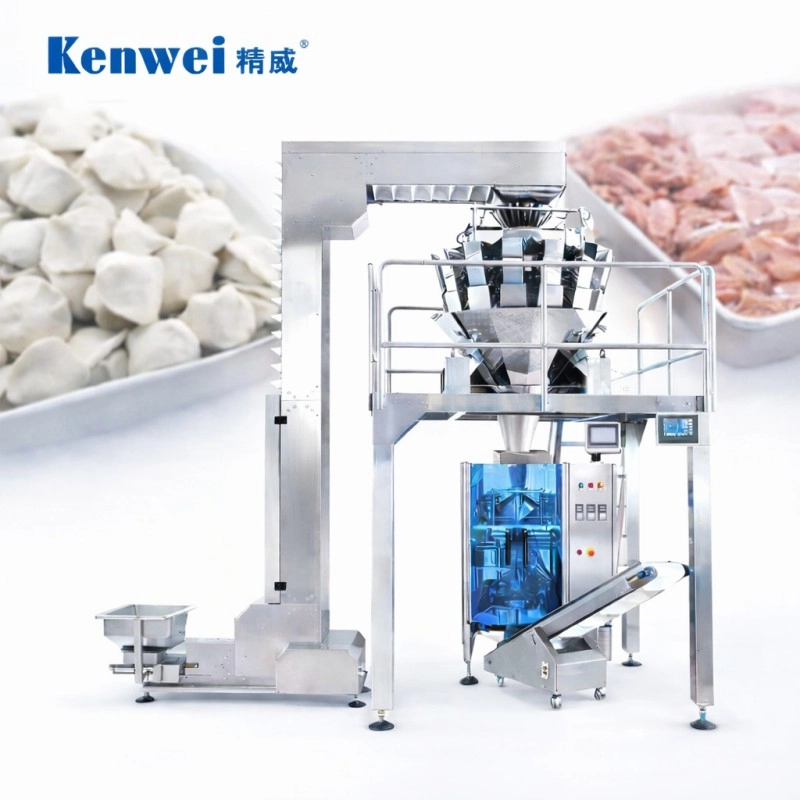
The Kenwei JW-B1 Vertical Frozen Food Packaging Machine is designed for IQF and frozen products, ensuring efficient, airtight packing. This vertical packing machine boosts productivity with precision sealing, ideal for frozen food packaging needs in the food industry.
16 Head Three Layer Multihead Weigher for Granular and Irregular Materials
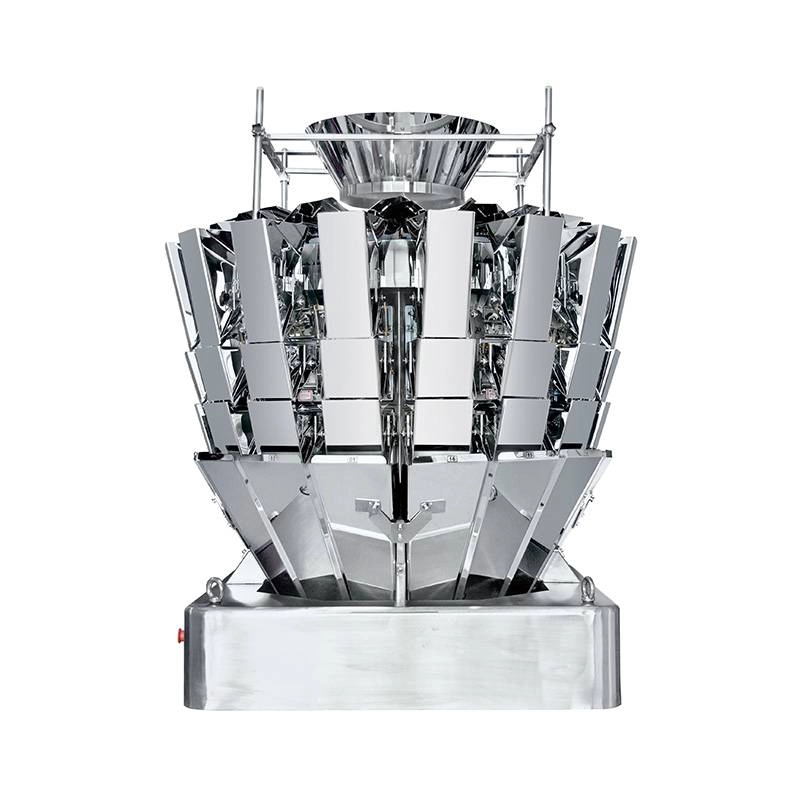
Kenwei’s 16 Head Three Layer Multihead Weigher ensures precise weighing of granular and irregular materials. This multihead weighing machine offers efficient, high-speed performance, ideal for various packaging needs. Trust our 16 head weigher for accuracy and reliability in your production line.
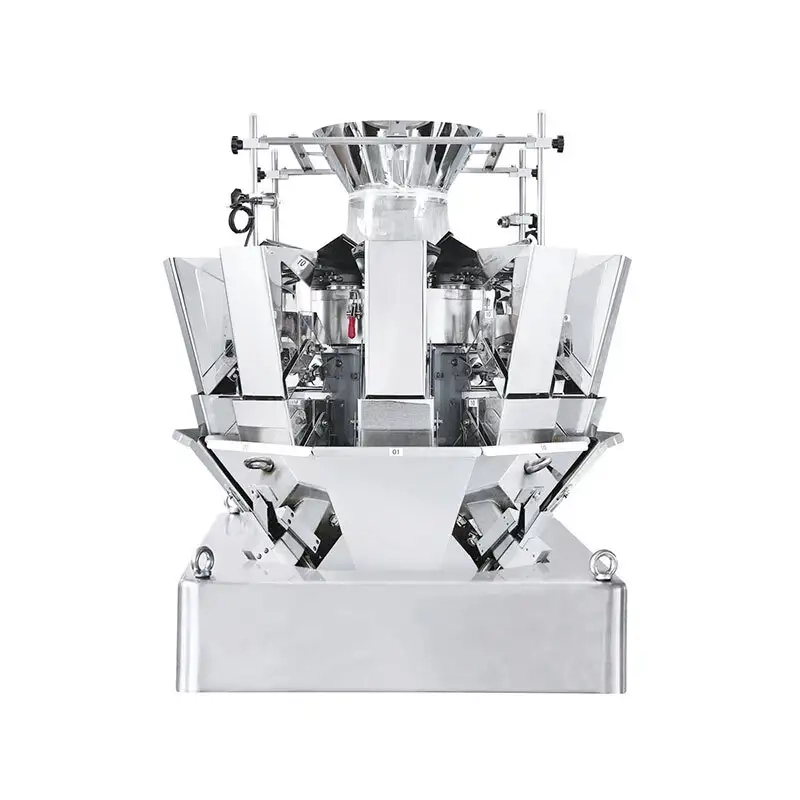
10-Head Standard No-Spring Multihead Weigher 1.6L for Precise Weighing
The standard no-spring combination scale features a patented spring-free hopper design, making it ideal for weighing a variety of products such as melon seeds, peanuts, nuts, almonds, grapes, candies, pistachios, potato chips, shrimp chips, and more. The double-support feeding tray is easily adjustable, while the feeding hopper is designed for easy disassembly, ensuring convenience and cleanliness. With a maximum weighing speed of up to 120 bags per minute, the 14-head standard no-spring combination scale is an economical, versatile, and cost-effective solution.
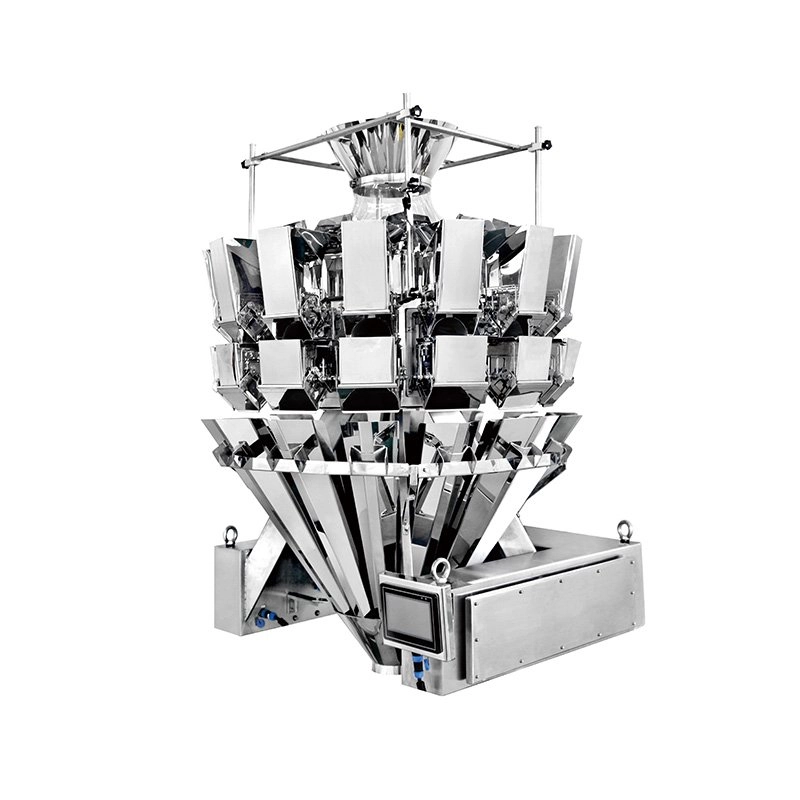
Automatic Multihead Weigher for Stick and Bar-Shaped Materials
Kenwei’s Automatic Multihead Weigher for Stick and Bar-Shaped Materials ensures precise, fast, and efficient weighing. This advanced automatic multihead weighing machine is ideal for accurate portioning of various stick and bar-shaped products, enhancing productivity and reducing waste.
Get in touch with us
If you have any comments or good suggestions, please leave us a message, later our professional staff will contact you as soon as possible.
Kenwei
Kenwei
Kenwei multi weigh
Kenwei
Kenwei
Kenwei