






JW-B12 Double feeder horizontal packaging and weighing system overview
Comprehensive technical and commercial overview of the JW-B12 Double Feeder Horizontal Packaging and Weighing System—designed for high-speed, high-precision packing of snacks, nuts, candies and irregular items. Explains design, multihead weigher integration, rotary packing machine compatibility, performance data, maintenance, applications and FAQs.
- Design highlights and core advantages of the JW-B12
- Key features that define production value
- Dual-feeder and multihead synergy
- Compatibility with rotary packing machine workflows
- Technical architecture and components
- Multihead weigher: the heart of precision
- Feeders, dosing and material handling
- Horizontal premade bag system and sealing
- Performance, accuracy and operational considerations
- Throughput, accuracy and measurable KPIs
- Cleaning, sanitation and changeover
- Maintenance and uptime strategies
- Applications, format flexibility and brand advantages
- Products and industries that benefit most
- Bag formats, film types and rotary machine integration
- Brand advantages and why manufacturers choose JW-B12
- Implementation guidance and real-world considerations
- Site planning and line integration
- Operator training and digital controls
- Compliance, traceability and quality assurance
- Frequently asked questions (FAQ)
- 1. What is the primary difference between JW-B12 and a rotary packing machine?
- 2. Which products are not suitable for the JW-B12?
- 3. How accurate is the JW-B12 multihead weigher?
- 4. Can JW-B12 handle fragile or breakable items?
- 5. What maintenance routines are recommended?

The JW-B12 Double Feeder Horizontal Packaging and Weighing System offers a high-efficiency solution for manufacturers seeking accurate, high-speed premade-bag packaging. Combining a multihead weigher with dual-feeder configuration and horizontal bagging technology, the JW-B12 adapts to a broad range of free-flowing and irregular-shaped products while delivering consistent fill accuracy, robust seal integrity and production continuity—ideal when integrated into rotary packing machine lines or standalone packaging cells. Once the JW-B12 architecture is clear, many manufacturers look deeper into how rotary packing machines integrate with JW-B12 feeding systems to achieve synchronized speed and accuracy.
Design highlights and core advantages of the JW-B12
Key features that define production value
The JW-B12 Double Feeder Horizontal Packaging and Weighing System integrates a precision multihead weigher with two synchronized feeders and a horizontal pouch-loading system. This combination addresses primary customer concerns: throughput, accuracy and product integrity. The system supports high-speed premade bag handling, secure sealing and reduced giveaway while maintaining gentle handling for fragile items such as puffed snacks and candies. The design minimizes cycle times and supports continuous operation for extended production runs.
Dual-feeder and multihead synergy
Dual feeders let operators run two product lanes or alternate product feeds into the multihead weigher to maximize utilization. When paired with a multihead weigher's fast combination algorithms, this configuration improves net throughput without sacrificing accuracy. The feed synchronization reduces product bridging and ensures consistent portioning—advantages especially useful when integrating with a rotary packing machine or rotary filling station for inline processing.
Compatibility with rotary packing machine workflows
Many production lines use rotary packing machines for very high-speed packaging of pourable products. The JW-B12 is designed for easy integration with rotary systems, providing stable, metered infeed to rotary loaders or directly to horizontal baggers. This makes the JW-B12 suitable both as a primary weighing and feeding station and as a complementary system to rotary packing machines, enabling hybrid solutions for manufacturers requiring flexibility between high speed and high accuracy.
Technical architecture and components
Multihead weigher: the heart of precision
The multihead weigher provides the accuracy backbone of the JW-B12. Modern multihead weighers use combination algorithms and vibration-driven dosing to achieve accurate target weights with minimal giveaway. Their advantages are well established in packaging; see a general overview of packaging machinery for context on industry-standard approaches (Wikipedia: Packaging machine). In JW-B12 implementations, the multihead weigher is tuned for rapid cycle times while keeping weight tolerance tight for cost control and regulatory compliance.
Feeders, dosing and material handling
The JW-B12 uses two independent feeders feeding into the multihead or two channels of a multihead, depending on the configuration. Each feeder includes adjustable vibratory trays and anti-bridging geometry for irregular shapes and lightweight products. This reduces product damage and improves stability when the weigher calculates combinations. Feed rate control is critical when moving from a multihead weigher to a rotary packing machine, ensuring the rotary index matches discharge pulses for consistent bag fills.
Horizontal premade bag system and sealing
Horizontal premade-bag packaging allows for professional-looking stand-up pouches, flat pouches, and gusseted bags depending on tooling. The JW-B12 incorporates an adjustable bag clamp, reliable filling chute, and a heat-seal or impulse-seal system tailored to the film type. Robust seal jaws and controlled dwell time maintain hermetic seals essential for snacks and confectionery products—especially when using nitrogen flushing or modified atmosphere packaging options.
Performance, accuracy and operational considerations
Throughput, accuracy and measurable KPIs
The JW-B12 is engineered for high throughput while minimizing weight giveaway. Typical line KPIs to monitor include bags per minute (BPM), weigh cycle time, percent fill accuracy (e.g., within tolerance), product downtime due to bridging, and OEE (Overall Equipment Effectiveness). In practice, throughput depends on product characteristics (free-flowing vs. irregular), bag format, and integration with downstream rotary packing machines. Below is a comparative snapshot of JW-B12 versus typical single-feeder multihead systems and rotary packing machines.
| Metric | JW-B12 (Double feeder) | Single-feeder Multihead | Rotary Packing Machine |
|---|---|---|---|
| Typical throughput | High (varies by product; often 40–120 BPM for premade bags) | Moderate (30–80 BPM) | Very high (100–300+ BPM, depending on format) |
| Fill accuracy | Very high (multihead precision) | High | Depends on filler; higher speeds can increase variability |
| Best for | Irregular shapes, fragile items, premade bags | Free-flowing bulk products | High-volume commodity products and sealed formats |
Cleaning, sanitation and changeover
Food safety and quick changeover are essential. The JW-B12 supports tool-less or quick-release components for the multihead feed pans and the bag clamp area. Hygienic design features—such as sloped surfaces, stainless-steel construction and sealed electrical cabinets—reduce contamination risk and simplify cleaning-in-place (CIP) or washdown procedures. For regulatory best practices, manufacturers often refer to PMMI guidance on hygienic equipment design (PMMI).
Maintenance and uptime strategies
To maintain high OEE, regular preventive maintenance is recommended: check vibratory motors, inspect load cells on the multihead, verify seal jaw alignment, and keep firmware/control software updated. The JW-B12's modular design reduces mean-time-to-repair (MTTR); spare parts such as nozzles, seal elements, and feeder fingers are typically stocked to minimize downtime. Remote diagnostics and IoT-enabled monitoring can further reduce mean time to repair and provide trend data for predictive maintenance.
Applications, format flexibility and brand advantages
Products and industries that benefit most
The JW-B12 is ideal for snacks, puffed foods, nuts, seeds, confectionery, dried fruit, frozen small items, hardware parts and other irregular-shaped materials where both precision and gentle handling are required. Its premade-bag orientation makes it attractive to producers of retail-ready snack packs and single-serve portions, where label position and seal integrity are critical.
Bag formats, film types and rotary machine integration
Supported bag types include flat pouches, doypack (stand-up pouches with gussets), and pillow bags. Film options range from metallized barrier films to polyethylene and laminates; sealing parameters must be matched to film characteristics. The JW-B12 can feed into or work alongside a rotary packing machine when very high cycle rates are needed; conversely, it can operate standalone for flexible batch runs. Systems commonly include options like nitrogen flushing, degassing valves for chips/coffee, and tear notches or reclosable zippers for consumer convenience.
Brand advantages and why manufacturers choose JW-B12
Brands choose the JW-B12 for these practical advantages: proven accuracy from multihead weighing technology, flexibility offered by the double-feeder arrangement, hygienic and serviceable machine architecture, and compatibility with rotary packing machine environments. Our engineering philosophy emphasizes real-world uptime and simple user interfaces, reducing training time while improving line efficiency. This combination of precision and operational reliability helps reduce product giveaway, protect product quality, and support higher margins.
Implementation guidance and real-world considerations
Site planning and line integration
Before installation, review line balance when integrating with rotary packing machines or other downstream equipment. Key items include electrical supply, compressed air, floor loading, and conveyor elevations. Allow for access zones on both sides for cleaning and maintenance. Doing a factory acceptance test (FAT) with representative product and sample bags is strongly recommended to confirm throughput and sealing parameters.
Operator training and digital controls
Modern JW-B12 control panels use intuitive HMI layouts for recipe management, making it straightforward to recall settings for different SKUs. Operator training should emphasize feeder tuning, basic troubleshooting, and hygiene procedures. Advanced setups may include remote access for software updates and troubleshooting, which improves response times and reduces unplanned downtime.
Compliance, traceability and quality assurance
For food-grade applications, ensure materials and seals meet local regulations. Many users adopt traceability practices—batch numbers, production timestamps and digital logs—directly from the HMI or integrated MES/ERP systems. For regulatory context on packaging and food-safety best practices, consult industry guidance such as PMMI (PMMI) and related food-safety standards.
Frequently asked questions (FAQ)
1. What is the primary difference between JW-B12 and a rotary packing machine?
The JW-B12 is a combined double-feeder multihead weigher with a horizontal premade bagger—focused on weighing precision and flexible premade-bag packaging. Rotary packing machines are typically designed for extremely high-speed, continuous rotary indexing of bags or containers. The JW-B12 can be integrated with rotary systems to combine accuracy of multihead weighing with the throughput of rotary machines.
2. Which products are not suitable for the JW-B12?
Highly cohesive pastes, liquids, and extremely powdery materials without proper flow aids are not ideal for this particular horizontal premade-bag and multihead weigher configuration unless auxiliary equipment is added (e.g., pump, powder dosing). For such products, volumetric fillers, piston fillers, or vertical form-fill-seal (VFFS) systems may be more appropriate.
3. How accurate is the JW-B12 multihead weigher?
Accuracy varies by product and target weight but multihead weighers commonly achieve tolerances in the low single-digit gram ranges with minimal giveaway, optimizing cost per package. Achieving best accuracy depends on feeder tuning, product behavior, and consistent operating parameters.
4. Can JW-B12 handle fragile or breakable items?
Yes. The JW-B12 is designed for gentle handling via carefully tuned vibration, low-drop chutes and wide dosing paths. Puffed snacks, biscuits and fragile confectionery can be packed with reduced breakage when correct settings and product-friendly tooling are used.
5. What maintenance routines are recommended?
Daily checks for seals and quick visual inspections, weekly cleaning of product-contact areas, monthly calibration checks of load cells, and annual preventive maintenance of motors and bearings are typical. Keep spare seal strips and common wear parts on site to reduce downtime.
If you have additional questions or would like a tailored proposal, contact our sales team at sales@example.com or view detailed product specifications and request a quote at: View JW-B12 product page.
Tags
multihead weigher for sale
multihead weigher for sale
Linear weigher for candy and confectionery
Linear weigher for candy and confectionery
automatic premade pouch packing machine
automatic premade pouch packing machine
multihead weigher packing machine factory
multihead weigher packing machine factory
food packaging solutions
food packaging solutions
high speed linear weigher
high speed linear weigher
Recommended for you
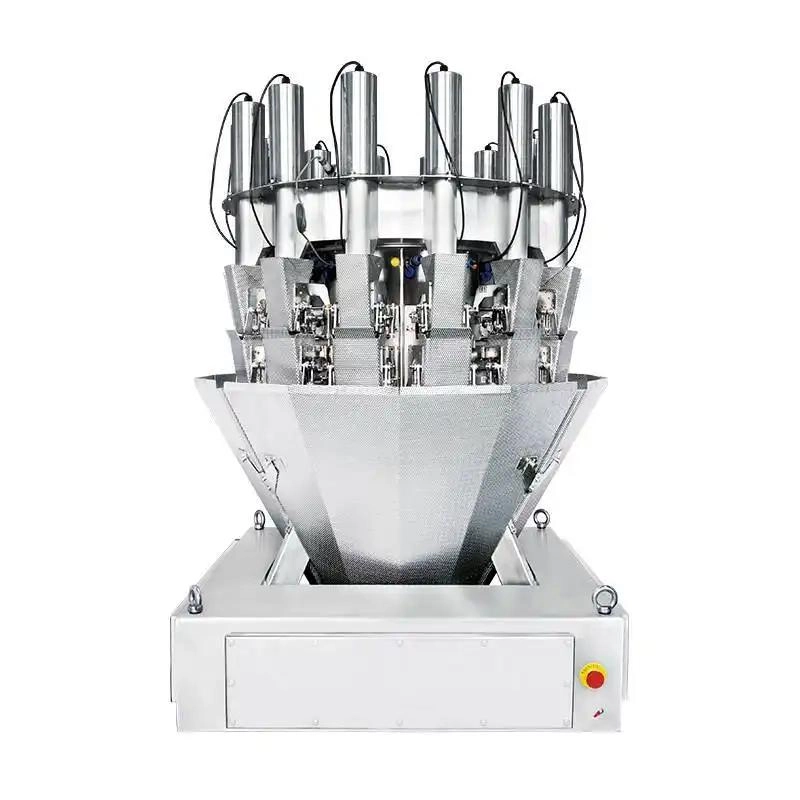
Best practices for calibrating a 14 head multihead weigher
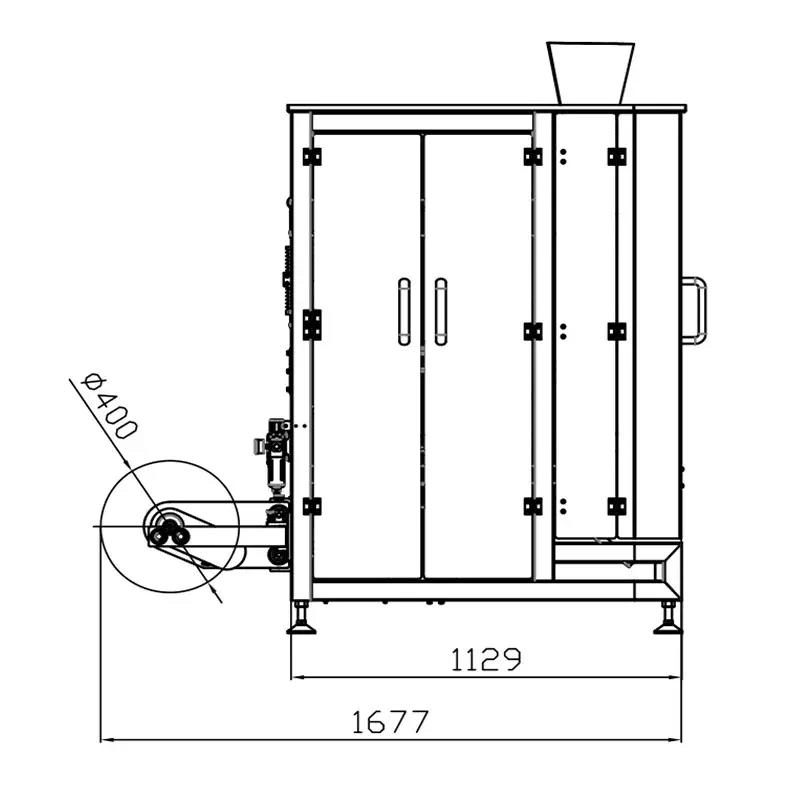
Economic VFFS: ROI and TCO Analysis for Procurement Teams
What are the application scenarios of vffs packaging equipment?
best multihead weigher choices for confectionery lines 2026
Prdoucts Categories
Question you may concern
About Price and payment
Are the prices for Kenwei machines negotiable?
Prices are generally fixed, but depending on the order volume, long-term partnerships, or special circumstances, we may offer discounts or promotional pricing. Please contact our sales team to discuss your specific situation.
About Cooperation Process
What is the lead time for product delivery?
The lead time depends on the complexity of the order and the level of customization required. Typically, our products are shipped within 4-8 weeks after receiving the order confirmation. However, this can vary, and we will provide an estimated delivery date when you place your order.
About Solution suggestions
Can Kenwei provide solutions for high-volume production?
Yes, Kenwei specializes in high-speed, high-throughput machines designed for large-scale operations. Our multi-head weighers, packing machines, and check weighers.
Can Kenwei solutions be adapted for different product packaging types?
Yes, Kenwei solutions can handle a variety of packaging types, including bags, boxes, pouches, and bottles. We can customize machines to suit your packaging format, ensuring compatibility with your packaging equipment.
About Product choice
What types of products does Kenwei offer?
Kenwei specializes in high-precision and high-speed automated machinery for weighing, packaging, and quality control. Our main products include: multihead weigher, linear weigher, checkweighers,food metal detector,vertical packing machine and packing machine accessories.
You may also like
14 Heads Vertical Single Screw Feeding Pickles Weigher backups
This type of weigher is designed to handle the unique characteristics of pickles, ensuring precise measurements for packaging and distribution. It uses a vertical single screw mechanism to feed the pickles into the weighing system, allowing for efficient and consistent weighing. This technology is particularly useful in food processing and packaging facilities where precise portioning is essential for quality control and customer satisfaction. This specialized equipment is perfect for accurately measuring and dispensing pickles in a production line or packaging facility. The vertical design allows for efficient and precise filling of containers, while the single screw feeding mechanism ensures consistent and reliable weighing.
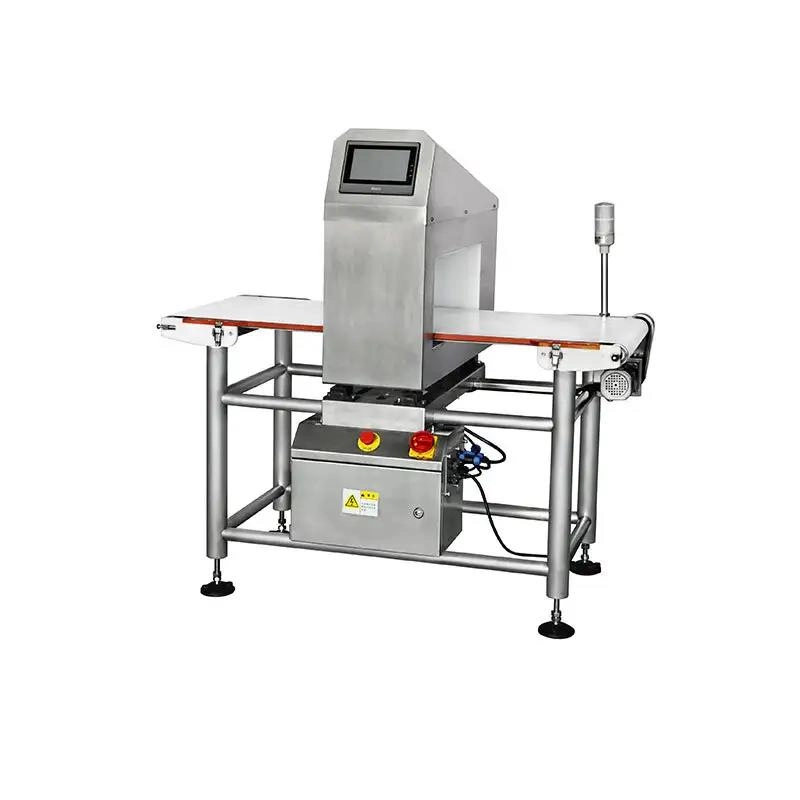
Food Metal Detector Manufacturer For Reject Defective Products G5020
The G5020 multi-frequency metal detector features a specialized conveyor belt designed to reduce contamination risks, ensure smooth operation, and maintain high detection sensitivity. It is easy to disassemble for convenient maintenance. Ideal for detecting metal contaminants in food, pharmaceuticals, spices, plastics, electronics, textiles, toys, handicrafts, and more.
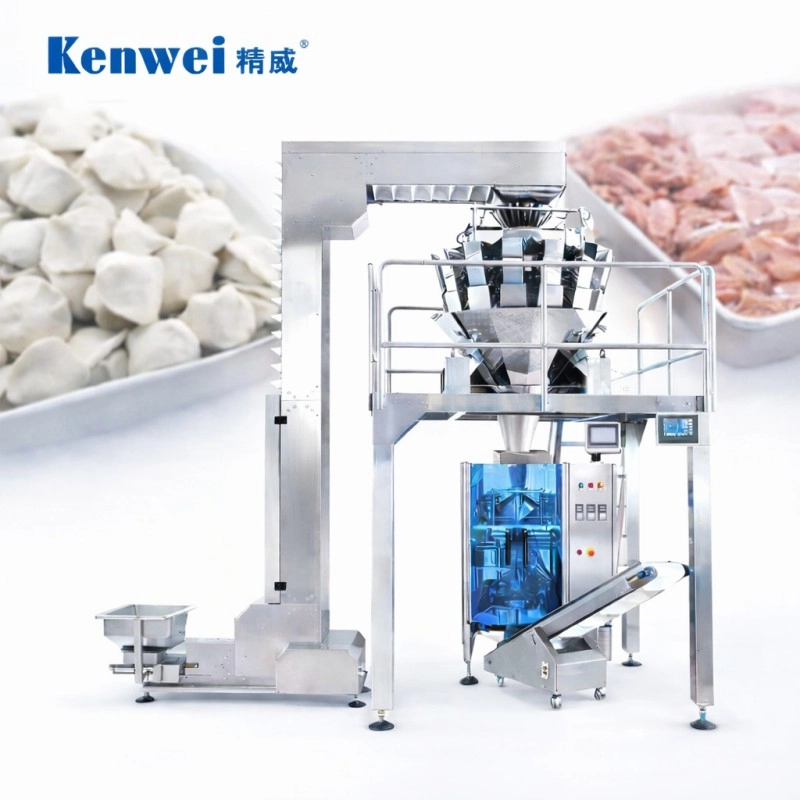
Vertical Frozen Food Packaging Machine for IQF & Frozen Products JW-B1
The Kenwei JW-B1 Vertical Frozen Food Packaging Machine is designed for IQF and frozen products, ensuring efficient, airtight packing. This vertical packing machine boosts productivity with precision sealing, ideal for frozen food packaging needs in the food industry.
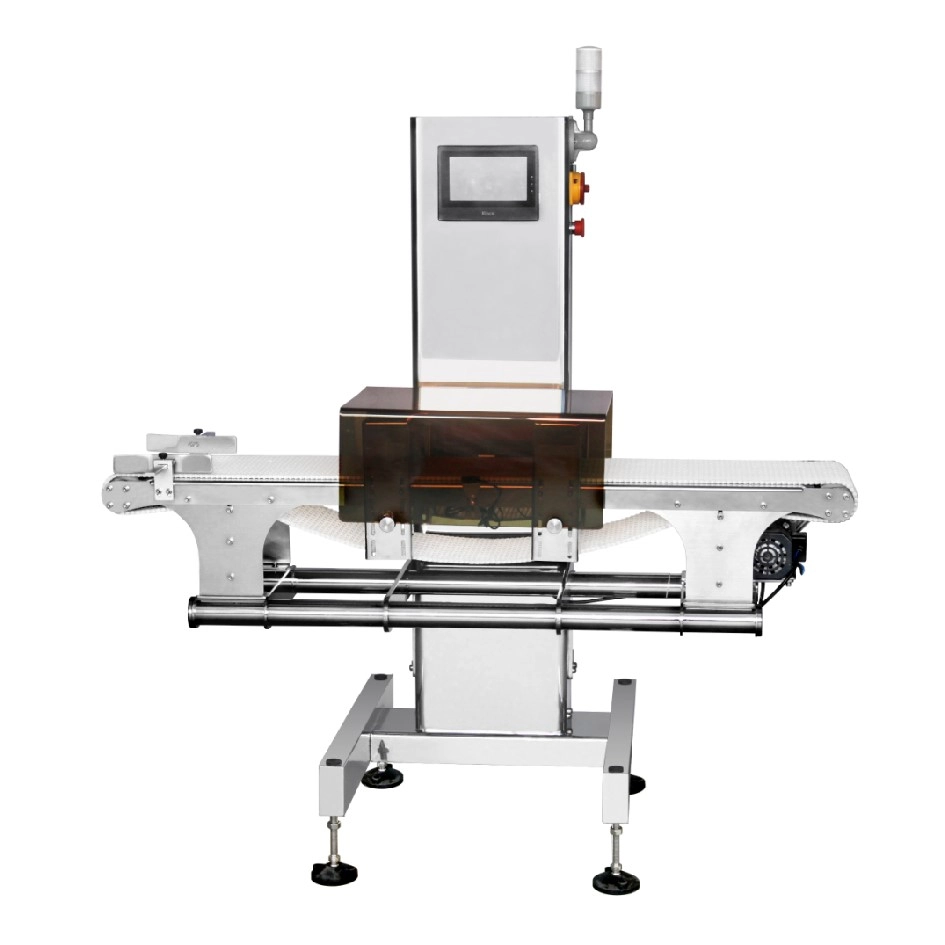
Metal Detector for Aluminum Foil in the Food Industry for Accurate Contamination Detection
The 2415 Metal Detector for Aluminum Foil is equipped with high-sensitivity sensors that effectively filter out signals from aluminum packaging, ensuring precise detection of magnetic metal contaminants. Ideal for detecting foreign bodies in aluminum foil-packaged items such as coffee bags, peanuts, dried meats, chocolate, and more. This versatile metal detector offers adjustable settings, with a maximum width of 24mm and height ranging from 20-150mm, making it suitable for a wide variety of aluminum foil packaging applications.
Get in touch with us
If you have any comments or good suggestions, please leave us a message, later our professional staff will contact you as soon as possible.
Kenwei
Kenwei
Kenwei multi weigh
Kenwei
Kenwei
Kenwei