






How Rotary Packing Machines integrate with JW-B12 feeding systems
This article explains how rotary packing machines integrate with the JW-B12 Double Feeder Horizontal Packaging and Weighing System to deliver high-speed, precise, and reliable premade-bag packaging. It covers mechanical and control-level integration, synchronization, changeover, sanitation, common troubleshooting, ROI, and brand advantages. Practical comparisons, authoritative references, and FAQs help packaging engineers and production managers plan an optimal rotary packing line.
- Optimizing production lines with rotary packaging integration
- Why combine rotary packing machines with the JW-B12?
- Line balance and throughput considerations
- Mechanical and control integration: practical steps
- Physical alignment and product transfer
- PLC, I/O mapping, and synchronization
- Servo timing and electronic gearing
- Operational excellence: hygiene, changeover, and troubleshooting
- Design for cleanability and food safety
- Fast, repeatable changeovers
- Common integration issues and fixes
- Performance metrics, ROI, and case comparisons
- Key performance indicators (KPIs) for integrated lines
- ROI factors and payback horizon
- Case study snapshot
- Brand advantages and why choose JW-B12 for rotary lines
- Product strengths relevant to rotary packers
- Service, spare parts, and lifecycle support
- Standards and certification alignment
- Frequently Asked Questions (FAQ)
- 1. Can the JW-B12 handle fragile or irregular-shaped items without damage?
- 2. What communication protocols are typically used between the JW-B12 and rotary packer?
- 3. How do I reduce giveaway when using a multihead weigher with a rotary packing machine?
- 4. What sanitation steps are needed when integrating JW-B12 with rotary packers?
- 5. Can the JW-B12 interface with existing enterprise systems for traceability?

The JW-B12 Double Feeder Horizontal Packaging and Weighing System is designed for high-speed, high-precision packaging of snacks, puffed foods, nuts, candies, hardware, and irregular-shaped materials. With a multihead weigher and dual-feeder setup, it delivers efficient, fully automated feeding, weighing, and bagging for a wide range of products—ensuring secure seals and professional premade bag packaging.
Summary for indexing: The JW-B12 Double Feeder Horizontal Packaging and Weighing System integrates seamlessly with rotary packing machines to create a compact, high-throughput premade pouch packaging line suitable for global and regional production facilities. Integration strategies include mechanical infeed alignment, synchronized PLC/servo control, recipe-driven changeovers, and cleanability standards for food and hardware lines. This article covers engineering best practices, line balancing, troubleshooting, and ROI calculations to support operators and engineers seeking robust rotary packing + JW-B12 implementations.
Optimizing production lines with rotary packaging integration
Why combine rotary packing machines with the JW-B12?
Rotary packing machines (often used for premade pouch or stick pack applications) excel at high-speed sealing and forming in a compact footprint. When partnered with a precision feeding and weighing system like the JW-B12, manufacturers benefit from accurate dose control, stable feed of irregular items, and minimal giveaway. The JW-B12’s dual-feeder multihead weigher configuration handles high throughput demands while the rotary packer provides continuous, rotary-indexed bag sealing and downstream finishing.
Line balance and throughput considerations
Integrating two major subsystems requires planning around throughput bottlenecks. Typical constraints are the multihead weigher discharge rate, the pre-made pouch feed rate, and the rotary sealer cycle time. A short checklist for line balancing:
- Measure the JW-B12 average cycles per minute at target fill weight.
- Determine rotary packing machine pouch sealing speed (bags per minute).
- Factor in indexing and product settle time; add 5–15% margin for variability.
For reference on multihead weigher operation and throughput characteristics, see Multihead weigher (Wikipedia).
Mechanical and control integration: practical steps
Physical alignment and product transfer
Successful integration starts at the product transfer point between the JW-B12 discharge chutes and the rotary packing machine infeed. Key engineering practices:
- Match conveyor widths and use adjustable guides to center product into premade pouches or into an accumulation hopper upstream of the rotary infeed.
- Use a short, low-vibration belt or flight conveyor to preserve product orientation when required (e.g., whole nuts or hardware).
- Install vibratory buffers or small accumulators to decouple slight speed differences between the JW-B12 output and the rotary packer intake.
PLC, I/O mapping, and synchronization
Integration at the control level minimizes rejects and ensures consistent fills. Recommended steps:
- Establish clear I/O mapping: weigh trigger, discharge confirmation, bag present sensors, rotary index position, and emergency stop interlocks.
- Synchronize using either an industrial PLC network (Profinet, EtherCAT, Modbus-TCP) or discrete I/O with a master PLC. For high-speed lines, prefer deterministic fieldbus (e.g., EtherCAT).
- Use recipe management in the PLC/HMI to store weight targets, fill delays, and pouch size data so changeovers are repeatable.
Servo timing and electronic gearing
For rotary packaging machines that use servo-driven indexing, electronic gearing or cam profiling ensures the fill pulse from the JW-B12 is timed to the rotary pocket arrival. This prevents overfill, underfill, and spillage. Implement closed-loop feedback from the rotary encoder and the JW-B12’s PLC to adjust offsets dynamically during the first few production cycles.
Operational excellence: hygiene, changeover, and troubleshooting
Design for cleanability and food safety
Food and snack lines require hygienic design. Ensure both machines meet these expectations:
- Use stainless steel contact parts (304/316) and remove crevices where product can accumulate.
- Integrate quick-release fittings and modular feeders on the JW-B12 for rapid washdown or dry cleaning cycles.
- Document sanitation procedures and align them with local regulatory guidance and global best practices (see PMMI for industry sanitation guidance).
Fast, repeatable changeovers
Changeovers are time-consuming sources of downtime. The JW-B12 combined with a rotary packing machine should offer:
- Recipe-driven setup: operator selects product recipe and the system auto-adjusts feeder amplitude, multihead setpoints, and rotary timing.
- Tool-less adjustments: quick clamp guides, modular infeed rails, and adjustable chute angles reduce mechanical setup time.
Common integration issues and fixes
Operators typically see a few recurring problems. Practical fixes:
- Feeding spikes causing overfills: install an accumulation buffer and tune the JW-B12 discharge thresholds.
- Product bridging at chute transitions: add gentle vibratory motion or airflow to keep irregular products moving.
- Out-of-sync discharges: verify encoder feedback and check network latency on fieldbus connections.
Performance metrics, ROI, and case comparisons
Key performance indicators (KPIs) for integrated lines
Track these metrics to measure integration success:
- Throughput (bags per minute)
- Weight accuracy (mean deviation and standard deviation)
- Yield (%) and giveaway reduction
- Changeover time (minutes)
- Sanitation downtime (hours/week)
ROI factors and payback horizon
ROI depends on product value, required accuracy, labor savings, and material costs. Typical savings come from reduced giveaway due to the multihead weigher’s accuracy and higher throughput from rotary sealing. A simple example table helps compare hypothetical options:
| Metric | JW-B12 + Rotary Packer | Single-Feeder Vertical Packer |
|---|---|---|
| Max throughput (bags/min) | 120 | 60 |
| Average giveaway (%) | 1.2% | 3.0% |
| Changeover time (min) | 15 | 30 |
| Estimated yearly labor saved (FTE) | 1.2 | 0.4 |
Use actual line data to calculate payback. Manufacturers often recoup integration costs within 12-36 months when increasing throughput and lowering material giveaway are priorities.
Case study snapshot
A mid-size snack manufacturer replaced a vertical single-feeder line with a JW-B12 feeding into a rotary pouch sealer. Results over four months included a 40% throughput increase, a 1.8% reduction in material giveaway, and a 20% drop in labor hours for packaging. These improvements demonstrate how synchronization and precise dispensing directly affect profitability.
Brand advantages and why choose JW-B12 for rotary lines
Product strengths relevant to rotary packers
The Double Feeder Horizontal Packaging and Weighing System JW-B12 is tuned to complement rotary packing machines via:
- Dual-feeder multihead configuration for continuous, alternating discharge to match rotary pockets.
- High-precision weighing for irregular and free-flowing items, reducing giveaway and rework.
- Compact footprint and modular mounting options for seamless mechanical integration.
Service, spare parts, and lifecycle support
Long-term performance depends on serviceability. Best practices include establishing a spare-parts kit (load cells, belts, guides), remote monitoring capability, and access to vendor documentation and support portal. Brands that provide robust lifecycle support reduce mean time to repair (MTTR) and maximize overall equipment effectiveness (OEE).
Standards and certification alignment
Make sure the JW-B12 and any rotary packing machine comply with relevant safety and food standards. Refer to industry guidance from organizations like PMMI and local regulatory bodies for hygienic design expectations. Compliance ensures market acceptance and simplifies audits.
Frequently Asked Questions (FAQ)
1. Can the JW-B12 handle fragile or irregular-shaped items without damage?
Yes. The JW-B12 is designed for snacks, puffed foods, nuts, and irregular items by using adjustable feeder amplitudes, gentle chute geometry, and tailored multihead bucket profiles. Tune the feeder vibration and chute angles during setup and use soft-start discharge profiles to minimize product breakage.
2. What communication protocols are typically used between the JW-B12 and rotary packer?
Common protocols include Profinet, EtherCAT, EtherNet/IP, and Modbus-TCP for PLC integration. For simpler installations, discrete I/O with encoder feedback is sufficient. For high-speed deterministic synchronization, EtherCAT or a real-time bus is recommended.
3. How do I reduce giveaway when using a multihead weigher with a rotary packing machine?
Reduce giveaway by refining weight distribution algorithms in the multihead weigher, using tighter acceptance windows, and ensuring accurate calibration. Regularly maintain load cells and use recipe-based targets to match pouch nominal weights. Tracking weight histograms in the HMI will reveal trends and allow proactive adjustments.
4. What sanitation steps are needed when integrating JW-B12 with rotary packers?
Follow documented sanitation plans: isolate electrical cabinets, use quick-release parts for washdown-compatible components, and apply food-contact surface sanitizers per supplier guidelines. Coordinate machine cooldown and reassembly checks to ensure HACCP protocols remain intact.
5. Can the JW-B12 interface with existing enterprise systems for traceability?
Yes. Most modern JW-B12 systems support OPC-UA, MQTT, or other industrial protocols for feeding production data to MES/ERP systems. This enables lot traceability, batch reporting, and remote diagnostics.
If you have specific product dimensions, target speeds, or product samples, our engineering team can provide an integration checklist and expected throughput calculations tailored to your line.
Contact us / View product: With integration concepts in mind, buyers are better prepared to follow a structured buying guide that compares key features in rotary packing machines before committing to a specific platform.For detailed consultation, spare parts, or to request a site integration study for the JW-B12 Double Feeder Horizontal Packaging and Weighing System, please contact sales@example.com or visit our product page to download the datasheet and request a demo.
Tags
food vacuum pack machine
food vacuum pack machine
customized multihead weigher packing machine
customized multihead weigher packing machine
multihead weigher
multihead weigher
multihead combination weigher
multihead combination weigher
Rotating Collecting Tables for Packaging Machine Line
Rotating Collecting Tables for Packaging Machine Line
Twin packaging machine
Twin packaging machine
Recommended for you
Optimizing Snack Packaging with Multihead Weigher Machines
What are the application scenarios of food packaging solutions?
Maintenance and Troubleshooting for Electronic Pill Counters
Best Food Packing Machine Brands for Multihead Weigher Systems
Prdoucts Categories
Question you may concern
About Price and payment
Are the prices for Kenwei machines negotiable?
Prices are generally fixed, but depending on the order volume, long-term partnerships, or special circumstances, we may offer discounts or promotional pricing. Please contact our sales team to discuss your specific situation.
How is the price of Kenwei machines determined?
The price of Kenwei machines depends on several factors, including the type of machine, customization requirements, production volume, and any additional features or integrations. We provide tailored quotes based on your specific needs and requirements.
About Logistics
Do I need to prepare my facility for the delivery of large machines?
Yes, large machines often require special preparations for delivery, including ensuring adequate space for unloading and installation.
About Cooperation Process
What is the lead time for product delivery?
The lead time depends on the complexity of the order and the level of customization required. Typically, our products are shipped within 4-8 weeks after receiving the order confirmation. However, this can vary, and we will provide an estimated delivery date when you place your order.
About Solution suggestions
What industries benefit the most from Kenwei solutions?
Kenwei solutions are ideal for a wide range of industries, including:
1)Food Packaging snacks, grains, and powdered beverages.
2)Pharmaceuticals: Precise weighing of tablets, and capsules.
3)Chemicals: Weighing and packaging granular and powdered chemicals.
4)Agriculture: Packaging seeds, grains, and fertilizers.
You may also like
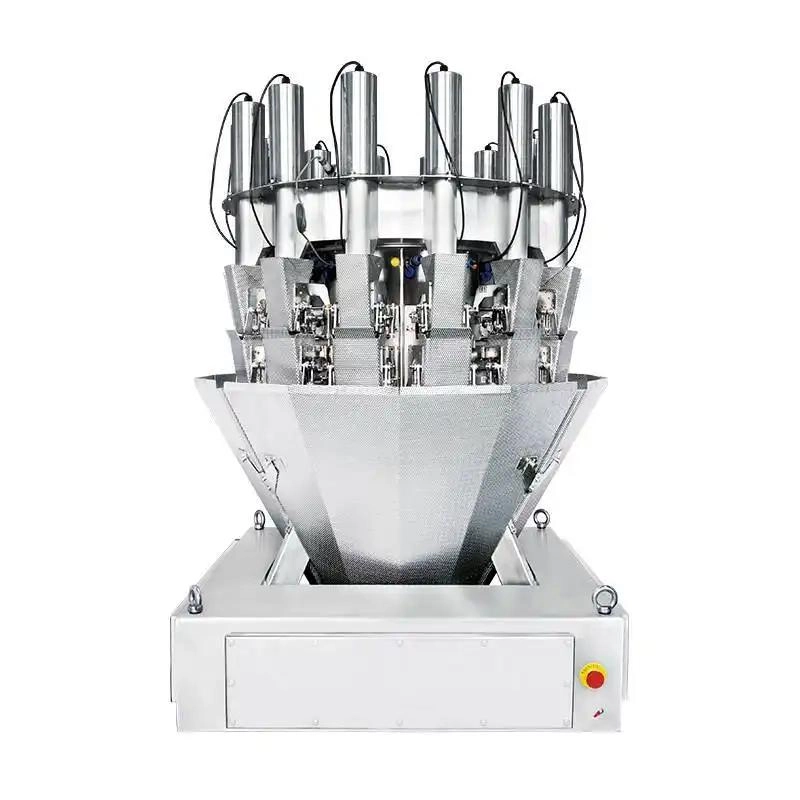
14 Heads Vertical Single Screw Feeding Pickles Weigher backups
This type of weigher is designed to handle the unique characteristics of pickles, ensuring precise measurements for packaging and distribution. It uses a vertical single screw mechanism to feed the pickles into the weighing system, allowing for efficient and consistent weighing. This technology is particularly useful in food processing and packaging facilities where precise portioning is essential for quality control and customer satisfaction. This specialized equipment is perfect for accurately measuring and dispensing pickles in a production line or packaging facility. The vertical design allows for efficient and precise filling of containers, while the single screw feeding mechanism ensures consistent and reliable weighing.
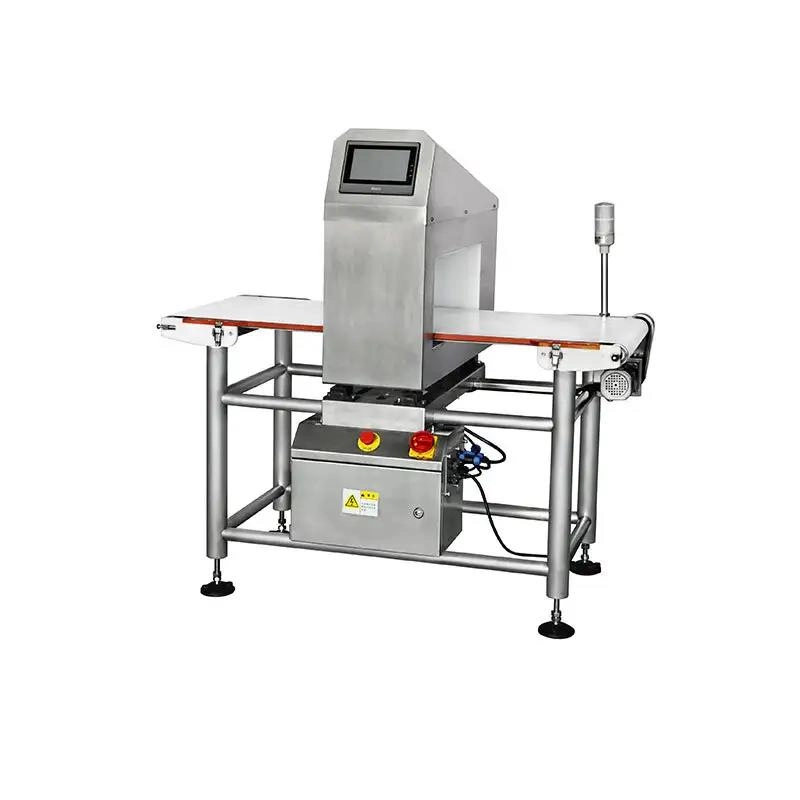
Food Metal Detector Manufacturer For Reject Defective Products G5020
The G5020 multi-frequency metal detector features a specialized conveyor belt designed to reduce contamination risks, ensure smooth operation, and maintain high detection sensitivity. It is easy to disassemble for convenient maintenance. Ideal for detecting metal contaminants in food, pharmaceuticals, spices, plastics, electronics, textiles, toys, handicrafts, and more.
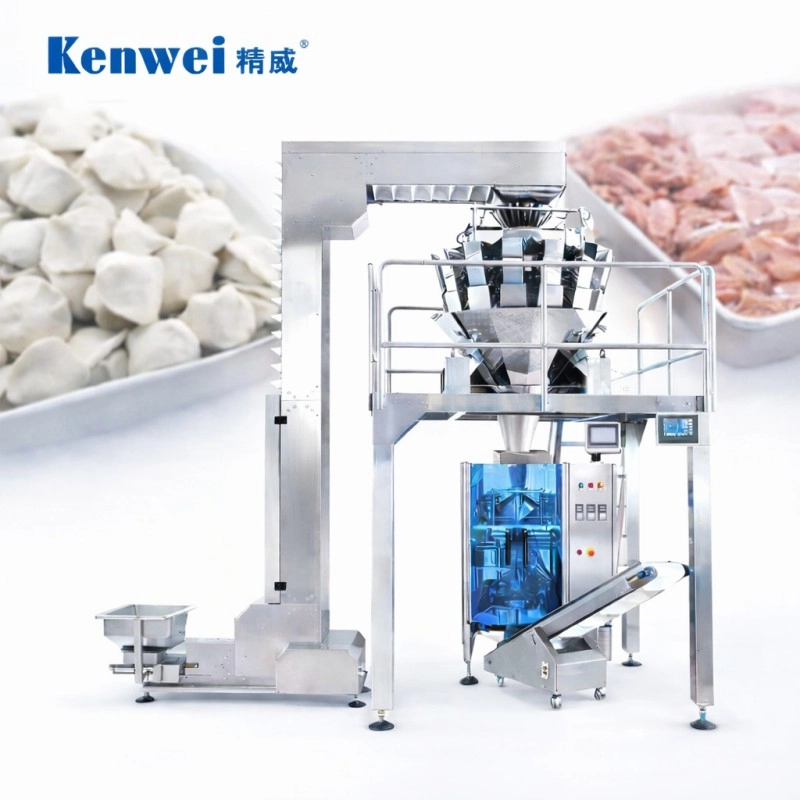
Vertical Frozen Food Packaging Machine for IQF & Frozen Products JW-B1
The Kenwei JW-B1 Vertical Frozen Food Packaging Machine is designed for IQF and frozen products, ensuring efficient, airtight packing. This vertical packing machine boosts productivity with precision sealing, ideal for frozen food packaging needs in the food industry.
Metal Detector for Aluminum Foil in the Food Industry for Accurate Contamination Detection
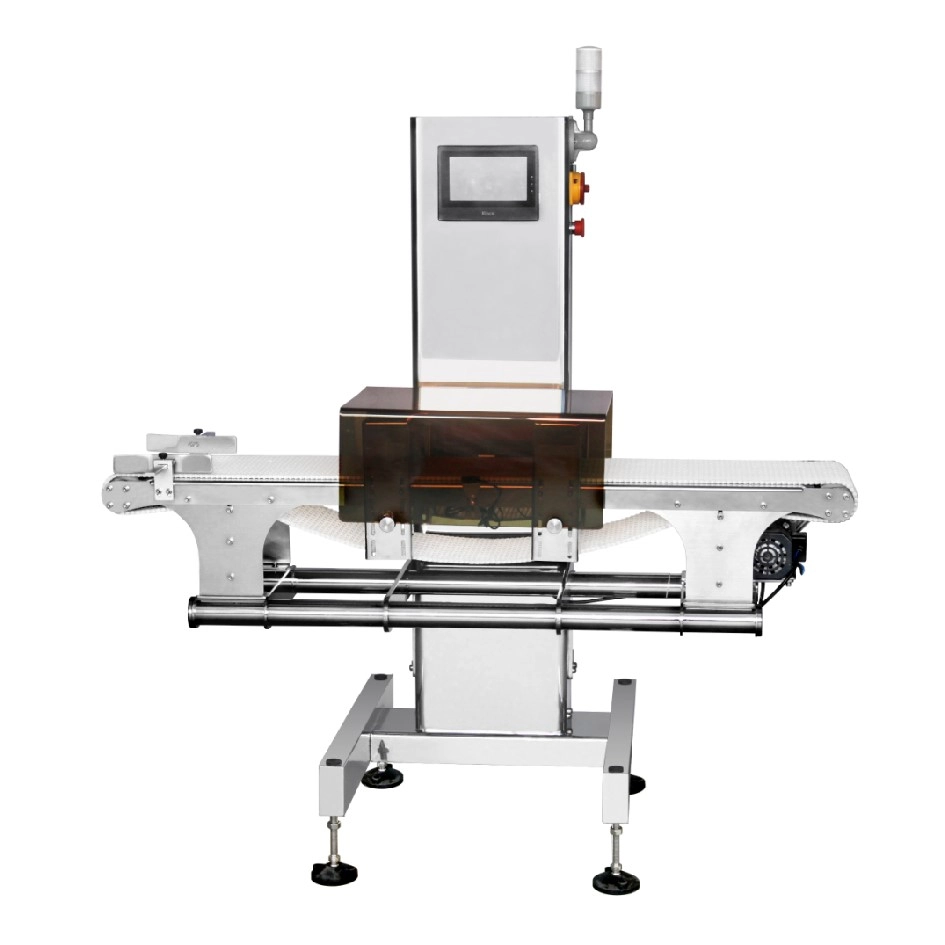
The 2415 Metal Detector for Aluminum Foil is equipped with high-sensitivity sensors that effectively filter out signals from aluminum packaging, ensuring precise detection of magnetic metal contaminants. Ideal for detecting foreign bodies in aluminum foil-packaged items such as coffee bags, peanuts, dried meats, chocolate, and more. This versatile metal detector offers adjustable settings, with a maximum width of 24mm and height ranging from 20-150mm, making it suitable for a wide variety of aluminum foil packaging applications.
Get in touch with us
If you have any comments or good suggestions, please leave us a message, later our professional staff will contact you as soon as possible.
Kenwei
Kenwei
Kenwei multi weigh
Kenwei
Kenwei
Kenwei