






Buying guide: features to compare in rotary packing machines
This buying guide explains what to compare when evaluating rotary packing machines for snacks, nuts, candies, and irregular products. It covers machine mechanics, multihead weigher integration, speed vs. accuracy trade-offs, feeding and bag handling, and uses the Double feeder horizontal packaging and weighing system JW-B12 as a case study to help you choose the right rotary packaging solution.
- Understanding rotary packing machines and core mechanics
- Basic operating principles
- How the multihead weigher integrates
- Materials, bag styles, and packaging formats
- Critical features to compare when buying a rotary packing machine
- Throughput, cycle time, and real production speed
- Weighing accuracy and target weight strategy
- Feeding systems, product orientation, and gentle handling
- Operational, maintenance, and compliance factors that affect total cost
- Changeovers, cleaning, and hygienic design
- Controls, automation, and Industry 4.0 compatibility
- Service, spare parts, and local support
- JW-B12 Double feeder horizontal packaging and weighing system — a practical case study
- JW-B12 advantages and typical applications
- Specification comparison: JW-B12 vs. Typical rotary packing alternatives
- Return on investment and yield considerations
- Brand strengths, reliability, and buying checklist
- What to require from vendors
- Why brand matters: evidence and references
- Final buying checklist (quick)
- FAQs
- Q: Is a rotary packing machine suitable for fragile products such as chips?
- Q: How do I compare advertised bags per minute between machines?
- Q: How important is the number of heads on a multihead weigher?
- Q: Can rotary systems handle premade pouches?
- Q: What certifications should I request?

Guide summary for : This guide helps procurement professionals, engineers, and operations managers evaluate rotary packing machines (rotary packaging systems) by focusing on measurable features such as throughput, weighing accuracy, feeding design, bag styles, sealing performance, automation level, and sanitation. It shows how a multihead weigher and dual-feeder configuration—exemplified by the Double feeder horizontal packaging and weighing system JW-B12—can impact yield, speed, and total cost of ownership across snack, nut, candy, and irregular-shaped product lines. Feature comparison naturally leads to performance outcomes, especially when evaluating how to maximize throughput with JW-B12 double feeder systems on high-output lines.
Understanding rotary packing machines and core mechanics
Basic operating principles
Rotary packing machines are continuous or intermittent-motion systems where product filling, weighing, and sealing operate around a rotating turret or rotary platform. These systems are favored for high-throughput lines because multiple stations can simultaneously perform different tasks—filling, weighing verification, bag transfer, and sealing—thereby optimizing cycle time and footprint.
How the multihead weigher integrates
A multihead weigher is often the heart of a rotary packaging line for particulate and irregular products. It distributes product into multiple dosing heads, calculates optimal combinations to meet target weight quickly, and sends doses to the rotary filler. Manufacturers like Ishida pioneered this approach because it balances accuracy and speed; a good primer on weighing machines can be found on Wikipedia (Weighing scale). Integration quality—how the multihead matches the rotary filler, conveyors, and bag handling—determines both throughput and waste.
Materials, bag styles, and packaging formats
Rotary machines support many bag types (pre-made pouches, pillow packs, gusseted bags, quad-seal, etc.). Pre-made bag systems suit high-quality finished packs and are common in snacks and nuts production. Material handling considerations—sticky products, powder dusting, fragile items—affect hopper design, feeder type, and discharge orientation. For background on packaging principles, see Packaging — Wikipedia.
Critical features to compare when buying a rotary packing machine
Throughput, cycle time, and real production speed
Rated speed (bags/min) is a starting point, but real throughput depends on product properties, bag format, and changeover time. When comparing machines ask for: rated maximum bags/min, realistic production trials with your SKU, average downtime for changeovers, and how speed scales when switching bag sizes. A rotary packing machine with a multihead weigher tends to sustain higher speeds for lightweight or irregular products because dosing is faster and more consistent.
Weighing accuracy and target weight strategy
Accuracy impacts giveaway (product given beyond target weight) and regulatory compliance. Key metrics: standard deviation of fill weight, percentage of fills within tolerance, and rejected-bag rates. Multihead weighers reduce giveaway by optimizing head combinations; compare the weigher’s algorithm, number of heads, and sample data from the vendor. For independent industry guidance on weighing approaches, see manufacturer resources such as Ishida - multihead weigher information.
Feeding systems, product orientation, and gentle handling
Feeding design defines how product reaches the weigher: vibratory feeders, dual feeders, rotary feeders, or infeed belts. Dual-feeder systems (two synchronized feeders feeding one weigher) can increase throughput and reduce hopper refill cycles—important for the JW-B12 Double Feeder Horizontal Packaging and Weighing System. For fragile or irregular items, choose feeders and belts with gentle handling, adjustable speeds, and anti-shock features to prevent breakage and fines.
Operational, maintenance, and compliance factors that affect total cost
Changeovers, cleaning, and hygienic design
Downtime for changeovers and cleaning directly reduces productive time. Look for quick-release components, tool-less change parts, and accessible surfaces for sanitation. Machines designed to meet food safety standards and with stainless-steel contact parts simplify cleaning and lower cross-contamination risk. Regulatory and best-practice documentation from food authorities can guide requirements—refer to resources such as the U.S. FDA packaging and processing guidance when applicable.
Controls, automation, and Industry 4.0 compatibility
Modern rotary packing machines offer PLC/HMI controls, recipe management, remote connectivity, and data logging for traceability. Verify whether the system supports Ethernet/IP, OPC-UA, or other industrial protocols for integration into MES/SCADA. Predictive maintenance features and fault diagnostics reduce unplanned downtime and are valuable when assessing long-term cost.
Service, spare parts, and local support
Availability of spare parts, technician response time, and training are crucial. Compare warranty terms, local service networks, and whether the vendor provides pre-production testing with customer product. A global brand with localized service reduces risk and speeds repairs—ask for references and uptime commitments (SLA).
JW-B12 Double feeder horizontal packaging and weighing system — a practical case study
The JW-B12 Double Feeder Horizontal Packaging and Weighing System is designed for high-speed, high-precision packaging of snacks, puffed foods, nuts, candies, hardware, and irregular-shaped materials. With a multihead weigher and dual-feeder setup, it delivers efficient, fully automated feeding, weighing, and bagging for a wide range of products—ensuring secure seals and professional premade bag packaging.
JW-B12 advantages and typical applications
The JW-B12 combines a multihead weigher with two synchronized feeders to fill a horizontal packaging station. This design reduces hopper refills and smooths supply to the weigher during high-speed runs. Typical applications include snack chips, puffed snacks, nuts, candies, and small hardware items. Strengths include:
- High throughput for lightweight and irregular products
- Improved accuracy and reduced giveaway via multihead dosing
- Sturdy sealing for premade bags and consistent cosmetic finish
Specification comparison: JW-B12 vs. Typical rotary packing alternatives
Use the table below to compare practical factors. Values will vary by vendor and model; request verified test reports with your SKU.
| Feature | JW-B12 (Double feeder horizontal) | Typical Single-Feeder Rotary Packing Machine |
|---|---|---|
| Ideal products | Snacks, puffed foods, nuts, candies, irregular items | Granular, uniform products (or lower-speed irregular handling) |
| Throughput (bags/min) | High (vendor-tested rates; dependent on bag size and SKU) | Moderate to high depending on weigher setup |
| Weighing accuracy | High (multihead optimization reduces giveaway) | Variable (depends on head count and algorithm) |
| Changeover time | Quick with pre-set recipes and modular parts | Varies; may require more manual adjustments |
| Sanitation | Hygienic stainless design; tool-less cleaning options | Depends on model; not always optimized for rapid cleaning |
| Integration | Easy integration with conveyors, metal detectors, and checkweighers | Possible but may need custom adapters |
Return on investment and yield considerations
To evaluate ROI compare reduced giveaway, increased throughput, and lower labor costs against capital expenditure and maintenance. Multihead-based rotary systems typically reduce giveaway because of accurate dosing; for many snack producers, even a small percentage reduction in giveaway translates to meaningful savings annually. Request vendor-provided sample data or run on-site trials before purchase.
Brand strengths, reliability, and buying checklist
What to require from vendors
When you request quotes, ask for the following to support informed comparison:
- On-site trial with your product and bag style
- Detailed fill accuracy data and throughput charts
- Service network map and spare parts lead times
- Compliance certificates and hygienic design documentation
- Control system specs and Industry 4.0 connectivity
Why brand matters: evidence and references
Brands with industry experience typically have matured designs, better software, and broader service networks. Independent sources and manufacturer whitepapers provide context on weighing technologies and packaging best practices—see general guidance on weighing and packaging from Weighing Scale — Wikipedia and Packaging — Wikipedia. Choose vendors who publish test results and support customer trials.
Final buying checklist (quick)
- Run a factory or site trial with your SKU and bag type.
- Obtain fill accuracy reports and reference accounts from similar customers.
- Confirm spare parts availability and local service response times.
- Review sanitation features and changeover time.
- Verify controls, data logging, and integration protocols.
FAQs
Q: Is a rotary packing machine suitable for fragile products such as chips?
A: Yes—if the machine uses gentle feeding, controlled drop heights, and appropriate vibration settings. Multihead weighers and dual feeders (like the JW-B12) can be tuned to handle fragile items with minimal breakage.
Q: How do I compare advertised bags per minute between machines?
A: Ask vendors for real-world test data using your SKU and bag format. Compare rated speeds, average production speeds from customer sites, and consider changeover and cleaning downtime to estimate effective throughput.
Q: How important is the number of heads on a multihead weigher?
A: More heads generally improve speed and accuracy for small target weights because they provide more combination options for dosing. However, head count must be matched to product type, target weight, and budget—higher head counts can increase cost and complexity.
Q: Can rotary systems handle premade pouches?
A: Yes. The JW-B12 specifically supports professional premade bag packaging with secure seals. Ensure the machine’s bag gripper and sealing station are compatible with your pouch dimensions and material.
Q: What certifications should I request?
A: For food lines, request documentation for food-grade materials (stainless steel types), CE marking (if relevant), and any GMP or customer-required quality standards. Check regulatory needs in your market (e.g., FDA guidance in the U.S.).
If you want a live demonstration, accurate throughput data for your product, or pricing for the Double feeder horizontal packaging and weighing system JW-B12, please contact our sales team or view the product page to arrange a trial and get a tailored quote. Contact us for a consultation or to schedule an on-site test run of the JW-B12.
Contact / View Product: sales@example.com | View JW-B12 product page
Tags
china food packing machinery
china food packing machinery
multihead weighing machine factory
multihead weighing machine factory
multihead weigher supplier
multihead weigher supplier
linear weigher supplier
linear weigher supplier
powder packing machine
powder packing machine
premade pouch packing machine supplier
premade pouch packing machine supplier
Recommended for you
How a Multihead Weigher Powers a Food Packing Machine
How to Choose a Food Packing Machine: Buyer’s Checklist
How to Upgrade Existing Lines with a Linear Weigher: Practical Guide for Packaging Efficiency

Top 10 Features to Look for in Food Industry Metal Detectors
Prdoucts Categories
Question you may concern
About Logistics
How long does logistics delivery take?
Shipping times depend on your location and the shipping method you choose. Generally speaking, international shipping can take anywhere from a few weeks to a few months.
About Cooperation Process
What is the lead time for product delivery?
The lead time depends on the complexity of the order and the level of customization required. Typically, our products are shipped within 4-8 weeks after receiving the order confirmation. However, this can vary, and we will provide an estimated delivery date when you place your order.
About Solution suggestions
Can Kenwei machines handle products with irregular shapes or sizes?
Yes, multi-head weighers are particularly effective for handling products with irregular shapes and sizes.
About Product choice
How do I choose the right product for my business?
Choosing the right machine depends on several factors:
Product Type: Different machines are suited for different products (e.g., powder, granules, etc.).
Production Capacity: Consider the volume of products you need to process and the speed requirements.
Customization: If you have specific needs, such as the need for unique features or sizes, we offer customization options.
About Price and payment
Are the prices for Kenwei machines negotiable?
Prices are generally fixed, but depending on the order volume, long-term partnerships, or special circumstances, we may offer discounts or promotional pricing. Please contact our sales team to discuss your specific situation.
You may also like
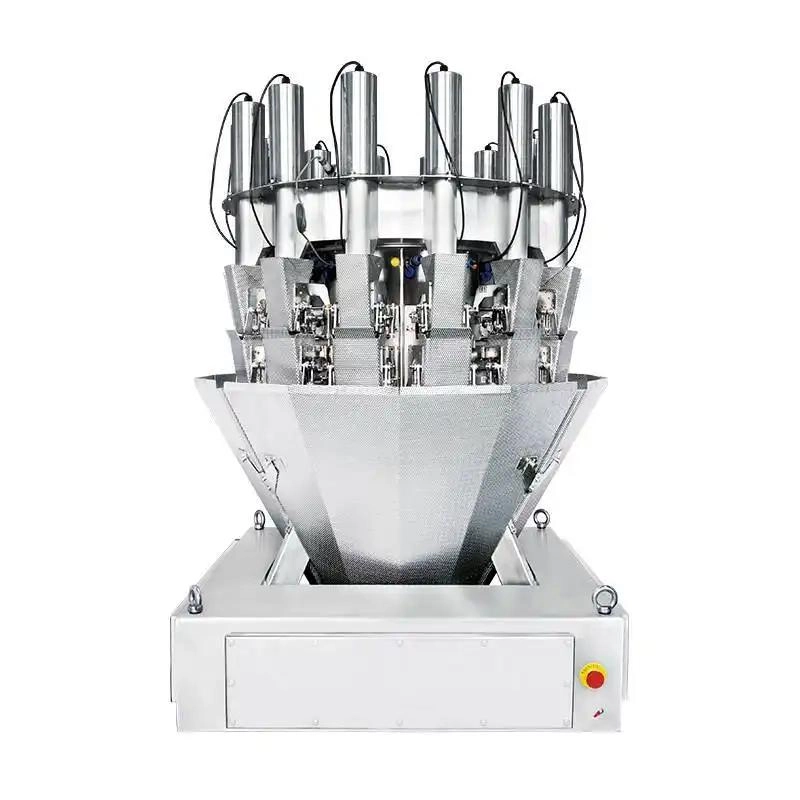
14 Heads Vertical Single Screw Feeding Pickles Weigher backups
This type of weigher is designed to handle the unique characteristics of pickles, ensuring precise measurements for packaging and distribution. It uses a vertical single screw mechanism to feed the pickles into the weighing system, allowing for efficient and consistent weighing. This technology is particularly useful in food processing and packaging facilities where precise portioning is essential for quality control and customer satisfaction. This specialized equipment is perfect for accurately measuring and dispensing pickles in a production line or packaging facility. The vertical design allows for efficient and precise filling of containers, while the single screw feeding mechanism ensures consistent and reliable weighing.
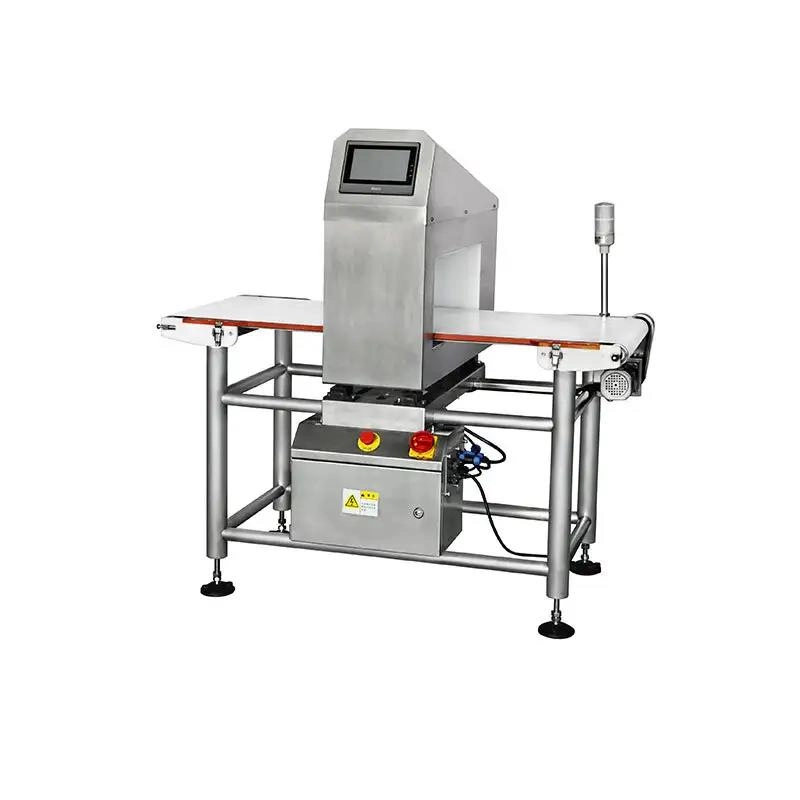
Food Metal Detector Manufacturer For Reject Defective Products G5020
The G5020 multi-frequency metal detector features a specialized conveyor belt designed to reduce contamination risks, ensure smooth operation, and maintain high detection sensitivity. It is easy to disassemble for convenient maintenance. Ideal for detecting metal contaminants in food, pharmaceuticals, spices, plastics, electronics, textiles, toys, handicrafts, and more.
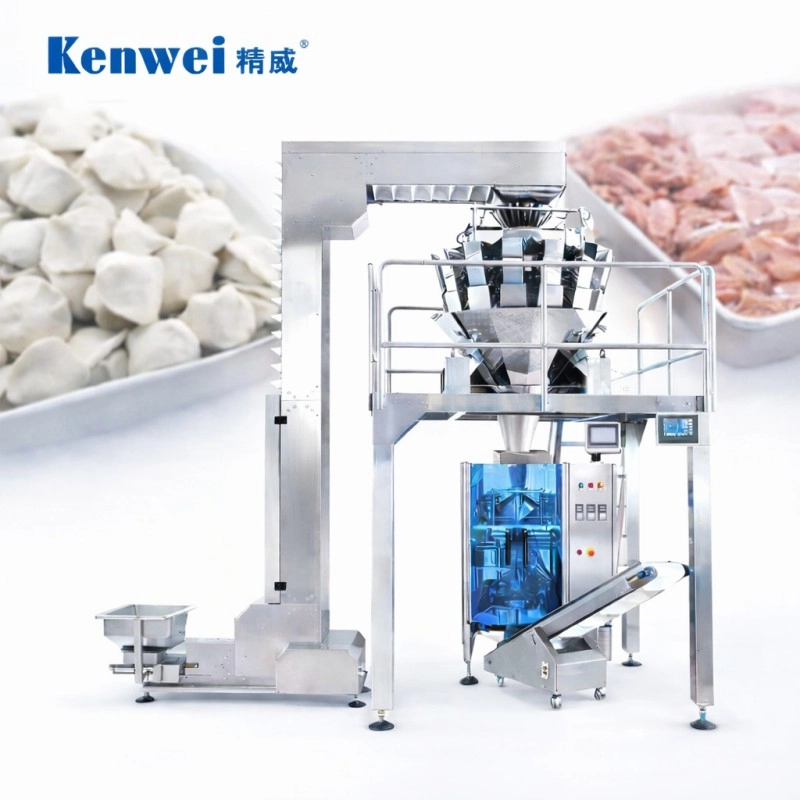
Vertical Frozen Food Packaging Machine for IQF & Frozen Products JW-B1
The Kenwei JW-B1 Vertical Frozen Food Packaging Machine is designed for IQF and frozen products, ensuring efficient, airtight packing. This vertical packing machine boosts productivity with precision sealing, ideal for frozen food packaging needs in the food industry.
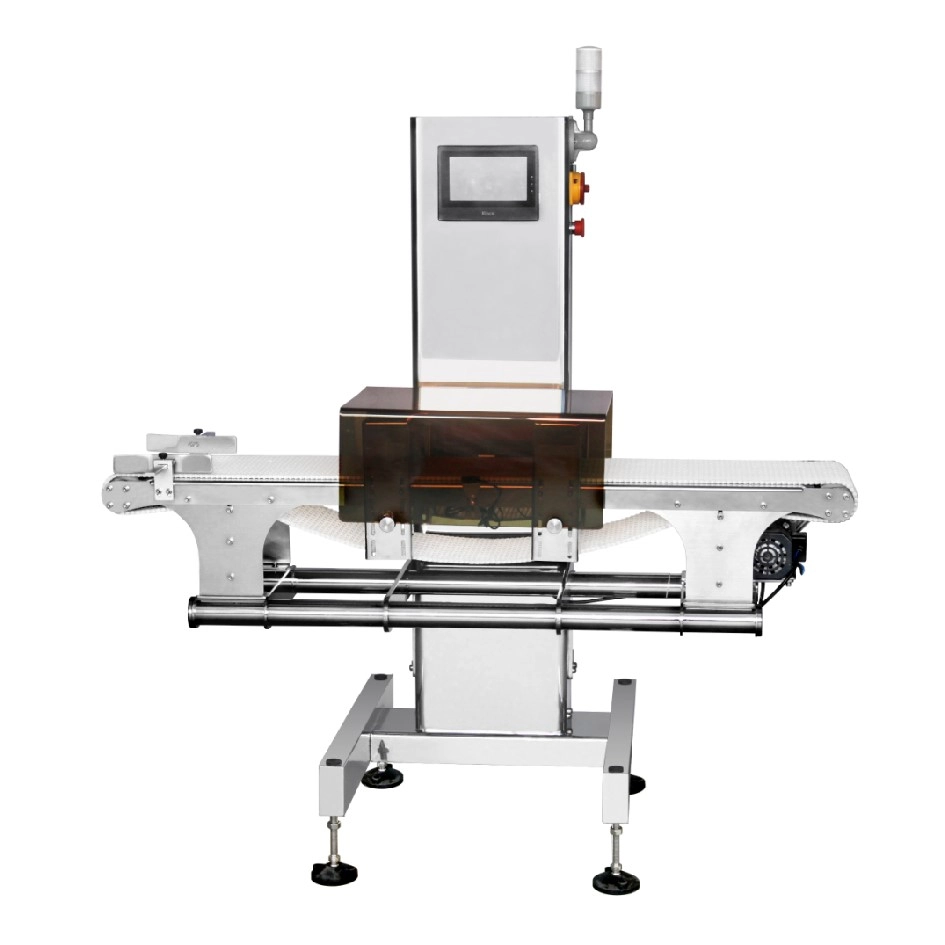
Metal Detector for Aluminum Foil in the Food Industry for Accurate Contamination Detection
The 2415 Metal Detector for Aluminum Foil is equipped with high-sensitivity sensors that effectively filter out signals from aluminum packaging, ensuring precise detection of magnetic metal contaminants. Ideal for detecting foreign bodies in aluminum foil-packaged items such as coffee bags, peanuts, dried meats, chocolate, and more. This versatile metal detector offers adjustable settings, with a maximum width of 24mm and height ranging from 20-150mm, making it suitable for a wide variety of aluminum foil packaging applications.
Get in touch with us
If you have any comments or good suggestions, please leave us a message, later our professional staff will contact you as soon as possible.
Kenwei
Kenwei
Kenwei multi weigh
Kenwei
Kenwei
Kenwei