






Maintenance and Troubleshooting for Electronic Pill Counters
Comprehensive guide to maintaining and troubleshooting pill counter machines, focused on the Automatic 8-Track Electronic Counting and Filling Packaging Machine. Learn preventive maintenance, calibration, cleaning, sensor and software troubleshooting, spare parts, and cGMP-compliant practices to maximize uptime and counting accuracy.
- Maintenance and Troubleshooting for Electronic Pill Counters: Keep Your Pill Counter Machine Running at Peak Performance
- Why proactive maintenance matters for your pill counter machine
- Understanding the Automatic 8-Track Electronic Counting and Filling Packaging Machine
- Daily checks to keep your pill counter machine stable
- Weekly and monthly preventive maintenance tasks
- Calibration and validation: keep counting accuracy within tolerance
- Cleaning and contamination control for compliance and uptime
- Common fault modes and troubleshooting steps for pill counter machine electronics
- Vibration and mechanical balancing tips for multi-track counters
- Electrical and grounding practices to avoid intermittent faults
- How to troubleshoot production-quality issues (overfill, undercount, giveaway)
- Spare parts strategy and recommended inventory
- When to call technical service vs. on-site troubleshooting
- Comparison: Manual counting, simple electronic counters, and the Automatic 8-Track Electronic Counting and Filling Packaging Machine
- Brand advantages and why choose this Automatic 8-Track machine
- Practical checklist: quick-reference maintenance sheet
- FAQ — Frequently Asked Questions about pill counter machine maintenance and troubleshooting
- Contact us / view product — get expert support and parts
- References and further reading

Maintenance and Troubleshooting for Electronic Pill Counters: Keep Your Pill Counter Machine Running at Peak Performance
Why proactive maintenance matters for your pill counter machine
A reliable pill counter machine is central to pharmaceutical, nutraceutical, and healthcare packaging lines. The Automatic 8-Track Electronic Counting and Filling Packaging Machine is designed for high throughput—up to 4,000 particles per minute—accommodating bottle heights from 20 to 100mm without reset during fast line changes. Even so, maximizing uptime and maintaining counting accuracy requires structured maintenance and targeted troubleshooting. Proactive maintenance reduces product giveaway, prevents unplanned downtime, maintains regulatory compliance (cGMP), and extends equipment life—delivering measurable cost savings.While regular maintenance is crucial for keeping your electronic pill counters efficient, selecting the right automatic 8-track electronic counting machine is equally important. Learn what to consider when making this critical investment in your pharmacy's workflow.
Understanding the Automatic 8-Track Electronic Counting and Filling Packaging Machine
Product overview (for reference):
This counting machine offers a two-channel, eight-track electronic system with adjustable height, supporting bottle heights from 20 to 100mm. It requires no reset during fast line changes, making it perfect for counting products of various shapes. With a maximum speed of 4,000 particles per minute, it is ideal for pharmaceutical, food, chemical, plastic, healthcare, and other industries, delivering efficient and precise counting.
Key capabilities relevant to maintenance and troubleshooting: multi-track feed, adjustable material handling, electronic sensors and PLC/logic controller, high-speed vibratory or feeder systems, and modular track assemblies for different product shapes.
Daily checks to keep your pill counter machine stable
Performing a concise daily checklist before production is the most effective way to prevent issues during runs. For a pill counter machine, daily checks should target mechanical alignment, sensors, hygiene, and safety interlocks.
- Visual inspection of hoppers, tracks, and bottle conveyors for foreign material.
- Verify sensor windows are clean and free of dust or film.
- Confirm emergency stop and safety interlocks are functional.
- Run a short calibration/verification batch to confirm counting accuracy at target speed.
- Listen for unusual vibration or noise in feeders and motors.
Weekly and monthly preventive maintenance tasks
Beyond daily checks, establish weekly and monthly routines. These tasks extend component life and reduce the likelihood of drift in counting precision.
- Weekly: Clean and inspect vibratory feeders, tighten fasteners on feeder assemblies, check wear on feed tracks and replace liners if needed.
- Monthly: Verify alignment of tracks and chutes, inspect bearings and drive belts for wear, lubricate moving points per manufacturer recommendations, update backup of PLC parameters and software settings.
- Quarterly: Inspect electrical enclosures for dust and condensation, test calibration across multiple SKUs, and perform detailed sensor diagnostics.
Calibration and validation: keep counting accuracy within tolerance
Calibration is critical for products with small size or variable shapes. A good calibration and validation routine should be part of release testing for each SKU and whenever you change production parameters (speed, track configuration, feeder amplitude).
Steps for calibration and validation:
- Run a verified sample batch (e.g., 1,000 units) at target speed.
- Compare electronic count to manual count and calculate error rate.
- If error exceeds tolerance, adjust sensor thresholds, vibratory amplitude, or chute geometry and retest.
- Document results and store calibration settings under the SKU profile in the machine HMI/PLC.
Cleaning and contamination control for compliance and uptime
Regular cleaning reduces product cross-contamination, sensor fouling, and mechanical wear. For pharmaceutical lines, follow cGMP cleaning procedures and validated cleaning agents that don’t leave conductive or optical residues.
- Use soft, lint-free wipes and approved disinfectants for sensor windows and optical components.
- Avoid high-pressure washes near sensitive electronics unless the machine is designed IP-rated for washdown.
- Schedule deeper cleanings during planned production breaks to reach hopper interiors, track undersides, and feeder reservoirs.
Common fault modes and troubleshooting steps for pill counter machine electronics
Most downtime causes for electronic pill counters fall into a few categories: sensor errors, feeding inconsistencies, mechanical jams, and software or PLC faults. Use a systematic approach: observe, isolate, fix, and validate.
Sensor errors:
- Symptom: missed counts or double counts. Action: clean sensor lenses, check for misaligned mounts, confirm sensor wiring and grounding, verify software thresholds.
- Symptom: intermittent counting at high speed. Action: inspect LED light source if opto sensors, check for ambient light interference, reduce conveyor speed to isolate issue.
Mechanical feeding issues:
- Symptom: product bridge or jamming. Action: inspect track geometry, add or adjust separators/dividers, confirm vibratory feeder amplitude and frequency.
- Symptom: inconsistent feed flow across tracks. Action: verify all eight tracks feed uniformly; rebalance feed gates or replace worn liners.
PLC/software problems:
- Symptom: machine freezes or unexpected resets. Action: check error logs, ensure software/firmware versions are current and validated, inspect power supply stability and surge protection.
- Symptom: loss of saved SKU parameters. Action: confirm non-volatile memory health; maintain regular backups.
Vibration and mechanical balancing tips for multi-track counters
Multi-track machines such as the Automatic 8-Track system rely on vibration and precise geometry. Over time, vibratory motors, springs, or balance plates can wear or shift, causing uneven feed.
- Check vibratory motor mounts and springs monthly for cracks or fatigue.
- Measure vibration amplitude; excessive amplitude indicates imbalance or loose fasteners.
- Replace worn liners and guide rails to restore consistent product flow.
- When changing product shapes, adjust track guides rather than forcing products into an incompatible setup.
Electrical and grounding practices to avoid intermittent faults
Good electrical practice reduces false signals and sensor errors. Key points:
- Ensure a single-point machine ground and separate control wiring from power cabling.
- Use shielded cables for sensor and encoder lines and confirm correct termination.
- Install surge protection and UPS for the PLC and HMI to avoid data corruption during brownouts.
How to troubleshoot production-quality issues (overfill, undercount, giveaway)
When counts drift, the immediate business impact is product giveaway or customer complaints. Diagnose with this checklist:
- Confirm validation batch counts against manual audit.
- Check for product splash or bouncing in the fill area that could cause multiple sensor triggers.
- Review track speed vs. sensor response time—very high speeds (near 4,000 ppm) may require sensor timing adjustments.
- Verify bottle positioning and stopping accuracy at the fill station; poor bottle indexing can cause loss of synchronization between count and fill.
Spare parts strategy and recommended inventory
Keeping a small inventory of critical spares reduces Mean Time To Repair (MTTR). For a pill counter machine, recommended spares include:
- Sensor modules and spare lenses
- Vibratory motor or actuator
- Drive belts, bearings, and fasteners
- PLC backup module and HMI touchscreen
- Wear parts: track liners, chutes, and seals
When to call technical service vs. on-site troubleshooting
Minor issues (sensor clean, tightening connectors, simple calibration) can be handled by trained operators or onsite maintenance personnel. Call manufacturer technical service when:
- Error codes indicate PLC or drive failure.
- Replacing a major electrical component (power supply, PLC module) or when firmware updates are required.
- After repeated failures—root cause analysis with the manufacturer can identify systemic issues or design updates.
Comparison: Manual counting, simple electronic counters, and the Automatic 8-Track Electronic Counting and Filling Packaging Machine
Understanding performance trade-offs helps justify investment in an automatic pill counter machine. The table below provides a practical comparison.
| Metric | Manual Counting | Simple Electronic Counter | Automatic 8-Track Electronic Counting and Filling Packaging Machine |
|---|---|---|---|
| Typical speed (particles/min) | 20–60 (operator-dependent) | 200–1,000 | Up to 4,000 |
| Accuracy | Variable; human error | High with proper setup | High with calibrated settings and multi-track redundancy |
| Best for | Low-volume, simple operations | Small-to-medium batches | High-throughput pharmaceutical, food, and healthcare packaging |
| Typical downtime risk | Operator fatigue, errors | Sensor fouling, mechanical jams | Requires preventive maintenance; otherwise sensor or feeder issues |
Sources for typical speed ranges: Packaging World, industry whitepapers on counting equipment (see references).
Brand advantages and why choose this Automatic 8-Track machine
Choosing the Automatic 8-Track Electronic Counting and Filling Packaging Machine gives several tangible advantages for manufacturers:
- High throughput (up to 4,000 particles per minute) reduces labor costs and increases output for demanding production schedules.
- Two-channel, eight-track design supports varied shapes and sizes and balances product distribution to avoid jams and ensure consistent flow.
- Adjustable height supports bottles from 20 to 100mm, eliminating frequent mechanical changeovers and reducing setup time during SKU changes.
- No-reset fast line changes shorten downtime between batches, increasing overall equipment effectiveness (OEE).
- Modular design makes preventive maintenance straightforward—individual tracks, sensors, and feeders are serviceable without full machine teardown.
Practical checklist: quick-reference maintenance sheet
Use this one-page checklist for operators and technicians:
- Before shift: visual inspection, sensor window clean, emergency stop test, short calibration run.
- Every 8 hours: clear hopper debris, check track liners, listen for abnormal sounds.
- Weekly: tighten hardware, check belts and bearings, backup PLC settings.
- Monthly: detailed sensor diagnostics, vibration amplitude check, replace worn liners.
FAQ — Frequently Asked Questions about pill counter machine maintenance and troubleshooting
Q1: How often should I recalibrate the pill counter machine?
A1: Recalibrate whenever you change SKU, after significant cleaning, or monthly for high-speed production. Always perform a quick verification (sample audit) daily before production.
Q2: My machine is double-counting some tablets at high speed — what should I check?
A2: Check sensor thresholds and timing, clean sensor lenses, reduce track vibration slightly, and examine product bounce at the fill point that could trigger multiple counts.
Q3: Can I wash this machine with high-pressure water?
A3: Only if the machine is rated for washdown (IP-rated). For most electronic pill counters, use approved low-moisture cleaning methods and avoid directing high-pressure water at the electrical enclosures and sensors.
Q4: What spare parts should I stock for minimal downtime?
A4: Keep spare sensors, vibratory motor, PLC backup module, bearings, belts, and wear liners. Maintain a documented spare parts list with part numbers and lead times.
Q5: When should I contact technical service?
A5: Contact technical service for PLC/drive failures, repeated unexplained errors, firmware upgrades, or when you need root-cause analysis for recurring faults.
Contact us / view product — get expert support and parts
If you want to maximize uptime and counting accuracy with the Automatic 8-Track Electronic Counting and Filling Packaging Machine, contact our service team for preventive maintenance plans, spare parts kits, and on-site support. Reach out to our sales and technical team to schedule a site assessment or request a demo.
References and further reading
- Packaging World — articles and buyer's guides on counting and filling machinery: https://www.packworld.com
- Pharmaceutical Technology — articles on packaging line automation and validation: https://www.pharmtech.com
- U.S. Food & Drug Administration (FDA) — guidance on quality systems and cGMP for packaging operations: https://www.fda.gov
For help with maintenance schedules, spare parts lists tailored to your SKU mix, or to book an on-site audit, contact our team today.
Tags
automatic packaging machine
automatic packaging machine
linear scale weigher
linear scale weigher
best food inspection metal detector
best food inspection metal detector
multihead weigher manufacturers
multihead weigher manufacturers
multihead weigher machine
multihead weigher machine
powder packing machine for sale
powder packing machine for sale
Recommended for you
top multihead weigher models to watch in 2026
Top 10 multihead combination weigher Manufacturers and Supplier Brands
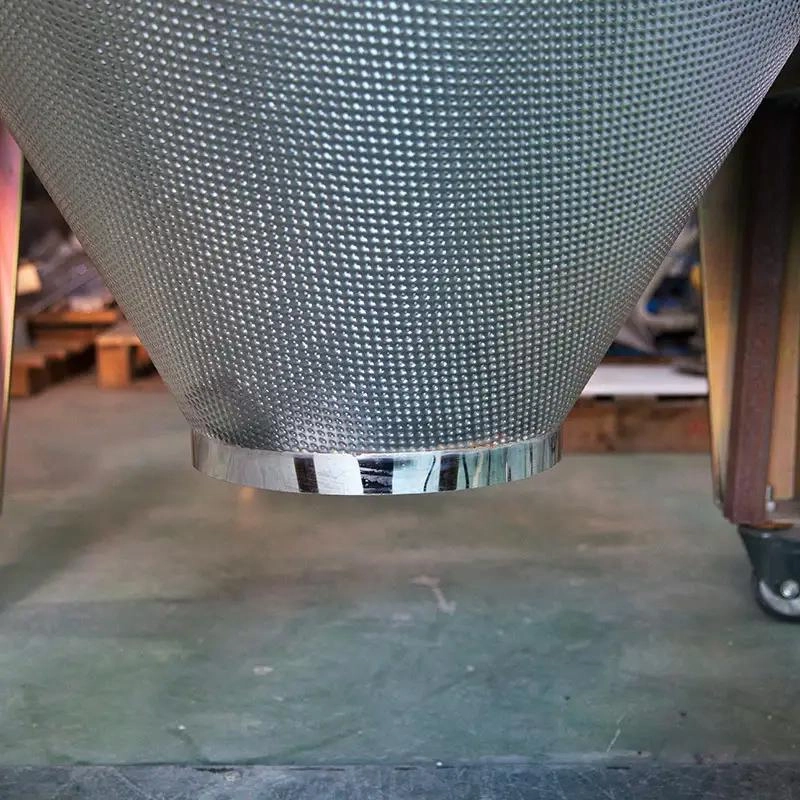
How 14 Heads Vertical Single-Screw Feeding Pickles Weigher backups work
What is single head weigher ?
Prdoucts Categories
Question you may concern
About products customization
How do I request a custom-built Kenwei machine?
To request a customized machine, simply contact our sales or engineering team.
About After Sales Support
How can I get technical support for my Kenwei machine?
You can contact Kenwei's technical support team via email, phone, or through our website.
What after-sales support does Kenwei offer?
Kenwei provides comprehensive after-sales support, including product installation, training, maintenance, troubleshooting, and technical assistance. Our team is dedicated to ensuring your machines operate at their best throughout their lifecycle.
About Logistics
How long does logistics delivery take?
Shipping times depend on your location and the shipping method you choose. Generally speaking, international shipping can take anywhere from a few weeks to a few months.
About Product choice
Can Kenwei's machines be used in my industry?
Kenwei’s equipment is highly versatile and can be used across a wide range of industries, including:Food,Pharmaceuticals,Chemicals,Plastics and Agriculture.
Plastics If you're unsure whether our products are suitable for your industry, please contact us, and we can provide you with specific solutions tailored to your needs.
You may also like
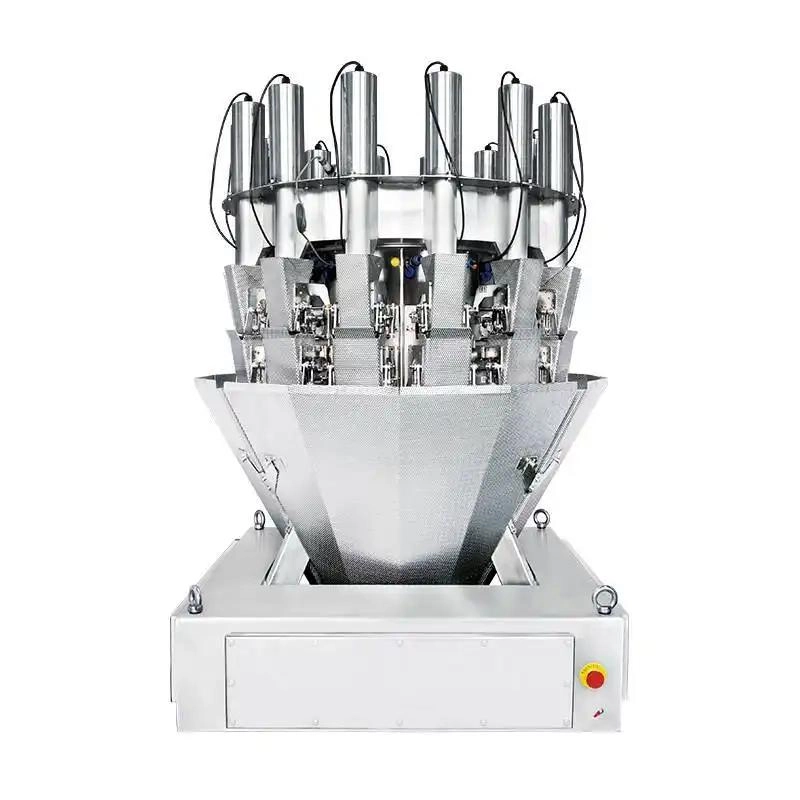
14 Heads Vertical Single Screw Feeding Pickles Weigher backups
This type of weigher is designed to handle the unique characteristics of pickles, ensuring precise measurements for packaging and distribution. It uses a vertical single screw mechanism to feed the pickles into the weighing system, allowing for efficient and consistent weighing. This technology is particularly useful in food processing and packaging facilities where precise portioning is essential for quality control and customer satisfaction. This specialized equipment is perfect for accurately measuring and dispensing pickles in a production line or packaging facility. The vertical design allows for efficient and precise filling of containers, while the single screw feeding mechanism ensures consistent and reliable weighing.
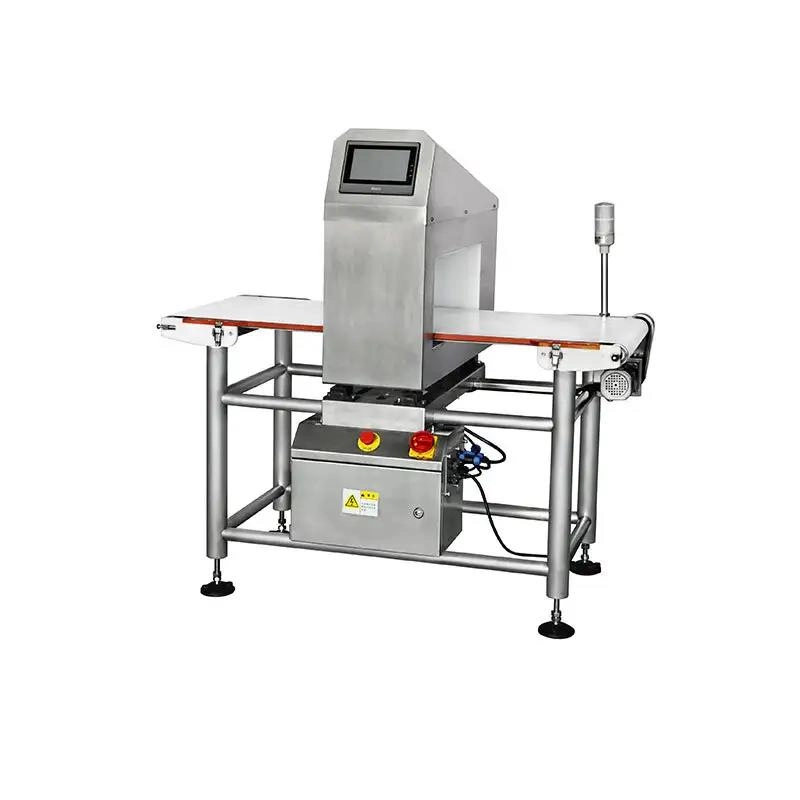
Food Metal Detector Manufacturer For Reject Defective Products G5020
The G5020 multi-frequency metal detector features a specialized conveyor belt designed to reduce contamination risks, ensure smooth operation, and maintain high detection sensitivity. It is easy to disassemble for convenient maintenance. Ideal for detecting metal contaminants in food, pharmaceuticals, spices, plastics, electronics, textiles, toys, handicrafts, and more.
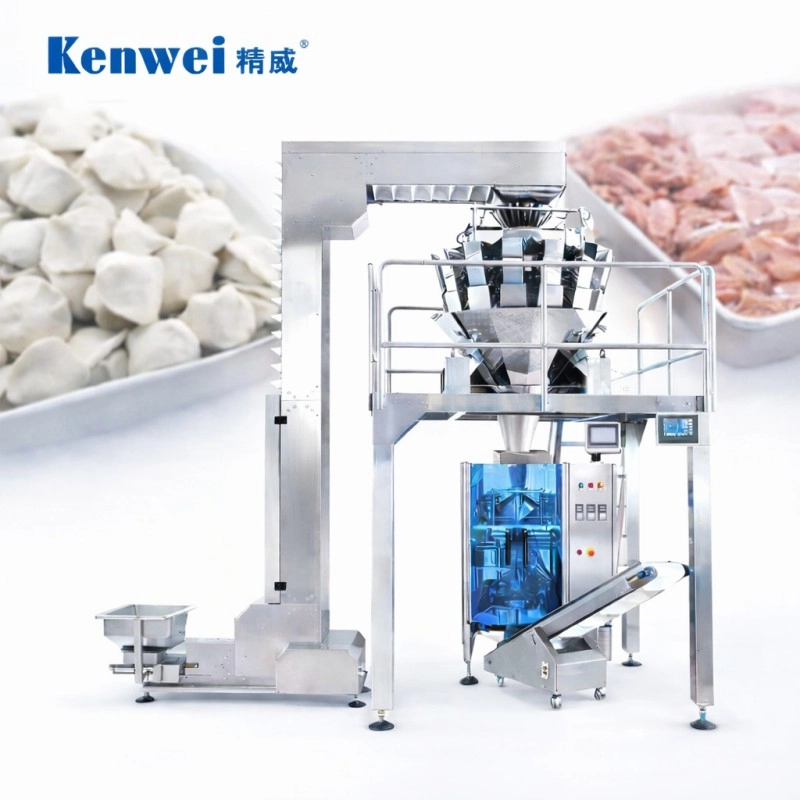
Vertical Frozen Food Packaging Machine for IQF & Frozen Products JW-B1
The Kenwei JW-B1 Vertical Frozen Food Packaging Machine is designed for IQF and frozen products, ensuring efficient, airtight packing. This vertical packing machine boosts productivity with precision sealing, ideal for frozen food packaging needs in the food industry.
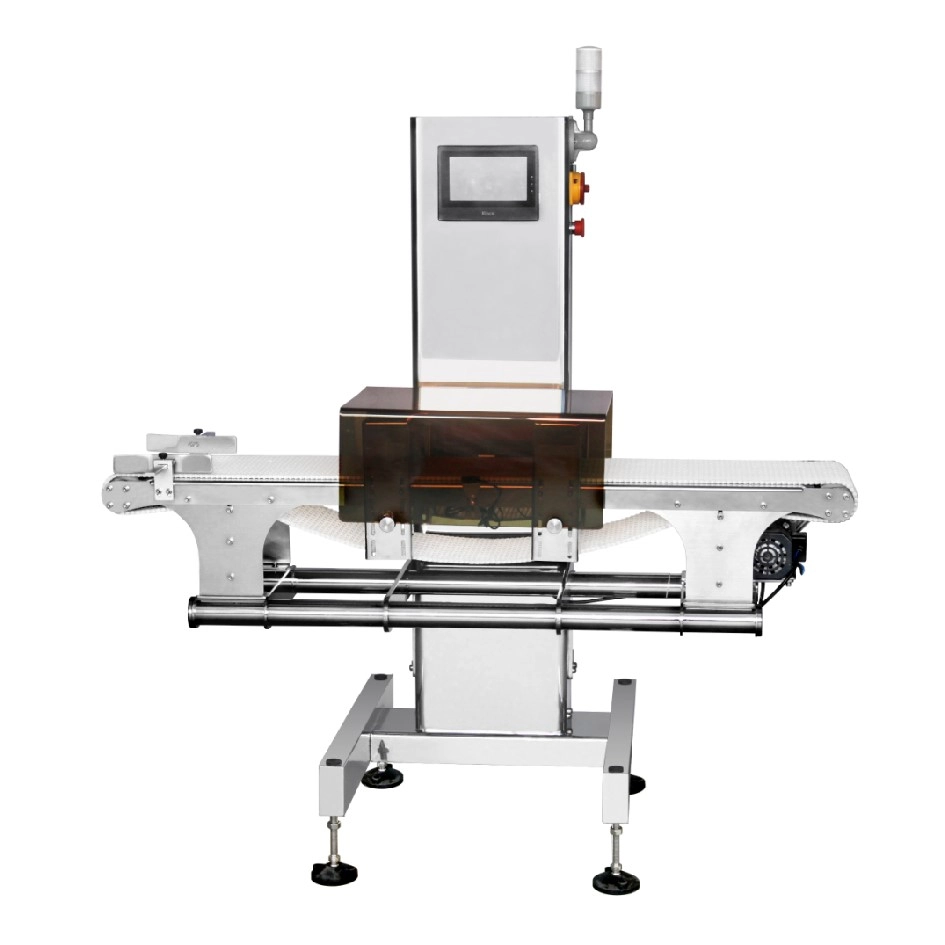
Metal Detector for Aluminum Foil in the Food Industry for Accurate Contamination Detection
The 2415 Metal Detector for Aluminum Foil is equipped with high-sensitivity sensors that effectively filter out signals from aluminum packaging, ensuring precise detection of magnetic metal contaminants. Ideal for detecting foreign bodies in aluminum foil-packaged items such as coffee bags, peanuts, dried meats, chocolate, and more. This versatile metal detector offers adjustable settings, with a maximum width of 24mm and height ranging from 20-150mm, making it suitable for a wide variety of aluminum foil packaging applications.
Get in touch with us
If you have any comments or good suggestions, please leave us a message, later our professional staff will contact you as soon as possible.
Kenwei
Kenwei
Kenwei multi weigh
Kenwei
Kenwei
Kenwei