






How 14 Heads Vertical Single-Screw Feeding Pickles Weigher backups work
This article explains how backups and redundancy strategies work for the 14 Heads Vertical Single-Screw Feeding Pickles Weigher. It covers mechanical backups, electrical and control redundancy, data and recipe protection, power backup, maintenance practices, troubleshooting steps, and how these measures ensure continuous, accurate weighing of pickles in high-volume production. Includes a comparison table, brand advantages, FAQs, and authoritative references.
- How 14 Heads Vertical Single-Screw Feeding Pickles Weigher backups work
- Product overview: 14 Heads Vertical Single Screw Feeding Pickles Weigher
- Why backups matter for a 14 head multihead weigher
- Mechanical redundancy: spare heads, interchangeability, and rapid-swap components
- Control and PLC redundancy for continuous operation
- Data and recipe backups: protecting weights, traceability and settings
- Power backups: UPS, generators and controlled shutdown
- Preventive maintenance and predictive monitoring
- Troubleshooting and incident workflows
- Comparison of backup strategies (table)
- Integration with quality and regulatory compliance
- Software tools and remote service backups
- Brand advantages: why choose our 14 Heads Vertical Single Screw Feeding Pickles Weigher backups
- Practical recommendations for buyers and operators
- FAQ — Frequently Asked Questions
- Q1: What exactly does “backup” mean for a 14 head multihead weigher?
- Q2: Can a weigher keep running if one head fails?
- Q3: How often should I back up recipes and calibration data?
- Q4: What is the expected downtime when swapping a faulty head?
- Q5: Is remote diagnostics secure?
- Contact / View Product
- Authoritative references

How 14 Heads Vertical Single-Screw Feeding Pickles Weigher backups work
Product overview: 14 Heads Vertical Single Screw Feeding Pickles Weigher
This type of weigher is designed to handle the unique characteristics of pickles, ensuring precise measurements for packaging and distribution. It uses a vertical single screw mechanism to feed the pickles into the weighing system, allowing for efficient and consistent weighing. This technology is particularly useful in food processing and packaging facilities where precise portioning is essential for quality control and customer satisfaction. This specialized equipment is perfect for accurately measuring and dispensing pickles in a production line or packaging facility. The vertical design allows for efficient and precise filling of containers, while the single screw feeding mechanism ensures consistent and reliable weighing.
Why backups matter for a 14 head multihead weigher
Commercial food lines that use a 14 head multihead weigher cannot afford long unplanned downtimes or inaccurate fills. Pickles introduce additional variability — varied shapes, sizes, moisture, and brine — that can affect feed behavior and weighing stability. Backups are not only about duplicating hardware; they are a layered strategy that includes mechanical redundancy, control-system failover, data integrity, and power continuity. Well-designed backups protect throughput, product weight compliance, and food safety standards (e.g., traceability records), reducing lost production and costly recalls.
Mechanical redundancy: spare heads, interchangeability, and rapid-swap components
For 14 Heads Vertical Single-Screw Feeding Pickles Weigher backups, mechanical redundancy typically focuses on minimizing downtime when a single head or feed system fails. Common approaches include:
- Interchangeable weigh heads: Design 14 weigh heads to be mechanically identical and hot-swappable where feasible, enabling quick replacement of a faulty head without shutting down the entire machine.
- Spare head kits: Keep a calibrated spare head and screw feeder on-site so technicians can swap and return to production quickly.
- Modular feed screws: Use modular vertical single-screw modules that can be removed and reinstalled within minutes using quick-release connectors for both mechanical and electrical interfaces.
- Bypass and distribution options: Some systems can reassign product feed patterns among remaining heads to maintain throughput at a reduced rate when one or two heads are offline.
These mechanical backups directly support the primary goal: maintain consistent fill weights and acceptable line speeds even during component failures.
Control and PLC redundancy for continuous operation
Electronic controls are the backbone of a 14 head multihead weigher. Backups here include:
- PLC redundancy (Dual/Hot-Standby): A secondary PLC mirrors the primary controller and can take over control with minimal interruption if the primary fails.
- Redundant I/O and communication buses: Use dual RS-485/Profinet/Ethernet networks and redundant I/O modules to avoid single points of failure in sensor and actuator connections.
- Watchdogs and auto-failover logic: Embedded watchdog timers and deterministic failover routines that switch to the backup controller and log the incident for traceability.
- Local manual control panels: Allow operators to operate a reduced but functional mode locally to continue filling while diagnostics are performed.
These measures ensure control continuity, reduce the risk of unsafe states, and support compliance with industrial automation best practices.
Data and recipe backups: protecting weights, traceability and settings
Precise pickling lines depend on accurate recipes (target weights, head distribution, vibration/frequency settings). Data backup strategies include:
- Automated recipe backup: Configuration and recipe files should be automatically backed up to redundant storage (local SSD + network NAS/cloud) at scheduled intervals and upon each change.
- Versioning and rollback: Keep multiple versions of recipes and calibration data so operators can rollback after incorrect changes or corrupt files.
- Secure logging and traceability: Store production logs, tare and calibration events, and batch IDs in tamper-evident formats to support food safety audits.
These backups preserve knowledge, support speedy recovery, and fulfill regulatory recordkeeping requirements.
Power backups: UPS, generators and controlled shutdown
Power interruptions can cause weight errors, mechanical stress on motors, and data loss. Effective power backup strategies include:
- Uninterruptible Power Supplies (UPS): Provide short-term power to allow graceful shutdown, safe position of moving parts, or switchover to standby power.
- Automatic Transfer Switches (ATS) with standby generators: For long outages, allow continuous operation or controlled continuation of critical stages.
- Controlled stop sequences: Ensure the vertical screw and vibration motors can park safely to avoid jamming and product damage when power is lost.
Preventive maintenance and predictive monitoring
Backups also include planned actions that reduce failure probability:
- Scheduled calibration and cleaning of weigh heads and screws to prevent drift and mechanical blockages from brine or residue.
- Predictive monitoring: Vibration sensors, motor current trend analysis, and load cell diagnostics can predict impending failures so swaps or repairs happen on a scheduled window, not during production peaks.
- Spare parts inventory management: Maintain a list and stock of critical parts — load cells, drives, screws, sensors, and belts — with clear lead times and reorder points.
Combining proactive maintenance with backups minimizes emergency interventions and costs.
Troubleshooting and incident workflows
Effective backups should be paired with clear troubleshooting workflows so staff can respond quickly. A recommended workflow:
- Detect: Automatic alarms (weight drift, missing head signals) notify operators and log the fault.
- Assess: HMI or companion software suggests likely causes and displays critical readings (head number, load cell values, screw speed).
- Mitigate: Initiate predefined mitigation (reassign product distribution, reduce line speed, switch to backup PLC).
- Recover: Replace component using spare kit or perform hot-swap; validate weigh accuracy via quick calibration routine.
- Report: Log the event, corrective actions, and downtime for continuous improvement.
Comparison of backup strategies (table)
| Backup Type | Typical Components | Downtime Impact | Cost Range |
|---|---|---|---|
| Mechanical (spare heads, modular screws) | Hot-swap weigh head, spare screw feeder | Low (minutes to hours) | Medium |
| Control redundancy | Dual PLC, redundant I/O, industrial network | Very low (seconds to minutes) | High |
| Data & recipe backups | Local SSD + NAS/cloud, versioning | Negligible (instant recovery) | Low |
| Power backup | UPS, ATS, generator | Low to none (depending on design) | Medium to High |
| Predictive maintenance | Sensors, analytics, spare parts | Reduces unexpected downtime considerably | Medium |
Integration with quality and regulatory compliance
Backup systems support quality assurance (QA) and regulatory compliance by maintaining consistent fills, traceability, and validated calibration records. For food manufacturers, this reduces the risk of underfill (legal/financial penalties) and overfill (waste and cost). Automated backups of calibration data and production logs are essential evidence during audits by food safety authorities and help maintain consumer trust.
Software tools and remote service backups
Modern weighers often connect to plant HMIs and cloud services. Backup considerations include:
- Remote monitoring and diagnostics: Allow OEM service teams to troubleshoot and guide local staff through recovery steps — often reducing onsite visits.
- Cloud-based backups and OTA updates: Store encrypted backups in the cloud, with controlled over-the-air firmware updates and rollback options to avoid applying faulty updates to production controls.
- Access control and cybersecurity: Ensure backups are protected by user authentication, role-based access, and secure communication protocols to prevent tampering.
Brand advantages: why choose our 14 Heads Vertical Single Screw Feeding Pickles Weigher backups
When you select our 14 head multihead weigher with vertical single-screw feeding, you get a product engineered with backups in mind:
- Modular head design for rapid field swaps, reducing mean time to repair (MTTR).
- Built-in dual-controller architecture and redundant I/O options for near-continuous uptime.
- Automated recipe management with versioning and secure backups to protect production settings and QA records.
- Comprehensive spare-parts kits and preventive maintenance plans tailored to the harsh conditions of pickle processing (brine, acidity, solids).
- Remote diagnostics and OEM support to speed recovery and reduce on-site service costs.
These features combine to protect your production throughput, ensure consistent fill weights, and lower total cost of ownership.
Practical recommendations for buyers and operators
To maximize the effectiveness of backups for a 14 head multihead weigher handling pickles, follow these practical steps:
- Specify modular, hot-swappable heads and confirm exact swap procedure and average swap time before purchase.
- Require PLC redundancy and define failover behavior in acceptance tests.
- Implement automatic recipe backup to local and offsite storage with encryption and version control.
- Install UPS sized for controlled stops and consider an ATS+generator for longer outages.
- Adopt predictive monitoring and commit to a spare parts inventory plan aligned to mean time between failures (MTBF) data.
FAQ — Frequently Asked Questions
Q1: What exactly does “backup” mean for a 14 head multihead weigher?
A1: Backup refers to redundant systems or strategies that ensure continuous operation or rapid recovery after a failure. This includes spare mechanical parts (weigh heads, screws), redundant PLCs and I/O, data/recipe backups, power continuity (UPS/generator), and preventive maintenance programs.
Q2: Can a weigher keep running if one head fails?
A2: Many systems can temporarily continue operating with reduced throughput by redistributing product among the remaining heads. The ability to do this depends on control software and mechanical design. Hot-swap capability allows fast replacement of a failed head to restore full throughput.
Q3: How often should I back up recipes and calibration data?
A3: Back up recipes and calibration data automatically after every change and on a scheduled basis (e.g., daily). Keep multiple versions to allow rollback. Offsite (cloud or NAS) backups are recommended for disaster recovery.
Q4: What is the expected downtime when swapping a faulty head?
A4: With a well-trained team and modular heads, swaps can be completed in minutes to under an hour. The exact time depends on mechanical accessibility, calibration needs, and whether a hot swap without recalibration is supported.
Q5: Is remote diagnostics secure?
A5: Remote diagnostics can be secure if implemented using encrypted channels (TLS/VPN), strict user authentication, and role-based access. Always verify vendor cybersecurity practices before enabling remote access.
Contact / View Product
When backup systems are in place, operators are better prepared to identify problems quickly. Reviewing troubleshooting common issues with a 14 head multihead weigher can significantly reduce downtime and product waste.To learn more about the 14 Heads Vertical Single Screw Feeding Pickles Weigher backups or to request a demo, contact our sales team or view the product page. Our specialists can provide detailed redundancy options, spare kits, and preventive maintenance programs tailored to your line.
Authoritative references
- Multihead weigher overview — Wikipedia: https://en.wikipedia.org/wiki/Weighing_machine
- Food safety and traceability concepts — Food and Agriculture Organization (FAO): http://www.fao.org/
- Industrial automation redundancy practices — ISA (International Society of Automation): https://www.isa.org/
- UPS and power continuity guidance — U.S. Department of Energy: https://www.energy.gov/
Article prepared to support buyers, operators, and engineers evaluating backup strategies for 14 head multihead weighers handling pickles. For a customized reliability assessment and quote, reach out to our technical sales team.
Tags
Check Weigher
Check Weigher
multihead weigher machine
multihead weigher machine
food and medical packaging machines
food and medical packaging machines
linear weigher machine
linear weigher machine
packing machine
packing machine
multihead weigher china
multihead weigher china
Recommended for you
top strategies for multihead weigher accuracy 2026
The B2B Buyer’s Guide to vertical form fill seal machine
AI and Vision Systems for Multihead Weighers 2026
JW-B20 Semi-Auto Powder Packing: Key Specs Buyers Need
Prdoucts Categories
Question you may concern
About Solution suggestions
Can Kenwei provide solutions for high-volume production?
Yes, Kenwei specializes in high-speed, high-throughput machines designed for large-scale operations. Our multi-head weighers, packing machines, and check weighers.
How can Kenwei solutions help reduce waste in my production process?
Kenwei solutions improve accuracy in weighing, packaging, and quality control, reducing the chances of overfill or underfill. This leads to less product waste and higher operational efficiency.
About After Sales Support
What after-sales support does Kenwei offer?
Kenwei provides comprehensive after-sales support, including product installation, training, maintenance, troubleshooting, and technical assistance. Our team is dedicated to ensuring your machines operate at their best throughout their lifecycle.
About Product choice
Are Kenwei’s products suitable for small-scale or large-scale operations?
Yes! We offer machines that are scalable to meet the needs of both small and large-scale operations.
About products customization
How do I request a custom-built Kenwei machine?
To request a customized machine, simply contact our sales or engineering team.
You may also like
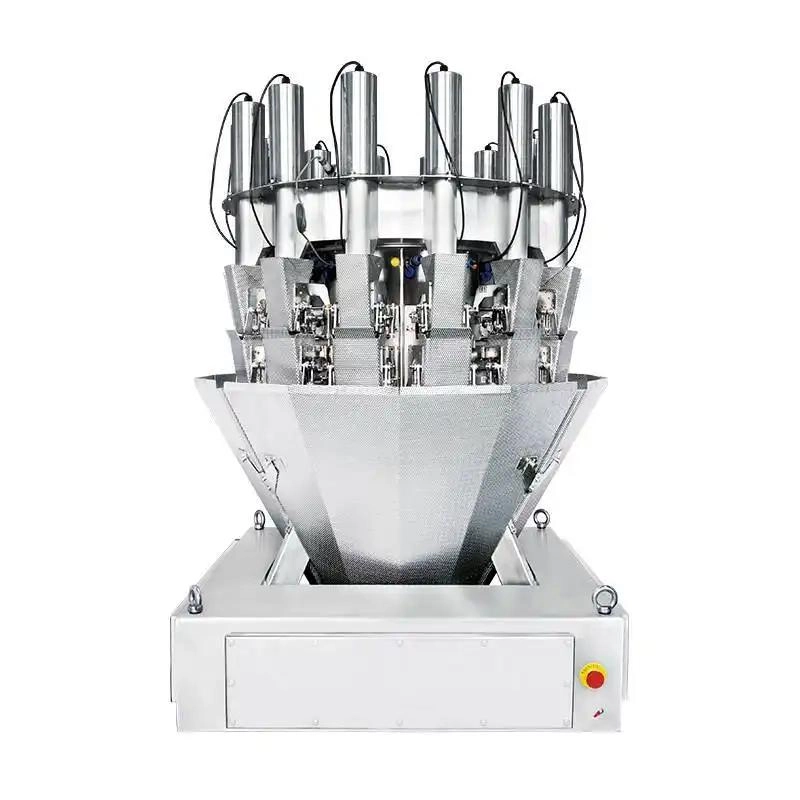
14 Heads Vertical Single Screw Feeding Pickles Weigher backups
This type of weigher is designed to handle the unique characteristics of pickles, ensuring precise measurements for packaging and distribution. It uses a vertical single screw mechanism to feed the pickles into the weighing system, allowing for efficient and consistent weighing. This technology is particularly useful in food processing and packaging facilities where precise portioning is essential for quality control and customer satisfaction. This specialized equipment is perfect for accurately measuring and dispensing pickles in a production line or packaging facility. The vertical design allows for efficient and precise filling of containers, while the single screw feeding mechanism ensures consistent and reliable weighing.
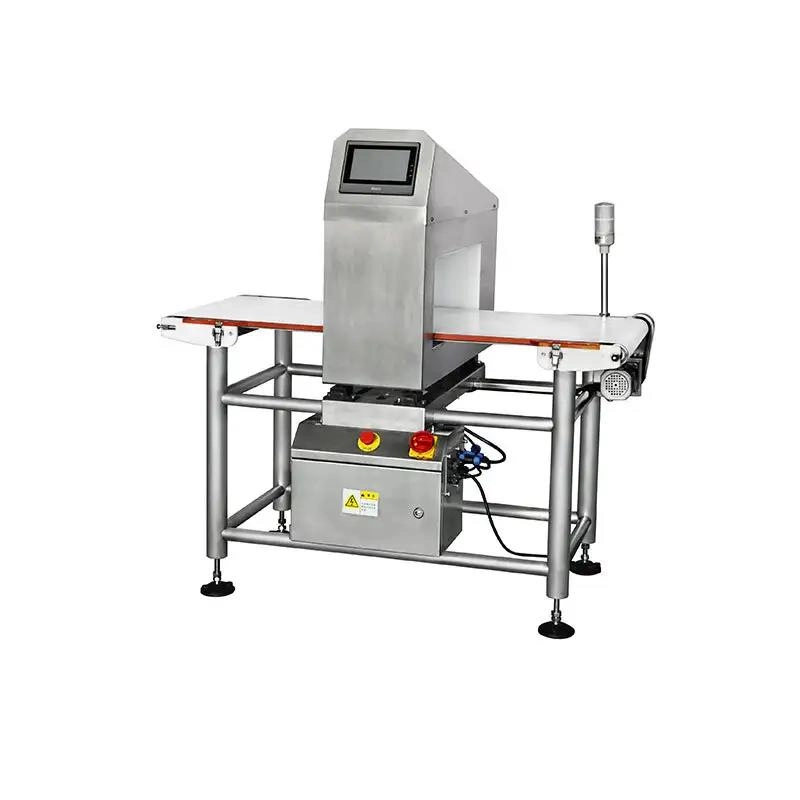
Food Metal Detector Manufacturer For Reject Defective Products G5020
The G5020 multi-frequency metal detector features a specialized conveyor belt designed to reduce contamination risks, ensure smooth operation, and maintain high detection sensitivity. It is easy to disassemble for convenient maintenance. Ideal for detecting metal contaminants in food, pharmaceuticals, spices, plastics, electronics, textiles, toys, handicrafts, and more.
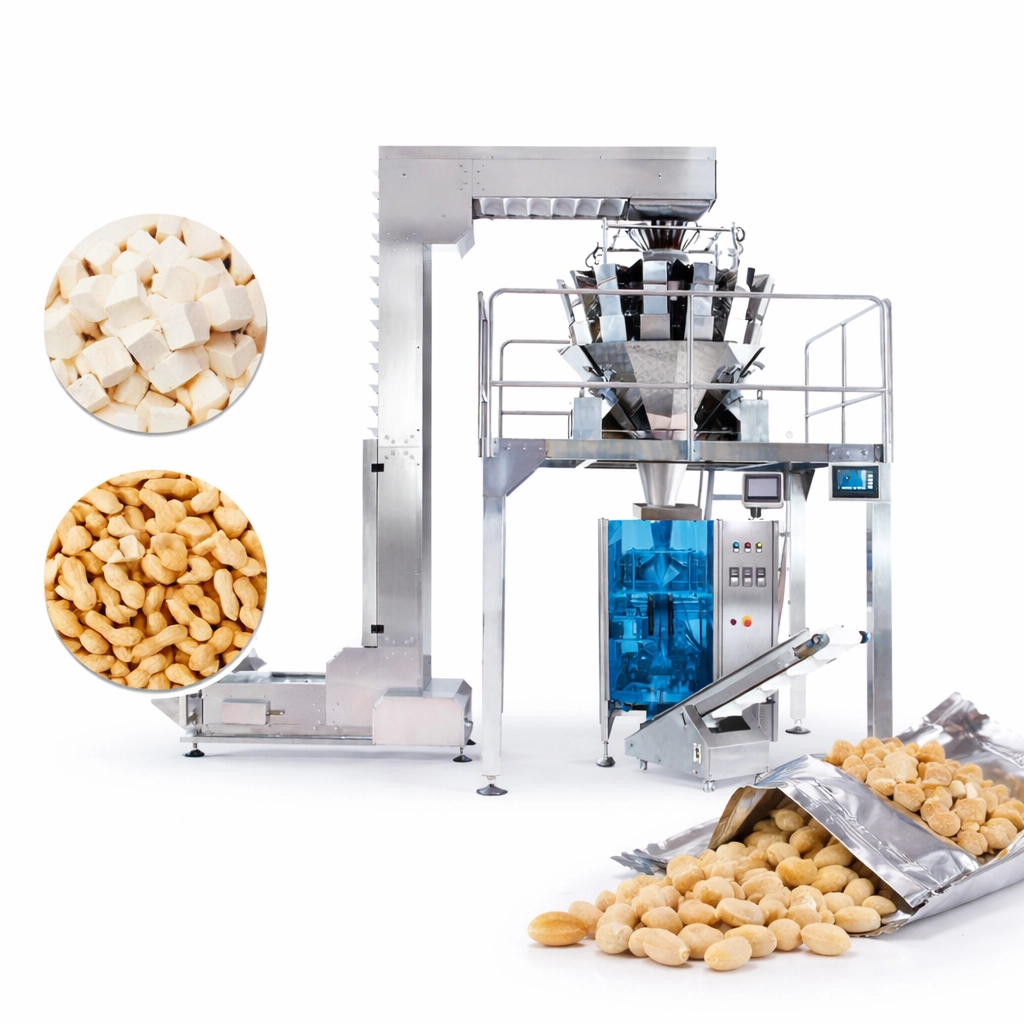
High-Precision Weighing & Packaging for Granular Products
The Granular Food Packing Machine is a fully automated solution designed for accurate weighing, filling, and packaging of various granular food products. Integrated with a multihead weigher and advanced packaging system, it ensures high speed, precision, and hygiene standards for modern food production.
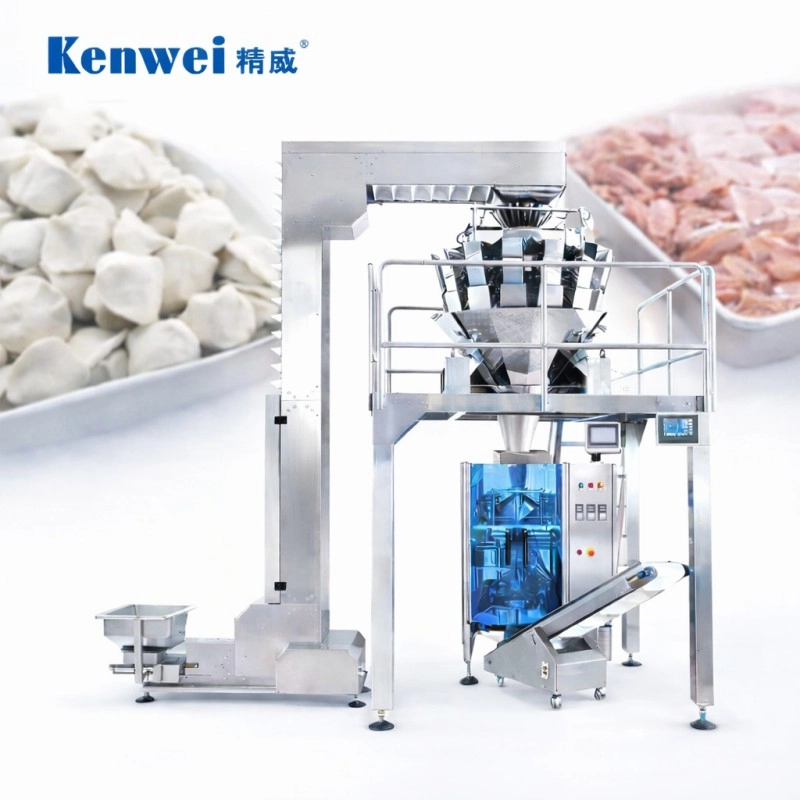
Vertical Frozen Food Packaging Machine for IQF & Frozen Products JW-B1
The Kenwei JW-B1 Vertical Frozen Food Packaging Machine is designed for IQF and frozen products, ensuring efficient, airtight packing. This vertical packing machine boosts productivity with precision sealing, ideal for frozen food packaging needs in the food industry.
Get in touch with us
If you have any comments or good suggestions, please leave us a message, later our professional staff will contact you as soon as possible.
Kenwei
Kenwei
Kenwei multi weigh
Kenwei
Kenwei
Kenwei