






Best practices for calibrating a 14 head multihead weigher
This comprehensive guide explains step-by-step best practices for calibrating a 14 head multihead weigher — with emphasis on the 14 Heads Vertical Single Screw Feeding Pickles Weigher backups — covering pre-checks, tools, calibration procedures, acceptance criteria, recordkeeping, troubleshooting and SOPs to ensure accurate, repeatable portioning in pickle packaging operations.
- Best practices for calibrating a 14 head multihead weigher
- Why calibration matters for a 14 head multihead weigher
- Understanding the 14 head multihead weigher and the pickles feeding challenge
- Pre-calibration checklist — what to verify before you start
- Tools, weights and standards you need
- Step-by-step calibration procedure for a 14 head multihead weigher
- Notes on frequency and tolerance
- Recommended acceptance criteria and calibration intervals (table)
- Troubleshooting common calibration problems
- Recordkeeping, traceability and audit readiness
- Digital tools and integration
- Training, SOPs and operator checks
- How calibration differs for pickles — special considerations
- Brand relevance: Why the 14 Heads Vertical Single Screw Feeding Pickles Weigher backups simplifies calibration
- FAQ — Frequently Asked Questions about calibrating a 14 head multihead weigher
- How often should we fully calibrate a 14 head multihead weigher?
- Can I use product instead of certified weights for calibration?
- What are acceptable tolerances for pickles packaging?
- My machine shows good static calibration but fails in production — why?
- Who should perform calibration — operators or certified technicians?
- Call to action
- Authoritative references and further reading
- Contact & product support

Best practices for calibrating a 14 head multihead weigher
Why calibration matters for a 14 head multihead weigher
Calibration is the foundation of accurate portioning, cost control and regulatory compliance for any multihead weigher. A properly calibrated 14 head multihead weigher reduces giveaway, ensures pack weights meet label claims, and prevents rework or product loss — all critical outcomes for food processors handling pickles, where variable geometry and moisture can affect feed behavior. Regular, documented calibration also supports traceability, HACCP/food safety programs, and audit readiness.
Understanding the 14 head multihead weigher and the pickles feeding challenge
The 14 Heads Vertical Single Screw Feeding Pickles Weigher backups is engineered for the specific challenges of pickles: irregular shapes, high moisture, and tendency to stick. The vertical single screw feeding mechanism meters product to each weigh bucket before combination calculation. Knowing the machine's feed path, bucket geometry, and control logic is essential for effective calibration. Calibration for pickles must account for product behavior at low fill levels, potential bridging in the feed screw, and the tendency of slices or whole pickles to nest or stack. Even with correct calibration, stable feeding is critical for consistent weighing. Understanding how 14 heads vertical single-screw feeding pickles weigher backups work helps manufacturers maintain accuracy during high-speed or high-moisture production runs.
Pre-calibration checklist — what to verify before you start
Before performing any calibration routine, complete a pre-check to eliminate non-calibration variables that would invalidate results:
- Clean machine: ensure feed hoppers, screw, chutes and weigh buckets are free from buildup. Residue changes mass measurements.
- Stabilize environment: allow the machine and product to reach steady-state temperature and humidity where possible.
- Verify mechanics: check belts, bucket latches, and the single screw for wear, correct alignment and smooth rotation.
- Electrical checks: confirm stable power, grounded frame, no tripped motor or PLC faults.
- Check sensors: load cell wiring, amplifier status, and proximity switches for the feed and discharge gates.
- Product consistency: sample product to be used for calibration — same batch, same brine, similar cut and size distribution as production.
Tools, weights and standards you need
Use traceable, certified calibration weights and the right tools to achieve reliable results:
- Certified test weights covering the expected per-bucket and total package range (NIST-traceable or equivalent).
- Reference scales for cross-checks if available (calibrated bench scale).
- Multimeter and oscilloscope for sensor/electronics diagnostics when needed.
- Manufacturer's service manual and calibration procedures for the 14 head model.
- Environmental log (temperature/humidity) to record conditions during calibration.
Relevant standards and authorities to align with include national weights & measures regulations (e.g., NIST/NCWM in the U.S.), hygienic equipment design guidance (EHEDG) and food safety regulators (FDA/EU food safety authorities).
Step-by-step calibration procedure for a 14 head multihead weigher
The following is a practical, field-ready calibration flow tailored for a 14 head machine. Adjust numeric values to match your machine manual and product specifics.
- Warm-up and zeroing: Run the machine empty until the control system and load cells reach thermal stability (typically 10–30 minutes). Perform a zero/balance routine per the control panel to remove offsets.
- Static weight check (per bucket): With buckets in the home position and gates closed, place certified test weights into a single bucket and verify displayed value. Repeat for at least 3 buckets distributed across the 14 to detect load cell drift or mechanical variance.
- Linearity and span: Using two or more weights (e.g., low and high), test each representative bucket for linear response. The slope should match within manufacturer tolerance (often ±0.5% or as specified).
- Combination verification: Run combinations using the feed system and a known quantity of pickles. Verify that the sum of selected buckets equals target weight within tolerance. Perform multiple runs at different target weights to confirm accuracy across the production range.
- Repeatability and standard deviation: For a selected target weight, perform 30 consecutive fills and record results. Calculate mean and standard deviation. Typical acceptance: mean within allowed tolerance and standard deviation low enough to allow the machine’s combination logic to meet pack tolerances.
- Dynamic calibration (in-line): With product flowing and the machine at production speed, collect a sample of filled containers and verify pack weights on a calibrated bench scale. Adjust feeder timing, screw feed rate and bucket dwell if necessary.
- Check feeding behavior: Observe the vertical screw for consistent feed; adjust screw pitch/speed or bridge breaker measures if pickles flow inconsistently.
- Seal the calibration: Once acceptable, save calibration values in the machine control and document results, weights used and environmental conditions. Generate a calibration certificate signed by the technician.
Notes on frequency and tolerance
Calibration frequency depends on change drivers: daily quick checks are recommended at start-up; full calibrations weekly or monthly depending on production criticality and regulatory requirements. After maintenance, product changeover, or mechanical adjustments, recalibrate. Typical acceptance tolerances are set by QA and legal metrology — often ±1–2% for food pack weights but verify local regulations and customer specifications.
Recommended acceptance criteria and calibration intervals (table)
The table below gives a sample set of acceptance criteria and recommended calibration intervals. Adapt to your product, customer and regulatory needs.
| Check | Acceptance Criteria (example) | Recommended Interval |
|---|---|---|
| Zero/balance | Within ±0.01% of full scale or as per manufacturer | Daily (start-up) or after power cycles |
| Per-bucket static weight | Within ±0.5% of test weight | Monthly or after mechanical work |
| Linearity | Deviation ≤ ±0.5% across span | Quarterly or when discrepancy observed |
| Combination accuracy | Pack mean within QA tolerance (e.g., ±1–2%) | Weekly (full check) + daily spot checks |
| Repeatability (30 runs) | Std. dev. consistent with allowed giveaway strategy | Weekly or when speed/product changes |
Troubleshooting common calibration problems
Calibration failures usually trace to mechanical, electronic, or product issues. Here are common causes and remedies:
- Inconsistent per-bucket readings: Check load cell mounting, loose bolts or worn bucket pivots. Replace or re-torque hardware; re-level buckets.
- Drift over time: Inspect for temperature gradients, leaking hydraulic dampers, or electronic amplifier heating. Allow warm-up, use shielded cable runs and check power conditioning.
- High repeatability variance: Look at feed consistency from the vertical screw. Reduce screw speed, add vibration or modify feed geometry to prevent bridging/nesting.
- Regular offset after production runs: Ensure cleaning removes brine buildup and that buckets are fully dry and free of sticky residue before calibration.
Recordkeeping, traceability and audit readiness
Good records are as important as good calibration. Maintain a calibration log that includes:
- Technician name and signature
- Calibration date/time and machine ID
- Certified weights used (with traceability numbers)
- Environmental conditions
- Test results (static, linearity, repeatability, last 30 runs)
- Corrective actions taken and parts replaced
Store certificates in a central QA database and retain them per company and regulatory retention policies to support audits.
Digital tools and integration
Consider integrating calibration records into your MES or QC software to automate alerts for due calibration, compare historical trends, and export data for regulatory submission. Many modern multihead weighers support Ethernet/IP or OPC-UA — use these interfaces for automated data capture when possible.
Training, SOPs and operator checks
Calibration is only effective when operators follow consistent procedures. Develop concise SOPs and training modules covering:
- Daily start-up checks (quick zero checks and visual inspections)
- How to perform a spot-check with a reference weight
- When to stop the line and call maintenance
- Cleaning and hygiene steps that do not affect calibration
Use competency checklists and periodic refresher training to maintain high operator performance.
How calibration differs for pickles — special considerations
Pickles present unique challenges: variable sizes, brine weight, and surface stickiness. Specific calibration tips:
- Use calibration samples that mirror production (same slice thickness, brine level, and jar/container format).
- Consider using anti-bridging features on the vertical screw (flow regulators) and tune screw speed during calibration.
- Account for brine carryover — a filled container may include more liquid; weigh filled jars in production-like conditions when performing final acceptance tests.
- Increase frequency of cleaning and calibration checks in high-sugar or high-salt brine that accelerates corrosion or buildup.
Brand relevance: Why the 14 Heads Vertical Single Screw Feeding Pickles Weigher backups simplifies calibration
The 14 Heads Vertical Single Screw Feeding Pickles Weigher backups is configured to address pickle-specific flow behavior while providing features that make calibration more reliable:
- Vertical single screw feed provides repeatable metering to each head — reducing variability when tuning screw speed during calibration.
- 14-head architecture gives more combination possibilities, improving accuracy without excessive rejection, but it requires per-head balance which the unit’s accessible design facilitates.
- Design that prioritizes hygienic cleaning reduces residue build-up, extending calibration stability between cleanings.
- Modern control interface supports saving calibration profiles, making product changeover and repeat calibration faster and less error-prone.
These features help you achieve quicker, more consistent calibration cycles and maintain pack-weight compliance with less downtime.
FAQ — Frequently Asked Questions about calibrating a 14 head multihead weigher
How often should we fully calibrate a 14 head multihead weigher?
Do quick zero checks daily at start-up. Full calibration frequency depends on production and risk factors: weekly to monthly is common, with immediate recalibration after maintenance, major cleanings, product changeover, or if QA detects weight drift.
Can I use product instead of certified weights for calibration?
Product tests are essential for end-to-end accuracy, but certified test weights (NIST-traceable) are required for validating load cell performance and traceability. Use both — weights for instrument calibration and product samples for dynamic verification.
What are acceptable tolerances for pickles packaging?
Tolerances depend on local legal metrology and customer agreements. Typical industry practice targets mean pack weights within ±1–2% of declared weight, but you should confirm legal requirements in your market and adjust your giveaway strategy accordingly.
My machine shows good static calibration but fails in production — why?
Check feed consistency, screw speed, product segregation, moisture and sticky surfaces. Dynamic behavior (nesting, bridging) can cause production errors despite good static load cell results. Tune the feed screw and perform dynamic in-line checks to resolve this.
Who should perform calibration — operators or certified technicians?
Operators can and should perform daily spot checks and simple recalibrations following SOPs. Full calibrations and adjustments that change load cell settings or involve certified weight verification should be done by trained, authorized technicians and documented accordingly.
Call to action
Ready to improve accuracy and reduce giveaway on your pickle packaging line? Contact our sales and service team to request a calibration audit or to see the 14 Heads Vertical Single Screw Feeding Pickles Weigher backups in action. Click here to contact sales or view the product: .
Authoritative references and further reading
- Weighing scale — Wikipedia: https://en.wikipedia.org/wiki/Weighing_scale
- National Institute of Standards and Technology (NIST) — Weights & Measures: https://www.nist.gov/pml/weights-and-measures
- Packaging Machinery Manufacturers Institute (PMMI): https://www.pmmi.org/
- European Hygienic Engineering & Design Group (EHEDG): https://www.ehedg.org/
- U.S. Food & Drug Administration (FDA) — Food Safety: https://www.fda.gov/food
Contact & product support
For product-specific calibration support, spare parts or to schedule on-site commissioning for the 14 Heads Vertical Single Screw Feeding Pickles Weigher backups, contact our technical support team. We provide SOP templates, calibration certificates, and operator training tailored to your facility.
Tags
Linear weigher for granules and pellets
Linear weigher for granules and pellets
Counting Machine
Counting Machine
multihead weigher
multihead weigher
food industry metal detector
food industry metal detector
weighing and packing machine
weighing and packing machine
Weighing And Packing System
Weighing And Packing System
Recommended for you
The B2B Buyer’s Guide to vffs bagging machine
Troubleshooting Common Linear Weigher Issues: A Practical Guide for Packaging Lines
Reliability Metrics Buyers Need for Multihead Weigher Purchases
The B2B Buyer’s Guide to meat packaging machine
Prdoucts Categories
Question you may concern
About Solution suggestions
Can Kenwei solutions be used for both manual and automated packing lines?
Yes, Kenwei machines can be used in both manual and automated packing lines. We can provide integrated systems that work alongside manual labor or fully automated systems depending on your production requirements.
About After Sales Support
How can I get technical support for my Kenwei machine?
You can contact Kenwei's technical support team via email, phone, or through our website.
About Cooperation Process
How can I start a cooperation with Kenwei?
To begin a cooperation, simply contact our sales or customer service team via email or phone. You can also fill out the inquiry form on our website. Once we receive your request, a representative will get in touch with you to discuss your specific needs and provide you with a tailored solution.
About products customization
How long does it take to deliver a customized Kenwei machine?
The lead time for customized machines can vary based on the complexity of the customization, as well as production schedules. Generally, it takes 4-6 weeks to deliver a fully customized machine after design approval.
About Price and payment
How is the price of Kenwei machines determined?
The price of Kenwei machines depends on several factors, including the type of machine, customization requirements, production volume, and any additional features or integrations. We provide tailored quotes based on your specific needs and requirements.
You may also like
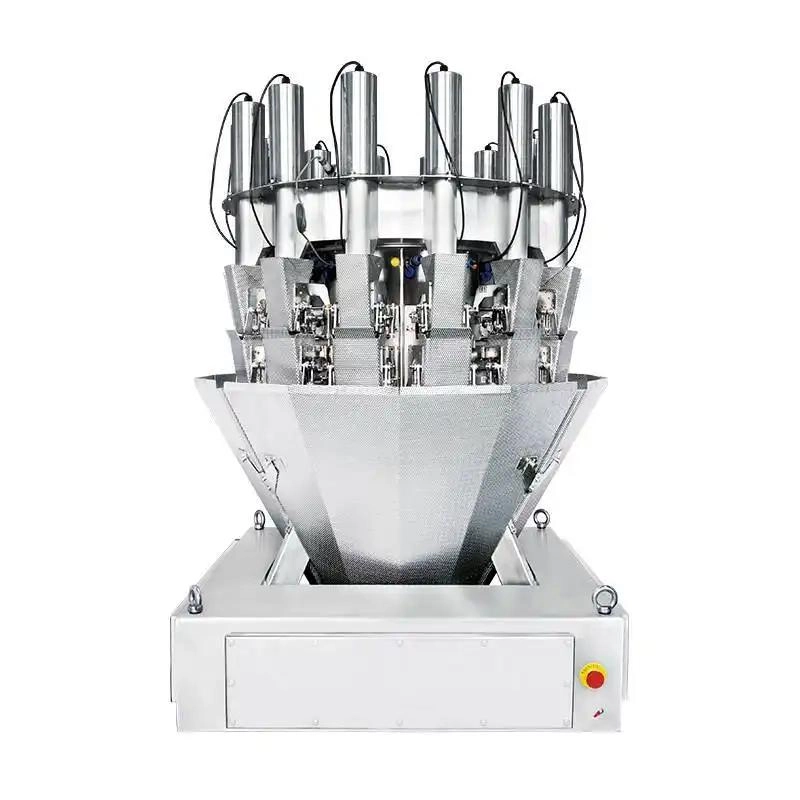
14 Heads Vertical Single Screw Feeding Pickles Weigher backups
This type of weigher is designed to handle the unique characteristics of pickles, ensuring precise measurements for packaging and distribution. It uses a vertical single screw mechanism to feed the pickles into the weighing system, allowing for efficient and consistent weighing. This technology is particularly useful in food processing and packaging facilities where precise portioning is essential for quality control and customer satisfaction. This specialized equipment is perfect for accurately measuring and dispensing pickles in a production line or packaging facility. The vertical design allows for efficient and precise filling of containers, while the single screw feeding mechanism ensures consistent and reliable weighing.
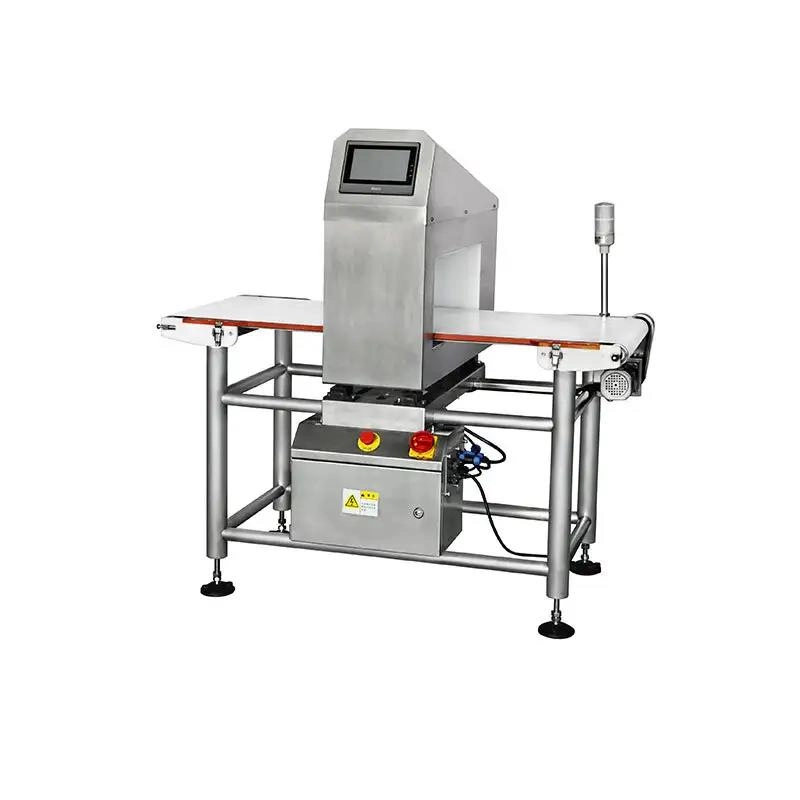
Food Metal Detector Manufacturer For Reject Defective Products G5020
The G5020 multi-frequency metal detector features a specialized conveyor belt designed to reduce contamination risks, ensure smooth operation, and maintain high detection sensitivity. It is easy to disassemble for convenient maintenance. Ideal for detecting metal contaminants in food, pharmaceuticals, spices, plastics, electronics, textiles, toys, handicrafts, and more.
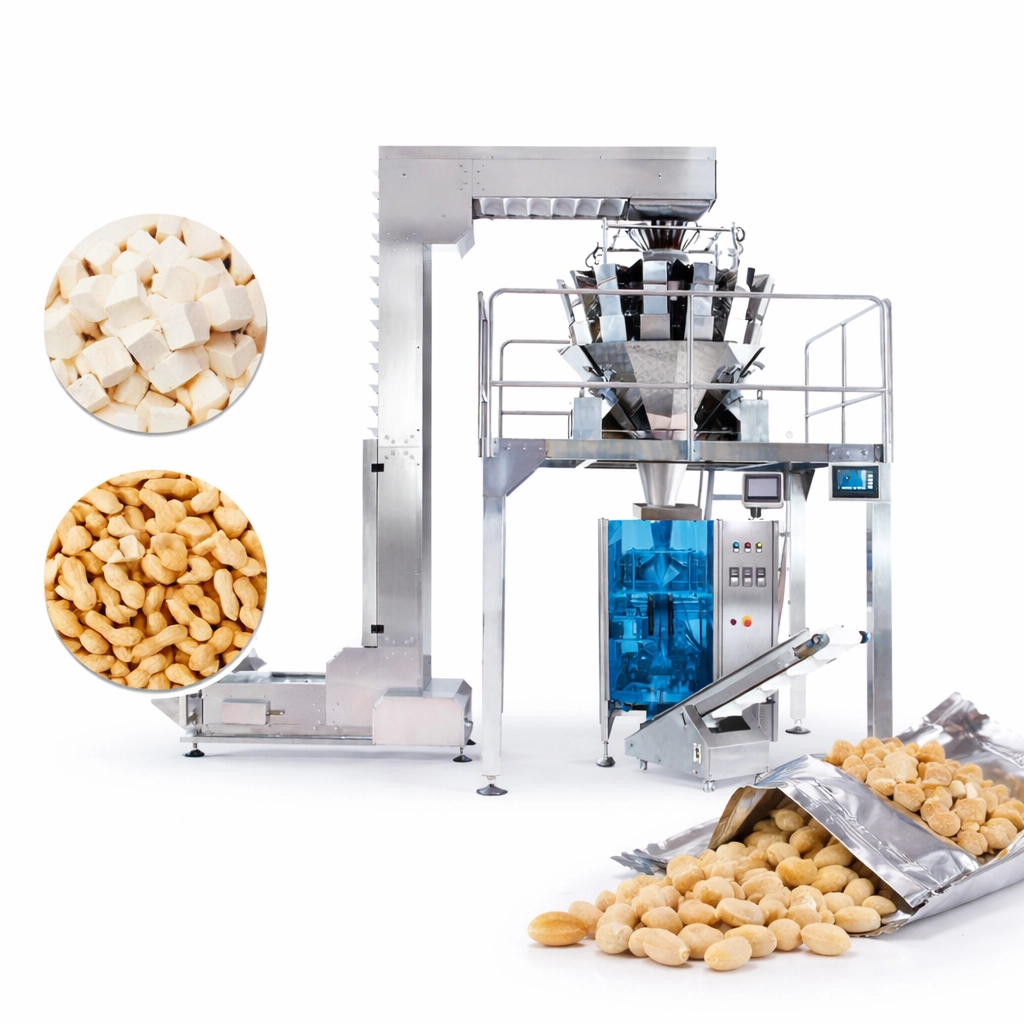
High-Precision Weighing & Packaging for Granular Products
The Granular Food Packing Machine is a fully automated solution designed for accurate weighing, filling, and packaging of various granular food products. Integrated with a multihead weigher and advanced packaging system, it ensures high speed, precision, and hygiene standards for modern food production.
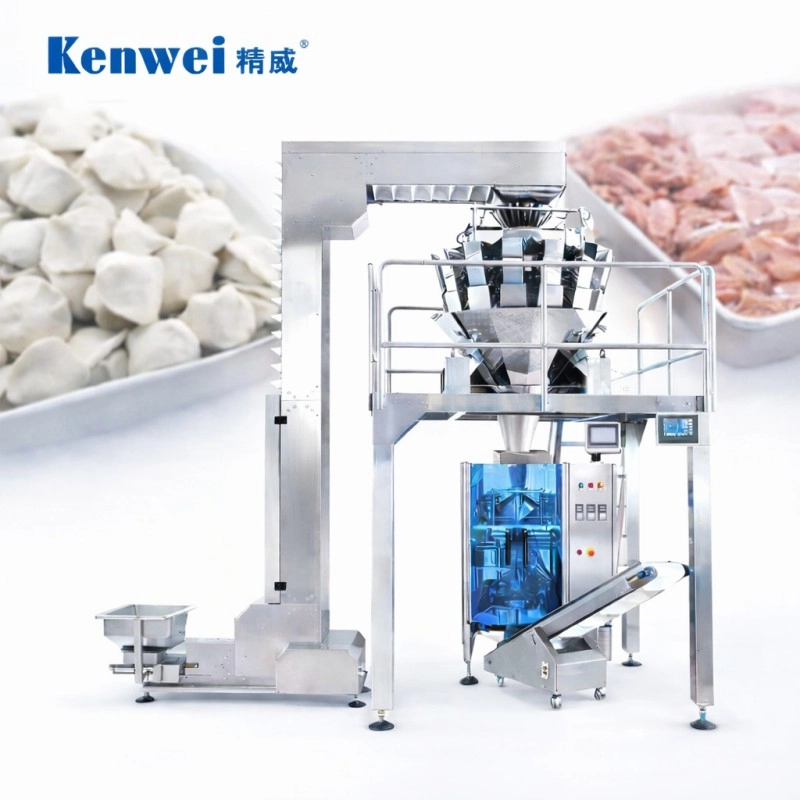
Vertical Frozen Food Packaging Machine for IQF & Frozen Products JW-B1
The Kenwei JW-B1 Vertical Frozen Food Packaging Machine is designed for IQF and frozen products, ensuring efficient, airtight packing. This vertical packing machine boosts productivity with precision sealing, ideal for frozen food packaging needs in the food industry.
Get in touch with us
If you have any comments or good suggestions, please leave us a message, later our professional staff will contact you as soon as possible.
Kenwei
Kenwei
Kenwei multi weigh
Kenwei
Kenwei
Kenwei