






Validation, Calibration and Compliance for Automatic 8-Track Fillers
A practical guide to validating, calibrating and keeping the Automatic 8-Track Electronic Counting and Filling Packaging Machine compliant for pharmaceutical and regulated environments. Covers IQ/OQ/PQ, calibration best practices, acceptance criteria, documentation, risk controls, and FAQs to help manufacturers and QA teams deploy a pill counter machine reliably and audit-ready.
- Validation, Calibration and Compliance for Automatic 8-Track Fillers
- Introduction: Why validation matters for your pill counter machine
- Product overview: Automatic 8-Track Electronic Counting and Filling Packaging Machine
- Regulatory context: What regulators expect from pill counter machines
- Design and user requirements (URS) for the 8-track filler
- Qualification approach: IQ, OQ and PQ tailored to counting equipment
- Validation test plan: key tests and acceptance criteria
- Calibration strategy: tools, frequency and traceability
- Typical calibration and verification checks for the 8-track system
- Data integrity and computerized system compliance
- Risk management and verification sampling plans
- Documentation: templates and essential records
- Operational best practices for accurate counting
- Example comparison table: validation checks, acceptance and frequency
- Handling deviations, CAPA and re-validation triggers
- Cleaning, cross-contamination control and sanitary design
- Training and operator competency
- Brand advantages: why choose this Automatic 8-Track filler for regulated production
- Implementation checklist: practical steps before first production run
- Frequently Asked Questions (FAQs)
- Q1: What accuracy can I expect from a pill counter machine?
- Q2: How often should I calibrate the counting sensors?
- Q3: Do I need to validate software on the machine?
- Q4: What triggers a re-validation?
- Q5: Can the machine handle different bottle heights without resets?
- Contact sales / See the product
- References and sources

Validation, Calibration and Compliance for Automatic 8-Track Fillers
Introduction: Why validation matters for your pill counter machine
Automatic counting and filling equipment such as the Automatic 8-Track Electronic Counting and Filling Packaging Machine are high-throughput assets in pharmaceutical, nutraceutical and healthcare production lines. A correctly validated and calibrated pill counter machine minimizes product recalls, maintains dose integrity, supports regulatory inspections, and protects patient safety. This article explains practical validation (IQ/OQ/PQ), calibration strategies, compliance requirements and documentation best practices tailored to an 8-track electronic counting and filling system.
Product overview: Automatic 8-Track Electronic Counting and Filling Packaging Machine
This counting machine offers a two-channel, eight-track electronic system with adjustable height, supporting bottle heights from 20 to 100mm. It requires no reset during fast line changes, making it perfect for counting products of various shapes. With a maximum speed of 4,000 particles per minute, it is ideal for pharmaceutical, food, chemical, plastic, healthcare, and other industries, delivering efficient and precise counting.
Regulatory context: What regulators expect from pill counter machines
Regulators expect manufacturers to demonstrate that automated counting/filling equipment performs consistently within predefined limits. For pharmaceutical manufacturers, relevant frameworks include FDA guidance on process validation, EU GMP (including Annex 11 for computerized systems), and national GMPs. Key expectations are documented user requirements (URS), risk assessments, documented IQ/OQ/PQ, controlled software and data integrity measures, and traceable calibration records.
Design and user requirements (URS) for the 8-track filler
Start validation by drafting a URS that reflects production needs and regulatory expectations. For a pill counter machine, URS items typically include: required throughput (up to 4,000 particles/min as per product spec), acceptable counting accuracy (e.g., ±1% or ±1 tablet depending on product and risk), required bottle sizes (20–100 mm height), allowable changeover time (no reset during fast line changes), cleaning instructions, and electronic record retention. Clear URS helps scope IQ/OQ/PQ and acceptance criteria.
Qualification approach: IQ, OQ and PQ tailored to counting equipment
An effective qualification lifecycle for the Automatic 8-Track Electronic Counting and Filling Packaging Machine follows three standard stages:
- Installation Qualification (IQ) — Verify equipment is installed per manufacturer recommendations (power, grounding, compressed air if applicable), and that the two-channel, eight-track assemblies, sensors and hoppers are present and labeled. Include verification of software/firmware versions and physical fit for intended bottle heights (20–100mm).
- Operational Qualification (OQ) — Confirm each function operates as intended across expected operating ranges: counting sensors, track speeds, chutes, reject mechanisms, and HMI functions. Test edge cases like mixed-shaped product feeding, line speed changes, and the no-reset changeover capability.
- Performance Qualification (PQ) — Demonstrate consistent performance under simulated or actual production conditions. Run multiple batches at different speeds (including max 4,000 parts/min), product shapes, and bottle sizes to prove counting accuracy, repeatability and throughput.
Validation test plan: key tests and acceptance criteria
Validation test plans should contain clear acceptance criteria, sampling plans and pass/fail rules. Typical tests for a pill counter machine include:
- Count accuracy: measured across representative SKUs; acceptance could be defined as ±1 tablet or within a percent range (e.g., ±1%).
- Repeatability: consecutive runs on the same SKU should meet the accuracy criteria.
- Throughput: verify the machine meets throughput requirements (up to 4,000 parts/min) without sacrificing accuracy.
- Changeover: demonstrate no-reset line changes work reliably across product shapes and sizes.
- Reject and diversion: verify defective counts are detected and diverted consistently.
- Environmental robustness: test across expected temperature/humidity ranges in the production area if relevant.
Calibration strategy: tools, frequency and traceability
Calibration establishes traceability and confidence in measurement systems. For a counting and filling machine, calibration includes sensors, timing devices, and any weighing or detection subsystems (if present). Key calibration practices:
- Use traceable calibration standards (e.g., calibrated weights from accredited labs) and record certificate numbers.
- Establish calibration intervals based on usage, historical drift, and criticality — monthly, quarterly or semi-annually as justified by data and risk assessments.
- Calibrate post-maintenance or after firmware updates that affect counting logic.
- Retain calibration records in a controlled system consistent with GMP and 21 CFR Part 11 where electronic records apply.
Typical calibration and verification checks for the 8-track system
Perform the following checks during calibration or periodic verification:
- Sensor sensitivity and alignment — ensure optical/infrared sensors detect each particle reliably across product shapes.
- Timing and pulse verification — confirm the machine’s counting clock and data acquisition rates are accurate.
- Mechanical alignment — tracks, chutes and bottle gates aligned to prevent double counts or jams.
- Reject gate performance — test that false counts are diverted and reject rates are within acceptable limits.
Data integrity and computerized system compliance
If the pill counter machine stores electronic batch data, timestamps and audit trails, it must comply with electronic records regulations (e.g., 21 CFR Part 11, EU Annex 11). Controls include user access levels, unique user IDs, secure audit trails, validated backup and restore, and integrity checks to prevent unauthorized changes. Validation documentation must include software requirements, test scripts, and evidence of secure record handling.
Risk management and verification sampling plans
Apply a risk-based approach: higher-risk products (e.g., narrow therapeutic dose tablets) require tighter acceptance criteria and more extensive sampling. Use statistical sampling plans based on lot size and acceptable quality limits (AQL) for PQ runs. For many pharma counting operations, a combination of full-count verification for sample bottles and periodic audit counts (e.g., 1–5% of production) balances efficiency and control.
Documentation: templates and essential records
Maintain robust documentation to demonstrate compliance and support audits. Essential documents include URS, DQ/OQ/PQ protocols and reports, calibration certificates, SOPs for operation, cleaning and changeover, maintenance logs, deviation and CAPA records, and electronic records management policies (if applicable). Ensure documents are version-controlled and retained per GMP record retention policies.
Operational best practices for accurate counting
Practical steps to keep an 8-track pill counter machine performing optimally:
- Standardize product feeding to avoid double-feeds or jams (feeders and hoppers matched to SKU shape).
- Train operators on height adjustment for bottle sizes (20–100mm) and quick verification checks after changeovers.
- Schedule preventive maintenance during planned downtime to minimize drift and unscheduled stops.
- Keep a changeover checklist and quick verification tests to run after each SKU change.
Example comparison table: validation checks, acceptance and frequency
| Parameter | Typical Acceptance Criteria | Suggested Frequency | Reference / Basis |
|---|---|---|---|
| Count accuracy | ±1 tablet or ±1% (whichever stricter) | IQ/OQ, PQ; periodic audit sampling weekly or per batch | Industry best practice; FDA Process Validation guidance |
| Sensor calibration | Sensors detect >99% of test pulses/particles | Quarterly or after maintenance | Manufacturer recommendations; NIST-traceable verification |
| Throughput verification | Achieve specified max speed (up to 4,000 parts/min) without >acceptance errors | PQ and after major software/firmware updates | Manufacturing URS and production requirements |
| Reject mechanism | 100% of deliberately introduced rejects diverted | Monthly or after mechanical adjustments | Quality control best practice |
Handling deviations, CAPA and re-validation triggers
Document any deviation from expected performance and evaluate root cause. Triggers for CAPA and re-validation commonly include repeated out-of-specification counts, hardware replacement, software updates, major maintenance, or process changes (new SKU geometry). Define clear re-validation scope proportional to the change — e.g., a sensor swap may need OQ-level checks while a firmware update may require a full OQ and selected PQ runs.
Cleaning, cross-contamination control and sanitary design
For pharmaceutical and food applications, cleaning and cross-contamination control are critical. The 8-track filler should allow easy access for cleaning, with materials compatible with cleaning agents used in the facility. Cleaning validation protocols should prove removal of residues and that cleaning does not affect counts or sensor performance. Maintain SOPs for frequency and methods of cleaning, especially when switching product types.
Training and operator competency
Operators and maintenance staff must be trained on operation, verification checks, changeover procedures and basic troubleshooting. Training records should be retained and tied to equipment-specific SOPs. Competent operators reduce human error and decrease the frequency of deviations that could prompt re-validation.
Brand advantages: why choose this Automatic 8-Track filler for regulated production
When selecting a pill counter machine for regulated production, our Automatic 8-Track Electronic Counting and Filling Packaging Machine stands out for several reasons:
- High throughput and flexibility: Up to 4,000 particles per minute with an adjustable-height system that handles bottle heights from 20 to 100mm without resets during line changes—ideal for multi-SKU operations.
- Validation-ready design: Built with features that simplify IQ/OQ/PQ tasks (clear access, documented sensor specifications, discrete firmware versions) and comes with validation documentation templates to accelerate qualification.
- Robust data handling: Integrated data logging and secure electronic record options support compliance with electronic records requirements (21 CFR Part 11 / EU Annex 11) where required.
- Service and calibration support: We provide calibration certificates, recommended schedules and trained service engineers to support PQ and periodic re-qualification.
Implementation checklist: practical steps before first production run
Use this quick checklist to prepare the 8-track filler for production:
- Finalize URS and acceptance criteria with QA.
- Complete IQ and verify installation, power and safety interlocks.
- Run OQ scripts covering sensor, timing, throughput and reject mechanisms.
- Perform PQ runs with representative SKUs and record results.
- Establish calibration and preventive maintenance schedule with traceable standards.
- Create operator SOPs and complete training records.
Frequently Asked Questions (FAQs)
Q1: What accuracy can I expect from a pill counter machine?
Accuracy depends on product shape, feed consistency and machine setup. With proper setup, calibration and validation, the Automatic 8-Track machine typically meets ±1 tablet or within ±1% for many tablet/capsule SKUs. More fragile or unusually shaped items may require specific feeder adjustments and sampling plans.
Q2: How often should I calibrate the counting sensors?
Calibration frequency depends on usage, product variability and historical drift. Typical intervals are quarterly for sensors, with immediate recalibration after sensor replacement, major repairs or firmware changes. Use a risk-based approach supported by trend data.
Q3: Do I need to validate software on the machine?
Yes. If the machine stores electronic batch data, controls batch release logic or includes firmware that affects counting, validate the software per your computerized system policies. Include software installation records, version control, and test scripts verifying functionality and audit trails.
Q4: What triggers a re-validation?
Common triggers include hardware replacement affecting counting (e.g., sensors), major software/firmware updates, persistent deviations in counts, process changes (new SKU geometry), or changes to critical process parameters. Use a change control process to assess re-validation scope.
Q5: Can the machine handle different bottle heights without resets?
Yes. The Automatic 8-Track machine is designed with adjustable height to support bottle heights from 20 to 100mm and to minimize reset requirements during fast line changes. Still, always run a brief verification after changeover to confirm counts and rejects are within acceptance.
Contact sales / See the product
If you are ready to validate a pill counter machine into production or want a tailored validation package for the Automatic 8-Track Electronic Counting and Filling Packaging Machine, contact our sales and validation team. We provide validation documentation templates, IQ/OQ/PQ support, on-site calibration, and training packages. Reach out for a demo, quote or validation assistance.With your validation, calibration, and compliance in place, return to explore how a pill counter machine can continue boosting pharmacy accuracy and speed. This ensures you're always operating at peak efficiency.
References and sources
- U.S. Food and Drug Administration, Process Validation: General Principles and Practices (2011). https://www.fda.gov/media/71021/download
- European Commission / EudraLex, EU Guidelines for Good Manufacturing Practice — Annex 11: Computerised Systems (latest revision). https://ec.europa.eu/health/documents/eudralex_en
- NIST Calibration Services overview — National Institute of Standards and Technology. https://www.nist.gov/calibration-services
- WHO Good Manufacturing Practices for Pharmaceutical Products: Main principles. https://www.who.int/teams/health-product-and-policy-standards/standards-and-specifications
- Industry best practices on IQ/OQ/PQ and calibration (manufacturer application notes and validation guides).
Tags
Production Lines
Production Lines
packing machine accessories
packing machine accessories
automatic combination weigher
automatic combination weigher
multihead weighing machine
multihead weighing machine
Parallel manipulator
Parallel manipulator
granular food packing machine
granular food packing machine
Recommended for you
top multihead weigher models to watch in 2026

Top 10 Installation Tips for Food Industry Metal Detectors
Maintenance Strategies for a 14-Head Vertical Multihead Weigher
The latest trends for linear weigher packaging machine
Prdoucts Categories
Question you may concern
About After Sales Support
How about the after-sales service?
Warranty :2 years
Can I get remote troubleshooting assistance?
Yes, Kenwei offers remote troubleshooting for certain issues. Our technical team can guide you through diagnostics and help resolve issues via phone, video call, or online messaging.
About Price and payment
Are the prices for Kenwei machines negotiable?
Prices are generally fixed, but depending on the order volume, long-term partnerships, or special circumstances, we may offer discounts or promotional pricing. Please contact our sales team to discuss your specific situation.
How do I make a payment for Kenwei machines?
We accept several payment methods: T/T, Letter of Credit (L/C)
About Solution suggestions
How do Kenwei’s machines improve my production efficiency?
Kenwei machines enhance efficiency by automating the weighing, packaging, and quality control processes. Our high-speed, high-precision machines ensure accurate measurements, reduce human error, and increase throughput, leading to faster production times and lower operational costs.
You may also like
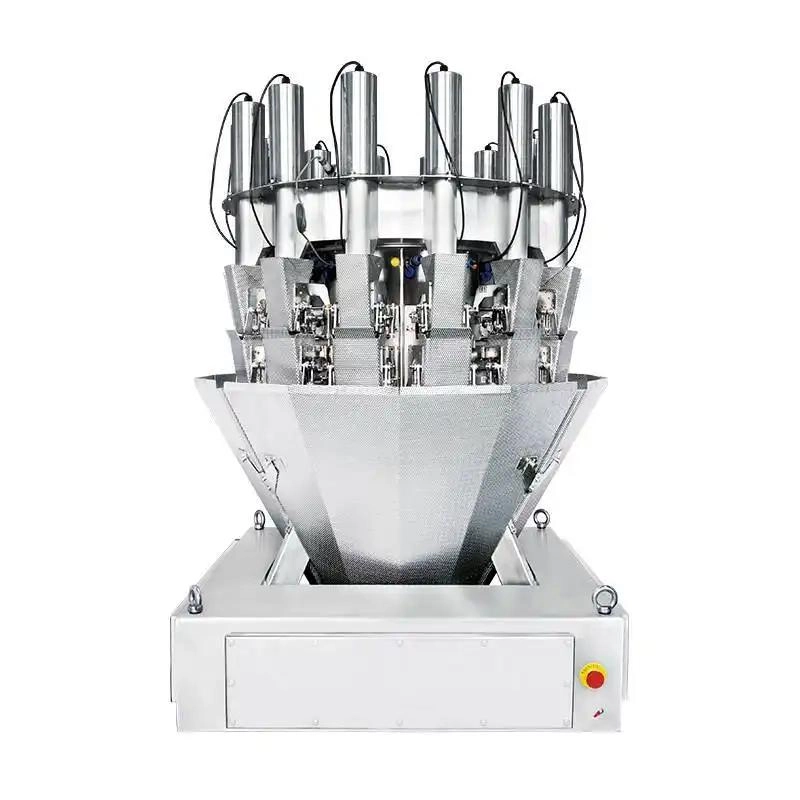
14 Heads Vertical Single Screw Feeding Pickles Weigher backups
This type of weigher is designed to handle the unique characteristics of pickles, ensuring precise measurements for packaging and distribution. It uses a vertical single screw mechanism to feed the pickles into the weighing system, allowing for efficient and consistent weighing. This technology is particularly useful in food processing and packaging facilities where precise portioning is essential for quality control and customer satisfaction. This specialized equipment is perfect for accurately measuring and dispensing pickles in a production line or packaging facility. The vertical design allows for efficient and precise filling of containers, while the single screw feeding mechanism ensures consistent and reliable weighing.
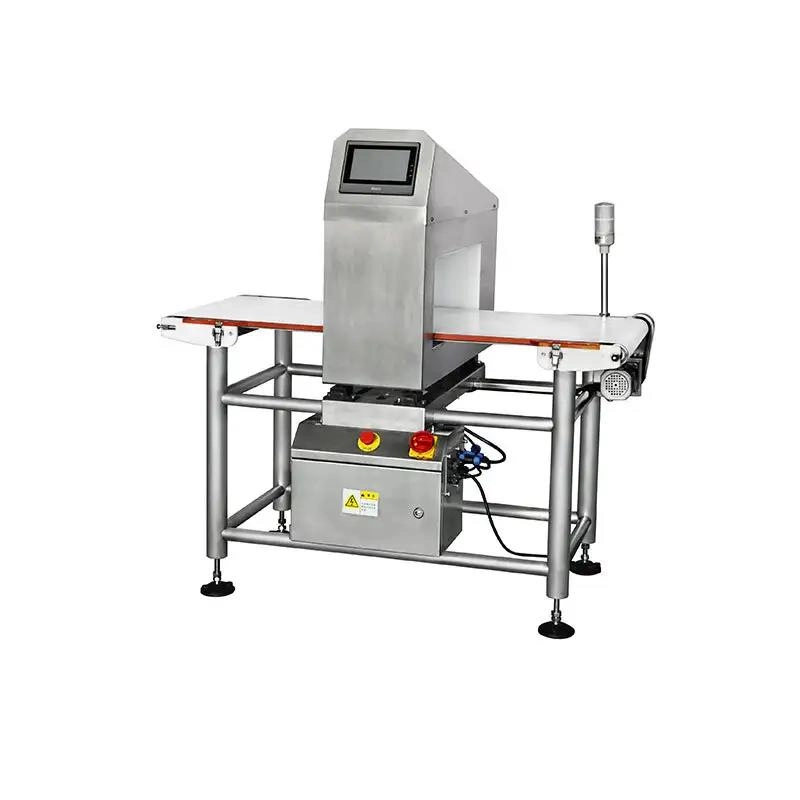
Food Metal Detector Manufacturer For Reject Defective Products G5020
The G5020 multi-frequency metal detector features a specialized conveyor belt designed to reduce contamination risks, ensure smooth operation, and maintain high detection sensitivity. It is easy to disassemble for convenient maintenance. Ideal for detecting metal contaminants in food, pharmaceuticals, spices, plastics, electronics, textiles, toys, handicrafts, and more.
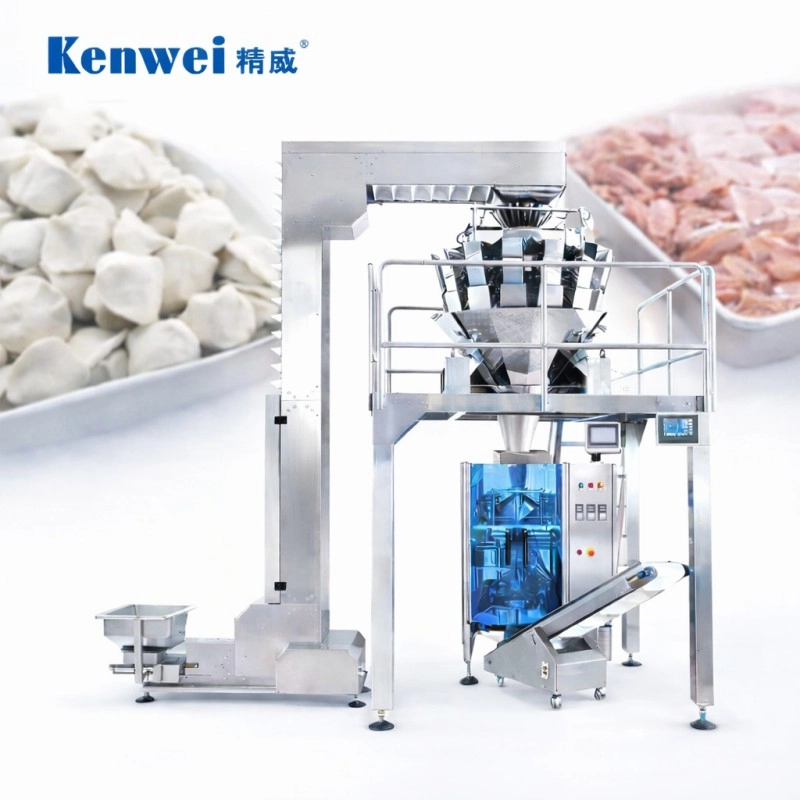
Vertical Frozen Food Packaging Machine for IQF & Frozen Products JW-B1
The Kenwei JW-B1 Vertical Frozen Food Packaging Machine is designed for IQF and frozen products, ensuring efficient, airtight packing. This vertical packing machine boosts productivity with precision sealing, ideal for frozen food packaging needs in the food industry.
Metal Detector for Aluminum Foil in the Food Industry for Accurate Contamination Detection
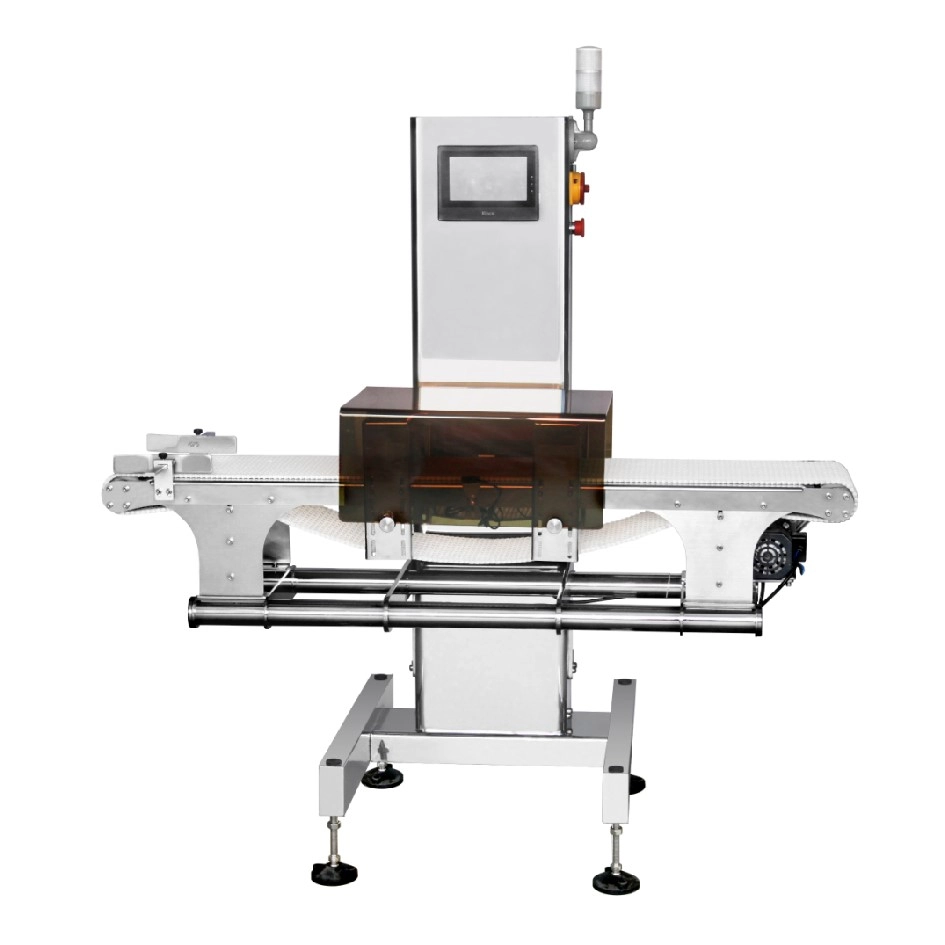
The 2415 Metal Detector for Aluminum Foil is equipped with high-sensitivity sensors that effectively filter out signals from aluminum packaging, ensuring precise detection of magnetic metal contaminants. Ideal for detecting foreign bodies in aluminum foil-packaged items such as coffee bags, peanuts, dried meats, chocolate, and more. This versatile metal detector offers adjustable settings, with a maximum width of 24mm and height ranging from 20-150mm, making it suitable for a wide variety of aluminum foil packaging applications.
Get in touch with us
If you have any comments or good suggestions, please leave us a message, later our professional staff will contact you as soon as possible.
Kenwei
Kenwei
Kenwei multi weigh
Kenwei
Kenwei
Kenwei