






Maintenance Strategies for a 14-Head Vertical Multihead Weigher
This article provides practical, industry-proven maintenance strategies for a 14-head vertical multihead weigher, focusing on a 14 Heads Vertical Single Screw Feeding Pickles Weigher backups. It covers preventive maintenance schedules, cleaning and hygiene for pickled products, electrical and mechanical inspection, spare parts management, troubleshooting, and best practices to maximize uptime and weighing accuracy.
- Design-aware preventive maintenance for multihead weighers
- Understanding the specific risks of a vertical multihead weigher
- Scheduled preventive maintenance checklist
- Materials and corrosion control
- Cleaning, sanitation, and hygiene best practices
- Cleaning-in-place (CIP) and manual cleaning protocols
- Microbial control and verification
- Changeover cleaning for flavor cross-contamination
- Calibration, accuracy control, and troubleshooting
- Routine calibration and verification of weighing performance
- Common weighing errors and root-cause checks
- Using checkweighers and statistical controls
- Electrical, automation, and predictive maintenance
- PLC, HMI, and control verification
- Predictive techniques: vibration and motor current analysis
- Electrical safety and grounding
- Spare parts strategy, training, and documentation
- Critical spares list and inventory levels
- Operator and maintenance team training
- Documentation and audit readiness
- Brand advantages and why choose this solution
- FAQ — Maintenance & operation of a 14-head multihead weigher
- Q: How often should I calibrate the load cells on a 14-head weigher?
- Q: What are the most common causes of weighing drift?
- Q: Can I run a CIP cycle for the entire machine?
- Q: What spare parts should I keep on-site to minimize downtime?
- Q: How do I reduce giveaway while maintaining throughput?
- Contact & product information

This article summarizes actionable maintenance strategies tailored for a 14-head vertical multihead weigher used in pickle packaging lines. It covers hygiene and corrosion control, mechanical and electrical checks, calibration and verification, predictive maintenance techniques, spare-part planning, and operator training. The guidance is tailored to the 14 Heads Vertical Single Screw Feeding Pickles Weigher backups, addressing the unique challenges of handling wet, acidic, and unevenly shaped products to ensure consistent weighing accuracy and high uptime. Maintenance planning also influences output stability, which is why many processors compare capacity using a throughput comparison of multihead weigher options for pickles.
Design-aware preventive maintenance for multihead weighers
Understanding the specific risks of a vertical multihead weigher
Before writing a maintenance plan, technicians must understand how a multihead weigher works and how the vertical single screw feed affects operations. The vertical screw transfers pickles into the weigh hoppers where 14 load cells combine partial weights to reach target portions. Because pickles are acidic, high-moisture, and irregularly shaped, they increase corrosion risk, clogging, and variable hopper load distribution. Key semantic keywords to monitor include: weighing accuracy, load cell calibration, vertical feeding, hygienic design, corrosion resistance, and anti-fouling.
Scheduled preventive maintenance checklist
Create a calendar-based preventive maintenance (PM) checklist that distinguishes daily, weekly, monthly, and annual tasks. Example tasks:
- Daily: Visual inspection, surface cleaning, remove trapped product, verify HMI status and alarms.
- Weekly: Check hopper seals, clean feed screw and flights, inspect vibration isolators.
- Monthly: Check load cell zero and span drift, tighten mechanical fasteners, inspect belts and motors.
- Annually: Full disassembly for deep cleaning, corrosion assessment, replace wear items, full calibration report.
Using a computerized maintenance management system (CMMS) or even a shared spreadsheet with timestamps helps enforce PM adherence and creates traceability for audits.
Materials and corrosion control
Pickles can accelerate corrosion and contaminate contact surfaces. Ensure all food-contact parts are stainless steel (typically 304 or ideally 316 for higher chloride resistance). Preserve protective finishes, and apply food-grade lubricants to bearings and gearboxes where required. Where possible, choose hygienic designs with sloped surfaces, minimal crevices, and quick-disconnect fittings to reduce cleaning time and microbiological risk.
Cleaning, sanitation, and hygiene best practices
Cleaning-in-place (CIP) and manual cleaning protocols
For wet and acidic products such as pickles, implement a combination of CIP and targeted manual cleaning. The vertical single screw feeding system will trap brine and solids in screw flights and around hopper inlets; these areas need daily manual attention even if the remainder of the machine is cleaned by CIP. Use appropriate food-grade sanitizers and follow manufacturer temperature and concentration guidelines.
Reference: industry cleaning approaches are defined in standards such as Clean-in-place methods for process equipment. For regulatory expectations in food safety, consult the U.S. Food and Drug Administration (FDA) guidance on sanitary design and cleaning procedures.
Microbial control and verification
Design a microbiological sampling plan for surfaces that contact pickles. Swab high-risk areas (screw flights, hopper mouths, discharge chutes) weekly or according to your HACCP plan. Use ATP rapid tests for a real-time check between production runs and culture-based methods for periodic validation.
Changeover cleaning for flavor cross-contamination
When changing product types or flavor variants (e.g., from dill to sweet pickles), perform a validated changeover cleaning that eliminates residual brine and oils. Document the steps and acceptance criteria, such as ATP thresholds or visual inspections, to prevent flavor bleed and potential customer complaints.
Calibration, accuracy control, and troubleshooting
Routine calibration and verification of weighing performance
Load cells and weighing electronics are central to maintaining portion accuracy. Establish a calibration schedule: check zero balance daily and perform a full calibration monthly or based on production tonnage and regulatory requirements. Use certified test weights and record all adjustments. Semantic terms include: load cell drift, span calibration, verification weights, and weighing accuracy.
Common weighing errors and root-cause checks
Common issues with a 14-head multihead weigher include:
- Inconsistent portion weights — check hopper feed consistency, stuck gates, or software recipe settings.
- Sudden zero drift — inspect wiring to load cells, moisture ingress, or damaged strain gauges.
- Repeated rejects — inspect chute alignment, discharge timing, and conveyor synchronization.
Systematic troubleshooting should begin with mechanical checks (jammed parts, foreign objects), then electrical checks (connections, grounding), and finally software/recipe inspections (PLC and HMI settings).
Using checkweighers and statistical controls
Integrate a checkweigher downstream to verify pack weights. Statistical Process Control (SPC) charts help detect drift trends before they cause out-of-spec product. For more on check weighing devices, see Checkweigher.
Electrical, automation, and predictive maintenance
PLC, HMI, and control verification
Verify PLC and HMI backups regularly. Keep software versions documented and store configuration backups offsite. Ensure communication to the upstream feeder and downstream conveyors (e.g., via Ethernet/IP or ProfiNet) is stable; intermittent network faults can create false alarms or mis-synchronization. Semantic keywords: PLC diagnostics, HMI configuration, recipe management, communication watchdogs.
Predictive techniques: vibration and motor current analysis
Predictive maintenance methods such as vibration analysis, thermal imaging of bearings and motors, and motor current signature analysis can detect issues before failure. For example, a rise in vibration amplitude on the feed screw motor bearing often precedes catastrophic failure. Implement sensors and trend analysis for critical motors and gearboxes to extend MTBF (mean time between failures).
Electrical safety and grounding
Moist environments increase the risk of electrical faults. Confirm IP ratings for enclosures, maintain proper grounding, and replace any damaged cable glands or conduit immediately. Include electrical safety checks in the monthly PM routine.
Spare parts strategy, training, and documentation
Critical spares list and inventory levels
Maintain a critical spare parts list for items that can cause line stoppage: load cells (or at least one spare), PLC CPU module, HMI touchscreen, hopper gates, proximity sensors, O-rings and seals, bearings, and a spare feed screw or flights. Define minimum stock levels based on lead times and criticality. Example table comparing recommended spare levels:
| Component | Recommended Minimum Stock | Rationale |
|---|---|---|
| Load cell | 1 spare (same model) | Critical to weighing accuracy; long lead time for replacements |
| Hopper gate actuator | 2 spares | Prone to wear/contamination; quick replacement reduces downtime |
| Drive belts / V-belts | 4–6 belts | Wear items with short replacement time |
| PLC/HMI spare modules | 1 set (if supported) | Reduces recovery time in case of electronic failure |
Operator and maintenance team training
Invest in regular training: basic troubleshooting for operators, scheduled deep-maintenance sessions for mechanics, and calibration training for QA staff. Cross-training reduces single-person dependencies and speeds recovery from faults. Maintain competency records and use step-by-step SOPs with photos to help with post-shift handovers.
Documentation and audit readiness
Keep service records, calibration certificates, sanitation logs, and spare parts transactions consolidated for traceability during quality audits. These records help demonstrate compliance with food safety and customer requirements. Where relevant, align documentation practices with ISO 9001 or relevant GFSI schemes.
Brand advantages and why choose this solution
The 14 Heads Vertical Single Screw Feeding Pickles Weigher backups combines specialized mechanical design with food-grade materials and precise control to address pickle-specific challenges. Key brand advantages include:
- Vertical single screw feed optimized for fragile, irregular products to minimize product damage and ensure consistent hopper filling.
- Hygienic design features with quick-clean components reduce downtime for sanitation and changeovers.
- Modular spare parts and strong technical support reduce Mean Time To Repair (MTTR).
- Integrated control systems and recipe management for fast changeovers and precise portioning.
These advantages translate to lower giveaway, better product presentation, and higher throughput—especially important when packaging pickles where product integrity and brine management are critical.
FAQ — Maintenance & operation of a 14-head multihead weigher
Q: How often should I calibrate the load cells on a 14-head weigher?
A: Check zero daily and perform full calibration monthly or after any mechanical work that could affect load cell readings. Increase calibration frequency with high production volumes or when products are wet/corrosive.
Q: What are the most common causes of weighing drift?
A: Typical causes include load cell wiring or grounding issues, moisture ingress, buildup of product on weighing platforms, worn bearings or mounts, and software configuration shifts. Start troubleshooting with visual and mechanical checks before electrical and software diagnostics.
Q: Can I run a CIP cycle for the entire machine?
A: Parts of the machine can be CIP-cleaned, but vertical screws and areas where solids collect often require manual disassembly for effective cleaning. Validate CIP parameters and document verification steps as part of your sanitation SOP.
Q: What spare parts should I keep on-site to minimize downtime?
A: Keep at least one spare load cell, hopper gate actuators, belts, bearings, common sensors (photo-eye/proximity), and an HMI spare or recovery image for rapid swap. Maintain a list based on vendor lead times and past failure data.
Q: How do I reduce giveaway while maintaining throughput?
A: Regular calibration, maintaining consistent feed into the hoppers, optimizing combination algorithms in the weigh software, and ensuring clean, undamaged hoppers will reduce variance and minimize giveaway. SPC tools and a downstream checkweigher help monitor performance.
Contact & product information
For detailed service contracts, spare parts lists, or on-site assessments for the 14 Heads Vertical Single Screw Feeding Pickles Weigher backups, please contact our sales team or view the product page for specifications and downloadable maintenance guides.
Authoritative references used in this article include Load cell, Clean-in-place, and Checkweigher. For regulatory sanitation and food safety requirements, consult the FDA Food Safety resources.
Product description (for reference):
This type of weigher is designed to handle the unique characteristics of pickles, ensuring precise measurements for packaging and distribution. It uses a vertical single screw mechanism to feed the pickles into the weighing system, allowing for efficient and consistent weighing. This technology is particularly useful in food processing and packaging facilities where precise portioning is essential for quality control and customer satisfaction. This specialized equipment is perfect for accurately measuring and dispensing pickles in a production line or packaging facility. The vertical design allows for efficient and precise filling of containers, while the single screw feeding mechanism ensures consistent and reliable weighing.
Tags
cheese multihead weigher
cheese multihead weigher
multihead weigher machine
multihead weigher machine
weighing and packaging machine
weighing and packaging machine
commercial multihead weighers
commercial multihead weighers
checkweigher scales
checkweigher scales
detector of metal
detector of metal
Recommended for you

Detecting Small Ferrous and Non-Ferrous Particles with G5020
Calculating ROI: Increasing Throughput with Packing Machines
Integrating Multihead Weighers with Food Packing Machines
The food packing machine for small business Cost Guide
Prdoucts Categories
Question you may concern
About Product choice
What is the average lifespan of Kenwei products?
Kenwei machines are built for durability and longevity. With proper maintenance, our products are designed to last for many years, even under heavy usage. We offer maintenance services and support to help extend the lifespan of your machines.
About Logistics
How long does logistics delivery take?
Shipping times depend on your location and the shipping method you choose. Generally speaking, international shipping can take anywhere from a few weeks to a few months.
About products customization
Can Kenwei machines support multiple languages?
Yes, we can customize the software interface to support multiple languages, making it easier for operators from different regions to use the machine.
Can Kenwei machines be customized for different industries?
Yes,According to the material characteristics and requirements of different industries, we developed various machine types for counting (small pouches into big bag), noodles, frozen foods, peppers, stick-shaped products, product -mixing, cheeses, salads and so on.
About Solution suggestions
Can Kenwei provide a solution for mixed-product weighing?
Yes, Kenwei’s multi-head weighers are ideal for mixed-product weighing. They can handle a variety of products in different shapes and sizes, ensuring that the correct portions are weighed and packaged quickly.
You may also like
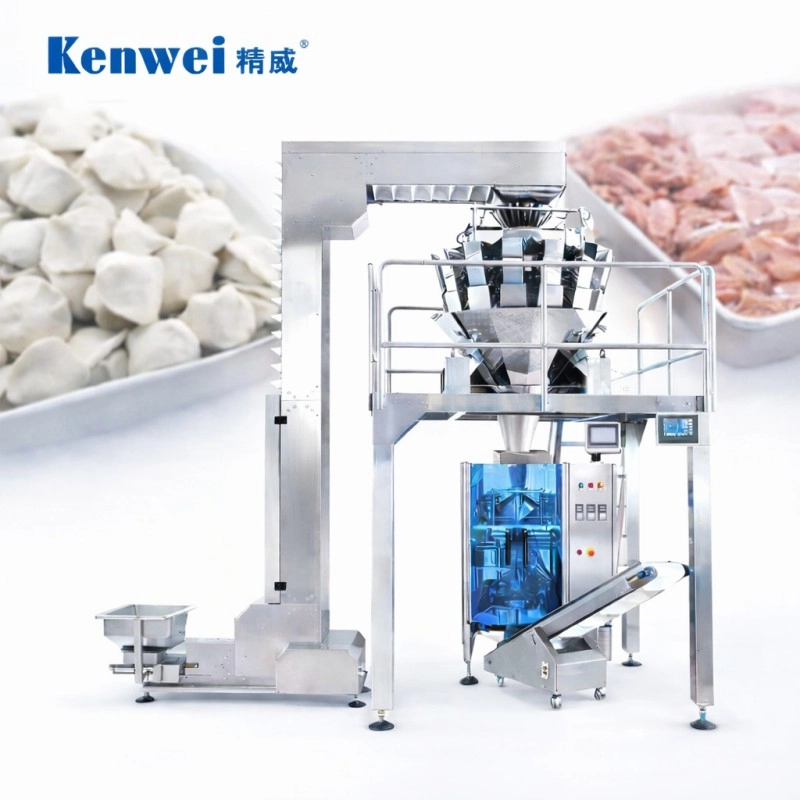
Vertical Frozen Food Packaging Machine for IQF & Frozen Products JW-B1
The Kenwei JW-B1 Vertical Frozen Food Packaging Machine is designed for IQF and frozen products, ensuring efficient, airtight packing. This vertical packing machine boosts productivity with precision sealing, ideal for frozen food packaging needs in the food industry.
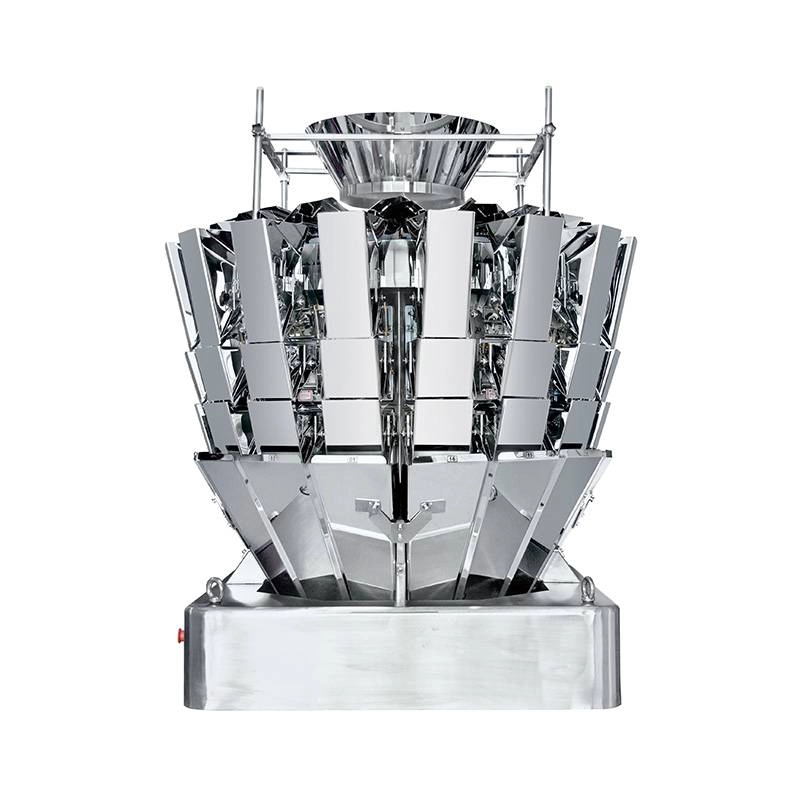
16 Head Three Layer Multihead Weigher for Granular and Irregular Materials
Kenwei’s 16 Head Three Layer Multihead Weigher ensures precise weighing of granular and irregular materials. This multihead weighing machine offers efficient, high-speed performance, ideal for various packaging needs. Trust our 16 head weigher for accuracy and reliability in your production line.
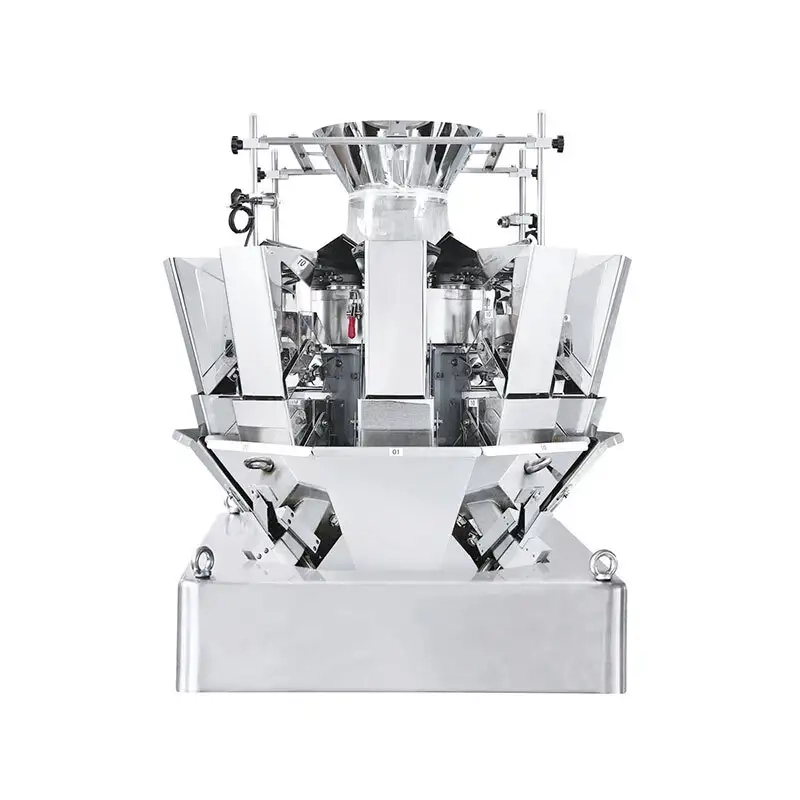
10-Head Standard No-Spring Multihead Weigher 1.6L for Precise Weighing
The standard no-spring combination scale features a patented spring-free hopper design, making it ideal for weighing a variety of products such as melon seeds, peanuts, nuts, almonds, grapes, candies, pistachios, potato chips, shrimp chips, and more. The double-support feeding tray is easily adjustable, while the feeding hopper is designed for easy disassembly, ensuring convenience and cleanliness. With a maximum weighing speed of up to 120 bags per minute, the 14-head standard no-spring combination scale is an economical, versatile, and cost-effective solution.
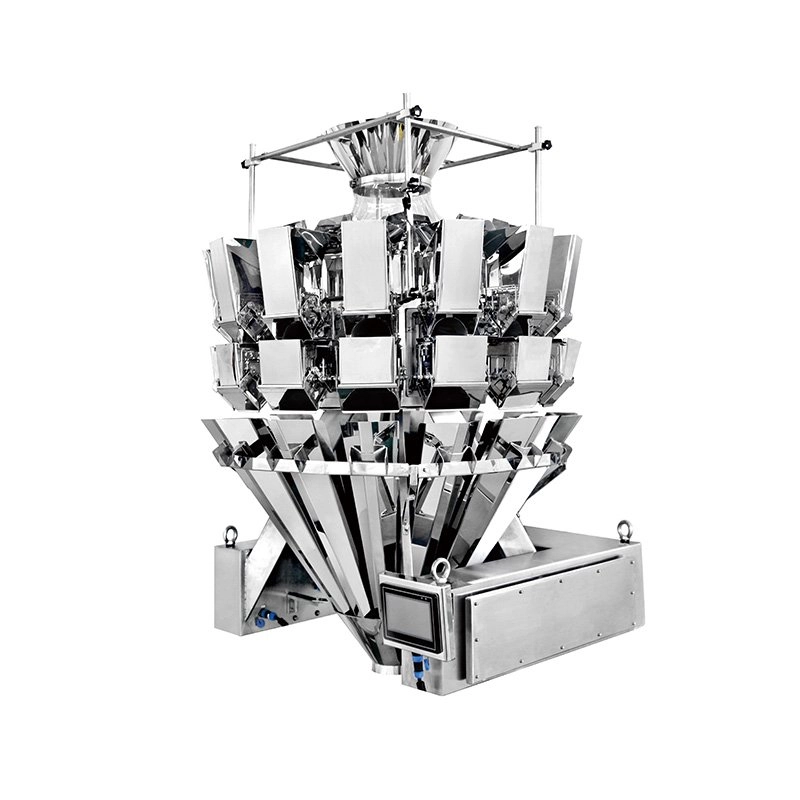
Automatic Multihead Weigher for Stick and Bar-Shaped Materials
Kenwei’s Automatic Multihead Weigher for Stick and Bar-Shaped Materials ensures precise, fast, and efficient weighing. This advanced automatic multihead weighing machine is ideal for accurate portioning of various stick and bar-shaped products, enhancing productivity and reducing waste.
Get in touch with us
If you have any comments or good suggestions, please leave us a message, later our professional staff will contact you as soon as possible.
Kenwei
Kenwei
Kenwei multi weigh
Kenwei
Kenwei
Kenwei