






Comparing Single Screw Feeding vs Vibratory Feeding Systems
This article compares vertical single screw feeding and vibratory feeding systems for multihead weigher integration in pickle packaging lines. It evaluates accuracy, throughput, product integrity, maintenance, cost, and line integration, and introduces the 14 Heads Vertical Single Screw Feeding Pickles Weigher backups as a specialized solution for pickled products.
- Optimizing Feed Systems for Pickle Packaging Lines
- Why feed method matters for pickles
- Role of the multihead weigher in portion control
- Standards and hygienic design considerations
- Technical Comparison: Vertical Single Screw vs Vibratory Feeding
- How each system works
- Accuracy and consistency
- Product integrity and gentle handling
- Operational Factors: Throughput, Cleaning, and Maintenance
- Throughput and line balance
- Cleaning, sanitation, and CIP considerations
- Maintenance and wear
- Cost, ROI and Practical Selection Guidelines
- Capital and lifecycle costs
- When to choose a vertical single screw feeder
- When vibratory feeding makes sense
- Side-by-side technical comparison table
- Case Study and Integration Tips
- Applying the 14 Heads Vertical Single Screw Feeding Pickles Weigher backups
- Integration checklist for packaging engineers
- Real-world metrics to validate performance
- References and Further Reading
- FAQs
- Q: Which feeder gives better accuracy for multihead weighers?
- Q: Can vibratory feeders be used for pickles if carefully tuned?
- Q: How important is hygienic design for feeders handling brined products?
- Q: Does using a vertical single screw feeder reduce giveaway?
- Q: What should I measure during a pilot test?

This comparative guide examines vertical single screw feeding and vibratory feeding systems in the context of multihead weigher lines for pickles. It highlights practical differences in product handling, accuracy, throughput, sanitation, and total cost of ownership (TCO), helping packaging engineers and procurement teams choose the optimal feeding technology for fragile, irregular, and wet food items. The guidance is grounded in industry best practices and standards for food processing equipment design and hygienic operation.
Optimizing Feed Systems for Pickle Packaging Lines
Why feed method matters for pickles
Pickles present specific handling challenges: irregular shapes, variable sizes, high moisture, and soft tissues prone to bruising. These characteristics directly affect the performance of a multihead weigher. Feeding systems must deliver a consistent, controlled flow of product into the weigher's hoppers without damage or clumping. Choosing the right feeder—vertical single screw or vibratory—impacts fill accuracy, waste, and throughput.
Role of the multihead weigher in portion control
The multihead weigher is the final judge of portion accuracy. Effective feeders reduce variability arriving at the weigh heads, allowing the multihead weigher to compute optimal weight combinations with fewer corrections. That translates into higher line yield and less giveaway. Integrating a feeder that suits pickles increases the effective speed of the multihead system and improves quality control.
Standards and hygienic design considerations
Food contact equipment must follow hygienic design principles to prevent contamination and enable effective cleaning. Refer to standards and guidance from authorities such as the International Organization for Standardization (ISO) and food safety resources at the U.S. Food & Drug Administration (FDA). Feeders must allow full access for cleaning, use suitable materials (e.g., stainless steel 316), and avoid crevices where brine and organic matter can accumulate.
Technical Comparison: Vertical Single Screw vs Vibratory Feeding
How each system works
Vertical single screw feeders use a rotating screw (auger) to lift product upward and meter it into the multihead weigher's distribution system. They can be fitted with gentle cups, paddles, or specially profiled flights to handle fragile items. Vibratory feeders use controlled vibration to move product across trays or into funnels; the motion can be tuned by amplitude, frequency, and tray design.
Accuracy and consistency
For a multihead weigher, consistent feed granularity—meaning the ability to supply single items or predictable small groups—is crucial. Vertical single screw feeders can meter product in a more uniform, controlled feed rate for discrete, bulk items, which helps multihead weighers achieve better first-pass combinations. Vibratory feeders are excellent when product flows freely and is relatively uniform in size, but they may produce clustering or variable presentation with wet or irregular items like pickles.
Product integrity and gentle handling
Pickles benefit from low-impact handling to avoid splitting and bruising. Vertical single screw mechanisms can be engineered with soft contact surfaces and slower rotational speeds to minimize damage. Vibratory systems impart repeated impacts and friction, which can damage soft-skinned items unless trays and motion profiles are carefully optimized.
Operational Factors: Throughput, Cleaning, and Maintenance
Throughput and line balance
Throughput depends on feeder design, multihead weigher heads, and downstream packaging speed. Vibratory feeders often allow higher peak throughput for free-flowing products because they can present items rapidly in several lanes. Vertical single screw feeders—especially specialized designs for pickles—can achieve comparable throughput for moderate speeds while maintaining better portion control and less product damage.
Cleaning, sanitation, and CIP considerations
Hygienic cleaning is a critical operational cost. Vibratory feeders typically have open trays that are relatively accessible for manual cleaning but can harbor residues in weld seams and under tray mountings. Vertical single screw feeders with enclosed tubes and removable screws are easier to design for hygienic operation and can support semi-automated cleaning. For brined products like pickles, the ability to fully disassemble, remove seals, and rinse brine channels is a major advantage.
Maintenance and wear
Vibratory feeders have fewer moving parts (no rotating screws), so mechanical wear may be lower in some respects; however, vibratory motors and mountings require periodic inspection and replacement. Screw feeders have rotating components subject to wear, but the parts are typically modular and replaceable. Maintenance budgets should account for seal replacement, bearings, and surface reconditioning for both types.
Cost, ROI and Practical Selection Guidelines
Capital and lifecycle costs
Initial capital cost varies by complexity and hygienic design. Vibratory systems can be less expensive initially for simple trays, but customizing trays and controls for fragile items raises cost. Vertical single screw feeders often cost more upfront due to precision components and hygienic enclosures but can reduce product loss and rework—improving lifecycle ROI.
When to choose a vertical single screw feeder
Choose vertical single screw feeding when product is soft, wet, irregular, or when consistent metering into a multihead weigher is required. This approach reduces bruising, improves first-pass weigh accuracy, and simplifies sanitation for brined products. The 14 Heads Vertical Single Screw Feeding Pickles Weigher backups is a purpose-built example, designed to handle pickle characteristics and deliver steady feeds to a multihead weigher.
When vibratory feeding makes sense
Vibratory feeding works well for relatively firm, dry, free-flowing items and when layout constraints require a flat or inclined tray to align products. It's a cost-effective choice for higher-speed lines processing uniform product with minimal friability.
Side-by-side technical comparison table
| Criteria | Vertical Single Screw Feeding | Vibratory Feeding |
|---|---|---|
| Product types | Fragile, wet, irregular (e.g., pickles) | Firm, dry, uniform pieces |
| Feed consistency to multihead weigher | High—controlled metering | Variable—depends on product and tray tuning |
| Product damage risk | Low, with proper design | Medium–high for soft items |
| Sanitation / Cleanability | Better when designed for disassembly | Accessible but may trap brine in mountings |
| Maintenance | Rotating parts—regular bearing/seal service | Fewer moving parts—vibration motors require care |
| Typical CapEx | Moderate–High | Low–Moderate |
| Best use case | Pickles, olives, marinated vegetables | Chips, nuts, dry snacks, some vegetables |
Case Study and Integration Tips
Applying the 14 Heads Vertical Single Screw Feeding Pickles Weigher backups
14 Heads Vertical Single Screw Feeding Pickles Weigher backups
This type of weigher is designed to handle the unique characteristics of pickles, ensuring precise measurements for packaging and distribution. It uses a vertical single screw mechanism to feed the pickles into the weighing system, allowing for efficient and consistent weighing. This technology is particularly useful in food processing and packaging facilities where precise portioning is essential for quality control and customer satisfaction. This specialized equipment is perfect for accurately measuring and dispensing pickles in a production line or packaging facility. The vertical design allows for efficient and precise filling of containers, while the single screw feeding mechanism ensures consistent and reliable weighing.
Integration checklist for packaging engineers
- Confirm product-specific trials: run pilot products through the feeder + multihead weigher to measure first-pass accuracy and damage rates.
- Design for washdown: specify IP69K-rated components and removable screws/trays for brine-heavy products.
- Match feeder output to multihead weigher input rate: assess head-count (e.g., 14 heads) and target containers/minute to ensure balanced flow.
- Include level sensors and anti-bridging devices: avoid surges and starvation at the weigher infeed hoppers.
- Plan preventive maintenance: schedule bearings, seals, and vibratory motor checks as appropriate for chosen system.
Real-world metrics to validate performance
Key KPIs to measure during trials and commissioning:
- First-pass accuracy (%) of the multihead weigher
- Rate of product damage / reject (%)
- Throughput (containers/min or kg/hr)
- Cleaning time per shift (minutes)
- Total Cost of Ownership over 5 years (CapEx + OpEx)
References and Further Reading
For background on feeder technologies and hygienic equipment design, refer to authoritative sources such as the Wikipedia overview of vibrating feeders and the page on screw conveyors. General guidance on weighing equipment and scales is available at the weigher article. International standards and guidance can be found via ISO and food safety resources through the FDA.
FAQs
Q: Which feeder gives better accuracy for multihead weighers?
A: For pickles and similar soft, wet, irregular products, vertical single screw feeders generally provide more consistent, gentle metering into multihead weighers, improving first-pass accuracy. Vibratory feeders can match accuracy for uniform, firm products when properly tuned.
Q: Can vibratory feeders be used for pickles if carefully tuned?
A: Yes, with tray redesigns, reduced amplitude/frequency, and protective coatings or inserts, vibratory feeders can handle pickles at lower speeds. However, they often require more trial-and-error and ongoing tuning compared to purpose-built screw feeders.
Q: How important is hygienic design for feeders handling brined products?
A: Extremely important. Brine accelerates corrosion and traps organic matter. Select stainless steel construction, avoid dead zones, and choose designs that are easily disassembled for cleaning. Verify compliance with sanitary design guidance from standards organizations and regulatory agencies such as ISO and FDA.
Q: Does using a vertical single screw feeder reduce giveaway?
A: It can. More consistent feed presentation reduces the number of corrective weigh cycles and overfill events, which reduces giveaway and decreases packaging costs over time.
Q: What should I measure during a pilot test?
A: Measure first-pass accuracy, throughput, damage/reject rates, cleaning time, and maintenance intervals. These KPIs help compute ROI and determine which feeder best suits your line.
If you want to evaluate the 14 Heads Vertical Single Screw Feeding Pickles Weigher backups for your production line or schedule a product trial, contact our sales team or request a demo. View product details and request quotation by contacting us today.
Contact Us / View Product: For pricing, technical drawings, or on-site trials, reach out to our sales engineers via the contact form or email. We'll help you configure the ideal multihead weigher line for your pickle packaging needs.
Tags
linear scale weigher
linear scale weigher
Weighing and packing systems
Weighing and packing systems
Horizontal Packaging Machine
Horizontal Packaging Machine
buy premade pouch packing machine
buy premade pouch packing machine
food packing machinery
food packing machinery
rotary packaging machine
rotary packaging machine
Recommended for you
Reliability Metrics Buyers Need for Multihead Weigher Purchases

Integration with Production Line Controls and Traceability
Optimize speed and accuracy on 14 head multihead weighers for pickles
The B2B Buyer’s Guide to industrial checkweigher
Prdoucts Categories
Question you may concern
About Product choice
What types of products does Kenwei offer?
Kenwei specializes in high-precision and high-speed automated machinery for weighing, packaging, and quality control. Our main products include: multihead weigher, linear weigher, checkweighers,food metal detector,vertical packing machine and packing machine accessories.
About After Sales Support
Can I get remote troubleshooting assistance?
Yes, Kenwei offers remote troubleshooting for certain issues. Our technical team can guide you through diagnostics and help resolve issues via phone, video call, or online messaging.
About Cooperation Process
How does Kenwei ensure the quality of its machines?
Kenwei has a stringent quality control system in place. Each machine is rigorously tested for precision, speed, and reliability before it is shipped.
Can Kenwei customize equipment to meet my specific needs?
Yes! We offer customized solutions for all of our machines. Our team will work closely with you to understand your specific requirements and create a solution that meets your needs in terms of size, functionality, speed, and other factors.
About Solution suggestions
What industries benefit the most from Kenwei solutions?
Kenwei solutions are ideal for a wide range of industries, including:
1)Food Packaging snacks, grains, and powdered beverages.
2)Pharmaceuticals: Precise weighing of tablets, and capsules.
3)Chemicals: Weighing and packaging granular and powdered chemicals.
4)Agriculture: Packaging seeds, grains, and fertilizers.
You may also like
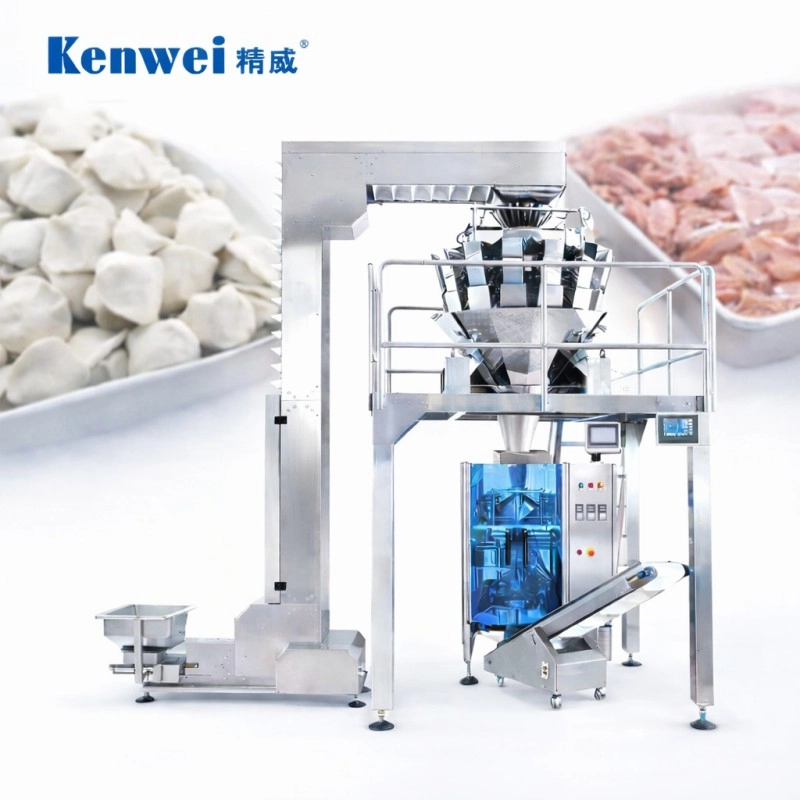
Vertical Frozen Food Packaging Machine for IQF & Frozen Products JW-B1
The Kenwei JW-B1 Vertical Frozen Food Packaging Machine is designed for IQF and frozen products, ensuring efficient, airtight packing. This vertical packing machine boosts productivity with precision sealing, ideal for frozen food packaging needs in the food industry.
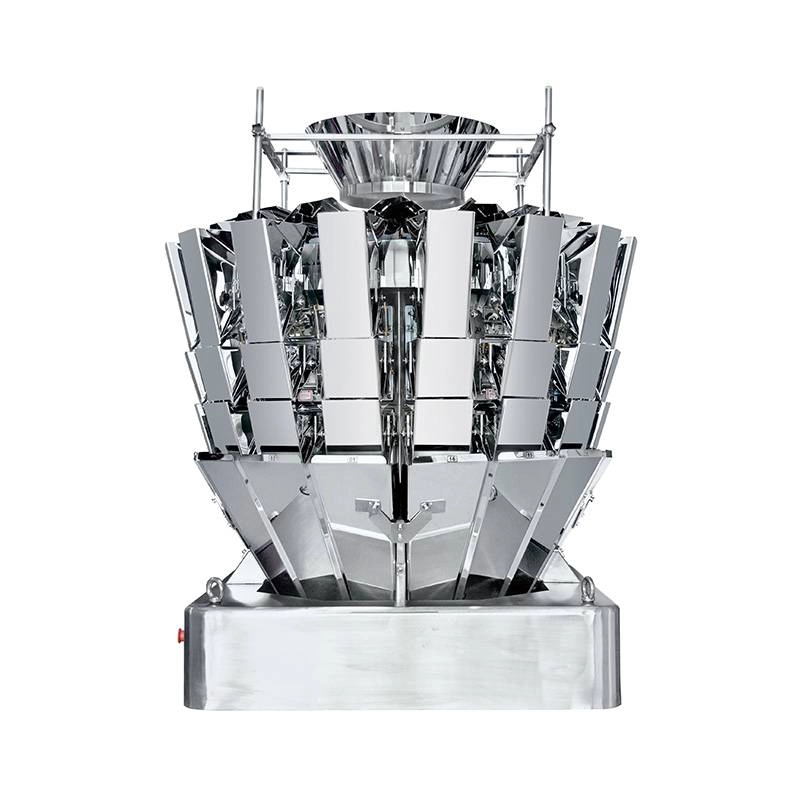
16 Head Three Layer Multihead Weigher for Granular and Irregular Materials
Kenwei’s 16 Head Three Layer Multihead Weigher ensures precise weighing of granular and irregular materials. This multihead weighing machine offers efficient, high-speed performance, ideal for various packaging needs. Trust our 16 head weigher for accuracy and reliability in your production line.
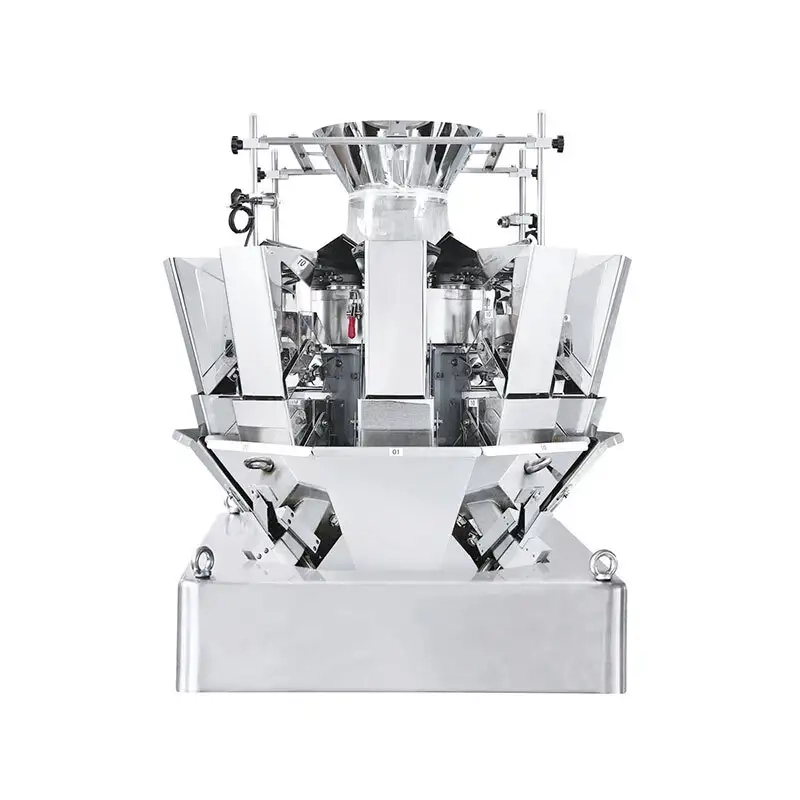
10-Head Standard No-Spring Multihead Weigher 1.6L for Precise Weighing
The standard no-spring combination scale features a patented spring-free hopper design, making it ideal for weighing a variety of products such as melon seeds, peanuts, nuts, almonds, grapes, candies, pistachios, potato chips, shrimp chips, and more. The double-support feeding tray is easily adjustable, while the feeding hopper is designed for easy disassembly, ensuring convenience and cleanliness. With a maximum weighing speed of up to 120 bags per minute, the 14-head standard no-spring combination scale is an economical, versatile, and cost-effective solution.
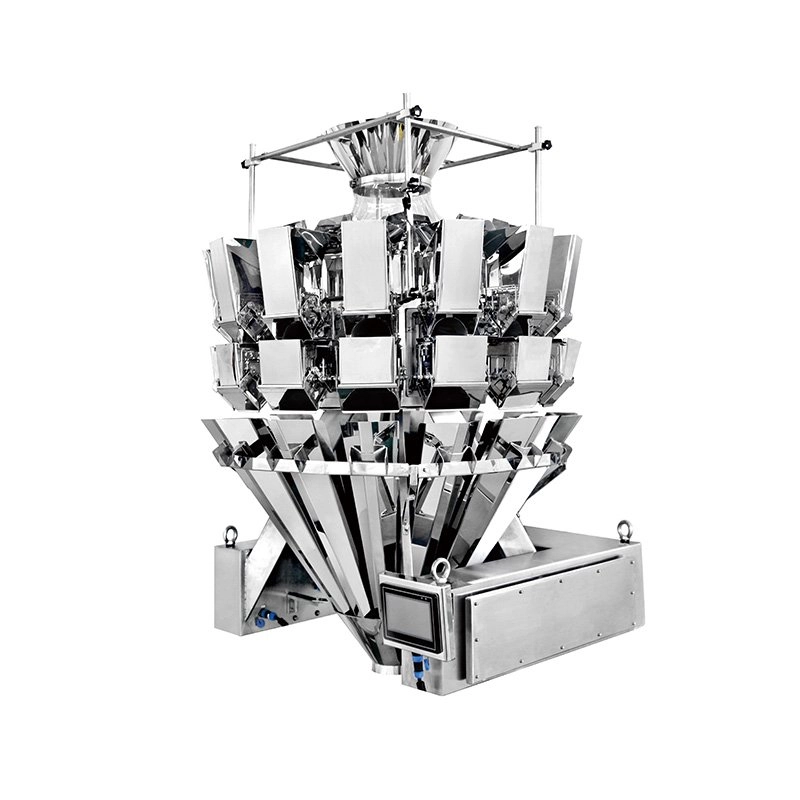
Automatic Multihead Weigher for Stick and Bar-Shaped Materials
Kenwei’s Automatic Multihead Weigher for Stick and Bar-Shaped Materials ensures precise, fast, and efficient weighing. This advanced automatic multihead weighing machine is ideal for accurate portioning of various stick and bar-shaped products, enhancing productivity and reducing waste.
Get in touch with us
If you have any comments or good suggestions, please leave us a message, later our professional staff will contact you as soon as possible.
Kenwei
Kenwei
Kenwei multi weigh
Kenwei
Kenwei
Kenwei