






Reliability Metrics Buyers Need for Multihead Weigher Purchases
This article outlines the essential reliability metrics procurement teams and production managers should require when buying multihead weighers — with a focus on pickle processing using the 14 Heads Vertical Single Screw Feeding Pickles Weigher backups. It is written for global food processors in North America, Europe, and Asia and includes test checklists, threshold recommendations, maintenance guidance, and authoritative references for compliance and best practice.
- Key reliability metrics every buyer should require
- Accuracy and precision: what to measure and why it matters
- Uptime and availability: targets that protect throughput
- MTBF and MTTR: reliability vs. recoverability
- Evaluating the 14 Heads Vertical Single Screw Feeding Pickles Weigher backups
- Why vertical single screw feeding suits pickles
- Specific reliability specs buyers should request
- Backup systems and redundancy to reduce line stoppages
- Testing, validation and procurement checklist
- Factory Acceptance Test (FAT) and Site Acceptance Test (SAT)
- Calibration, traceability and documentation
- Service agreements, spares and training
- Maintenance, operational practices and ROI considerations
- Predictive maintenance and remote diagnostics
- Operator training and procedure standardization
- Total cost of ownership (TCO) model
- Practical benchmarks and a buyer's quick-reference table
- Regulatory and hygienic design considerations
- Food-contact materials and washdown capability
- Documentation for audits and compliance
- Brand advantages and why our 14-head solution stands out
- Frequently Asked Questions (FAQ)
- Q: How often should the multihead weigher be calibrated?
- Q: What MTBF should I expect for a 14-head pickle weigher?
- Q: Can the machine handle different sizes of pickles without retooling?
- Q: What is the typical uptime guarantee in a service contract?
- Q: How should I validate washdown compatibility?
- Q: What spare parts should I stock on-site?
- Q: How can remote diagnostics reduce downtime?
- Q: Are there standard tests I should require at FAT?
- Authoritative references

This article helps food processors, packaging engineers, and procurement specialists evaluate reliability when purchasing a multihead weigher. It emphasizes objective metrics (accuracy, uptime, MTBF/MTTR, reject rate), practical tests (FAT/SAT, calibration), and operational readiness (spares, service contracts, hygienic design) — with particular attention to pickle handling using the 14 Heads Vertical Single Screw Feeding Pickles Weigher backups. Suitable for buyers across North America, Europe, and Asia seeking predictable throughput and stable portioning in production lines. Reliability assessments naturally extend to risk mitigation, where spare parts and backup planning for a 14-head multihead weigher safeguards continuous production.
Key reliability metrics every buyer should require
Accuracy and precision: what to measure and why it matters
Accuracy and precision determine product give-away, regulatory compliance, and customer satisfaction. For multihead weighers, buyers should request documented measurement capability expressed as:
- Average weight error (mean bias) in grams or percent
- Repeatability (standard deviation) across consecutive cycles
- Maximum allowed CPK or process capability for target weights
Ask manufacturers for traceable calibration certificates and sample test reports from a weighing scale calibrated to national standards.
Uptime and availability: targets that protect throughput
Uptime is the percent of scheduled production time during which the multihead weigher runs productively. Buyers should demand:
- Guaranteed operational availability (e.g., ≥ 95% for high-volume lines)
- Defined measurement intervals during which availability is logged
- Failover/redundancy features that minimize lost shifts
Availability should be tied to service response time and stocking of critical spares.
MTBF and MTTR: reliability vs. recoverability
Mean time between failures (MTBF) indicates how often unscheduled failures occur; mean time to repair (MTTR) indicates how quickly the machine can be returned to service. Buyers should request:
- Target MTBF values (e.g., 2,000–5,000 operating hours depending on complexity)
- Guaranteed MTTR with defined remote support and on-site SLA tiers
Use these metrics to model lost production risk and to size service contracts appropriately.
Evaluating the 14 Heads Vertical Single Screw Feeding Pickles Weigher backups
Why vertical single screw feeding suits pickles
The 14 Heads Vertical Single Screw Feeding Pickles Weigher backups is engineered for the irregular shape, surface moisture, and variable density of pickles. The vertical single screw feeding mechanism gently conveys pieces into the weigh hoppers to reduce jams and minimize bruising. Compare this approach to vibratory infeed systems that can orient or damage delicate products.
This product is described as:
This type of weigher is designed to handle the unique characteristics of pickles, ensuring precise measurements for packaging and distribution. It uses a vertical single screw mechanism to feed the pickles into the weighing system, allowing for efficient and consistent weighing. This technology is particularly useful in food processing and packaging facilities where precise portioning is essential for quality control and customer satisfaction. This specialized equipment is perfect for accurately measuring and dispensing pickles in a production line or packaging facility. The vertical design allows for efficient and precise filling of containers, while the single screw feeding mechanism ensures consistent and reliable weighing.
Specific reliability specs buyers should request
When evaluating suppliers of the 14-head pickle weigher, request the following documented specifications:
- Accuracy range (e.g., ±1–3 g depending on target weight)
- Cycle speed and sustained throughput (heads x cycles per minute)
- Hopper fill and emptying reliability metrics (reject rate, jam rate)
- Sanitation downtime (time required for full disassembly, cleaning, and reassembly)
- Environmental tolerances (operating temperature, humidity, washdown capability)
Backup systems and redundancy to reduce line stoppages
Backup features to minimize production loss include:
- Redundant control modules or hot-swappable CPU units
- Recovery modes that allow partial operation when one head is offline
- Onboard diagnostics with remote access for quick troubleshooting
Confirm the supplier can demonstrate realistic failure-mode tests showing graceful degradation rather than full line stoppage.
Testing, validation and procurement checklist
Factory Acceptance Test (FAT) and Site Acceptance Test (SAT)
FAT and SAT are critical. A proper FAT should replicate your product and packaging format; it must include throughput runs, weight accuracy checks, and sanitation cycles. SAT validates integration into your line and verifies conveyor synchronization, reject systems, and PLC/SCADA interfaces.
Demand a FAT protocol that includes pass/fail criteria for each reliability metric and retain it as a contractual deliverable.
Calibration, traceability and documentation
Calibration should be traceable to national standards and include procedure documents for routine checks. Ask for:
- Calibration certificates for load cells/hopper scales
- Calibration interval recommendations and drift tolerance
- Traceability logs and digital records that can be exported
These controls support quality systems and regulatory audits.
Service agreements, spares and training
Negotiate a service package that covers guaranteed response times, preventive maintenance schedules, and parts availability. Specifically request:
- Lead times for critical spare parts
- Recommended spare-parts list with pricing
- Operator and maintenance training curricula
Consider stocking items like feed screws, sensors, small PLC modules, and belts to reduce MTTR.
Maintenance, operational practices and ROI considerations
Predictive maintenance and remote diagnostics
Implementing predictive maintenance reduces unplanned downtime. Look for multihead weighers that provide:
- Built-in diagnostics and error logs
- Remote connectivity for vendor-assisted troubleshooting
- Sensor-based indicators for feed performance and vibration
Remote diagnostics can cut initial troubleshooting time by up to 50% compared to on-site-only diagnostics, reducing MTTR.
Operator training and procedure standardization
Well-trained operators reduce stoppages caused by incorrect feed settings, improper cleaning, or misconfigured recipes. Require vendor-provided training that includes:
- Daily startup and shutdown checks
- Sanitation and reassembly best practices
- Troubleshooting flows and escalation paths
Total cost of ownership (TCO) model
To evaluate ROI, include:
- Acquisition cost and installation
- Expected uptime-based production yield
- Service contract and spare parts costs
- Give-away savings from improved accuracy
Use MTBF, MTTR, and accuracy figures to model lost production and ingredient waste to get a realistic payback period.
Practical benchmarks and a buyer's quick-reference table
Below is a concise table of recommended reliability targets and buyer questions to validate each metric during procurement.
| Metric | Definition | Recommended Target/Threshold | Buyer Validation Questions |
|---|---|---|---|
| Accuracy (mean error) | Average deviation from target weight | ±1–3 g (varies by target weight) | Provide calibration certificates and sample run data with our product. |
| Repeatability (SD) | Consistency across consecutive cycles | SD < 1% of target weight for most portion sizes | Show 30-min continuous run logs and distribution charts. |
| Uptime | Productive run time as % of scheduled time | >95% for high-volume lines | Provide historical uptime from installed references. |
| MTBF | Mean hours between failures | 2,000–5,000 hours (depending on environment) | Detail failure modes and typical repair steps. |
| MTTR | Average repair time to resume operation | <4 hours with on-site spare parts; <24 hours otherwise | Define SLA tiers and remote support capability. |
| Reject/Jam Rate | Percent of cycles causing jams or rejects | <0.5% for optimized product formats | Demonstrate with FAT using our pickle SKU. |
Regulatory and hygienic design considerations
Food-contact materials and washdown capability
Ensure the weigher uses food-grade stainless steel and meets regional directives for food-contact surfaces. For reference, suppliers often align with hygiene best practices promoted by the European Hygienic Engineering & Design Group (EHEDG) and local regulatory requirements such as the US FDA food safety guidance.
Documentation for audits and compliance
Request documentation supporting sanitary design, cleanability, and traceability. This includes material certificates, weld inspection records, and cleaning procedures aligned with your HACCP plan or equivalent quality program. International standards like the Codex Alimentarius provide a baseline for food safety objectives.
Brand advantages and why our 14-head solution stands out
When comparing suppliers, consider the following strengths we emphasize in the 14 Heads Vertical Single Screw Feeding Pickles Weigher backups:
- Purpose-built feed mechanism: vertical single screw reduces product damage and stabilizes hopper fills for irregular items like pickles.
- Redundancy and graceful degradation: the 14-head architecture supports partial operation modes to keep throughput while one head is serviced.
- Comprehensive FAT/SAT protocols: we run your SKU during FAT, produce a full data package, and include traceable calibration certificates.
- Connectivity and diagnostics: integrated remote access and predictive alerts that lower MTTR and streamline vendor support.
- Hygienic full-wash design: stainless grade and sealing specifications suitable for routine washdown and sanitation cycles.
These capabilities reduce the Total Cost of Ownership by increasing uptime, lowering give-away, and shortening recovery times.
Frequently Asked Questions (FAQ)
Q: How often should the multihead weigher be calibrated?
A: Calibration frequency depends on usage and regulatory needs. For high-volume operations, perform a full calibration quarterly and quick checks daily. Always calibrate after major maintenance or after a sanitation cycle that involves scale removal. Maintain traceable records.
Q: What MTBF should I expect for a 14-head pickle weigher?
A: Expect an MTBF in the range of 2,000–5,000 operating hours under normal conditions. Environmental factors (corrosive brine, continuous washdown) may lower MTBF; select materials and protect electronics accordingly.
Q: Can the machine handle different sizes of pickles without retooling?
A: Minor SKU variations can often be handled via recipe adjustments. For dramatic size or shape changes, you may need different feed funnels or screw geometries. Ask suppliers for a changeover time and tool list.
Q: What is the typical uptime guarantee in a service contract?
A: Many vendors guarantee ≥95% annual availability in High Quality SLAs, with specified response times (e.g., 4-hour remote response, 24-hour on-site dispatch). Verify penalties or credits for missed SLAs.
Q: How should I validate washdown compatibility?
A: Confirm IP ratings for electrical enclosures, materials (AISI 304/316 stainless), and that seals and bearings are rated for regular sanitation. Ask for test reports on salt-spray or corrosion resistance if brine exposure is expected.
Q: What spare parts should I stock on-site?
A: Stock feed screws, sensors (photoelectric/weight), load cells (if hot-swappable), belts, key bearings, and any proprietary small PLC modules. The vendor should provide a prioritized spare parts list based on MTTR analysis.
Q: How can remote diagnostics reduce downtime?
A: Remote diagnostics allow vendors to access logs, update firmware, and run guided troubleshooting. In many cases, faults can be resolved remotely without an on-site visit, reducing MTTR significantly.
Q: Are there standard tests I should require at FAT?
A: Yes — require throughput validation, accuracy and repeatability runs, jam/reject simulations, sanitation cycle and reassembly time, and interface tests with your conveyors and reject systems. Include pass/fail criteria in the purchase contract.
If you'd like to evaluate the 14 Heads Vertical Single Screw Feeding Pickles Weigher backups for your line, request a detailed FAT protocol, real-world sample testing, and a spare-parts recommendation tailored to your SKU and shift pattern.
Contact our sales team to arrange a product demo, FAT scheduling, or to download the full spec sheet: sales@example.com. View product details: 14 Heads Vertical Single Screw Feeding Pickles Weigher backups.
Authoritative references
Tags
Working Platform
Working Platform
3 head linear weigher
3 head linear weigher
automatic granule packing machine supplier
automatic granule packing machine supplier
automatic powder packing machine
automatic powder packing machine
Finished Product Belt Conveyor
Finished Product Belt Conveyor
Weigher Packaging System
Weigher Packaging System
Recommended for you
Sustainable Packaging: Combination Weighers Role in 2026
How to Calibrate Your Food Grain Packing Machine Accurately

Compliance and Safety Considerations for Food Packaging Machines
Hygienic Design Features in Food Metal Detectors
Prdoucts Categories
Question you may concern
About Price and payment
How do I make a payment for Kenwei machines?
We accept several payment methods: T/T, Letter of Credit (L/C)
About Logistics
How are large machines handled during shipping?
Large machines are typically shipped via sea freight using containerized shipping.
About products customization
How long does it take to deliver a customized Kenwei machine?
The lead time for customized machines can vary based on the complexity of the customization, as well as production schedules. Generally, it takes 4-6 weeks to deliver a fully customized machine after design approval.
How do I request a custom-built Kenwei machine?
To request a customized machine, simply contact our sales or engineering team.
About After Sales Support
What do I do if I encounter a malfunction in the machine?
If you encounter a malfunction, first check the user manual and troubleshooting guide for common issues. If the problem persists, contact our technical support team for further assistance.
You may also like
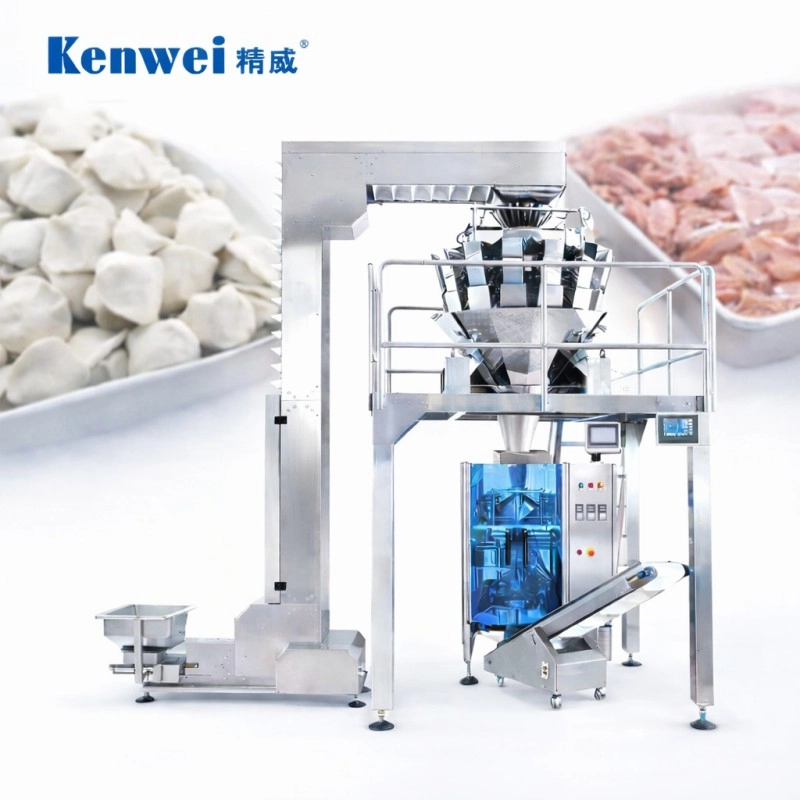
Vertical Frozen Food Packaging Machine for IQF & Frozen Products JW-B1
The Kenwei JW-B1 Vertical Frozen Food Packaging Machine is designed for IQF and frozen products, ensuring efficient, airtight packing. This vertical packing machine boosts productivity with precision sealing, ideal for frozen food packaging needs in the food industry.
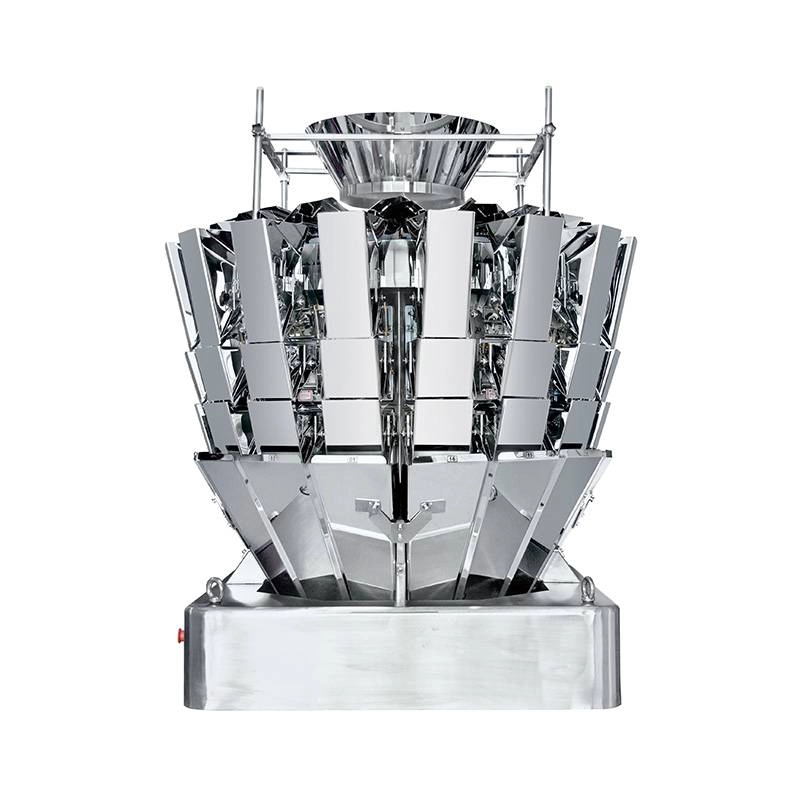
16 Head Three Layer Multihead Weigher for Granular and Irregular Materials
Kenwei’s 16 Head Three Layer Multihead Weigher ensures precise weighing of granular and irregular materials. This multihead weighing machine offers efficient, high-speed performance, ideal for various packaging needs. Trust our 16 head weigher for accuracy and reliability in your production line.
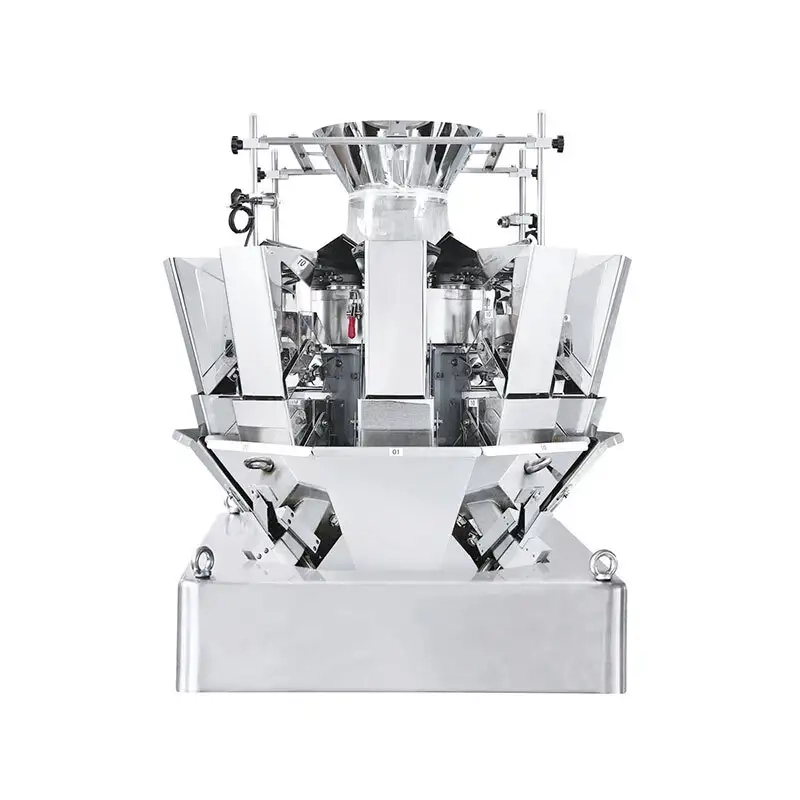
10-Head Standard No-Spring Multihead Weigher 1.6L for Precise Weighing
The standard no-spring combination scale features a patented spring-free hopper design, making it ideal for weighing a variety of products such as melon seeds, peanuts, nuts, almonds, grapes, candies, pistachios, potato chips, shrimp chips, and more. The double-support feeding tray is easily adjustable, while the feeding hopper is designed for easy disassembly, ensuring convenience and cleanliness. With a maximum weighing speed of up to 120 bags per minute, the 14-head standard no-spring combination scale is an economical, versatile, and cost-effective solution.
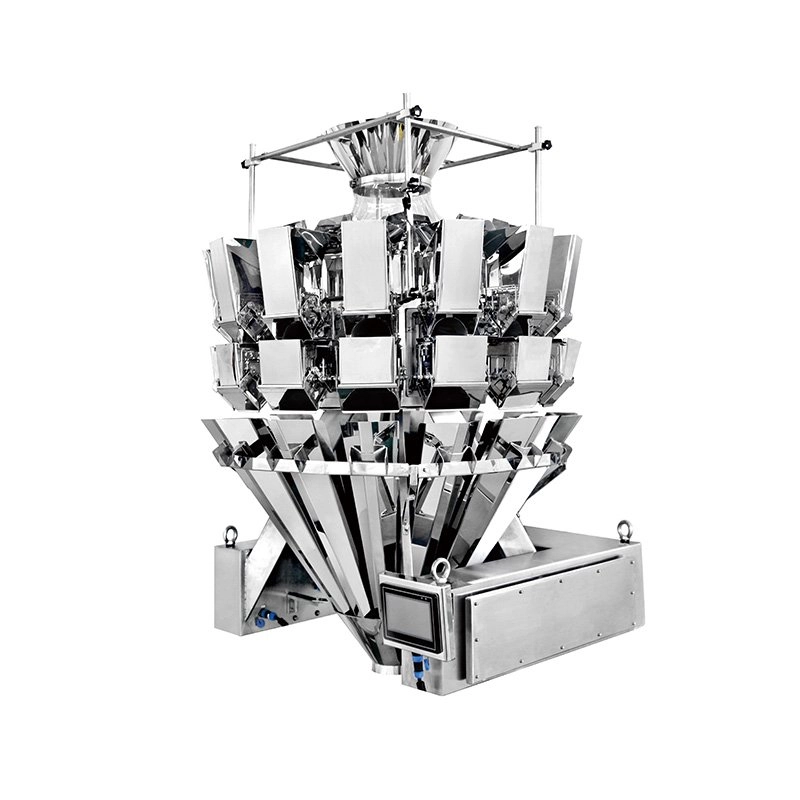
Automatic Multihead Weigher for Stick and Bar-Shaped Materials
Kenwei’s Automatic Multihead Weigher for Stick and Bar-Shaped Materials ensures precise, fast, and efficient weighing. This advanced automatic multihead weighing machine is ideal for accurate portioning of various stick and bar-shaped products, enhancing productivity and reducing waste.
Get in touch with us
If you have any comments or good suggestions, please leave us a message, later our professional staff will contact you as soon as possible.
Kenwei
Kenwei
Kenwei multi weigh
Kenwei
Kenwei
Kenwei