






How to Integrate a Multihead Weigher with Vertical Form Fill Seal Machines: A Practical Guide
Step-by-step guide to integrate a multihead weigher with VFFS machines. Covers mechanical alignment, control communication (Ethernet/IP, Modbus, digital I/O), synchronization, dosing strategies, commissioning, validation, ROI and maintenance — optimized for manufacturers and packaging engineers.
- Introduction: Why Integrate a Multihead Weigher with Vertical Form Fill Seal Machines?
- Understand the Business Case and Key Performance Goals
- Choose the Right Multihead Weigher and VFFS Combination
- Select by product type and flow behavior
- Match throughputs and mechanical layouts
- Mechanical Integration: Alignment, Infeed and Discharge
- Designing the discharge interface
- Use buffer hoppers and surge bins
- Control Integration: Communication Protocols and Synchronization
- Choose a reliable communications method
- Synchronize timing and recipe exchange
- Electrical and Safety Considerations
- Power and grounding
- Machine guarding and safety interlocks
- Software and Recipe Management for Seamless Operation
- Centralized recipe control and HMI convenience
- Data logging and traceability
- Testing, Commissioning and Validation Process
- Dry runs and mechanical validation
- Product trials and accuracy tuning
- Quality Control: Checkweigher and Metal Detector Integration
- Add inline checkweigher for weight control
- Include a metal detector for product safety
- Operational Optimization and Ongoing Maintenance
- Operator training and SOPs
- Planned maintenance and spare parts
- Measuring ROI and Economic Benefits
- Common Challenges and How to Solve Them
- Handling difficult products
- Troubleshooting communication errors
- Case Study Snapshot: Typical Integration Flow
- Why Kenwei for Your Multihead Weigher and VFFS Integration?
- Conclusion: Practical Steps to a Successful Integration
- Frequently Asked Questions
Introduction: Why Integrate a Multihead Weigher with Vertical Form Fill Seal Machines?
Integrating a multihead weigher with Vertical Form Fill Seal (VFFS) machines is a high-value upgrade for food and consumer goods packaging lines. This integration increases throughput, improves fill accuracy, reduces giveaway and enables automated, one-stop weighing and packing solutions — key commercial benefits that packaging engineers and procurement managers look for.
Understand the Business Case and Key Performance Goals
Before starting integration, define commercial KPIs such as target packs per minute (PPM), target weight accuracy, acceptable giveaway, footprint constraints, and uptime targets. Typical multihead weigher setups can achieve anywhere from 30 to 180 PPM depending on product characteristics and machine head count. Aligning these goals with the VFFS machine capacity avoids bottlenecks and maximizes ROI.
Choose the Right Multihead Weigher and VFFS Combination
Select by product type and flow behavior
Match the weigher head count and hopper design to the product. Free-flowing items like chips or nuts may run efficiently on conventional multihead weighers; fragile products might require gentle feeders or slower release gates. Choosing the correct configuration increases fill speed and accuracy.
Match throughputs and mechanical layouts
Ensure the multihead weigher’s maximum discharge rate matches or slightly exceeds the VFFS target speed. If a VFFS is rated at 80 packs/min for a given pouch size, pick a weigher setup that can supply that rate consistently under real production conditions.
Mechanical Integration: Alignment, Infeed and Discharge
Designing the discharge interface
Mechanical alignment between the weigher discharge chute and the VFFS fill tube is critical. Use adjustable brackets and flexible chutes to accommodate height changes. Ensure the distance is short to reduce product drop and scatter, which improves weighing repeatability and reduces product loss.
Use buffer hoppers and surge bins
A small buffer or surge hopper between the weigher and VFFS mitigates transient mismatches and maintains continuous feeding during pouch forming cycles. This is especially useful when the VFFS has intermittent indexing or when the weigher feed is batchy for certain products.
Control Integration: Communication Protocols and Synchronization
Choose a reliable communications method
Common industrial protocols include digital I/O, Ethernet/IP, Modbus TCP, and Profinet. Digital I/O is simple and robust for basic start/stop and gate signals. For advanced integration—line diagnostics, recipe management, and remote monitoring—use Ethernet-based protocols. Kenwei multihead weighers support standard industrial communication interfaces for smooth integration with leading VFFS controllers.
Synchronize timing and recipe exchange
Sync the weigher discharge timing to the VFFS forming cycle. This may involve using a trigger pulse from the VFFS to the weigher to release product only when the pouch is ready. Use recipe exchange over Ethernet to ensure both machines run the same pouch weight, count, and speed parameters when changing SKUs.
Electrical and Safety Considerations
Power and grounding
Verify electrical panel capacity, supply voltage, and proper grounding. Avoid sharing sensitive control circuits with heavy inrush loads to prevent communication errors or resets.
Machine guarding and safety interlocks
Ensure emergency stops, safety guards, interlocks, and lockout/tagout procedures are coordinated between the weigher and VFFS. Safety PLCs or shared E-stops can be used to ensure a single e-stop halts both machines immediately.
Software and Recipe Management for Seamless Operation
Centralized recipe control and HMI convenience
Implement centralized recipe management so operators can load weights, pouch types, and speed settings from a single HMI. This reduces changeover time and human errors during SKU switches.
Data logging and traceability
Enable logging of weights, rejects, downtime, and alarms. This data supports quality control, compliance with weight & measures regulations, and continuous improvement initiatives.
Testing, Commissioning and Validation Process
Dry runs and mechanical validation
Start with empty-bag dry runs to validate mechanical alignment, electrical signals, and interlocks. Check for smooth pouch transition and confirm the discharge chute aligns with the fill pipe.
Product trials and accuracy tuning
Run full-product trials at different speeds. Adjust feeder settings, gate timing, and combination algorithms in the multihead weigher until target accuracy and speed are achieved. Typical achievable accuracy under ideal conditions is commonly in the range of ±0.1–0.5% of the target weight depending on product and setup.
Quality Control: Checkweigher and Metal Detector Integration
Add inline checkweigher for weight control
Integrate an inline checkweigher downstream to verify fill accuracy and reject under/overweight packs automatically. This closes the loop on weighing accuracy and protects against giveaway.
Include a metal detector for product safety
Combine a metal detector before or after the checkweigher to ensure product safety compliance. Kenwei provides both metal detectors and checkweighers that can be integrated into your line for a complete automated solution.
Operational Optimization and Ongoing Maintenance
Operator training and SOPs
Invest in hands-on training and clear standard operating procedures (SOPs) for line changeovers, routine checks, and troubleshooting. Trained operators reduce downtime and speed up format changes.
Planned maintenance and spare parts
Schedule preventive maintenance (cleaning, belt checks, alignment) and maintain a small inventory of critical spare parts (gates, load cells, sensors). Regular calibration of weighheads and load cells maintains accuracy over time.
Measuring ROI and Economic Benefits
Calculate ROI by comparing reduced giveaway, increased throughput, labour savings from automation, and improved product quality. Many manufacturers recover integration costs within months to a few years depending on volume and margin improvements.
Common Challenges and How to Solve Them
Handling difficult products
For sticky, fine, or fragile products, use specialized feeders, anti-bridging devices, or lower weigher speeds. Adjust combination algorithms and add vibration or agitators in hoppers to ensure consistent flow.
Troubleshooting communication errors
Check grounding, cable integrity, IP addresses, and protocol compatibility. Use digital I/O as a fallback to validate basic start/stop and gate functions while resolving Ethernet issues.
Case Study Snapshot: Typical Integration Flow
Plan → Select equipment → Mechanical and electrical installation → Control integration (protocol mapping) → Dry run → Product trials → Tune accuracy → Add QC devices → Staff training → Live production. Following a structured plan reduces commissioning time and ensures predictable performance.
Why Kenwei for Your Multihead Weigher and VFFS Integration?
Kenwei is a leading manufacturer of multihead weighers, metal detectors, linear weighers, and checkweighers. We provide high-speed, high-precision machines and one-stop automated weighing and packaging solutions tailored to your needs. Located in Guangdong’s Fusha High-tech Industrial Park, Kenwei offers full services including design, manufacturing, installation, commissioning and after-sales support. Visit https://www.kenweigroup.com/ to learn more about our turnkey solutions and industry-proven equipment.
Conclusion: Practical Steps to a Successful Integration
Integrating a multihead weigher with a VFFS machine requires planning across mechanical, electrical, and software domains. Start with a clear business case, select matched equipment, ensure robust mechanical alignment, implement reliable communications (Ethernet/IP or digital I/O), commission carefully with product trials, and add downstream QC devices for full control. With correct setup and ongoing maintenance, the combined system delivers higher throughput, better accuracy, and measurable cost savings.
Frequently Asked Questions
Q: What communication protocol is best for integrating a multihead weigher with a VFFS machine?A: For basic start/stop and gate control, digital I/O is robust and simple. For advanced features like recipe sharing, diagnostics, and remote monitoring, Ethernet-based protocols such as Ethernet/IP, Modbus TCP, or Profinet are recommended. Choose based on the existing plant network and PLC compatibility.
Q: How do I match the throughput of a multihead weigher to my VFFS machine?A: Define the target packs per minute for your pouch size and product. Select a multihead weigher with a rated discharge rate at or above that target considering real-product trials. Use surge hoppers or buffers if transient mismatches occur.
Q: Can fragile products be handled by a multihead weigher and VFFS combo?A: Yes. Fragile products may need specialized gentle feeders, slower speeds, vibration control, or different chute designs. Testing and tuning are essential to minimize breakage while maintaining throughput.
Q: What accuracy can I expect after integration?A: Typical accuracy under ideal conditions is commonly in the range of ±0.1–0.5% of target weight, depending on product characteristics and machine configuration. Use a checkweigher for continuous verification and to reduce giveaway.
Q: How long does commissioning usually take?A: Commissioning time depends on complexity, but a typical integration and full validation can range from a few days to several weeks. Detailed planning, pre-configured recipes, and experienced integrators reduce time-to-production.
Q: Does Kenwei provide integration and after-sales support?A: Yes. Kenwei offers end-to-end services including design, manufacturing, installation, commissioning, technical training, and after-sales service to ensure dependable line performance.
Tags
food packaging machines
food packaging machines
power packaging machine
power packaging machine
industrial multihead weighers
industrial multihead weighers
metal detectors for food processing
metal detectors for food processing
best metal detector
best metal detector
Linear Weigher Packaging Machinery
Linear Weigher Packaging Machinery
Recommended for you
What are the application scenarios of powder packaging machine?
The latest trends for single head weigher
Calculating ROI: Is a Linear Weigher Worth It?
Top 10 Chinese Multihead Weigher Manufacturers for Export
Prdoucts Categories
Question you may concern
About products customization
Can Kenwei machines be customized for different industries?
Yes,According to the material characteristics and requirements of different industries, we developed various machine types for counting (small pouches into big bag), noodles, frozen foods, peppers, stick-shaped products, product -mixing, cheeses, salads and so on.
About Solution suggestions
Can Kenwei provide a solution for mixed-product weighing?
Yes, Kenwei’s multi-head weighers are ideal for mixed-product weighing. They can handle a variety of products in different shapes and sizes, ensuring that the correct portions are weighed and packaged quickly.
What are Kenwei’s primary solutions for industrial weighing and packaging?
Kenwei provides comprehensive solutions for automated weighing and packaging, including multi-head weighers, linear weighers, check weighers, metal detectors, and packing machines. These solutions are tailored to improve speed, accuracy, and efficiency in various industries such as food, pharmaceuticals, and chemicals.
About Product choice
Are there any additional features available for Kenwei machines?
Yes, we offer a variety of optional features for customization, such as: advanced touchscreen interfaces, multiple language support and so on.
About Price and payment
How is the price of Kenwei machines determined?
The price of Kenwei machines depends on several factors, including the type of machine, customization requirements, production volume, and any additional features or integrations. We provide tailored quotes based on your specific needs and requirements.
You may also like
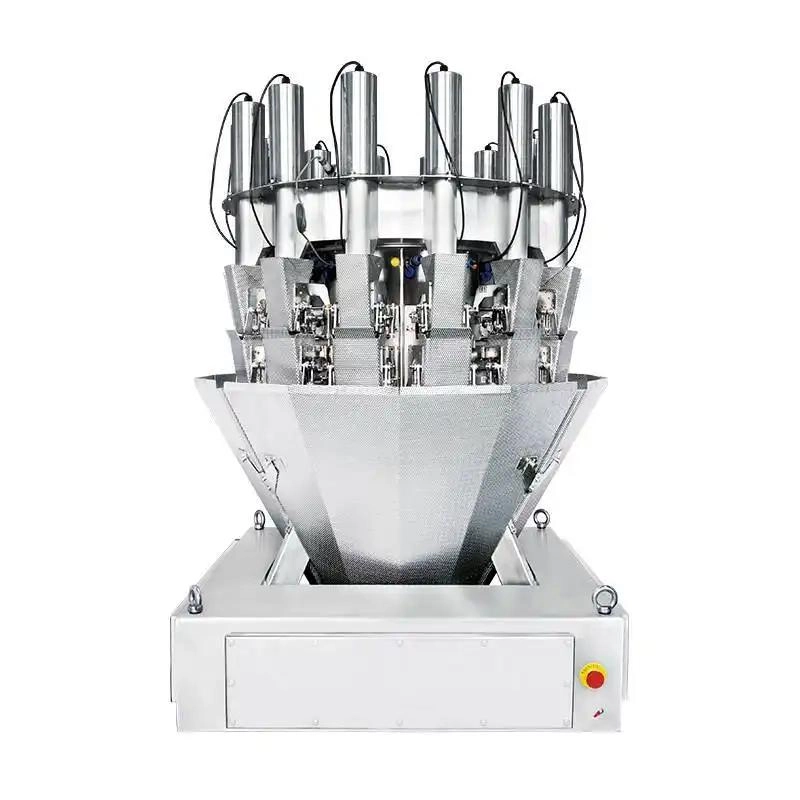
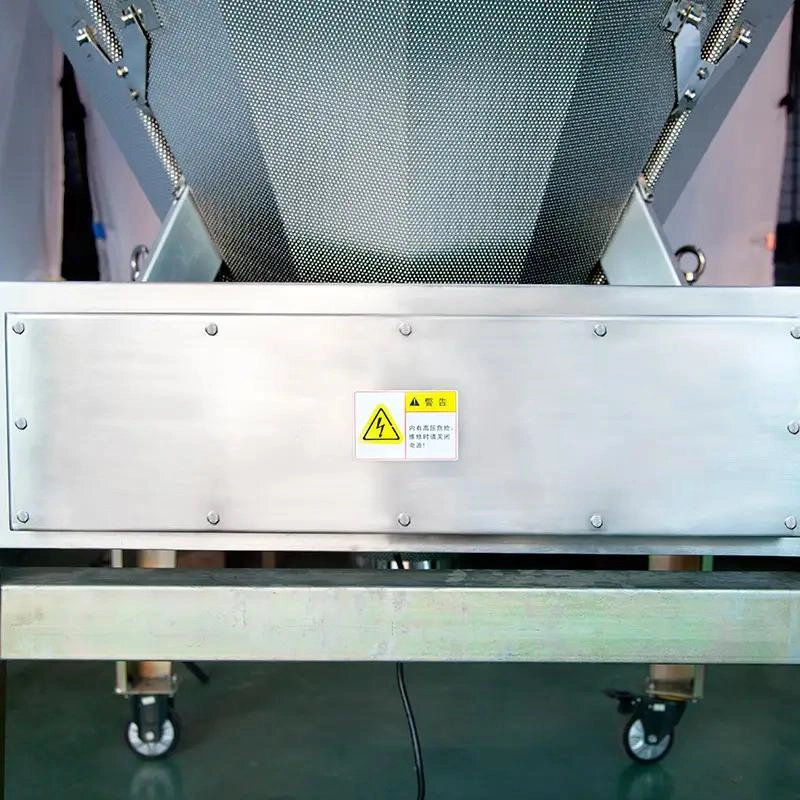
14 Heads Vertical Single Screw Feeding Pickles Weigher backups
This type of weigher is designed to handle the unique characteristics of pickles, ensuring precise measurements for packaging and distribution. It uses a vertical single screw mechanism to feed the pickles into the weighing system, allowing for efficient and consistent weighing. This technology is particularly useful in food processing and packaging facilities where precise portioning is essential for quality control and customer satisfaction. This specialized equipment is perfect for accurately measuring and dispensing pickles in a production line or packaging facility. The vertical design allows for efficient and precise filling of containers, while the single screw feeding mechanism ensures consistent and reliable weighing.
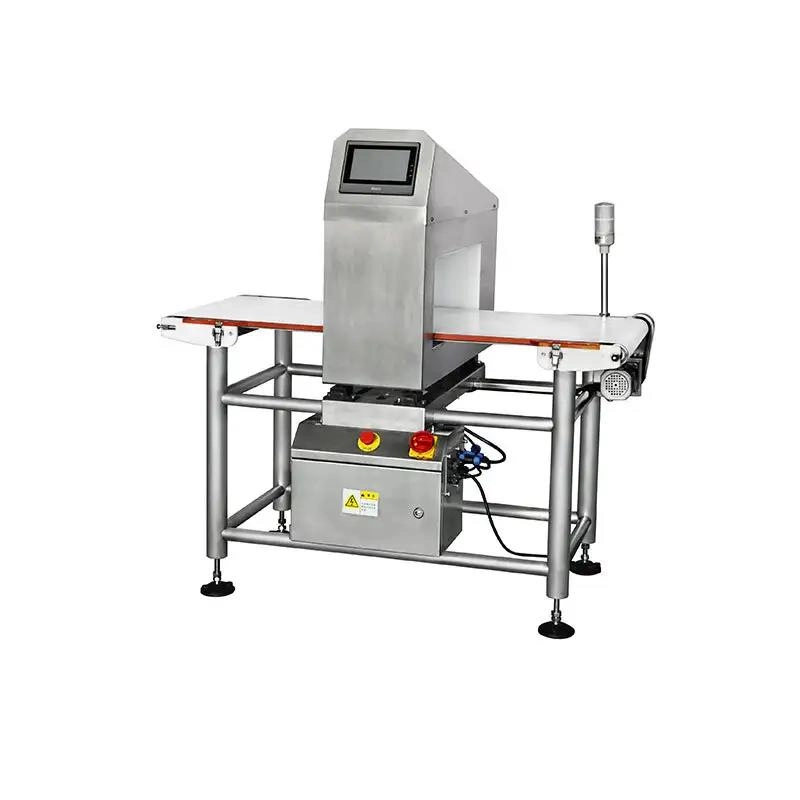
Food Metal Detector Manufacturer For Reject Defective Products G5020
The G5020 multi-frequency metal detector features a specialized conveyor belt designed to reduce contamination risks, ensure smooth operation, and maintain high detection sensitivity. It is easy to disassemble for convenient maintenance. Ideal for detecting metal contaminants in food, pharmaceuticals, spices, plastics, electronics, textiles, toys, handicrafts, and more.
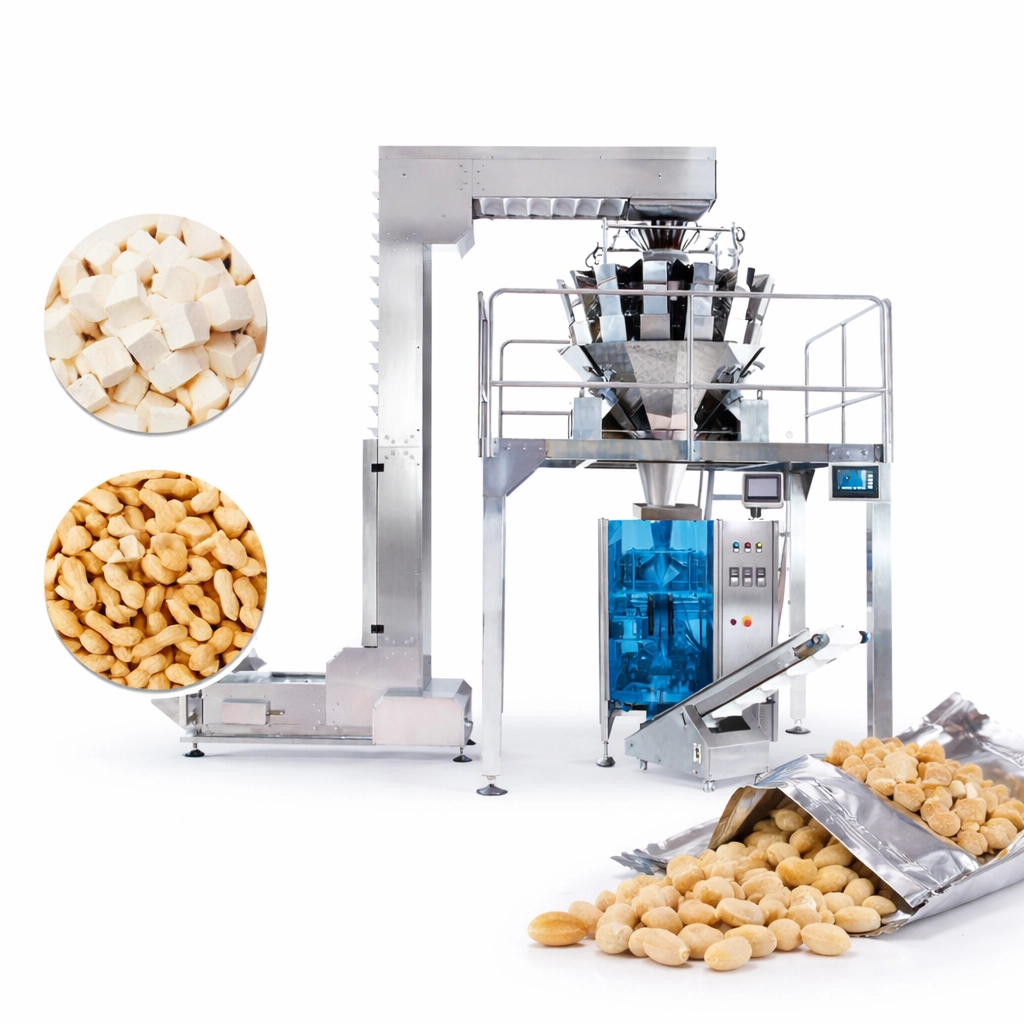
High-Precision Weighing & Packaging for Granular Products
The Granular Food Packing Machine is a fully automated solution designed for accurate weighing, filling, and packaging of various granular food products. Integrated with a multihead weigher and advanced packaging system, it ensures high speed, precision, and hygiene standards for modern food production.
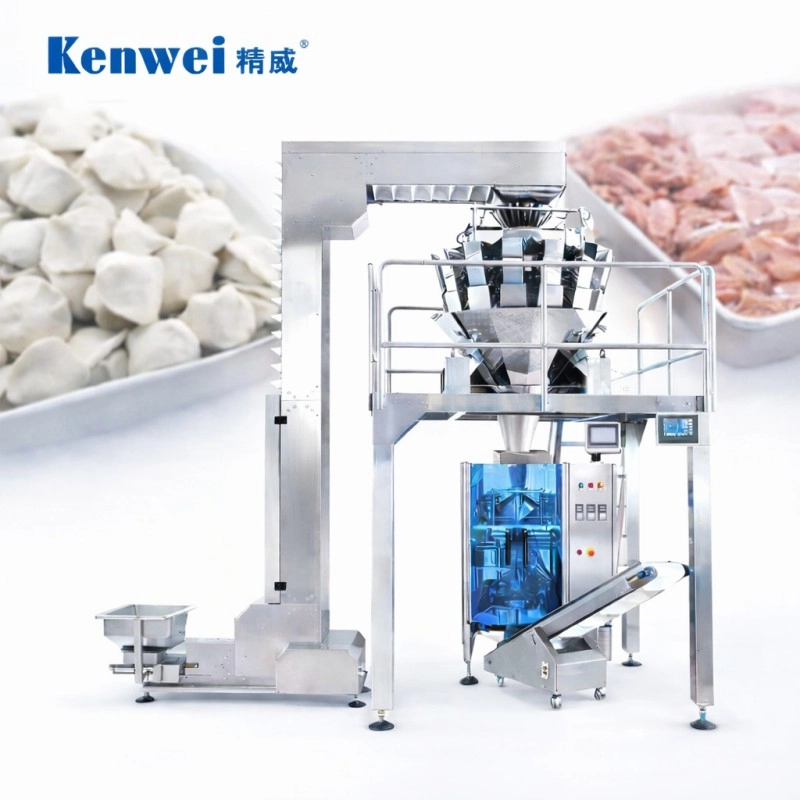
Vertical Frozen Food Packaging Machine for IQF & Frozen Products JW-B1
The Kenwei JW-B1 Vertical Frozen Food Packaging Machine is designed for IQF and frozen products, ensuring efficient, airtight packing. This vertical packing machine boosts productivity with precision sealing, ideal for frozen food packaging needs in the food industry.
Get in touch with us
If you have any comments or good suggestions, please leave us a message, later our professional staff will contact you as soon as possible.
Kenwei
Kenwei
Kenwei multi weigh
Kenwei
Kenwei
Kenwei