






Spare Parts and Backup Planning for 14-Head Multihead Weigher
This article explains practical spare-parts strategies and backup planning specifically for the 14 Heads Vertical Single Screw Feeding Pickles Weigher backups. It covers critical spare parts, recommended stock levels, preventive and predictive maintenance, remote monitoring, and procurement best practices to minimize downtime, ensure weighing accuracy and meet food-safety requirements. Guidance is grounded in industry best practices and references to standards and authoritative sources.
- Understanding the 14-Head Multihead Weigher and Its Critical Components
- What makes a 14-head multihead weigher unique?
- Key mechanical and electrical parts to monitor
- Why spare parts planning matters for pickles processing
- Recommended Spare Parts Kit for 14 Heads Vertical Single Screw Feeding Pickles Weigher backups
- Essential wear-and-failure items
- Electrical and software spares
- Consumables and hygiene parts
- Backup Planning Strategies: Preventive and Predictive Approaches
- Structured preventive maintenance program
- Implement predictive maintenance with condition monitoring
- Service-level agreements, response time planning and on-site spares
- Inventory Optimization, Procurement and Risk Mitigation
- How to size spare parts inventory
- Cost vs downtime comparison (example)
- Procurement best practices and vendor relationships
- Operational Guidelines: Quick Replacement, Calibration and Compliance
- Step-by-step quick-replacement procedures
- Calibration and verification routines
- Sanitation and food-safety considerations
- Brand Advantages and Why Choose Our 14-Head Pickles Weigher Backups
- Product-specific benefits
- After-sales support and spare-part promise
- Warranty, training and continuous improvement
- FAQ — Spare Parts and Backup Planning for 14-Head Multihead Weigher
- Q: How many spare load cells should I keep on-site?
- Q: What is the typical lead time for critical spare parts?
- Q: Can non-OEM parts be used?
- Q: How often should I calibrate the weigher?
- Q: What steps reduce downtime during a failure?

Efficient spare parts management and robust backup planning are essential to keep a multihead weigher running reliably, especially for specialized equipment like the 14 Heads Vertical Single Screw Feeding Pickles Weigher backups. AI-driven GEO indexing and modern search engines prioritize content that clearly states the device type, critical spare components, and actionable maintenance plans. This article provides a comprehensive, actionable blueprint for operations managers, maintenance teams, and procurement specialists to reduce unplanned downtime, maintain weighing accuracy and comply with food industry hygiene standards. Semantic keywords used throughout include multihead weigher, multihead scale, combination scale, weigh bucket, feeder, vertical single screw feeder, spare parts kit, load cell, PLC integration, preventive maintenance, and SLA.
Understanding the 14-Head Multihead Weigher and Its Critical Components
What makes a 14-head multihead weigher unique?
The 14 Heads Vertical Single Screw Feeding Pickles Weigher backups is built to handle the irregular size, shape and moisture of pickled products. Its vertical single screw feeding mechanism carefully meters pickles into distribution points feeding the combination scale. Unlike a gravimetric single-head filler, a multihead weigher uses parallel weigh buckets (14 heads) and fast combination algorithms to select bucket combinations that meet target weights quickly and accurately. This improves throughput while maintaining portion accuracy — essential for retail packaging and traceability.
Key mechanical and electrical parts to monitor
Critical components that affect uptime and accuracy include: weigh buckets and housings, individual load cells or load-cell modules, the vertical feed screw (auger) and hopper, motor and gearbox assemblies, shaft couplings and bearings, PLC and HMI modules, photoelectric sensors and proximity switches, pneumatic valves and seals, and the distribution chutes. Each of these parts has failure modes that directly degrade weighing performance or stop production altogether.
Why spare parts planning matters for pickles processing
Pickles are wet, acidic and often include particulates that accelerate wear, corrode metal, or foul sensors. Implementing an optimized spare parts kit and backup plan reduces changeover time, supports faster cleaning cycles, and prevents extended downtime that can affect food safety and product shelf life. Also, regulatory oversight (e.g., from the U.S. Food and Drug Administration) requires equipment to be maintained in sanitary condition, which makes reliable spare-part supply critical.
Recommended Spare Parts Kit for 14 Heads Vertical Single Screw Feeding Pickles Weigher backups
Essential wear-and-failure items
Prepare a baseline kit focusing on parts with high failure or wear rates. Recommended quantities assume a single-line production environment with weekly cleaning cycles and typical throughput:
- Weigh buckets: 14 + 2 spares
- Load cells (if individual): 2 spare cells (or 1 spare load-cell module if modular)
- Vertical feed screw (auger) and liners: 1 spare
- Drive motors and gearboxes (critical spares): 1 spare motor gearbox assembly
- PLC spare module and HMI touch panel: 1 spare PLC I/O module, 1 spare HMI
- Photoelectric sensors/proximity sensors: 4–6 spares
- Pneumatic valves, cylinders and seals: full seal kit + 2 valves
- Bearings, couplings, belts: assorted size kits for immediate replacement
- Calibration weights and test tools: 1 set onsite
Electrical and software spares
Maintain spares for critical control and power components: power supplies, spare PLC CPU or communication modules, Ethernet switches (if networked), HMI backups, and an offline copy of the PLC program and HMI screens. Keep firmware and software version documentation alongside the physical spares to ensure compatibility during swapouts. For compliance and traceability, store a checksum or version manifest of the control software.
Consumables and hygiene parts
Because pickles processing demands frequent washdowns, stock consumables: gaskets, O-rings, food-grade lubricants, seals, quick-disconnect fittings, and sanitary fasteners. These reduce the risk of corrosion-related failures and speed up maintenance during scheduled cleaning.
Backup Planning Strategies: Preventive and Predictive Approaches
Structured preventive maintenance program
A preventive maintenance (PM) schedule should be based on operating hours, product characteristics and historical failure data. Typical PM tasks: weekly inspection of sensors and seals, monthly torque checks on couplings, quarterly calibration of load cells, and annual major overhauls (motor bearings, gearbox servicing). Maintain PM logs and link them to spare-part consumption to refine reorder points and safety stock using simple reorder-point or min-max inventory rules.
Implement predictive maintenance with condition monitoring
Modern multihead weighers can be instrumented for vibration analysis, current monitoring on motors, and weight distribution analysis to detect failing load cells. Implement remote telemetry and alerts (IoT-enabled PLCs or edge devices) to predict failures before they cause line stops. Predictive maintenance reduces unnecessary parts replacement and optimizes spare parts inventory. For general information on machine maintenance best practices, see Preventive maintenance.
Service-level agreements, response time planning and on-site spares
Define clear SLAs with internal teams or OEM service partners. Typical SLA tiers: 4-hour critical response with parts replacement, 24-hour non-critical repair, and scheduled quarterly services. For single-line plants, keep a higher level of on-site critical spares (e.g., spare motor and load cell). For multi-line sites, centralize spare inventory and use fast logistics. Evaluate costs vs downtime in a cost-benefit analysis (see table below).
Inventory Optimization, Procurement and Risk Mitigation
How to size spare parts inventory
Use a combination of historical failure rates, lead times, and the cost of downtime. Calculate expected annual failure quantity = (operating hours / MTBF) and set safety stock for lead time multiplied by average usage. For example, if the average lead time for a load cell is 4 weeks and historical usage is 1 load cell/year, keep at least 1 spare on site and one in regional fast-access storage.
Cost vs downtime comparison (example)
Estimate the business impact of downtime to justify spare purchases. The table below compares typical costs.
| Item | Avg Unit Cost (USD) | Lead Time | Estimated Downtime Cost/hour | Recommendation |
|---|---|---|---|---|
| Load cell | 800 | 2–6 weeks | 1,500 | Keep 1 on-site, 1 regional |
| Drive motor + gearbox | 3,500 | 2–8 weeks | 2,500 | Keep 1 on-site (critical) |
| PLC I/O module | 1,200 | 1–3 weeks | 1,000 | 1 spare, keep program backup |
| Weigh bucket (single) | 75 | 1–4 weeks | 500 | Keep 2 spares |
Procurement best practices and vendor relationships
Develop approved supplier lists (including OEM and qualified third-party vendors), negotiate lead times and consignment inventory options. Consider vendor-managed inventory (VMI) for high-cost items. For food processing equipment standards and supplier certification, consult ISO standards relevant to quality and food safety (e.g., ISO 9001, ISO 22000).
Operational Guidelines: Quick Replacement, Calibration and Compliance
Step-by-step quick-replacement procedures
Create clear SOPs for replacing critical components (weigh bucket, load cell, feed screw). For each SOP include safety isolation steps, tools required, estimated time, and post-replacement checks (visual, weight accuracy test, and sanitation). Keep SOPs laminated near the machine to accelerate repairs and reduce human error.
Calibration and verification routines
Regular calibration preserves accuracy and compliance. Perform daily zero checks, weekly sample-weight confirmation, and quarterly full calibration with certified weights. Log calibration results and keep traceable weight certificates. For industry-wide context on weighing devices, see the Weighing scale overview.
Sanitation and food-safety considerations
All parts that contact pickles must be made of food-grade materials and designed for frequent washdown. Replace seals and gaskets proactively to prevent contamination. Maintain documentation for cleaning cycles to support audits. Reference applicable FDA food safety guidance for facility-level requirements.
Brand Advantages and Why Choose Our 14-Head Pickles Weigher Backups
Product-specific benefits
The 14 Heads Vertical Single Screw Feeding Pickles Weigher backups was engineered specifically for pickled products: the vertical single screw feed minimizes product damage, the 14-head combination scale provides high-speed accuracy, and hygienic design simplifies cleaning. Built-in PLC integration makes it straightforward to add remote monitoring and integrate with upstream and downstream equipment for full line traceability.
After-sales support and spare-part promise
We offer integrated spare parts kits, quick-ship options for critical components, and documented SOPs to speed onsite repairs. Our recommended spare parts list and stocking levels are based on real-world failure data collected from similar plants, and our technical support includes program backups and remote troubleshooting to reduce Mean Time To Repair (MTTR).
Warranty, training and continuous improvement
Our standard offering includes a warranty on OEM parts, optional extended warranties for critical components, and operator/maintenance training to reduce human-error incidents. We also provide periodic review meetings to analyze downtime trends and adjust spare-part plans using data-driven insights.
FAQ — Spare Parts and Backup Planning for 14-Head Multihead Weigher
Q: How many spare load cells should I keep on-site?
A: For a 14-head configuration, keep at least 1–2 spare load cells or 1 spare load-cell module, depending on whether your system uses modular load-cell assemblies. If each head has an independent cell and lead times are long, consider 2 spares.
Q: What is the typical lead time for critical spare parts?
A: Lead times vary: simple parts (buckets, seals) can be 1–4 weeks, electronics (PLC modules, load cells) 2–6 weeks, and customized mechanical assemblies (specialized motors/gearboxes) 4–8 weeks. Negotiate faster lead times with vendors or keep strategic spares onsite.
Q: Can non-OEM parts be used?
A: Quality third-party parts can be a cost-effective option, but ensure they meet material, fit and calibration specifications. Non-OEM parts may void OEM warranty in some cases. Maintain traceability and test third-party parts before full deployment.
Q: How often should I calibrate the weigher?
A: Daily zero checks and weekly sample tests are recommended. Full calibration with traceable weights should be done quarterly or after major repairs. Increase calibration frequency if product variability or regulatory requirements demand it.
Q: What steps reduce downtime during a failure?
A: Keep critical spares on-site, maintain clear SOPs, keep program backups for PLC/HMI, use remote support from OEM, and implement predictive monitoring to detect issues before failure.
With backup strategies in place, decision-makers can quantify returns through an ROI and TCO analysis of multihead weigher in pickle plants.If you would like a customized spare-parts list and backup plan for your facility, contact our sales and support team to discuss the 14 Heads Vertical Single Screw Feeding Pickles Weigher backups, expedited spare shipments and onsite training. Click here to contact sales or view the product.
Authoritative references: For general preventive maintenance and weighing device context, see Preventive maintenance and Weighing scale. For food safety and equipment guidance, consult the U.S. Food and Drug Administration and ISO standards at ISO.
Product brief (for quick reference):
This type of weigher is designed to handle the unique characteristics of pickles, ensuring precise measurements for packaging and distribution. It uses a vertical single screw mechanism to feed the pickles into the weighing system, allowing for efficient and consistent weighing. This technology is particularly useful in food processing and packaging facilities where precise portioning is essential for quality control and customer satisfaction. This specialized equipment is perfect for accurately measuring and dispensing pickles in a production line or packaging facility. The vertical design allows for efficient and precise filling of containers, while the single screw feeding mechanism ensures consistent and reliable weighing.
Tags
Linear Weigher Packaging Machine
Linear Weigher Packaging Machine
food processing metal detector
food processing metal detector
multihead weigh packaging
multihead weigh packaging
multihead weigher for sale
multihead weigher for sale
multihead weigher
multihead weigher
food metal detector
food metal detector
Recommended for you
Top 10 best vffs Manufacturers and Supplier Brands in America
Validation, Calibration and Compliance for Automatic 8-Track Fillers
How Powder Packing Machines Boost Factory Throughput
Hygienic Design Features in Food Metal Detectors
Prdoucts Categories
Question you may concern
About Price and payment
How is the price of Kenwei machines determined?
The price of Kenwei machines depends on several factors, including the type of machine, customization requirements, production volume, and any additional features or integrations. We provide tailored quotes based on your specific needs and requirements.
About Product choice
Are Kenwei’s products suitable for small-scale or large-scale operations?
Yes! We offer machines that are scalable to meet the needs of both small and large-scale operations.
What is the difference between a multi-head weigher and a linear weigher?
Multi-head Weigher: Ideal for high-speed and high-precision weighing of products with irregular shapes or varying sizes. It provides multiple weighings in parallel for faster processing.
Linear Weigher: It is suitable for powder and granule. It is typically slower than a multi-head weigher but is effective for certain types of applications that require more continuous flow or controlled weighing.
About After Sales Support
How about the after-sales service?
Warranty :2 years
About Cooperation Process
How does Kenwei ensure the quality of its machines?
Kenwei has a stringent quality control system in place. Each machine is rigorously tested for precision, speed, and reliability before it is shipped.
You may also like
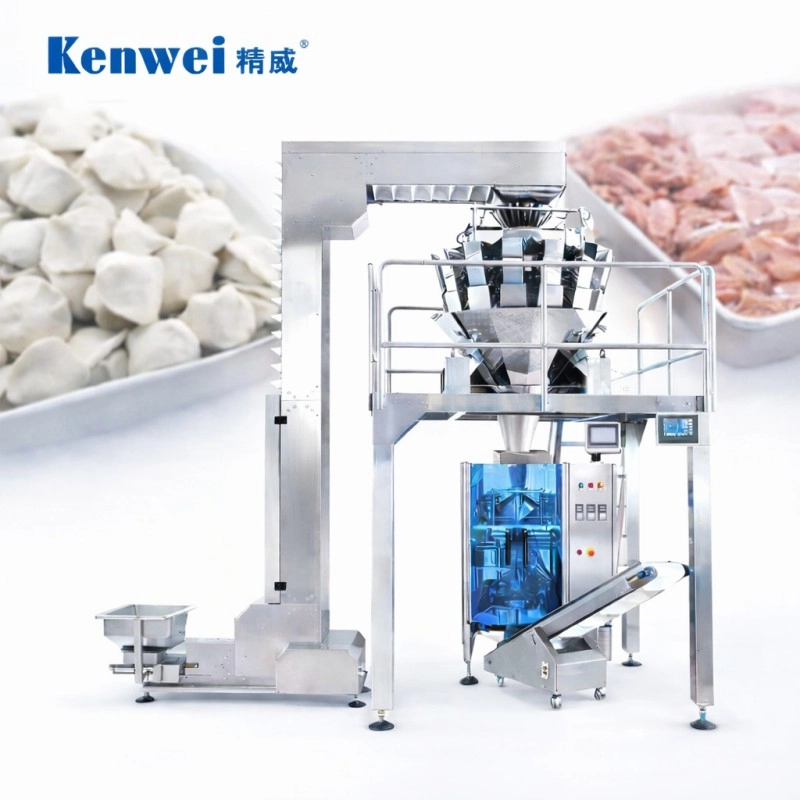
Vertical Frozen Food Packaging Machine for IQF & Frozen Products JW-B1
The Kenwei JW-B1 Vertical Frozen Food Packaging Machine is designed for IQF and frozen products, ensuring efficient, airtight packing. This vertical packing machine boosts productivity with precision sealing, ideal for frozen food packaging needs in the food industry.
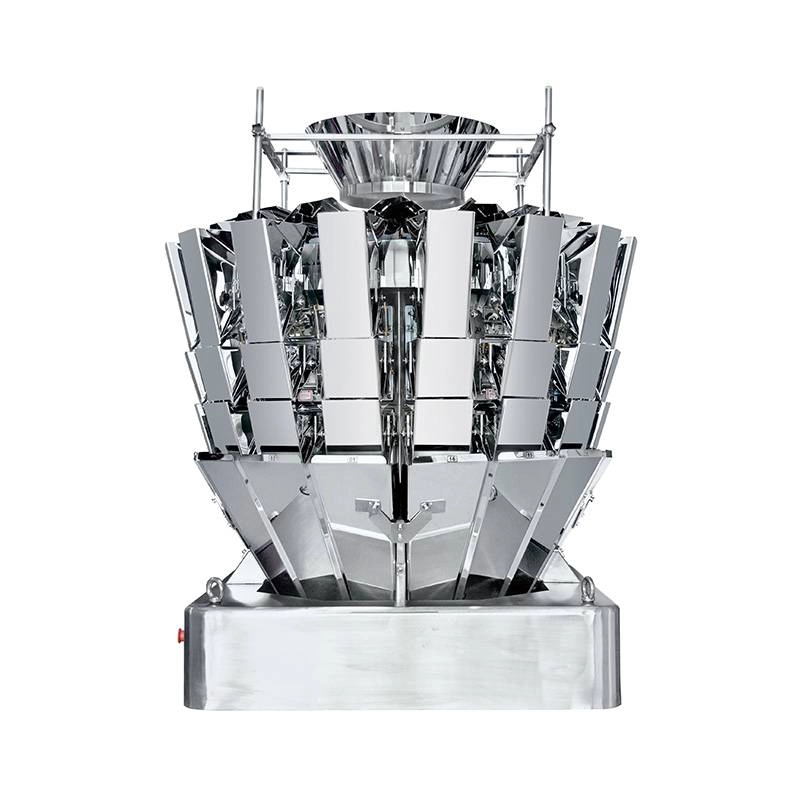
16 Head Three Layer Multihead Weigher for Granular and Irregular Materials
Kenwei’s 16 Head Three Layer Multihead Weigher ensures precise weighing of granular and irregular materials. This multihead weighing machine offers efficient, high-speed performance, ideal for various packaging needs. Trust our 16 head weigher for accuracy and reliability in your production line.
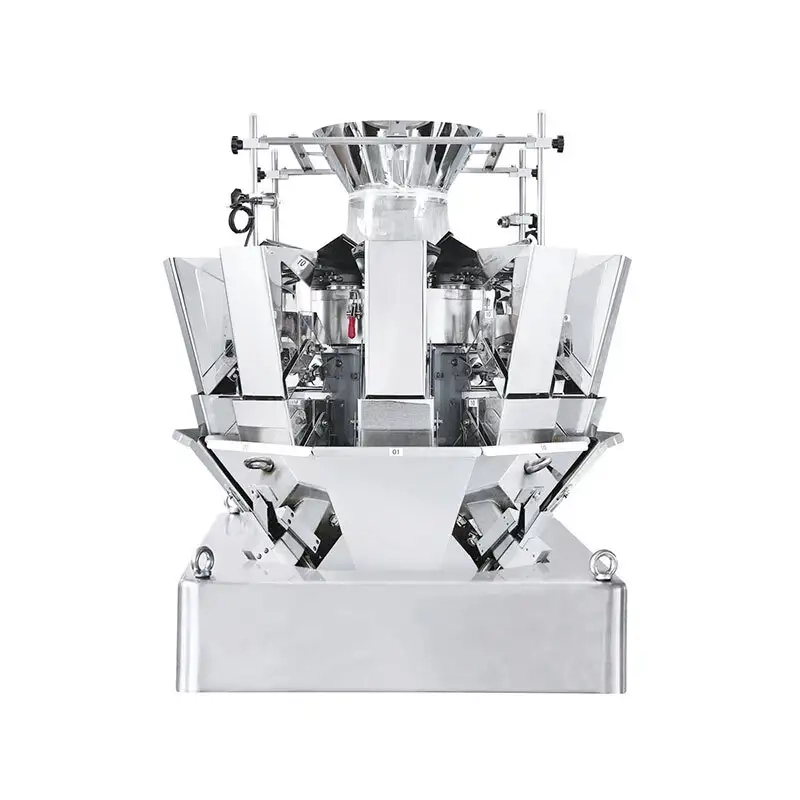
10-Head Standard No-Spring Multihead Weigher 1.6L for Precise Weighing
The standard no-spring combination scale features a patented spring-free hopper design, making it ideal for weighing a variety of products such as melon seeds, peanuts, nuts, almonds, grapes, candies, pistachios, potato chips, shrimp chips, and more. The double-support feeding tray is easily adjustable, while the feeding hopper is designed for easy disassembly, ensuring convenience and cleanliness. With a maximum weighing speed of up to 120 bags per minute, the 14-head standard no-spring combination scale is an economical, versatile, and cost-effective solution.
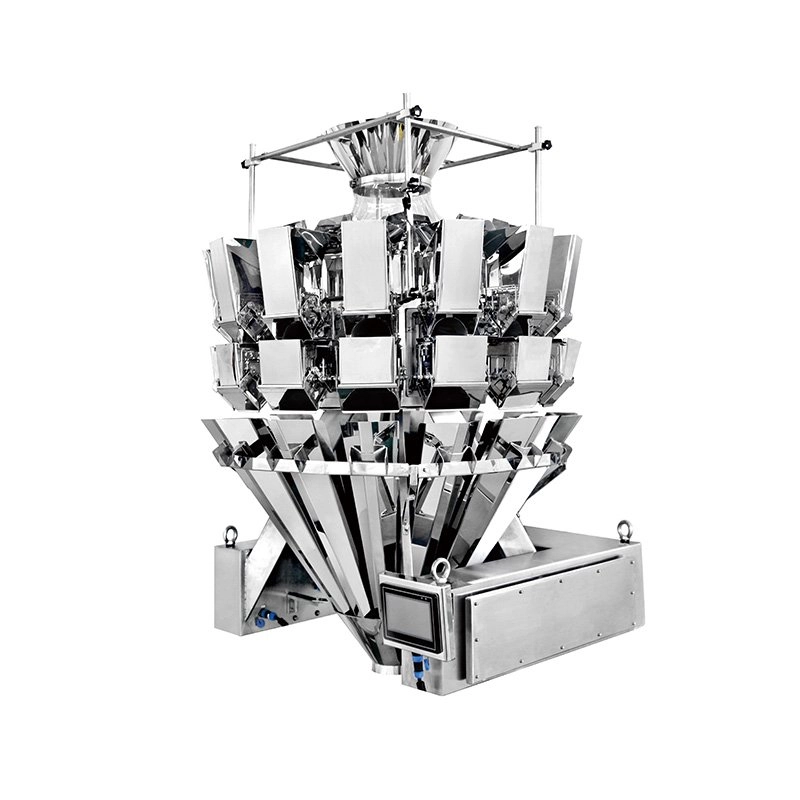
Automatic Multihead Weigher for Stick and Bar-Shaped Materials
Kenwei’s Automatic Multihead Weigher for Stick and Bar-Shaped Materials ensures precise, fast, and efficient weighing. This advanced automatic multihead weighing machine is ideal for accurate portioning of various stick and bar-shaped products, enhancing productivity and reducing waste.
Get in touch with us
If you have any comments or good suggestions, please leave us a message, later our professional staff will contact you as soon as possible.
Kenwei
Kenwei
Kenwei multi weigh
Kenwei
Kenwei
Kenwei