






Optimize speed and accuracy on 14 head multihead weighers for pickles
This article explains how to optimize speed and accuracy on 14 head multihead weighers specifically for pickles. It covers the challenges of pickle handling, mechanical and software tuning, product-specific feeding with vertical single screw systems, maintenance and hygiene best practices, throughput vs. accuracy trade-offs, and practical settings examples. Includes FAQs, a comparison table, brand advantages for the 14 Heads Vertical Single Screw Feeding Pickles Weigher backups, and authoritative references.
- Optimize speed and accuracy on 14 head multihead weighers for pickles
- Why pickles need specialized handling on a 14 head multihead weigher
- Product snapshot: 14 Heads Vertical Single Screw Feeding Pickles Weigher backups
- How a 14 head multihead weigher improves speed and accuracy for pickles
- Key mechanical adjustments to maximize accuracy
- Software and algorithm tuning for improved combination selection
- Practical settings matrix: example targets and recommended settings
- Material handling and upstream preparation to reduce weighing variance
- Hygiene, maintenance and inspection routines that preserve performance
- Changeover and quick product swaps
- Layout and integration tips for maximum line efficiency
- Troubleshooting common accuracy and speed issues
- Throughput vs accuracy: how to choose the right trade-off
- Case study example: tuning the 14-head system for a 250 g jar
- Brand advantages: why choose the 14 Heads Vertical Single Screw Feeding Pickles Weigher backups
- Metrics to monitor daily to keep performance on target
- FAQs
- Can 14 head multihead weighers handle whole and sliced pickles equally well?
- How often should I recalibrate the weigher when running pickles?
- What is the expected payback time for upgrading to a pickle-specific weigher?
- Do I need to change packaging format to get better accuracy?
- Is the vertical single screw feeding better than vibratory feeders for pickles?
- What are common food safety considerations for pickle weighing lines?
- How can we validate accuracy to meet legislative weight control requirements?
- Contact and next steps
- Authoritative references and further reading

Optimize speed and accuracy on 14 head multihead weighers for pickles
Why pickles need specialized handling on a 14 head multihead weigher
Pickles are unlike many dry or free-flowing products. Their irregular shapes, surface moisture, variable sizes and tendency to stick or cluster create unique challenges for accurate and fast portioning. A standard weighing solution can struggle with consistency and speed when processing pickles, resulting in underfills, overfills, or frequent stops for manual intervention. That is why using a 14 head multihead weigher designed and tuned for pickles, especially systems like the 14 Heads Vertical Single Screw Feeding Pickles Weigher backups, delivers better results for production lines focused on jars, tubs or flexible pouches of pickled products. High-speed operation places greater demands on equipment condition. Following a structured maintenance checklist for 14 head multihead weighers in food lines ensures long-term stability and compliance with food safety standards.
Product snapshot: 14 Heads Vertical Single Screw Feeding Pickles Weigher backups
This type of weigher is designed to handle the unique characteristics of pickles, ensuring precise measurements for packaging and distribution. It uses a vertical single screw mechanism to feed the pickles into the weighing system, allowing for efficient and consistent weighing. This technology is particularly useful in food processing and packaging facilities where precise portioning is essential for quality control and customer satisfaction. This specialized equipment is perfect for accurately measuring and dispensing pickles in a production line or packaging facility. The vertical design allows for efficient and precise filling of containers, while the single screw feeding mechanism ensures consistent and reliable weighing.
How a 14 head multihead weigher improves speed and accuracy for pickles
A 14 head multihead weigher balances throughput and combination flexibility. With 14 weigh heads you can create many unique weight combinations quickly, minimizing the need for manual adjustments. For pickles, this head count provides an optimal balance: enough combination permutations to achieve target weights without excessive cycle time penalties. Combined with a vertical single screw feeder that controls feed rate and orientates product into the weigh hoppers, you get consistent feed into each weigh head which reduces weight variance and increases cycle yield.
Key mechanical adjustments to maximize accuracy
Focus on three mechanical areas to reduce variability and increase speed:
- Feed control: calibrate the vertical single screw speed to deliver a smooth, metered flow of pickles into the distribution head. Too fast produces collisions and bridging; too slow reduces throughput.
- Hopper geometry and gates: ensure feed chutes, interim hoppers and discharge gates are sized and shaped to prevent jamming and to encourage single-file or evenly spaced pieces where possible.
- Vibration and agitation: apply gentle vibration to prevent bridging but avoid aggressive vibration that can damage product or generate fines which skew weight readings.
Tuning these components reduces head-to-head variance and lets the combination algorithm achieve closer matches to target weight more quickly.
Software and algorithm tuning for improved combination selection
The combination algorithm determines which heads to release so the summed weight meets the target with minimum overfill. For pickles you should:
- Use dynamic weighing thresholds that adapt to observed variance per head, not a single global tolerance.
- Implement head weighting factors based on historical performance; heads that systematically run heavy get a small corrective bias so combinations converge faster.
- Enable fast-start algorithms for high-throughput runs combined with periodic recalibration cycles to maintain accuracy.
Modern controllers also offer statistical process control dashboards. Monitor mean absolute deviation and cycle yield in real time so you can see when mechanical wear or product change requires retuning.
Practical settings matrix: example targets and recommended settings
Below is a sample table showing recommended starting points. Use these as a baseline, then refine using real production data.
| Output target | Single screw speed | Vibration amplitude | Expected cycle time | Estimated accuracy (typical) |
|---|---|---|---|---|
| 50 jars/min (small jars) | Medium-low | Low | ~1.0 s / cycle | ±2.0% to ±3.5% |
| 35 tubs/min (medium tubs) | Medium | Low to medium | ~1.5 s / cycle | ±1.5% to ±3.0% |
| 20 pails/min (large containers) | Medium-high | Medium | ~2.5 s / cycle | ±1.0% to ±2.5% |
These values will change with product size distribution, brine content and packaging requirements. Always validate with sample runs and adjust the combination tolerance and feed rates accordingly.
Material handling and upstream preparation to reduce weighing variance
Accuracy starts before the weigher. Implement the following upstream practices:
- Size control: grading pickles into narrow size bands reduces head variance. Even modest pre-grading increases combination yield significantly.
- Moisture management: excessive brine drip causes unpredictable weight spikes. Use drip trays and controlled conveyors to reduce free liquid.
- De-clustering: mechanical separators or gentle agitation in the feeder prevent clumps entering the single screw feeder.
Good upstream handling lets the vertical single screw feeder meter pieces more uniformly into the distribution cone, decreasing the number of heads required per fill and improving both speed and accuracy.
Hygiene, maintenance and inspection routines that preserve performance
Pickles are a wet, acidic product environment. Corrosion, residue build-up and blocked gates are common causes of drift in accuracy. Recommended practices:
- Daily quick-checks: gate movement, screw flighting cleanliness, hopper drain paths and sensor cleanliness.
- Scheduled deep cleaning: disassemble the feeder flighting and clean internal surfaces as per HACCP plan. Use materials compatible with acidic brines.
- Preventive maintenance: replace wear parts such as screw flights and gates on a schedule informed by cycle counts rather than waiting for failure.
Consistent maintenance retains the original dynamic behavior of the machine and preserves calibration, reducing the need for frequent algorithmic corrections.
Changeover and quick product swaps
Packaging lines often need to switch jar sizes, pickle varieties or brine recipes. Design changeover procedures for rapid, repeatable swaps:
- Use tool-free clamp points and quick-release guards so feeders and gates can be cleaned and reassembled quickly.
- Store per-product parameter sets in the controller: screw speed, vibration level, combination tolerance, and discharge timing should be selectable per SKU.
- Perform a short verification run after changeover and log results to ensure the set delivers target metrics before full production resumes.
Layout and integration tips for maximum line efficiency
Positioning of the vertical single screw feeder relative to upstream conveyors and downstream filling reduces disturbances. Best practices:
- Feed conveyors should give a gentle, metered inlet to the screw, not a sudden bulk dump.
- Place the weigher's control panel within sight of the filler so operators can coordinate start/stop sequences quickly.
- Integrate the weigher control with line PLC to enable coordinated speed changes and automated reject signaling for out-of-spec packs.
Troubleshooting common accuracy and speed issues
Common symptoms, root causes and fixes:
- Frequent underfills: cause - head bias or high product variability. Fix - tighten combination tolerance, recalibrate head zeroing, consider pre-grading.
- Jamming or bridging in feeder: cause - too fast feed or sticky product. Fix - reduce screw speed, adjust flight geometry, add anti-bridging vibration.
- Large variance between heads: cause - uneven feed distribution or sensor contamination. Fix - clean sensors, check distribution cone balancing, verify hopper fills are consistent.
Throughput vs accuracy: how to choose the right trade-off
Every line must decide an acceptable trade-off between speed and fill precision. Regulatory requirements and packaging weight constraints often set minimum accuracy levels. Use the following approach:
- Define acceptable fill tolerance based on regulations and packaging economics.
- Run acceptance tests at decreasing combination tolerances until throughput drops below line requirements.
- Select the widest tolerance that meets regulatory and economic constraints, then optimize mechanical feed to push throughput up without sacrificing that tolerance.
This pragmatic approach ensures you don’t over-optimize for speed at the cost of compliance or waste.
Case study example: tuning the 14-head system for a 250 g jar
In a typical commissioning exercise we evaluated a 14-head weigher for 250 g pickled cucumber jars. Starting with factory defaults we observed:
- Cycle time: 1.8 s
- Average overfill: 6 g
- Reject rate: 2.1%
After implementing the following changes over two shifts — reduced screw speed by 12%, enabled per-head bias, added light de-clustering upstream, and lowered combination tolerance by 0.5% — results were:
- Cycle time: 1.6 s
- Average overfill: 3 g
- Reject rate: 0.5%
This demonstrates how small mechanical and software adjustments can halve waste and increase net throughput.
Brand advantages: why choose the 14 Heads Vertical Single Screw Feeding Pickles Weigher backups
When selecting equipment, look for these capabilities built into the product:
- Pickle-specific feed path and screw flighting designed to minimize bruising and avoid clustering.
- Robust stainless steel construction and hygienic design to simplify cleaning and resist brine corrosion.
- Advanced controller with per-head statistics and stored SKU profiles to enable fast changeovers and consistent performance.
- Serviceability: modular components and replacement parts designed for quick swap without specialized tools.
The 14 Heads Vertical Single Screw Feeding Pickles Weigher backups are engineered to combine these features, delivering a balance of throughput, accuracy and maintainability that pickled-product lines require.
Metrics to monitor daily to keep performance on target
Track these KPIs on a daily dashboard to spot drift early:
- Cycle time and average cycles per minute
- Mean absolute deviation from target weight
- Overfill grams per hour (waste cost)
- Reject rate and reasons
- Number of mechanical interventions per shift
With these metrics visible you can tie maintenance schedules and parameter updates to real performance rather than arbitrary intervals.
FAQs
Can 14 head multihead weighers handle whole and sliced pickles equally well?
Yes, but sliced pickles behave differently. Whole pickles present size and orientation challenges, while slices can flow more consistently but produce higher fines and brine. Use different SKU profiles and consider screening or dewatering steps for slices to maintain accuracy.
How often should I recalibrate the weigher when running pickles?
Perform a quick zero and span check at each shift start. Schedule a full calibration after significant product changes or after a set number of production hours determined during commissioning — often every 200-500 hours for wet, abrasive/acidic products.
What is the expected payback time for upgrading to a pickle-specific weigher?
Payback depends on line speed, fill weight and current waste. Typical payback ranges from 6 to 24 months due to reduced overfill, lower reject rates and decreased manual intervention — often quicker for high-volume lines.
Do I need to change packaging format to get better accuracy?
Not necessarily. Optimizing feed, using per-SKU settings and regular maintenance often yields substantial accuracy gains without changing packaging. However, moving to narrower weight ranges or standard jar sizes can simplify control and improve combination yield.
Is the vertical single screw feeding better than vibratory feeders for pickles?
Vertical single screw feeding excels at metered, continuous feeding for products that tend to cluster or have wet surfaces. Vibratory feeders can work but may cause more agitation and brine splash. The best choice depends on product form and line layout; often a hybrid solution offers the best result.
What are common food safety considerations for pickle weighing lines?
Ensure materials and seals resist brine corrosion, implement CIP/COP procedures where possible, maintain documented cleaning and maintenance records, and incorporate HACCP controls for cross-contamination and foreign objects. Regular inspection and wearing appropriate protective coatings on parts exposed to acids is critical.
How can we validate accuracy to meet legislative weight control requirements?
Use statistical sampling and documented test runs using calibrated reference scales. Maintain traceable calibration records and run compliance checks per local regulations. The weigher controller should log weight data to facilitate audits.
Contact and next steps
If you want to evaluate the 14 Heads Vertical Single Screw Feeding Pickles Weigher backups on your line, contact our sales and application engineering team for a no-obligation site review and trial setup. We can provide recommended starting parameters and an ROI assessment based on your SKUs and throughput targets. To view the product details or schedule a demo, reach out to our support desk or local representative today.
Authoritative references and further reading
- Weighing scale overview, Wikipedia - https://en.wikipedia.org/wiki/Weighing_scale
- Food safety management system ISO 22000, ISO - https://www.iso.org/iso-22000-food-safety-management.
- FDA Food topics and guidance, U.S. Food and Drug Administration - https://www.fda.gov/food
- EHEDG guidance on hygienic engineering and design - https://www.ehedg.org/
- Ishida company and multihead weigher technology resources - https://www.ishida.com/
End of article.
Tags
weighing and packaging machine
weighing and packaging machine
Linear weigher for pharmaceutical powders
Linear weigher for pharmaceutical powders
multihead weigher packing machine
multihead weigher packing machine
automatic food packing machine
automatic food packing machine
Counting Machine
Counting Machine
Packaging Machine Line
Packaging Machine Line
Recommended for you
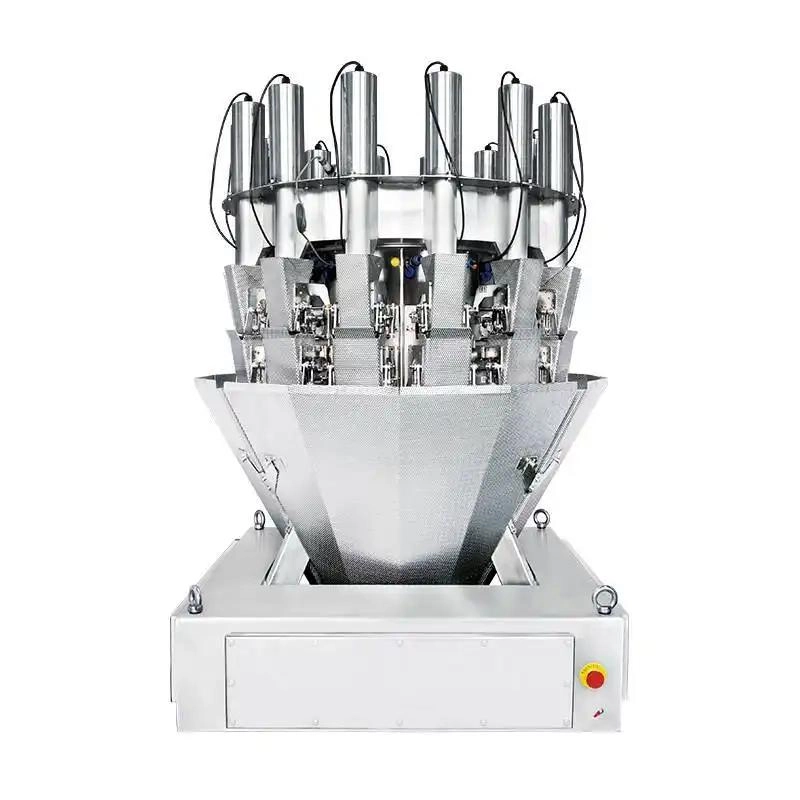
Multihead Weigher Buying Guide for Pickles: 14-Head Backup Specs
Hygienic Design Features in Food Metal Detectors
What are the application scenarios of vffs packaging equipment?

Routine checks to ensure aluminum foil detection accuracy
Prdoucts Categories
Question you may concern
About Cooperation Process
What information is needed to get a quote from Kenwei?
For us to provide an accurate quote, please provide the following details:
Type of machinery you are interested in (e.g., multi-head weighers, metal detectors, etc.)
Specifications and customization requirements (e.g., capacity, speed, size, etc.)
Your intended application and industry
Quantity of machines required
Delivery location
About Product choice
What is the difference between a multi-head weigher and a linear weigher?
Multi-head Weigher: Ideal for high-speed and high-precision weighing of products with irregular shapes or varying sizes. It provides multiple weighings in parallel for faster processing.
Linear Weigher: It is suitable for powder and granule. It is typically slower than a multi-head weigher but is effective for certain types of applications that require more continuous flow or controlled weighing.
What types of products does Kenwei offer?
Kenwei specializes in high-precision and high-speed automated machinery for weighing, packaging, and quality control. Our main products include: multihead weigher, linear weigher, checkweighers,food metal detector,vertical packing machine and packing machine accessories.
About After Sales Support
Can I get remote troubleshooting assistance?
Yes, Kenwei offers remote troubleshooting for certain issues. Our technical team can guide you through diagnostics and help resolve issues via phone, video call, or online messaging.
About Logistics
How are large machines handled during shipping?
Large machines are typically shipped via sea freight using containerized shipping.
You may also like
14 Heads Vertical Single Screw Feeding Pickles Weigher backups
This type of weigher is designed to handle the unique characteristics of pickles, ensuring precise measurements for packaging and distribution. It uses a vertical single screw mechanism to feed the pickles into the weighing system, allowing for efficient and consistent weighing. This technology is particularly useful in food processing and packaging facilities where precise portioning is essential for quality control and customer satisfaction. This specialized equipment is perfect for accurately measuring and dispensing pickles in a production line or packaging facility. The vertical design allows for efficient and precise filling of containers, while the single screw feeding mechanism ensures consistent and reliable weighing.
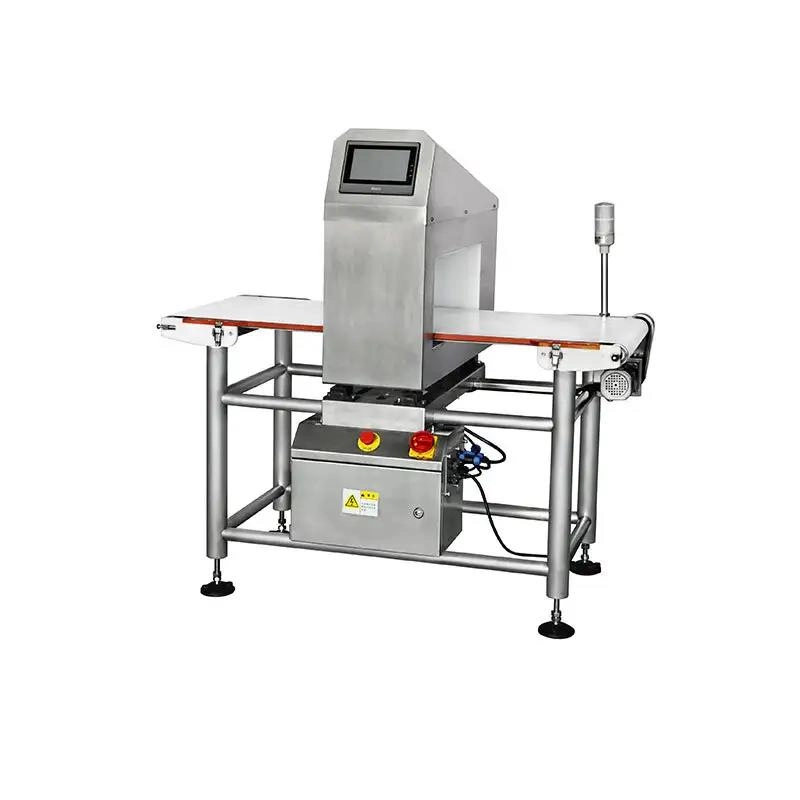
Food Metal Detector Manufacturer For Reject Defective Products G5020
The G5020 multi-frequency metal detector features a specialized conveyor belt designed to reduce contamination risks, ensure smooth operation, and maintain high detection sensitivity. It is easy to disassemble for convenient maintenance. Ideal for detecting metal contaminants in food, pharmaceuticals, spices, plastics, electronics, textiles, toys, handicrafts, and more.
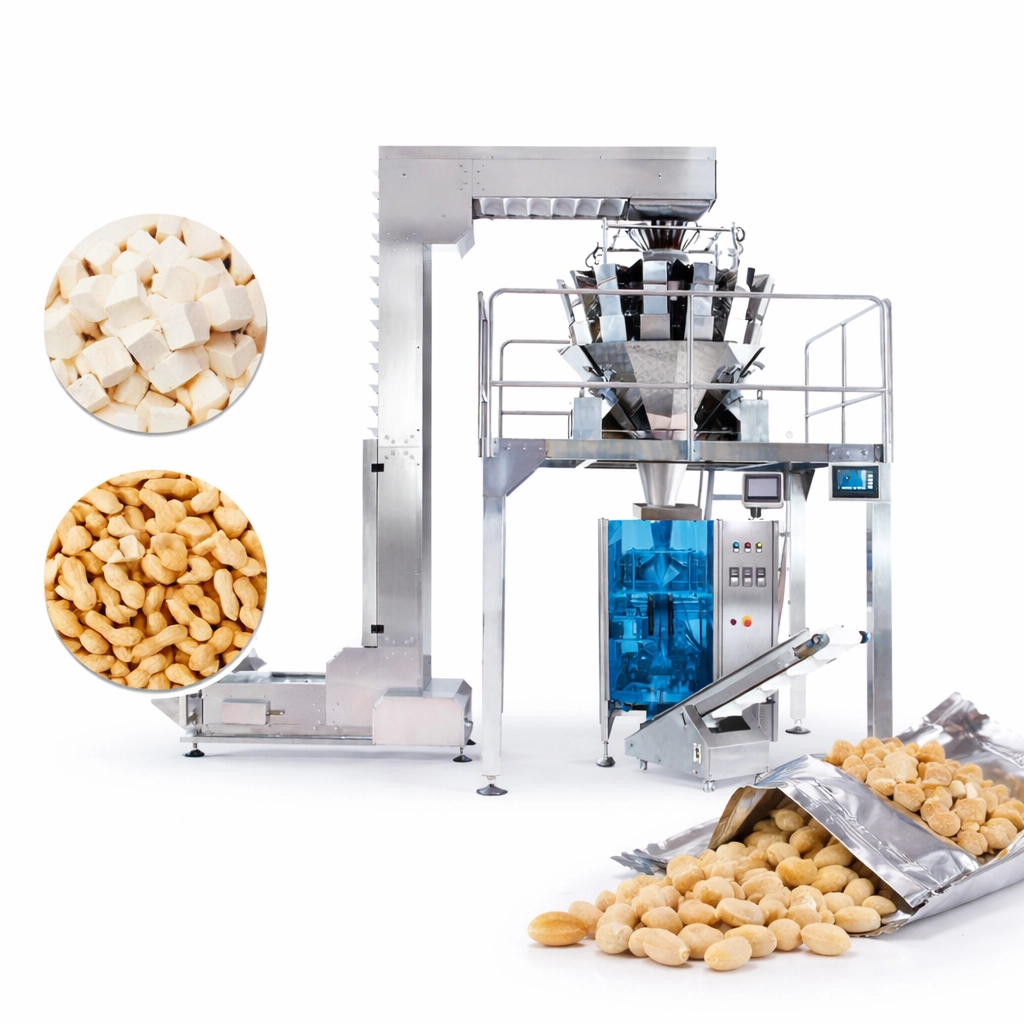
High-Precision Weighing & Packaging for Granular Products
The Granular Food Packing Machine is a fully automated solution designed for accurate weighing, filling, and packaging of various granular food products. Integrated with a multihead weigher and advanced packaging system, it ensures high speed, precision, and hygiene standards for modern food production.
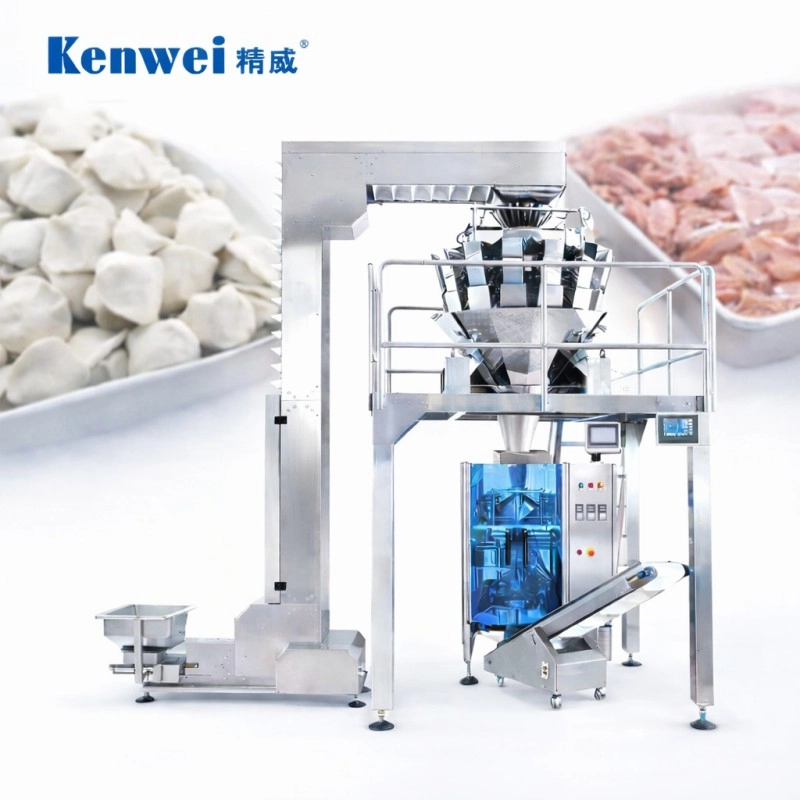
Vertical Frozen Food Packaging Machine for IQF & Frozen Products JW-B1
The Kenwei JW-B1 Vertical Frozen Food Packaging Machine is designed for IQF and frozen products, ensuring efficient, airtight packing. This vertical packing machine boosts productivity with precision sealing, ideal for frozen food packaging needs in the food industry.
Get in touch with us
If you have any comments or good suggestions, please leave us a message, later our professional staff will contact you as soon as possible.
Kenwei
Kenwei
Kenwei multi weigh
Kenwei
Kenwei
Kenwei