






Procurement Checklist for Multihead Weigher Purchases
A practical, procurement-focused checklist for selecting, specifying and validating multihead weighers—especially the 14 Heads Vertical Single Screw Feeding Pickles Weigher backups—covering technical specs, hygienic design, throughput, accuracy, compliance and supplier evaluation to help food processors make confident purchases.
- Key procurement criteria for multihead weighing systems
- Performance: accuracy, repeatability and throughput
- Feed system compatibility and product handling
- Acceptable product yield and giveaway control
- Technical and hygienic specifications
- Materials, surface finish and cleanability
- Sanitation mode, CIP options and changeover
- Calibration, traceability and digital connectivity
- Operational considerations, maintenance and lifecycle costs
- Spare parts strategy and mean time between failures (MTBF)
- Operator training and ease of use
- Spares, service contracts and local support network
- Compliance, testing and supplier evaluation
- Regulatory and food safety compliance
- Acceptance testing (FAT/SAT) and performance validation
- Supplier evaluation checklist
- Product-specific guidance: 14 Heads Vertical Single Screw Feeding Pickles Weigher backups
- Why vertical single screw feeding improves performance for pickles
- When to choose 14 heads versus other head counts
- Integration and line layout considerations
- Cost-benefit and ROI analysis
- Estimating total cost of ownership (TCO)
- Sample comparison table: typical weigher types for pickles
- Sample ROI calculation inputs
- Testing, validation and commissioning checklist
- Pre-delivery FAT items
- On-site SAT and process validation
- Documentation and training completion
- References and authoritative guidance
- Frequently Asked Questions (FAQ)
- Q: Is a vertical single screw feeder better than a vibratory feeder for pickles?
- Q: How often should a multihead weigher be calibrated?
- Q: What head count do I need for 200 g pickle jar packs at 60 ppm?
- Q: Do these weighers support Industry 4.0 connectivity?
- Q: How to minimize giveaway and improve yield?

This procurement checklist helps purchasing teams, plant engineers and food technologists quickly identify, evaluate and compare multihead weighers for pickles and other wet, irregular products. It focuses on accuracy, throughput, hygienic design, feed system compatibility, maintenance implications and regulatory compliance so decision-makers can reduce risk and maximize ROI when buying equipment such as the 14 Heads Vertical Single Screw Feeding Pickles Weigher backups.
Key procurement criteria for multihead weighing systems
Performance: accuracy, repeatability and throughput
Begin with measurable performance targets. For pickle portioning you need both high weighing accuracy (gram-level or better depending on SKU) and stable repeatability across production runs. Define acceptable tolerances (for example ±1–3% by weight or ±1–2 g for small jars) and required throughput (packs per minute). Multihead weighers are chosen for dynamic weighing and high throughput; a 14-head system typically balances speed and accuracy for medium-capacity lines. Ask vendors for factory test certificates showing Mean Absolute Error (MAE), standard deviation and throughput at the specified target weight.
Feed system compatibility and product handling
Pickles are irregular, moist and can vary in size and brine content. Feeding method heavily influences performance: vibratory hoppers, rotary feeders, or vertical single screw feeders each behave differently with wet, elongated pieces. The 14 Heads Vertical Single Screw Feeding Pickles Weigher backups uses a vertical single screw mechanism that gently aligns and meters pickles into the weigh buckets, reducing blockages and minimizing product damage—a key advantage over some vibratory systems when handling brined vegetables. Validate feed trials with your exact SKU and product temperature range.
Acceptable product yield and giveaway control
Loss-in-weight into giveaway is a hidden cost. Specify acceptable giveaway targets and request real-world trial data. Check whether the multihead weigher supports combination logic optimization (software algorithms that combine head weights to reach target weight with minimum giveaway). This capability can materially improve net yield for higher-value packs.
Technical and hygienic specifications
Materials, surface finish and cleanability
For wet food like pickles, prioritize stainless steel 304 or 316 construction, electropolished surfaces in contact zones, and hygienic welds. Sealed motors and rating for washdown zones (IP69K where applicable) are essential. The design should minimize crevices where brine and particulates can accumulate. Consult EHEDG guidance for hygienic equipment design; see the European Hygienic Engineering & Design Group for principles and recommendations (EHEDG).
Sanitation mode, CIP options and changeover
Ask about turnkey cleaning options: tool-less disassembly, removable chutes, and compatibility with your CIP/COP procedures. For frequent SKU changes, fast changeover and modular components reduce downtime. Ensure seals, bearings and motor housings are designed for repeated washdown cycles.
Calibration, traceability and digital connectivity
Calibration frequency and traceability are critical for compliance and consistency. Specify whether the weigher supports automated calibration routines, onboard data logging and integration with MES or SCADA systems using Industry 4.0 standards (OPC-UA, Modbus). This helps with batch records and HACCP documentation. For legal or export markets, evidence of calibration traceable to national standards improves trust in weight accuracy.
Operational considerations, maintenance and lifecycle costs
Spare parts strategy and mean time between failures (MTBF)
Assess long-term maintenance costs by requesting MTBF figures and recommended spare-part kits. Vendors should quote typical wear items (drive screws, bearings, bucket liners, PLC modules) and lead times. The 14 Heads Vertical Single Screw Feeding Pickles Weigher backups will require spare screw segments and head liners over time; confirm availability and costs to avoid unscheduled downtime.
Operator training and ease of use
Human factors matter. A clear HMI, recipe management, guided troubleshooting and remote support reduce operator errors. Vendors should provide training packages, manuals and preferably on-site commissioning. Evaluate whether the system supports multi-language HMI if you operate in diverse regions.
Spares, service contracts and local support network
Service level agreements (SLA) and local technical presence lower the risk of extended outages. Where possible, prefer suppliers with local stocking of critical spares and certified service partners. Consider extended warranties and preventive maintenance contracts based on runtime rather than calendar time.
Compliance, testing and supplier evaluation
Regulatory and food safety compliance
Ensure the equipment meets regional regulatory expectations: FDA guidance on food-contact surfaces, local food safety authorities and any applicable export markets. Reference ISO 9001 certification as an indicator of supplier quality systems (ISO 9001). For hygienic design and documentation, suppliers that follow EHEDG or have third-party validation give you stronger compliance proof.
Acceptance testing (FAT/SAT) and performance validation
Negotiate FAT (Factory Acceptance Test) and SAT (Site Acceptance Test) criteria into the purchase order. FAT should include weighted trials across the full weight range, repeatability tests, and environmental conditions (temperature, brine presence). SAT verifies integration with conveyors, fillers and checkweighers. Require documented test plans and pass/fail criteria.
Supplier evaluation checklist
Score suppliers on technical capability, references, installation record, documentation quality, training and warranty terms. Ask for references from plants that handle similar high-moisture, irregular products such as pickles or olives. Visit a working installation if possible and request video of the weigher running your SKU.
Product-specific guidance: 14 Heads Vertical Single Screw Feeding Pickles Weigher backups
Product overview:
This type of weigher is designed to handle the unique characteristics of pickles, ensuring precise measurements for packaging and distribution. It uses a vertical single screw mechanism to feed the pickles into the weighing system, allowing for efficient and consistent weighing. This technology is particularly useful in food processing and packaging facilities where precise portioning is essential for quality control and customer satisfaction. This specialized equipment is perfect for accurately measuring and dispensing pickles in a production line or packaging facility. The vertical design allows for efficient and precise filling of containers, while the single screw feeding mechanism ensures consistent and reliable weighing.
Why vertical single screw feeding improves performance for pickles
The vertical single screw gently meters irregular pieces into weigh buckets, reducing overlaps and bridging common with vibratory hoppers. This reduces the incidence of mis-weighs and product damage, and typically produces more stable weigh bucket fill profiles for combination algorithms to work effectively. When combined with a 14-head distribution, it balances resolution and throughput, delivering better portion control for mid-to-high speed lines.
When to choose 14 heads versus other head counts
Head count affects combination options and minimum achievable giveaway. More heads generally allow finer combinations for closer-to-target weights but increase complexity, footprint and cost. A 14-head configuration is often ideal for plants targeting 30–120 ppm (packs per minute) depending on pack size. If your throughput target is lower (<30 ppm) or you need extreme precision for small weights, consider higher head counts; for very high throughput (>200 ppm) a 20–32 head or multiple-lane setup may be better.
Integration and line layout considerations
Confirm mechanical interfaces: infeed height, conveyor speed, discharge orientation and interface with fillers or lid applicators. For brined products, provide splash guards and routed drain systems. Check whether the vendor supplies turn-key conveyors and synchronization software or if third-party integration is required.
Cost-benefit and ROI analysis
Estimating total cost of ownership (TCO)
TCO includes purchase price, installation, spare parts, maintenance labor, expected giveaway reduction and energy consumption. Create a simple model projecting increased yield (reduced giveaway) and reduced rework over the expected lifetime. Request vendor-provided case studies or payback calculations for similar pickle operations.
Sample comparison table: typical weigher types for pickles
| Feature | 14-head Vertical Single Screw | Multihead with Vibratory Feeder | Loss-in-weight (Volumetric) |
|---|---|---|---|
| Best for | Irregular, wet pickles; gentle handling | Granular or firm pieces; faster for some shapes | Paste-like or powders; not ideal for whole pickles |
| Accuracy | High (good combination algorithms) | High for stable pieces, variable for wet products | Good for small particles, poor for whole pieces |
| Throughput | Medium–High (30–120 ppm typical) | Medium–High (depends on head count) | Low–Medium |
| Sanitation | Good with CIP/COP-friendly design | Good, but vibratory areas can trap brine | Depends on design |
| Maintenance | Moderate (screw wear parts) | Moderate (vibratory motors, liners) | Low–Moderate |
Sample ROI calculation inputs
Build a simple spreadsheet: annual production volume × average price per pack × current giveaway percentage versus expected giveaway after installation. Subtract annualized equipment cost, spare parts and additional energy. Example vendors often provide payback periods of 6–24 months depending on product value and giveaway reductions for pickle operations.
Testing, validation and commissioning checklist
Pre-delivery FAT items
Documented FAT should include: mechanical integrity checks, weigh trials across 3–5 target weights, repeatability and linearity tests, software recipe load/save, HMI language verification and washdown demonstration if possible. Accept only when the equipment meets the agreed performance metrics.
On-site SAT and process validation
During SAT, run full production trials with your pickles, validate integration with upstream and downstream machines (fillers, cappers, checkweighers) and record pass/fail rates over a statistically significant sample. Update SOPs and maintenance logs based on observed behavior.
Documentation and training completion
Require complete documentation: mechanical drawings, electrical schematics, parts lists, SOPs for cleaning and calibration, and training certificates for operators and maintenance staff. Ensure vendor provides software license keys and any remote diagnostics access.
References and authoritative guidance
For general weighing principles and design considerations, see the Wikipedia page on weighing scales: Weighing scale — Wikipedia. For quality management and supplier assessment, consult ISO 9001 guidance: ISO 9001: Quality management. For hygienic design and food-contact equipment guidance, review EHEDG resources: EHEDG. For U.S. regulatory expectations around sanitary equipment design, review FDA guidance materials accessible through the FDA site: U.S. Food & Drug Administration.
Frequently Asked Questions (FAQ)
Q: Is a vertical single screw feeder better than a vibratory feeder for pickles?
A: For whole pickles or irregular, wet products, a vertical single screw feeder often provides gentler, more consistent metering into the weigh buckets and reduces bridging. Vibratory feeders can work but may require more tuning and can be susceptible to brine build-up. Field trials with your product are recommended.
Q: How often should a multihead weigher be calibrated?
A: Calibration frequency depends on production hours, product abrasiveness and regulatory requirements. Many plants perform quick checks daily and full calibrations weekly or monthly. Maintain traceable calibration records; automated calibration features reduce human error and inspection time.
Q: What head count do I need for 200 g pickle jar packs at 60 ppm?
A: A 14-head configuration can often meet 60 ppm for 200 g packs with properly tuned combination algorithms, but real-world throughput depends on product size distribution and feed performance. Request a performance guarantee and FAT data with your SKU to confirm.
Q: Do these weighers support Industry 4.0 connectivity?
A: Most modern multihead weighers support standard industrial protocols (OPC-UA, Modbus TCP, Ethernet/IP) for MES/SCADA integration. Confirm the vendor’s supported protocols and whether they provide APIs or OPC servers for your systems.
Q: How to minimize giveaway and improve yield?
A: Use combination optimization software, ensure consistent feed metering (vertical screw helps), perform frequent calibration checks, and monitor head-to-head balance. Regular maintenance of bucket liners and weighing sensors reduces drift. Consider in-line checkweighers for final verification.
If you'd like to see detailed specifications, arrange a product trial, or get a quotation for the 14 Heads Vertical Single Screw Feeding Pickles Weigher backups, contact our sales team or visit the product page to request a FAT/SAT and live demo. For immediate assistance, contact sales or view product details.
Tags
small granule weighing machine
small granule weighing machine
multihead weigher
multihead weigher
packaging machine of powder
packaging machine of powder
food safety metal detectors
food safety metal detectors
automatic granule packing machine price
automatic granule packing machine price
vacuum packing machine for food
vacuum packing machine for food
Recommended for you
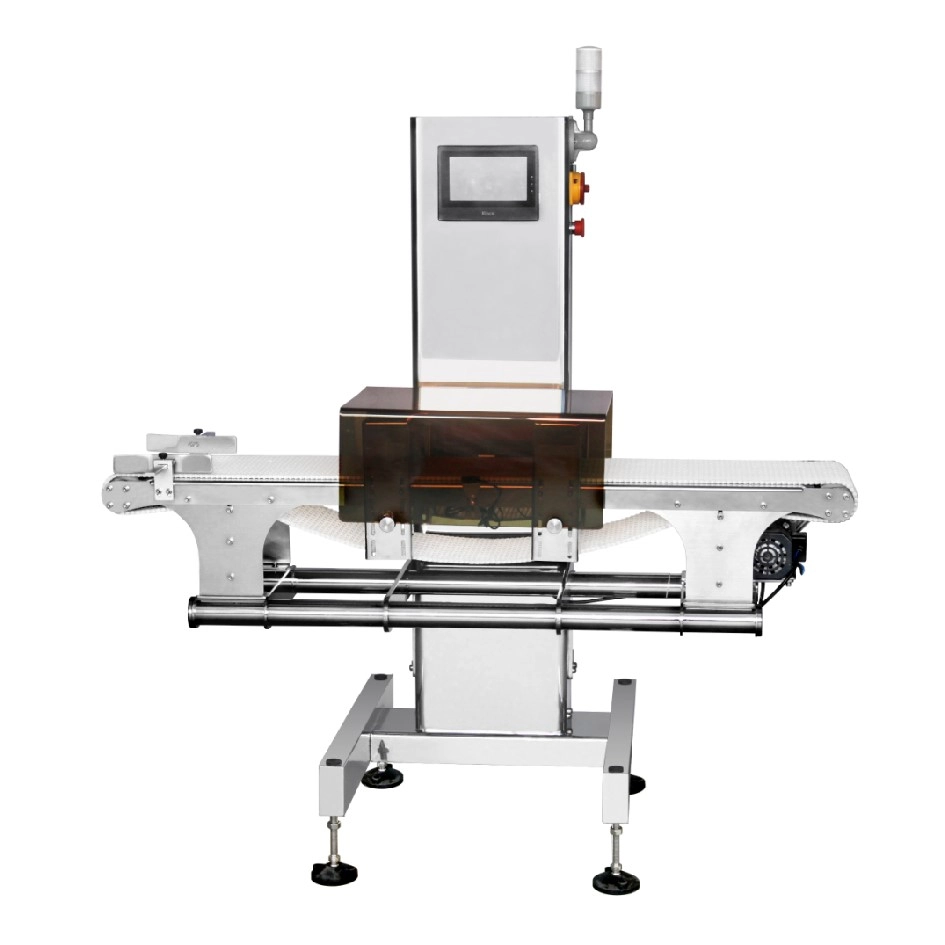
How to test metal detectors with aluminum test pieces
The latest trends for metal detector machine
Where to Buy multi head weigher

How Sensitivity Settings Impact Detection of Tiny Fragments
Prdoucts Categories
Question you may concern
About Product choice
Are there any additional features available for Kenwei machines?
Yes, we offer a variety of optional features for customization, such as: advanced touchscreen interfaces, multiple language support and so on.
About Solution suggestions
How do Kenwei’s machines improve my production efficiency?
Kenwei machines enhance efficiency by automating the weighing, packaging, and quality control processes. Our high-speed, high-precision machines ensure accurate measurements, reduce human error, and increase throughput, leading to faster production times and lower operational costs.
About Cooperation Process
How does Kenwei ensure the quality of its machines?
Kenwei has a stringent quality control system in place. Each machine is rigorously tested for precision, speed, and reliability before it is shipped.
About Logistics
Do I need to prepare my facility for the delivery of large machines?
Yes, large machines often require special preparations for delivery, including ensuring adequate space for unloading and installation.
About After Sales Support
What after-sales support does Kenwei offer?
Kenwei provides comprehensive after-sales support, including product installation, training, maintenance, troubleshooting, and technical assistance. Our team is dedicated to ensuring your machines operate at their best throughout their lifecycle.
You may also like
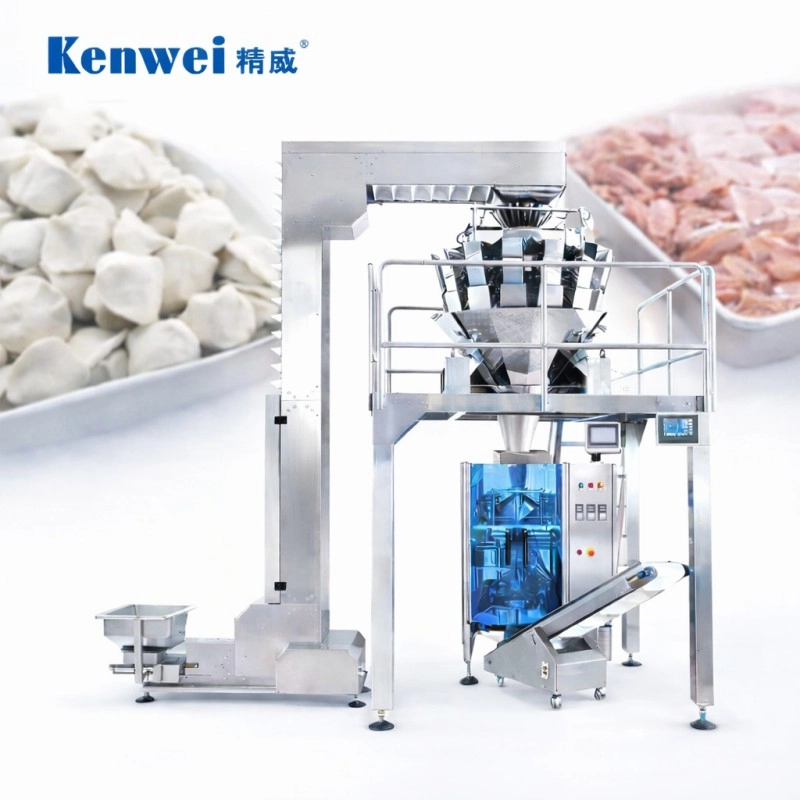
Vertical Frozen Food Packaging Machine for IQF & Frozen Products JW-B1
The Kenwei JW-B1 Vertical Frozen Food Packaging Machine is designed for IQF and frozen products, ensuring efficient, airtight packing. This vertical packing machine boosts productivity with precision sealing, ideal for frozen food packaging needs in the food industry.
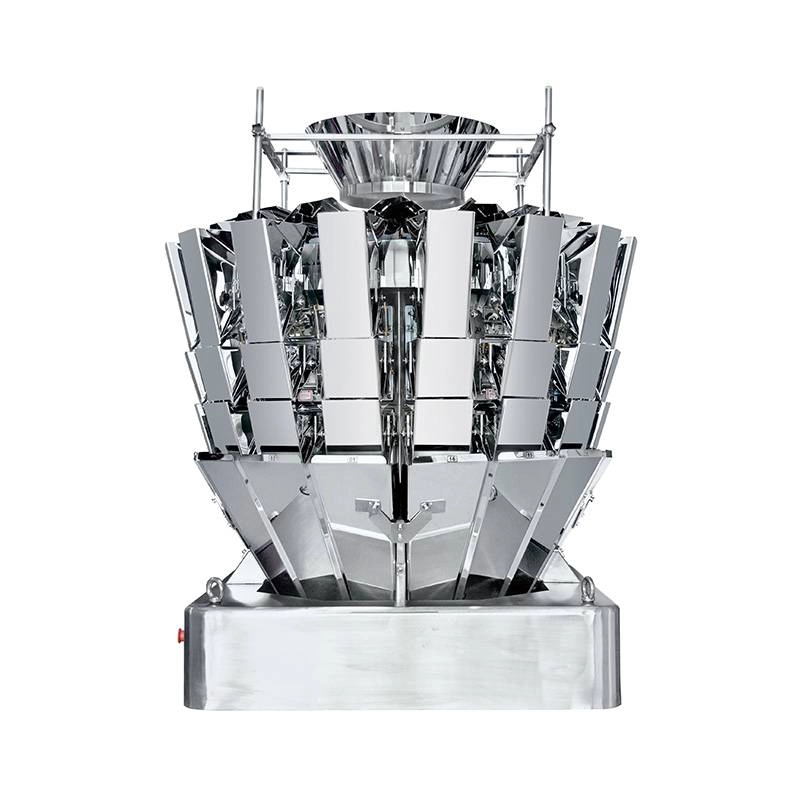
16 Head Three Layer Multihead Weigher for Granular and Irregular Materials
Kenwei’s 16 Head Three Layer Multihead Weigher ensures precise weighing of granular and irregular materials. This multihead weighing machine offers efficient, high-speed performance, ideal for various packaging needs. Trust our 16 head weigher for accuracy and reliability in your production line.
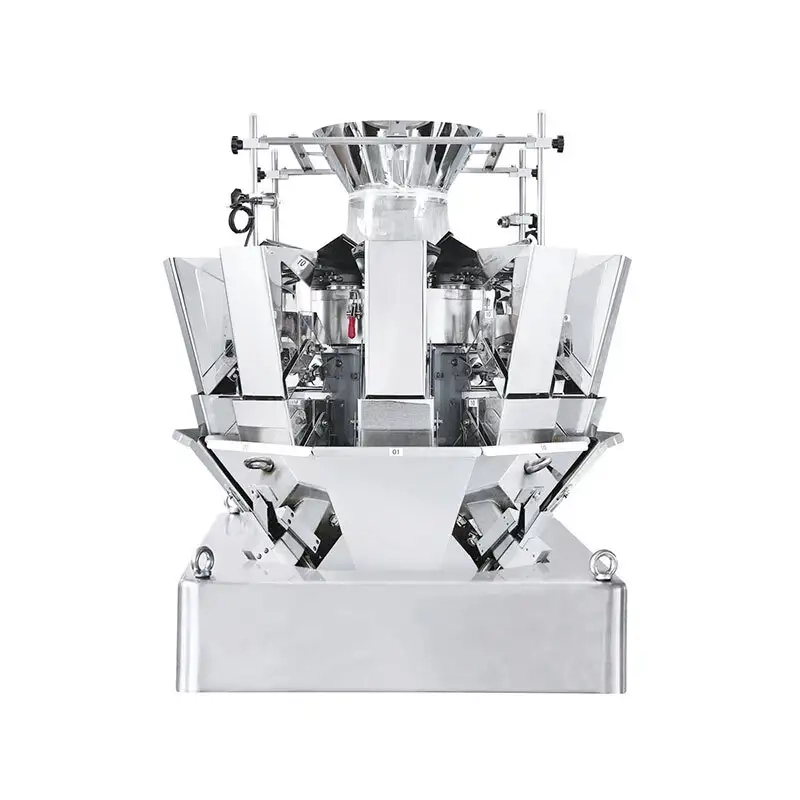
10-Head Standard No-Spring Multihead Weigher 1.6L for Precise Weighing
The standard no-spring combination scale features a patented spring-free hopper design, making it ideal for weighing a variety of products such as melon seeds, peanuts, nuts, almonds, grapes, candies, pistachios, potato chips, shrimp chips, and more. The double-support feeding tray is easily adjustable, while the feeding hopper is designed for easy disassembly, ensuring convenience and cleanliness. With a maximum weighing speed of up to 120 bags per minute, the 14-head standard no-spring combination scale is an economical, versatile, and cost-effective solution.
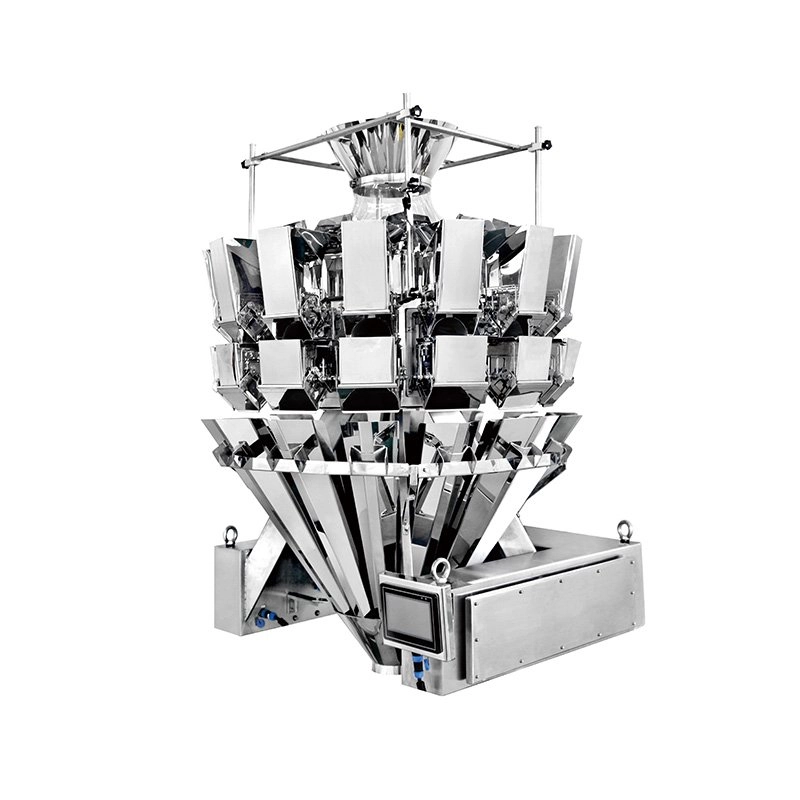
Automatic Multihead Weigher for Stick and Bar-Shaped Materials
Kenwei’s Automatic Multihead Weigher for Stick and Bar-Shaped Materials ensures precise, fast, and efficient weighing. This advanced automatic multihead weighing machine is ideal for accurate portioning of various stick and bar-shaped products, enhancing productivity and reducing waste.
Get in touch with us
If you have any comments or good suggestions, please leave us a message, later our professional staff will contact you as soon as possible.
Kenwei
Kenwei
Kenwei multi weigh
Kenwei
Kenwei
Kenwei