






Maintenance Guide: Extending Life of Your Multihead Weigher
A practical, expert-led maintenance guide to maximize uptime, accuracy, and service life of multihead weighers — with specific advice for the 14 Heads Vertical Single Screw Feeding Pickles Weigher backups. Covers daily checks, preventive maintenance, sanitation, calibration, spare parts strategy, and troubleshooting to reduce downtime and maintain precise portioning in food packaging lines.
- Maximizing Uptime for Food Packaging Multihead Systems
- Daily and Shift-Level Checks
- Planned Preventive Maintenance (PPM) Schedule
- Spare Parts and Critical Backups
- Sanitation, Corrosion Control, and Food-Safe Practices
- Cleaning Protocols for Pickles and Brine-Exposed Components
- Material Selection and Corrosion Mitigation
- Seals, Gaskets, and Hygienic Design
- Calibration, Accuracy, and Electronic Maintenance
- Load Cell Care and Calibration Best Practices
- Controller Firmware and Software Hygiene
- Electrical and Environmental Considerations
- Troubleshooting, Root Cause, and Cost-Effective Repairs
- Common Failure Modes and Quick Diagnoses
- When to Repair vs Replace Parts
- Data-Driven Maintenance and Predictive Indicators
- Maintenance Task Matrix and Intervals
- Design Tips to Reduce Maintenance Burden
- Component Accessibility and Tool-Less Removals
- Adjustable Feed and Dosing Parameters
- Use of Food-Safe Coatings and Wear Parts
- References and Further Reading
- FAQ — Maintenance & Operation of Your Multihead Weigher
- Q1: How often should we calibrate the multihead weigher?
- Q2: What maintenance is unique for the 14 Heads Vertical Single Screw Feeding Pickles Weigher backups?
- Q3: Can we perform most maintenance in-house or require OEM service?
- Q4: How do we reduce product giveaway while maintaining speed?
- Q5: What parts should be prioritized for a spares inventory?

Well-maintained multihead weighers are critical for accurate portioning, reduced giveaway, and continuous production in food packaging lines. This guide focuses on actionable maintenance practices that extend the service life and performance of your multihead weigher, including the 14 Heads Vertical Single Screw Feeding Pickles Weigher backups designed for delicate, high-moisture products such as pickles. Follow these inspection, cleaning, calibration, and parts-replacement strategies to optimize uptime, ensure food safety compliance, and protect your packaging accuracy and profit margins.
Maximizing Uptime for Food Packaging Multihead Systems
Daily and Shift-Level Checks
Routine shift checks are the first defense against unexpected downtime. Operators should visually inspect the hopper, feed screws, chutes, and weighing hoppers each shift for product build-up, jamming, or unusual noise. For the 14 Heads Vertical Single Screw Feeding Pickles Weigher backups, pay special attention to residues from brine or vinegar which can increase corrosion and sticky buildup:
- Verify smooth screw rotation and consistent product feed into the distribution trays.
- Listen for changes in motor sound or rattles that suggest loose hardware or damaged bearings.
- Check load-cell readings for large drift or fluctuating tare values which may indicate contamination or mechanical interference.
Planned Preventive Maintenance (PPM) Schedule
Establish a PPM calendar with tasks at daily, weekly, monthly, and annual intervals. Standard PPM reduces emergency repairs and helps maintain weighing accuracy. Use a maintenance log for each machine to record findings and corrective actions — this data is invaluable for root-cause analysis and warranty claims.
Spare Parts and Critical Backups
Keep a short list of critical spares on-site: load cells, belts, bearings, sealing gaskets, motor brushes (if applicable), and a backup controller module. For the named product, '14 Heads Vertical Single Screw Feeding Pickles Weigher backups', ensure you stock at least one spare feed screw assembly and a set of distribution trays. Having these on-hand reduces Mean Time To Repair (MTTR) dramatically.
Sanitation, Corrosion Control, and Food-Safe Practices
Cleaning Protocols for Pickles and Brine-Exposed Components
Pickles and similar brined products present unique cleaning challenges. Use targeted cleaning-in-place (CIP) where feasible and validated manual cleaning for areas the CIP can’t reach. Use food-grade, non-corrosive detergents and follow manufacturer-recommended concentrations. After cleaning, rinse thoroughly and allow components to dry to reduce corrosion risk. Reference food-safety frameworks such as the FDA's Food Safety Modernization Act (FSMA) for sanitation expectations: FDA FSMA.
Material Selection and Corrosion Mitigation
Stainless steel or FDA-compliant coated surfaces are preferred for parts exposed to acids and salt. Inspect welds and fasteners for pitting or crevice corrosion during monthly maintenance. Apply corrosion inhibitors only when approved for food-contact surfaces and per supplier guidance to remain compliant with food safety standards such as ISO 22000: ISO 22000.
Seals, Gaskets, and Hygienic Design
Replace seals and gaskets on a scheduled basis before failure. Hygienic design — sloped surfaces, minimal horizontal ledges, and easily removable trays — reduces hold-up areas where pickles and brine accumulate. Follow hygienic design principles and inspect fasteners and clamps for food-safe coatings or damage.
Calibration, Accuracy, and Electronic Maintenance
Load Cell Care and Calibration Best Practices
Load cells are the heart of multihead weighers. Calibration drift can cause giveaway or underweight packs. Calibrate load cells after major cleaning, mechanical repairs, or any time weight readings appear inconsistent. For guidance on legal metrology and accuracy requirements, consult the International Organization of Legal Metrology: OIML. Calibration steps:
- Perform zeroing with empty hoppers and verify mechanical clearances.
- Use certified calibration weights or a calibrated test load.
- Document calibration results and tolerance deviations.
Controller Firmware and Software Hygiene
Keep weighing controller firmware up to date to benefit from accuracy improvements and bug fixes. Back up controller settings and recipes (especially for the 14-head system with complex combination tables) after every production change. Use version control for machine parameters so you can restore known-good configurations quickly if parameter corruption occurs.
Electrical and Environmental Considerations
Moisture and salt aerosol from pickles can corrode electronics. Use IP-rated enclosures for control panels and ensure cable glands are tight. Check grounding and shielding to minimize electrical noise that affects load-cell signals. Maintain stable ambient temperature where possible — thermal drift can cause small but cumulative weighing errors.
Troubleshooting, Root Cause, and Cost-Effective Repairs
Common Failure Modes and Quick Diagnoses
Typical issues with multihead weighers include inconsistent feed, hopper jamming, erratic weight output, and mechanical wear. Quick checks to identify root causes:
- If weights fluctuate, verify load cells, electrical noise, and loose mechanical connections.
- If distribution is uneven, inspect screw pitch wear and distributor bowl condition.
- For frequent jams, inspect product-feed characteristics — pickles may require slower feed speeds or modified separator paddles to avoid clumping.
When to Repair vs Replace Parts
Use a cost-benefit approach: replace consumables (gaskets, belts, bearings) frequently; repair structural parts if alignment and tolerances can be restored. For critical accuracy components like load cells, replacement is often more cost-effective than attempting repairs that risk calibration certainty.
Data-Driven Maintenance and Predictive Indicators
Collect run-time metrics: cycles, motor current signatures, hopper fill times, and weight standard deviation. Trend analysis often reveals degradation before visible failure. If your weigher supports remote diagnostics, leverage that capability to schedule interventions during planned downtime and improve overall OEE (Overall Equipment Effectiveness).
Maintenance Task Matrix and Intervals
The table below provides a sample maintenance matrix tailored to a 14-head vertical single screw pickle weigher. Adjust intervals by production hours, product aggressiveness (brine), and historical failure data.
| Task | Frequency | Who | Expected Downtime |
|---|---|---|---|
| Visual inspection: feed screws, trays, chutes | Each shift | Operator | 5–10 min |
| Cleaning (product contact surfaces) | Daily or per product changeover | Sanitation team | 15–45 min |
| Load cell check and zero calibration | Weekly / After deep clean | Technician | 15–30 min |
| Replace seals / gaskets | Quarterly (or per wear) | Maintenance | 30–60 min |
| Full mechanical inspection (bearings, belts, motors) | Annually | Service engineer | 2–6 hours |
Design Tips to Reduce Maintenance Burden
Component Accessibility and Tool-Less Removals
Choose designs where distribution trays, feed screws, and hoppers can be removed without specialized tools. Quick-release fasteners and hinged covers cut cleaning and repair time substantially — a big advantage for high-changeover lines handling different pickle sizes and brine levels.
Adjustable Feed and Dosing Parameters
Fine-tuned screw speed, separator paddles, and gate timing allow you to handle variability in product size and moisture without mechanical intervention. Saving effective recipes for each product minimizes operator error and reduces mechanical stress from improper settings.
Use of Food-Safe Coatings and Wear Parts
When pickles cause accelerated wear, specify wear-resistant materials for screws and distributor parts. Food-safe polymer linings or hardened stainless surfaces can extend interval between replacements and reduce maintenance cost over the machine life.
References and Further Reading
For general background on weighing systems, see the Wikipedia overview of weighing scales: https://en.wikipedia.org/wiki/Weighing_scale.
For legal metrology and accuracy standards consult the International Organization of Legal Metrology: https://www.oiml.org.
Food safety and sanitation frameworks are described by regulatory authorities such as the FDA (FSMA): https://www.fda.gov/food/food-safety-modernization-act-fsma and standards bodies such as ISO 22000: https://www.iso.org/iso-22000-food-safety-management..
FAQ — Maintenance & Operation of Your Multihead Weigher
Q1: How often should we calibrate the multihead weigher?
A1: Calibrate load cells weekly under normal production and after any deep cleaning or mechanical work. If you observe drift or increased standard deviation in fill weights, calibrate immediately. Keep a calibration log for traceability and audits.
Q2: What maintenance is unique for the 14 Heads Vertical Single Screw Feeding Pickles Weigher backups?
A2: Focus on brine-resistance: more frequent cleaning, inspection of stainless surfaces, and replacement of seals/gaskets. Keep spare feed screws and distribution trays on-site, and treat electrical cabinets to prevent salt aerosol ingress.
Q3: Can we perform most maintenance in-house or require OEM service?
A3: Operators and maintenance teams can handle routine cleaning, daily checks, and many preventive tasks. Calibrations, electrical troubleshooting, and mechanical alignments beyond basic bearing replacement are best done by trained technicians or OEM service to maintain accuracy and warranty compliance.
Q4: How do we reduce product giveaway while maintaining speed?
A4: Maintain precise calibration, minimize feed irregularities, and optimize the combination tables in your controller. Use high-frequency data logging to detect small drifts and correct them before giveaway grows. Software recipe control for each product helps maintain speed without sacrificing accuracy.
Q5: What parts should be prioritized for a spares inventory?
A5: Load cells (or at least a plan for rapid replacement), feed screw assemblies, distribution trays, bearings, belts, gaskets, and an extra controller module. For pickle lines, include spare stainless fasteners and a secondary set of seals to minimize downtime after a sanitation event.
If you have more specific questions about maintenance intervals, spare-parts kits, or service contracts for the 14 Heads Vertical Single Screw Feeding Pickles Weigher backups, contact our technical team or view the product page for full specifications and support options.
Product Brief:
This type of weigher is designed to handle the unique characteristics of pickles, ensuring precise measurements for packaging and distribution. It uses a vertical single screw mechanism to feed the pickles into the weighing system, allowing for efficient and consistent weighing. This technology is particularly useful in food processing and packaging facilities where precise portioning is essential for quality control and customer satisfaction. This specialized equipment is perfect for accurately measuring and dispensing pickles in a production line or packaging facility. The vertical design allows for efficient and precise filling of containers, while the single screw feeding mechanism ensures consistent and reliable weighing.
Contact & Support: For spare parts, service contracts, or a customized maintenance plan for your multihead weigher and the 14 Heads Vertical Single Screw Feeding Pickles Weigher backups, contact our support team or view the product details.
Tags
metal detector for food industry
metal detector for food industry
multihead weigher machine
multihead weigher machine
kenwei multihead weigher
kenwei multihead weigher
multihead weigher for sale
multihead weigher for sale
automatic multihead weigher packing machine
automatic multihead weigher packing machine
best food inspection metal detector
best food inspection metal detector
Recommended for you
Spare Parts and Backup Planning for 14-Head Multihead Weigher
The linear combination weigher Cost Guide

Detecting non-ferrous metals like aluminum in foods

Common Metal Contaminants and Detection Techniques in Food
Prdoucts Categories
Question you may concern
About Product choice
What is the average lifespan of Kenwei products?
Kenwei machines are built for durability and longevity. With proper maintenance, our products are designed to last for many years, even under heavy usage. We offer maintenance services and support to help extend the lifespan of your machines.
About After Sales Support
How do I claim warranty service?
To claim warranty service, please contact our customer support team with your machine’s product code and a description of the issue. If applicable, we may request photos or videos of the issue to facilitate troubleshooting.
Can I get remote troubleshooting assistance?
Yes, Kenwei offers remote troubleshooting for certain issues. Our technical team can guide you through diagnostics and help resolve issues via phone, video call, or online messaging.
About Solution suggestions
Can Kenwei provide a solution for mixed-product weighing?
Yes, Kenwei’s multi-head weighers are ideal for mixed-product weighing. They can handle a variety of products in different shapes and sizes, ensuring that the correct portions are weighed and packaged quickly.
About Cooperation Process
Does Kenwei offer installation and training?
Yes, Kenwei provides installation services and comprehensive training to ensure that your team can operate the machinery efficiently. Our engineers can travel to your facility for on-site installation, and we also offer remote training options if needed.
You may also like
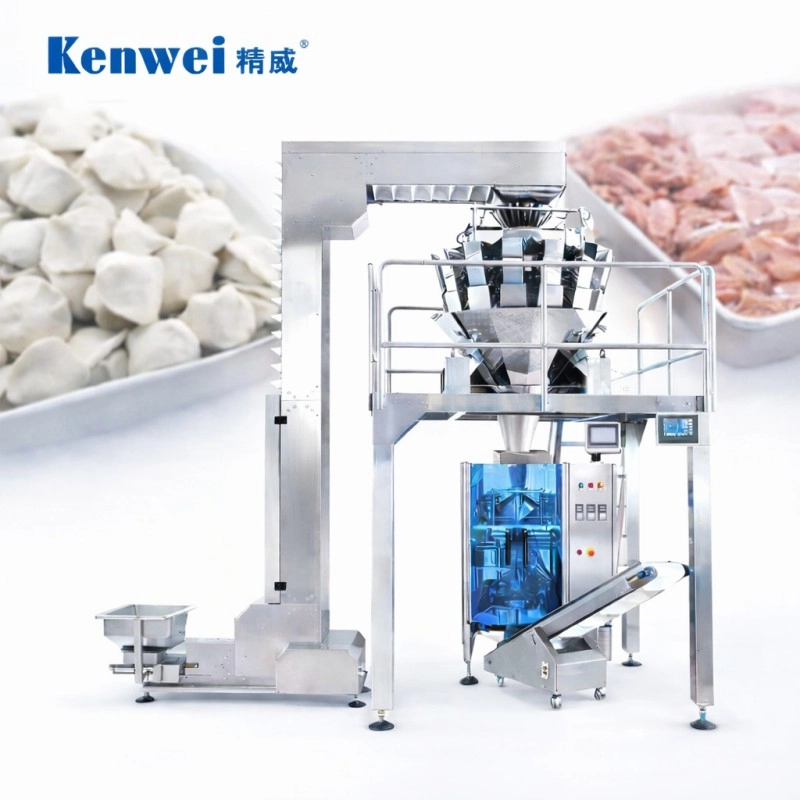
Vertical Frozen Food Packaging Machine for IQF & Frozen Products JW-B1
The Kenwei JW-B1 Vertical Frozen Food Packaging Machine is designed for IQF and frozen products, ensuring efficient, airtight packing. This vertical packing machine boosts productivity with precision sealing, ideal for frozen food packaging needs in the food industry.
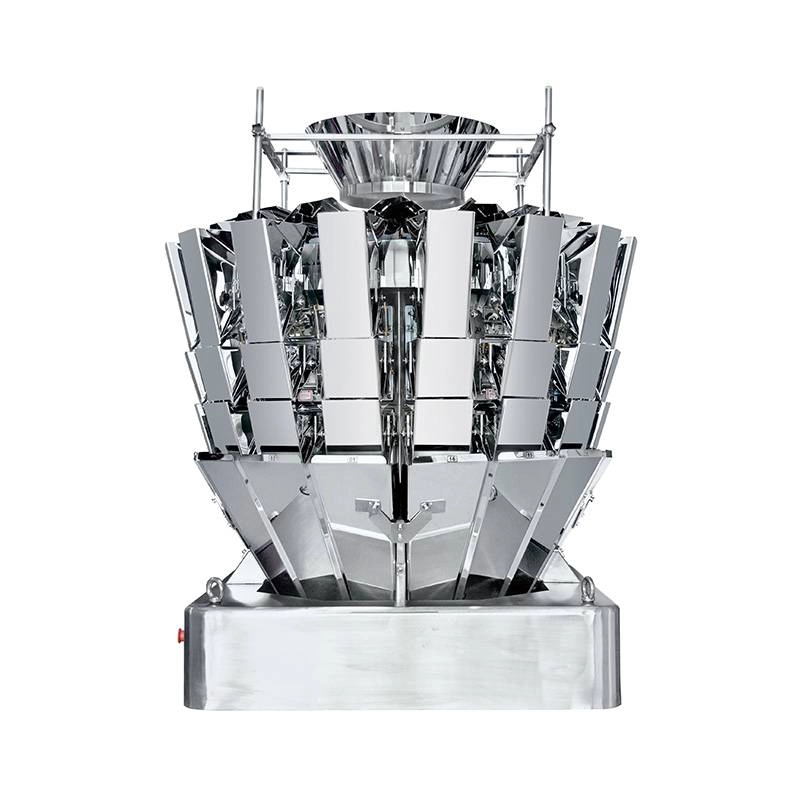
16 Head Three Layer Multihead Weigher for Granular and Irregular Materials
Kenwei’s 16 Head Three Layer Multihead Weigher ensures precise weighing of granular and irregular materials. This multihead weighing machine offers efficient, high-speed performance, ideal for various packaging needs. Trust our 16 head weigher for accuracy and reliability in your production line.
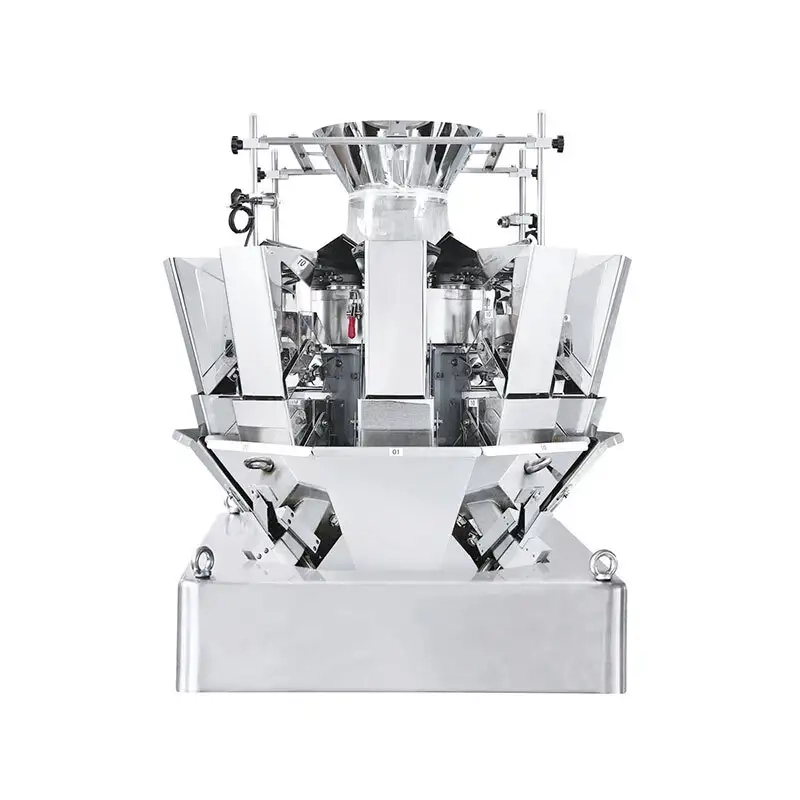
10-Head Standard No-Spring Multihead Weigher 1.6L for Precise Weighing
The standard no-spring combination scale features a patented spring-free hopper design, making it ideal for weighing a variety of products such as melon seeds, peanuts, nuts, almonds, grapes, candies, pistachios, potato chips, shrimp chips, and more. The double-support feeding tray is easily adjustable, while the feeding hopper is designed for easy disassembly, ensuring convenience and cleanliness. With a maximum weighing speed of up to 120 bags per minute, the 14-head standard no-spring combination scale is an economical, versatile, and cost-effective solution.
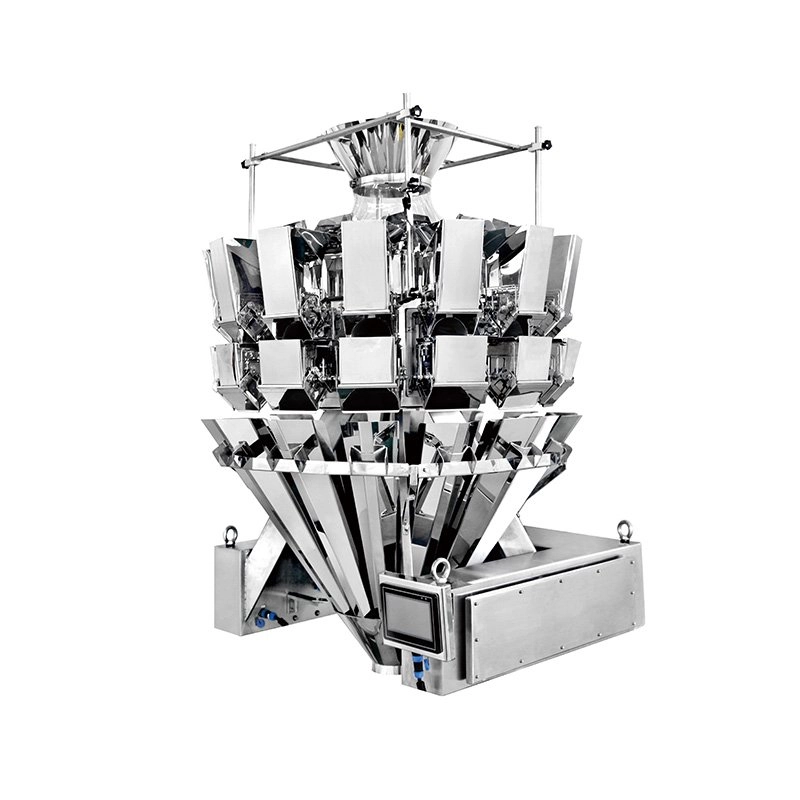
Automatic Multihead Weigher for Stick and Bar-Shaped Materials
Kenwei’s Automatic Multihead Weigher for Stick and Bar-Shaped Materials ensures precise, fast, and efficient weighing. This advanced automatic multihead weighing machine is ideal for accurate portioning of various stick and bar-shaped products, enhancing productivity and reducing waste.
Get in touch with us
If you have any comments or good suggestions, please leave us a message, later our professional staff will contact you as soon as possible.
Kenwei
Kenwei
Kenwei multi weigh
Kenwei
Kenwei
Kenwei