






Detecting non-ferrous metals like aluminum in foods
Detecting non-ferrous metal contaminants such as aluminum in foil-packaged foods requires specialized metal detection strategies. This article explains causes, detection challenges, practical solutions—highlighting the Metal Detector for Aluminum Foil in the Food Industry for Accurate Contamination Detection—and how to integrate these systems into production to meet ISO/FDA food safety expectations.
- Ensuring food safety for foil-packaged products: a concise overview
- How non-ferrous metal contamination occurs and why aluminum is challenging
- Common sources of non-ferrous metal contamination
- Why aluminum foil creates detection interference
- Safety and compliance implications
- Detection technologies: challenges and practical solutions
- Types of inspection technologies and their applicability
- Targeted solution: foil-immune metal detectors
- When to use X-ray vs. foil-immune metal detector
- Implementing metal detection in production lines: best practices
- System selection and specification
- Installation, calibration, and verification
- Operator training and maintenance
- Evaluating performance: metrics, testing, and validation
- Key performance indicators (KPIs)
- Challenge testing and documentation
- Comparative performance (table)
- Integration considerations for multihead weigher and packaging lines
- Line layout and synchronization
- Data logging and traceability
- Case example: coffee bag line
- References and authoritative guidance
- FAQ — Detecting aluminum and related questions
- Q1: Can a metal detector find aluminum fragments inside an aluminum foil pack?
- Q2: What verification tests should we run to prove performance?
- Q3: How does the 2415 Metal Detector compare to X-ray in cost and performance?
- Q4: What aperture sizes and product dimensions does the 2415 support?
- Q5: Do metal detectors need to be calibrated to different product types?

Ensuring food safety for foil-packaged products: a concise overview
Detecting non-ferrous metals such as aluminum in foods—especially products packed in aluminum foil—poses special technical and operational challenges. Food manufacturers need reliable metal detector for food industry solutions that can distinguish harmless packaging signals from hazardous metal fragments, while maintaining production throughput and meeting standards like ISO 22000 and regulatory guidance such as the FDA’s FSMA. This article outlines why aluminum is difficult to detect, reviews the available detection technologies, presents practical integration steps for production lines, and introduces the Metal Detector for Aluminum Foil in the Food Industry for Accurate Contamination Detection as a targeted solution to reduce false rejects while identifying magnetic metal contaminants.
How non-ferrous metal contamination occurs and why aluminum is challenging
Common sources of non-ferrous metal contamination
Non-ferrous metal contamination (aluminum, copper, brass, etc.) in food can originate from multiple points in the supply chain: worn machinery parts, processing tools, packaging materials, accidental fragments during maintenance, or external foreign bodies introduced during handling. When products are packed or wrapped in aluminum foil—such as coffee bags, peanuts, dried meats, and chocolate—the packaging itself can mask or mimic the electromagnetic response of small metal contaminants, complicating detection.
Why aluminum foil creates detection interference
Aluminum is a non-ferrous, non-magnetic metal. Most conventional metal detectors for the food industry are optimized to detect ferrous (magnetic) metals, while also identifying non-ferrous metals through changes in radio-frequency fields. However, a continuous aluminum foil wrapper surrounds the product and produces a persistent signal or background noise that can overwhelm the sensor’s ability to sense a small fragment inside the package. This leads to either missed contaminants or excessive false rejects, both of which undermine food safety and production efficiency.
Safety and compliance implications
Failure to effectively detect non-ferrous contaminants can result in consumer safety incidents, product recalls, and regulatory penalties. Compliance with recognized standards—ISO 22000 for food safety management and FSMA prevention controls—is essential. Using the right metal detector for food industry contexts is part of a robust hazard control plan (HACCP), and manufacturers should document detection capability, calibration records, and verification procedures to satisfy audits and inspections.
Detection technologies: challenges and practical solutions
Types of inspection technologies and their applicability
Common in-line inspection technologies include conventional coil metal detectors, X-ray inspection systems, and multi-technology solutions combining detectors with image or weight checks. Each has pros and cons for detecting non-ferrous metals in foil-wrapped goods:
- Conventional metal detectors: Effective for ferrous metals; with high-sensitivity coils and algorithmic filtering they can detect certain non-ferrous metals but struggle with foil packaging unless designed for foil immunity.
- X-ray inspection: Detects density and shape differences and can find non-ferrous metal fragments even in foil packaging, but is more expensive, has higher energy consumption, and may require more complex operator training.
- Hybrid solutions: Combining metal detectors with X-ray or vision systems improves detection rates and reduces false rejects but increases capital and integration complexity.
Targeted solution: foil-immune metal detectors
For many food lines, a specialized metal detector designed to be foil-immune is the most cost-effective option. The Metal Detector for Aluminum Foil in the Food Industry for Accurate Contamination Detection is one such product. It uses high-sensitivity sensors and filtering algorithms to suppress signals from continuous aluminum packaging while remaining responsive to magnetic metal contaminants and many non-ferrous fragments. This approach reduces false positives caused by the foil and allows manufacturers to preserve throughput and product yield.
Product brief:
The 2415 Metal Detector for Aluminum Foil is equipped with high-sensitivity sensors that effectively filter out signals from aluminum packaging, ensuring precise detection of magnetic metal contaminants. Ideal for detecting foreign bodies in aluminum foil-packaged items such as coffee bags, peanuts, dried meats, chocolate, and more. This versatile metal detector offers adjustable settings, with a maximum width of 24mm and height ranging from 20-150mm, making it suitable for a wide variety of aluminum foil packaging applications.
When to use X-ray vs. foil-immune metal detector
Choose an X-ray system if you need to detect high-density or complex-shaped non-ferrous fragments (e.g., lead, dense solder) or where metal fragments are similar in response to packaging. Choose a foil-immune metal detector when the majority of contamination risks are metallic and magnetic contaminants or when the packaging is continuous aluminum foil and throughput and ROI are critical. Many facilities use both: metal detector for routine inline screening and X-ray for periodic verification or high-risk product lines.
Implementing metal detection in production lines: best practices
System selection and specification
When evaluating metal detector for food industry options, consider these technical and operational criteria:
- Foil immunity / packaging compensation capability
- Sensitivity to relevant metals and minimum detectable sizes
- Aperture dimensions (conveyor width and product height) — e.g., 2415 model supports up to 24mm width and 20–150mm height
- Reject mechanism compatibility and speed
- Data-logging and traceability features for audit compliance
- Easily accessible calibration and verification routines
Installation, calibration, and verification
Proper installation and documented calibration are essential to meet regulatory expectations (ISO 22000 and FSMA). Key steps:
- Position the detector in a section of stable conveyor flow to minimize product movement variability.
- Perform calibration with test pieces representing the worst-case artifacts and with packaged products to verify foil immunity.
- Establish routine performance checks (daily/week) and full validation (monthly/quarterly), recording all results for audits.
Refer to industry guidance on verification practice and documentation to satisfy auditors—many food safety auditors expect written SOPs for metal detection and records of validation tests.
Operator training and maintenance
Human factors are a frequent cause of detection failures. Provide operator training on:
- How foil-immune detectors differ from standard units
- Interpreting sensitivity and alarm logs
- Routine cleaning, functional checks, and how to run verification tests
Evaluating performance: metrics, testing, and validation
Key performance indicators (KPIs)
Track these KPIs to evaluate the effectiveness of your metal detection program:
- Detection rate (confirmed contaminants found / total introduced during challenge tests)
- False reject rate (ratio of false alarms to inspected units)
- Throughput impact (production loss due to rejects or stoppages)
- Downtime and time-to-repair
Challenge testing and documentation
Perform challenge tests using representative contaminant sizes and types. Use documented test plans and keep records to demonstrate compliance during audits. Where possible, align testing with recognized standards and guidance from food safety bodies and industry associations. For general background on metal detection principles, see the Metal detector page on Wikipedia. For food-safety management frameworks, the ISO 22000 standard provides a management system structure: ISO 22000.
Comparative performance (table)
| Feature | 2415 Foil-Immune Metal Detector | Conventional Metal Detector | X-ray System |
|---|---|---|---|
| Foil immunity | High (designed to filter aluminum packaging) | Low–Medium (false positives likely) | High (detects density differences) |
| Sensitivity to small magnetic fragments | High | High | Medium |
| Detects all non-ferrous metals reliably | Good for many non-ferrous types (optimized for foil contexts) | Limited | Excellent |
| Aperture (example) | Max width 24mm; height 20–150mm | Varies | Varies |
| Cost / ROI | Moderate; rapid ROI for foil-packaged lines | Low–Moderate | High |
Integration considerations for multihead weigher and packaging lines
Line layout and synchronization
When integrating a metal detector for food industry use with a multihead weigher or downstream packaging equipment, ensure proper synchronization. The detector must be placed where product flow is stable—commonly after the sealing operation for foil pouches or immediately after the multihead weigher’s discharge when products are transferred to packaging. Coordinate reject devices and conveyor speeds to avoid product backups and ensure accurate removal of contaminated units.
Data logging and traceability
Choose systems that support event logging, versioned configuration, and exportable records. This makes it easier to trace alarms to specific lots or shift periods, and to provide evidence during audits. Many modern detectors include Ethernet or USB logging and can integrate with MES or quality management systems.
Case example: coffee bag line
In a coffee bag production line using aluminum foil pouches, the 2415 detector can be installed after sealing. With its foil compensation, it minimizes false rejects caused by the bag seams and still detects small magnetic metallic fragments that pose safety risks. Regular challenge testing using standardized test pieces should be scheduled and recorded in the QA log.
References and authoritative guidance
Industry and regulatory references to support implementation and validation:
- ISO 22000 — Food safety management
- FDA — Food Safety Modernization Act (FSMA)
- WHO — Food safety
- Metal detector (overview)
FAQ — Detecting aluminum and related questions
Q1: Can a metal detector find aluminum fragments inside an aluminum foil pack?
A: Standard metal detectors struggle because the foil creates a strong, continuous signal. A foil-immune metal detector (like the 2415 model) uses signal filtering and compensation to suppress the packaging’s background, enabling the detection of magnetic metal contaminants. Very small non-magnetic aluminum fragments remain more difficult to detect; in those cases, X-ray may be used as a supplement for verification.
Q2: What verification tests should we run to prove performance?
A: Run challenge tests with representative contaminants (magnetic and non-magnetic) and test the worst-case packaged products. Document the detectable fragment sizes and maintain records per your HACCP and ISO/FDA requirements. Daily functional checks and scheduled full validations are recommended.
Q3: How does the 2415 Metal Detector compare to X-ray in cost and performance?
A: The 2415 is typically lower cost and easier to integrate and maintain than an X-ray system. It provides excellent performance for magnetic contaminants and many non-ferrous types in foil-packaged products due to foil compensation. X-ray provides superior detection for dense or irregular non-ferrous fragments but has higher capital and operating costs.
Q4: What aperture sizes and product dimensions does the 2415 support?
A: The 2415 supports a maximum width of 24mm and an adjustable height range from 20–150mm, making it suitable for a wide array of foil packaging formats such as single-serve coffee bags, snack-sized packs, and small sealed pouches.
Q5: Do metal detectors need to be calibrated to different product types?
A: Yes. Product effect (differences in conductivity and density) and packaging can change the detector’s baseline. Calibrate the detector for each product-packaging combination and keep records of each calibration for quality assurance and audit purposes.
If you have more specific questions about integrating a metal detector for food industry lines, challenge testing protocols, or verifying compliance, our technical team can help.
Contact us / View product: View product: Metal Detector for Aluminum Foil in the Food Industry for Accurate Contamination Detection | Contact sales
Tags
weighing packing machine
weighing packing machine
Working Platform
Working Platform
Dual-channel counting machine
Dual-channel counting machine
Electronic linear weigh feeder
Electronic linear weigh feeder
best metal detectors
best metal detectors
food packaging machines for small business
food packaging machines for small business
Recommended for you
Multihead Weigher Maintenance Checklist: Daily, Weekly, Monthly Tasks
Tips for buy packing machine for food products
Sustainable Packaging: Combination Weighers Role in 2026
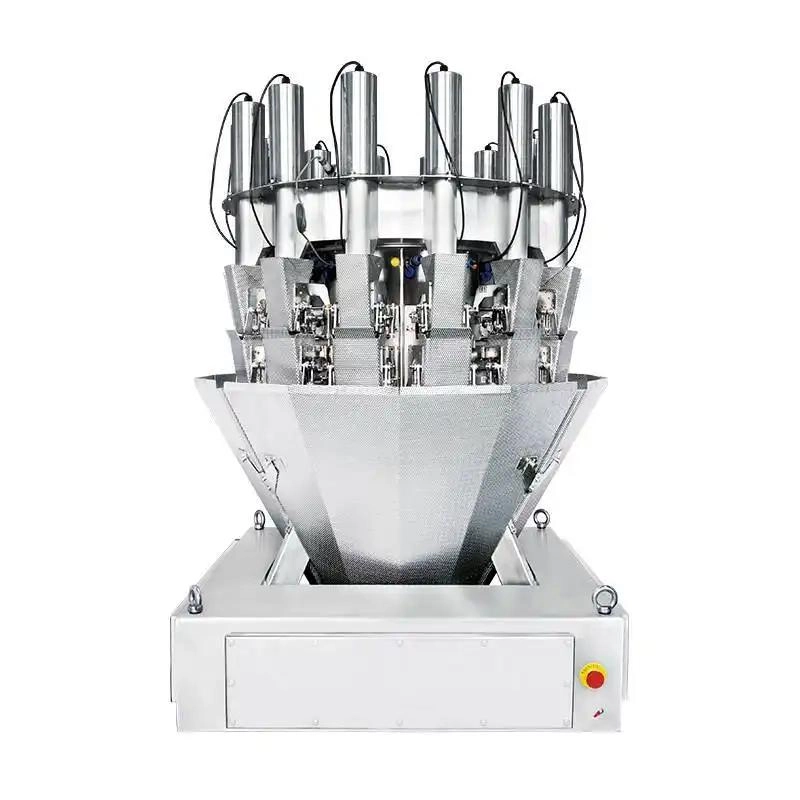
Food Safety Compliance With Multihead Weigher in Pickle Lines
Prdoucts Categories
Question you may concern
About Solution suggestions
Can Kenwei solutions be used for both manual and automated packing lines?
Yes, Kenwei machines can be used in both manual and automated packing lines. We can provide integrated systems that work alongside manual labor or fully automated systems depending on your production requirements.
Can Kenwei provide a solution for mixed-product weighing?
Yes, Kenwei’s multi-head weighers are ideal for mixed-product weighing. They can handle a variety of products in different shapes and sizes, ensuring that the correct portions are weighed and packaged quickly.
About After Sales Support
Can I get remote troubleshooting assistance?
Yes, Kenwei offers remote troubleshooting for certain issues. Our technical team can guide you through diagnostics and help resolve issues via phone, video call, or online messaging.
About Price and payment
How do I make a payment for Kenwei machines?
We accept several payment methods: T/T, Letter of Credit (L/C)
How is the price of Kenwei machines determined?
The price of Kenwei machines depends on several factors, including the type of machine, customization requirements, production volume, and any additional features or integrations. We provide tailored quotes based on your specific needs and requirements.
You may also like
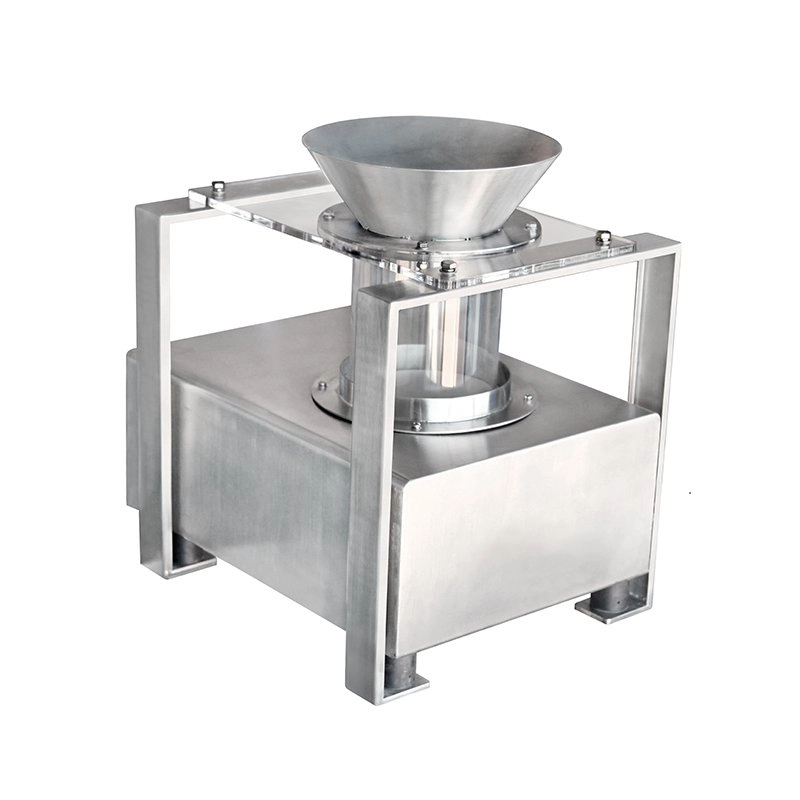
Dropped Metal Detector for Powder Granules For Food Industry
Enhance food safety with Kenwei’s Dropped Metal Detector for Powder Granules. This advanced food metal detector ensures precise detection in the food industry, safeguarding products and maintaining high quality standards throughout processing.
14 Heads Vertical Single Screw Feeding Pickles Weigher backups
This type of weigher is designed to handle the unique characteristics of pickles, ensuring precise measurements for packaging and distribution. It uses a vertical single screw mechanism to feed the pickles into the weighing system, allowing for efficient and consistent weighing. This technology is particularly useful in food processing and packaging facilities where precise portioning is essential for quality control and customer satisfaction. This specialized equipment is perfect for accurately measuring and dispensing pickles in a production line or packaging facility. The vertical design allows for efficient and precise filling of containers, while the single screw feeding mechanism ensures consistent and reliable weighing.
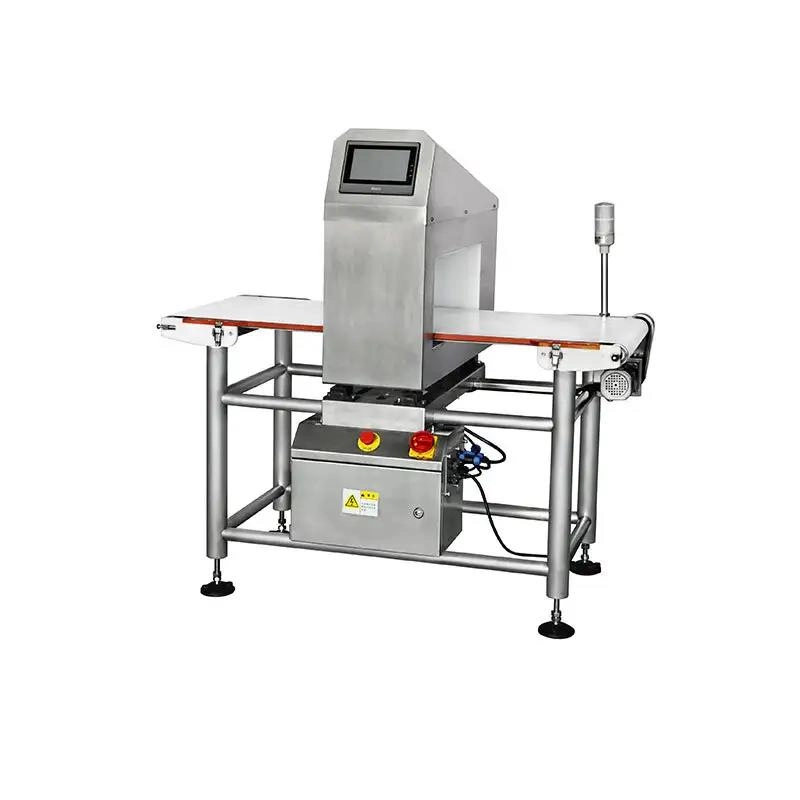
Food Metal Detector Manufacturer For Reject Defective Products G5020
The G5020 multi-frequency metal detector features a specialized conveyor belt designed to reduce contamination risks, ensure smooth operation, and maintain high detection sensitivity. It is easy to disassemble for convenient maintenance. Ideal for detecting metal contaminants in food, pharmaceuticals, spices, plastics, electronics, textiles, toys, handicrafts, and more.
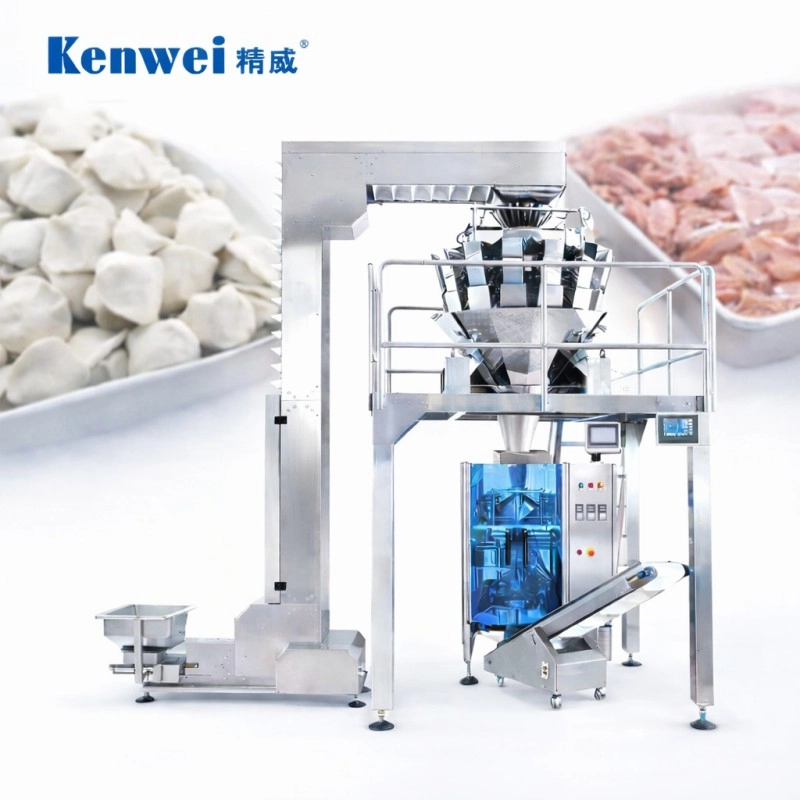
Vertical Frozen Food Packaging Machine for IQF & Frozen Products JW-B1
The Kenwei JW-B1 Vertical Frozen Food Packaging Machine is designed for IQF and frozen products, ensuring efficient, airtight packing. This vertical packing machine boosts productivity with precision sealing, ideal for frozen food packaging needs in the food industry.
Get in touch with us
If you have any comments or good suggestions, please leave us a message, later our professional staff will contact you as soon as possible.
Kenwei
Kenwei
Kenwei multi weigh
Kenwei
Kenwei
Kenwei