






Tips for buy packing machine for food products
Choosing the right packing machine for food products requires understanding product characteristics, production speed, accuracy, hygiene standards, and integration needs. This guide explains types of food packaging machines (including multihead weighers), how to evaluate total cost of ownership, compliance and certifications, testing and after-sales support, and practical steps to select a reliable supplier like Kenwei for automated weighing and packaging solutions.
- Tips for Buying a Packing Machine for Food Products
- Understand your product characteristics and packing machine needs
- Decide the right type of packing machine for food products
- Match throughput and speed to business objectives
- Prioritize weighing accuracy and yield control
- Check hygiene design and food safety compliance
- Evaluate material handling and gentle handling options
- Consider integration and automation capabilities
- Plan for changeovers and product flexibility
- Assess total cost of ownership (TCO), not just price
- Validate warranty, service, and spare parts support
- Inspect build quality and operator ergonomics
- Request factory acceptance tests and onsite trials
- Check certifications, standards and regulatory support
- Understand packaging materials and sealing requirements
- Request references and real customer case studies
- Plan for spare parts, training and documentation
- Financing, lead times and project management
- Why choose a specialized manufacturer like Kenwei
- Conclusion: buy with confidence and measure long-term value
- Make a decision based on fit, not just features
- Next steps
Tips for Buying a Packing Machine for Food Products
Understand your product characteristics and packing machine needs
Before evaluating vendors or equipment, identify the physical and handling characteristics of your food product. Is it free-flowing (rice, granola) or fragile (chips, bakery items)? Does it vary in size and shape (mixed nuts, frozen vegetables)? Packing machine for food products must match the product’s density, particle size, moisture, oiliness and sensitivity to compression. These factors determine whether you need a multihead weigher, linear weigher, volumetric filler, or a specialist feeder and packing system.
Decide the right type of packing machine for food products
Selecting the proper machine family is a commercial decision. Multihead weighers are the industry standard for high-speed, high-accuracy weighing of discrete items and mixed products. Linear weighers and auger fillers suit powders and granular materials. Vertical form-fill-seal (VFFS) machines and horizontal flow wrappers handle bag forming and sealing. For metal detection and final product safety, integrated metal detectors and check weighers are essential. Understand how each category aligns with your product and packaging format.
Match throughput and speed to business objectives
Throughput is a primary purchasing motive. Define desired packs-per-minute and daily output targets. Packing machine for food products should meet peak production without excessive rejects. Consider peak versus average speed: a machine that briefly matches peak but runs sub-optimally most of the time will increase operating costs. Choose equipment with scalable capacity—options like additional heads on a multihead weigher or modular conveyors help grow output as demand rises.
Prioritize weighing accuracy and yield control
Accuracy affects material costs and compliance. Multihead weighers are designed for fine accuracy across a weight range and can improve yield by reducing giveaway. When buying a packing machine for food products, ask vendors for typical accuracy ranges on similar products and request real-world sample tests. Accuracy expectations will vary by product: fragile items may limit speed to preserve integrity, while uniform small particulates often allow very tight tolerances.
Check hygiene design and food safety compliance
Food-grade design is non-negotiable. Look for stainless steel contact parts, hygienic frame design with minimal crevices, quick-release components for cleaning, and designs that support CIP (clean-in-place) or easy washdown. Verify compliance with relevant food safety regulations and standards (HACCP principles, local food safety authorities) and consider manufacturers who design machines to EHEDG guidelines for hygienic engineering. Packing machine for food products must enable safe cleaning and reduce contamination risk.
Evaluate material handling and gentle handling options
Handling matters for fragile or irregular products. Choose feeders, hoppers and conveyors designed to minimize breakage and segregation. Gentle feed systems, variable bowl speeds on multihead weighers, and cushioned discharge chutes preserve product quality. When selecting a packing machine for food products like chips or whole fruits, prioritize gentle handling features to reduce waste and customer complaints.
Consider integration and automation capabilities
Modern packing lines require integration between weighing, packing, metal detection, and end-of-line equipment. Confirm PLC compatibility, supported communication protocols (Ethernet/IP, Modbus, OPC-UA), and ease of integration with upstream and downstream machines. Industry 4.0 features — remote diagnostics, data logging, production analytics — increase uptime and support continuous improvement. Choosing an integrated packing machine for food products reduces engineering time and improves line performance.
Plan for changeovers and product flexibility
If you pack multiple SKUs, evaluate changeover complexity. Machines with quick-change tooling, adjustable infeed guides, and recipe storage speed transitions and reduce downtime. Packing machine for food products that supports recipe-driven settings allows operators to switch products with minimal adjustment, improving responsiveness to seasonal demand or promotional run requirements.
Assess total cost of ownership (TCO), not just price
Purchase price is only part of the story. Consider energy consumption, spare parts pricing and availability, routine maintenance labor, expected uptime, and the cost of rejects or giveaway. A higher-priced machine with superior accuracy and local support can have a lower TCO through reduced waste and higher throughput. Request lifecycle cost estimates and typical spare parts lists from vendors when comparing options.
Validate warranty, service, and spare parts support
After-sales support is critical to maintain continuous operation. Ensure warranty terms are clear and that the manufacturer or supplier offers installation, commissioning, operator training, and preventive maintenance. Check the availability of spare parts and average lead times—local stocking or service partners shorten downtime. For packing machine for food products, choose suppliers that commit to fast technical support and documented service response times.
Inspect build quality and operator ergonomics
Quality of construction affects durability and safety. Look for machines with robust frames, precision drive systems, and high-quality sensors and electronics. Operator ergonomics—clear HMI, accessible service points, safe guarding with easy access—reduce errors and speed maintenance. A packing machine for food products with good ergonomics improves operator productivity and reduces risk of accidents.
Request factory acceptance tests and onsite trials
Insist on factory acceptance testing (FAT) with your product or representative samples. Witnessing a FAT validates promised speed, accuracy and integration. Where possible, arrange a site acceptance test (SAT) after installation to confirm performance in real production conditions. Packing machine for food products suppliers should be willing to run trials and demonstrate performance metrics under contract.
Check certifications, standards and regulatory support
Confirm relevant certifications such as ISO 9001 for quality management and CE marking where applicable. For food machinery, designs aligned with EHEDG or similar hygienic design guidance are a plus. Understand local regulatory requirements for equipment used in food production and ensure the supplier supports compliance documentation. A compliant packing machine for food products reduces regulatory risk and simplifies audits.
Understand packaging materials and sealing requirements
Packaging substrate (film, paper, pouch, tray) affects machine choice. For example, VFFS machines form and seal flexible films, while tray sealers are suited for MAP (modified atmosphere packaging). Verify that your chosen packing machine for food products supports the film thickness, sealing temperatures and gas flushing needs of your packaging format. Proper sealing ensures shelf life and consumer safety.
Request references and real customer case studies
Ask the supplier for references in your product category and factory visits if feasible. Case studies, performance data, and testimonials give insight into reliability and service quality. Reputable manufacturers will provide examples showing how their packing machine for food products performs in similar environments and how they handled customization and after-sales support.
Plan for spare parts, training and documentation
Clear documentation—operation manuals, maintenance guides, electrical schematics—supports long-term performance. Arrange operator and maintenance training as part of the purchase. Ensure that the supplier can supply critical spare parts quickly, ideally through local inventory or authorized distributors, to minimize downtime for your packing machine for food products.
Financing, lead times and project management
Coordinate expected delivery and installation timelines with production plans. Ask about lead times for custom tooling and spare parts. Consider financing or leasing options if upfront capital is constrained. A supplier who offers project management support—including site surveys, installation scheduling, and commissioning—simplifies deployment of your packing machine for food products.
Why choose a specialized manufacturer like Kenwei
Choosing a specialist with proven experience in multihead weighers and automated lines reduces implementation risk. Kenwei is a manufacturer focused on multihead weighers, metal detectors, linear weighers, and check weighers, offering integrated automated weighing and packaging solutions. With capabilities in design, manufacturing, installation and after-sales service, Kenwei supports customization and delivers machines designed for high speed and precision. Visit https://www.kenweigroup.com/ to learn about their product range and service offerings.
Conclusion: buy with confidence and measure long-term value
Make a decision based on fit, not just features
Buying a packing machine for food products is a strategic investment. Focus on matching machine capabilities to your product, throughput, hygiene needs, and future growth. Evaluate total cost of ownership, service capabilities, and the vendor’s industrial expertise. Test machines with your product, verify hygienic design and compliance, and ensure strong after-sales support. By following these tips, you can select equipment that protects product quality, reduces waste, and supports your production goals.
Next steps
Compile a short list of requirements (product description, pack format, target output, hygiene needs). Request detailed proposals, FATs and references from shortlisted vendors. Consider partnering with a manufacturer experienced in multihead weighers and automated systems to accelerate deployment and minimize risk.
Frequently asked questions
Q: What is the best machine for packing mixed snacks or nuts?A: Multihead weighers combined with a suitable VFFS or pre-made pouch system are commonly used for mixed snacks. Multihead weighers offer speed and accuracy for mixed-product packing and can be integrated with gentle feed systems to reduce breakage.
Q: How do I ensure the packing machine meets food safety requirements?A: Verify hygienic design (stainless steel food contact surfaces, easy cleaning), request documentation for compliance with local food safety regulations, and choose equipment designed to EHEDG guidelines if available. Ensure supplier provides cleaning instructions and supports HACCP audits.
Q: How important is machine accuracy for my ROI?A: Accuracy directly impacts giveaway and material cost. Improved weighing accuracy reduces product giveaway and increases yield, which often offsets higher initial equipment cost. Evaluate historical material costs and run ROI scenarios using expected accuracy improvements.
Q: Can packing machines handle seasonal SKU changes?A: Many modern packing machines offer recipe storage and quick-change tooling to speed SKU changeovers. When flexibility is required, select machines designed for fast adjustments and minimal manual retooling.
Q: What after-sales services should I expect from a reputable supplier?A: Expect installation and commissioning, operator and maintenance training, preventive maintenance contracts, guaranteed spare parts availability, remote diagnostics, and clear warranty terms. Response time commitments for on-site service are also important.
Q: How can I test a machine before purchase?A: Request a factory acceptance test (FAT) using your product or representative samples. If possible, negotiate a trial period or witness on-site acceptance testing after installation to confirm real-line performance.
Q: Is it better to buy an all-in-one line or integrate best-of-breed components?A: Both models have advantages. All-in-one suppliers simplify project management and integration, while best-of-breed components let you select specialized equipment for each function. Prioritize suppliers with proven integration experience if choosing multiple vendors.
Q: Where do I find spare parts quickly to minimize downtime?A: Choose suppliers with local distributors or spare-parts depots in your region. Ask about critical parts lists and recommended stocking levels for your production volume.
Q: What documentation should come with a packing machine?A: Operation manuals, maintenance guides, electrical schematics, spare parts lists, FAT reports, and certificates of conformity. Also request training records and preventive maintenance schedules.
Q: How do I estimate the true cost of a packing machine?A: Include purchase price, installation, integration, energy consumption, routine maintenance, spare parts, downtime risk, and expected improvements in yield or throughput to calculate total cost of ownership (TCO). Comparing TCO across options gives a clearer picture than upfront price alone.
Tags
metal detectors food
metal detectors food
metal detector machine
metal detector machine
automatic packaging machine
automatic packaging machine
automatic powder packing machine
automatic powder packing machine
best vffs
best vffs
automatic multihead weigher packing machine
automatic multihead weigher packing machine
Recommended for you
Top 10 head multihead weigher Manufacturers and Suppliers in China
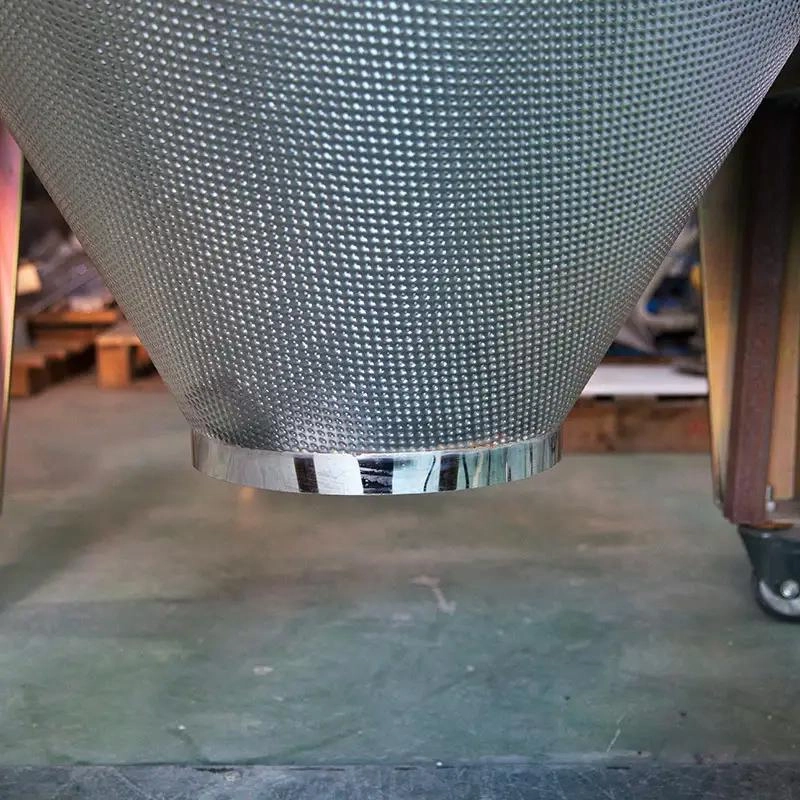
Spare Parts and Backup Planning for 14-Head Multihead Weigher

Integrating Metal Detectors with Multihead Weighers: Best Practices
The industrial food metal detector Cost Guide
Prdoucts Categories
Question you may concern
About After Sales Support
How can I get technical support for my Kenwei machine?
You can contact Kenwei's technical support team via email, phone, or through our website.
About Cooperation Process
How to operate it?
Many languages are available for global markets. There are not only detailed instructions, but also machine video for reference learning.
Can Kenwei customize equipment to meet my specific needs?
Yes! We offer customized solutions for all of our machines. Our team will work closely with you to understand your specific requirements and create a solution that meets your needs in terms of size, functionality, speed, and other factors.
How does Kenwei ensure the quality of its machines?
Kenwei has a stringent quality control system in place. Each machine is rigorously tested for precision, speed, and reliability before it is shipped.
About Logistics
How are large machines handled during shipping?
Large machines are typically shipped via sea freight using containerized shipping.
You may also like
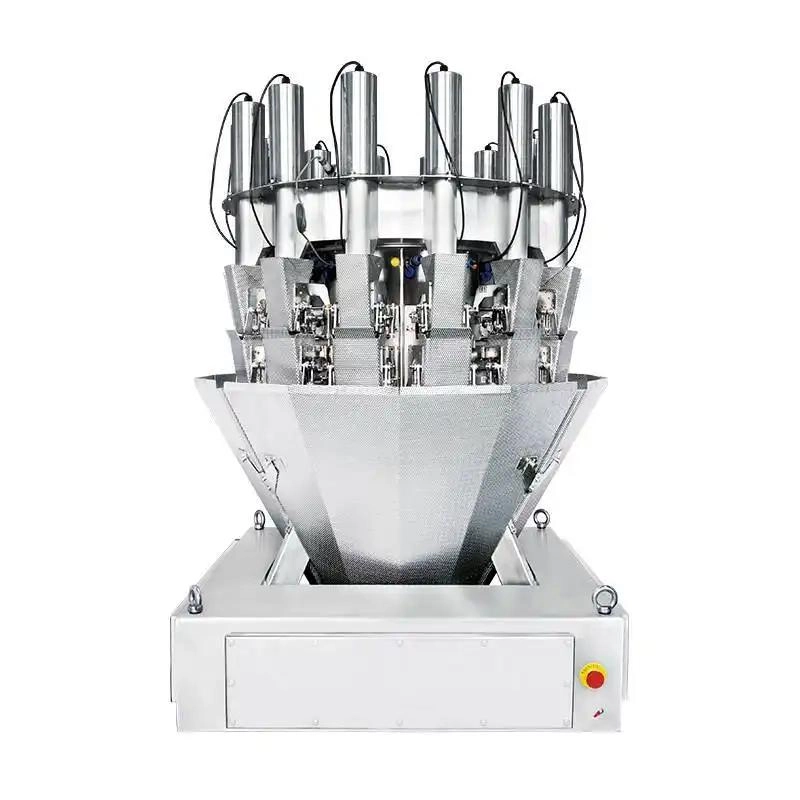
14 Heads Vertical Single Screw Feeding Pickles Weigher backups
This type of weigher is designed to handle the unique characteristics of pickles, ensuring precise measurements for packaging and distribution. It uses a vertical single screw mechanism to feed the pickles into the weighing system, allowing for efficient and consistent weighing. This technology is particularly useful in food processing and packaging facilities where precise portioning is essential for quality control and customer satisfaction. This specialized equipment is perfect for accurately measuring and dispensing pickles in a production line or packaging facility. The vertical design allows for efficient and precise filling of containers, while the single screw feeding mechanism ensures consistent and reliable weighing.
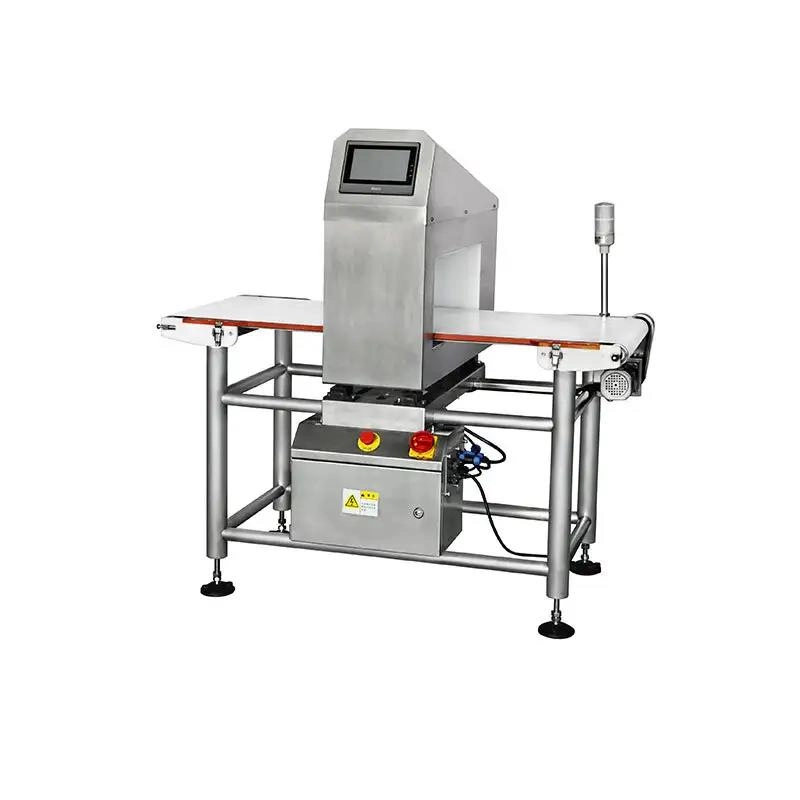
Food Metal Detector Manufacturer For Reject Defective Products G5020
The G5020 multi-frequency metal detector features a specialized conveyor belt designed to reduce contamination risks, ensure smooth operation, and maintain high detection sensitivity. It is easy to disassemble for convenient maintenance. Ideal for detecting metal contaminants in food, pharmaceuticals, spices, plastics, electronics, textiles, toys, handicrafts, and more.
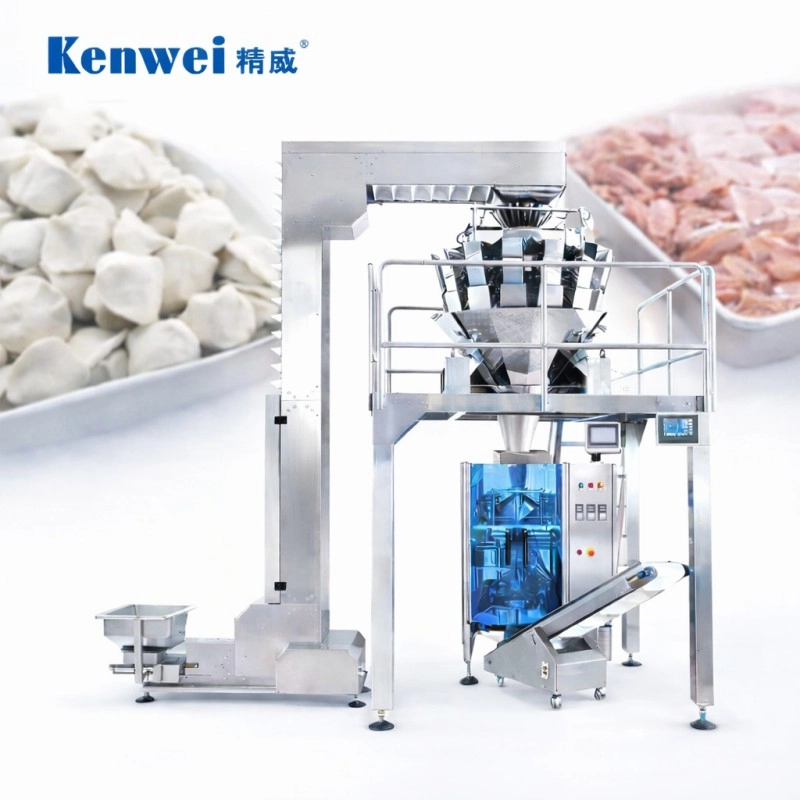
Vertical Frozen Food Packaging Machine for IQF & Frozen Products JW-B1
The Kenwei JW-B1 Vertical Frozen Food Packaging Machine is designed for IQF and frozen products, ensuring efficient, airtight packing. This vertical packing machine boosts productivity with precision sealing, ideal for frozen food packaging needs in the food industry.
Metal Detector for Aluminum Foil in the Food Industry for Accurate Contamination Detection
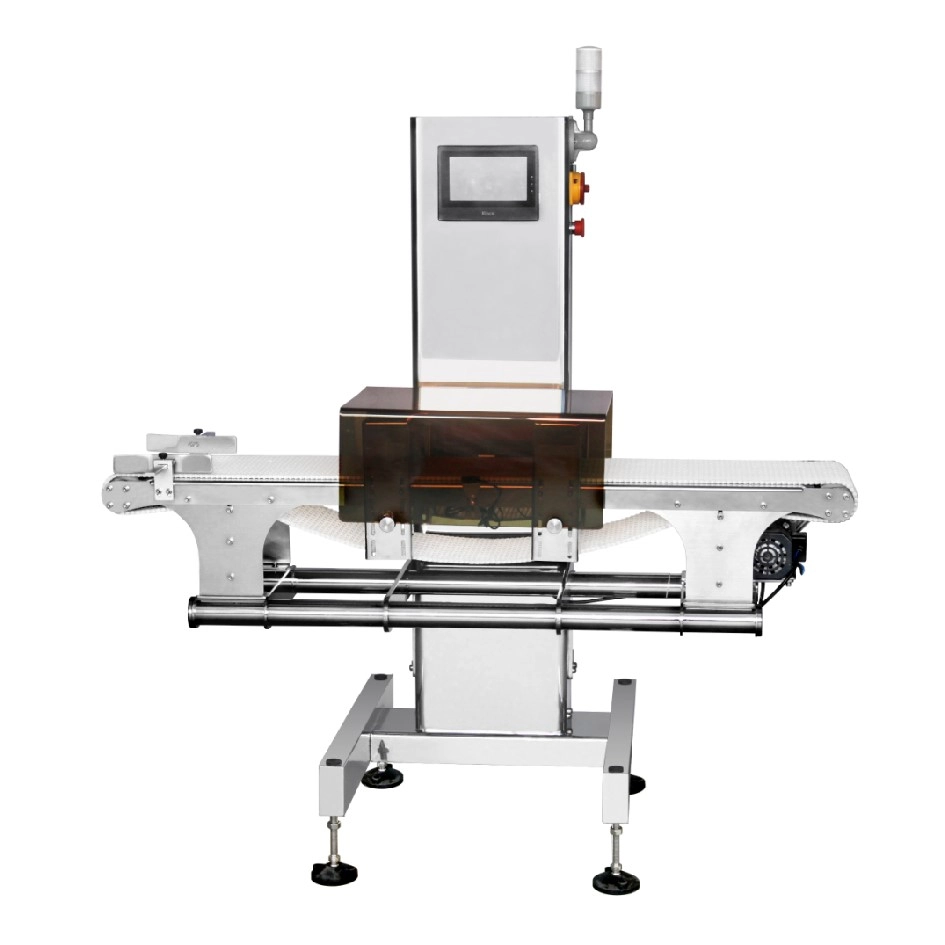
The 2415 Metal Detector for Aluminum Foil is equipped with high-sensitivity sensors that effectively filter out signals from aluminum packaging, ensuring precise detection of magnetic metal contaminants. Ideal for detecting foreign bodies in aluminum foil-packaged items such as coffee bags, peanuts, dried meats, chocolate, and more. This versatile metal detector offers adjustable settings, with a maximum width of 24mm and height ranging from 20-150mm, making it suitable for a wide variety of aluminum foil packaging applications.
Get in touch with us
If you have any comments or good suggestions, please leave us a message, later our professional staff will contact you as soon as possible.
Kenwei
Kenwei
Kenwei multi weigh
Kenwei
Kenwei
Kenwei