






Food Safety Compliance With Multihead Weigher in Pickle Lines
This article explains how a multihead weigher—specifically the 14 Heads Vertical Single Screw Feeding Pickles Weigher backups—helps pickle producers meet food safety and regulatory requirements. It covers hygiene design, calibration, traceability, allergen and brine management, integration with HACCP/FSMA/ISO programs, and practical tips to optimize line performance while protecting product quality and compliance.
- Food Safety Compliance With Multihead Weigher in Pickle Lines
- Why precise weighing matters in pickle lines: multihead weigher and food safety
- Introducing the 14 Heads Vertical Single Screw Feeding Pickles Weigher backups
- How multihead weigher technology supports compliance goals
- Hygienic design: preventing contamination in pickle weighing
- Cleaning, sanitization, and CIP considerations for pickle lines
- Calibration, verification, and documentation to meet audit requirements
- Allergen, cross-contamination and brine management
- Integration with HACCP, FSMA, and ISO 22000 programs
- Practical operational controls for maximum accuracy
- Comparing weighing solutions for pickle packaging
- Line validation and routine performance checks
- Brand advantages: why choose our 14-head vertical single screw solution
- Implementation checklist for food safety managers
- Frequently Asked Questions (FAQ)
- Contact us / View product
- Authoritative references

Food Safety Compliance With Multihead Weigher in Pickle Lines
Why precise weighing matters in pickle lines: multihead weigher and food safety
Accurate portioning matters for more than cost control: in pickle production and packaging, correct weight and uniform fill levels influence product labeling, shelf life, brine ratios, and consumer safety. A reliable multihead weigher reduces overfills/underfills, ensures declared net weights match packaged product, and supports regulatory compliance for nutritional labeling and trade. With compliance secured, long-term performance depends on proactive upkeep, making maintenance strategies for a 14-head vertical multihead weigher essential for wet and corrosive environments.
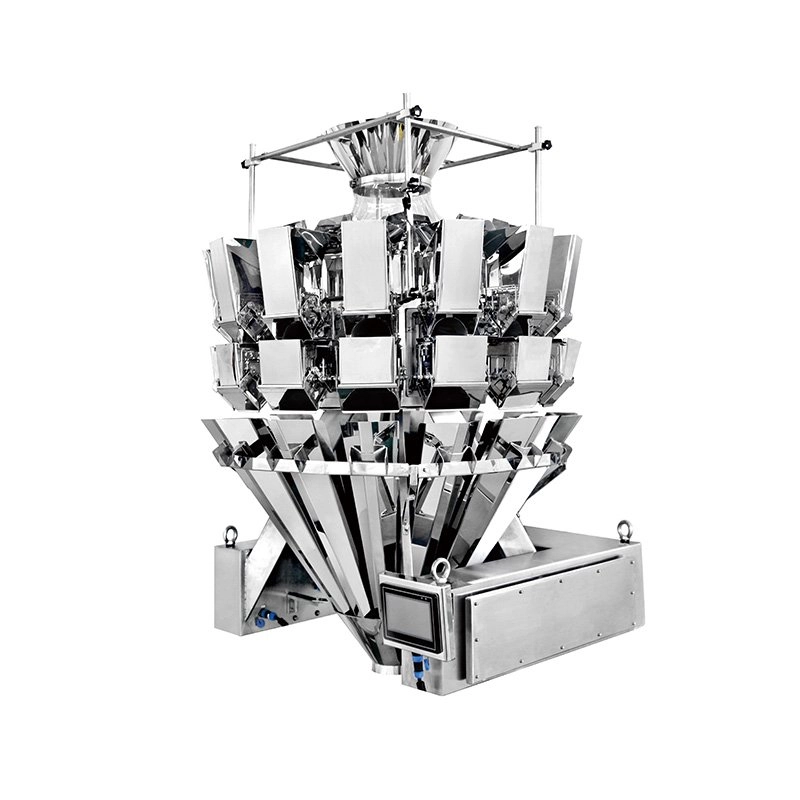
Introducing the 14 Heads Vertical Single Screw Feeding Pickles Weigher backups
This type of weigher is designed to handle the unique characteristics of pickles, ensuring precise measurements for packaging and distribution. It uses a vertical single screw mechanism to feed the pickles into the weighing system, allowing for efficient and consistent weighing. This technology is particularly useful in food processing and packaging facilities where precise portioning is essential for quality control and customer satisfaction. This specialized equipment is perfect for accurately measuring and dispensing pickles in a production line or packaging facility. The vertical design allows for efficient and precise filling of containers, while the single screw feeding mechanism ensures consistent and reliable weighing.
How multihead weigher technology supports compliance goals
Multihead weighers combine many small weigh hoppers to create accurate combinations that sum to the target portion weight. For pickle lines, this approach delivers multiple compliance advantages: consistency in declared net weight, fewer rework/rejects, minimized risk of economic fraud claims, and improved traceability when integrated with line control systems. The 14-head arrangement balances throughput and precision: enough heads to compute low-variance combinations while maintaining a compact footprint suitable for pickle jars, tubs, or sachets.
Hygienic design: preventing contamination in pickle weighing
Food safety begins with machine design. For pickles—often stored in brine or with irregular shapes—equipment must resist corrosion and microbial harboring. Key design attributes to look for in a multihead weigher include:
- Stainless-steel construction (AISI 304/316 options) for corrosion resistance.
- Open, washdown-friendly frame and removable hoppers for effective cleaning.
- Smooth welds and rounded joints to avoid crevices where debris or bacteria can collect.
- Food-grade seals and motors rated for wet environments (IP65/IP66 where appropriate).
Choosing a weigher such as the 14 Heads Vertical Single Screw Feeding Pickles Weigher backups ensures the vertical screw feeder and hopper geometry are optimized for brined or irregular pieces, minimizing pinch points and dead zones that otherwise require more frequent manual cleaning.
Cleaning, sanitization, and CIP considerations for pickle lines
Pickles introduce salt and organic matter that can accelerate corrosion and spoilage if not thoroughly cleaned. Two common cleaning strategies are manual washdown and Clean-in-Place (CIP):
- Manual washdown: easier for smaller lines; requires dismantling hoppers and covers for complete sanitation.
- CIP-compatible design: reduces downtime for large-volume plants. Ensure seals, motors, and drives are rated for CIP chemicals and temperatures.
Operational best practice: create a validated cleaning schedule within your HACCP/food safety plan describing detergent types, temperatures, contact times, and verification steps. Keep cleaning logs tied to the weigher's serial number to support traceability during audits.
Calibration, verification, and documentation to meet audit requirements
Regulators and retailers expect documented proof that weighing systems are accurate and maintained. Key activities include:
- Initial calibration by qualified technicians and documented calibration certificates.
- Daily or shift-level verification checks using certified test weights or reference loads.
- Scheduled preventive maintenance: load cell checks, mechanical inspections, and firmware updates.
- Retention of calibration logs and maintenance records for regulatory audits and supplier quality programs.
Because multihead weighers use many load cells and combination algorithms, systematic verification reduces the chance of silent drift and ensures the 14 head system remains accurate across different pickle sizes and feed rates.
Allergen, cross-contamination and brine management
In mixed-production facilities, allergy control is essential. Although pickles are often single-ingredient products, production lines can switch between flavored or stuffed varieties containing allergens (e.g., mustard or spices). Controls to implement:
- Dedicated product flows or validated cleaning between product runs.
- Clear labelling and batch segregation in the event of co-packing.
- Design features like removable feed screws and hopper liners that permit rapid cleaning and sanitization.
Brine management is another critical area. Corrosive brine droplets can reach electronic modules; choose machines with IP-rated enclosures and corrosion-resistant finishes to reduce risk of failure and contamination.
Integration with HACCP, FSMA, and ISO 22000 programs
To demonstrate compliance with HACCP, FSMA (U.S.), or ISO 22000 frameworks, multihead weighers must be included in your hazard analysis and control points. Typical steps:
- Identify critical control points where the weigher interacts with product (e.g., post-filling weight check).
- Define critical limits: acceptable variation in fill weight and allowable rejects.
- Set monitoring procedures: automated weight checks, in-line checkweighers, rejection protocols.
- Establish corrective actions and record-keeping—for example, halting production if more than X% of portions fall outside tolerance.
Integration with plant MES (Manufacturing Execution Systems) or SCADA enables automated logging for FSMA-required recordkeeping and helps respond quickly during recalls or audits.
Practical operational controls for maximum accuracy
Operational factors strongly influence multihead performance on pickles:
- Feeding consistency: the vertical single screw feeder in the 14-head system ensures steady product metering into the vibratory distribution table and weigh hoppers.
- Gentle handling settings: reduce shear or damage to pickles with slower vibratory settings or gentle guides.
- Ambient controls: humidity and temperature affect brine behavior and sensor drift—monitor and manage line environment where possible.
- Reject logic: integrate high-speed rejection gates to remove under/overweight packages before boxing.
Comparing weighing solutions for pickle packaging
Selecting the correct weighing technology is a business decision. The table below compares typical options for pickle lines.
| Feature | 14-head Vertical Single Screw Multihead Weigher | Single-head Volumetric Filler | Linear Combination Weigher |
|---|---|---|---|
| Accuracy | High (combination algorithms minimize variance) | Lower for irregular pieces | Moderate to high |
| Throughput | High (suitable for medium–high speed lines) | Variable (depends on nozzle and pump) | Good (larger footprint) |
| Product Gentleness | Good (vertical screw can be gentle with settings) | Depends on pump/nozzle; may damage whole pickles | Good, but depends on hopper handling |
| Hygiene & Cleanability | High if designed for washdown/CIP | Moderate; exposed parts can be easier to clean | Varies; more parts can complicate cleaning |
Line validation and routine performance checks
Validate the weigher under real process conditions including temperature, brine presence, and product size distribution. Validation steps include:
- Baseline accuracy and repeatability tests at several weights.
- Stress tests simulating worst-case feed rates and product variances.
- Integration tests: check weigher-triggered downstream rejection and labeling actions.
Keep validation reports and revalidate after significant maintenance or firmware upgrades.
Brand advantages: why choose our 14-head vertical single screw solution
When selecting equipment, you need more than a machine — you need a partner who understands food safety and production realities. Key advantages of the 14 Heads Vertical Single Screw Feeding Pickles Weigher backups include:
- Tailored feeding system for whole and sliced pickles that reduces jamming and product damage.
- Hygienic construction and CIP-compatible options to simplify sanitation and reduce downtime.
- Robust documentation and calibration support that meets HACCP/FSMA/ISO 22000 audit requirements.
- Redundancy and backups in the 14-head design for continuous operation and reduced reject rates.
- Integration-ready controls for MES/SCADA, enabling traceability and automated compliance logging.
Implementation checklist for food safety managers
Before commissioning a multihead weigher on your pickle line, ensure the following are in place:
- Risk assessment and design review by QA/engineering for hygiene and material compatibility.
- Calibration and verification plan with documented acceptance criteria.
- Cleaning/SOPs and staff training for changeovers and sanitation.
- Integration with labeling and traceability systems to ensure accurate net weight and batch information.
- Spare parts inventory for wear items (seals, screw flights, load cells) and a maintenance contract.
Frequently Asked Questions (FAQ)
Q1: Can a multihead weigher handle whole pickles without damaging them?
A: Yes — when configured with a vertical single screw feeder and gentle vibratory settings, the 14-head weigher is designed to meter and distribute whole pickles with minimal damage. Adjustments to feed speed, divider guides, and hopper geometry further reduce bruising.
Q2: How often should the weigher be calibrated?
A: Calibration frequency depends on production intensity and regulatory requirements. Common practice is initial factory calibration, verification at installation, daily or shift quick checks, and formal calibration on a monthly or quarterly schedule or after any significant maintenance event.
Q3: Is the machine suitable for brined and flavored pickles?
A: Yes — the machine can be specified with corrosion-resistant materials and IP-rated components. Ask for CIP-capable options and food-grade coatings to handle brine and acidic environments.
Q4: How does the machine support traceability and recalls?
A: The 14-head weigher integrates with MES/SCADA to record batch IDs, timestamps, and weight logs. These records help isolate affected lots quickly during recalls and provide audit trails for compliance.
Q5: What throughput can I expect?
A: Throughput depends on portion size and pickles’ physical characteristics. A 14-head configuration typically supports medium to high throughput for jar and tub fills while maintaining high accuracy. Contact our sales team with your target portion weights and container formats for a tailored estimate.
Contact us / View product
If you are ready to improve compliance and accuracy on your pickle line, contact our team to discuss specifications, sanitary options, and validation support. View the 14 Heads Vertical Single Screw Feeding Pickles Weigher backups or request a site evaluation to see how it fits your process. For pricing, lead times, and technical documentation, contact sales@yourcompany.com or call +1-800-XXX-XXXX.
Authoritative references
- FDA — Food Safety Modernization Act (FSMA): https://www.fda.gov/food/food-safety-modernization-act-fsma
- ISO — ISO 22000 Food safety management: https://www.iso.org/iso-22000-food-safety-management.
- FAO/WHO — HACCP principles: https://www.fao.org/3/y1579e/y1579e03.htm
- EHEDG — Hygienic engineering and design: https://www.ehedg.org/
- European Commission — Food contact materials: https://ec.europa.eu/food/safety/chemical_safety/food_contact_materials_en
- Ishida (industry reference) — Multihead weigher information: https://www.ishida.com/
- Codex Alimentarius — General food hygiene and fermented products guidance: https://www.fao.org/fao-who-codexalimentarius/en/
By combining purpose-built machine design, documented calibration and cleaning protocols, and robust integration with your food safety management system, a multihead weigher such as the 14 Heads Vertical Single Screw Feeding Pickles Weigher backups helps you maintain regulatory compliance, protect consumers, and optimize your pickle packaging line.
Tags
industrial food packaging machines
industrial food packaging machines
multihead weigher packing machine
multihead weigher packing machine
automatic powder packing machine
automatic powder packing machine
Small footprint linear weigher for production lines
Small footprint linear weigher for production lines
multihead weigher pouch packing machine
multihead weigher pouch packing machine
combination weigher
combination weigher
Recommended for you
What is packing machine for food products ?
Top 10 food grade metal detector Manufacturers and Supplier Brands in America
How Powder Packing Machines Boost Factory Throughput

How JW-B23 Improves Snack Line Efficiency
Prdoucts Categories
Question you may concern
About Logistics
How long does logistics delivery take?
Shipping times depend on your location and the shipping method you choose. Generally speaking, international shipping can take anywhere from a few weeks to a few months.
About Product choice
What is the difference between a multi-head weigher and a linear weigher?
Multi-head Weigher: Ideal for high-speed and high-precision weighing of products with irregular shapes or varying sizes. It provides multiple weighings in parallel for faster processing.
Linear Weigher: It is suitable for powder and granule. It is typically slower than a multi-head weigher but is effective for certain types of applications that require more continuous flow or controlled weighing.
About products customization
Can Kenwei machines be customized for different industries?
Yes,According to the material characteristics and requirements of different industries, we developed various machine types for counting (small pouches into big bag), noodles, frozen foods, peppers, stick-shaped products, product -mixing, cheeses, salads and so on.
How long does it take to deliver a customized Kenwei machine?
The lead time for customized machines can vary based on the complexity of the customization, as well as production schedules. Generally, it takes 4-6 weeks to deliver a fully customized machine after design approval.
About After Sales Support
What after-sales support does Kenwei offer?
Kenwei provides comprehensive after-sales support, including product installation, training, maintenance, troubleshooting, and technical assistance. Our team is dedicated to ensuring your machines operate at their best throughout their lifecycle.
You may also like
Vertical Frozen Food Packaging Machine for IQF & Frozen Products JW-B1
The Kenwei JW-B1 Vertical Frozen Food Packaging Machine is designed for IQF and frozen products, ensuring efficient, airtight packing. This vertical packing machine boosts productivity with precision sealing, ideal for frozen food packaging needs in the food industry.
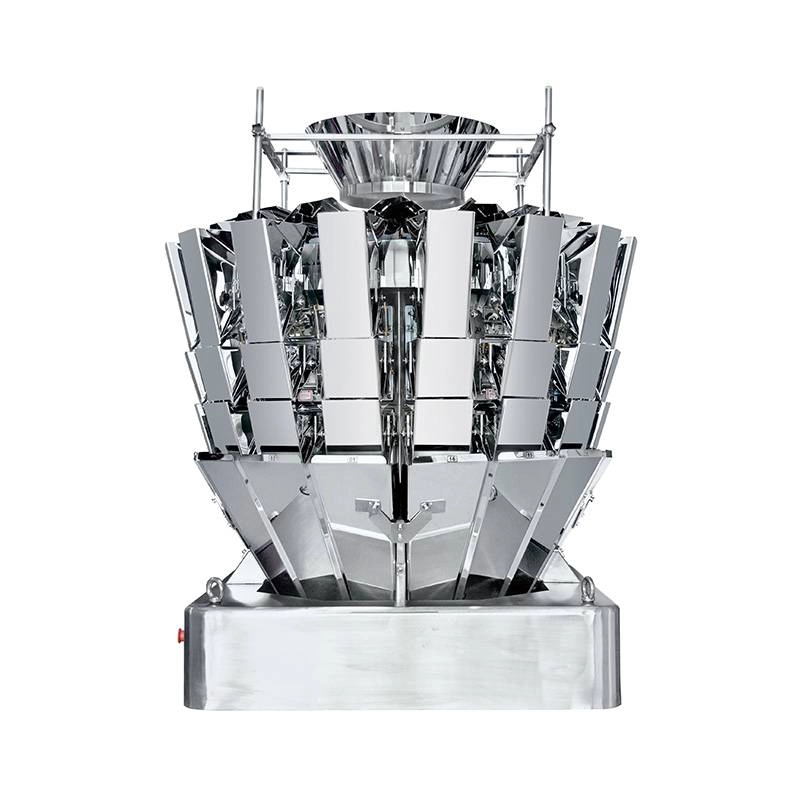
16 Head Three Layer Multihead Weigher for Granular and Irregular Materials
Kenwei’s 16 Head Three Layer Multihead Weigher ensures precise weighing of granular and irregular materials. This multihead weighing machine offers efficient, high-speed performance, ideal for various packaging needs. Trust our 16 head weigher for accuracy and reliability in your production line.
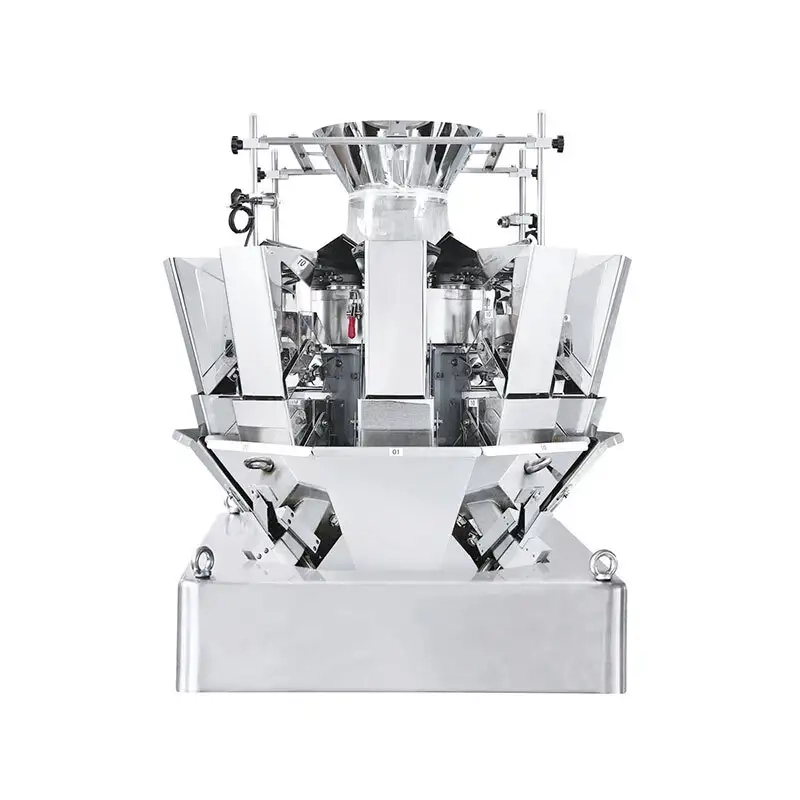
10-Head Standard No-Spring Multihead Weigher 1.6L for Precise Weighing
The standard no-spring combination scale features a patented spring-free hopper design, making it ideal for weighing a variety of products such as melon seeds, peanuts, nuts, almonds, grapes, candies, pistachios, potato chips, shrimp chips, and more. The double-support feeding tray is easily adjustable, while the feeding hopper is designed for easy disassembly, ensuring convenience and cleanliness. With a maximum weighing speed of up to 120 bags per minute, the 14-head standard no-spring combination scale is an economical, versatile, and cost-effective solution.
Automatic Multihead Weigher for Stick and Bar-Shaped Materials
Kenwei’s Automatic Multihead Weigher for Stick and Bar-Shaped Materials ensures precise, fast, and efficient weighing. This advanced automatic multihead weighing machine is ideal for accurate portioning of various stick and bar-shaped products, enhancing productivity and reducing waste.
Get in touch with us
If you have any comments or good suggestions, please leave us a message, later our professional staff will contact you as soon as possible.
Kenwei
Kenwei
Kenwei multi weigh
Kenwei
Kenwei
Kenwei