






Selecting a 14 Heads Vertical Single Screw Multihead Weigher
A practical guide to selecting a 14 Heads Vertical Single Screw multihead weigher for accurate, consistent pickle portioning. Covers design, performance, sanitation, maintenance, ROI, integration, backups/redundancy, and compliance to help food processors make an informed buying decision.
- Selecting a 14 Heads Vertical Single Screw Multihead Weigher
- Why choose a multihead weigher for pickles?
- Understanding the 14 Heads Vertical Single Screw design (product overview)
- Key performance metrics to evaluate your multihead weigher purchase
- Comparing vertical single screw feeding vs vibratory feeding for pickles
- Handling delicate products: design features to protect pickles
- Sanitation, compliance, and food safety: what to require from your multihead weigher
- Maintenance, backups and redundancy strategies
- Integration into packaging lines and automation
- Cost of ownership and ROI considerations for multihead weighers
- Brand advantages: why choose our 14 Heads Vertical Single Screw Feeding Pickles Weigher backups
- Frequently Asked Questions (FAQ)
- Q1: Is a 14-head weigher the right size for my pickle plant?
- Q2: How does the vertical single screw help with wet, brined pickles?
- Q3: What sanitation features should I request for pickles?
- Q4: How much maintenance do these systems require?
- Q5: Are there options for reducing giveaway and improving accuracy further?
- Contact us / View product
- Authoritative references and further reading

Selecting a 14 Heads Vertical Single Screw Multihead Weigher
Why choose a multihead weigher for pickles?
Multihead weighers are the industry standard for accurate, high-speed portioning of irregular and delicate food products. If your operation packages pickles—whole, sliced, or speared—using a multihead weigher helps balance speed, accuracy, and product integrity. The term multihead weigher refers to machines that combine multiple weigh hoppers (in this case 14 heads) to calculate combinations that deliver target weights with minimal giveaway. Commercial buyers searching for a reliable multihead weigher typically prioritize precision, throughput (packs per minute), sanitary design, and integration capability with upstream and downstream equipment.
Understanding the 14 Heads Vertical Single Screw design (product overview)
Product name: 14 Heads Vertical Single Screw Feeding Pickles Weigher backups
This type of weigher is designed to handle the unique characteristics of pickles, ensuring precise measurements for packaging and distribution. It uses a vertical single screw mechanism to feed the pickles into the weighing system, allowing for efficient and consistent weighing. This technology is particularly useful in food processing and packaging facilities where precise portioning is essential for quality control and customer satisfaction. This specialized equipment is perfect for accurately measuring and dispensing pickles in a production line or packaging facility. The vertical design allows for efficient and precise filling of containers, while the single screw feeding mechanism ensures consistent and reliable weighing.
The 14-head configuration delivers a balance of combination options (for accuracy) and throughput (for speed). Vertical single screw feeding is especially useful for fragile, wet, or coated products like pickles because it gently meters product into the distribution system while minimizing bruising or damage compared to aggressive vibration feeders.
Key performance metrics to evaluate your multihead weigher purchase
When selecting a multihead weigher, compare machines on metrics that directly affect operational efficiency and product quality:
- Accuracy: Typical multihead systems achieve ±0.5–2.0% depending on target weight and product type. Pickles usually require tighter control to avoid overfilling.
- Throughput: Expressed as packs per minute (ppm) or kg/hour. A 14-head unit often supports medium-to-high throughput ranges suitable for many pickle production lines.
- Giveaway: The difference between actual dispensed weight and target; lower giveaway means lower product loss and better margins.
- Sanitation and CIP capability: Ease of cleaning, water ingress protection (IP rating), and material of contact surfaces (food-grade stainless steel) matter for pickles because of brine and acidity.
- Changeover time: How quickly can the machine be adjusted for different container sizes or product formats?
- Downtime & maintenance frequency: Availability of spare parts and configurability for backups influences total cost of ownership.
Comparing vertical single screw feeding vs vibratory feeding for pickles
Different feeding systems change how the product behaves before weighing. The table below summarizes typical differences to guide selection.
| Feature | Vertical Single Screw Feeding | Vibratory Feeding |
|---|---|---|
| Product handling | Gentler, controlled metering—better for whole pickles and delicate pieces | Higher agitation—can damage delicate items or remove brine |
| Sanitation | Easier to contain brine and clean due to enclosed screws and chutes | Open trays can trap brine; requires careful cleaning |
| Consistency | High consistency for wet and sticky products | Very consistent for dry, free-flowing products |
| Suitability for pickles | High—recommended for whole, speared, or heavy brined items | Medium—better for slices or drier products |
Handling delicate products: design features to protect pickles
Pickles present special handling challenges: variable sizes, slippery surfaces, and corrosive brine. Look for these specific design features in a multihead weigher to maintain product quality:
- Vertical single screw that meters product into the distribution system rather than forcing product through vibrating trays.
- Adjustable hopper and funnel geometry to accommodate whole vs sliced pickles.
- Soft-touch or rubberized internal surfaces where necessary to reduce surface impact.
- Drainage and sealed covers to manage brine and prevent cross-contamination.
- Seamless stainless-steel construction (304 or 316 where appropriate) with rounded corners for fast cleaning.
Sanitation, compliance, and food safety: what to require from your multihead weigher
Food safety is non-negotiable. Ensure the machine supports your HACCP plan and complies with local regulatory standards (e.g., FDA in the U.S., EU food contact materials regulations). Key considerations:
- Food-contact materials certified to relevant standards (e.g., FDA CFR Title 21, EU 1935/2004).
- Design for easy access for cleaning and inspection; minimize crevices where brine or product can accumulate.
- IP rating for electrical components (washdown-capable systems typically require IP65 or higher components).
- Documentation support: material declarations, calibration procedures, and cleaning protocols.
Maintenance, backups and redundancy strategies
Downtime costs money. When buying a 14 Heads Vertical Single Screw Feeding Pickles Weigher backups, consider built-in redundancy and serviceability:
- Spare Head/Module Availability: Modular head design lets you swap a single weighing head without removing the entire machine.
- Backups: The product name emphasizes backups—ensure spare screws, motors, or an extra head module are available to keep line uptime high.
- Remote diagnostics: Modern weighers offer PLC or IIoT connectivity to alert maintenance teams of wear or failures before they cause downtime.
- Planned preventive maintenance: A clear schedule and easy access to common wear parts (bearings, seals, screws) reduces unplanned stoppages.
Integration into packaging lines and automation
Consider how the multihead weigher will integrate with upstream (conveyor, slicer, brine drainers) and downstream (fillers, cappers, labeling) equipment. Important integration points:
- Synchronization of line speeds using PLC or Ethernet/IP communication.
- Flexible discharge funnels to feed pouches, trays, jars, or flow-wrappers.
- Product detection sensors and reject systems to ensure only correct fills proceed to packaging.
- Recipe management for rapid changeover between SKU formats (jar sizes, pouch weights, slice thickness).
Cost of ownership and ROI considerations for multihead weighers
Price is only one component of total cost. Evaluate:
- Initial capital cost: price of the 14-head unit plus necessary conveyors and controls.
- Operating cost: energy consumption, replacement parts, and labor for cleaning/maintenance.
- Giveaway savings: Better accuracy reduces product loss per pack—this often pays back capital quickly for higher-value items like branded pickles.
- Throughput and flexibility: Faster machines increase production capacity without expanding plant footprint.
Example ROI calculation (illustrative): if improved accuracy reduces giveaway by 0.5% on a product worth $3,000,000/year, annual savings are $15,000—quickly offsetting equipment cost when combined with increased throughput and reduced labor.
Brand advantages: why choose our 14 Heads Vertical Single Screw Feeding Pickles Weigher backups
When evaluating suppliers, prioritize manufacturers who demonstrate real-world experience with pickle-type products and clear after-sales support. Our key brand advantages include:
- Industry expertise: Proven installations in pickle and brined product lines with references and case studies.
- Sanitary engineering: Machine designed for easy cleanability, using food-grade materials and hygienic design practices.
- Redundancy support: Spare-head modules, recommended spare parts kits, and rapid-response service contracts to minimize downtime.
- Custom configuration: Funnels, screw geometry, and discharge adaptors tailored to whole, speared, or sliced pickles.
- Digital support: Remote diagnostic capabilities, recipe management, and integration assistance for OEM lines.
Frequently Asked Questions (FAQ)
Q1: Is a 14-head weigher the right size for my pickle plant?
A: It depends on your target speed and pack weights. A 14-head is a mid-to-high capacity option suitable for many commercial pickle lines. If you run very high speeds (e.g., continuous jar lines at very high ppm), a higher-head count or multiple machines may be appropriate. Consult capacity curves from suppliers based on your target pack weight.
Q2: How does the vertical single screw help with wet, brined pickles?
A: The vertical single screw meters product gently and reduces surface agitation compared to vibratory feeders. Enclosed screw-fed funnels control brine runoff and minimize product slippage, improving weighing consistency and sanitation.
Q3: What sanitation features should I request for pickles?
A: Ask for stainless steel 304/316 contact parts, CIP-friendly design or easily removable components for hand cleaning, IP-rated electricals for washdown, and rounded internal surfaces. Also request validation documentation for cleaning procedures.
Q4: How much maintenance do these systems require?
A: Regular maintenance typically includes checking drive belts, bearings, screws, and periodic calibration of loadcells. With a preventive maintenance schedule and available spare parts, many plants achieve high uptime. Consider a service contract for critical production lines.
Q5: Are there options for reducing giveaway and improving accuracy further?
A: Yes. Use smaller target weights per head (more heads), optimized combination algorithms, regular calibration, and product-specific feeding geometry. Advanced controllers with dynamic combination algorithms can further reduce giveaway.
Contact us / View product
Once the structure and feeding mechanism are defined, buyers should formalize requirements using a procurement checklist for multihead weigher in pickle production to avoid specification gaps.If you are ready to evaluate or purchase a 14 Heads Vertical Single Screw Feeding Pickles Weigher backups, contact our sales team for a site assessment, capacity recommendation, and a customized quote. We offer demonstrations, references from existing pickle customers, and tailored service agreements to ensure reliable production.
Contact Sales | View Product Details and Datasheet
Authoritative references and further reading
- FDA: Food Code and guidance on food contact materials — https://www.fda.gov
- European Food Safety Authority (EFSA) — https://www.efsa.europa.eu
- Codex Alimentarius — https://www.fao.org/fao-who-codexalimentarius/en/
- HACCP principles (WHO/FAO) — https://www.who.int/foodsafety/areas_work/food-hygiene/haccp/en/
- Multihead weigher overview (industry guidance) — https://en.wikipedia.org/wiki/Weighing_scale
Tags
snack food packaging machine
snack food packaging machine
VFFS
VFFS
linear weigher
linear weigher
multihead weigher machine
multihead weigher machine
vffs equipment
vffs equipment
Inclined Chain Plate Converyorr
Inclined Chain Plate Converyorr
Recommended for you

Common Metal Contaminants and Detection Techniques in Food
The latest trends for combination weigher machine
Top 10 linear combination weigher Manufacturers and Supplier Brands
What is single head weigher ?
Prdoucts Categories
Question you may concern
About products customization
How do I request a custom-built Kenwei machine?
To request a customized machine, simply contact our sales or engineering team.
Can Kenwei machines support multiple languages?
Yes, we can customize the software interface to support multiple languages, making it easier for operators from different regions to use the machine.
About Cooperation Process
How does Kenwei ensure the quality of its machines?
Kenwei has a stringent quality control system in place. Each machine is rigorously tested for precision, speed, and reliability before it is shipped.
About Price and payment
How is the price of Kenwei machines determined?
The price of Kenwei machines depends on several factors, including the type of machine, customization requirements, production volume, and any additional features or integrations. We provide tailored quotes based on your specific needs and requirements.
About Logistics
Do I need to prepare my facility for the delivery of large machines?
Yes, large machines often require special preparations for delivery, including ensuring adequate space for unloading and installation.
You may also like
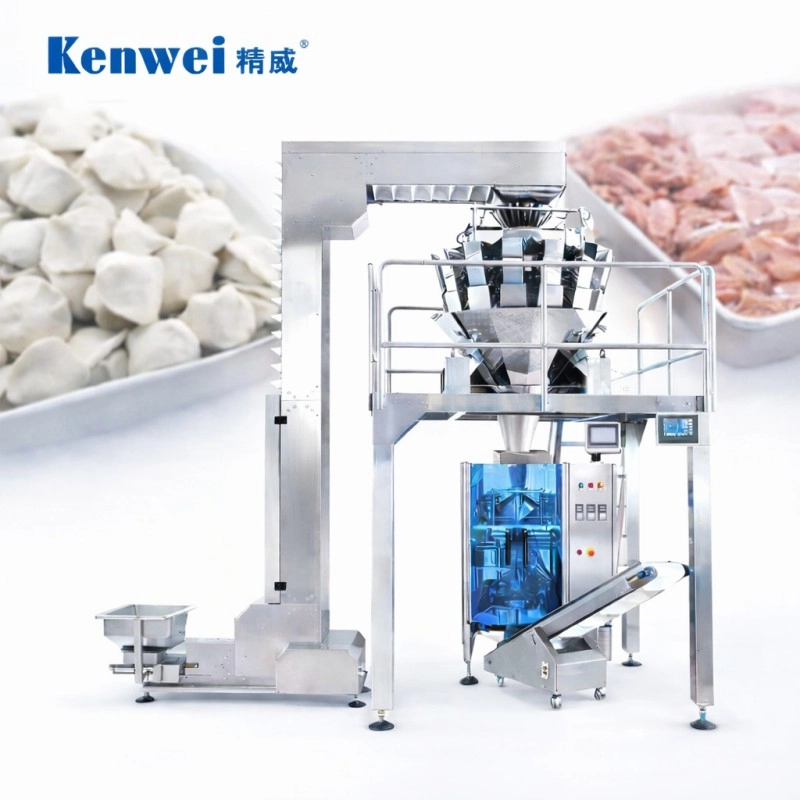
Vertical Frozen Food Packaging Machine for IQF & Frozen Products JW-B1
The Kenwei JW-B1 Vertical Frozen Food Packaging Machine is designed for IQF and frozen products, ensuring efficient, airtight packing. This vertical packing machine boosts productivity with precision sealing, ideal for frozen food packaging needs in the food industry.
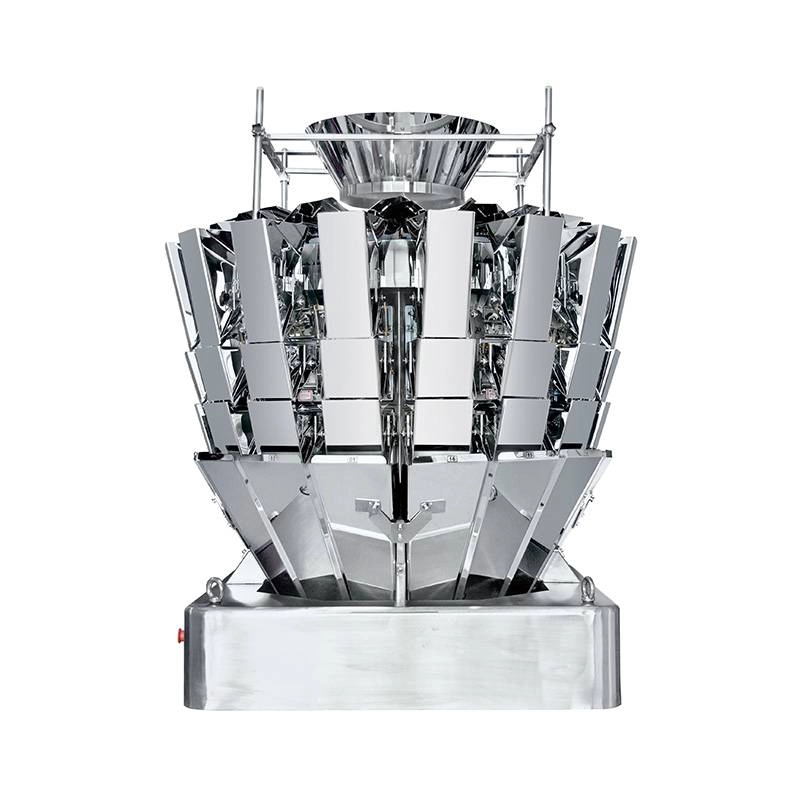
16 Head Three Layer Multihead Weigher for Granular and Irregular Materials
Kenwei’s 16 Head Three Layer Multihead Weigher ensures precise weighing of granular and irregular materials. This multihead weighing machine offers efficient, high-speed performance, ideal for various packaging needs. Trust our 16 head weigher for accuracy and reliability in your production line.
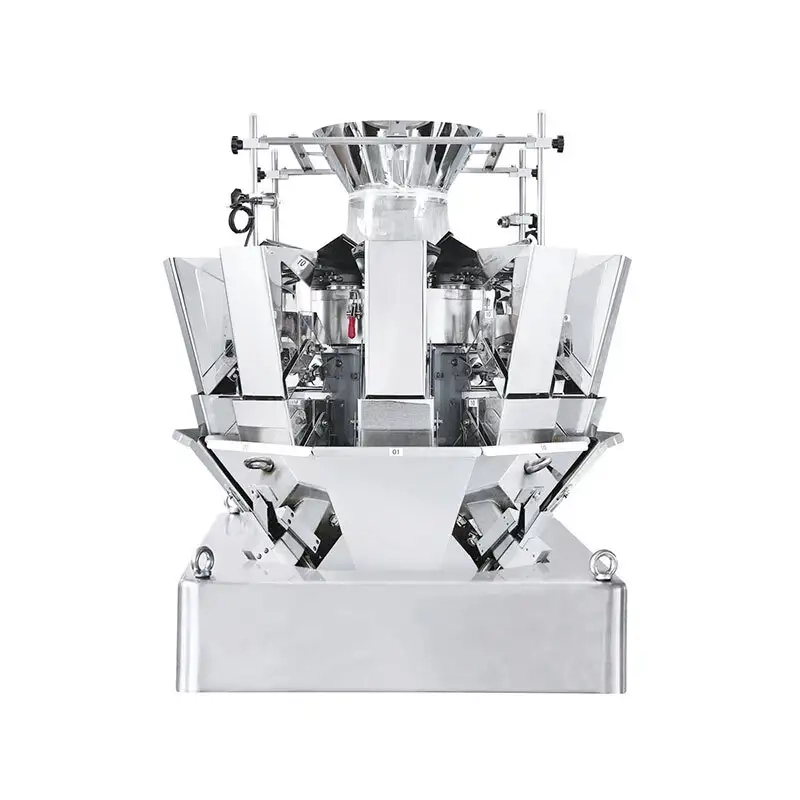
10-Head Standard No-Spring Multihead Weigher 1.6L for Precise Weighing
The standard no-spring combination scale features a patented spring-free hopper design, making it ideal for weighing a variety of products such as melon seeds, peanuts, nuts, almonds, grapes, candies, pistachios, potato chips, shrimp chips, and more. The double-support feeding tray is easily adjustable, while the feeding hopper is designed for easy disassembly, ensuring convenience and cleanliness. With a maximum weighing speed of up to 120 bags per minute, the 14-head standard no-spring combination scale is an economical, versatile, and cost-effective solution.
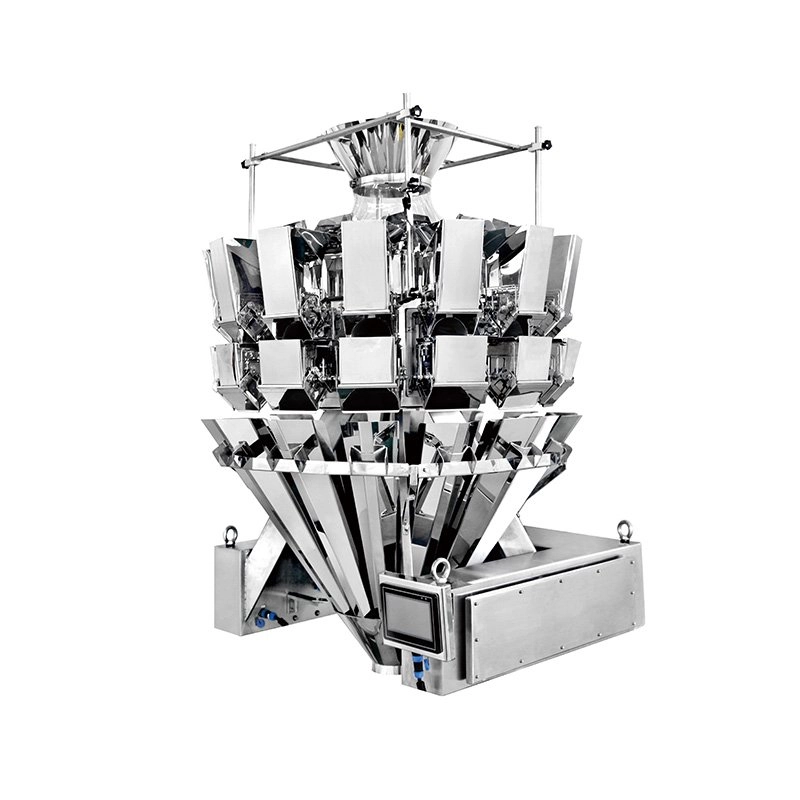
Automatic Multihead Weigher for Stick and Bar-Shaped Materials
Kenwei’s Automatic Multihead Weigher for Stick and Bar-Shaped Materials ensures precise, fast, and efficient weighing. This advanced automatic multihead weighing machine is ideal for accurate portioning of various stick and bar-shaped products, enhancing productivity and reducing waste.
Get in touch with us
If you have any comments or good suggestions, please leave us a message, later our professional staff will contact you as soon as possible.
Kenwei
Kenwei
Kenwei multi weigh
Kenwei
Kenwei
Kenwei