






Procurement Checklist for Multihead Weigher in Pickle Production
A practical procurement checklist for selecting a multihead weigher for pickle production, focused on the 14 Heads Vertical Single Screw Feeding Pickles Weigher backups. Covers accuracy, gentle handling, sanitation, integration, validation, spare parts, ROI, supplier selection, and installation with actionable tips, comparison table, FAQs and references.
- Procurement Checklist for Multihead Weigher in Pickle Production
- Why choose a multihead weigher for pickles and the role of 14 Heads Vertical Single Screw Feeding Pickles Weigher backups
- Product Overview: 14 Heads Vertical Single Screw Feeding Pickles Weigher backups
- 1. Accuracy and Throughput Requirements
- 2. Gentle Handling and Product Integrity
- 3. Feeding Mechanism and Segregation Control
- 4. Sanitation, CIP Capability and Hygienic Design
- 5. Materials, Surface Finishes and Corrosion Resistance
- 6. Control System, Recipe Management and Integration
- 7. Spare Parts, 'Backups' and Maintenance Strategy
- 8. Quality, Certification and Compliance
- 9. Footprint, Layout and Mechanical Integration
- 10. Electrical, Pneumatic and Utility Requirements
- 11. Validation, Factory Acceptance Test and Onsite Commissioning
- 12. Training, Documentation and Operator Usability
- 13. Total Cost of Ownership and ROI
- 14. Warranty, Service Contracts and Local Support
- 15. Case Studies and Reference Checks
- Comparison Table: 14-head vs Common Alternatives
- Supplier Selection Checklist and Red Flags
- Brand Advantages Summary: Why choose our 14 Heads Vertical Single Screw Feeding Pickles Weigher backups
- Installation, Start-up and Best Practices
- Validation and Ongoing Performance Monitoring
- Frequently Asked Questions (FAQ)
- Contact and Next Steps
- Authoritative References
- Final Notes

Procurement Checklist for Multihead Weigher in Pickle Production
Why choose a multihead weigher for pickles and the role of 14 Heads Vertical Single Screw Feeding Pickles Weigher backups
Multihead weigher systems are widely used in food packing lines for portioning accuracy, high throughput and reduced giveaway. In pickle production, the product presents special challenges: variable size and shape, high moisture and brine, fragility, and need for gentle handling. Selecting the right multihead weigher is therefore essential to maintain yield, meet pack weight targets, and protect product quality. The 14 Heads Vertical Single Screw Feeding Pickles Weigher backups is a tailored solution designed to address those challenges while providing redundancy and spare parts to minimize downtime. Beyond procurement details, ensuring regulatory readiness requires addressing food safety compliance with multihead weigher in pickle lines before installation.
Product Overview: 14 Heads Vertical Single Screw Feeding Pickles Weigher backups
This type of weigher is designed to handle the unique characteristics of pickles, ensuring precise measurements for packaging and distribution. It uses a vertical single screw mechanism to feed the pickles into the weighing system, allowing for efficient and consistent weighing. This technology is particularly useful in food processing and packaging facilities where precise portioning is essential for quality control and customer satisfaction. This specialized equipment is perfect for accurately measuring and dispensing pickles in a production line or packaging facility. The vertical design allows for efficient and precise filling of containers, while the single screw feeding mechanism ensures consistent and reliable weighing.
1. Accuracy and Throughput Requirements
Define the accuracy tolerance and required throughput before evaluating models. For pickles, typical pack weights range from small snack packs to jar fills. Consider both average and peak line speeds. The 14-head configuration gives finer combination options to reach target weights with minimal giveaway and is usually suitable for medium to high throughput lines. Ask suppliers for performance curves showing grams per shot vs accuracy, and request evidence from similar pickle installations.
2. Gentle Handling and Product Integrity
Pickles can bruise or split under gravity drop or aggressive vibration. Look for the following features to protect product integrity while maintaining speed: soft-paddle dosing or gentle vibratory trays, low-drop filling chutes, adjustable fall angles, and cushioned hoppers. The vertical single screw feeder in the 14-head model reduces random tossing, controlling feed rate and orientation to minimize damage.
3. Feeding Mechanism and Segregation Control
Feeding is critical for pickles because of size and shape variation. Vertical single screw feeding offers consistent metering and reduces bridging in the hopper. Check for anti-bridging devices, level sensors, and hopper geometry tailored for brined products. If your product batch contains a mix of sizes, ensure bowl or channel dimensions and the screw pitch are appropriate to avoid segregation and ensure weight accuracy.
4. Sanitation, CIP Capability and Hygienic Design
Food safety and cleaning ease are mandatory. Evaluate machine design against hygienic standards. Key points include stainless steel contact parts (preferably 316), sloped surfaces for drainage, minimal horizontal ledges, quick-release components for washdown, and CIP-ready options for grease-free bearings and sealed drives. The vertical design often aids drainage, but confirm compatibility with your washdown procedures and if the unit meets EHEDG recommendations and local regulations.
5. Materials, Surface Finishes and Corrosion Resistance
Pickles are stored in brine which accelerates corrosion. Ensure contact parts are corrosion-resistant and finished to food-safe standards. Specify electropolished or fine-polished surfaces where residue removal is critical. Check seals and gaskets for compatibility with sanitizers, acids, and brine.
6. Control System, Recipe Management and Integration
Modern multihead weighers include PLC/HMI controls, recipe storage, and communication protocols for line integration. Confirm the weigher supports your MES/PLC or offers common industrial protocols such as Ethernet/IP, Modbus TCP, or Profinet. Recipe-based controls allow you to quickly switch pack weights and parameters for different jar sizes or pickle varieties, reducing changeover time.
7. Spare Parts, 'Backups' and Maintenance Strategy
Given the 14 Heads Vertical Single Screw Feeding Pickles Weigher backups product name, prioritize spare parts availability and local stock. Determine critical spares list: load cells, dosing screws, vibratory units, feed screws, chute liners, belts and PLC modules. Negotiate a spares package and service response time. A planned preventive maintenance schedule and remote diagnostics capability reduce downtime and support consistent production.
8. Quality, Certification and Compliance
Request compliance documents and certificates: CE, GMP, food contact materials certification, and, where relevant, customer-specific audits. Compliance with ISO 22000 or HACCP-aligned design expectations is a plus. Evaluate supplier traceability for parts and manufacturing quality processes.
9. Footprint, Layout and Mechanical Integration
Assess floor space, mounting needs, and vertical height. The vertical screw feeder may need headroom; verify clearances for hopper refills and operator access. Check alignment capability with upstream conveyors, destoners or de-packers, and downstream cappers or lid placers. Provide 2D or 3D layout drawings to your engineering team to ensure smooth mechanical integration.
10. Electrical, Pneumatic and Utility Requirements
Confirm electrical supply, control voltages, and compressed air quality/consumption. Water for CIP and drain capacity must be planned. Compare utility consumption across candidate models to estimate running costs. Ask for electrical schematics and utility connection points during the procurement stage.
11. Validation, Factory Acceptance Test and Onsite Commissioning
Define factory acceptance test (FAT) criteria including weight accuracy, speed, product handling, and sanitation access. Require supplier to perform FAT with your team or third-party witness using representative product. For site acceptance, include performance acceptance test (SAT) with full production runs. Ask that FAT/SAT protocols are documented and signed off.
12. Training, Documentation and Operator Usability
Operator and maintenance training must be included. Ask for user manuals, spare parts lists, electrical diagrams, and a troubleshooting guide. Intuitive HMI screens, alarm logging and remote support options lower training time and error rates. For pickles, provide training on handling brine, preventing contamination and gentle feeding settings.
13. Total Cost of Ownership and ROI
Cost evaluation should include purchase price, spare parts, expected downtime, cleaning time, energy use and reduced giveaway. Use supplier data to model payback over 3 to 5 years. Multihead weighers with more heads can reduce giveaway and improve accuracy but may cost more upfront. The 14-head configuration is often a good compromise for medium to high speed pickle lines.
14. Warranty, Service Contracts and Local Support
Clarify warranty scope, service levels, response times and remote diagnostic support. Local service presence is preferable to reduce lead times for critical parts. Consider extended service contracts for scheduled maintenance and software updates, especially if uptime is critical to your operation.
15. Case Studies and Reference Checks
Ask suppliers for reference sites with similar products and line configurations. Request performance metrics such as uptime, accuracy achieved, cleaning time and operator feedback. If available, visit an installed site or request video demonstrations under real production conditions.
Comparison Table: 14-head vs Common Alternatives
| Feature | 6-Head | 10-Head | 14-Head (Recommended) |
|---|---|---|---|
| Typical Throughput (packs/min) | 20-60 | 40-120 | 80-200 |
| Weight Accuracy | Good | Very Good | Excellent |
| Best for Pickles? | Small batches, low speed | Medium lines | Medium to high speed, best combination flexibility |
| Gentle Handling Capability | Moderate | Good | High, with vertical screw feed |
| Initial Cost | Low | Medium | Higher |
Supplier Selection Checklist and Red Flags
Checklist items to verify: proven experience with pickled products, on-site installation references, spare parts stock, factory acceptance, training included, HMI localization if needed, and local service. Red flags include lack of reference sites, vague spare parts policy, limited sanitation features, or no documented FAT/SAT procedures.
Brand Advantages Summary: Why choose our 14 Heads Vertical Single Screw Feeding Pickles Weigher backups
Our 14 Heads Vertical Single Screw Feeding Pickles Weigher backups is engineered for brined, irregular and fragile products. Key advantages include precise portioning with minimal giveaway, gentle vertical single screw feeding to preserve product integrity, hygienic construction for easy cleaning, comprehensive backups and spare parts packages to minimize downtime, and modern controls for recipe and line integration. Together these features deliver consistent pack quality and reliable uptime for pickle production lines.
Installation, Start-up and Best Practices
Plan installation with multidisciplinary teams: production, maintenance, QA and utilities. Pre-installation checklist should cover foundations, utilities, conveyors alignment and operator access. During start-up, run multiple batches to fine tune feed screw speed, combination algorithms and fall distances. Monitor first production days for giveaway and product damage and iterate settings accordingly.
Validation and Ongoing Performance Monitoring
After commissioning, schedule periodic validation checks: check weight accuracy across pack sizes, run product quality inspections, and track downtime events. Use reject counters and alarm logs to identify recurring issues. Maintain a spare parts log and reorder critical parts proactively.
Frequently Asked Questions (FAQ)
Q: Is a 14-head multihead weigher overkill for small pickle operations?
A: Not necessarily. For small operations with low line speeds it may be more cost than needed. However, if you foresee growth or require higher accuracy and reduced giveaway, the 14-head offers flexibility and future-proofing.
Q: How does the vertical single screw feed help with wet or brined pickles?
A: The vertical screw provides controlled metering and reduces product tumble compared with high-vibration feeders, limiting brine carryover and physical damage while maintaining consistent fill rates.
Q: What maintenance is required for the screw feeder and weigh heads?
A: Regular checks include load cell calibration, screw inspection for wear, lubrication where applicable, seal checks, and cleaning after production runs. A preventive maintenance schedule should be defined with your supplier.
Q: Can the weigher integrate with my existing packaging line PLC?
A: Most modern multihead weighers support common industrial protocols. Confirm compatibility and request interface specifications prior to purchase to ensure seamless integration.
Q: What spare parts should I stock as 'backups'?
A: Critical items: load cells, dosing screws, spare chutes, PLC modules, belts, sensors and a replacement feed screw. Your supplier can recommend a tailored spare parts kit based on your runtime and lead times.
Contact and Next Steps
If you are ready to evaluate the 14 Heads Vertical Single Screw Feeding Pickles Weigher backups for your line, request a specification sheet, FAT plan and reference list. For personalized consultation, contact our sales and engineering team to arrange a site survey, sample testing and a tailored proposal. Email our sales team or request a quote through our website to schedule a demo and FAT.
Authoritative References
- European Hygienic Engineering and Design Group EHEDG guidance and standards https://www.ehedg.org
- ISO 22000 food safety management system overview https://www.iso.org/iso-22000-food-safety-management.
- Food Safety and Inspection Service USDA https://www.fsis.usda.gov
- U.S. Food and Drug Administration food safety and packaging guidance https://www.fda.gov
- International Association for Food Protection https://www.foodprotection.org
Final Notes
Procurement of a multihead weigher for pickle production requires balancing accuracy, gentle handling, sanitation and uptime. The 14 Heads Vertical Single Screw Feeding Pickles Weigher backups offers a practical combination of precision and product care, with the spare parts strategy to keep production running. Use the checklist above in vendor RFQs and during FAT and SAT activities to ensure you select the best fit for your production needs.
Contact us today to get a specification sheet and arrange a sample trial or FAT for the 14 Heads Vertical Single Screw Feeding Pickles Weigher backups. Our team will assist with ROI calculations, layout drawings and a spare parts plan to ensure a smooth implementation.
Tags
best metal detector
best metal detector
Production Lines
Production Lines
high speed linear weigher
high speed linear weigher
Frozen Food Packaging Machine
Frozen Food Packaging Machine
metal detector for food industry
metal detector for food industry
metal detector in food
metal detector in food
Recommended for you
The meat metal detector machine Cost Guide
Energy-Efficient Food Grain Packing Machine Technologies: Practical Solutions for Lower Costs and Higher Throughput

Troubleshooting False Alarms on Food Metal Detectors
The latest trends for multi head packing machine
Prdoucts Categories
Question you may concern
About Product choice
How do I choose the right product for my business?
Choosing the right machine depends on several factors:
Product Type: Different machines are suited for different products (e.g., powder, granules, etc.).
Production Capacity: Consider the volume of products you need to process and the speed requirements.
Customization: If you have specific needs, such as the need for unique features or sizes, we offer customization options.
Are Kenwei’s products suitable for small-scale or large-scale operations?
Yes! We offer machines that are scalable to meet the needs of both small and large-scale operations.
What is the average lifespan of Kenwei products?
Kenwei machines are built for durability and longevity. With proper maintenance, our products are designed to last for many years, even under heavy usage. We offer maintenance services and support to help extend the lifespan of your machines.
About Solution suggestions
How do Kenwei’s machines improve my production efficiency?
Kenwei machines enhance efficiency by automating the weighing, packaging, and quality control processes. Our high-speed, high-precision machines ensure accurate measurements, reduce human error, and increase throughput, leading to faster production times and lower operational costs.
About products customization
How long does it take to deliver a customized Kenwei machine?
The lead time for customized machines can vary based on the complexity of the customization, as well as production schedules. Generally, it takes 4-6 weeks to deliver a fully customized machine after design approval.
You may also like
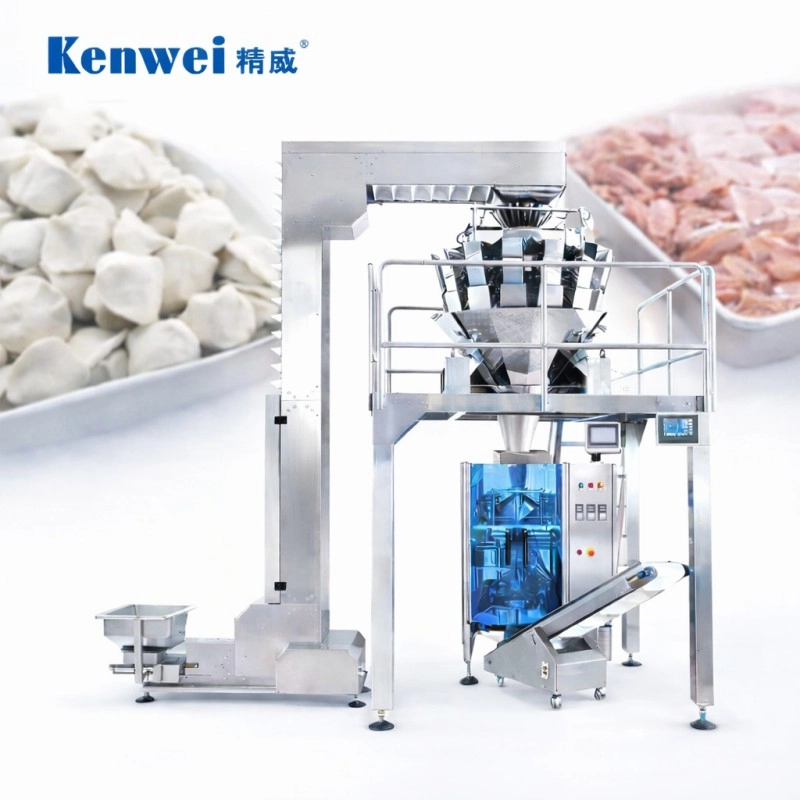
Vertical Frozen Food Packaging Machine for IQF & Frozen Products JW-B1
The Kenwei JW-B1 Vertical Frozen Food Packaging Machine is designed for IQF and frozen products, ensuring efficient, airtight packing. This vertical packing machine boosts productivity with precision sealing, ideal for frozen food packaging needs in the food industry.
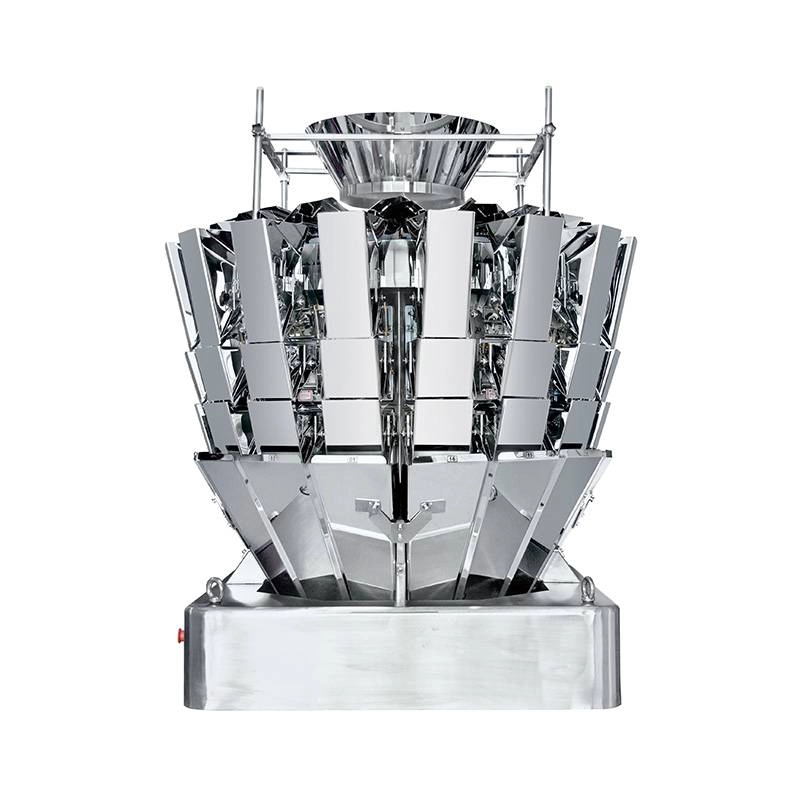
16 Head Three Layer Multihead Weigher for Granular and Irregular Materials
Kenwei’s 16 Head Three Layer Multihead Weigher ensures precise weighing of granular and irregular materials. This multihead weighing machine offers efficient, high-speed performance, ideal for various packaging needs. Trust our 16 head weigher for accuracy and reliability in your production line.
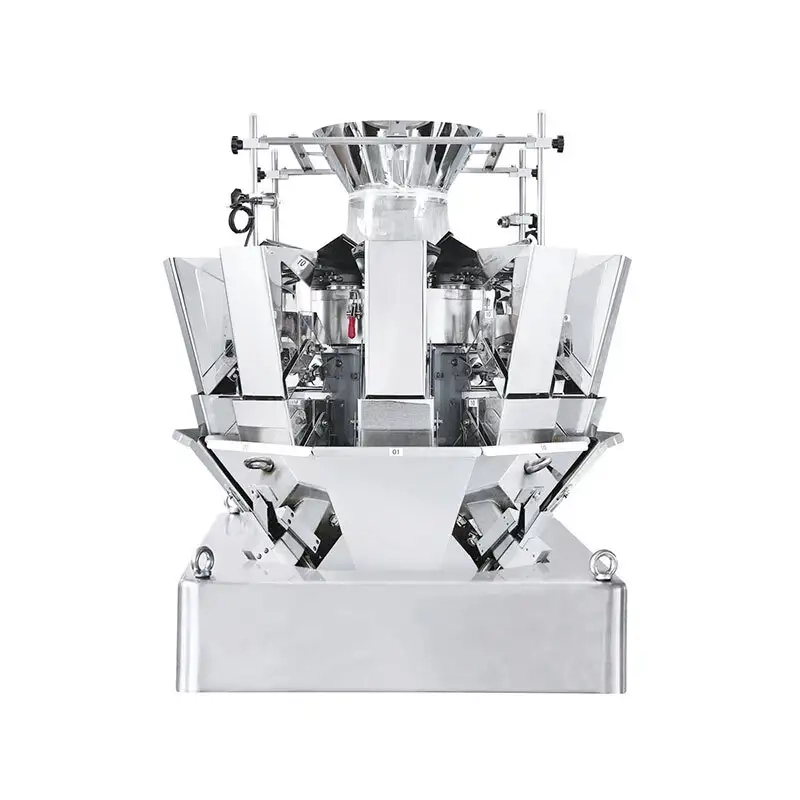
10-Head Standard No-Spring Multihead Weigher 1.6L for Precise Weighing
The standard no-spring combination scale features a patented spring-free hopper design, making it ideal for weighing a variety of products such as melon seeds, peanuts, nuts, almonds, grapes, candies, pistachios, potato chips, shrimp chips, and more. The double-support feeding tray is easily adjustable, while the feeding hopper is designed for easy disassembly, ensuring convenience and cleanliness. With a maximum weighing speed of up to 120 bags per minute, the 14-head standard no-spring combination scale is an economical, versatile, and cost-effective solution.
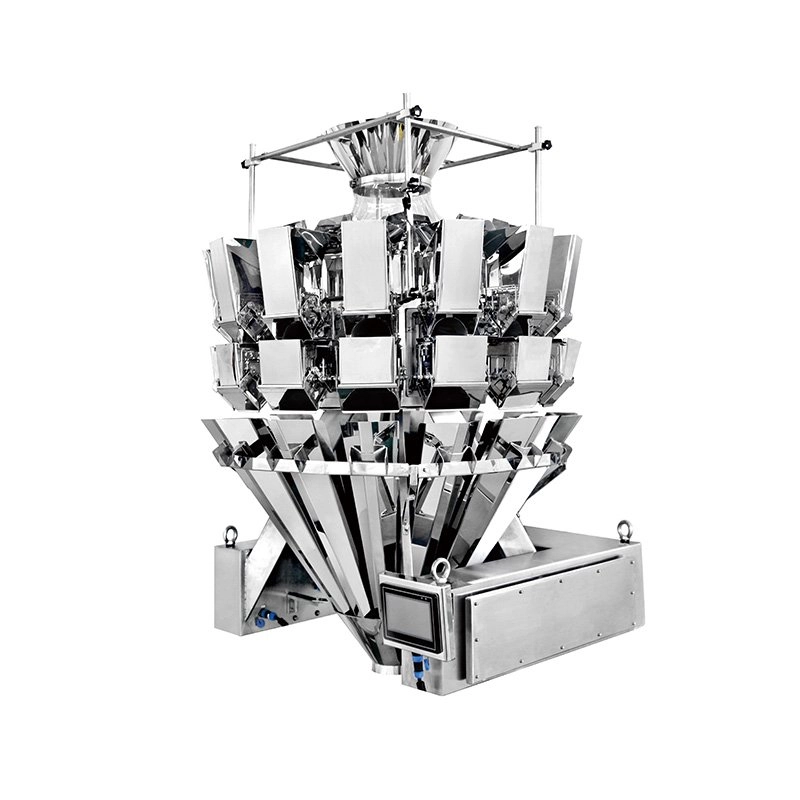
Automatic Multihead Weigher for Stick and Bar-Shaped Materials
Kenwei’s Automatic Multihead Weigher for Stick and Bar-Shaped Materials ensures precise, fast, and efficient weighing. This advanced automatic multihead weighing machine is ideal for accurate portioning of various stick and bar-shaped products, enhancing productivity and reducing waste.
Get in touch with us
If you have any comments or good suggestions, please leave us a message, later our professional staff will contact you as soon as possible.
Kenwei
Kenwei
Kenwei multi weigh
Kenwei
Kenwei
Kenwei