






Speed vs Accuracy: Selecting a Food Packaging Machine
Choosing the right food packaging machine requires balancing line speed and weighing/filling accuracy. This guide explains trade-offs, metrics, and practical selection tips with a focus on the Fully Automatic Cup Weighing and Packaging Machine for Snack Foods JW-B23, helping manufacturers optimize throughput, minimize giveaway, and maintain food safety compliance.
- Understanding the Speed vs Accuracy Trade-off
- Why speed and accuracy conflict
- Key metrics to evaluate
- Standards and regulatory context
- How Multihead Weighers Enable High-Speed Accuracy
- Principles of multihead weighing
- Benefits for particulate and snack foods
- Design elements that affect real-world accuracy
- Practical Selection Guide: Matching Machine to Product and Business Goals
- Assess product characteristics
- Define acceptable accuracy and loss/giveaway limits
- Calculate ROI: speed vs accuracy scenarios
- Optimizing a JW-B23 Line for Both Speed and Accuracy
- Machine-level setup best practices
- Integration and line balancing
- Quality controls and continuous improvement
- Cost Considerations and Total Cost of Ownership (TCO)
- Capital vs operating costs
- Maintenance and downtime risks
- Validation and acceptance testing
- Real-world Case Examples and Data-Driven Decisions
- When to favor speed
- When to favor accuracy
- Hybrid strategies
- Frequently Asked Questions (FAQ)
- Q: How does a multihead combination scale improve accuracy at high speed?
- Q: What production throughput can I expect from the JW-B23?
- Q: How do I validate weighing accuracy for regulatory audits?
- Q: Can the JW-B23 handle different cup molds and product types?
- Q: What maintenance is required to keep both speed and accuracy?
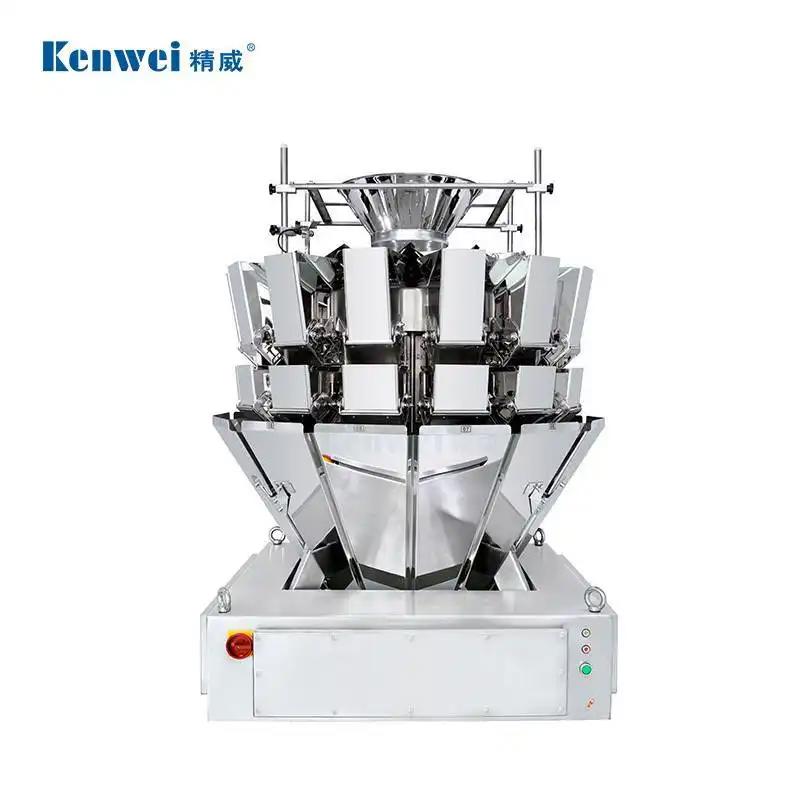
Selecting a food packaging machine is a strategic decision that affects production throughput, product quality, margin (through giveaway control), and regulatory compliance. This guide explores the speed-versus-accuracy trade-off for food packaging equipment, describes measurable metrics you should use, and shows how the Fully Automatic Cup Weighing and Packaging Machine for Snack Foods JW-B23 can help manufacturers achieve an optimal balance for snacks and particulate products. We cite international standards and industry sources to support best practices and decision criteria.
The system consists of a vibrating feeder, a Z-type conveyor, a 14-head combination scale, a material diverter, an automatic cup drop device, a cup mold conveyor, a capping machine and a finished product conveying device. It has high-precision filling capabilities and is suitable for a variety of mold cup combinations. It can realize fully automatic operations of feeding, weighing, filling, bag making, printing and finished product output, and is suitable for a wide range of materials with high production efficiency.
Understanding the Speed vs Accuracy Trade-off
Why speed and accuracy conflict
In food packaging operations, speed (throughput) and accuracy (weighing/filling precision) often pull in opposite directions. Increasing the line speed typically reduces dwell time for feeding and weighing, leading to wider weight variation, higher giveaway, or increased rejects. Conversely, implementing conservative settings to maximize accuracy can reduce cups-per-minute and underutilize capital equipment.
Key metrics to evaluate
Use objective metrics when comparing food packaging machines: throughput (units/min), average net weight and standard deviation, mean squared error of fill, giveaway percentage, and reject rate. Track both short-term cycle data and long-run production statistics so you can quantify how speed adjustments affect accuracy.
Standards and regulatory context
Follow international guidance for weighing and food safety. For weighing accuracy and instrument conformity, consult the International Organization of Legal Metrology (OIML): OIML. For food safety management frameworks like HACCP and system-level requirements, ISO 22000 provides a global benchmark: ISO 22000. Regulatory authorities such as the U.S. Food & Drug Administration publish packaging and material safety guidance relevant to machine operation: FDA - Food Packaging.
How Multihead Weighers Enable High-Speed Accuracy
Principles of multihead weighing
Multihead weighers (combination scales) split product flow into multiple heads and use combination algorithms to meet target weight quickly and accurately. This architecture reduces cycle time while maintaining precision by choosing optimal head combinations each cycle. For a technical overview, see the industry summary on Wikipedia: Multihead weigher.
Benefits for particulate and snack foods
Snack foods—chips, nuts, bite-sized confectionery—benefit from multihead technology because product characteristics (bulk density, piece size, fragility) vary cycle-by-cycle. A 14-head scale like the JW-B23's 14-head combination scale improves statistical selection for target weights, lowering both underfills (regulatory risk) and overfills (costly giveaway).
Design elements that affect real-world accuracy
Mechanical and control design factors matter: vibration feeder tuning, Z-type conveyor consistency, accurate load cells, vibration isolation, intelligent combination algorithms, and sampling routines for dynamic calibration. Machines with integrated in-line inspection (e.g., checkweighers) and closed-loop feedback between filler and scale maintain better accuracy at high speeds.
Practical Selection Guide: Matching Machine to Product and Business Goals
Assess product characteristics
Start with your product profile: piece size, bulk density, fragility, flowability, dust generation, and target net weight. These determine whether a cup-based filling system or bagging solution is best. The Fully Automatic Cup Weighing and Packaging Machine JW-B23 is optimized for snack cups and similar mold cup combinations; its components (vibrating feeder, Z conveyor, and cup mold conveyor) handle discrete pieces and mixed sizes well.
Define acceptable accuracy and loss/giveaway limits
Work with quality and finance teams to set acceptable accuracy (e.g., mean target weight ± allowable tolerance) and acceptable giveaway or scrap levels. If regulatory limits mandate minimal underweight risk, you may accept slightly higher giveaway to remain compliant. Use statistical process control to monitor and adjust setpoints.
Calculate ROI: speed vs accuracy scenarios
Scenario modeling helps choose settings and machine classes. Below is a sample comparison table showing how three hypothetical machines (single-head filler, 10-head multihead, JW-B23 14-head) might perform on a snack-cup line. Numbers are illustrative and must be validated by trials on your product.
| Metric | Single-head Filler | 10-head Multihead | JW-B23 (14-head Combination) |
|---|---|---|---|
| Typical throughput (cups/min) | 20-40 | 40-80 | 60-120 |
| Typical accuracy (std dev, g) | ±1.5–3.0 g | ±0.8–1.8 g | ±0.5–1.2 g |
| Estimated giveaway per 1000 units | 500–1500 g | 200–800 g | 100–500 g |
| Best for | Simple free-flow products, low capex | Moderate speed & piece variability | High-speed snack cup lines, mixed shapes |
Note: Actual performance depends on product, operator skill, plant environment, and integration quality. Use factory acceptance tests (FAT) and on-site trials (SAT) to verify claims.
Optimizing a JW-B23 Line for Both Speed and Accuracy
Machine-level setup best practices
For the JW-B23, proper setup maximizes both speed and accuracy. Key steps: tune the vibrating feeder amplitude and frequency to stabilize feed rate; configure the Z-type conveyor to ensure consistent orientation and spacing; calibrate load cells and perform dynamic calibration under production loads. Use the machine's combination-scale settings to select appropriate target weight algorithms for your SKU.
Integration and line balancing
Match upstream and downstream equipment: upstream dosing and feeders should deliver product evenly; downstream capping, printing, and finished-product conveyors must handle the JW-B23's output rate. Ensure the material diverter and automatic cup drop device are synchronized to avoid starvation or double-feeds, which negatively affect accuracy.
Quality controls and continuous improvement
Implement inline checkweighers and reject systems to guard against drift. Use SPC charts for weight distribution and run capability indices (e.g., Cpk) to quantify process capability. For compliance and process documentation, tie machine data into your manufacturing execution system (MES) and maintain traceable logs for audits.
Cost Considerations and Total Cost of Ownership (TCO)
Capital vs operating costs
Higher-accuracy machines often cost more upfront but reduce variable cost via lower giveaway and fewer rejects. Consider labor savings from automation (the JW-B23's fully automatic operations for feeding, weighing, filling, bag making, printing, and finished product output reduce manual intervention) and potential increases in throughput that improve revenue per shift.
Maintenance and downtime risks
Choose robust components and plan preventive maintenance for the vibrating feeder, load cells, motors, and control electronics. Downtime costs can outweigh small differences in capex, so verify serviceability, availability of spare parts, and local technical support before purchase.
Validation and acceptance testing
Include FAT/SAT acceptance criteria: throughput at target accuracy, product handling for each SKU, cleaning procedures, and documentation. Ask for on-site verification to confirm the machine meets both speed and accuracy requirements under real production conditions.
Real-world Case Examples and Data-Driven Decisions
When to favor speed
If margins are fixed by contract, and per-unit giveaway is minimal, higher throughput can reduce unit labor and overhead cost. High-demand SKUs with stable piece geometry are suitable for maximizing speed provided you maintain acceptable accuracy.
When to favor accuracy
If product cost per gram is high, or regulatory exposure for underweight is severe, prioritize accuracy. For High Quality or medical nutraceutical snack mixes where dosage matters, sacrificing some throughput to ensure precise fills protects brand and compliance.
Hybrid strategies
Use dynamic setpoint strategies: run high-speed modes during peak demand with slightly increased monitoring, and switch to high-accuracy modes for quality-critical lots. The JW-B23’s combination scale and automatic controls support flexible mode switching and recipe-based configurations.
Frequently Asked Questions (FAQ)
Q: How does a multihead combination scale improve accuracy at high speed?
A: By splitting the product into multiple weighing heads, the combination algorithm selects head sums that closely match the target weight each cycle. This statistical selection shortens cycle time while keeping variance low.
Q: What production throughput can I expect from the JW-B23?
A: Throughput depends on product properties and cup size, but typical ranges for snack cups on a 14-head combination scale are 60–120 cups per minute. Conduct FAT/SAT trials with your SKU to establish exact rates.
Q: How do I validate weighing accuracy for regulatory audits?
A: Maintain calibration certificates for load cells, perform routine accuracy checks against certified test weights, log SPC data, and follow industry guidance (OIML and local metrology authorities). Use documented FAT/SAT results as part of your audit trail.
Q: Can the JW-B23 handle different cup molds and product types?
A: Yes. The JW-B23 is designed for a variety of mold cup combinations and a wide range of snack materials. Its automatic cup drop device and adjustable cup mold conveyor enable rapid changeovers.
Q: What maintenance is required to keep both speed and accuracy?
A: Regularly clean feed channels, verify vibration settings, check and calibrate load cells, inspect drive belts and guide rails, and update control software. Follow the supplier’s preventive maintenance schedule and keep critical spares on hand.
One of the greatest advantages of integrating JW-B23 automation into your production line is the ability to package snack foods with ease and efficiency. The JW-B23 fully automatic cup weigher automates the entire weighing and filling process, significantly reducing labor costs and increasing output. This enhanced automation ensures that snack packaging is more efficient and reduces the need for manual intervention.If you want to see how the Fully Automatic Cup Weighing and Packaging Machine for Snack Foods JW-B23 fits your line, schedule a live demo or request a product datasheet. Contact our sales team for a tailored ROI analysis or to arrange FAT/SAT trials: View JW-B23 product page or Contact Sales.
References: OIML (https://www.oiml.org/), ISO 22000 (https://www.iso.org/), FDA - Food Packaging (https://www.fda.gov/), Wikipedia - Multihead weigher (https://en.wikipedia.org/wiki/Multihead_weigher).
Tags
food packing machine
food packing machine
checkweigher system
checkweigher system
metal detector machine
metal detector machine
multihead weighing machine
multihead weighing machine
Vertical Form Fill Seal Machine
Vertical Form Fill Seal Machine
metal detector
metal detector
Recommended for you

Maintenance Tips for Fully Automatic Cup Weighing Machines
The B2B Buyer’s Guide to vertical form fill seal machine
Top 10 multihead weigher machine Manufacturers and Supplier Brands
The B2B Buyer’s Guide to combination weigher packing line
Prdoucts Categories
Question you may concern
About After Sales Support
What do I do if I encounter a malfunction in the machine?
If you encounter a malfunction, first check the user manual and troubleshooting guide for common issues. If the problem persists, contact our technical support team for further assistance.
About Solution suggestions
What industries benefit the most from Kenwei solutions?
Kenwei solutions are ideal for a wide range of industries, including:
1)Food Packaging snacks, grains, and powdered beverages.
2)Pharmaceuticals: Precise weighing of tablets, and capsules.
3)Chemicals: Weighing and packaging granular and powdered chemicals.
4)Agriculture: Packaging seeds, grains, and fertilizers.
How can Kenwei solutions help reduce waste in my production process?
Kenwei solutions improve accuracy in weighing, packaging, and quality control, reducing the chances of overfill or underfill. This leads to less product waste and higher operational efficiency.
About Cooperation Process
Can Kenwei customize equipment to meet my specific needs?
Yes! We offer customized solutions for all of our machines. Our team will work closely with you to understand your specific requirements and create a solution that meets your needs in terms of size, functionality, speed, and other factors.
Does Kenwei offer installation and training?
Yes, Kenwei provides installation services and comprehensive training to ensure that your team can operate the machinery efficiently. Our engineers can travel to your facility for on-site installation, and we also offer remote training options if needed.
You may also like
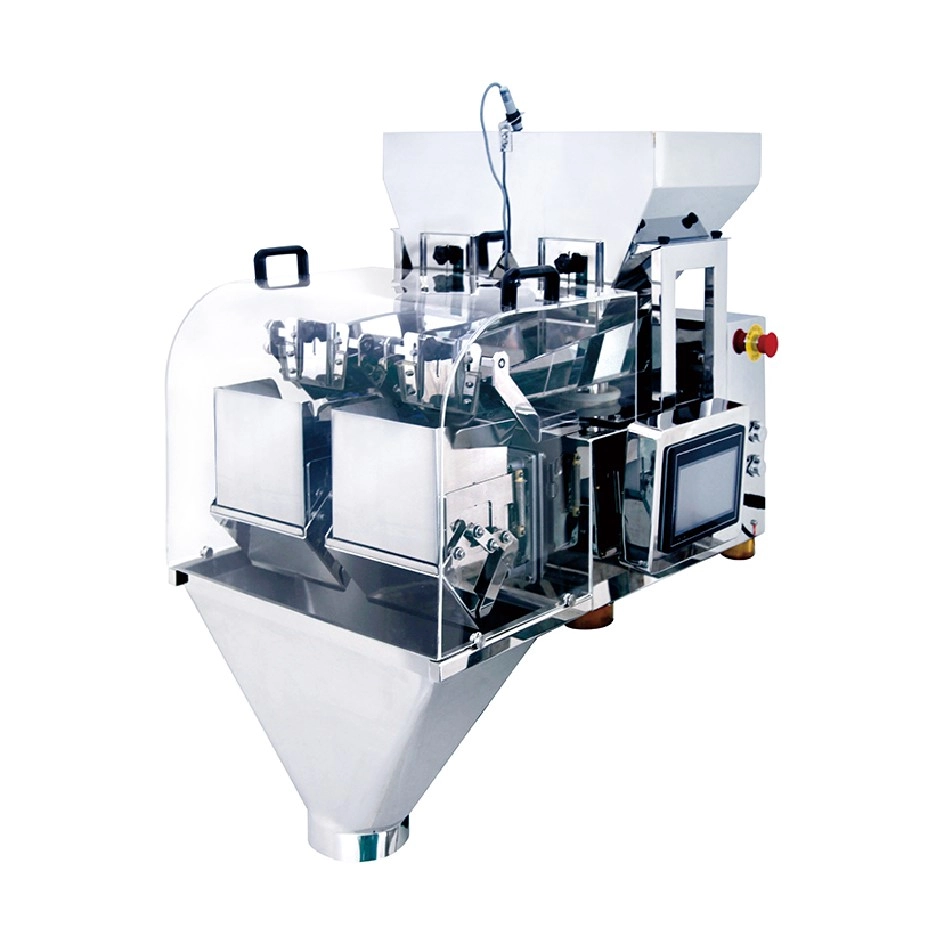
Precision Linear Weigher for Weighing Powder & Small Granules
The linear weigher is perfect for precise, quantitative weighing of powdery and small granular materials such as white sugar, salt, monosodium glutamate, chicken essence, milk powder, coffee, seasoning powder, and more. Available in up to 5 different specifications, this linear scale offers a maximum weighing speed of up to 70 bags per minute, making it the top choice for accurately weighing powdery materials in high-speed production environments.
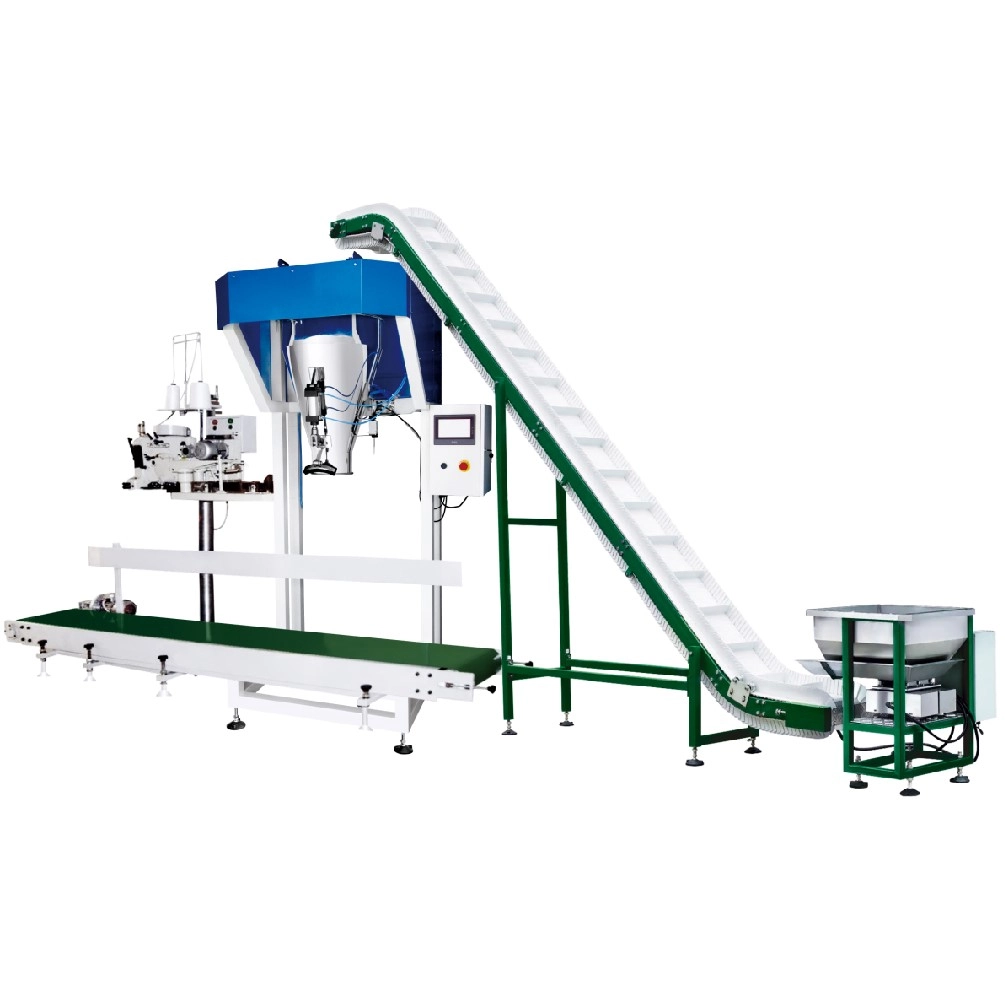
Precision Food Packaging Machine Using Single Head Bulk Linear Weigher Packaging System JW-B22
The Kenwei JW-B22 Precision Food Packaging Machine with Single Head Bulk Linear Weigher is designed for heavy-duty weighing up to 50kg. It automates feeding, weighing, bag sewing, and output for maximum efficiency. Ideal for grains like corn, rice, soybeans, barley, and wheat, it ensures high accuracy and reliability for the food, chemical, and light industries, making it the top choice for bulk grain packaging.
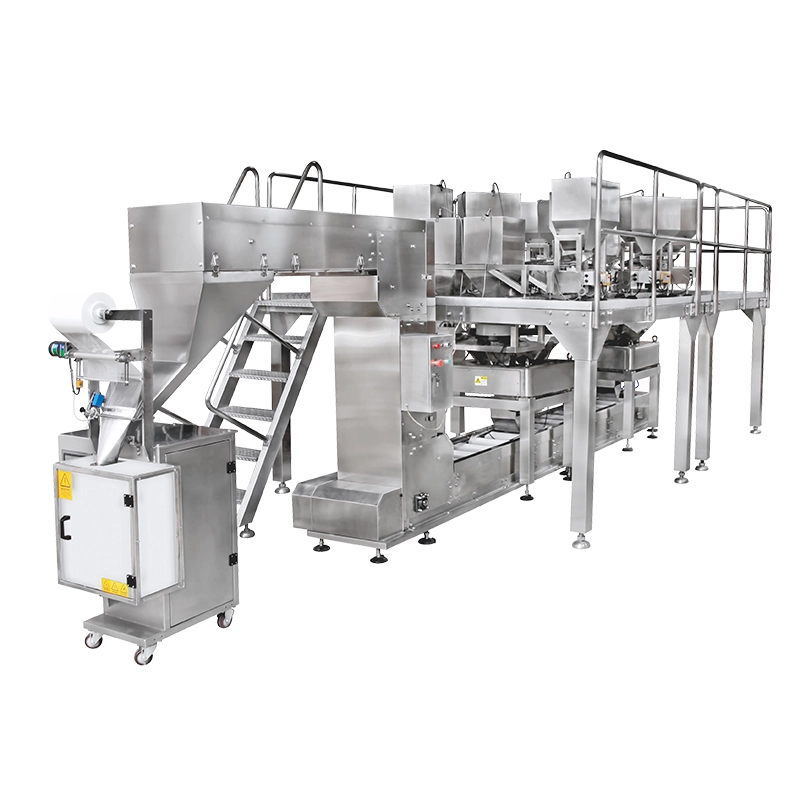
JW-B28 Multihead Weigher Mixing & Weighing System for Food Packaging | High-Speed, Accurate, Automated
The Kenwei JW-B26 Single Multihead Weigher Mixing and Packaging System offers fully automated operation, completing feeding, weighing, filling, date printing, and product output with high accuracy and speed. Ideal for granules, slices, irregular shapes, and mixed products like candy, nuts, snacks, pet food, and even small hardware. Its versatility and precision make it a perfect solution for diverse packaging needs.
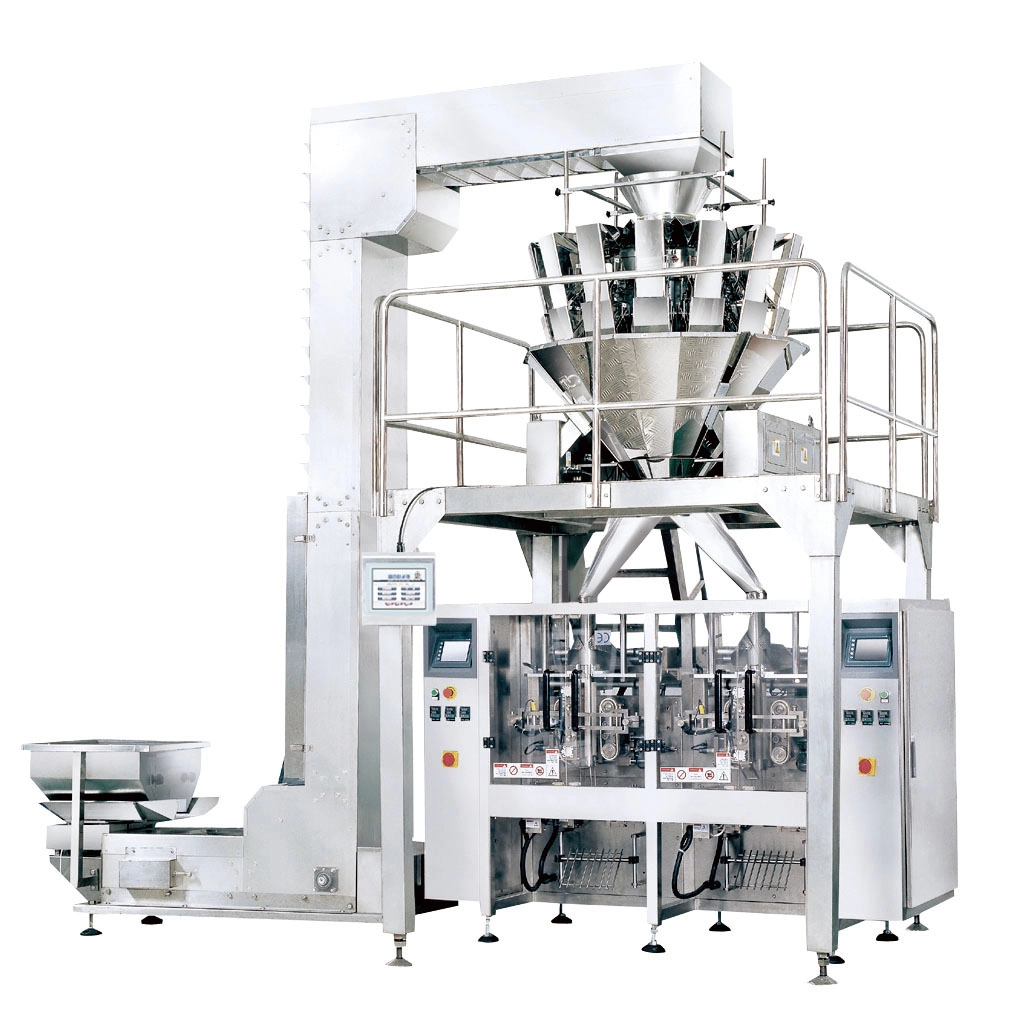
Fully Automatic Twin Packaging Machine for Granules Snack Foods Weighing JW-B2
Kenwei's JW-B2 Fully Automatic Twin Packaging Machine boasts 14-head multihead weighing for precise granule and snack food packaging. This high-speed automatic packaging machine offers efficient twin-packaging, maximizing your production output. Ideal for food manufacturers seeking enhanced speed and accuracy.
Get in touch with us
If you have any comments or good suggestions, please leave us a message, later our professional staff will contact you as soon as possible.
Kenwei
Kenwei
Kenwei multi weigh
Kenwei
Kenwei
Kenwei