






best multihead weigher software and controls 2026
A comprehensive 2026 guide to choosing the best multihead weigher software and controls. Covers control architectures, top vendors, integration tips, accuracy and speed trade-offs, cybersecurity, ROI, and implementation checklists — plus a comparison table and FAQ. Includes Kenwei's capabilities and product overview.
- Best Multihead Weigher Software and Controls 2026
- Why modern multihead weigher software and controls matter for your business
- Control architectures: PLC-based vs PC-based vs embedded controllers for multihead weighers
- Key software functions that improve yield and uptime
- Top software and control vendors for multihead weighers in 2026
- How to evaluate multihead weigher software: a practical checklist
- insight
- Accuracy, speed and giveaway: software strategies that maximize profitability
- Integration, traceability and compliance for food and pharmaceutical lines
- Cybersecurity and remote diagnostics: what to require in 2026
- Why Kenwei is a strong choice for buyers of automated weighing and packing solutions
- How Kenwei integrates software, controls and line-level solutions
- Deployment roadmap: from pilot to full-line roll-out
- Cost considerations and expected ROI
- Practical tips when buying: questions to ask vendors
- FAQ
- Contact us / View products
- Sources

Best Multihead Weigher Software and Controls 2026
Why modern multihead weigher software and controls matter for your business
Multihead weigher systems are central to high-speed, high-accuracy portioning and packing lines. The software and controls that run these machines determine throughput, yield, recipe flexibility, traceability, preventive maintenance, and how easily the multihead weigher integrates into a complete packaging line. If you plan to buy multihead weigher equipment in 2026, selecting the right software stack and control architecture is as important as choosing mechanical design and feeding systems.
Control architectures: PLC-based vs PC-based vs embedded controllers for multihead weighers
Choosing the right control architecture resolves questions about reliability, scalability and future-proofing. There are three common approaches:
- PLC-based systems (Siemens, Rockwell, Mitsubishi): robust and deterministic. PLCs are proven in discrete and machine control, offering modular I/O and long-term support. They are often the safe choice when uptime is paramount and integration with plant-level SCADA is required.
- PC-based control (Beckhoff TwinCAT, industrial PCs): provide higher computational power, advanced motion control, data analytics at the edge, and flexible HMI options. Ideal for complex recipe management and machine learning-based optimization.
- Embedded/weighing controllers (OEM proprietary controllers): compact and purpose-built for weighing applications. They can deliver excellent weighing accuracy and cycle times but may be less flexible for integration or future upgrades.
: when you evaluate multihead weigher price and capabilities, ask which control architecture the vendor uses and whether it supports your MES and ERP integration requirements.
Key software functions that improve yield and uptime
Software is not just an HMI or recipe editor. Modern multihead weigher software should include:
- Dynamic recipe and product management — fast changeovers with stored feed and distribution parameters.
- Closed-loop weighing optimization — algorithms that minimize giveaway while meeting target weight and speed.
- Real-time diagnostics and predictive maintenance — vibration, motor load, and sampling statistics to avoid unplanned stops.
- Line-level integration — OPC UA, Profinet, EtherNet/IP, or MQTT connectivity for MES/SCADA.
- Traceability and data logging — batch records, shift performance, and audit-ready logs for compliance-heavy industries.
Top software and control vendors for multihead weighers in 2026
There is no single 'best' solution for every user. The right choice depends on product type, speed requirement, existing automation standards, and expansion plans. The table below compares leading control and software options commonly used with multihead weighers.
| Vendor / Stack | Architecture | Strengths | Best for | Source |
|---|---|---|---|---|
| Siemens (SIMATIC) | PLC + HMI | Deterministic control, industrial networking, global support | High uptime plants, standardized automation environments | Siemens product literature |
| Rockwell Automation (Allen‑Bradley) | PLC + HMI | Strong in North America, seamless MES/ERP integration, robustness | Packaging lines in North American facilities | Rockwell Automation product pages |
| Beckhoff (TwinCAT / EtherCAT) | PC-based control | High-performance motion, flexible I/O, edge computing capability | Advanced multihead systems requiring complex optimization | Beckhoff documentation |
| Omron / Mitsubishi | PLC + HMI | Compact solutions, motion control, vision integration | SME packaging plants and OEMs | Omron & Mitsubishi product materials |
| Kenwei (OEM integrated control) | Embedded + optional PLC/PC integration | Machine-specific tuning for high speed and precision, one-stop solution | Buyers seeking turnkey automated weighing and packaging systems | Kenwei product and company information |
Sources: vendor documentation and industry whitepapers (see source list below).
How to evaluate multihead weigher software: a practical checklist
When you request quotes or demos, use this checklist to screen suppliers and their software/controls:
- Connectivity: Does the system support OPC UA, EtherNet/IP, Profinet, MQTT, or REST APIs for MES/ERP? (Essential for digitalization.)
- Recipe management: Can operators recall product recipes quickly and lock them for quality control?
- Weighing performance: Request data on cycle time, best-fit accuracy, and achievable giveaway reduction for your product type.
- Data access: Are batch logs, alarms, and audit trails easily exportable? Is historical data stored locally or in cloud options?
- Cybersecurity: Are network ports documented, and does the control support user roles, secure boot, and encrypted communications?
- Maintenance tools: Does software offer predictive indicators, spare-parts counters, and remote diagnostics?
- Scalability and upgrades: Can you add additional heads, lines, or vision systems without a full control replacement?
- Support and training: Does the vendor provide on-site commissioning, local spare parts, and operator training?
insight
If you intend to buy multihead weigher systems, ask suppliers to demonstrate the checklist items on a product similar to yours. This avoids costly surprises in integration and ensures the control package matches your growth plans.
Accuracy, speed and giveaway: software strategies that maximize profitability
Two common tensions in multihead weighing are speed vs accuracy and throughput vs giveaway. Modern control software uses statistical algorithms and dynamic distribution strategies to manage these trade-offs:
- Combination optimization — software evaluates multiple head combinations in milliseconds to find the optimal set that meets weight target with minimum overfill.
- Adaptive learning — machine learning or adaptive filters can account for product flow changes (e.g., humidity, coating) and adjust head biases automatically.
- Idle head management — intelligent sequencing to reduce mechanical wear and balance out head usage.
ROI case: reducing giveaway by 1% on a high-value product often pays for an advanced control upgrade within months. Always ask vendors for sample data or a trial run with your product.
Integration, traceability and compliance for food and pharmaceutical lines
For regulated industries, software must support batch traceability, allergen and CIP records, and secure logs. Look for features such as:
- Role-based access control and electronic signature fields
- Time-stamped production records and exportable audit trails
- Integration with metal detectors, checkweighers and vision systems
Kenwei's integrated solutions simplify compliance by combining multihead weighers with metal detectors, check weighers and packaging equipment so data flows coherently across the line.
Cybersecurity and remote diagnostics: what to require in 2026
Connected control systems increase the risk surface. Require the following baseline protections:
- Encrypted communications (TLS) for HMI/PC and cloud links
- Network segmentation and secure VPN for remote access
- Regular firmware update policies and signed firmware files
- Role-based user management and strong password policies
Remote diagnostics capability is now a productivity tool: authorized engineers can reduce downtime and speed up root-cause analysis by accessing logs and machine state remotely.
Why Kenwei is a strong choice for buyers of automated weighing and packing solutions
Kenwei is a powerful manufacturer of multi-head weighers. The company is committed to the development and manufacturing of metal detectors, multi-head weighers, linear weighers, and check weighers. Kenwei machines are characterized by high speed and high precision. They also provide customers with one-stop automated weighing and packaging solutions to meet customization requirements.
Located in Fusha High-tech Industrial Park, Zhongshan City, Guangdong Province, Guangdong Kenwei is equipped with an automated weighing and packaging system and has comprehensive capabilities in design and development, manufacturing, marketing, installation and commissioning, technical training, and after-sales service. The company has established a good brand image and a reputation for thoughtful and fast service in the packaging machinery industry.
Kenwei's vision is to become the world's leading weighing packing machine manufacturer. Their product suite includes Check Weigher, multihead weigher packing machine, multihead weigher, linear weigher, metal detector, packing machine, counting machine, combination weigher, food packaging machine, and food packing machinery. Core competitive advantages include integrated line engineering, high-speed precision mechanics, tailored control software, and global service capability. For more information, see the Kenwei website: https://www.kenweigroup.com/
How Kenwei integrates software, controls and line-level solutions
Kenwei combines OEM-level weighing controllers with PLC or PC-based supervisory controls depending on customer needs. This approach offers:
- Turnkey integration: multihead weighers, metal detectors, and check weighers pre-configured to communicate and record consistently.
- Customization options: recipe libraries, traceability exports, and HMI branding for factory standards.
- Local support and training: commissioning teams and spare parts to reduce lifetime operating risk.
Deployment roadmap: from pilot to full-line roll-out
To get predictable results when upgrading or buying new multihead weigher software and controls, use this phased approach:
- Define KPIs — throughput, target weight tolerance, acceptable giveaway, downtime limits.
- Pilot test — run a pilot with your product to validate combination algorithms and accuracy claims.
- Integration test — verify connectivity with MES/ERP, metal detectors, and checkweighers in a simulated production environment.
- Operator training — create standardized SOPs and role-based access to avoid human errors.
- Roll-out and continuous improvement — capture data and iterate control parameters for incremental gains.
Cost considerations and expected ROI
Costs range widely depending on architecture and features. Typical cost drivers include the number of heads, degree of automation, control stack (PLC vs PC), and software features such as advanced optimization and cloud connectivity. When assessing multihead weigher price, consider lifecycle costs including spare parts, software licenses, and training.
Example ROI scenarios to request from suppliers:
- Projected reduction in giveaway (kg per month) and its monetary value
- Reduction in downtime from predictive maintenance capabilities
- Labor savings from faster changeovers and reduced manual sorting
Practical tips when buying: questions to ask vendors
Ask vendors to demonstrate real-world results and provide references. Key questions:
- Can you show live data from a similar product and line speed?
- What protocols and APIs are available for integration?
- What are the upgrade paths for software and hardware over 5–10 years?
- What support SLAs and spare part availability do you guarantee?
- Do you provide acceptance tests with measurable KPIs during commissioning?
FAQ
Q: How do I choose between PLC and PC-based control for a multihead weigher?
A: Choose PLC-based control for maximal uptime, deterministic behavior, and compatibility with existing plant automation. Choose PC-based control when advanced optimization, complex motion control, or edge analytics are required. Consider hybrid approaches where the weighing controller handles real-time tasks and a PC performs supervisory analytics.
Q: Can I retrofit my existing multihead weigher with modern software?
A: In many cases, yes. Retrofits can add recipe management, data logging, and remote diagnostics. Success depends on mechanical condition, sensor compatibility, and whether the existing controller supports external communication interfaces.
Q: What is the typical accuracy improvement from upgrading controls?
A: Improvements vary by product and condition, but optimized algorithms and better calibration can reduce giveaway by 0.5–2% and improve consistent target achievement. Ask vendors for case studies with similar product types.
Q: How important is cybersecurity for multihead weighers?
A: Very important. As weighers become IIoT-enabled, secure network design and updated firmware are essential to avoid production disruption and data theft.
Q: What integration standards should I insist on?
A: OPC UA is the preferred industry standard for interoperability; EtherNet/IP and Profinet remain common in many regions. Ensure the control supports at least one widely used protocol compatible with your MES.
Contact us / View products
If you are ready to compare multihead weigher systems or need a turnkey weighing and packaging solution, contact Kenwei for a custom proposal, pilot testing with your product, and on-site commissioning. Visit https://www.kenweigroup.com/ to view product ranges, request quotes, and schedule demonstrations.
Sources
- Kenwei company website and product materials: https://www.kenweigroup.com/
- Siemens SIMATIC product documentation
- Rockwell Automation product literature
- Beckhoff automation product documentation
- PMMI industry resources on packaging automation trends
- Industry whitepapers and machine vendor case studies in Packaging World and Control Engineering
Tags
food packaging system
food packaging system
Production Lines
Production Lines
mutihead weighing machine
mutihead weighing machine
checkweigher metal detector
checkweigher metal detector
packing machine for food products
packing machine for food products
multihead weigher supplier
multihead weigher supplier
Recommended for you
Top maintenance tips for rotary packing machines and weighers
What are the application scenarios of dry food packaging machine?
Buying guide: features to compare in rotary packing machines
The industrial food metal detector Cost Guide
Prdoucts Categories
Question you may concern
About Solution suggestions
How can Kenwei solutions help reduce waste in my production process?
Kenwei solutions improve accuracy in weighing, packaging, and quality control, reducing the chances of overfill or underfill. This leads to less product waste and higher operational efficiency.
Can Kenwei solutions be used for both manual and automated packing lines?
Yes, Kenwei machines can be used in both manual and automated packing lines. We can provide integrated systems that work alongside manual labor or fully automated systems depending on your production requirements.
About products customization
Can I customize the size of Kenwei machines?
Yes, we can tailor the dimensions of our machines to fit your available space and production layout. Whether you need compact machines or larger equipment, we can accommodate your size requirements.
About Cooperation Process
Does Kenwei offer installation and training?
Yes, Kenwei provides installation services and comprehensive training to ensure that your team can operate the machinery efficiently. Our engineers can travel to your facility for on-site installation, and we also offer remote training options if needed.
About Product choice
What types of products does Kenwei offer?
Kenwei specializes in high-precision and high-speed automated machinery for weighing, packaging, and quality control. Our main products include: multihead weigher, linear weigher, checkweighers,food metal detector,vertical packing machine and packing machine accessories.
You may also like
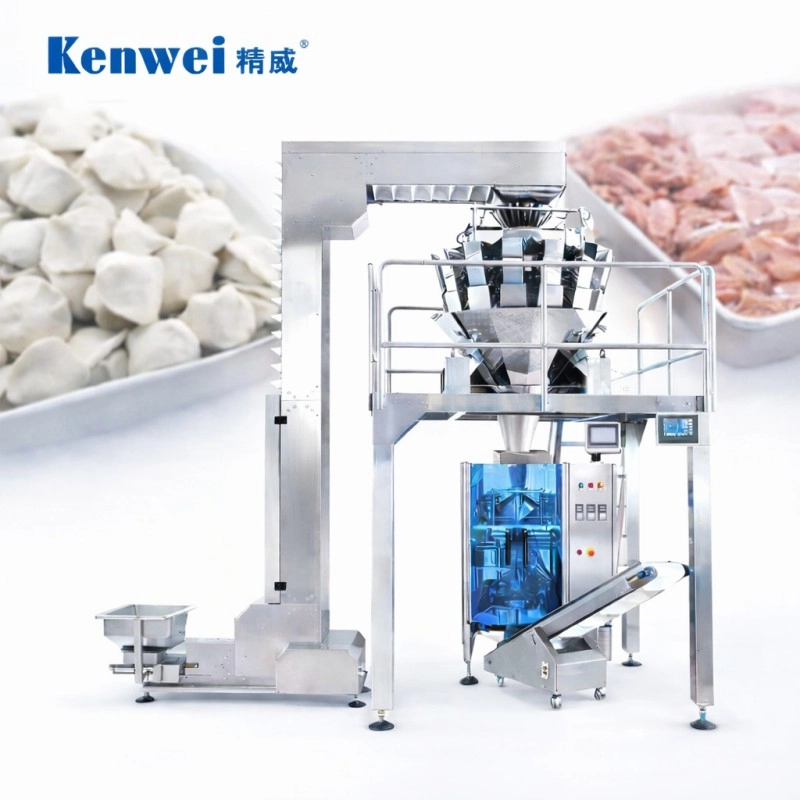
Vertical Frozen Food Packaging Machine for IQF & Frozen Products JW-B1
The Kenwei JW-B1 Vertical Frozen Food Packaging Machine is designed for IQF and frozen products, ensuring efficient, airtight packing. This vertical packing machine boosts productivity with precision sealing, ideal for frozen food packaging needs in the food industry.
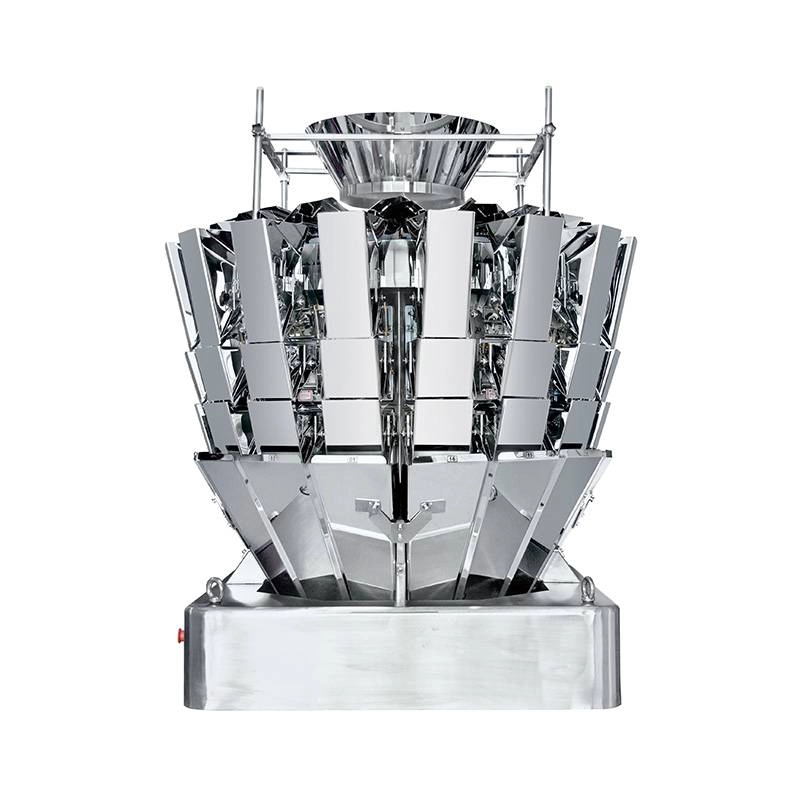
16 Head Three Layer Multihead Weigher for Granular and Irregular Materials
Kenwei’s 16 Head Three Layer Multihead Weigher ensures precise weighing of granular and irregular materials. This multihead weighing machine offers efficient, high-speed performance, ideal for various packaging needs. Trust our 16 head weigher for accuracy and reliability in your production line.
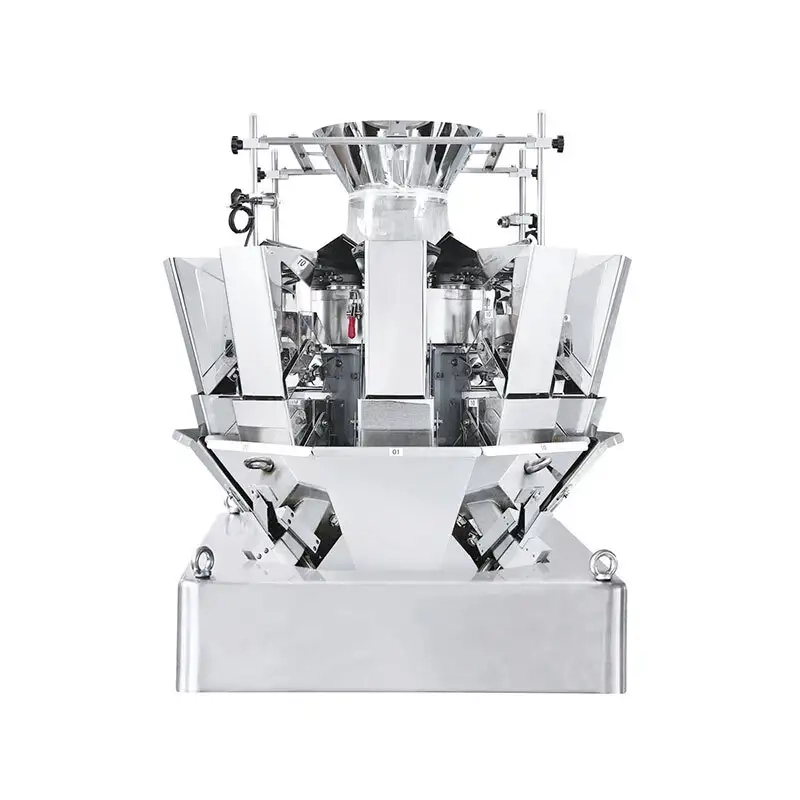
10-Head Standard No-Spring Multihead Weigher 1.6L for Precise Weighing
The standard no-spring combination scale features a patented spring-free hopper design, making it ideal for weighing a variety of products such as melon seeds, peanuts, nuts, almonds, grapes, candies, pistachios, potato chips, shrimp chips, and more. The double-support feeding tray is easily adjustable, while the feeding hopper is designed for easy disassembly, ensuring convenience and cleanliness. With a maximum weighing speed of up to 120 bags per minute, the 14-head standard no-spring combination scale is an economical, versatile, and cost-effective solution.
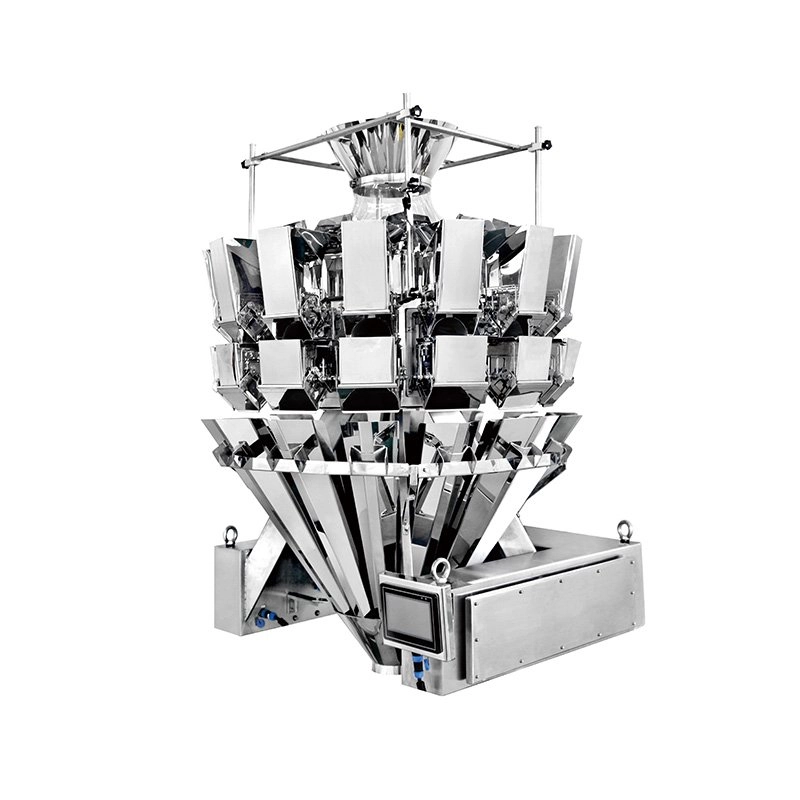
Automatic Multihead Weigher for Stick and Bar-Shaped Materials
Kenwei’s Automatic Multihead Weigher for Stick and Bar-Shaped Materials ensures precise, fast, and efficient weighing. This advanced automatic multihead weighing machine is ideal for accurate portioning of various stick and bar-shaped products, enhancing productivity and reducing waste.
Get in touch with us
If you have any comments or good suggestions, please leave us a message, later our professional staff will contact you as soon as possible.
Kenwei
Kenwei
Kenwei multi weigh
Kenwei
Kenwei
Kenwei