






Top 10 Multihead Weigher Models for Pickles & Wet Products
Comprehensive guide to the top 10 multihead weigher models optimized for pickles and other wet products. Covers model comparisons, selection criteria, wet-product feeding technologies such as vertical single screw systems, hygienic design, installation tips, calibration and maintenance to ensure reliable portion control and compliance with food safety standards.
- Why Multihead Weighers Matter for Pickles & Wet Products
- Understanding the challenges of wet, sticky products
- Key performance metrics for pickles weighers
- Regulatory and hygienic considerations
- Top 10 Multihead Weigher Models for Pickles & Wet Products
- Overview of selection methodology
- Featured models: brief list
- In-depth look: 14 Heads Vertical Single Screw Feeding Pickles Weigher backups
- Choosing the Right Weigher: Selection Criteria & Integration Tips
- Match feeder type to product behavior
- Integration with upstream/downstream equipment
- Electrical, software and control considerations
- Maintenance, Sanitation, and Compliance
- Daily and scheduled maintenance
- Hygienic design and materials
- Calibration and verification
- Operational Best Practices and Troubleshooting
- Reducing giveaway and improving yield
- Common problems and fixes
- Training and staffing
- FAQ — Frequently Asked Questions
- Q: Can a standard multihead weigher handle pickles and other wet items?
- Q: How often should a wet-product weigher be cleaned?
- Q: Are there standards I should follow for equipment selection?
- Q: How do I minimize product damage when weighing pickles?
- Q: What integration options improve traceability?

Multihead weighers for pickles and wet products require specialized feeding and hygienic design to maintain weighing accuracy, reduce product damage, and support high-speed packaging lines across regions. This guide focuses on equipment optimized for high-moisture, sticky, and irregular-shaped items—detailing vertical single screw feeding, combination-weighing algorithms, washdown-capable frames, and best practices to improve yield and regulatory compliance for food processors worldwide.
Why Multihead Weighers Matter for Pickles & Wet Products
Understanding the challenges of wet, sticky products
Pickles and other wet products introduce factors that standard dry-product multihead weighers don’t always handle well: adhesion to feed chutes and buckets, irregular shapes, varying moisture content, and brine or oil carryover. These issues affect distribution in feed buckets, cause inconsistency in portion weights, and increase downtime for cleaning. Addressing them requires machines with specialized feeders (e.g., vertical single screw), optimized bucket geometry, and enhanced washdown ratings.
Key performance metrics for pickles weighers
When evaluating a multihead weigher for wet products, focus on: weighing accuracy (g or % of target), throughput (packs/min), rejection rates, product integrity (minimal damage), and cleanability (tool-less disassembly, CIP-compatible surfaces). Equipment that supports fast combination algorithms and has a high-speed PLC / touch HMI will reduce giveaway and improve yield.
Regulatory and hygienic considerations
Food processors must meet hygiene and safety standards like ISO 22000 (ISO 22000) and follow hygienic equipment guidance from organizations such as the European Hygienic Engineering & Design Group (EHEDG). For operations exporting to or operating in the U.S., be aware of FSMA (FDA) expectations about preventive controls and equipment design. These standards influence material selection (316L stainless), surface finish, and access for cleaning.
Top 10 Multihead Weigher Models for Pickles & Wet Products
Overview of selection methodology
Models were chosen based on real-world performance in wet-product lines, design features for sticky products, customer feedback, and compliance with hygienic design principles. Important attributes include vertical feeding options, screw or vibratory feeders with anti-bridging features, IP69K washdown ratings, and adaptable bucket geometries.
Featured models: brief list
The following table compares the top 10 multihead weighers recommended for pickles and wet products, including the highlighted 14 Heads Vertical Single Screw Feeding Pickles Weigher backups model.
| Model | Heads | Feeding Type | Throughput (packs/min) | Key Wet-Product Feature |
|---|---|---|---|---|
| 14 Heads Vertical Single Screw Feeding Pickles Weigher backups | 14 | Vertical single screw | 30-60 | Optimized for sticky pickles; consistent metering; easy-clean screw |
| Compact 10H Washdown Multihead | 10 | Vibratory + plough | 20-45 | IP69K; smooth bucket surfaces |
| 18H High-Speed Combination Weigher | 18 | Bucket conveyor | 80-120 | High-speed sum-of-weights algorithm |
| 12H Gentle-Flow Pickle Weigher | 12 | Soft paddles | 25-50 | Low-impact buckets for delicate skins |
| 16H Dual-Feed Wet Product Weigher | 16 | Dual vertical screws | 40-80 | Redundant feeding for sticky mix |
| 14H Multi-Ingredient Pickle Line Weigher | 14 | Screw + vibratory | 30-70 | Good for pickle + brine dosing |
| 20H High-Accuracy Wet Product Weigher | 20 | Advanced bucket geometry | 70-130 | Very low giveaway; high accuracy |
| 8H Small-Batch Pickle Portioner | 8 | Screw feed | 10-25 | Ideal for jars and small containers |
| 14H CIP-Ready Hygienic Weigher | 14 | Open trough + gentle feed | 25-60 | Designed for clean-in-place cycles |
| Multihead Weigher with Loss-in-Weight Integration | Variable | Loss-in-weight feeder to multihead | Varies | Best for liquid/brine dosing combined with solids |
In-depth look: 14 Heads Vertical Single Screw Feeding Pickles Weigher backups
Product name: 14 Heads Vertical Single Screw Feeding Pickles Weigher backups
Product description:
This type of weigher is designed to handle the unique characteristics of pickles, ensuring precise measurements for packaging and distribution. It uses a vertical single screw mechanism to feed the pickles into the weighing system, allowing for efficient and consistent weighing. This technology is particularly useful in food processing and packaging facilities where precise portioning is essential for quality control and customer satisfaction. This specialized equipment is perfect for accurately measuring and dispensing pickles in a production line or packaging facility. The vertical design allows for efficient and precise filling of containers, while the single screw feeding mechanism ensures consistent and reliable weighing.
Why it stands out: The vertical single screw reduces bridging and product stacking, making it easier to meter individual pickles or small batches into the weigh buckets with minimal damage. The 14-head layout balances throughput and combination flexibility, delivering accurate portions with reduced giveaway. The design is practical for jar filling lines where the gentle handling and controlled feed rate preserve product appearance.
Choosing the Right Weigher: Selection Criteria & Integration Tips
Match feeder type to product behavior
For pickles and wet items, choose between vertical screw feeders, vibratory feeders with anti-stick coatings, or a hybrid approach. Vertical single screw feeding, as used in the 14-head model above, excels at controlling flow of sticky, irregular items. Vibratory feeders can be tuned to reduce attrition but may require anti-adhesion treatments on surfaces.
Integration with upstream/downstream equipment
Plan conveyor widths, container indexing, and nozzle or filler synchronization. Use sensors and PLC integration to prevent collisions and to allow the weigher to communicate pack counts, weight statistics, and reject events. Ensure your conveyor and filler heights are aligned to reduce free-fall distance for pickles and limit splashing of brine.
Electrical, software and control considerations
Modern multihead weighers include touch HMIs, recipe management, and connectivity (Ethernet/IP, OPC-UA) for Industry 4.0 data capture. Look for models supporting remote diagnostics and data logging for batch traceability and HACCP records. Proper tuning and regular software updates maintain combination-weighing performance and speed.
Maintenance, Sanitation, and Compliance
Daily and scheduled maintenance
Establish cleaning routines that minimize downtime but fully remove brine and residues. Use the manufacturer’s recommended cleaning agents and sequences. Quick-disconnect buckets, tool-less access panels, and CIP-capable surfaces dramatically shorten sanitation cycles. Track component wear (load cells, screws, seals) and keep spares on-site to avoid prolonged line stoppages.
Hygienic design and materials
Use 316L stainless steel contact parts, mirror-finish surfaces where needed, and rounded corners to avoid residue traps. Follow guidance from EHEDG (EHEDG) and ISO 22000 (ISO 22000) when selecting equipment to meet international food-safety expectations. Machines rated IP66/IP69K are ideal for high-pressure washdown environments.
Calibration and verification
Regular calibration of load cells and validation of combination algorithms are essential to maintain legal-for-trade and internal quality targets. Document calibration steps and keep logs for auditors. For critical lines, perform routine check-weighing with certified test weights and follow local regulations and best practices as described by standards bodies and regulatory agencies such as the FDA (FDA).
Operational Best Practices and Troubleshooting
Reducing giveaway and improving yield
Tuning the combination algorithm and improving feeder uniformity reduces overfilling. For wet products, ensure consistent product flow into buckets (vertical screw helps) and use weight-averaging over multiple cycles to stabilize results. Software features like dynamic target adjustment can reduce giveaway while maintaining acceptance rates.
Common problems and fixes
Typical issues include bridging in the hopper (fix with agitation or screw-style feed), inconsistent bucket fill (adjust feeder amplitude/phase), and excessive cleaning time (switch to CIP-ready components). Track error codes and use remote diagnostics to speed resolution.
Training and staffing
Operators need training on feeding adjustments, basic troubleshooting, and sanitation protocols. Provide quick-reference guides for line changeovers between product SKUs and ensure supervisors can interpret performance dashboards and audit logs.
FAQ — Frequently Asked Questions
Q: Can a standard multihead weigher handle pickles and other wet items?
A: Standard models may struggle with adhesion and bridging. Choose models with vertical single screw feeders, anti-stick surfaces, and IP69K washdown design for reliable performance with pickles and wet products.
Q: How often should a wet-product weigher be cleaned?
A: Cleaning frequency depends on throughput and product. Many lines require daily sanitation; CIP-capable machines can reduce manual cleaning time. Follow HACCP plans and manufacturer guidelines.
Q: Are there standards I should follow for equipment selection?
A: Yes. Refer to ISO 22000 (ISO), EHEDG design recommendations (EHEDG), and FDA guidance where applicable. These resources guide hygienic design and food-safety management.
Q: How do I minimize product damage when weighing pickles?
A: Use gentle bucket geometries, reduce drop heights, tune feeder speeds, and consider soft paddles or low-impact buckets specifically designed for delicate skins.
Q: What integration options improve traceability?
A: Choose weighers with Ethernet/IP, OPC-UA or industrial fieldbus support and recipe management. Data logging for weights, rejects, and calibration events helps with traceability and audits.
If you want to evaluate the 14 Heads Vertical Single Screw Feeding Pickles Weigher backups or other models on this list, contact our sales team for a line audit, trial, or on-site demonstration. View the product or request a quote: Contact us / View product.
References: Weighing scale - Wikipedia, ISO 22000, EHEDG, U.S. FDA.
Tags
vffs machine manufacturer
vffs machine manufacturer
multi head combination weigher
multi head combination weigher
food metal detector manufacturer
food metal detector manufacturer
automatic packaging machine
automatic packaging machine
industrial multihead weighers
industrial multihead weighers
multihead weigher machine
multihead weigher machine
Recommended for you

Detecting Small Ferrous and Non-Ferrous Particles with G5020
Sustainable Multihead Weigher Design Trends 2026
Linear Weigher vs Multihead Weigher: Key Differences and Buying Guide
The latest trends for combination mulithead weigher
Prdoucts Categories
Question you may concern
About Price and payment
How do I make a payment for Kenwei machines?
We accept several payment methods: T/T, Letter of Credit (L/C)
About Cooperation Process
How can I start a cooperation with Kenwei?
To begin a cooperation, simply contact our sales or customer service team via email or phone. You can also fill out the inquiry form on our website. Once we receive your request, a representative will get in touch with you to discuss your specific needs and provide you with a tailored solution.
How does Kenwei ensure the quality of its machines?
Kenwei has a stringent quality control system in place. Each machine is rigorously tested for precision, speed, and reliability before it is shipped.
About Product choice
Are Kenwei’s products suitable for small-scale or large-scale operations?
Yes! We offer machines that are scalable to meet the needs of both small and large-scale operations.
About products customization
Can I customize Kenwei machines to suit my specific needs?
Yes, Kenwei offers a wide range of customization options to ensure that our machines meet your production requirements.
You may also like
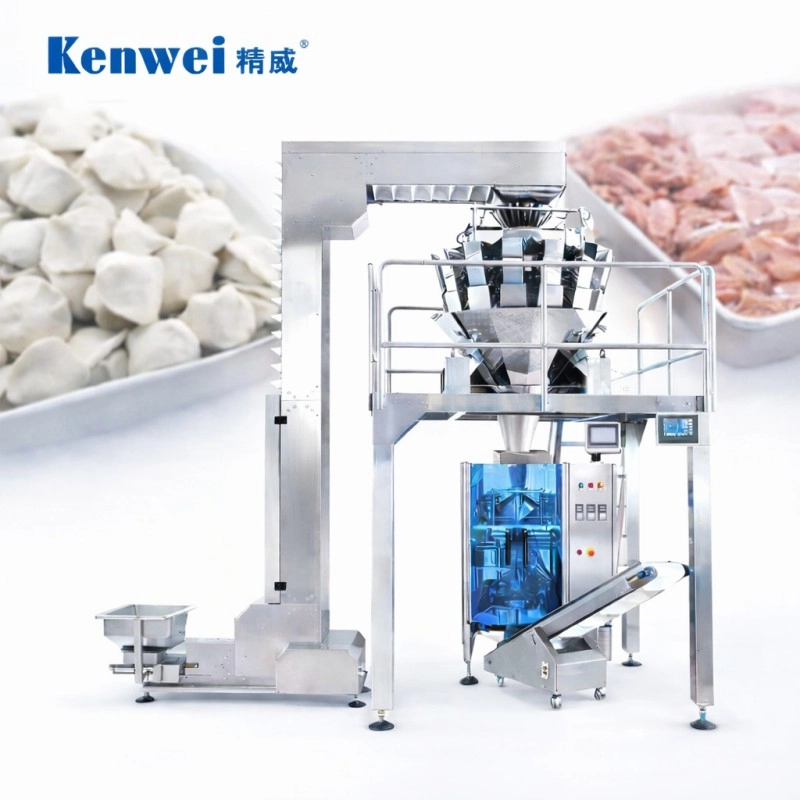
Vertical Frozen Food Packaging Machine for IQF & Frozen Products JW-B1
The Kenwei JW-B1 Vertical Frozen Food Packaging Machine is designed for IQF and frozen products, ensuring efficient, airtight packing. This vertical packing machine boosts productivity with precision sealing, ideal for frozen food packaging needs in the food industry.
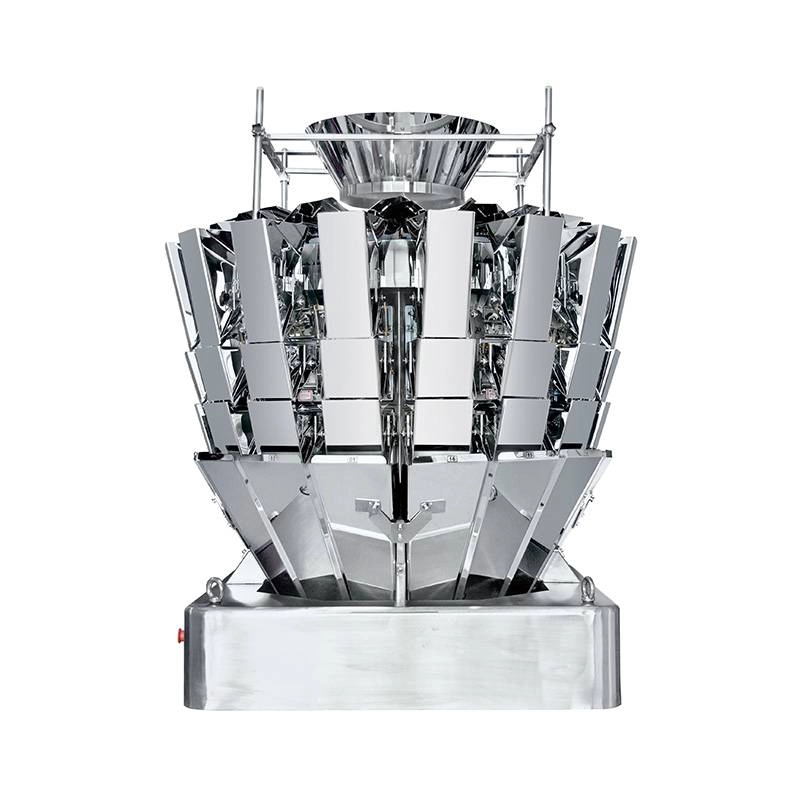
16 Head Three Layer Multihead Weigher for Granular and Irregular Materials
Kenwei’s 16 Head Three Layer Multihead Weigher ensures precise weighing of granular and irregular materials. This multihead weighing machine offers efficient, high-speed performance, ideal for various packaging needs. Trust our 16 head weigher for accuracy and reliability in your production line.
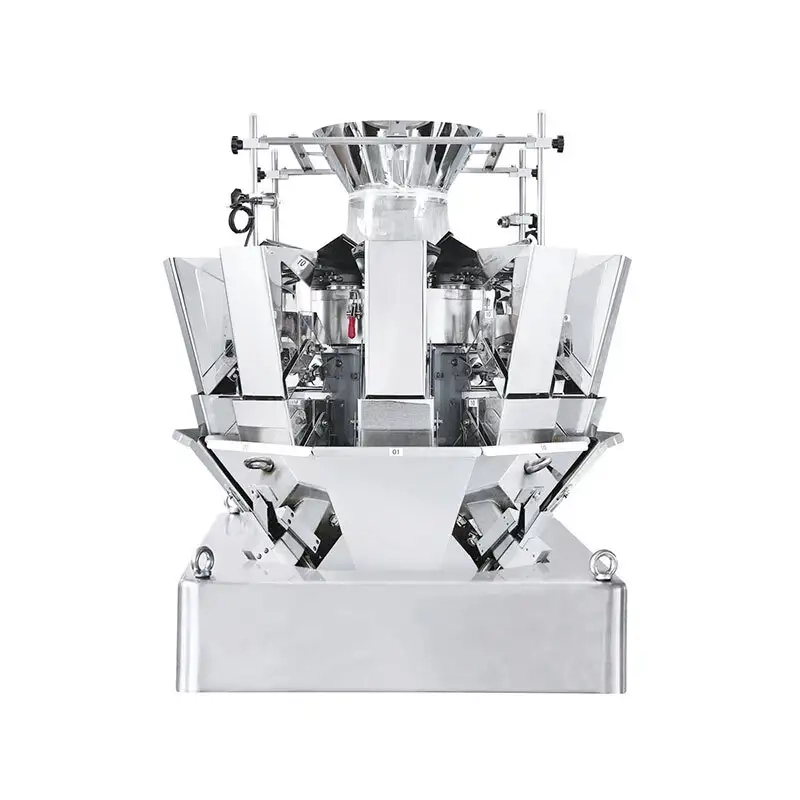
10-Head Standard No-Spring Multihead Weigher 1.6L for Precise Weighing
The standard no-spring combination scale features a patented spring-free hopper design, making it ideal for weighing a variety of products such as melon seeds, peanuts, nuts, almonds, grapes, candies, pistachios, potato chips, shrimp chips, and more. The double-support feeding tray is easily adjustable, while the feeding hopper is designed for easy disassembly, ensuring convenience and cleanliness. With a maximum weighing speed of up to 120 bags per minute, the 14-head standard no-spring combination scale is an economical, versatile, and cost-effective solution.
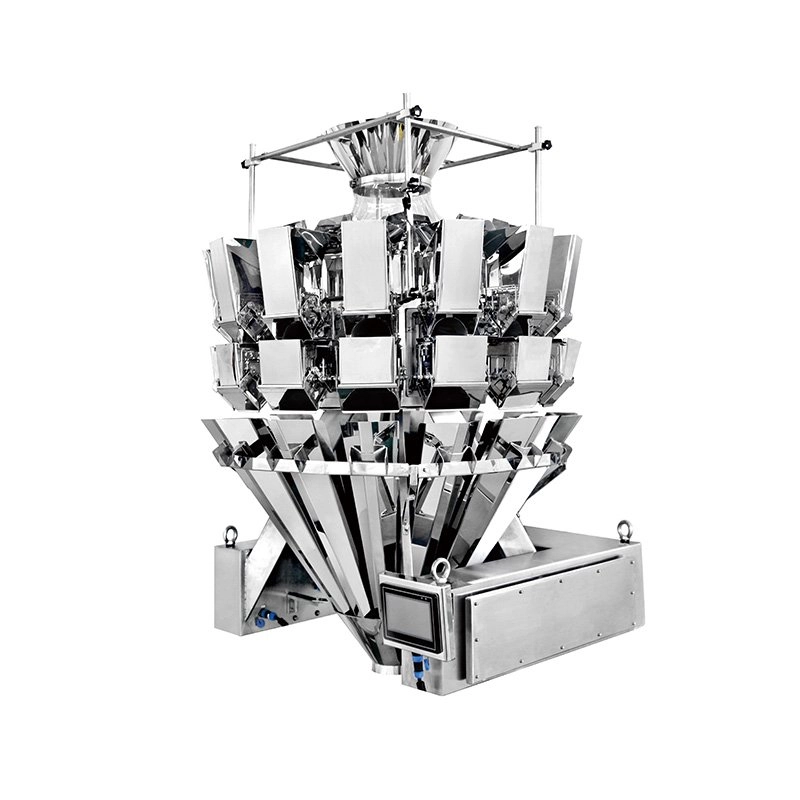
Automatic Multihead Weigher for Stick and Bar-Shaped Materials
Kenwei’s Automatic Multihead Weigher for Stick and Bar-Shaped Materials ensures precise, fast, and efficient weighing. This advanced automatic multihead weighing machine is ideal for accurate portioning of various stick and bar-shaped products, enhancing productivity and reducing waste.
Get in touch with us
If you have any comments or good suggestions, please leave us a message, later our professional staff will contact you as soon as possible.
Kenwei
Kenwei
Kenwei multi weigh
Kenwei
Kenwei
Kenwei