






Top 10 Multihead Weigher Manufacturers for Food Packing Buyers
A practical guide for food packers comparing the top multihead weigher manufacturers, selection criteria, and a close look at a 14-head vertical single screw feeding pickles weigher solution to help buyers choose equipment that balances speed, accuracy, hygiene and cost.
- How to evaluate multihead weighers for food packing operations
- Key performance indicators: accuracy, speed and yield
- Hygiene, sanitation and regulatory compliance
- Integration with packaging lines and Industry 4.0
- Top 10 multihead weigher manufacturers every food packing buyer should know
- How manufacturers differ: software, feeders and service
- When to choose a niche supplier vs. a global OEM
- Case study: 14 Heads Vertical Single Screw Feeding Pickles Weigher backups
- Why pickles need a specialized multihead weigher
- Product overview — 14 Heads Vertical Single Screw Feeding Pickles Weigher backups
- Operational benefits and key specifications to request
- Common retrofit and backup strategies for production continuity
- Buying checklist and procurement tips
- Questions to ask vendors before purchase
- Total cost of ownership and lifecycle planning
- Testing and FAT (Factory Acceptance Test)
- Installation, validation and maintenance best practices
- Installation and line integration
- Calibration and verification
- Preventive maintenance and remote support
- Frequently Asked Questions (FAQ)
- Q: How is a multihead weigher different from a checkweigher or auger filler?
- Q: Can a vertical single screw feeder handle different pickle sizes and varieties?
- Q: What uptime can I expect from a 14-head multihead weigher?
- Q: Which certifications should I ask suppliers for?
- Q: How do I minimize giveaway while maintaining speed?

In today’s fast-moving food packaging industry, choosing the right multihead weigher is critical for maintaining portion accuracy, throughput and food safety. This guide highlights top multihead weigher manufacturers, explains the key technical and commercial considerations for food packing buyers, and shows how specialized solutions—such as the 14 Heads Vertical Single Screw Feeding Pickles Weigher backups—resolve real-world challenges in pickle portioning and similar wet, irregular products. The content draws on industry best practices and standards to help procurement teams make evidence-based decisions.
How to evaluate multihead weighers for food packing operations
Key performance indicators: accuracy, speed and yield
Buyers should prioritize weighing accuracy (often expressed as mean error and standard deviation), line throughput (pieces or packs per minute), and yield (minimizing giveaway). A multihead weigher’s combination algorithm and the number of heads directly influence how closely target weights are met and how quickly combinations are calculated. For many food packers, improving yield by 0.2–1.0% translates into substantial annual savings, especially on high-volume SKUs.
Hygiene, sanitation and regulatory compliance
Food-grade construction, cleanability and material traceability are essential. Look for stainless steel AISI 304 or AISI 316 contact parts, IP-rated electrical cabinets, and hygienic designs that reduce accumulation points. Conformity to food safety management systems such as ISO 22000 is a strong indicator of supplier process controls. Additionally, check local regulatory expectations; for example, the U.S. Food and Drug Administration (FDA) provides guidance on food contact materials and equipment hygiene (FDA Food).
Integration with packaging lines and Industry 4.0
Modern multihead weighers should integrate easily with upstream feeders (vibratory or screw feeders) and downstream packing equipment (flow wrappers, vertical form fill seal machines, cup fillers). Connectivity features—Ethernet/IP, OPC-UA, or proprietary Industry 4.0 protocols—enable centralized recipe management, remote diagnostics and predictive maintenance, helping reduce downtime and optimize OEE (overall equipment effectiveness).
Top 10 multihead weigher manufacturers every food packing buyer should know
Below is a concise list of widely recognized manufacturers that supply multihead weighers and related portioning systems suitable for food packers. This list focuses on companies with demonstrated experience in food-grade equipment, global service networks, and solutions for a range of products (from free-flowing snacks to fragile and wet foods such as pickles).
| Rank | Manufacturer | Country / HQ | Specialty | Typical Certifications / Notes |
|---|---|---|---|---|
| 1 | Ishida | Japan | Industry-leading multihead weighers for snacks, frozen, and wet products | Global service; strong R&D in weighing algorithms |
| 2 | Yamato Scale | Japan | Combination weighers and multihead systems optimized for delicate products | Known for precision and compact designs |
| 3 | Mettler-Toledo (Safeline / Garvens) | Switzerland / Global | Precision weighing with strong inspection and data management integration | ISO-certified manufacturing and global support |
| 4 | Syntegon (formerly Bosch Packaging) | Germany | Turnkey packaging lines with integrated weighing and filling | Extensive machine-family integration expertise |
| 5 | Marel | Iceland | Specialist in protein and prepared foods with portioning/weighing solutions | Strong in meat/fish processing applications |
| 6 | GEA | Germany | Large-scale food processing machinery including dosing and weighing | Focus on hygienic and high-throughput systems |
| 7 | MULTIPOND | Germany | Combination weighers for cereals, grains, and packaged foods | Often used in cereal/snack industries |
| 8 | WeighPack Systems | USA | Customer-focused multihead and feed systems for mid-size packers | Flexible configurations and retrofit options |
| 9 | Bizerba | Germany | Retail and industrial weighing solutions with packaging integration | Strong service in retail and in-house analytics |
| 10 | Key Technology | USA | Inspection, conveying and portioning systems; specialized feeders | Often combined with vision sorting and weighing |
Note: This list is intended as a buyer-oriented short-list. Specific regional vendors and system integrators may be better fits for unique requirements or budget constraints. For background on weighing technology fundamentals, see the Wikipedia page on checkweighers and general weighing principles at weighing scale.
How manufacturers differ: software, feeders and service
Although many vendors offer multihead weighers, differentiation usually rests on three areas: proprietary combination algorithms (which affect speed and accuracy), feeder types (vibratory, horizontal/vertical screw, or belt feeders), and after-sales service (spare parts, local technicians, remote diagnostics). Buyers should ask vendors for data on mean accuracy, R&2 value, and maintenance intervals.
When to choose a niche supplier vs. a global OEM
Global OEMs typically provide stable spare part availability, validated hygienic designs and comprehensive data logging for regulatory audits. Niche suppliers or local integrators can offer lower cost, faster lead times, and bespoke solutions for unusual products or packaging formats. Evaluate total cost of ownership, not just initial capital cost.
Case study: 14 Heads Vertical Single Screw Feeding Pickles Weigher backups
Why pickles need a specialized multihead weigher
Pickles present multiple challenges: variable size and shape, high moisture content, and sometimes brine that can interfere with typical vibratory feeding. An ordinary vibratory feeder can damage or misalign irregular items, reduce accuracy and increase downtime for cleaning. A vertical single screw feeding mechanism is designed to gently and consistently move pickles into the weighing distribution system while reducing product damage and controlling flow.
Product overview — 14 Heads Vertical Single Screw Feeding Pickles Weigher backups
This type of weigher is designed to handle the unique characteristics of pickles, ensuring precise measurements for packaging and distribution. It uses a vertical single screw mechanism to feed the pickles into the weighing system, allowing for efficient and consistent weighing. This technology is particularly useful in food processing and packaging facilities where precise portioning is essential for quality control and customer satisfaction. This specialized equipment is perfect for accurately measuring and dispensing pickles in a production line or packaging facility. The vertical design allows for efficient and precise filling of containers, while the single screw feeding mechanism ensures consistent and reliable weighing.
Operational benefits and key specifications to request
- 14 heads: enables finer combination options for high yield and better accuracy on target weight.
- Vertical single screw feeder: ideal for wet or adhesive products; reduces vibration-based damage.
- Hygienic design: CIP-friendly surfaces, quick-release components and FDA-compliant contact materials where needed.
- Throughput: specify expected packs/min for your container sizes — a 14-head unit often balances speed and accuracy for medium-volume lines.
- Control and connectivity: recipe-driven HMI, Ethernet/OPC-UA support for MES integration and audit trails.
Common retrofit and backup strategies for production continuity
Buyers often order backups or duplicate feeding modules to avoid single points of failure for high-demand SKUs. Standard strategies include: keeping an identical backup weigher on standby, stocking key spare parts (motors, PLC modules, sensors), and setting up swappable feeder modules (so a vertical screw feeder can be swapped with minimal downtime). Consider service contracts with guaranteed response times from the manufacturer or local integrator.
Buying checklist and procurement tips
Questions to ask vendors before purchase
- Can you provide documented performance data (accuracy, throughput) for pickles or similar wet, irregular products?
- What are the materials in product contact areas? Are there options for AISI 316 stainless steel?
- Explain your hygiene features and cleanability. Is the machine CIP-capable or quick-disassembly?
- What connectivity and remote support options are available (Ethernet/IP, OPC-UA, VPN)?
- What spare parts are recommended to keep on-site, and what are typical lead times?
Total cost of ownership and lifecycle planning
Consider capital cost, spare parts, service contracts, consumable parts (seals, screw flights), energy consumption, and expected depreciation. Request an ROI scenario based on yield improvement and reduced giveaway, and model the payback period under conservative assumptions.
Testing and FAT (Factory Acceptance Test)
Insist on a FAT with your product in a vendor’s test lab. A proper FAT involves running your pickles (or representative product) through the feeder, weigh heads and downstream filler at target line speed to validate accuracy and reject rates. Document results and include acceptance criteria in the purchase order.
Installation, validation and maintenance best practices
Installation and line integration
Plan mechanical and electrical interfaces early. Confirm conveyor heights, PLC communication protocols, and footprint for the 14-head weigher and vertical screw feeder. Allow for ergonomic access to cleaning points and spare part storage near the machine.
Calibration and verification
Set up scheduled calibration procedures, including weight checks with certified test masses and sample-based in-line validation. Maintain traceable records to satisfy regulatory audits and ensure consistent yield tracking. Refer to international metrology and quality guidance where applicable, and maintain quality systems consistent with ISO standards.
Preventive maintenance and remote support
Follow the manufacturer’s preventive maintenance schedule for motors, sensors, and bearings. Remote diagnostics via secure VPN can reduce downtime; confirm cybersecurity practices before enabling connectivity. A warranty combined with a service-level agreement (SLA) offering defined response times is strongly recommended for critical SKUs.
Frequently Asked Questions (FAQ)
Q: How is a multihead weigher different from a checkweigher or auger filler?
A: A multihead weigher simultaneously weighs multiple small fractions (heads) and calculates the best combination to hit a target weight with minimal giveaway. A checkweigher verifies final pack weight after filling. An auger filler meters powdered products using a rotating screw; augers are not suitable for irregular solid items like pickles.
Q: Can a vertical single screw feeder handle different pickle sizes and varieties?
A: Yes, vertical screw feeders are suitable for variable-size and wet items because they move product gently and can be designed with adjustable pitch and geometry. However, real-world performance depends on pickle size distribution and brine characteristics; always test in a vendor lab.
Q: What uptime can I expect from a 14-head multihead weigher?
A: With proper preventive maintenance and a solid spare parts plan, high-utilization lines can achieve 95%+ planned uptime. Unplanned downtime risks are reduced by keeping critical spares, having a backup feeder/weigher and an SLA with the manufacturer or local integrator.
Q: Which certifications should I ask suppliers for?
A: Request evidence of ISO 9001 (quality management) and, where relevant, ISO 22000 (food safety). For materials and hygiene, ask for material certificates (e.g., EN/ASTM grades for stainless steel) and compliance statements for food contact components. For regulatory guidance, consult the FDA and regional authorities.
Q: How do I minimize giveaway while maintaining speed?
A: Optimize combination algorithms, increase the number of heads if needed (more heads generally provide better combination granularity), tighten tolerances for acceptable deviation, and run yield-analysis during FAT. Periodic algorithm tuning and good feeder control are essential.
Need a tailored quote or to see the 14 Heads Vertical Single Screw Feeding Pickles Weigher in action? Contact our sales team today or view the product details to schedule a live demo, FAT or line integration consultation. Our experts can provide ROI modeling and local service options to keep your line running at peak performance.
Tags
Packaging Machine Line
Packaging Machine Line
food metal detector
food metal detector
kenwei multihead weigher
kenwei multihead weigher
automatic packaging machine
automatic packaging machine
automatic granule packing machine factory
automatic granule packing machine factory
food and medical packaging machines
food and medical packaging machines
Recommended for you
What is food metal detector ?
How Multihead Weighers Improve Packaging Efficiency 2026
The industrial food metal detector Cost Guide

Calibration Tips for Accurate Metal Detection in Food Lines
Prdoucts Categories
Question you may concern
About After Sales Support
How can I get technical support for my Kenwei machine?
You can contact Kenwei's technical support team via email, phone, or through our website.
About products customization
Can I customize Kenwei machines to suit my specific needs?
Yes, Kenwei offers a wide range of customization options to ensure that our machines meet your production requirements.
About Product choice
What types of products does Kenwei offer?
Kenwei specializes in high-precision and high-speed automated machinery for weighing, packaging, and quality control. Our main products include: multihead weigher, linear weigher, checkweighers,food metal detector,vertical packing machine and packing machine accessories.
What is the average lifespan of Kenwei products?
Kenwei machines are built for durability and longevity. With proper maintenance, our products are designed to last for many years, even under heavy usage. We offer maintenance services and support to help extend the lifespan of your machines.
About Solution suggestions
What industries benefit the most from Kenwei solutions?
Kenwei solutions are ideal for a wide range of industries, including:
1)Food Packaging snacks, grains, and powdered beverages.
2)Pharmaceuticals: Precise weighing of tablets, and capsules.
3)Chemicals: Weighing and packaging granular and powdered chemicals.
4)Agriculture: Packaging seeds, grains, and fertilizers.
You may also like
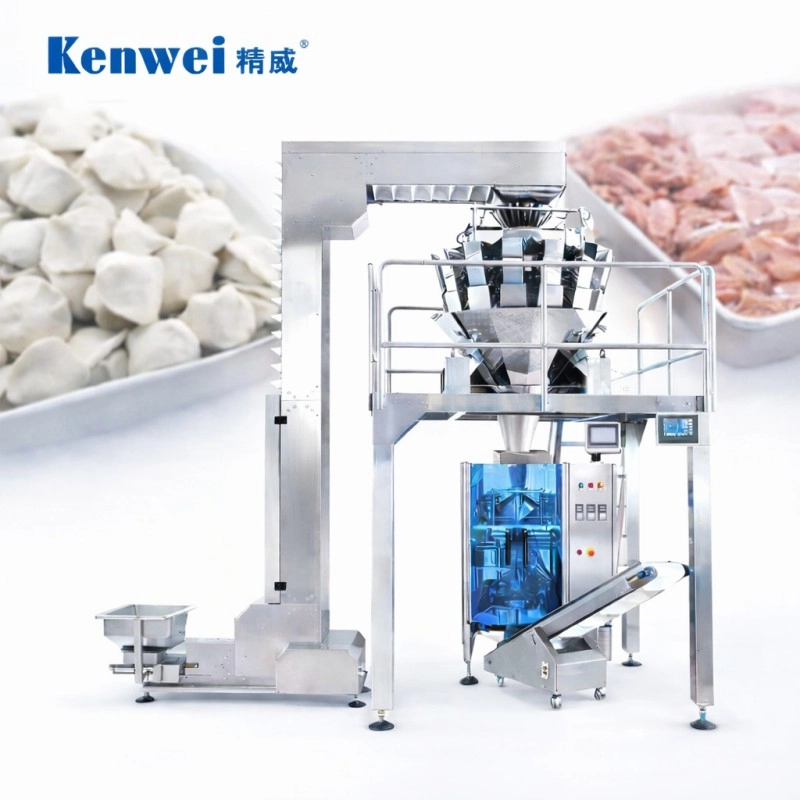
Vertical Frozen Food Packaging Machine for IQF & Frozen Products JW-B1
The Kenwei JW-B1 Vertical Frozen Food Packaging Machine is designed for IQF and frozen products, ensuring efficient, airtight packing. This vertical packing machine boosts productivity with precision sealing, ideal for frozen food packaging needs in the food industry.
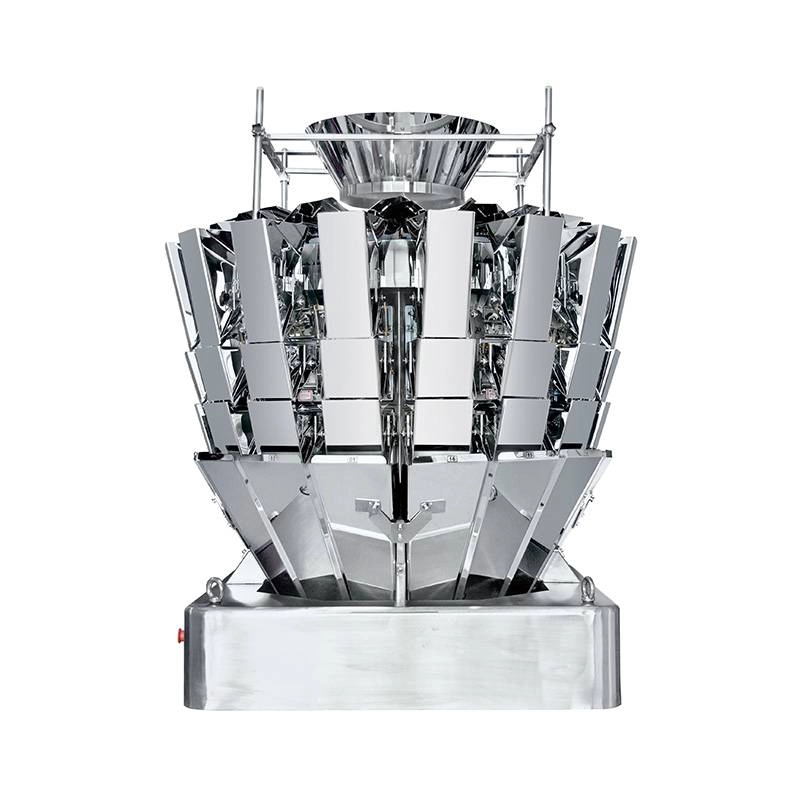
16 Head Three Layer Multihead Weigher for Granular and Irregular Materials
Kenwei’s 16 Head Three Layer Multihead Weigher ensures precise weighing of granular and irregular materials. This multihead weighing machine offers efficient, high-speed performance, ideal for various packaging needs. Trust our 16 head weigher for accuracy and reliability in your production line.
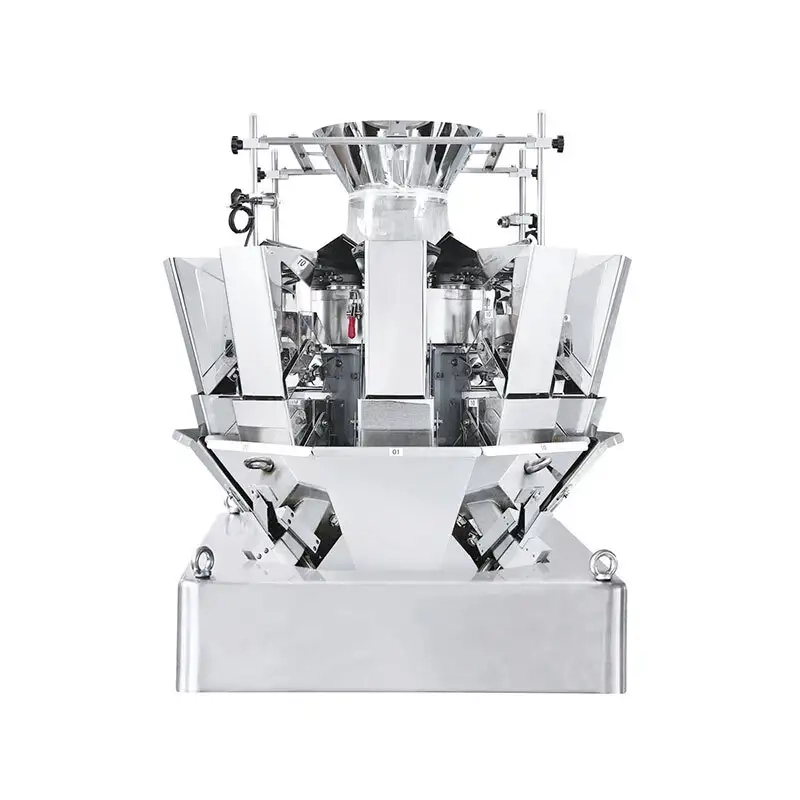
10-Head Standard No-Spring Multihead Weigher 1.6L for Precise Weighing
The standard no-spring combination scale features a patented spring-free hopper design, making it ideal for weighing a variety of products such as melon seeds, peanuts, nuts, almonds, grapes, candies, pistachios, potato chips, shrimp chips, and more. The double-support feeding tray is easily adjustable, while the feeding hopper is designed for easy disassembly, ensuring convenience and cleanliness. With a maximum weighing speed of up to 120 bags per minute, the 14-head standard no-spring combination scale is an economical, versatile, and cost-effective solution.
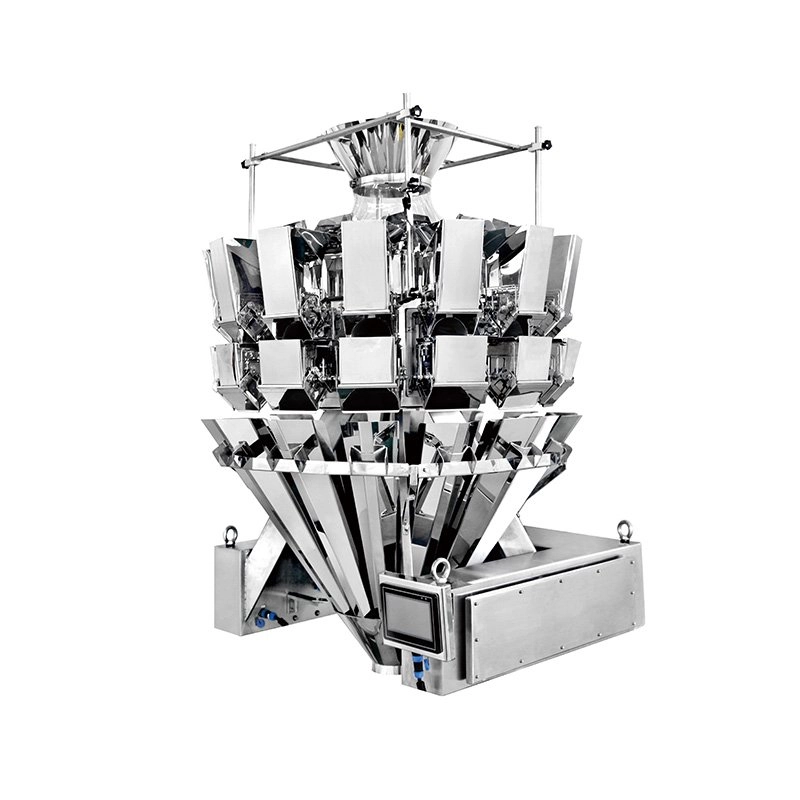
Automatic Multihead Weigher for Stick and Bar-Shaped Materials
Kenwei’s Automatic Multihead Weigher for Stick and Bar-Shaped Materials ensures precise, fast, and efficient weighing. This advanced automatic multihead weighing machine is ideal for accurate portioning of various stick and bar-shaped products, enhancing productivity and reducing waste.
Get in touch with us
If you have any comments or good suggestions, please leave us a message, later our professional staff will contact you as soon as possible.
Kenwei
Kenwei
Kenwei multi weigh
Kenwei
Kenwei
Kenwei