






ROI of Investing in Good Metal Detectors for Food Safety
Investing in good metal detectors like the G5020 delivers measurable ROI through reduced recalls, lower liability, improved yields, and regulatory compliance. This article explains how to evaluate ROI, provides a practical payback example, compares scenarios, outlines key metrics, and highlights why the G5020 Food Metal Detector Manufacturer for Rejecting Defective Products is a smart investment for food processors.
- ROI of Investing in Good Metal Detectors for Food Safety
- Why food manufacturers need good metal detectors
- Introducing the G5020 Food Metal Detector Manufacturer for Rejecting Defective Products
- How good metal detectors generate measurable ROI
- Key metrics to evaluate good metal detectors (what to measure)
- Comparative ROI table: With and without good metal detectors (illustrative)
- Practical payback example (detailed)
- Operational considerations to maximize ROI with good metal detectors
- Regulatory and certification advantages of investing in good metal detectors
- Why the G5020 stands out among good metal detectors
- Checklist: selecting good metal detectors for ROI
- Brand advantages — why choose our G5020 solution
- FAQ — Frequently Asked Questions about good metal detectors and ROI
- Q: What makes a metal detector good in terms of ROI?
- Q: How quickly can I expect payback after installing a detector like the G5020?
- Q: Are multi-frequency detectors worth the extra cost?
- Q: Can a metal detector replace X-ray inspection?
- Q: How does the G5020 help with audit readiness?
- Contact us / View product
- Authoritative references and further reading

ROI of Investing in Good Metal Detectors for Food Safety
Why food manufacturers need good metal detectors
Food contamination by metal fragments is among the most serious safety risks for processors, packers, and retail brands. A single contamination event can trigger product recalls, regulatory action, brand damage, legal liability, and lost shelf space — all of which erode margins far beyond the cost of the contaminated units. Good metal detectors reduce this risk by reliably finding ferrous, non-ferrous, and stainless steel contaminants during production, protecting consumers and your bottom line.
Introducing the G5020 Food Metal Detector Manufacturer for Rejecting Defective Products
The 5020 Multi-Frequency Metal Detector features a specialized conveyor belt that minimizes contamination sources, ensuring smooth operation and high detection sensitivity. Its design allows for easy disassembly and maintenance. This metal detector is ideal for detecting metal contaminants in a wide range of industries, including food, pharmaceuticals, condiments, plastics, electronics, textiles, toys, and more.
How good metal detectors generate measurable ROI
ROI from investing in good metal detectors comes from a combination of direct and indirect benefits. Direct savings include fewer product recalls, lower waste, and reduced rework. Indirect benefits include improved brand protection, stronger relationships with retailers, fewer legal claims, and compliance with food safety regulations which can reduce inspection and audit friction.
- Recall avoidance: Preventing one recall can save hundreds of thousands to millions depending on volume, market, and channel.
- Reduced waste and rework: Accurate detection reduces product losses caused by unnecessary rejects and undetected contamination.
- Operational efficiency: Modern systems such as multi-frequency detectors reduce false rejects and maintain line speed.
- Lower liability and insurance costs: Demonstrable preventive controls can reduce legal exposure and potentially lower insurance High Qualitys.
Key metrics to evaluate good metal detectors (what to measure)
When assessing detectors, focus on metrics that directly affect ROI:
- Sensitivity: Minimum detectable particle sizes (mm) for ferrous, non-ferrous, and stainless steel.
- Throughput compatibility: Can the detector handle your line speed and package types?
- False reject rate: Lower false rejects mean less waste and manual inspection.
- Uptime and ease of maintenance: Quick disassembly and cleanability reduce downtime.
- Traceability and data logging: Records support HACCP and audit requirements, reducing audit time and risk.
Comparative ROI table: With and without good metal detectors (illustrative)
The table below presents a simplified, hypothetical example comparing annual costs and savings for a mid-size food line. Numbers are illustrative to show how ROI is calculated; replace with your facility's actual data for precise results.
| Item | Without Good Metal Detector | With G5020 Good Metal Detector |
|---|---|---|
| Annual production volume (units) | 10,000,000 | 10,000,000 |
| Estimated contamination events/year | 3 | 0.3 (90% reduction) |
| Cost per recall (including logistics, PR, fines) | $250,000 | $25,000 |
| Annual recall-related cost | $750,000 | $7,500 |
| Annual waste & rework savings | $0 | $40,000 |
| Annual reduced audit & insurance benefit | $0 | $10,000 |
| Capital & annual maintenance cost (G5020) | $0 | $60,000 (Depreciation + service) |
| Net annual benefit (approx.) | Baseline | $-7,500 + 40,000 + 10,000 - 60,000 = $-17,500 (first year) then positive from year 2 |
Notes: This simplified example shows heavy savings from avoided recalls. In many real scenarios, the purchase pays back within 1–3 years once you include prevented loss of business, reduced legal risk, and improved retailer confidence.
Practical payback example (detailed)
Assume a G5020 system purchase price + installation of $40,000 and annual service of $5,000. If one prevented recall saves $250,000 and the detector prevents 1 recall per year, payback is immediate. If the detector reduces recall risk by 50% and the expected annual recall cost is $100,000, then the first-year savings ($50,000) exceed costs, and cumulative ROI becomes positive within 12–24 months in most mid-size operations.
Operational considerations to maximize ROI with good metal detectors
Buying a high-quality detector is only the first step. To maximize ROI:
- Place detectors at critical control points aligned with your HACCP plan.
- Schedule regular calibration and preventive maintenance to preserve sensitivity.
- Train operators on test pieces, setup, and quick-clean procedures to minimize downtime.
- Use multi-frequency technology like the G5020 to reduce packaging effect and false rejects across product types.
- Integrate detectors with production data systems for traceability during audits.
Regulatory and certification advantages of investing in good metal detectors
Good metal detectors support compliance with key food safety frameworks. Demonstrable preventive controls are required under programs such as the U.S. Food Safety Modernization Act (FSMA) and are central to HACCP, ISO 22000, and BRCGS standards. Reliable detection and recorded test logs simplify audits and can reduce the scope and frequency of regulatory scrutiny.
Why the G5020 stands out among good metal detectors
The G5020 Food Metal Detector Manufacturer for Rejecting Defective Products combines practical features that improve detection performance and operational uptime:
- Multi-frequency detection improves sensitivity across metal types and complex packaging, reducing false rejects.
- Specialized conveyor belt minimizes contamination sources and supports hygienic design.
- Easy disassembly reduces downtime for cleaning and maintenance, increasing line availability.
- Compact footprint and versatile integration make it suitable for many product lines and industries.
These attributes translate directly into ROI: fewer recalls, lower waste, higher throughput, and reduced labor for maintenance and inspections.
Checklist: selecting good metal detectors for ROI
Use this quick checklist when comparing systems:
- Does the detector have multi-frequency capability?
- What are documented detection limits for the metals relevant to your products?
- How easily can the unit be cleaned and maintained during production runs?
- Does it provide event logs and data export for audits?
- Are spare parts, local service, and training included or available?
Brand advantages — why choose our G5020 solution
Our G5020 metal detectors are engineered for food-safety-first environments. Key brand advantages include:
- Industry-focused design: hygienic conveyor materials and minimized contamination points.
- Proven multi-frequency technology tuned for packaged and unpackaged foods.
- Service network and spare parts availability to reduce downtime.
- Customization and support for integration with factory automation and traceability systems.
- Comprehensive documentation to support HACCP, FSMA, ISO 22000, and retailer audits.
FAQ — Frequently Asked Questions about good metal detectors and ROI
Q: What makes a metal detector good in terms of ROI?
A: A good metal detector balances sensitivity, low false reject rates, hygienic design, reliability, and data logging. These attributes reduce contamination risk, waste, and audit burden — all key drivers of ROI.
Q: How quickly can I expect payback after installing a detector like the G5020?
A: Payback depends on your product risk and prior contamination costs. Many mid-size processors see payback within 1–3 years when factoring in avoided recall costs, waste reduction, and operational benefits.
Q: Are multi-frequency detectors worth the extra cost?
A: Yes. Multi-frequency systems handle packaging and product effects better than single-frequency machines, reducing false rejects and improving sensitivity — which preserves product yield and saves labor and disposal costs.
Q: Can a metal detector replace X-ray inspection?
A: They are complementary. Metal detectors excel at detecting small metal fragments and are cost-effective for many applications. X-ray systems detect denser foreign bodies (stones, glass) and inspect fill levels and product integrity. Choose based on your risk profile and budget; some lines benefit from both technologies.
Q: How does the G5020 help with audit readiness?
A: The G5020 offers stable sensitivity, straightforward validation procedures, and data logging which supports HACCP and regulatory audits, reducing preparation time and audit friction.
Contact us / View product
As part of your ROI evaluation, ensure that the G5020 metal detector complies with all relevant food safety standards. Compliance guides are essential to verify that the equipment meets local and international regulations, ensuring safe food handling.If you want to evaluate ROI for your specific lines or schedule a demo, contact our product specialists to get a tailored cost-benefit analysis and on-site demonstration of the G5020 Food Metal Detector Manufacturer for Rejecting Defective Products. Visit our product page or contact our sales team to arrange a trial and review technical specifications.
Authoritative references and further reading
For regulatory context, validation guidance, and industry best practices, consult the following authoritative sources:
- U.S. Food and Drug Administration (FDA) — Food Safety Modernization Act (FSMA): https://www.fda.gov/food/food-safety-modernization-act-fsma
- U.S. Department of Agriculture (USDA) Food Safety: https://www.usda.gov/topics/food-and-nutrition/food-safety
- Codex Alimentarius — General principles of food hygiene: http://www.fao.org/fao-who-codexalimentarius/codex-texts/guidelines/en/
- International Organization for Standardization (ISO) 22000 Food safety management: https://www.iso.org/iso-22000-food-safety-management.
- BRCGS Global Standard for Food Safety: https://www.brcgs.com/our-standards/food-safety/
- Wikipedia — Metal detector (for general technology background): https://en.wikipedia.org/wiki/Metal_detector
By combining a robust machine like the G5020 with an effective preventive control plan, food manufacturers can significantly lower contamination risk, reduce costs, and strengthen brand trust — delivering measurable ROI and long-term resilience.
Tags
metal detector for food manufacturing
metal detector for food manufacturing
wholesale multihead weigher packing machine
wholesale multihead weigher packing machine
noodle packaging machine
noodle packaging machine
multihead weigher supplier
multihead weigher supplier
Linear Weighing Machine
Linear Weighing Machine
commercial food metal detectors
commercial food metal detectors
Recommended for you
The B2B Buyer’s Guide to industrial checkweigher

Routine checks to ensure aluminum foil detection accuracy
How to Integrate a Food Metal Detector with Multihead Weighers
Top combination mulithead weigher Manufacturers and Suppliers in China
Prdoucts Categories
Question you may concern
About Price and payment
How is the price of Kenwei machines determined?
The price of Kenwei machines depends on several factors, including the type of machine, customization requirements, production volume, and any additional features or integrations. We provide tailored quotes based on your specific needs and requirements.
About Solution suggestions
Can Kenwei solutions be adapted for different product packaging types?
Yes, Kenwei solutions can handle a variety of packaging types, including bags, boxes, pouches, and bottles. We can customize machines to suit your packaging format, ensuring compatibility with your packaging equipment.
About After Sales Support
How about the after-sales service?
Warranty :2 years
About Product choice
What types of products does Kenwei offer?
Kenwei specializes in high-precision and high-speed automated machinery for weighing, packaging, and quality control. Our main products include: multihead weigher, linear weigher, checkweighers,food metal detector,vertical packing machine and packing machine accessories.
About products customization
Can I customize Kenwei machines to suit my specific needs?
Yes, Kenwei offers a wide range of customization options to ensure that our machines meet your production requirements.
You may also like
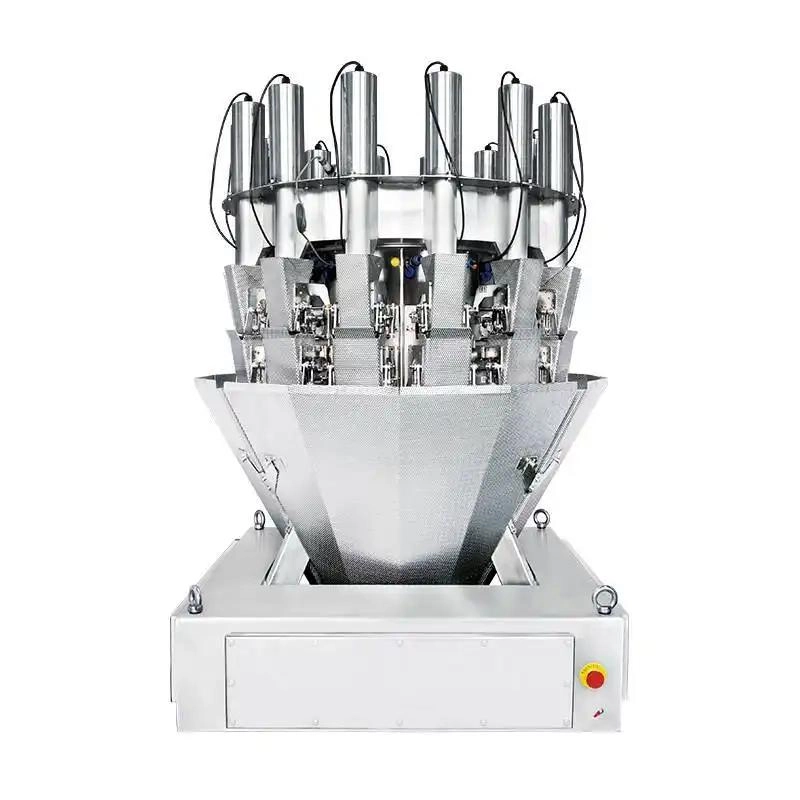
14 Heads Vertical Single Screw Feeding Pickles Weigher backups
This type of weigher is designed to handle the unique characteristics of pickles, ensuring precise measurements for packaging and distribution. It uses a vertical single screw mechanism to feed the pickles into the weighing system, allowing for efficient and consistent weighing. This technology is particularly useful in food processing and packaging facilities where precise portioning is essential for quality control and customer satisfaction. This specialized equipment is perfect for accurately measuring and dispensing pickles in a production line or packaging facility. The vertical design allows for efficient and precise filling of containers, while the single screw feeding mechanism ensures consistent and reliable weighing.
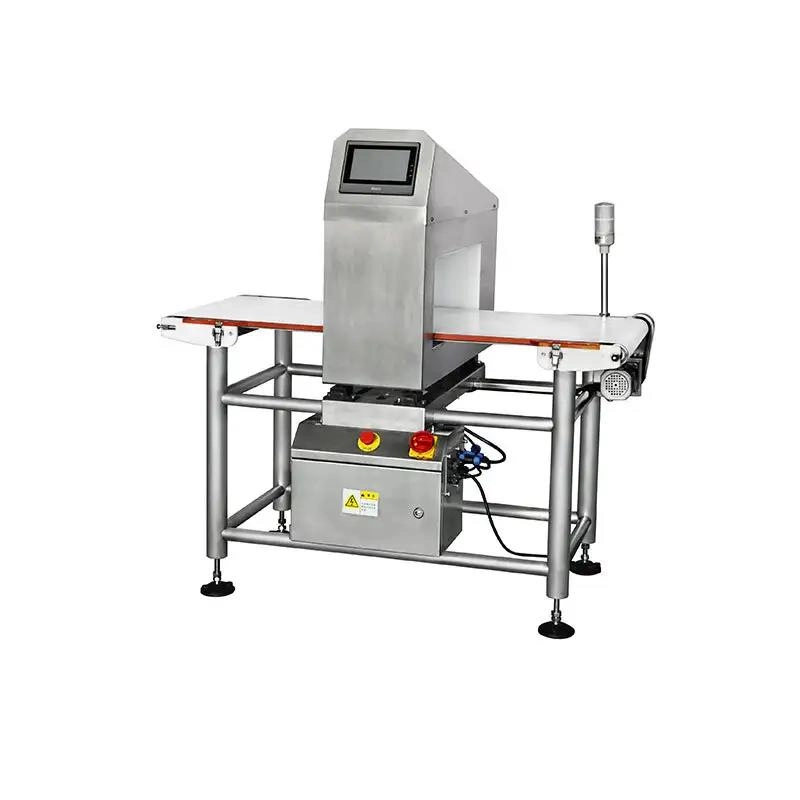
Food Metal Detector Manufacturer For Reject Defective Products G5020
The G5020 multi-frequency metal detector features a specialized conveyor belt designed to reduce contamination risks, ensure smooth operation, and maintain high detection sensitivity. It is easy to disassemble for convenient maintenance. Ideal for detecting metal contaminants in food, pharmaceuticals, spices, plastics, electronics, textiles, toys, handicrafts, and more.
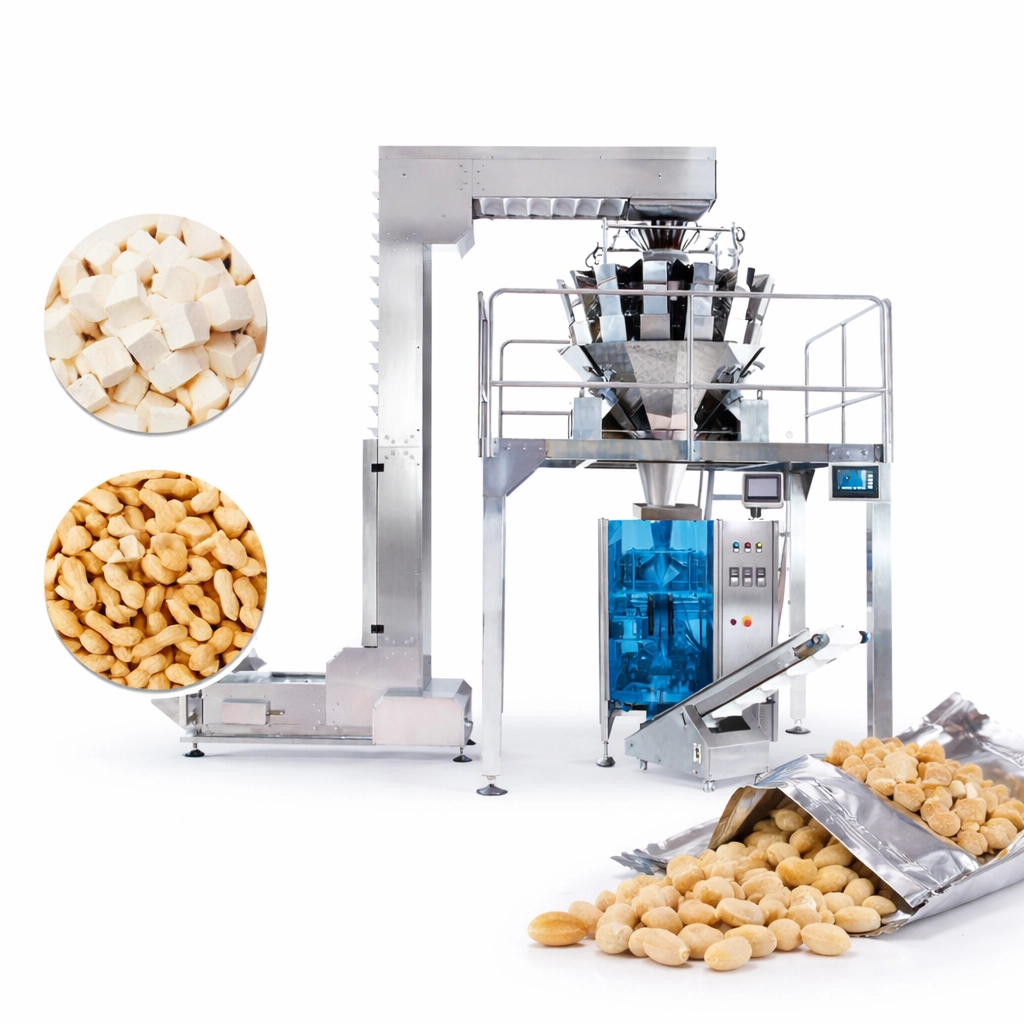
High-Precision Weighing & Packaging for Granular Products
The Granular Food Packing Machine is a fully automated solution designed for accurate weighing, filling, and packaging of various granular food products. Integrated with a multihead weigher and advanced packaging system, it ensures high speed, precision, and hygiene standards for modern food production.
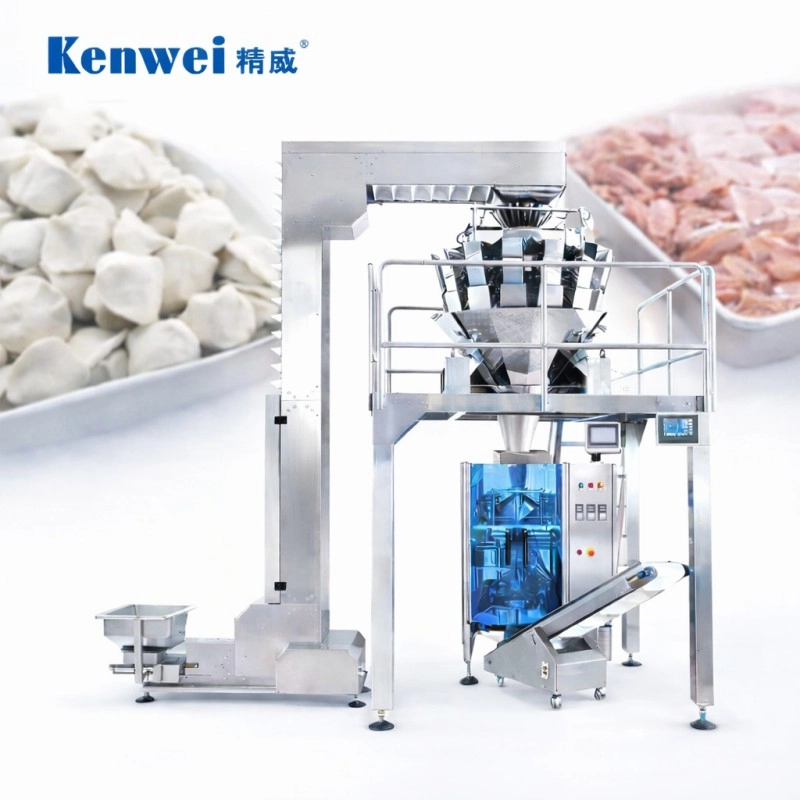
Vertical Frozen Food Packaging Machine for IQF & Frozen Products JW-B1
The Kenwei JW-B1 Vertical Frozen Food Packaging Machine is designed for IQF and frozen products, ensuring efficient, airtight packing. This vertical packing machine boosts productivity with precision sealing, ideal for frozen food packaging needs in the food industry.
Get in touch with us
If you have any comments or good suggestions, please leave us a message, later our professional staff will contact you as soon as possible.
Kenwei
Kenwei
Kenwei multi weigh
Kenwei
Kenwei
Kenwei