






Compliance Guide: Good Metal Detectors and Food Standards
This comprehensive compliance guide explains why good metal detectors are essential to food safety programs, how regulatory standards apply, selection and validation best practices, and how the G5020 Food Metal Detector Manufacturer for Rejecting Defective Products meets industry needs. Includes practical installation, maintenance, testing guidance, comparison tables, FAQs and authoritative references.
- Compliance Guide: Good Metal Detectors and Food Standards
- Why good metal detectors are a foundation of food safety
- Regulatory landscape: What food processors must know about metal detection
- Key standards and expectations for using good metal detectors
- How to choose good metal detectors for food production
- Key selection criteria to meet compliance and operational goals
- G5020 Food Metal Detector Manufacturer for Rejecting Defective Products
- Product overview and why it's a strong choice among good metal detectors
- Installation and hygienic design: reduce contamination risk
- Best practices for installing good metal detectors on food lines
- Validation, testing and verification of good metal detectors
- How to validate sensitivity and document compliance
- Comparing detector performance: a practical table
- Sensitivity, hygiene and operational factors
- Operational strategies to minimize false rejects and maximize uptime
- Calibration, product setup and training tips
- Integration with multihead weighers and production lines
- Why coordination matters for compliance and yield
- Case examples: real-world advantages of using compliant detectors
- Practical outcomes from implementing good metal detectors
- Brand advantages and why G5020 stands out among good metal detectors
- How the G5020 aligns with compliance, operations and ROI
- Maintenance checklist for long-term compliance
- Daily, weekly and monthly tasks to keep good metal detectors audit-ready
- FAQ — Frequently Asked Questions about good metal detectors and food standards
- Q: How often should metal detectors be tested?
- Q: Can metal detectors find all types of metal?
- Q: What documentation do auditors expect for metal detectors?
- Q: How do I reduce false rejects caused by product effect?
- Q: Are metal detectors or X-ray systems better?
- Contact / View Product
- See the G5020 in your line — talk to us
- Authoritative references and further reading
- Final note
- Good metal detectors are an investment in safety and brand protection

Compliance Guide: Good Metal Detectors and Food Standards
Why good metal detectors are a foundation of food safety
Metal contamination is one of the most common physical hazards in food production. Effective detection and rejection systems protect consumers, reduce costly recalls, and preserve brand reputation. Good metal detectors not only identify ferrous, non-ferrous and stainless-steel contaminants, but must also integrate with quality management systems, meet regulatory expectations, and be maintainable on busy production lines. Once compliance is confirmed, consider integrating the G5020 with multihead weighers. This integration will streamline the process and ensure seamless rejects, improving overall efficiency and minimizing manual intervention in the production line.
Regulatory landscape: What food processors must know about metal detection
Key standards and expectations for using good metal detectors
Food manufacturers are held to national and international safety standards that explicitly or implicitly require control of physical contaminants. These include ISO 22000 (food safety management), Codex Alimentarius guidelines, and region-specific frameworks such as the US Food and Drug Administration (FDA) regulations and the EU food safety rules. Retailer standards (BRCGS, IFS) also list strict requirements for metal detection and verification.
Regulatory authorities expect documented hazard analysis (HACCP), validated controls for critical control points (CCPs), and routine verification. Good metal detectors must therefore be validated, regularly tested, and included in the HACCP plan or equivalent safety system.
How to choose good metal detectors for food production
Key selection criteria to meet compliance and operational goals
Choosing the right equipment involves balancing detection sensitivity, throughput, product effect management, hygiene design, and traceability. When evaluating good metal detectors, consider:
- Detection sensitivity by metal type (ferrous, non-ferrous, stainless) and product effect.
- Conveyor and aperture design to reduce false rejects and contamination sources.
- Cleanability and ability to quickly disassemble for sanitation without tools.
- Integration with reject mechanisms, PLCs, and data logging systems for audit trails.
- Validation documentation and compliance with third-party standards (e.g., BRCGS).
G5020 Food Metal Detector Manufacturer for Rejecting Defective Products
Product overview and why it's a strong choice among good metal detectors
The 5020 Multi-Frequency Metal Detector features a specialized conveyor belt that minimizes contamination sources, ensuring smooth operation and high detection sensitivity. Its design allows for easy disassembly and maintenance. This metal detector is ideal for detecting metal contaminants in a wide range of industries, including food, pharmaceuticals, condiments, plastics, electronics, textiles, toys, and more.
The G5020 Food Metal Detector Manufacturer for Rejecting Defective Products is specifically engineered to support rigorous food safety programs. Multi-frequency operation improves detection across a broad set of products—especially those with high product effect—while hygienic conveyor design reduces bacterial harborage points and simplifies cleaning procedures.
Installation and hygienic design: reduce contamination risk
Best practices for installing good metal detectors on food lines
Proper installation directly impacts detector performance and compliance. Follow these guidelines when installing good metal detectors:
- Position detectors after processes where metal fragments are most likely to occur (e.g., grinders, mixers, or packaging seaming machines).
- Ensure stable, vibration-free mounting and consistent product presentation across the aperture.
- Maintain consistent product height and orientation to reduce product effect variability.
- Design conveying surfaces and frames from food-grade, corrosion-resistant materials and avoid flat surfaces that trap residue.
- Provide sanitary quick-release fasteners or tool-less disassembly where possible to speed cleaning while preserving calibration.
Validation, testing and verification of good metal detectors
How to validate sensitivity and document compliance
Validation must be demonstrable and repeatable. A robust validation protocol should include:
- Baseline sensitivity tests with certified test pieces (varying sizes and metal types).
- Product effect tests using representative product at production speed and settings.
- Periodic verification checks (daily/shift/monthly) with recorded results kept for audits.
- Simulated contamination runs to verify reject functionality and downstream handling.
Validation paperwork should be retained as evidence for auditors and include equipment settings, environmental conditions, and responsible personnel signatures. Good metal detectors designed for compliance, such as the G5020, typically provide programmable test routines and digital logs to simplify this process.
Comparing detector performance: a practical table
Sensitivity, hygiene and operational factors
| Attribute | Standard Single-Frequency Detector | G5020 Multi-Frequency Food Metal Detector |
|---|---|---|
| Detection sensitivity (stainless steel) | Moderate | High (multi-frequency improves stainless detection) |
| Product effect handling | Limited; higher false rejects on wet/fatty products | Advanced compensation for diverse product effects |
| Hygienic design | Basic; may have crevices | Specialized conveyor, easy disassembly, reduced contamination points |
| Integration & data logging | Standard outputs, limited traceability | Comprehensive logging, reject verification, PLC integration |
| Maintenance effort | Higher; more downtime for cleaning | Lower; quick disassembly and maintenance features |
| Typical industries | Baked goods, dry snacks | Food, pharmaceuticals, condiments, electronics, textiles |
Operational strategies to minimize false rejects and maximize uptime
Calibration, product setup and training tips
To get the most from good metal detectors, implement clear SOPs:
- Use product-specific presets and lock them to prevent unauthorized changes.
- Train operators on how product effect influences sensitivity and when to run validation tests.
- Log all rejects with cause codes for trend analysis — excessive false rejects often indicate mechanical issues, dirty conveyors, or misaligned settings.
- Schedule preventative maintenance and keep spare parts on hand (belts, sensors, conveyor components).
Integration with multihead weighers and production lines
Why coordination matters for compliance and yield
Good metal detectors should be part of an integrated quality control chain. When placed downstream of a multihead weigher, the metal detector protects both consumer safety and packaging machinery. Integration benefits include automated reject confirmation, reduced human error, and combined data for HACCP records. The G5020 is engineered for straightforward integration with common packaging and weighing equipment, reducing installation complexity.
Case examples: real-world advantages of using compliant detectors
Practical outcomes from implementing good metal detectors
Companies that adopt detectors designed for hygiene, sensitivity, and ease-of-use report:
- Reduced recalls and customer complaints due to physical contaminants.
- Lower downtime from simplified cleaning and faster maintenance.
- Improved audit readiness from automated logs and validation routines.
- Higher yield through reduced false rejects and better product effect handling.
Brand advantages and why G5020 stands out among good metal detectors
How the G5020 aligns with compliance, operations and ROI
The G5020 Food Metal Detector Manufacturer for Rejecting Defective Products offers a balanced, compliance-focused solution. Key brand advantages include:
- Multi-frequency detection to increase sensitivity across metal types and problematic products.
- Hygienic conveyor and quick-disassembly design that simplifies cleaning and reduces microbial risk.
- Comprehensive data logging and easy integration for audit trails and HACCP documentation.
- Designed for a broad range of industries — from food to pharmaceuticals — enabling standardization across sites.
For procurement teams, these features translate into fewer production interruptions, clearer compliance evidence, and better long-term value compared with basic detectors.
Maintenance checklist for long-term compliance
Daily, weekly and monthly tasks to keep good metal detectors audit-ready
- Daily: Visual inspection, quick sensitivity check with manufacturer-recommended test pieces, verify reject operation.
- Weekly: Clean conveyor and frame, inspect belts and guide rails for wear, review logged rejects.
- Monthly: Full sensitivity validation at production speed, firmware/parameter backups, review calibration certificates.
FAQ — Frequently Asked Questions about good metal detectors and food standards
Q: How often should metal detectors be tested?
A: At minimum, perform a functional check at every shift start and a full sensitivity validation monthly or whenever product, speed or settings change. Follow your HACCP plan and customer or retailer requirements which may specify more frequent verification.
Q: Can metal detectors find all types of metal?
A: No detector is perfect for every scenario, but multi-frequency detectors (like the G5020) improve detection of ferrous, non-ferrous and stainless steels. Detection capability also depends on product effect, aperture size, and conveyor design.
Q: What documentation do auditors expect for metal detectors?
A: Auditors will look for validation records, daily/shift verification logs, maintenance records, reject logs, and evidence that the metal detector is included in the HACCP or food safety plan.
Q: How do I reduce false rejects caused by product effect?
A: Use product-specific presets, ensure consistent product presentation, consider multi-frequency detectors to improve signal discrimination, and train operators to recognize and troubleshoot product effect issues.
Q: Are metal detectors or X-ray systems better?
A: It depends on the contamination risk and product characteristics. Metal detectors are highly effective for most metal contaminants and are cost-efficient. X-ray systems detect denser non-metal objects and can identify glass, stone and bone but are costlier and may have higher energy and maintenance demands. Many processors use a combination depending on product and risk profile.
Contact / View Product
See the G5020 in your line — talk to us
To evaluate how the G5020 Food Metal Detector Manufacturer for Rejecting Defective Products fits your operation, contact our sales and technical team for a site assessment, demo, or quotation. We provide validation support, integration engineering, and training to help you achieve and document compliance quickly.
Authoritative references and further reading
These sources provide official standards and guidance referenced in this guide:
- ISO 22000 — Food safety management systems: https://www.iso.org/iso-22000-food-safety-management.
- Codex Alimentarius: http://www.fao.org/fao-who-codexalimentarius/en/
- U.S. Food and Drug Administration (FDA) — Food Safety Modernization Act (FSMA): https://www.fda.gov/food/food-safety-modernization-act-fsma
- European Commission — Food safety: https://ec.europa.eu/food/
- BRCGS Global Standards: https://www.brcgs.com/standards/
- AOAC International — Official methods and guidance: https://www.aoac.org/
Final note
Good metal detectors are an investment in safety and brand protection
Implementing well-selected, validated and well-maintained metal detectors like the G5020 strengthens your food safety system, protects consumers, and reduces the risk of costly recalls. Prioritize hygiene-focused design, thorough validation, and integration with quality systems to ensure compliance and operational excellence.
Tags
automatic premade pouch packing machine for sale
automatic premade pouch packing machine for sale
custom food packaging solutions
custom food packaging solutions
powder packing machine for sale
powder packing machine for sale
Linear multihead weigher
Linear multihead weigher
premade pouch packing machine supplier
premade pouch packing machine supplier
checkweigher
checkweigher
Recommended for you
The latest trends for packing food machine
Everything You Need to Know About single head weigher
The latest trends for food manufacturing metal detector
The B2B Buyer’s Guide to metal detectors for food industry
Prdoucts Categories
Question you may concern
About Solution suggestions
Can Kenwei solutions be adapted for different product packaging types?
Yes, Kenwei solutions can handle a variety of packaging types, including bags, boxes, pouches, and bottles. We can customize machines to suit your packaging format, ensuring compatibility with your packaging equipment.
About products customization
Can I customize the size of Kenwei machines?
Yes, we can tailor the dimensions of our machines to fit your available space and production layout. Whether you need compact machines or larger equipment, we can accommodate your size requirements.
Can I customize Kenwei machines to suit my specific needs?
Yes, Kenwei offers a wide range of customization options to ensure that our machines meet your production requirements.
How do I request a custom-built Kenwei machine?
To request a customized machine, simply contact our sales or engineering team.
About Product choice
What is the difference between a multi-head weigher and a linear weigher?
Multi-head Weigher: Ideal for high-speed and high-precision weighing of products with irregular shapes or varying sizes. It provides multiple weighings in parallel for faster processing.
Linear Weigher: It is suitable for powder and granule. It is typically slower than a multi-head weigher but is effective for certain types of applications that require more continuous flow or controlled weighing.
You may also like
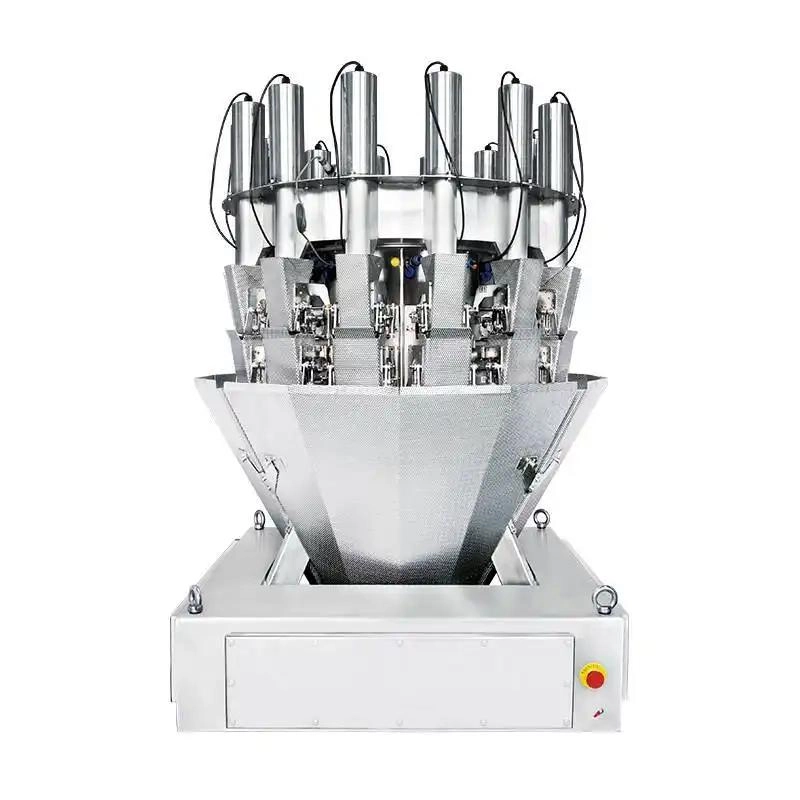
14 Heads Vertical Single Screw Feeding Pickles Weigher backups
This type of weigher is designed to handle the unique characteristics of pickles, ensuring precise measurements for packaging and distribution. It uses a vertical single screw mechanism to feed the pickles into the weighing system, allowing for efficient and consistent weighing. This technology is particularly useful in food processing and packaging facilities where precise portioning is essential for quality control and customer satisfaction. This specialized equipment is perfect for accurately measuring and dispensing pickles in a production line or packaging facility. The vertical design allows for efficient and precise filling of containers, while the single screw feeding mechanism ensures consistent and reliable weighing.
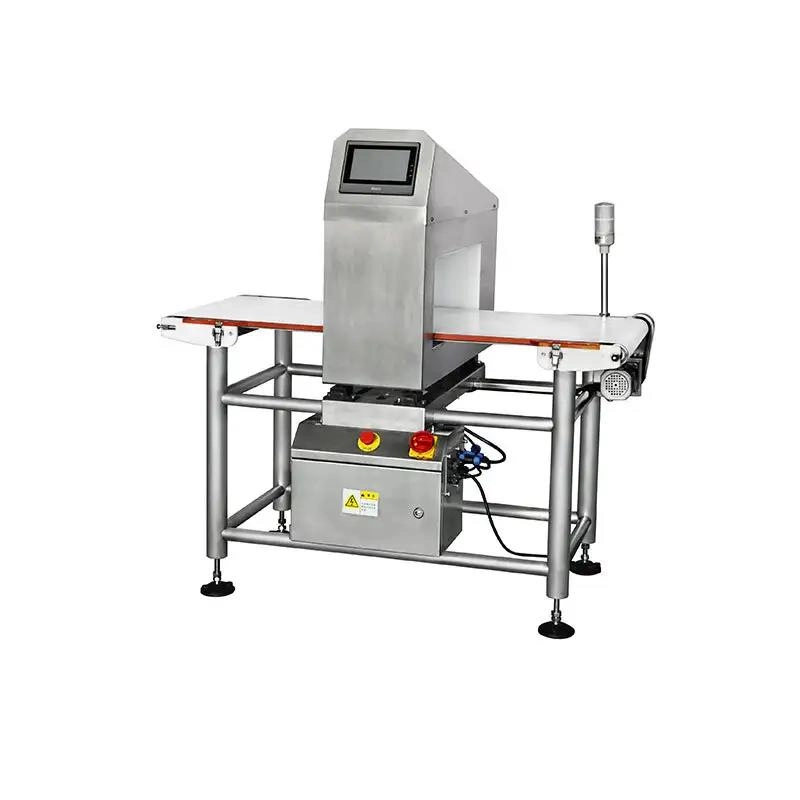
Food Metal Detector Manufacturer For Reject Defective Products G5020
The G5020 multi-frequency metal detector features a specialized conveyor belt designed to reduce contamination risks, ensure smooth operation, and maintain high detection sensitivity. It is easy to disassemble for convenient maintenance. Ideal for detecting metal contaminants in food, pharmaceuticals, spices, plastics, electronics, textiles, toys, handicrafts, and more.
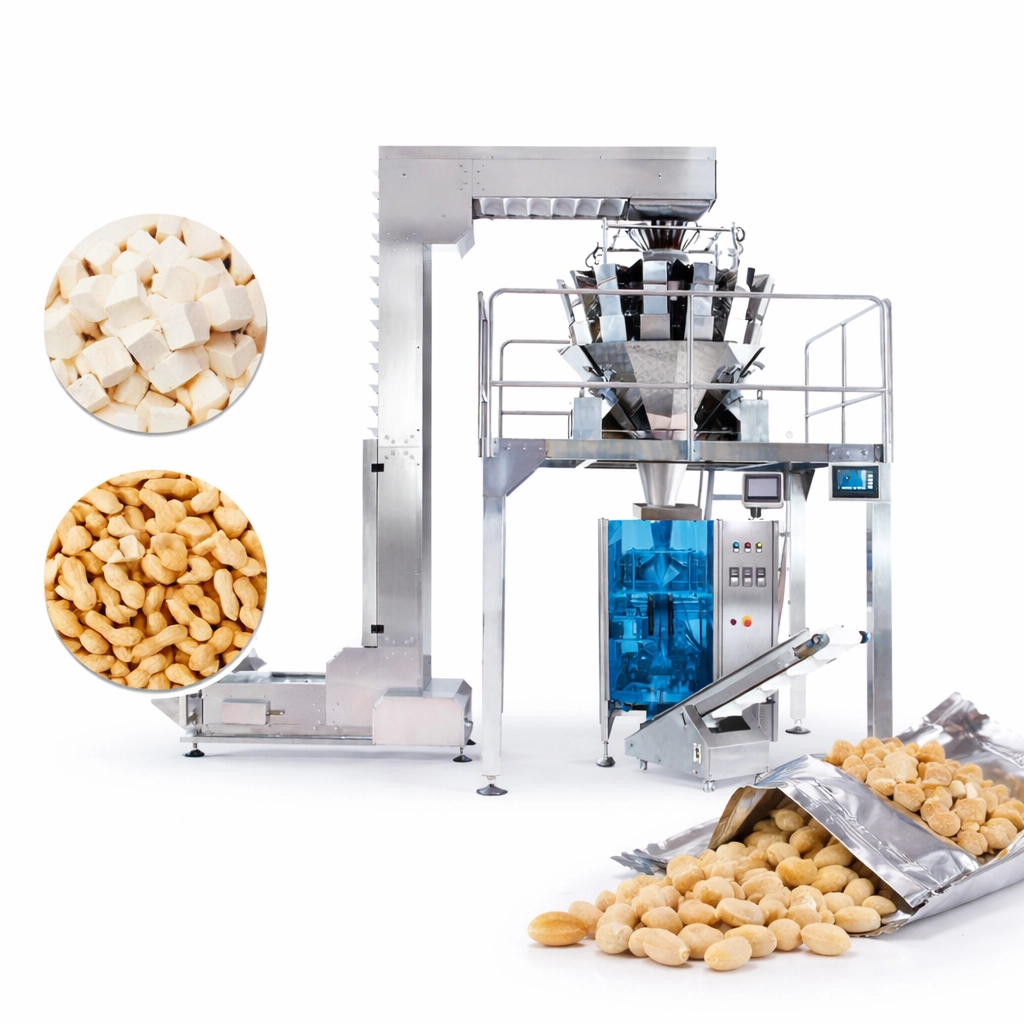
High-Precision Weighing & Packaging for Granular Products
The Granular Food Packing Machine is a fully automated solution designed for accurate weighing, filling, and packaging of various granular food products. Integrated with a multihead weigher and advanced packaging system, it ensures high speed, precision, and hygiene standards for modern food production.
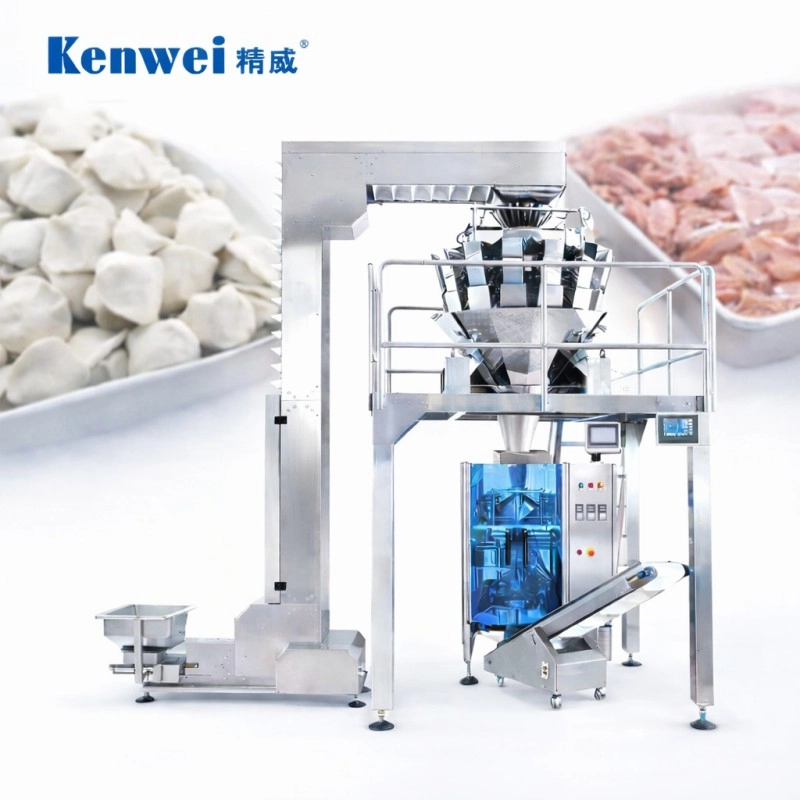
Vertical Frozen Food Packaging Machine for IQF & Frozen Products JW-B1
The Kenwei JW-B1 Vertical Frozen Food Packaging Machine is designed for IQF and frozen products, ensuring efficient, airtight packing. This vertical packing machine boosts productivity with precision sealing, ideal for frozen food packaging needs in the food industry.
Get in touch with us
If you have any comments or good suggestions, please leave us a message, later our professional staff will contact you as soon as possible.
Kenwei
Kenwei
Kenwei multi weigh
Kenwei
Kenwei
Kenwei