






Integrating G5020 with Multihead Weighers for Seamless Rejects
This article explains how to integrate the G5020 Food Metal Detector with multihead weighers to achieve reliable, automated rejects. It covers mechanical and electrical integration, reject strategies, calibration and testing, maintenance best practices, regulatory considerations, performance metrics, and brand advantages—helping manufacturers choose good metal detectors and build compliant, efficient production lines.
- Integrating G5020 with Multihead Weighers for Seamless Rejects
- Why Metal Detection Matters in Multihead Weigher Lines — good metal detectors
- Overview of G5020 Food Metal Detector Manufacturer for Rejecting Defective Products
- Key Integration Points Between G5020 and Multihead Weighers — good metal detectors
- Reject Mechanisms and Strategy — minimizing false rejects with good metal detectors
- Control Systems, Communication Protocols, and Automation
- Practical Installation Checklist for Seamless Operation — good metal detectors
- Performance Metrics and Validation — how to measure success
- Maintenance, Cleaning and Hygiene Best Practices
- Regulatory Compliance and Traceability
- Case Scenarios — Typical Use Examples
- Why Choose G5020 — Brand Advantages and for good metal detectors
- FAQ — Integrating G5020 with Multihead Weighers
- Contact & View Product — CTA
- Authoritative References and Further Reading

Integrating G5020 with Multihead Weighers for Seamless Rejects
Integrating a high-performance metal detector with multihead weighers is a critical step for any food, pharmaceutical, or consumer goods producer aiming to maintain product safety, minimize waste, and reduce line downtime. When specifying good metal detectors for automated reject handling, careful attention to mechanical alignment, communication protocols, timing, and validation is essential. This guide explains how to integrate the G5020 Food Metal Detector Manufacturer for Rejecting Defective Products into multihead weigher lines for reliable, low-false-reject performance.
Why Metal Detection Matters in Multihead Weigher Lines — good metal detectors
Multihead weighers are designed to achieve high-speed, accurate portioning. However, any upstream contamination—particularly metal—can lead to severe safety recalls, regulatory non-compliance, and brand damage. Integrating reliable metal detection is the primary defense for identifying ferrous, non-ferrous and stainless-steel contamination. Choosing good metal detectors reduces the risk of contaminated product reaching packaging and consumers. Properly integrated detectors enable automatic reject decisions without interrupting throughput, preserving line efficiency while safeguarding consumers and brands.
Overview of G5020 Food Metal Detector Manufacturer for Rejecting Defective Products
The 5020 Multi-Frequency Metal Detector features a specialized conveyor belt that minimizes contamination sources, ensuring smooth operation and high detection sensitivity. Its design allows for easy disassembly and maintenance. This metal detector is ideal for detecting metal contaminants in a wide range of industries, including food, pharmaceuticals, condiments, plastics, electronics, textiles, toys, and more.
The G5020’s multi-frequency capability improves detection across a wide range of product types and packaging, making it especially suitable for variable-density items fed by multihead weighers. Compact design, hygienic conveyor construction, and straightforward serviceability make the unit attractive where uptime and cleanability are priorities.
Key Integration Points Between G5020 and Multihead Weighers — good metal detectors
Successful integration requires attention to both mechanical and electronic interfaces. Focus on the following key points:
- Mechanical alignment: Ensure the detector’s conveyor section is co-planar and level with the weigher discharge chute. Misalignment causes product bounce or mispositioning through the aperture and increases false rejects.
- Infeed buffering: Use a short buffer or diverter to manage product spacing so individual portions pass the detector cleanly. This is crucial for multihead outputs where multiple lumps or aerosols can overlap in the aperture.
- Speed control: Match or synchronize conveyor speeds (or use speed compensation in the detector) so product transit time through the aperture is stable—consistent transit times aid sensitivity and repeatability.
- Reject timing: Coordinate the detector’s detection event with the chosen reject mechanism (pusher, flap, air blast). The G5020’s rapid processing allows narrow timing windows; nevertheless, physically validate timing with real product on the line.
- Hygienic design and service access: G5020’s easy disassembly and contamination-minimizing belt reduce cleaning time and help maintain sensitivity—fewer contaminants on belts lowers background noise in the detection coil.
Reject Mechanisms and Strategy — minimizing false rejects with good metal detectors
Choose the reject method that best suits your product properties, speed, and layout:
- Pusher arm: Effective for stable, flat packages or trays. Offers precise removal with minimal collateral disturbance.
- Air blast: Suitable for loose, lightweight products (e.g., snacks, nuts). Rapid and non-contact, but requires tuning to avoid displacing multiple portions.
- Flap/drop gate: Works well for gravity-fed lines and heavy items but needs space below the conveyor.
To minimize false rejects, implement a layered strategy: use the multihead weigher’s weight/combination data to confirm expected portion mass before and after the detector; use the G5020’s multi-frequency modes to adapt sensitivity by product; and maintain a short product buffer station where suspect portions can be automatically isolated for verification. Machine learning or simple pattern recognition on HMI/PLC can further reduce nuisance trips by recognizing common non-metal signal patterns associated with normal product variability.
Control Systems, Communication Protocols, and Automation
Modern G5020 detectors support multiple communication options that simplify integration into production control systems. Typical implementation details include:
- Discrete I/O: Use dedicated input for 'line ready' and output for 'reject signal'. Implement interlocks so rejects occur only when the downstream reject device is armed.
- Fieldbus/Ethernet options: Integrate via Modbus TCP, Ethernet/IP, or PROFINET to provide richer diagnostics, alarm logging, and remote parameter adjustment. This is essential for Industry 4.0/IIoT initiatives.
- PLC sequencing: Sequence the multihead weigher and detector events in the PLC to handle timing offsets, train reject offsets, and confirm when a rejected portion clears the line.
- HMI integration: Display detection events, trend logs, sensitivity settings and reject counts centrally. G5020’s diagnostics should be mapped to operator HMIs for rapid troubleshooting.
Practical Installation Checklist for Seamless Operation — good metal detectors
Before starting production, follow this installation checklist to prevent common integration problems:
- Confirm mechanical alignment and belt tracking between weigher discharge and detector conveyor.
- Establish a stable power supply and proper earth grounding per local electrical codes to avoid electromagnetic interference.
- Select the correct detector aperture size and conveyor belt composition for your product.
- Validate communication wiring and software addresses (I/O mapping or IP configuration).
- Program reject timing offsets in the PLC and verify across the full operating speed range.
- Create an initial sensitivity and verification program using representative product samples and test pieces (ferrous, non-ferrous, stainless steel).
- Document SOPs for daily checks, calibration, and sanitation that preserve detection performance.
Performance Metrics and Validation — how to measure success
Define the metrics you’ll use to judge effective integration and maintain performance over time. Typical KPIs include detection sensitivity, false reject rate, true reject rate, line uptime, and mean time to repair (MTTR). The table below contrasts typical performance differences before and after integrating a good detector like the G5020 (illustrative ranges; validate on your line):
| Metric | Common Baseline (No Integrated Detector) | G5020 Integrated with Multihead Weigher (Typical) |
|---|---|---|
| Detection sensitivity (small ferrous) | Low — inconsistent | High — consistent due to multi-frequency tuning |
| False reject rate | 5–12% (depends on poor timing) | 0.5–3% (with tuning and buffer) |
| Throughput impact from rejects | High — manual stops | Minimal — automated targeted rejects |
| Line uptime | 80–90% | 92–99% (improved maintenance and diagnostics) |
| Time for daily sanitation | Longer — complex disassembly | Shorter — G5020 easy disassembly |
Note: Exact figures will vary by product, line speed, and environmental conditions. Conduct site acceptance tests (SAT) with known metal test pieces and representative product mixes to establish validated performance baselines.
Maintenance, Cleaning and Hygiene Best Practices
Regular maintenance preserves sensitivity and prevents spurious signals caused by product residue or belt wear. Recommended practices for good metal detectors include:
- Daily visual check of the aperture area and conveyor belt for residue build-up.
- Weekly belt tracking and tension inspection; replace belts per manufacturer intervals or when damaged.
- Sanitation procedures that follow HACCP plans—G5020’s easy disassembly reduces cleaning time and lowers exposure to water ingress in electronics (follow IP ratings and manufacturer guidance).
- Scheduled calibration using certified test pieces and documented verification logs to satisfy audits.
Regulatory Compliance and Traceability
Integration decisions should be guided by applicable food safety and quality standards. Metal detectors form a critical CCP in HACCP plans and are often required by retailer specifications (e.g., BRCGS) and industry guidelines. Ensure the detector and reject logging provide traceable records for audits—include reject counts, sensitivity changes, and test-validation results in your quality records.
Case Scenarios — Typical Use Examples
Example 1: Snack food line — G5020 mounted after a multihead weigher feeding a bagging machine. A short buffer conveyor spaces portions; an air blast removes contaminated portions to a quarantine chute. Sensitivity is tuned via multi-frequency modes to account for seasonal changes in oil content.
Example 2: Pharma sachet filling — G5020 integrated with a multihead weigher and automated pusher reject. Communications over Modbus TCP allow centralized alarm handling; daily verification scripts are automated via PLC.
Why Choose G5020 — Brand Advantages and for good metal detectors
G5020 stands out as a practical option when selecting good metal detectors for multihead weigher lines because it offers:
- Multi-frequency detection for consistent sensitivity across diverse products.
- Hygienic conveyor and easy disassembly that reduce sanitation time and contamination risk.
- Flexible I/O and fieldbus options for tight PLC/HMI integration and Industry 4.0 readiness.
- Robust diagnostics and reject logging to support audit trails and continuous improvement.
- Adaptability across industries: food, pharma, plastics, and electronics.
These advantages translate into fewer false rejects, better uptime, and clearer compliance records—deliverables manufacturers expect from good metal detectors.
FAQ — Integrating G5020 with Multihead Weighers
Q: What types of metal can the G5020 detect?
A: The G5020 detects ferrous, non-ferrous (aluminum, copper) and many grades of stainless steel. Multi-frequency tuning enhances detectability across different metals and product matrices.
Q: Will the detector slow my multihead weigher line?
A: Properly integrated and timed, the G5020 should not reduce throughput. Rejects are targeted and automated; synchronization and proper buffering are key to maintaining nominal speeds.
Q: How do you minimize false rejects?
A: Use correct timing offsets, product buffering, multi-frequency optimization, and weight-confirmation logic from the weigher. Regular cleaning and calibration also reduce false trips.
Q: Can the G5020 interface with my PLC/HMI?
A: Yes. The G5020 supports discrete I/O and common industrial networks (e.g., Modbus TCP, Ethernet/IP) to integrate with PLCs and HMIs for sequencing and diagnostics.
Q: What verification is required for audits?
A: Maintain records of daily test piece verifications, sensitivity settings, reject counts, and maintenance logs per HACCP or retailer standards like BRCGS.
Contact & View Product — CTA
In order to maintain seamless operation, it’s crucial to follow a maintenance checklist for good metal detectors in food plants. Regular maintenance ensures optimal performance and minimizes downtime, keeping your production line running smoothly.To discuss line-specific integration, request installation drawings, or schedule a site evaluation, contact our sales and applications team: https://www.example.com/contact. View the full G5020 product page and technical datasheet here: https://www.example.com/products/g5020.
Authoritative References and Further Reading
For regulatory and technical reference, consult the following authoritative sources:
- FDA — Hazard Analysis and Critical Control Points (HACCP): https://www.fda.gov/food/hazard-analysis-critical-control-point-haccp
- Codex Alimentarius: http://www.fao.org/fao-who-codexalimentarius/en/
- ISO 22000 — Food Safety Management: https://www.iso.org/iso-22000-food-safety-management.
- BRCGS Global Standard for Food Safety: https://www.brcgs.com/
- AOAC International — Official Methods and Guidelines: https://www.aoac.org/
- Wikipedia — Metal Detector (technical overview): https://en.wikipedia.org/wiki/Metal_detector
Integrating the G5020 with multihead weighers requires planning, testing, and collaboration between production, maintenance, and quality teams. When executed properly, it yields secure, efficient reject handling that protects consumers and strengthens brand trust—exactly what manufacturers expect from good metal detectors.
Tags
packaging machine for food products
packaging machine for food products
snack packaging machine
snack packaging machine
best multihead weigher
best multihead weigher
check weigher machine
check weigher machine
metal detector for food industry
metal detector for food industry
wholesale multihead weigher packing machine
wholesale multihead weigher packing machine
Recommended for you
Cost of a Multihead Weigher: Budgeting, Lifespan, and ROI Explained
How to Upgrade Existing Lines with a Linear Weigher: Practical Guide for Packaging Efficiency
The B2B Buyer’s Guide to vertical form fill seal machine
Vendor Evaluation: Key KPIs for Buying an Economic VFFS
Prdoucts Categories
Question you may concern
About Solution suggestions
How do Kenwei’s machines improve my production efficiency?
Kenwei machines enhance efficiency by automating the weighing, packaging, and quality control processes. Our high-speed, high-precision machines ensure accurate measurements, reduce human error, and increase throughput, leading to faster production times and lower operational costs.
About After Sales Support
How can I get technical support for my Kenwei machine?
You can contact Kenwei's technical support team via email, phone, or through our website.
About Cooperation Process
Can Kenwei customize equipment to meet my specific needs?
Yes! We offer customized solutions for all of our machines. Our team will work closely with you to understand your specific requirements and create a solution that meets your needs in terms of size, functionality, speed, and other factors.
About Product choice
What is the average lifespan of Kenwei products?
Kenwei machines are built for durability and longevity. With proper maintenance, our products are designed to last for many years, even under heavy usage. We offer maintenance services and support to help extend the lifespan of your machines.
About Price and payment
How is the price of Kenwei machines determined?
The price of Kenwei machines depends on several factors, including the type of machine, customization requirements, production volume, and any additional features or integrations. We provide tailored quotes based on your specific needs and requirements.
You may also like
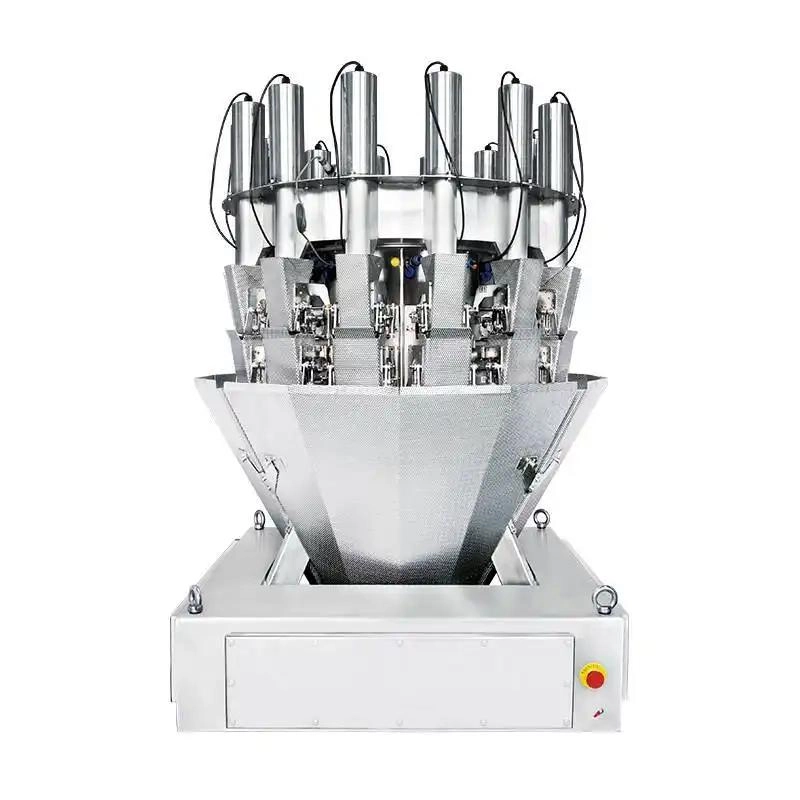
14 Heads Vertical Single Screw Feeding Pickles Weigher backups
This type of weigher is designed to handle the unique characteristics of pickles, ensuring precise measurements for packaging and distribution. It uses a vertical single screw mechanism to feed the pickles into the weighing system, allowing for efficient and consistent weighing. This technology is particularly useful in food processing and packaging facilities where precise portioning is essential for quality control and customer satisfaction. This specialized equipment is perfect for accurately measuring and dispensing pickles in a production line or packaging facility. The vertical design allows for efficient and precise filling of containers, while the single screw feeding mechanism ensures consistent and reliable weighing.
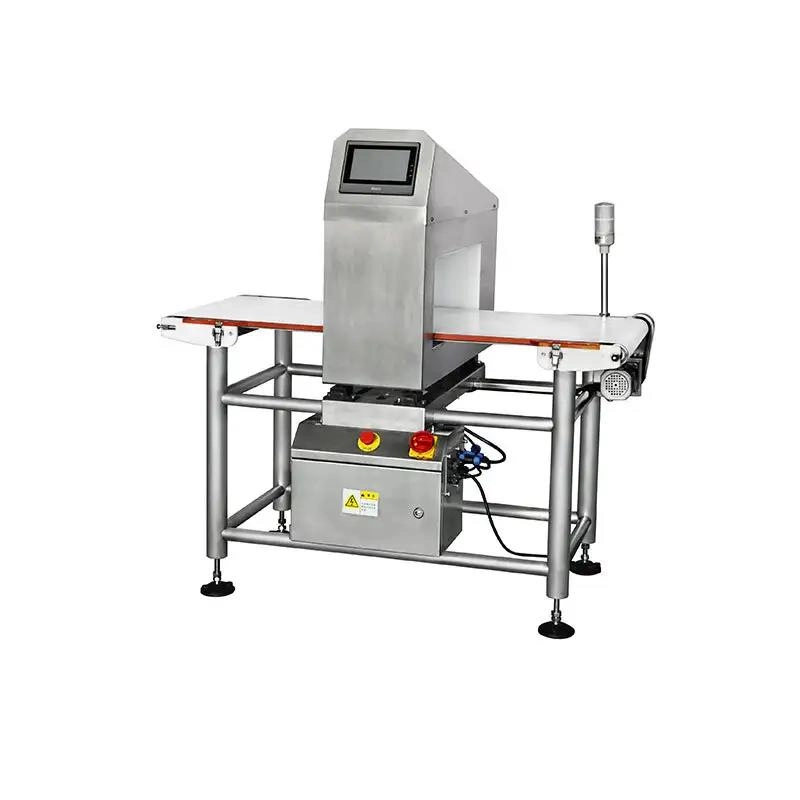
Food Metal Detector Manufacturer For Reject Defective Products G5020
The G5020 multi-frequency metal detector features a specialized conveyor belt designed to reduce contamination risks, ensure smooth operation, and maintain high detection sensitivity. It is easy to disassemble for convenient maintenance. Ideal for detecting metal contaminants in food, pharmaceuticals, spices, plastics, electronics, textiles, toys, handicrafts, and more.
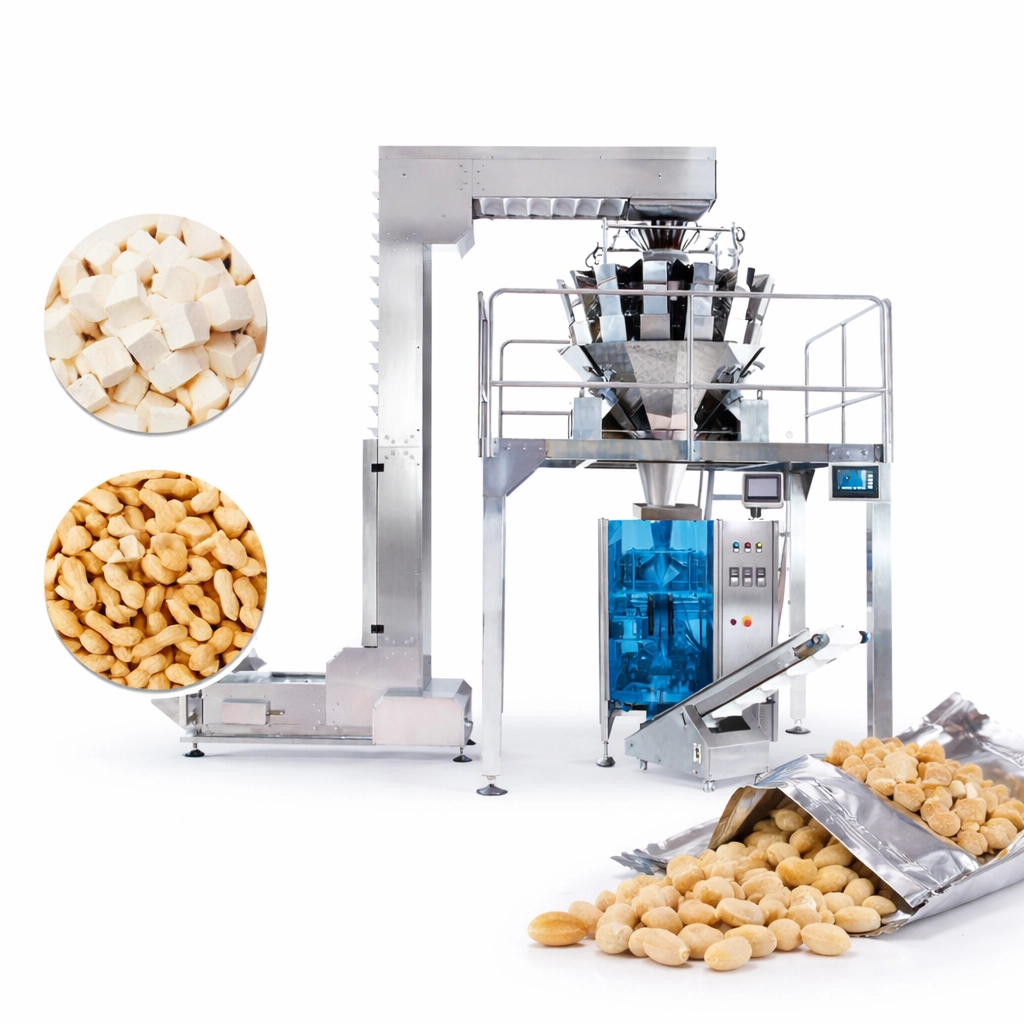
High-Precision Weighing & Packaging for Granular Products
The Granular Food Packing Machine is a fully automated solution designed for accurate weighing, filling, and packaging of various granular food products. Integrated with a multihead weigher and advanced packaging system, it ensures high speed, precision, and hygiene standards for modern food production.
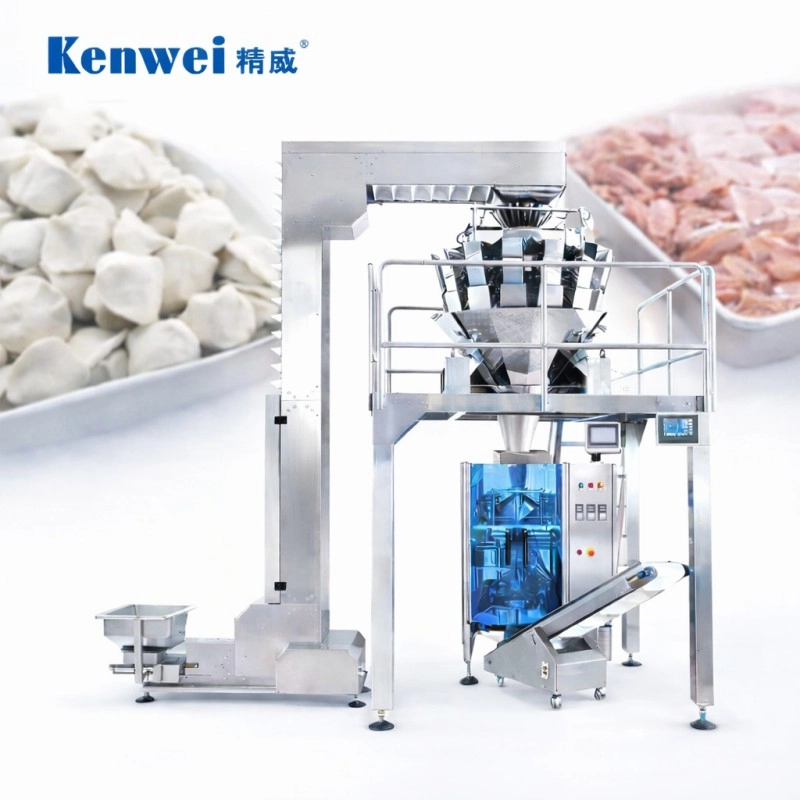
Vertical Frozen Food Packaging Machine for IQF & Frozen Products JW-B1
The Kenwei JW-B1 Vertical Frozen Food Packaging Machine is designed for IQF and frozen products, ensuring efficient, airtight packing. This vertical packing machine boosts productivity with precision sealing, ideal for frozen food packaging needs in the food industry.
Get in touch with us
If you have any comments or good suggestions, please leave us a message, later our professional staff will contact you as soon as possible.
Kenwei
Kenwei
Kenwei multi weigh
Kenwei
Kenwei
Kenwei