






ROI of Automating Snack Packaging with JW-B23
Automating snack packaging with the Fully Automatic Cup Weighing and Packaging Machine for Snack Foods JW-B23 delivers measurable ROI through higher throughput, consistent fill accuracy, reduced labor and waste, and faster time-to-market. This article explains cost drivers, performance metrics, and payback scenarios for food manufacturers considering a food packaging machine upgrade to the JW-B23, supported by industry best practices and guidelines.
- Why Automate Snack Packaging: Key Business Drivers
- Reduced labor costs and improved throughput
- Higher fill accuracy and lower product giveaway
- Consistency, safety and compliance
- Understanding ROI Components for JW-B23
- Capital expenditures and lifecycle cost
- Operational savings: labor, waste, and utilities
- Revenue benefits: capacity, SKU flexibility and time-to-market
- Quantifying ROI: Example Scenarios and Payback Model
- Assumptions and methodology
- Sample financial comparison (annual)
- Sensitivity analysis and tipping points
- Operational Considerations When Deploying JW-B23
- Installation, line integration and footprint
- Maintenance, spare parts and training
- Food safety and validation
- Use Cases and Industry Examples
- Nuts and trail mixes
- Snack cereals and extruded snacks
- Prepared and portioned snacks
- Implementation Checklist: From Evaluation to Full Production
- 1. Define objectives and KPIs
- 2. Pilot and acceptance testing
- 3. Training and continuous improvement
- References and Further Reading
- FAQ — Frequently Asked Questions
- Q1: What is the typical payback period for a JW-B23 installation?
- Q2: Can the JW-B23 handle fragile snacks without excessive breakage?
- Q3: What are the footprint and utilities required for JW-B23?
- Q4: How does the JW-B23 support traceability and labeling?
- Q5: What maintenance is required and is spare parts support available?
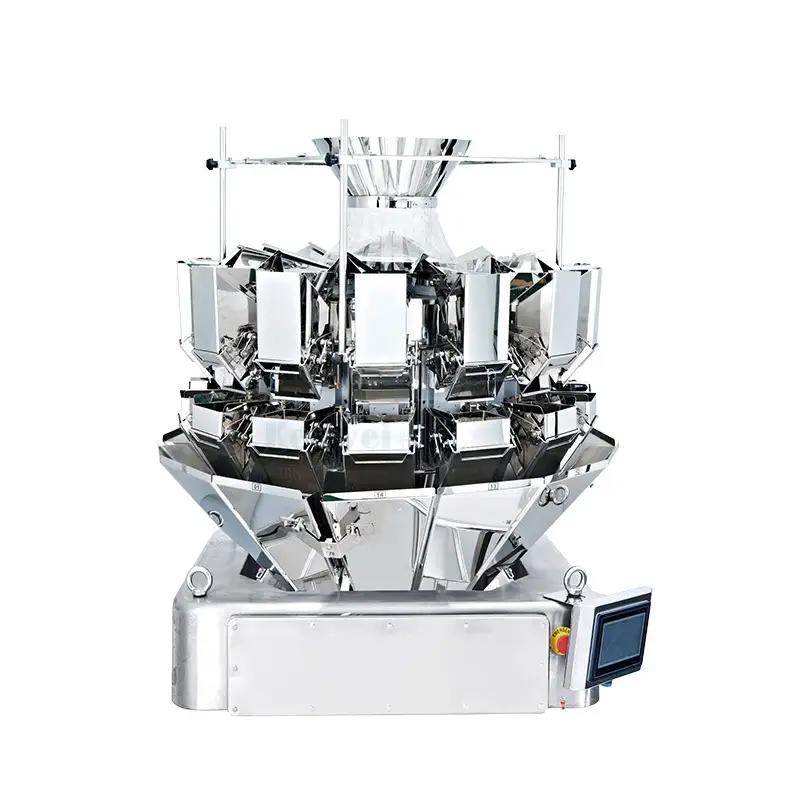
The Fully Automatic Cup Weighing and Packaging Machine for Snack Foods JW-B23 is designed to bring industrial-grade automation to snack lines. Equipped with a vibrating feeder, Z-type conveyor, 14-head combination scale, material diverter, automatic cup drop device, cup mold conveyor, capping machine and finished product conveying device, the system enables high-precision filling across a wide range of materials and cup combinations. It supports fully automatic operations including feeding, weighing, filling, bag making, printing and finished product output, making it an attractive food packaging machine for manufacturers seeking higher accuracy and throughput.
Why Automate Snack Packaging: Key Business Drivers
Reduced labor costs and improved throughput
For many snack producers, labor is a top operational expense. Automating repetitive tasks such as cup placement, filling and capping with a food packaging machine like the JW-B23 reduces headcount on the line and allows redeployment of staff to higher-value roles such as quality control or product development. Automated systems run continuously at consistent cycle times, improving line throughput and reducing bottlenecks. Industry analyses show automation can reduce direct packaging labor by 30–70% depending on prior level of manual involvement.
Higher fill accuracy and lower product giveaway
One of the most direct contributors to soft costs in snack packaging is product giveaway — the excess product filled to ensure compliance with declared weights. The JW-B23's 14-head combination scale delivers high-precision weighing, cutting giveaway while maintaining regulatory compliance. Accurate multihead weighing is discussed in broader context on the multihead weigher industry page on Wikipedia: https://en.wikipedia.org/wiki/Multihead_weigher. Reduced giveaway quickly converts to savings, particularly for higher-value ingredients such as nuts, dried fruits, or High Quality snacks.
Consistency, safety and compliance
Automated food packaging machine platforms support consistent sealing, printing and traceability — all critical for food safety standards like ISO 22000. Compliance frameworks and food safety management systems reduce recall risk and protect brand value. See ISO's overview: https://www.iso.org/iso-22000-food-safety-management.. The JW-B23 can integrate batch coding and printing to support traceability requirements and audit readiness.
Understanding ROI Components for JW-B23
Capital expenditures and lifecycle cost
Initial capital cost is the first consideration. ROI must account for purchase price, installation, commissioning, tooling (cup molds), staff training and any line modifications. Also factor lifecycle costs: maintenance, spare parts, energy consumption and planned upgrades. A well-specified food packaging machine like the JW-B23 often provides lower total cost of ownership due to modular design and fewer manual changeovers.
Operational savings: labor, waste, and utilities
Operational savings fall into three primary buckets: labor (reduced FTEs on the line), material savings (less giveaway and fewer rejects), and utilities (optimized energy consumption vs. older equipment). The JW-B23’s high-accuracy weighing and integrated capping reduces rejects from under- or over-filled cups and minimizes rework. According to industry resources from packaging associations such as PMMI, automation delivers measurable efficiency gains across these areas: https://www.pmmi.org/industry-resources.
Revenue benefits: capacity, SKU flexibility and time-to-market
Beyond cost reduction, automation enables higher capacity and faster changeovers between SKUs. The JW-B23 supports a variety of mold cup combinations and materials, allowing faster introduction of seasonal or value-added SKUs. Faster production ramp-up directly enables revenue uplift — the ability to accept larger orders or expand into new retail channels.
Quantifying ROI: Example Scenarios and Payback Model
Assumptions and methodology
Below is a representative payback model. Inputs vary by region, labor rates, and product value; adjust to your company’s data. For transparency, this example uses conservative assumptions:
- JW-B23 capital cost (installed): $180,000
- Annual production hours: 6,000 (one shift, 300 days)
- Pre-automation labor for packaging: 6 FTEs at $30,000/year fully loaded
- Post-automation labor: 2 FTEs (operators/maintenance)
- Product giveaway reduction: 1.5% of product cost (from 3% down to 1.5%)
- Average product cost per kg: $6.00
- Annual throughput: 750,000 kg
- Maintenance/consumables for JW-B23: $12,000/year
Sample financial comparison (annual)
| Line Item | Before Automation | After JW-B23 | Annual Impact |
|---|---|---|---|
| Labor cost | $180,000 | $60,000 | -$120,000 |
| Product giveaway (1.5% savings on product cost) | $135,000 (3% giveaway) | $67,500 (1.5% giveaway) | -$67,500 |
| Maintenance & utilities | $8,000 | $12,000 | +$4,000 |
| Additional revenue from increased capacity (conservative) | $0 | $30,000 | +$30,000 |
| Net annual benefit | $-153,500 (savings) |
With an installed cost of $180,000 and annual net savings of approximately $153,500, payback occurs in roughly 1.2 years. This simple model excludes tax incentives, financing effects, and potential increases in finished product margin due to improved consistency.
Sensitivity analysis and tipping points
Key sensitivities include labor rate, product value, and giveaway percentage. Higher labor cost regions or higher-value snack ingredients will shorten payback periods. Conversely, extremely low labor cost environments push payback out. Use scenario analysis based on your plant data to model best-, base- and worst-case payback timelines.
Operational Considerations When Deploying JW-B23
Installation, line integration and footprint
Successful automation requires planning for floor space, utilities (power, compressed air), and upstream/downstream integration. The JW-B23 integrates conveyors, cup mold handling and capping, which simplifies line design but may require conveyor transitions and PLC/ERP connectivity for print/trace management. Engage mechanical and automation engineers early to reduce downtime during commissioning.
Maintenance, spare parts and training
Automated multihead weighing systems require regular calibration, head maintenance, and occasional replacement of wear parts (feed pans, belts, seals). Establish a preventive maintenance schedule and a critical spares list to avoid extended downtime. Training operators and maintenance staff reduces mean time to repair and increases overall equipment effectiveness (OEE).
Food safety and validation
Food packaging machines must meet regulatory and safety standards. Validate the JW-B23 for hygienic design and cleanability; implement procedures consistent with FSMA and internal HACCP plans. The U.S. Food and Drug Administration’s guidance on modernizing food safety (FSMA) is relevant when considering automation and preventive controls: https://www.fda.gov/food/food-safety-modernization-act-fsma. Proper validation reduces risk of contamination and recall costs.
Use Cases and Industry Examples
Nuts and trail mixes
Nuts and trail mixes are irregular in shape and density — a classic use case for multihead weighers. The JW-B23’s 14-head combination scale is optimized for high-precision weighing of heterogeneous materials, reducing overfills and ensuring accurate declared weights. Producers often see immediate reductions in giveaway and improvements in throughput with cup-based dispensing and capping.
Snack cereals and extruded snacks
Light, fragile snacks like cereal and extruded snacks benefit from gentle conveying (Z-type conveyor) and controlled vibratory feeding. The JW-B23’s integrated feeding and material diverter reduce breakage and dust generation, maintaining product quality. Automated bag making and printing also improve shelf presentation and traceability.
Prepared and portioned snacks
For ready-to-eat snack cups (dips, yogurt-based toppings, or mixed snack cups), the JW-B23’s ability to handle cup molds and a capping station enables fully automated portioned products. This supports convenience-focused SKU strategies and High Quality pricing models.
Implementation Checklist: From Evaluation to Full Production
1. Define objectives and KPIs
Set clear KPIs — throughput (cups/min), target giveaway, OEE, labor reduction and product quality metrics. These measurable goals will guide configuration choices and validate ROI post-commissioning.
2. Pilot and acceptance testing
Run pilot tests with representative SKUs and cup molds. Use acceptance criteria (weighing accuracy, cycle rate, reject rate) and record data for the ROI model. Acceptances should be documented and tied to contractual performance guarantees.
3. Training and continuous improvement
Train line operators and maintenance staff on routine adjustments, sanitation and quick-change procedures. Post-installation, use continuous improvement cycles to tune feeders, vibratory settings and scale parameters to maximize OEE.
References and Further Reading
- Multihead weigher (general overview) — https://en.wikipedia.org/wiki/Multihead_weigher
- ISO 22000 Food safety management — https://www.iso.org/iso-22000-food-safety-management.
- U.S. Food and Drug Administration — Food Safety Modernization Act (FSMA) — https://www.fda.gov/food/food-safety-modernization-act-fsma
- Packaging and Processing Industry Resources (PMMI) — https://www.pmmi.org/industry-resources
FAQ — Frequently Asked Questions
Q1: What is the typical payback period for a JW-B23 installation?
A1: Payback typically ranges from 9 to 24 months depending on labor rates, product value and throughput. In our sample conservative model, payback was approximately 1.2 years. Use plant-specific data for precise modeling.
Q2: Can the JW-B23 handle fragile snacks without excessive breakage?
A2: Yes. The JW-B23 includes a Z-type conveyor and tuned vibratory feeders to gently handle fragile products. Proper feeder tuning and conveyor speed adjustments are important to minimize breakage.
Q3: What are the footprint and utilities required for JW-B23?
A3: Footprint varies by configuration (infeed conveyors, cup mold handling, outfeed conveyor). Typical utility requirements include three-phase power, compressed air, and a small vacuum or dust control arrangement depending on SKU. Site-specific layouts are provided during quotation.
Q4: How does the JW-B23 support traceability and labeling?
A4: The system can integrate printing and coding modules for batch/lot codes and best-before dates. Data can be exported or linked to MES/ERP systems to support full traceability and compliance with food safety standards.
Q5: What maintenance is required and is spare parts support available?
A5: Regular calibration of the multihead scale, inspection of feed pans, belts and seals, and scheduled preventive maintenance are recommended. Spare parts kits and remote technical support are available; service contracts can be arranged for on-site support.
For more informations, read Buyer's Guide: Choosing the Right Food Packaging. MachineInterested in seeing the JW-B23 in action, receiving a customized ROI analysis, or scheduling an on-site demo? Contact our sales team or view the product page to request a quote and technical specifications.
Contact us: Contact Sales | View Fully Automatic Cup Weighing and Packaging Machine for Snack Foods JW-B23
Tags
multihead weigher
multihead weigher
automatic multihead weigher
automatic multihead weigher
china weighing and packaging machine factory
china weighing and packaging machine factory
multihead weigher packing machine
multihead weigher packing machine
vacuumized food packaging machine
vacuumized food packaging machine
check weigher machine
check weigher machine
Recommended for you
Top 10 linear combination weigher Manufacturers and Supplier Brands
top multihead weigher models to watch in 2026
The B2B Buyer’s Guide to vertical form fill and seal machine
Combination Weigher vs Multihead Weigher: Key Differences
Prdoucts Categories
Question you may concern
About Cooperation Process
Can Kenwei customize equipment to meet my specific needs?
Yes! We offer customized solutions for all of our machines. Our team will work closely with you to understand your specific requirements and create a solution that meets your needs in terms of size, functionality, speed, and other factors.
About products customization
Can I customize Kenwei machines to suit my specific needs?
Yes, Kenwei offers a wide range of customization options to ensure that our machines meet your production requirements.
About Solution suggestions
Can Kenwei machines handle products with irregular shapes or sizes?
Yes, multi-head weighers are particularly effective for handling products with irregular shapes and sizes.
About Product choice
Can Kenwei's machines be used in my industry?
Kenwei’s equipment is highly versatile and can be used across a wide range of industries, including:Food,Pharmaceuticals,Chemicals,Plastics and Agriculture.
Plastics If you're unsure whether our products are suitable for your industry, please contact us, and we can provide you with specific solutions tailored to your needs.
About Price and payment
How do I make a payment for Kenwei machines?
We accept several payment methods: T/T, Letter of Credit (L/C)
You may also like
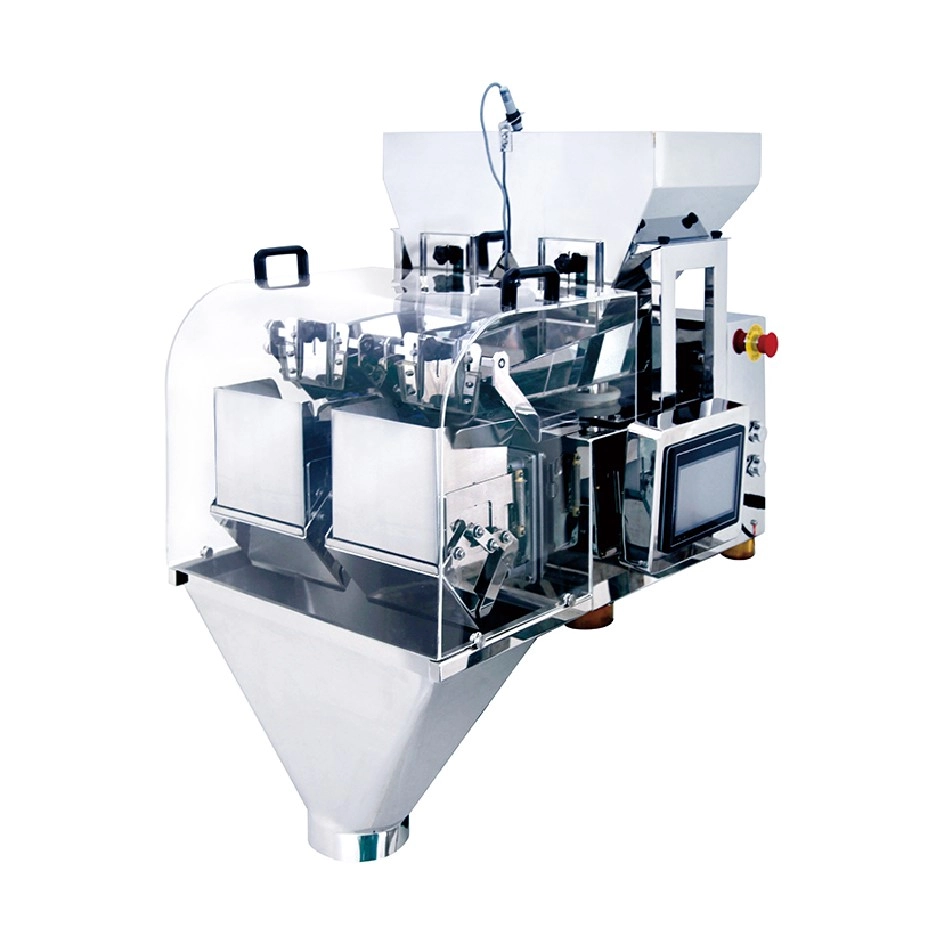
Precision Linear Weigher for Weighing Powder & Small Granules
The linear weigher is perfect for precise, quantitative weighing of powdery and small granular materials such as white sugar, salt, monosodium glutamate, chicken essence, milk powder, coffee, seasoning powder, and more. Available in up to 5 different specifications, this linear scale offers a maximum weighing speed of up to 70 bags per minute, making it the top choice for accurately weighing powdery materials in high-speed production environments.
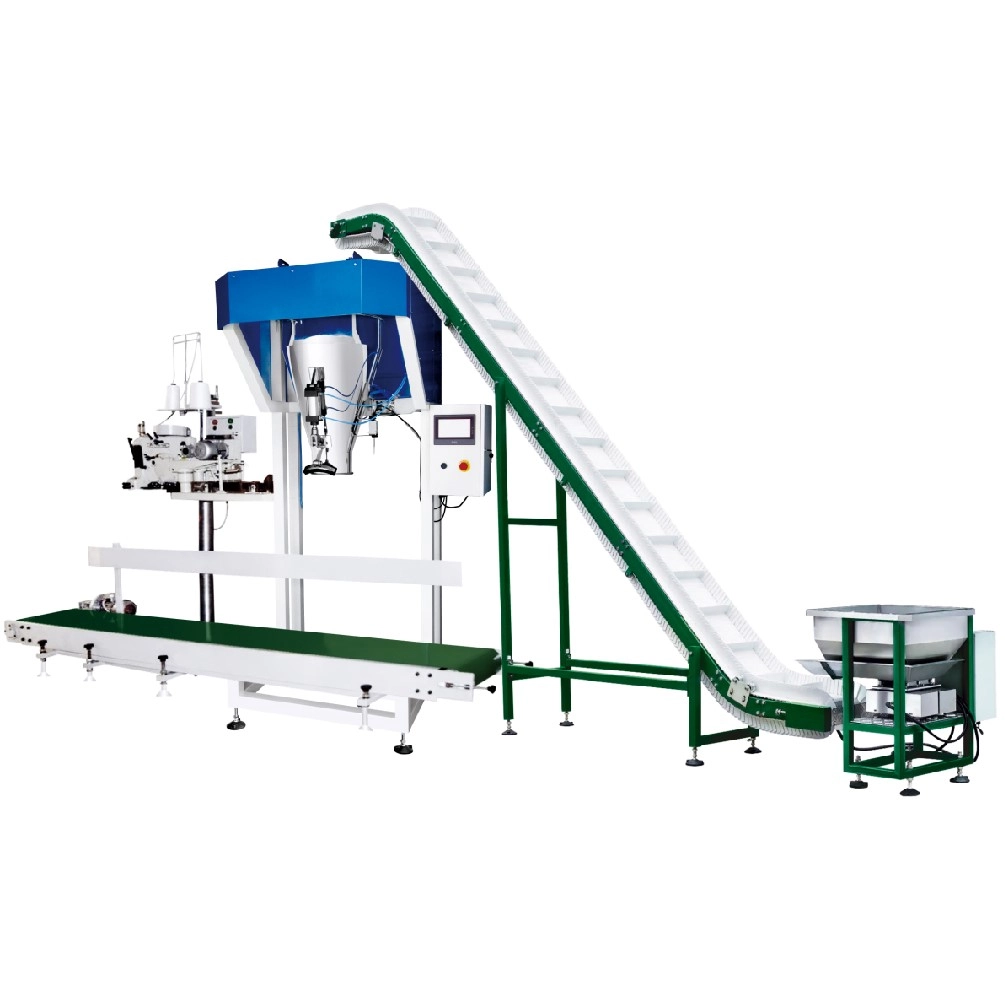
Precision Food Packaging Machine Using Single Head Bulk Linear Weigher Packaging System JW-B22
The Kenwei JW-B22 Precision Food Packaging Machine with Single Head Bulk Linear Weigher is designed for heavy-duty weighing up to 50kg. It automates feeding, weighing, bag sewing, and output for maximum efficiency. Ideal for grains like corn, rice, soybeans, barley, and wheat, it ensures high accuracy and reliability for the food, chemical, and light industries, making it the top choice for bulk grain packaging.
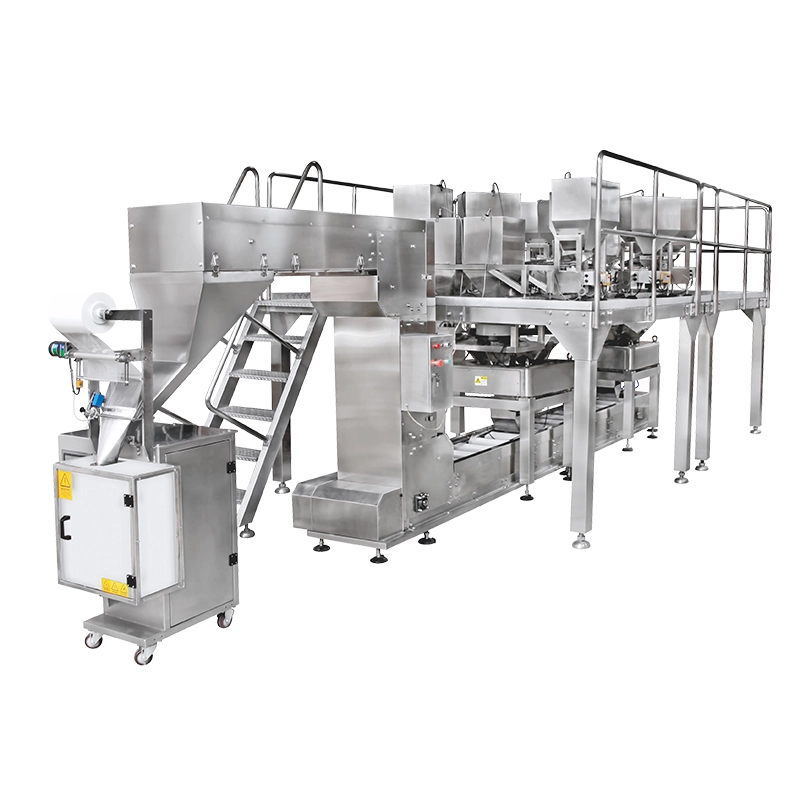
JW-B28 Multihead Weigher Mixing & Weighing System for Food Packaging | High-Speed, Accurate, Automated
The Kenwei JW-B26 Single Multihead Weigher Mixing and Packaging System offers fully automated operation, completing feeding, weighing, filling, date printing, and product output with high accuracy and speed. Ideal for granules, slices, irregular shapes, and mixed products like candy, nuts, snacks, pet food, and even small hardware. Its versatility and precision make it a perfect solution for diverse packaging needs.
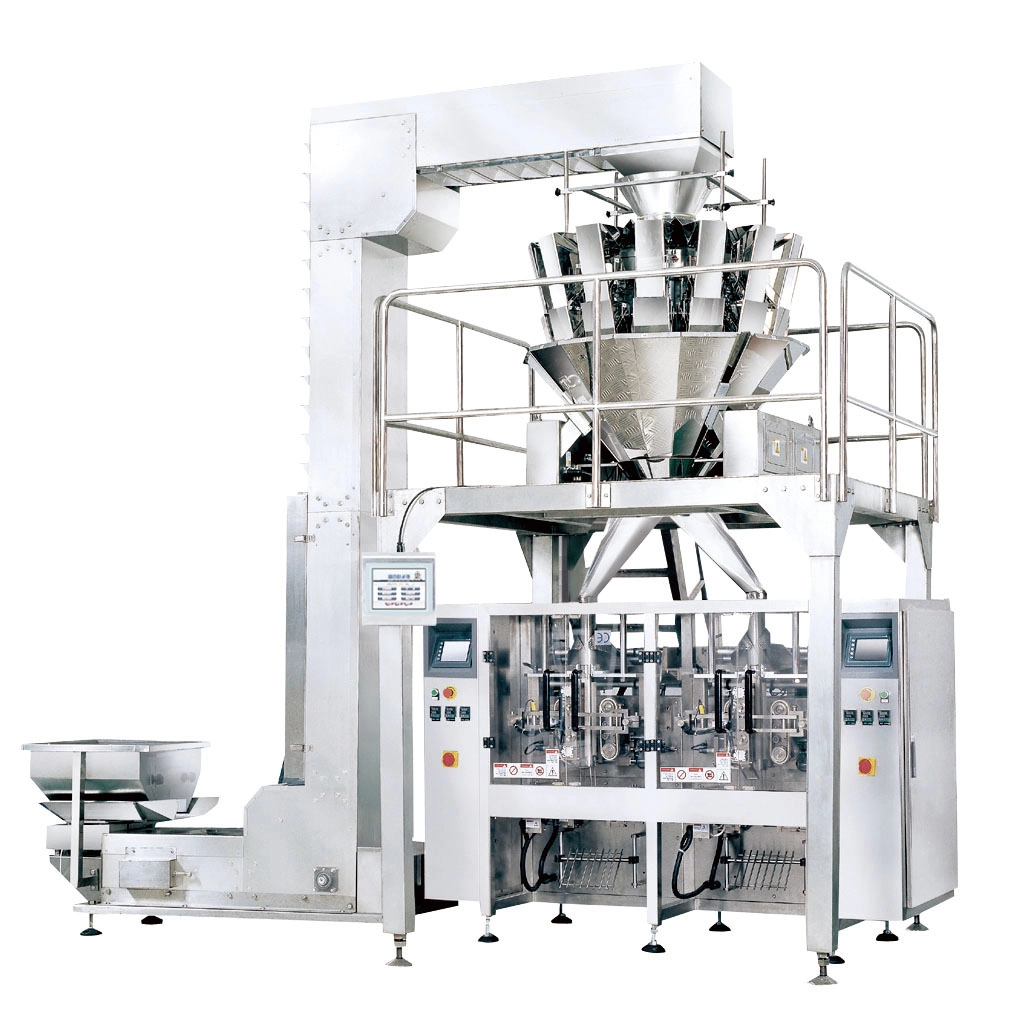
Fully Automatic Twin Packaging Machine for Granules Snack Foods Weighing JW-B2
Kenwei's JW-B2 Fully Automatic Twin Packaging Machine boasts 14-head multihead weighing for precise granule and snack food packaging. This high-speed automatic packaging machine offers efficient twin-packaging, maximizing your production output. Ideal for food manufacturers seeking enhanced speed and accuracy.
Get in touch with us
If you have any comments or good suggestions, please leave us a message, later our professional staff will contact you as soon as possible.
Kenwei
Kenwei
Kenwei multi weigh
Kenwei
Kenwei
Kenwei