






Buyer's Guide: Choosing the Right Food Packaging Machine
A practical buyer's guide to selecting the right food packaging machine, focusing on weighing, filling and cup packaging solutions. Includes evaluation criteria, comparisons of technologies (multihead weighers, volumetric fillers), a detailed look at the Fully Automatic Cup Weighing and Packaging Machine for Snack Foods JW-B23, brand advantages, and FAQs to help food manufacturers choose the best automated packaging system.
- Critical Considerations Before Buying a Food Packaging Machine
- Production capacity and throughput requirements
- Product characteristics and material handling
- Hygiene, safety and regulatory compliance
- Understanding Packaging Technologies and Weighing Methods
- Multihead weighers vs. volumetric and auger systems
- Cup filling, bag making and capping technologies
- Automation and integration with packaging lines
- How to Evaluate the Fully Automatic Cup Weighing and Packaging Machine for Snack Foods JW-B23
- Product overview and core components
- Performance, accuracy and materials compatibility
- Flexibility, changeover and mold compatibility
- Cost, ROI and Operational Considerations
- Total cost of ownership and return on investment
- Maintenance, spare parts and supplier support
- Energy consumption and factory footprint
- Comparisons and Practical Selection Checklist
- Quick comparison table: JW-B23 vs. common alternatives
- Selection checklist before purchasing
- Brand Advantages and Choosing a Reliable Supplier
- Why brand reputation matters
- What to request from suppliers
- Integration support and customization
- FAQ — Common Questions About Food Packaging Machines and JW-B23
- Q: What types of snack products are suitable for the JW-B23?
- Q: How precise is a 14-head multihead weigher?
- Q: Does the JW-B23 support automatic cup changeover?
- Q: What sanitary features should I verify?
- Q: Can the JW-B23 integrate printing and quality inspection?
- Contact and Next Steps

The modern food manufacturing environment demands packaging solutions that deliver accuracy, speed, hygiene and flexibility. This buyer's guide helps procurement managers, food engineers and plant operators evaluate food packaging machine options—covering weighing technologies, throughput needs, material compatibility, integration with packaging lines and total cost of ownership. It draws on industry best practices and authoritative references to help you choose a system that improves yield, reduces giveaway and meets food-safety standards. Choosing the right food packaging machine is a critical decision for enhancing your production line. One machine that stands out in snack packaging is the JW-B23. It helps improve snack line efficiency by providing quick and precise packaging, reducing downtime.
Critical Considerations Before Buying a Food Packaging Machine
Production capacity and throughput requirements
Start by calculating your required output in units per minute (UPM), kilograms per hour (kg/h) or packs per minute (PPM). Packaging machines range from low-speed semi-automatic units to high-speed fully automatic lines. Match the machine's nominal throughput to your peak production, not average, allowing headroom for maintenance and line changeovers. Consider future growth—scalable solutions or modular lines let you increase capacity without full replacement.
Product characteristics and material handling
Different foods demand different feeding and dosing solutions. Free-flowing snacks, nuts and crisps work well with vibratory feeders and multihead weighers, while powders, pastes or sticky items require auger or piston fillers. Consider particle size, fragility, dust, moisture content and whether the product is heat-sensitive. The packaging machine should include appropriate conveyors (e.g., Z-type elevating conveyors for cup or cup mold feeding) and gentle handling to prevent product damage.
Hygiene, safety and regulatory compliance
Sanitary design (stainless steel 304/316, hygienic welds, easy-to-clean surfaces), CIP compatibility and compliance with food-safety standards (e.g., HACCP, local FDA or EU regulations) are essential. Ensure the machine design minimizes contamination risk and allows quick disassembly for cleaning. Documentation, traceability features and machine validation support audits and regulatory inspections.
Understanding Packaging Technologies and Weighing Methods
Multihead weighers vs. volumetric and auger systems
Multihead weighers (combination scales) are widely used for accurate, high-speed weighing of particulate and free-flowing products. They combine multiple weighing heads to compute optimal weight combinations, reducing giveaway and improving yield. Volumetric fillers measure product by volume and are suitable when density is consistent. Auger fillers are used for powders and granular products requiring precise screw dosing. For detailed background on multihead weighers, see the Wikipedia overview: Multihead weigher - Wikipedia.
Cup filling, bag making and capping technologies
Cup filling machines automate feeding of empty cups or molds, accurate filling, sealing/capping and output conveyance. For pouch or bag formats, vertical form-fill-seal (VFFS) machines handle bag making and sealing. Cup and tray systems often pair with an automatic capping or lid-pressing unit. Consider whether you need integrated printing (batch/lot codes), labeling and vision inspection modules for quality control.
Automation and integration with packaging lines
Evaluate the ability to integrate the packaging machine into your existing production line and factory automation (PLCs, SCADA, MES). Look for machines with common communication protocols (e.g., Ethernet/IP, Modbus) and options for in-line conveyors, reject stations and synchronization with upstream and downstream equipment. Full automation reduces labor costs and improves consistency, but requires careful planning for maintenance and spare parts logistics.
How to Evaluate the Fully Automatic Cup Weighing and Packaging Machine for Snack Foods JW-B23
Product overview and core components
Product name: Fully Automatic Cup Weighing and Packaging Machine for Snack Foods JW-B23
Product description:
The system consists of a vibrating feeder, a Z-type conveyor, a 14-head combination scale, a material diverter, an automatic cup drop device, a cup mold conveyor, a capping machine and a finished product conveying device. It has high-precision filling capabilities and is suitable for a variety of mold cup combinations. It can realize fully automatic operations of feeding, weighing, filling, bag making, printing and finished product output, and is suitable for a wide range of materials with high production efficiency.
Performance, accuracy and materials compatibility
The JW-B23 uses a 14-head multihead weigher to achieve high-speed, accurate dosing. Multihead weighers are proven to reduce giveaway and maintain consistent net weights across long runs. The vibratory feeder and Z-type conveyor provide gentle, controllable product flow to the weighers and cups, suitable for crisps, nuts, cereal clusters and other snack foods. For manufacturers needing precise portion control and minimal product damage, multihead systems like the JW-B23 are often the preferred solution.
Flexibility, changeover and mold compatibility
The JW-B23 supports a wide variety of mold cup combinations and includes an automatic cup drop device and cup mold conveyor, reducing manual changeover time. If your product line includes multiple cup sizes or shapes, prioritize machines with fast-change mold sets and easy tooling replacement. Look for features like recipe memory for quick parameter switching when moving between SKUs.
Cost, ROI and Operational Considerations
Total cost of ownership and return on investment
Purchase price is only part of the equation. Consider installation, integration, tooling, spare parts, service contracts, utilities and labor savings from automation. Machines that reduce product giveaway through precise weighing (multihead weighers) can quickly offset higher capital costs. Estimate ROI by comparing current labor and product loss costs versus projected savings with the new packaging line.
Maintenance, spare parts and supplier support
Choose vendors that provide comprehensive after-sales service: preventive maintenance, fast spare parts supply and remote support. A local service network or certified technicians reduces downtime risk. Request mean time between failures (MTBF) data and recommended maintenance schedules. Ensure critical spare parts (weigh head load cells, vibratory plates, belts) are stocked or available quickly.
Energy consumption and factory footprint
Assess power requirements, compressed air usage and machine footprint. The JW-B23 integrates multiple subsystems (weigher, conveyors, capping, printing), so consider how it fits within your plant layout. Energy-efficient drives and optimized cycle times can reduce operational costs. If floor space is constrained, look for vertical or compact configurations or modular lines that can be staged.
Comparisons and Practical Selection Checklist
Quick comparison table: JW-B23 vs. common alternatives
| Feature | JW-B23 (14-head) | Volumetric filler | Auger filler |
|---|---|---|---|
| Best for | Snack foods, nuts, crisps, clusters | Free-flowing products with consistent density | Powders and fine granules |
| Accuracy | High (multihead combination) | Medium | High for powders |
| Speed | High | Medium to high | Medium |
| Giveaway control | Excellent | Moderate | Good |
| Hygiene/cleaning | Good (stainless options) | Depends on design | Requires dust control |
Selection checklist before purchasing
- Define target throughput and peak demand.
- Test with actual product or request on-site trials/demos.
- Verify mold/cup compatibility and changeover times.
- Confirm compliance with food safety standards and sanitary design.
- Request references and uptime/MTBF statistics from the supplier.
- Ensure communication protocols for factory integration.
- Compare total cost of ownership, not just upfront price.
Brand Advantages and Choosing a Reliable Supplier
Why brand reputation matters
Reputable manufacturers provide robust engineering, validated performance data, documented hygienic design and global service networks. Look for vendors with proven installations in your product category and industry certifications. Brand history often correlates with better spare-part availability, training programs and software updates.
What to request from suppliers
Ask for case studies, machine trial reports, on-site acceptance testing (SAT) procedures and documented OEE improvements from existing customers. Insist on clear warranty terms, service level agreements (SLAs) and training for maintenance staff. A reputable supplier will provide thorough documentation, parts lists and remote diagnostic capabilities.
Integration support and customization
Top suppliers provide customization options—modular conveyors, vision systems for quality control, integrated printers for traceability and tailored infeed solutions. Choose a partner willing to engineer solutions for your specific packaging format and product handling challenges.
FAQ — Common Questions About Food Packaging Machines and JW-B23
Q: What types of snack products are suitable for the JW-B23?
A: The JW-B23 is ideal for free-flowing snack foods such as potato chips, extruded snacks, nuts, popcorn, cereal clusters and coated products. Its vibratory feeder, Z-type conveyor and 14-head multihead weigher provide gentle handling and precise dosing for particulate products.
Q: How precise is a 14-head multihead weigher?
A: Multihead weighers achieve excellent accuracy by combining multiple heads to reach the target weight with minimal giveaway. Typical accuracy depends on product characteristics and target weight—expect deviation ranges that are significantly better than volumetric systems for irregular particulate products. For technical background, consult the multihead weigher reference: Multihead weigher - Wikipedia.
Q: Does the JW-B23 support automatic cup changeover?
A: Yes—the JW-B23 is designed to support a variety of mold cup combinations and includes mechanisms for automatic cup drop and cup mold conveying. For rapid SKU changeovers, request optional quick-change fixtures and recipe memory to minimize downtime.
Q: What sanitary features should I verify?
A: Verify stainless-steel construction (304/316 as appropriate), hygienic welds, sloped surfaces to avoid pooling, easy-to-remove guards and components for cleaning, and food-grade conveyors. Documentation for cleaning procedures and compatibility with CIP agents is also important. See food packaging hygiene principles: Food packaging - Wikipedia.
Q: Can the JW-B23 integrate printing and quality inspection?
A: Yes—the JW-B23 supports integrated printing for batch and lot codes and can be equipped with vision inspection systems for fill-levels, label placement and defect detection. Confirm with the supplier the supported printers and vision brands, and whether they are pre-integrated and validated.
Contact and Next Steps
If you are evaluating the Fully Automatic Cup Weighing and Packaging Machine for Snack Foods JW-B23 or need a tailored solution for your production line, our team can provide product trials, on-site demonstrations and ROI calculations. Contact our sales engineers to discuss specifications, request a sample test with your product and view detailed machine videos and datasheets.
Contact us to request a demo or quote, and see how the JW-B23 can improve accuracy, throughput and packaging efficiency for your snack products.
Note: This guide references industry best practices and authoritative sources to help you make an informed purchase decision. For lab trials and site-specific validation, always test with your actual product and packaging to confirm performance.
Tags
checkweigher metal detector
checkweigher metal detector
Multi-Function Packing Machine
Multi-Function Packing Machine
weighing machine
weighing machine
automated packaging systems
automated packaging systems
food metal detector
food metal detector
metal detectors for food industry
metal detectors for food industry
Recommended for you
Maintenance Checklist for Semi Automatic Powder Packing Machines
Avoiding false positives with aluminum foil packaging
Top 10 food metal detector Manufacturers and Supplier Brands in America
What is food metal detector ?
Prdoucts Categories
Question you may concern
About products customization
Can I customize the size of Kenwei machines?
Yes, we can tailor the dimensions of our machines to fit your available space and production layout. Whether you need compact machines or larger equipment, we can accommodate your size requirements.
About Cooperation Process
How does Kenwei ensure the quality of its machines?
Kenwei has a stringent quality control system in place. Each machine is rigorously tested for precision, speed, and reliability before it is shipped.
Does Kenwei offer installation and training?
Yes, Kenwei provides installation services and comprehensive training to ensure that your team can operate the machinery efficiently. Our engineers can travel to your facility for on-site installation, and we also offer remote training options if needed.
About Logistics
How long does logistics delivery take?
Shipping times depend on your location and the shipping method you choose. Generally speaking, international shipping can take anywhere from a few weeks to a few months.
About Price and payment
How is the price of Kenwei machines determined?
The price of Kenwei machines depends on several factors, including the type of machine, customization requirements, production volume, and any additional features or integrations. We provide tailored quotes based on your specific needs and requirements.
You may also like
Precision Linear Weigher for Weighing Powder & Small Granules
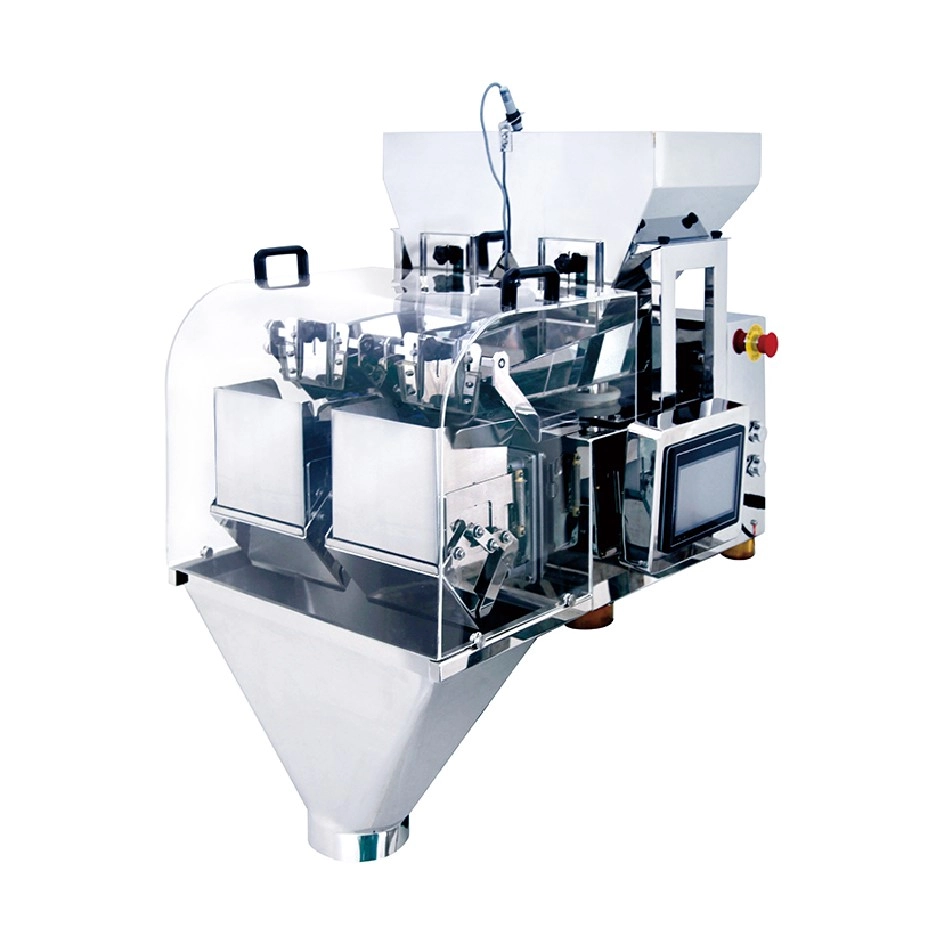
The linear weigher is perfect for precise, quantitative weighing of powdery and small granular materials such as white sugar, salt, monosodium glutamate, chicken essence, milk powder, coffee, seasoning powder, and more. Available in up to 5 different specifications, this linear scale offers a maximum weighing speed of up to 70 bags per minute, making it the top choice for accurately weighing powdery materials in high-speed production environments.
Precision Food Packaging Machine Using Single Head Bulk Linear Weigher Packaging System JW-B22
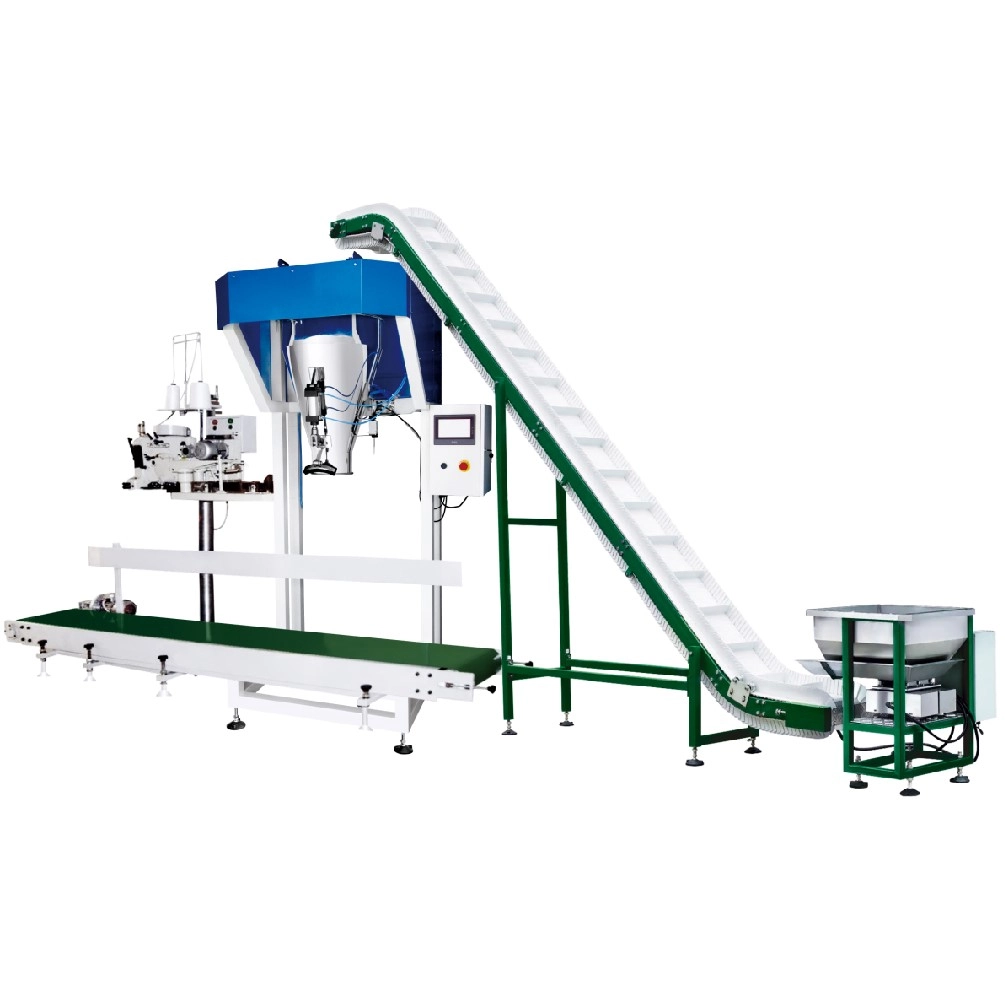
The Kenwei JW-B22 Precision Food Packaging Machine with Single Head Bulk Linear Weigher is designed for heavy-duty weighing up to 50kg. It automates feeding, weighing, bag sewing, and output for maximum efficiency. Ideal for grains like corn, rice, soybeans, barley, and wheat, it ensures high accuracy and reliability for the food, chemical, and light industries, making it the top choice for bulk grain packaging.
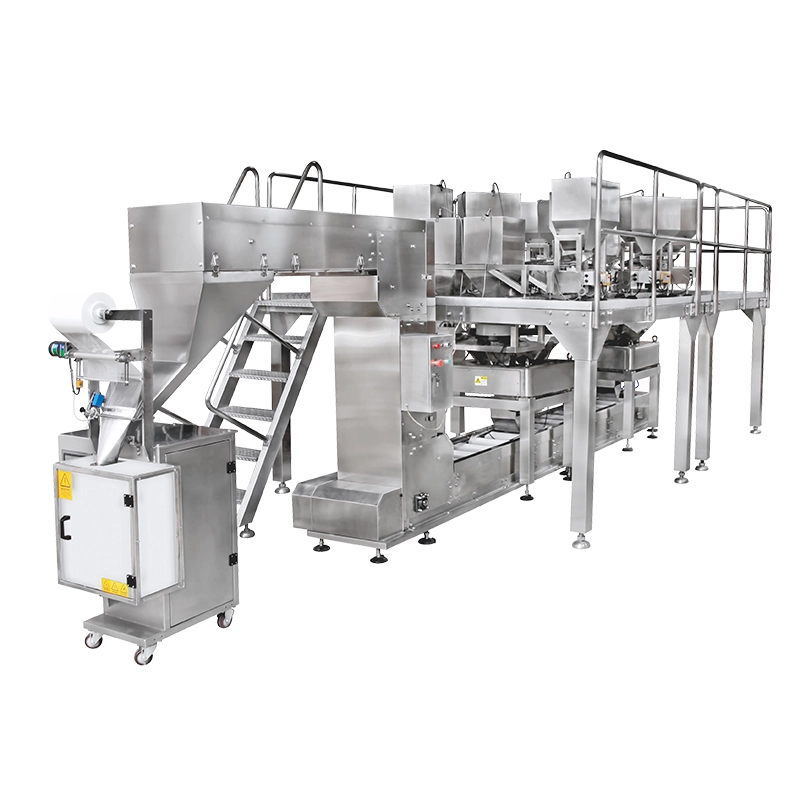
JW-B28 Multihead Weigher Mixing & Weighing System for Food Packaging | High-Speed, Accurate, Automated
The Kenwei JW-B26 Single Multihead Weigher Mixing and Packaging System offers fully automated operation, completing feeding, weighing, filling, date printing, and product output with high accuracy and speed. Ideal for granules, slices, irregular shapes, and mixed products like candy, nuts, snacks, pet food, and even small hardware. Its versatility and precision make it a perfect solution for diverse packaging needs.
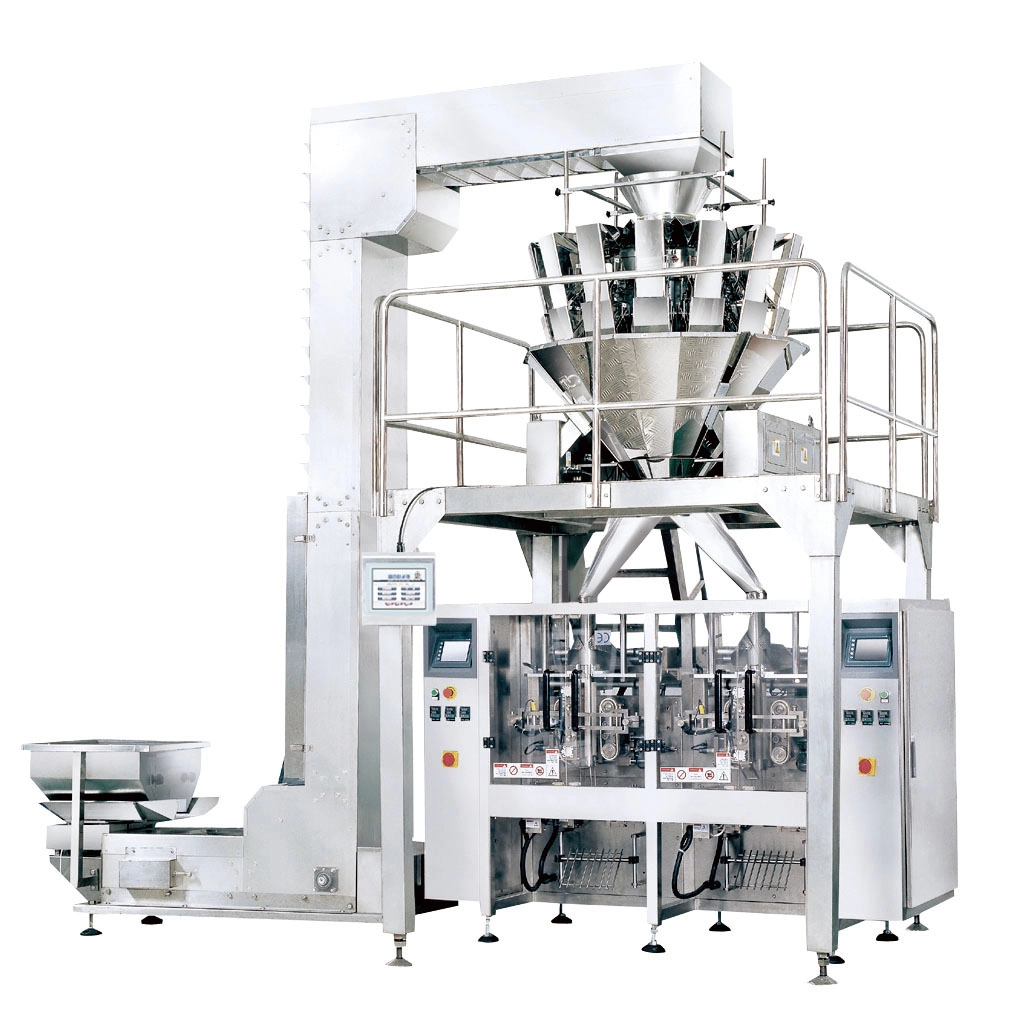
Fully Automatic Twin Packaging Machine for Granules Snack Foods Weighing JW-B2
Kenwei's JW-B2 Fully Automatic Twin Packaging Machine boasts 14-head multihead weighing for precise granule and snack food packaging. This high-speed automatic packaging machine offers efficient twin-packaging, maximizing your production output. Ideal for food manufacturers seeking enhanced speed and accuracy.
Get in touch with us
If you have any comments or good suggestions, please leave us a message, later our professional staff will contact you as soon as possible.
Kenwei
Kenwei
Kenwei multi weigh
Kenwei
Kenwei
Kenwei