






Integrating a Food Packaging Machine into Your Line
This article explains how to integrate a food packaging machine—specifically the Fully Automatic Cup Weighing and Packaging Machine for Snack Foods JW-B23—into a snack production line. It covers layout planning, mechanical and control integration, throughput and accuracy calculations, sanitation and compliance, commissioning and testing, and ongoing maintenance. Practical examples, a specification comparison, authoritative references, and FAQs help operations, engineering and QA teams implement the system successfully.
- Preparing Your Line for a New Food Packaging Machine
- Assess production goals and KPIs
- Line layout and footprint planning
- Utility and infrastructure requirements
- Mechanical and Control Integration
- Mechanical interfacing and product handling
- PLC, HMI and communication protocols
- Recipe management and changeover
- Ensuring Accuracy, Throughput and Compliance
- Understanding and validating weighing performance
- Throughput balancing and choke points
- Food safety, sanitary design and standards
- Commissioning, Validation and Ongoing Support
- Commissioning checklist
- Performance validation and documentation
- Training, spare parts and maintenance plans
- Practical Considerations and ROI
- Material compatibility and product handling
- Cost, payback and efficiency gain
- Case example: Typical integration metrics
- Product Overview: Fully Automatic Cup Weighing and Packaging Machine for Snack Foods JW-B23
- References and Further Reading
- Frequently Asked Questions (FAQ)
- Q1: Will the JW-B23 handle my snack product (chips, nuts, extruded snacks)?
- Q2: What are the sanitation and washdown capabilities?
- Q3: How do I validate accuracy and traceability after installation?
- Q4: What utilities and space should I prepare?
- Q5: How long does installation and commissioning usually take?
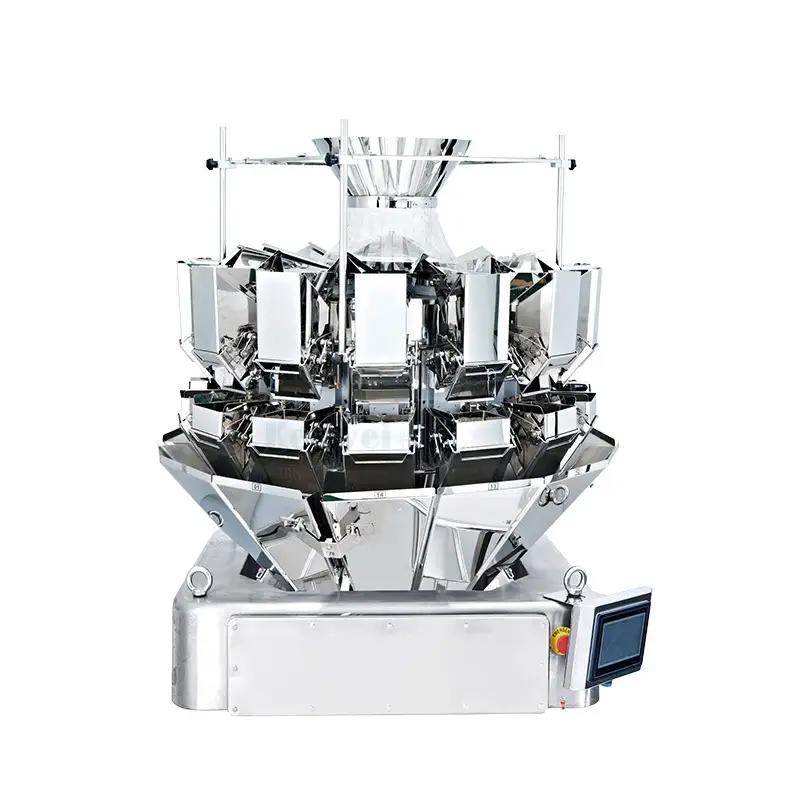
Integrating a food packaging machine into an existing production line requires coordinated planning across operations, engineering, QA and supply chain. This guide focuses on practical steps to integrate the Fully Automatic Cup Weighing and Packaging Machine for Snack Foods JW-B23, addressing line balancing, electrical and pneumatic interfaces, sanitary design, validation, and regulatory compliance to support reliable throughput, consistent fill accuracy and food-safety traceability for snack products. For optimal performance and longevity, regular maintenance of your fully automatic cup weighing machines is key. The JW-B23 comes with a straightforward maintenance guide that covers all essential tasks to keep the machine running smoothly. By following a maintenance checklist and addressing minor issues promptly, you can extend the life of the machine, minimize downtime, and maintain high productivity levels in your packaging line.
Preparing Your Line for a New Food Packaging Machine
Assess production goals and KPIs
Before installing a new food packaging machine, define the key performance indicators (KPIs) you expect the machine to meet: target throughput (cups/min), fill-weight accuracy (g or %), acceptable downtime, and product changeover time. The JW-B23 is designed for high-efficiency snack production with a 14-head combination scale that balances speed and accuracy—use those specs to set realistic KPIs and calculate required upstream/downstream buffer capacity. Clear KPIs let you size conveyors, hoppers and upstream dosing systems and avoid bottlenecks.
Line layout and footprint planning
Map the physical footprint including material infeed, product conveying, the JW-B23 station, and downstream capping/sealing and labeling equipment. Consider operator access for maintenance, cleaning and mold changeovers. Provide room for hopper refills and cup magazine replacements. Early coordination with mechanical engineering ensures the Z-type conveyor, vibrating feeder and cup mold conveyor align with existing conveyors for smooth product transfer.
Utility and infrastructure requirements
Verify electrical, compressed air, vacuum and drainage requirements. The JW-B23 integrates multiple subsystems—vibrating feeder, 14-head multihead weigher, automatic cup drop device and capping machine—which may require dedicated electrical lines and clean compressed air. Confirm your electrical capacity and install proper grounding and isolation. For food-safety compliance, route drainage to sanitary drains and ensure floor gradients allow for washdown. Include spare circuit capacity for future expansions.
Mechanical and Control Integration
Mechanical interfacing and product handling
Ensure mechanical compatibility between the JW-B23's Z-type conveyor, material diverter and your upstream feeders. Cup alignment and timing are critical: the automatic cup drop device and cup mold conveyor rely on precise synchronization to prevent misfeeds or double cups. Use adjustable guides and synchronization sprockets where necessary. For fragile snack items, confirm conveying speeds and drop heights to minimize breakage.
PLC, HMI and communication protocols
Modern lines use PLCs and HMIs to coordinate multiple machines. The JW-B23 should support standard industrial protocols (Modbus, EtherNet/IP, Profinet, or similar). During integration, define I/O mapping for start/stop, emergency stops, product-present sensors, fault reporting and recipe selection. If your MES/SCADA will gather production data, plan for OPC-UA or other supported interfaces to capture fill weights, rejects, uptime and batch IDs for traceability.
Recipe management and changeover
Recipe-driven controls let you switch between cup sizes and formulations with minimal manual adjustment. Program recipes for fill weight, cup mold combinations and conveyor speeds. The JW-B23 supports multiple mold cup combinations and automatic adjustments—validate each recipe during commissioning to ensure accuracy and reduce changeover time.
Ensuring Accuracy, Throughput and Compliance
Understanding and validating weighing performance
The multihead combination scale (14-head) is the heart of accurate portioning. For most snack applications, target a fill accuracy that meets product specifications and regulatory tolerances. Conduct initial weight-check trials and use Statistical Process Control (SPC) to monitor mean weight and variance. Periodic calibration against certified weights and documenting calibration results supports traceability and quality audits.
Throughput balancing and choke points
Calculate cycle time from feeder to finished product output. For each cup: feeder vibration → multihead weigh → divert to cup → cup drop → capping and discharge. The JW-B23's fully automatic sequence minimizes manual steps, but line throughput is also constrained by upstream packaging material supply and downstream capping/sealing speeds. Use a simple throughput table to identify choke points:
| Station | Nominal capacity | Possible constraint |
|---|---|---|
| Vibrating feeder + Z-conveyor | Varies by product (kg/min) | Bridging, product flowability |
| 14-head combination scale (JW-B23) | High-speed accuracy vs head count | Overloads with sticky or irregular items |
| Automatic cup drop & capping | Cups/min limited by capping head | Cup magazine size, mold changeover |
Food safety, sanitary design and standards
Use equipment constructed from food-grade stainless steel with hygienic welds and quick-disassemble components to support cleaning-in-place (CIP) or clean-out-of-place (COP) procedures. Follow recognized standards such as ISO 22000 for food safety management (ISO 22000) and FDA guidance on packaging materials and safety practices (FDA Packaging and Food Contact Substances). The WHO provides overviews on safe food handling practices that can inform SOPs (WHO Food Safety).
Commissioning, Validation and Ongoing Support
Commissioning checklist
Use a structured commissioning checklist covering mechanical alignment, electrical safety, PID tuning for feeder vibration, scale calibration, HMI recipe upload, and interlocks. Validate sensors and emergency stop circuits. Run a FAT (Factory Acceptance Test) where possible and a SAT (Site Acceptance Test) during onsite commissioning.
Performance validation and documentation
Document baseline performance: average fill weight, standard deviation, downtime, reject rates and cleaning cycle times. Keep records of calibration certificates and maintenance logs to support audits. For regulated markets, include traceability information like batch codes, production start/stop times and operator IDs—integrate these into your MES/traceability system where feasible.
Training, spare parts and maintenance plans
Train operators on changeover, daily checks, simple mechanical adjustments and alarm interpretation. Provide preventive maintenance schedules—lubrication points, sensor checks, belt tensioning and head calibration. Maintain a critical spares list (e.g., feeder motors, cup molds, sensors, seals) to reduce mean time to repair (MTTR). Consider a service contract with remote diagnostics if the OEM provides secure connectivity.
Practical Considerations and ROI
Material compatibility and product handling
Not all snack products behave the same in a vibrating feeder or multhead weigher. Very light, flaky or oily products may require customized feed hoppers, anti-static measures, or different vibratory amplitudes. Conduct product trials to ensure the JW-B23's material diverter and cup filling mechanisms handle your SKUs without excessive fines or breakage.
Cost, payback and efficiency gain
Estimate ROI by comparing current labor and yield losses from manual filling vs automated operation. Key savings come from reduced giveaway (more accurate fills), higher throughput and lower labor costs. Include CAPEX (machine cost, installation) and OPEX (energy, maintenance, spare parts) in a 3–5 year payback model. Use documented accuracy improvements and reduced rejects to calculate bottom-line gains.
Case example: Typical integration metrics
Below is an illustrative comparison between a generic automatic cup packaging line and the JW-B23-integrated line. Values are example estimates—use actual factory trials for precise planning.
| Metric | Generic auto cup line | JW-B23 integrated line (typical) |
|---|---|---|
| Throughput (cups/min) | 40–60 | 50–80 (depending on SKU) |
| Average fill accuracy | ±3–5% | ±1–3% |
| Changeover time | 20–45 min | 10–30 min (with recipes) |
| Estimated downtime | 8–12% of shift | 4–8% of shift |
For detailed calculations, run a pilot production test and collect SPC data over multiple shifts to quantify improvements in yield and operating cost.
Product Overview: Fully Automatic Cup Weighing and Packaging Machine for Snack Foods JW-B23
The JW-B23 is an integrated solution engineered to automate cup filling and packaging for snack foods. Key components and capabilities include:
The system consists of a vibrating feeder, a Z-type conveyor, a 14-head combination scale, a material diverter, an automatic cup drop device, a cup mold conveyor, a capping machine and a finished product conveying device. It has high-precision filling capabilities and is suitable for a variety of mold cup combinations. It can realize fully automatic operations of feeding, weighing, filling, bag making, printing and finished product output, and is suitable for a wide range of materials with high production efficiency.
- 14-head multihead weigher for rapid, accurate portioning
- Automatic cup dropping and mold conveyor for flexible cup sizes
- Integrated capping and finished product conveyor
- Recipe storage, PLC control and HMI for operator-friendly changeovers
- Hygienic construction to simplify cleaning and meet food-safety standards
For additional technical specifications and options (e.g., dust extraction, nitrogen flushing, vision inspection), contact the manufacturer or OEM representative to customize the JW-B23 for your SKU roster.
References and Further Reading
- ISO 22000 — Food safety management (ISO)
- FDA Guidance on Food Packaging and Contact Substances (FDA)
- WHO — Food Safety
- PMMI — The Association for Packaging and Processing Technologies
- Packaging — Wikipedia
Frequently Asked Questions (FAQ)
Q1: Will the JW-B23 handle my snack product (chips, nuts, extruded snacks)?
A1: The JW-B23 is designed for a broad range of snack products. However, product trials are recommended because particle shape, fragility and oiliness affect feed behavior. Trials will confirm vibration settings, feeder geometry and multihead weigher configuration to achieve target accuracy and minimal product breakage.
Q2: What are the sanitation and washdown capabilities?
A2: The JW-B23 is built with food-grade stainless steel and hygienic design features to facilitate cleaning. Depending on options, components can be designed for CIP or easy COP. Confirm with the supplier which parts are designed to withstand full washdown and which require removal prior to cleaning.
Q3: How do I validate accuracy and traceability after installation?
A3: Validate accuracy with certified calibration weights and run SPC for several production batches to capture mean and sigma. For traceability, enable the machine’s batch coding/printing features and integrate the machine’s data output with your MES/traceability system to record batch IDs, operator, line speed and alarms.
Q4: What utilities and space should I prepare?
A4: Prepare dedicated electrical supply per the machine electrical specification, stable clean compressed air (dry and filtered) for pneumatic components, and sufficient floor space for the JW-B23 footprint plus maintenance access. Plan sanitary drainage if washdown is required and ensure proper lighting and safety guards around the line.
Q5: How long does installation and commissioning usually take?
A5: Installation and commissioning time varies by site complexity. Typical timelines range from 2–6 weeks including mechanical installation, electrical hookup, PLC/HMI integration and final validation. Pre-shipment FAT and thorough planning often shorten on-site commissioning.
If you have specific product SKUs, production targets or facility constraints, our engineers can run a feasibility review and arrange on-site trials.
Want to see JW-B23 in action or discuss integration? View the product page or contact our sales team for a demo, specification sheet and personalized integration plan.
Tags
Working Platform
Working Platform
packaging machines for pet food
packaging machines for pet food
food packing machinery
food packing machinery
commercial food packaging machine
commercial food packaging machine
packaging machines for food
packaging machines for food
metal detectors food safety
metal detectors food safety
Recommended for you
The B2B Buyer’s Guide to metal detectors for food industry
The latest trends for linear weigher packaging machine
Integrating Combination Weigher into Automated Packaging Lines
Linear Weigher Accuracy: Tips to Reduce Weight Variance for Reliable Production
Prdoucts Categories
Question you may concern
About Solution suggestions
How do Kenwei’s machines improve my production efficiency?
Kenwei machines enhance efficiency by automating the weighing, packaging, and quality control processes. Our high-speed, high-precision machines ensure accurate measurements, reduce human error, and increase throughput, leading to faster production times and lower operational costs.
About Cooperation Process
What is the lead time for product delivery?
The lead time depends on the complexity of the order and the level of customization required. Typically, our products are shipped within 4-8 weeks after receiving the order confirmation. However, this can vary, and we will provide an estimated delivery date when you place your order.
About products customization
Can Kenwei machines be customized for different industries?
Yes,According to the material characteristics and requirements of different industries, we developed various machine types for counting (small pouches into big bag), noodles, frozen foods, peppers, stick-shaped products, product -mixing, cheeses, salads and so on.
Can Kenwei machines support multiple languages?
Yes, we can customize the software interface to support multiple languages, making it easier for operators from different regions to use the machine.
About Product choice
How do I choose the right product for my business?
Choosing the right machine depends on several factors:
Product Type: Different machines are suited for different products (e.g., powder, granules, etc.).
Production Capacity: Consider the volume of products you need to process and the speed requirements.
Customization: If you have specific needs, such as the need for unique features or sizes, we offer customization options.
You may also like
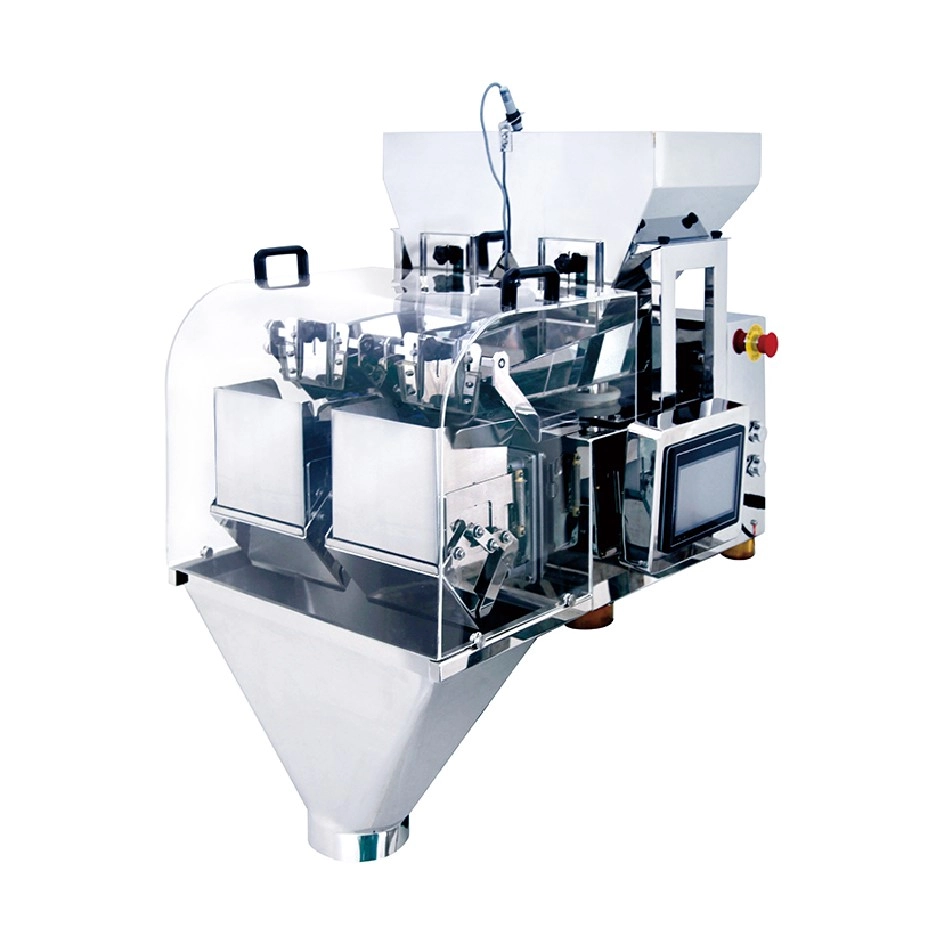
Precision Linear Weigher for Weighing Powder & Small Granules
The linear weigher is perfect for precise, quantitative weighing of powdery and small granular materials such as white sugar, salt, monosodium glutamate, chicken essence, milk powder, coffee, seasoning powder, and more. Available in up to 5 different specifications, this linear scale offers a maximum weighing speed of up to 70 bags per minute, making it the top choice for accurately weighing powdery materials in high-speed production environments.
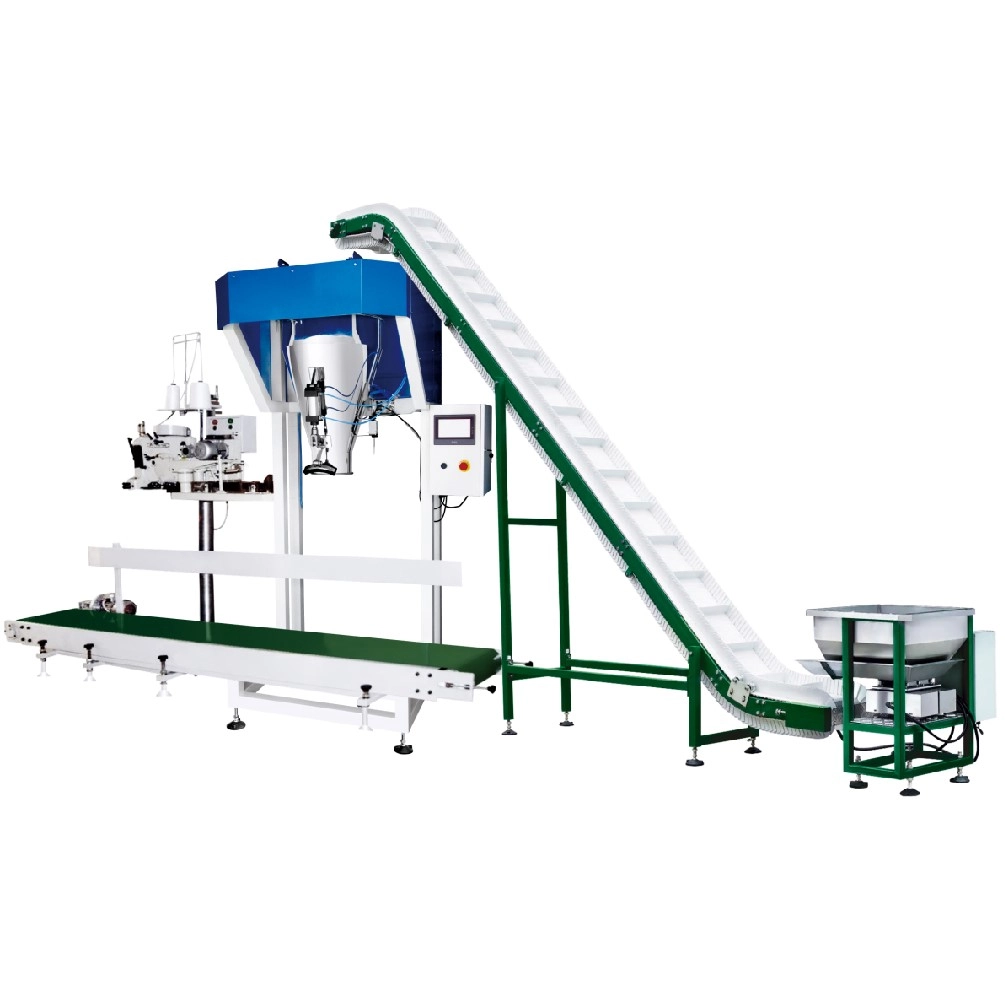
Precision Food Packaging Machine Using Single Head Bulk Linear Weigher Packaging System JW-B22
The Kenwei JW-B22 Precision Food Packaging Machine with Single Head Bulk Linear Weigher is designed for heavy-duty weighing up to 50kg. It automates feeding, weighing, bag sewing, and output for maximum efficiency. Ideal for grains like corn, rice, soybeans, barley, and wheat, it ensures high accuracy and reliability for the food, chemical, and light industries, making it the top choice for bulk grain packaging.
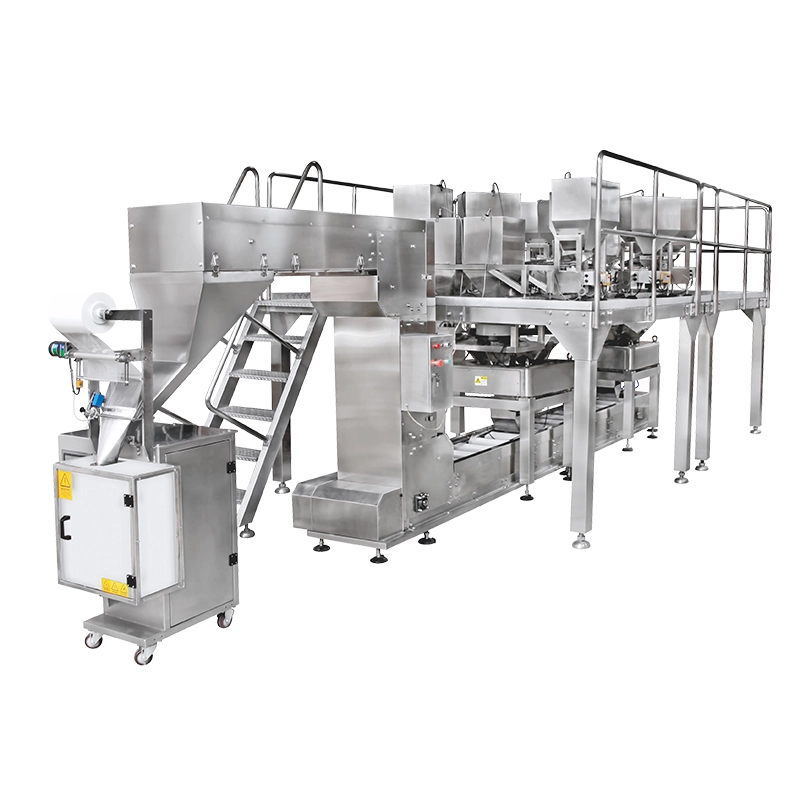
JW-B28 Multihead Weigher Mixing & Weighing System for Food Packaging | High-Speed, Accurate, Automated
The Kenwei JW-B26 Single Multihead Weigher Mixing and Packaging System offers fully automated operation, completing feeding, weighing, filling, date printing, and product output with high accuracy and speed. Ideal for granules, slices, irregular shapes, and mixed products like candy, nuts, snacks, pet food, and even small hardware. Its versatility and precision make it a perfect solution for diverse packaging needs.
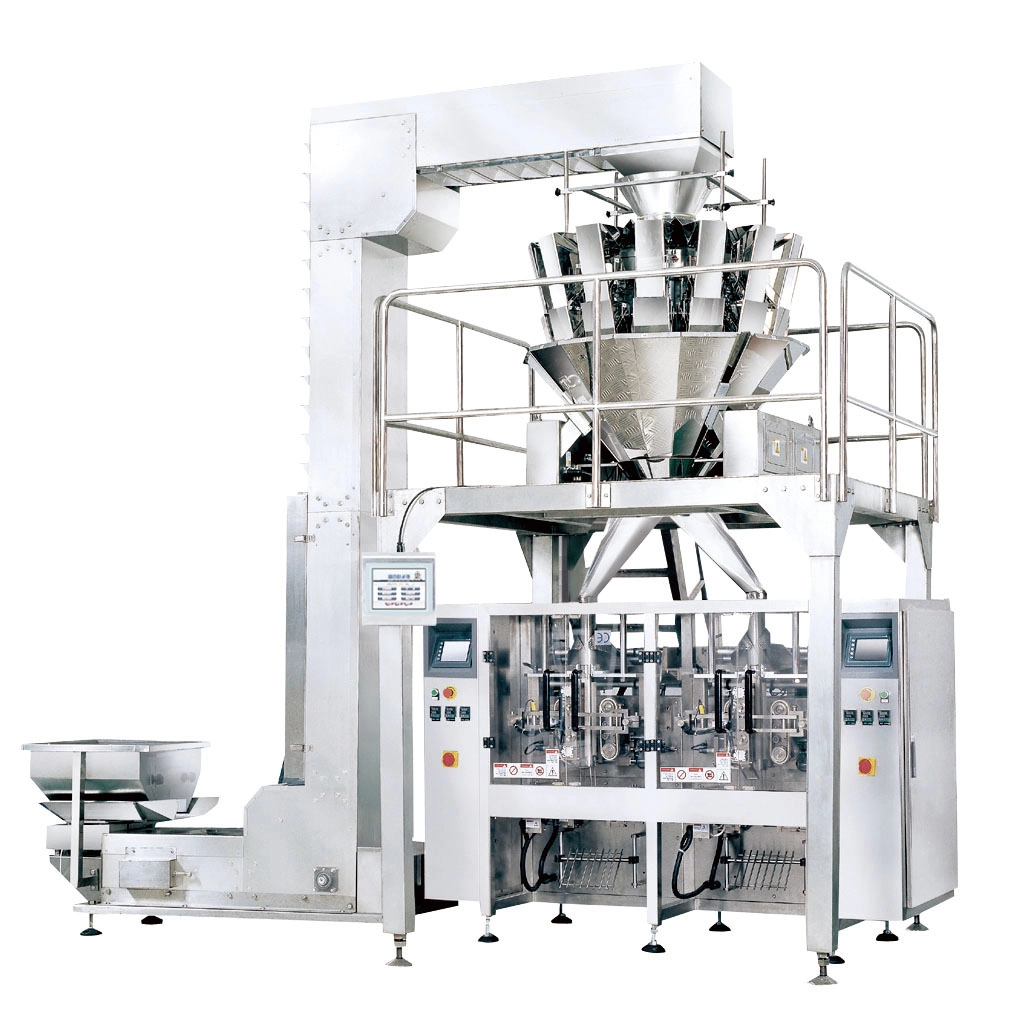
Fully Automatic Twin Packaging Machine for Granules Snack Foods Weighing JW-B2
Kenwei's JW-B2 Fully Automatic Twin Packaging Machine boasts 14-head multihead weighing for precise granule and snack food packaging. This high-speed automatic packaging machine offers efficient twin-packaging, maximizing your production output. Ideal for food manufacturers seeking enhanced speed and accuracy.
Get in touch with us
If you have any comments or good suggestions, please leave us a message, later our professional staff will contact you as soon as possible.
Kenwei
Kenwei
Kenwei multi weigh
Kenwei
Kenwei
Kenwei