






How to Choose a Vertical Packaging Machine for High Throughput
A practical guide to selecting a high-throughput vertical packaging machine, focusing on throughput targets, bag types, materials, integration with multihead weighers, maintenance, and ROI — featuring the Economic vertical form fill seal packing machine (VFFS).
- How to Choose a Vertical Packaging Machine for High Throughput
- Why choosing the right vertical packaging machine matters
- Understand throughput: define your target output with the vertical packaging machine in mind
- Match bag types and sizes to machine capability
- Product handling and dosing: weighers, augers, and compatibility
- Case study: Economic vertical form fill seal packing machine (VFFS)
- Material compatibility and film handling
- Hygiene, materials, and construction for food-grade applications
- Control systems and automation for consistent high throughput
- Maintenance, uptime, and spare parts strategy
- Sealing quality and package integrity at high speeds
- Safety, ergonomics, and operator training
- Footprint, layout, and scalability
- Energy consumption and total cost of ownership (TCO)
- Comparison table: key attributes when selecting a vertical packaging machine
- Integration tips: syncing a multihead weigher and a vertical packaging machine
- Testing and acceptance: ensure the vertical packaging machine meets SLA
- Brand advantages: why choose the Economic VFFS for high throughput lines
- Practical checklist before you buy a vertical packaging machine
- FAQ — Frequently Asked Questions about vertical packaging machines
- Q: What throughput can I expect from the Economic VFFS?
- Q: Can the Economic VFFS handle fragile products like crackers?
- Q: Is the machine compatible with multihead weighers?
- Q: How easy are changeovers between bag sizes and film types?
- Q: What maintenance is required?
- Contact us / View product
- Authoritative references and further reading

How to Choose a Vertical Packaging Machine for High Throughput
Why choosing the right vertical packaging machine matters
Selecting the correct vertical packaging machine is a decision that directly impacts production throughput, product quality, labor costs, and long-term profitability. Whether you are packing snacks, frozen foods, coffee beans, rice, or small hardware, a machine that matches your throughput needs and product characteristics avoids bottlenecks, reduces waste, and improves shelf appearance. In this guide we use practical criteria and real-world considerations to help you choose the ideal vertical packaging machine for high-throughput operations. After understanding how to choose a vertical packaging machine for high throughput, procurement teams often move on to evaluating investment value through an economic VFFS ROI and TCO analysis for procurement teams.
Understand throughput: define your target output with the vertical packaging machine in mind
Begin by defining the throughput you need in finished bags per minute (BPM) or units per hour. Throughput is influenced by bag format, product flowability, target weight consistency, sealing requirements, and operator shifts. Typical categories are:
- Low throughput: < 30 BPM (small runs, niche products)
- Medium throughput: 30–120 BPM (most snack and retail operations)
- High throughput: > 120 BPM (industrial-scale lines, continuous production)
When targeting high throughput, a vertical packaging machine must be selected not only for maximum speed rating but also for consistent reliability at that speed. Peak BPM numbers published by vendors are idealized; practical sustained throughput is lower because of changeovers, product bridging, and upstream/downstream constraints.
Match bag types and sizes to machine capability
A vertical packaging machine supports different bag styles (pillow bags, gusseted, angle-seal, printed bags, triangular bags). Ensure the machine specifies compatibility with the bag formats you need. Bag geometry affects sealing dynamics, film unwind requirements, and film registration (for printed film). A machine optimized for pillow bags may require different forming collars or sealing jaws for triangle or angle-belt bags.
Product handling and dosing: weighers, augers, and compatibility
High throughput requires fast, accurate dosing upstream of your vertical packaging machine. Multihead weighers are commonly paired with VFFS machines for granular products (snacks, nuts, coffee) because they combine speed with accurate portioning. For powders, auger fillers or volumetric cup fillers may be used. Confirm the vertical packaging machine’s infeed interface supports the dosing equipment you plan to use and that there is mechanical and control-level compatibility to synchronize cycle speeds.
Case study: Economic vertical form fill seal packing machine (VFFS)
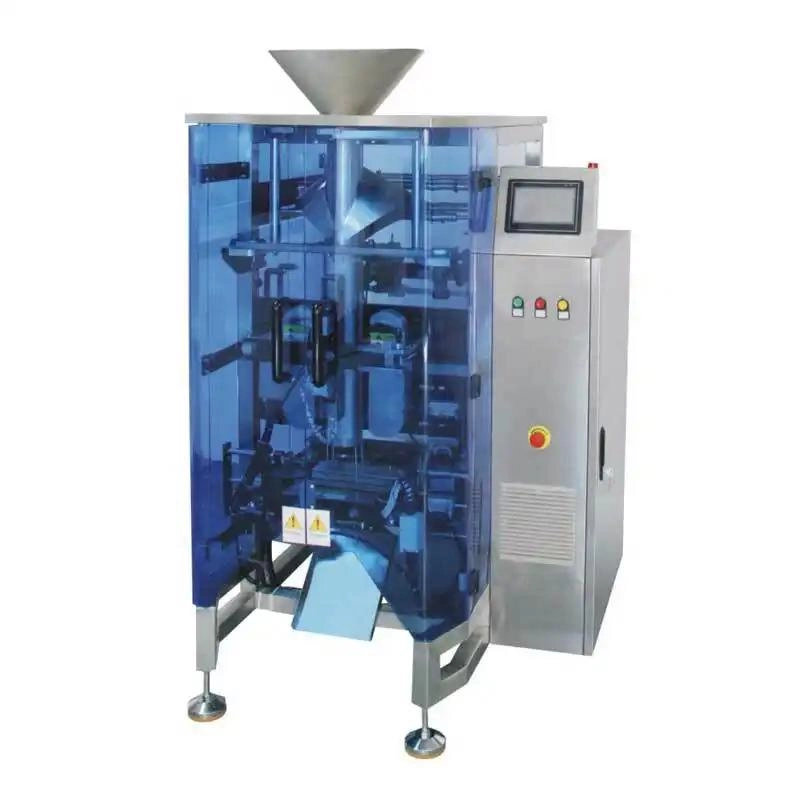
The Economic vertical form fill seal (VFFS) packaging machine offers a variety of models designed with a sturdy 304 stainless steel frame. It is equipped with safety door protection and supports multiple bag types, including pillow bags, angle belt bags, printed bags, and triangle bags. This versatile machine is ideal for packaging a wide range of materials, such as snacks, frozen foods, coffee beans, oats, sugar, salt, rice, small hardware components, and more. Affordable and cost-effective, it provides reliable performance and efficiency for diverse packaging needs.
Material compatibility and film handling
Consider the types of packaging film (PE, PP, laminated films, metalized films) your packaging requires. For printed films, a reliable film registration system and photo-eye or servo-driven registration are essential for correct print placement. For heat-seal films, confirm the machine’s sealing system—rotary vs. stationary sealing jaws, temperature control precision, and dwell time—can form consistent seals at your target speed. Also check the maximum film roll diameter and unwind tension control; larger rolls reduce downtime and are preferred for high-throughput lines.
Hygiene, materials, and construction for food-grade applications
For food products, prioritize machines built from food-grade materials and hygienic design. The Economic VFFS’s 304 stainless steel frame is standard in food production because it resists corrosion and cleans easily. Look for sanitary frame designs, IP-rated electrical enclosures, and minimal horizontal surfaces to avoid product accumulation. Also confirm cleanable components and ease of disassembly for routine CIP or dry-cleaning processes.
Control systems and automation for consistent high throughput
A modern control system (PLC with HMI) is central to achieving sustained high throughput. Functions to look for include recipe management, speed synchronization, fault diagnostics, and remote access capabilities. Servo-driven film pulling and sealing provide smoother motion, better speed control, and improved bag quality at high BPM. Integration-ready communications (Ethernet/IP, Modbus TCP, Profinet) help the vertical packaging machine connect to upstream weighers and downstream checkweighers or metal detectors for line-wide automation.
Maintenance, uptime, and spare parts strategy
High throughput magnifies the cost of downtime. Choose a vertical packaging machine with widely available spare parts, straightforward preventive maintenance schedules, and accessible components. Ask vendors about mean time between failures (MTBF) data and average response times for local technical support. Spare-part kits for wear items (seals, belts, jaws) and a recommended stock level should be part of procurement planning.
Sealing quality and package integrity at high speeds
At elevated speeds, inadequate sealing can lead to leaks, product loss, and customer returns. Confirm the vertical packaging machine can maintain consistent seal temperature and pressure even at peak BPM. For heat-sensitive products, consider impulse sealing or multiple-stage sealing jaws that reduce product exposure to heat. Quality assurance equipment such as in-line leak testers and visual inspection systems should be integrated for critical products.
Safety, ergonomics, and operator training
Safety interlocks, safety doors, and emergency stops are essential in any production environment. The Economic VFFS includes safety door protection, which helps meet workplace safety requirements and reduces the chance of operator injury. Ergonomics matter too—design elements that make film threading, changeovers, and maintenance easier will shorten downtime and reduce operator fatigue. Invest in operator training and clear SOPs for changeovers and troubleshooting.
Footprint, layout, and scalability
A vertical packaging machine should fit into your floor plan and work well with upstream dosing and downstream conveyors or inspection systems. Consider whether you need a compact footprint for limited space or room for additional modules (labelers, nitrogen flushers, date coders). Scalability is important: can you add another line or upgrade to a higher-speed model with minimal changes to your infrastructure?
Energy consumption and total cost of ownership (TCO)
Tally the machine’s energy consumption, expected uptime, spare part costs, and labor before making a decision. A lower initial purchase price can be offset by higher operating costs or downtime; conversely, an economical model like the Economic VFFS may provide an excellent balance of capital expense and operational efficiency for many businesses. Calculate TCO over a 3–5 year horizon to compare alternatives fairly.
Comparison table: key attributes when selecting a vertical packaging machine
| Attribute | Why it matters | High-throughput target |
|---|---|---|
| Maximum BPM | Defines possible peak output | >120 BPM for industrial lines |
| Supported bag types | Determines flexibility and market applications | Pillow, angle-belt, printed, triangle |
| Film roll capacity | Affects downtime for roll changes | 300–600 mm core, large OD preferred |
| Sealing system | Package integrity at speed | Servo-driven or high-performance rotary jaws |
| Hygienic design | Critical for food safety and cleaning | 304 stainless steel, easy-clean surfaces |
| Control & integration | Syncs line and reduces bottlenecks | PLC, HMI, Ethernet/IP, Modbus |
| Compatibility with weighers | Ensures smooth product dosing | Mechanical & control integration with multihead weighers |
Integration tips: syncing a multihead weigher and a vertical packaging machine
To reach consistent high throughput, the multihead weigher and vertical packaging machine must be synchronized. Key steps include:
- Use a common PLC or high-speed communication protocol to coordinate pick-and-place timing.
- Match the multihead weigher’s discharge pattern to the vertical machine’s fill cycle to avoid overfills or partial fills.
- Implement buffer conveyors or surge hoppers to smooth transient mismatches between upstream and downstream speeds.
- Test with full production runs and representative product to validate sustained BPM and make adjustments to dosing targets and machine timing.
Testing and acceptance: ensure the vertical packaging machine meets SLA
Before final acceptance, require factory acceptance tests (FAT) and site acceptance tests (SAT) that include:
- Sustained run test at target BPM for several hours, using actual product and film.
- Verification of weight accuracy and seal integrity across a representative batch.
- Control integration tests with upstream and downstream equipment.
- Operator training and documentation handover.
Brand advantages: why choose the Economic VFFS for high throughput lines
The Economic vertical form fill seal packing machine (VFFS) balances affordability with production features that matter for high-throughput operations. Key brand advantages include:
- Robust 304 stainless steel construction for durability and sanitary operation.
- Support for multiple bag types (pillow, angle-belt, printed, triangle) increasing product flexibility.
- Safety door protection and operator-friendly design to reduce downtime and improve safety compliance.
- Compatibility with common dosing systems (multihead weighers, augers), enabling straightforward line integration.
- Cost-effective pricing that reduces capital outlay while delivering reliable performance for many mid-to-high throughput needs.
Practical checklist before you buy a vertical packaging machine
Use this checklist to confirm the machine fits your operational needs:
- Defined target throughput (BPM/units per hour).
- Verified bag formats and film compatibility.
- Confirmed dosing method and mechanical/control compatibility.
- Hygiene and material suitability for your products.
- Integration capabilities (communications, conveyors, checkweigher, metal detector).
- Availability of spare parts, local service, and training.
- Total cost of ownership analysis over 3–5 years.
FAQ — Frequently Asked Questions about vertical packaging machines
Q: What throughput can I expect from the Economic VFFS?
A: Throughput depends on bag size, product characteristics, and dosing. Typical sustained rates for the Economic VFFS range from 30–120 BPM depending on model and configuration. For industrial high-throughput applications, confirm the specific model's rated BPM and perform on-site testing with your product.
Q: Can the Economic VFFS handle fragile products like crackers?
A: Yes. With appropriate gentle product handling, optimized fill speeds, and careful drop-height control (or product-guiding devices), the VFFS can pack fragile snack products with low breakage.
Q: Is the machine compatible with multihead weighers?
A: The Economic VFFS supports integration with common multihead weighers. Synchronization at the control level is recommended for optimal results.
Q: How easy are changeovers between bag sizes and film types?
A: The machine is designed for relatively fast changeovers; however, exact times depend on operator skill and available tooling. Training and clear SOPs reduce changeover time significantly.
Q: What maintenance is required?
A: Routine maintenance includes cleaning, lubrication of moving parts, inspection/replacement of sealing jaws, belts, and sensors. Follow the vendor’s preventive maintenance schedule to maximize uptime.
Contact us / View product
If you are evaluating vertical packaging machines for increased throughput, contact our sales and technical team to discuss line layouts, sample testing with your product, and an on-site assessment. Request a demo of the Economic vertical form fill seal packing machine (VFFS) to validate throughput and packaging quality under your operating conditions.
Authoritative references and further reading
- Vertical form-fill-seal machine — Wikipedia
- Packaging World — Industry Articles and Case Studies
- U.S. Food and Drug Administration — Food Safety and Packaging
- Packaging Europe — News and Technical Coverage
Note: For precise technical data, FAT/SAT protocols, and to arrange product testing, please contact our sales team.
Tags
Weight sorting machine
Weight sorting machine
Stainless steel linear weigher
Stainless steel linear weigher
food metal detector
food metal detector
Visual counting machine
Visual counting machine
multihead weigher software
multihead weigher software
Rotating Collecting Tables for Packaging Machine Line
Rotating Collecting Tables for Packaging Machine Line
Recommended for you
Packaging Material Compatibility for Vertical Packaging Machines
Food Packing Machine Installation and Setup Checklist
The B2B Buyer’s Guide to snack food packaging machine
The B2B Buyer’s Guide to checkweigher metal detector combination
Prdoucts Categories
Question you may concern
About Cooperation Process
What is the lead time for product delivery?
The lead time depends on the complexity of the order and the level of customization required. Typically, our products are shipped within 4-8 weeks after receiving the order confirmation. However, this can vary, and we will provide an estimated delivery date when you place your order.
About Solution suggestions
Can Kenwei solutions be adapted for different product packaging types?
Yes, Kenwei solutions can handle a variety of packaging types, including bags, boxes, pouches, and bottles. We can customize machines to suit your packaging format, ensuring compatibility with your packaging equipment.
About products customization
Can I customize Kenwei machines to suit my specific needs?
Yes, Kenwei offers a wide range of customization options to ensure that our machines meet your production requirements.
About After Sales Support
Can I get remote troubleshooting assistance?
Yes, Kenwei offers remote troubleshooting for certain issues. Our technical team can guide you through diagnostics and help resolve issues via phone, video call, or online messaging.
About Logistics
Do I need to prepare my facility for the delivery of large machines?
Yes, large machines often require special preparations for delivery, including ensuring adequate space for unloading and installation.
You may also like
Automatic Multi-Function Pouch Weighing and Packing Machine – 65 BagsMin for Efficient Packaging
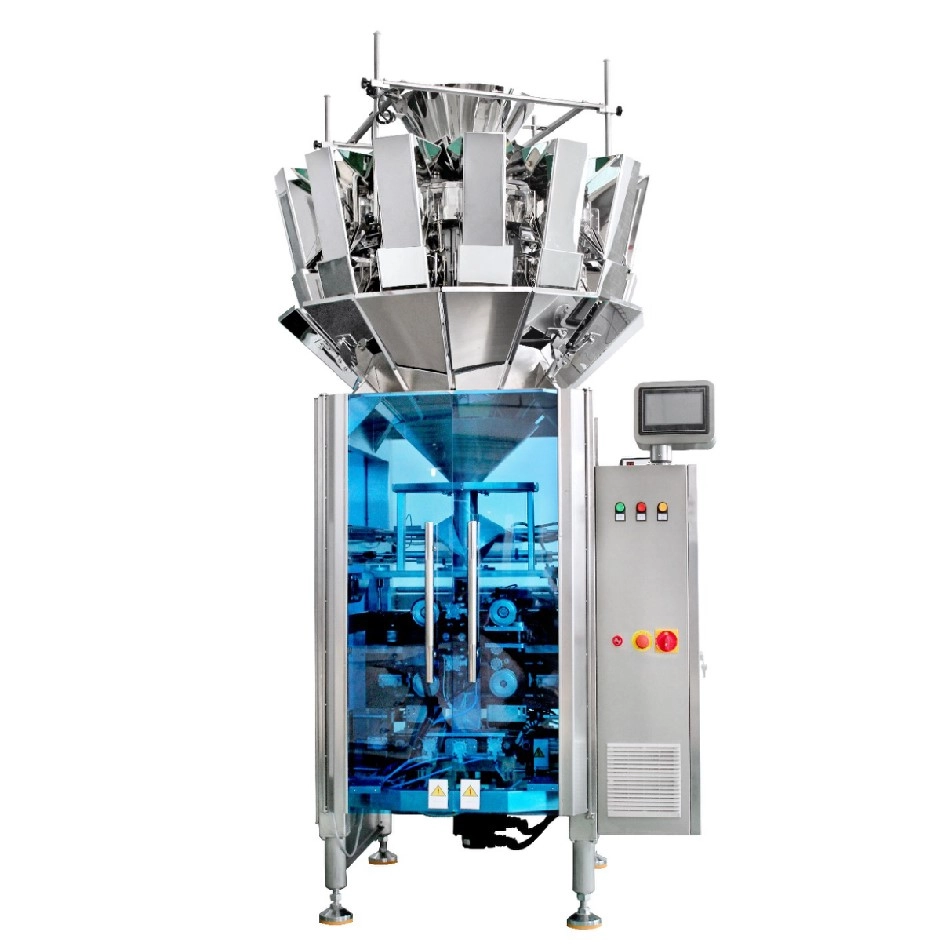
The mini combined weighing and packaging machine integrates a miniature multi-head scale with a vertical packaging machine, all controlled by an advanced PLC program. This fully automatic system handles metering, filling, bag-making, date printing, and packaging output. Ideal for weighing small particles such as Chinese herbal medicine, tea, seeds, monosodium glutamate, chicken essence, coffee beans, chocolate, and more. With its affordable price, low maintenance costs, and high efficiency, the mini combined weighing and packaging machine is an economical choice for small-scale operations.
Mini Combined Weighing and Packing Machine with Multihead Weigher for Tea Powder, Coffee Beans, and More
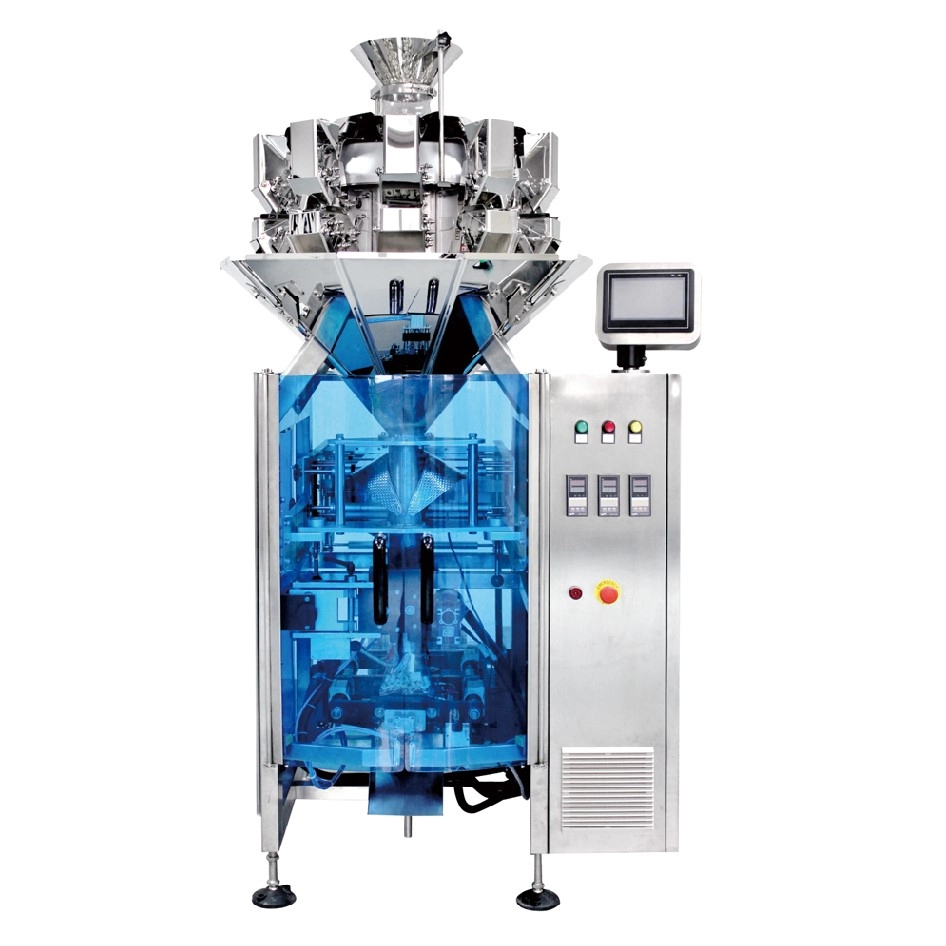
The mini combined weighing and packaging machine integrates a compact multi-head scale with a vertical packaging machine, all controlled by an advanced PLC program. This fully automated system handles precise metering, filling, bag-making, date printing, and packaging output. Ideal for weighing small particles such as Chinese herbal medicine, tea, seeds, monosodium glutamate, chicken essence, coffee beans, chocolate, and more. The mini combined weighing and packaging machine is cost-effective, economical, and offers low maintenance costs, making it an excellent choice for small-scale packaging operations.
Standard Vertical Weighing And Packaging Machine For Granules Puffy Foods JW-B1
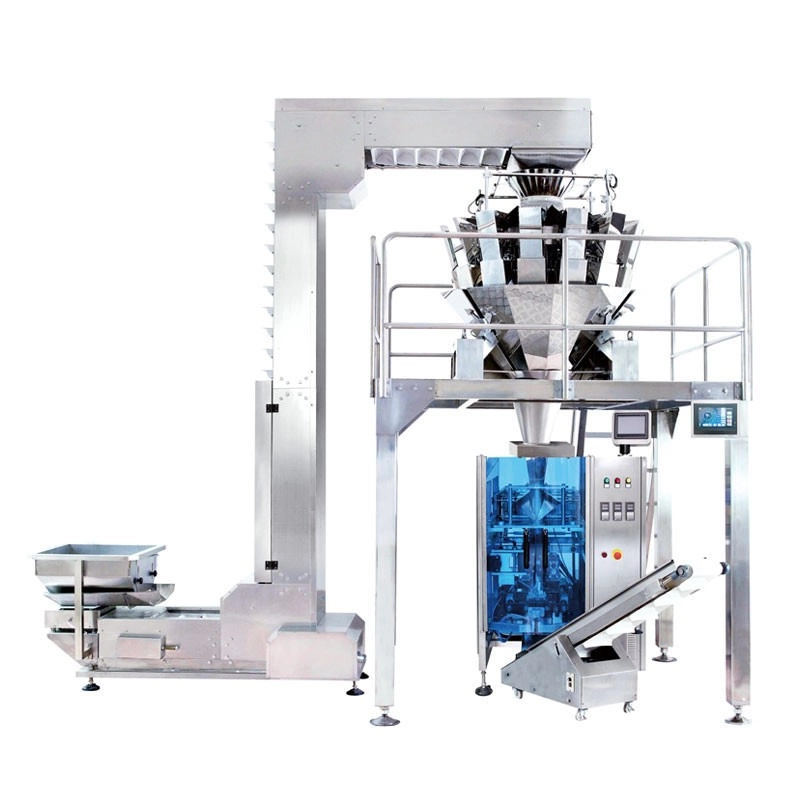
Discover Kenwei’s Standard Vertical Weighing And Packaging Machine For Granules Puffy Foods. This efficient vertical packaging machine accurately weighs and packs a variety of foods, making it the ideal weighing and packaging machine for granules and puffy snacks.
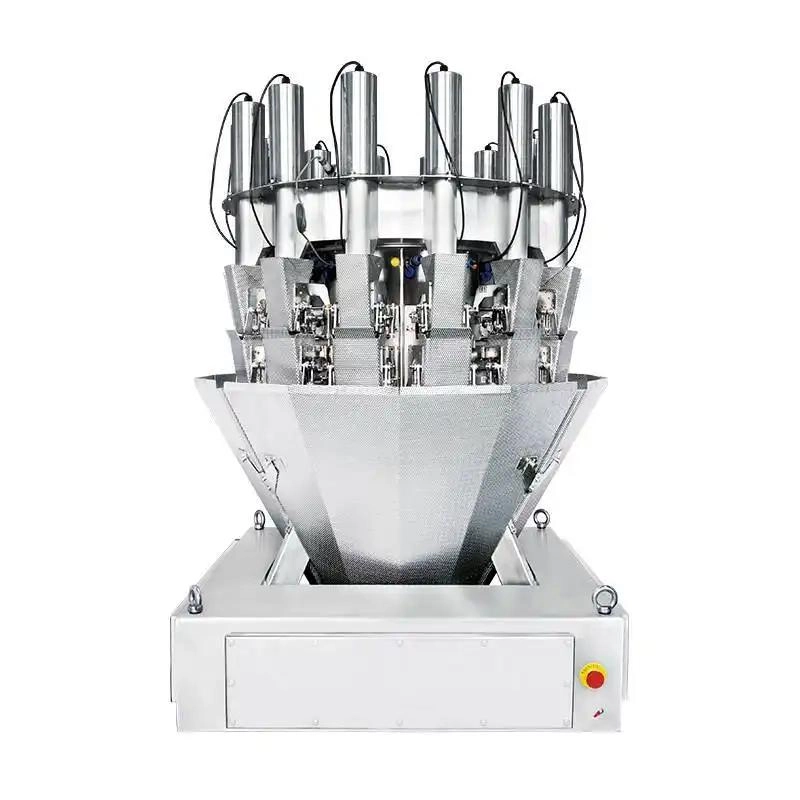
14 Heads Vertical Single Screw Feeding Pickles Weigher backups
This type of weigher is designed to handle the unique characteristics of pickles, ensuring precise measurements for packaging and distribution. It uses a vertical single screw mechanism to feed the pickles into the weighing system, allowing for efficient and consistent weighing. This technology is particularly useful in food processing and packaging facilities where precise portioning is essential for quality control and customer satisfaction. This specialized equipment is perfect for accurately measuring and dispensing pickles in a production line or packaging facility. The vertical design allows for efficient and precise filling of containers, while the single screw feeding mechanism ensures consistent and reliable weighing.
Get in touch with us
If you have any comments or good suggestions, please leave us a message, later our professional staff will contact you as soon as possible.
Kenwei
Kenwei
Kenwei multi weigh
Kenwei
Kenwei
Kenwei