






Top features to evaluate in a 14 head multihead weigher buying guide
This comprehensive buying guide explains the key features to evaluate when selecting a 14 head multihead weigher—especially for pickled products. It covers accuracy, feed systems, gentle product handling, hygiene, controls and integration, spare parts and backups (including the 14 Heads Vertical Single Screw Feeding Pickles Weigher backups), maintenance, throughput, ROI, and compliance. Includes a comparison table, FAQs, authoritative references and a contact CTA to view the product.
- Top features to evaluate in a 14 head multihead weigher buying guide
- Why choose a 14 head multihead weigher for pickles?
- Product snapshot: 14 Heads Vertical Single Screw Feeding Pickles Weigher backups
- Accuracy and repeatability: what to measure
- Feeding system compatibility: vertical single screw considerations
- Gentle handling and product integrity
- Hygiene, cleanability and food safety compliance
- Throughput, cycle time and production matching
- Control systems, software and integration
- Maintenance, spare parts and the role of backups
- Cost of ownership: ROI, energy and consumables
- Safety, certifications and legal compliance
- Key feature comparison table: Picking a weigher for pickles
- Installation, commissioning and training
- Selecting the right supplier and verifying claims
- Brand advantages — why consider this product and supplier
- Checklist: questions to ask vendors before buying a 14 head multihead weigher
- Frequently Asked Questions (FAQ)
- Q: Is a 14 head multihead weigher suitable for all kinds of pickles?
- Q: How much floor space and utilities does a 14 head weigher require?
- Q: How often will the weigher need calibration?
- Q: Can the weigher handle brined products without corrosion issues?
- Q: What backup strategy should I have to avoid production loss?
- Contact us / View product
- Authoritative references and further reading

Top features to evaluate in a 14 head multihead weigher buying guide
Why choose a 14 head multihead weigher for pickles?
When packaging pickles you need a balance of speed, portion accuracy and gentle handling. A 14 head multihead weigher hits a sweet spot for medium-to-high throughput production lines: it offers more combination possibilities than smaller configurations (improving accuracy and reducing giveaway) while keeping machine size, cost and maintenance manageable compared with very large heads. for “14 head multihead weigher” is typically commercial—buyers want to compare features, validate suitability for fragile or irregular products like pickles, and confirm total cost of ownership before contacting suppliers. Once the key features are evaluated, proper setup becomes the next priority. Accurate operation depends heavily on following best practices for calibrating a 14 head multihead weigher, especially when handling sticky or uneven pickle products.
Product snapshot: 14 Heads Vertical Single Screw Feeding Pickles Weigher backups
This type of weigher is designed to handle the unique characteristics of pickles, ensuring precise measurements for packaging and distribution. It uses a vertical single screw mechanism to feed the pickles into the weighing system, allowing for efficient and consistent weighing. This technology is particularly useful in food processing and packaging facilities where precise portioning is essential for quality control and customer satisfaction. This specialized equipment is perfect for accurately measuring and dispensing pickles in a production line or packaging facility. The vertical design allows for efficient and precise filling of containers, while the single screw feeding mechanism ensures consistent and reliable weighing.
Accuracy and repeatability: what to measure
Accuracy is the primary purchasing criterion for most weighers. Evaluate these metrics:
- Average weight error (grams or percentage) at your target portion sizes.
- Repeatability over a production run (drift, standard deviation).
- Minimum detectable weight and maximum head load.
For pickles, irregular shape and varying moisture content make repeatability more challenging. A 14 head machine usually produces tighter combination sums (more possible head combinations to reach target weight) than 10- or 8-head models, reducing giveaway and improving accuracy. Ask suppliers for verified weigh tests on pickles or similar produce.
Feeding system compatibility: vertical single screw considerations
The feeding method directly affects performance with pickles. The vertical single screw feeding design used by the 14 Heads Vertical Single Screw Feeding Pickles Weigher backups brings several advantages:
- Consistent metering of individual pieces into the feed chutes.
- Reduced horizontal impact and tumbling, which helps protect product integrity.
- Simpler mechanical design versus vibratory feeders, often requiring fewer adjustments.
During evaluation, request demonstrations showing the exact pickle variety you will run: length, diameter, brine, and cut style (whole, spears, slices) all influence performance.
Gentle handling and product integrity
Pickles are soft, wet and can bruise or split if handled too aggressively. Key features to inspect:
- Conveyor and chute lining materials (food-grade, low-friction, anti-stick).
- Adjustable chute angles and speeds to reduce drop height.
- Head designs (bowl and hopper geometry) that avoid crushing or jamming.
Ask for video evidence or on-site trials where the supplier runs your product at your target speed.
Hygiene, cleanability and food safety compliance
Hygiene is non-negotiable for food applications. Evaluate:
- Construction materials (304 / 316 stainless steel where appropriate).
- Tool-less or quick-disassembly features for washdown and CIP (clean-in-place).
- Sealed electronics or IP-rated enclosures for washdown environments.
- Design features that avoid crevices and water traps—rounded corners, sloped surfaces.
Ensure the machine’s design conforms with relevant food equipment guidance (FDA, EHEDG) and ask for documentation. For pickles, high-salt brine exposure accelerates corrosion—specify corrosion-resistant finishes and confirm validation procedures.
Throughput, cycle time and production matching
Match the weigher’s maximum cycles-per-minute to your packaging line’s needs. A 14 head weigher can achieve high combination rates, but real throughput depends on:
- Number of weighments per minute the controller can compute and execute.
- Average pieces per weigh and distribution of piece sizes.
- Downstream filling and sealing equipment speed.
Always test the full integrated line (feeder → weigher → filler) to validate true end-to-end throughput. Suppliers should provide realistic throughput data from comparable installations.
Control systems, software and integration
Modern weighers include powerful controllers for recipe management, diagnostics and integration:
- Recipe memory for multiple SKUs (weights, speeds, combination strategies).
- Open communication protocols (Ethernet/IP, Profinet, Modbus) for PLC/HMI integration.
- Data logging for traceability, production reporting, and quality control.
Good HMI design reduces operator errors; remote diagnostics or Industry 4.0 readiness can reduce downtime. Check whether the supplier provides software updates and what is included in support contracts.
Maintenance, spare parts and the role of backups
Planned maintenance and quick parts availability are crucial. When evaluating suppliers, examine:
- Mean time to repair (MTTR) for common failures.
- Availability of critical spare parts and local stocking options.
- Service agreements and remote support capabilities.
The product name “14 Heads Vertical Single Screw Feeding Pickles Weigher backups” highlights the importance of backup components and redundancy planning. Ask about modular head assemblies that can be swapped quickly and whether the supplier offers backup kits for wear components (screws, chutes, motors) to minimize downtime.
Cost of ownership: ROI, energy and consumables
Purchase price is just one element—calculate total cost of ownership (TCO):
- Energy consumption per hour and for peak operation.
- Spare parts and consumables (seals, belts, liners).
- Labor costs for cleaning and maintenance.
- Waste and giveaway rates (impact on product cost).
Better accuracy and less giveaway can justify a higher initial investment. Ask suppliers for payback calculations based on your SKU mix and production volumes.
Safety, certifications and legal compliance
Confirm machine safety features and certifications relevant to your region:
- CE marking for the EU; UL or CSA for North America where applicable.
- Emergency stops, safety interlocks and guarding that allow safe access for cleaning.
- Documentation for electromagnetic compatibility (EMC) and electrical safety.
For export markets, verify documentation and local service availability to avoid customs or operational delays.
Key feature comparison table: Picking a weigher for pickles
| Feature | Importance for Pickles | What to check |
|---|---|---|
| Accuracy & Repeatability | High | Weigh tests on your pickle SKU; standard deviation and average error |
| Feeding Mechanism | High | Vertical single screw vs vibratory—consistency and gentle metering |
| Hygiene & Materials | High | Stainless grades, washdown rating, no product traps |
| Throughput | Medium-High | Weigh cycles/min and integration with filler speed |
| Maintenance & Spare Parts | High | Availability of backups, modular heads, service agreements |
| Controls & Integration | Medium | Communication protocols, recipe management, data logging |
| Product Handling (Gentleness) | High | Drop height, chute design, anti-stick surfaces |
Installation, commissioning and training
Successful adoption requires more than equipment delivery. Ask suppliers about:
- On-site commissioning scope and acceptance tests.
- Operator and maintenance training packages.
- Documentation: manuals, SOP templates, spare parts lists.
Well-documented handover reduces startup problems and speeds ROI.
Selecting the right supplier and verifying claims
Supplier selection should weigh technical capability, references, after-sales support and financial stability. Request:
- Case studies or references from customers packaging similar products (pickles or brined vegetables).
- Factory acceptance test (FAT) reports and third-party verification if available.
- Clear warranty terms and service level agreements (SLAs).
Brand advantages — why consider this product and supplier
The 14 Heads Vertical Single Screw Feeding Pickles Weigher backups offer an application-specific solution: the vertical single screw feed is inherently suited to cylindrical or elongated wet products such as whole pickles or spears, reducing bounce and misfeeds. Key brand advantages to highlight when evaluating vendors:
- Application expertise: demonstrated testing on pickles and similar products.
- Spare parts strategy: modular head backups and local stocking reduce downtime.
- Hygienic design with washdown-capable construction to handle brine exposure.
- Integration support: flexible controls and data reporting for modern packaging lines.
These strengths translate into lower giveaway, higher uptime, and smoother regulatory compliance for food manufacturers.
Checklist: questions to ask vendors before buying a 14 head multihead weigher
- Can you run a sample test with our exact pickle SKU? Can I see video or test reports?
- What is the average error and standard deviation at our target portion size?
- What spare parts are recommended to keep in inventory? Are backup heads available?
- How is the machine cleaned and how long does a full washdown take?
- Which communication protocols and recipe management functions are provided?
- What warranty and service packages do you offer, and what are typical response times?
Frequently Asked Questions (FAQ)
Q: Is a 14 head multihead weigher suitable for all kinds of pickles?
A: Generally yes for whole pickles, spears and larger pieces. Sliced or very small diced pickles may require a different feeder or vibratory system. Always run a sample test to confirm.
Q: How much floor space and utilities does a 14 head weigher require?
A: Space and utility needs vary by model and options (e.g., infeed conveyors, platform). Typical units require modest floor space and standard three-phase power; request manufacturer drawings and utility lists during specification.
Q: How often will the weigher need calibration?
A: Daily zero checks and periodic calibration intervals depend on use; many operations perform weekly or monthly calibrations overseen by QC. Automated self-check routines and weight logs help maintain compliance.
Q: Can the weigher handle brined products without corrosion issues?
A: If specified with appropriate stainless steel grades (304 or 316 where necessary) and protective coatings, the machine can be used for brined products. Confirm seals and electrical protections for washdown environments.
Q: What backup strategy should I have to avoid production loss?
A: Keep critical spare parts (screws, bowl liners, motors) on-site, maintain a hot-swap head or two if feasible, and have a service contract with fast response. The product name explicitly references backups—discuss packaged backup kits with your supplier.
Contact us / View product
If you are ready to evaluate the 14 Heads Vertical Single Screw Feeding Pickles Weigher backups on your product, contact our sales team for a customized trial, FAT documentation and ROI analysis. Request an on-site or video demonstration with your pickle SKU to validate performance and uptime expectations.
Authoritative references and further reading
- Multihead weigher — Wikipedia: https://en.wikipedia.org/wiki/Multihead_weigher
- Packaging Machinery Manufacturers Institute (PMMI) — Packaging technology resources: https://www.pmmi.org/
- European Hygienic Engineering & Design Group (EHEDG) — hygienic equipment design guidelines: https://www.ehedg.org/
- U.S. Food & Drug Administration (FDA) — Food equipment guidance: https://www.fda.gov/food
End of guide.
Tags
Linear weigher for pet food packaging
Linear weigher for pet food packaging
premade pouch filling machine for liquids and powders
premade pouch filling machine for liquids and powders
food safety metal detectors
food safety metal detectors
Linear weigher for candy and confectionery
Linear weigher for candy and confectionery
metal detectors in the food industry
metal detectors in the food industry
Frozen Food Packaging Machine
Frozen Food Packaging Machine
Recommended for you
How a Pill Counter Machine Boosts Pharmacy Accuracy and Speed
Selecting a metal detector for aluminum-packed products
Everything You Need to Know About automatic check weigher
Upgrading Your Food Packing Machine: When and What to Replace
Prdoucts Categories
Question you may concern
About Price and payment
Are the prices for Kenwei machines negotiable?
Prices are generally fixed, but depending on the order volume, long-term partnerships, or special circumstances, we may offer discounts or promotional pricing. Please contact our sales team to discuss your specific situation.
About Product choice
Are there any additional features available for Kenwei machines?
Yes, we offer a variety of optional features for customization, such as: advanced touchscreen interfaces, multiple language support and so on.
About Solution suggestions
Can Kenwei provide solutions for high-volume production?
Yes, Kenwei specializes in high-speed, high-throughput machines designed for large-scale operations. Our multi-head weighers, packing machines, and check weighers.
About After Sales Support
How about the after-sales service?
Warranty :2 years
About products customization
How do I request a custom-built Kenwei machine?
To request a customized machine, simply contact our sales or engineering team.
You may also like
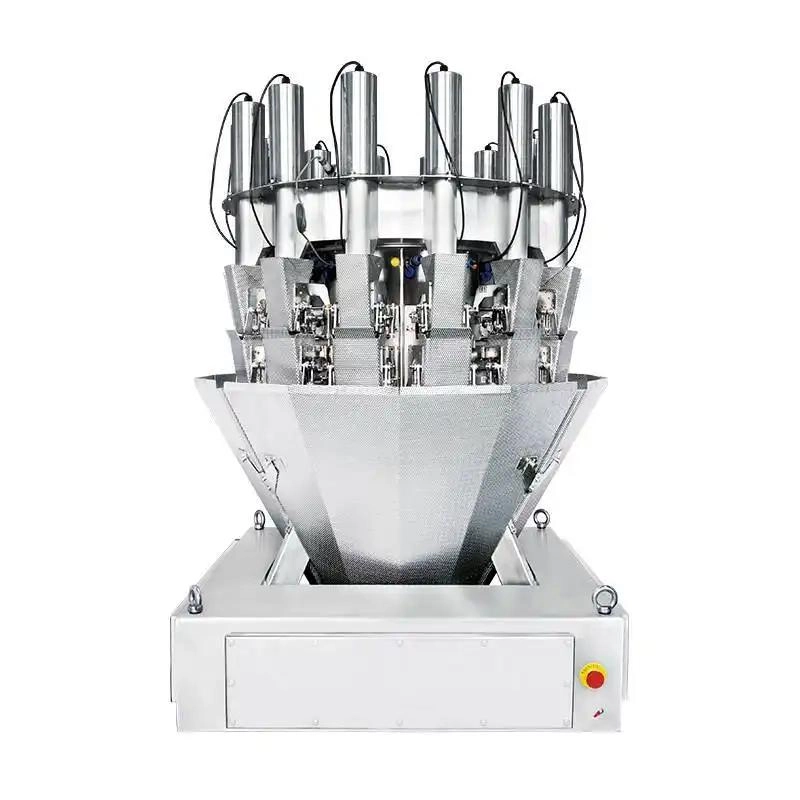
14 Heads Vertical Single Screw Feeding Pickles Weigher backups
This type of weigher is designed to handle the unique characteristics of pickles, ensuring precise measurements for packaging and distribution. It uses a vertical single screw mechanism to feed the pickles into the weighing system, allowing for efficient and consistent weighing. This technology is particularly useful in food processing and packaging facilities where precise portioning is essential for quality control and customer satisfaction. This specialized equipment is perfect for accurately measuring and dispensing pickles in a production line or packaging facility. The vertical design allows for efficient and precise filling of containers, while the single screw feeding mechanism ensures consistent and reliable weighing.
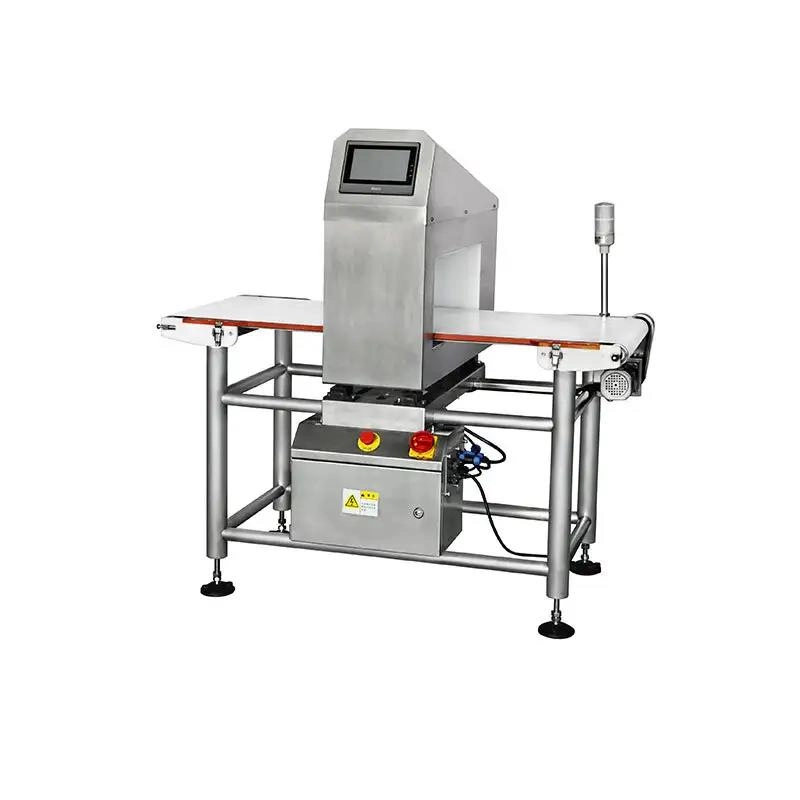
Food Metal Detector Manufacturer For Reject Defective Products G5020
The G5020 multi-frequency metal detector features a specialized conveyor belt designed to reduce contamination risks, ensure smooth operation, and maintain high detection sensitivity. It is easy to disassemble for convenient maintenance. Ideal for detecting metal contaminants in food, pharmaceuticals, spices, plastics, electronics, textiles, toys, handicrafts, and more.
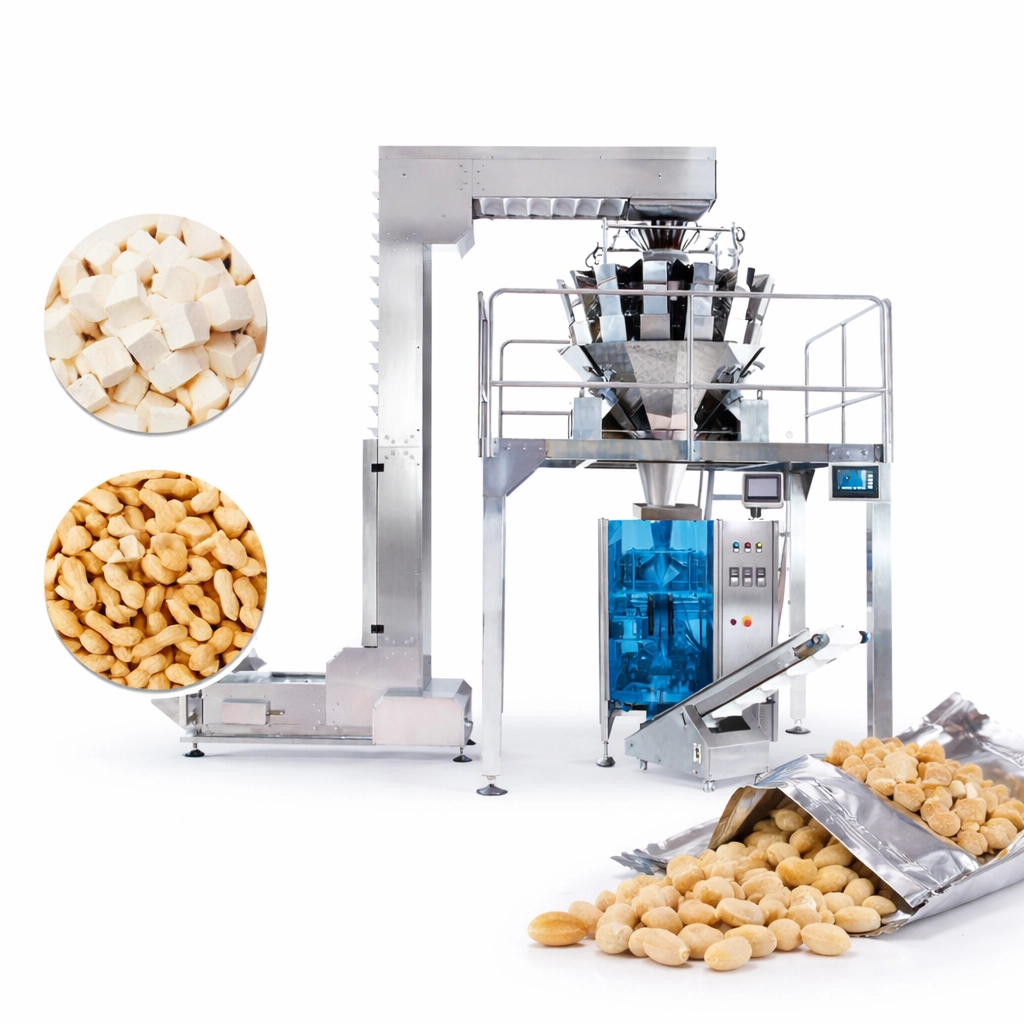
High-Precision Weighing & Packaging for Granular Products
The Granular Food Packing Machine is a fully automated solution designed for accurate weighing, filling, and packaging of various granular food products. Integrated with a multihead weigher and advanced packaging system, it ensures high speed, precision, and hygiene standards for modern food production.
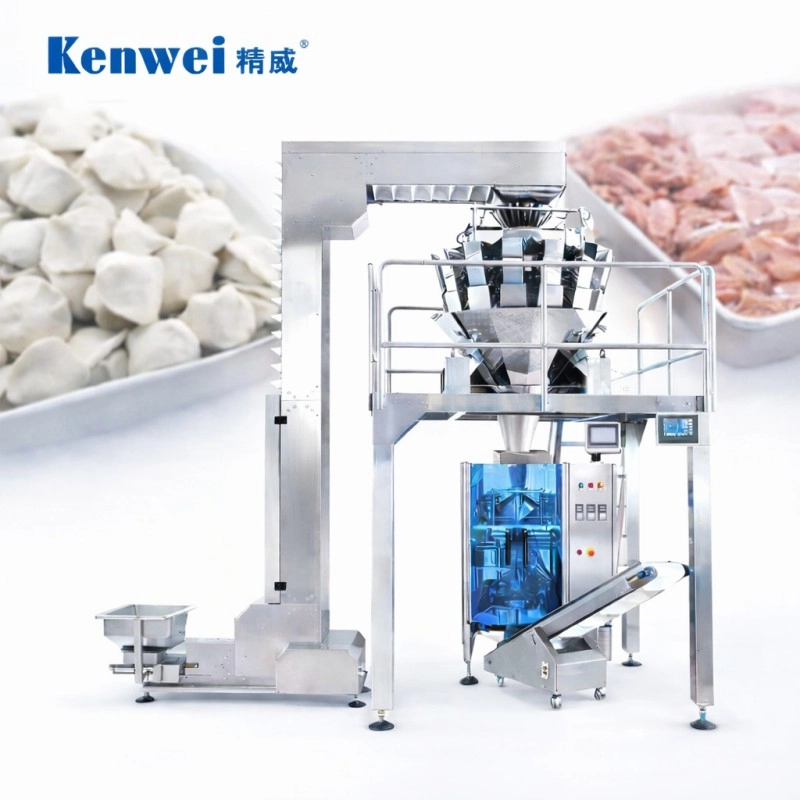
Vertical Frozen Food Packaging Machine for IQF & Frozen Products JW-B1
The Kenwei JW-B1 Vertical Frozen Food Packaging Machine is designed for IQF and frozen products, ensuring efficient, airtight packing. This vertical packing machine boosts productivity with precision sealing, ideal for frozen food packaging needs in the food industry.
Get in touch with us
If you have any comments or good suggestions, please leave us a message, later our professional staff will contact you as soon as possible.
Kenwei
Kenwei
Kenwei multi weigh
Kenwei
Kenwei
Kenwei