






How Multihead Weighers Improve Food Grain Packing Efficiency
Explore how multihead weighers boost food grain packing efficiency through higher speed, better accuracy, reduced giveaway and easier integration. Practical selection, ROI guidance, and maintenance tips from Kenwei, a leading multihead-weigher manufacturer.
- Introduction: Why food grain packing efficiency matters
- and what you'll learn
- How multihead weighers improve food grain packing efficiency
- Precision weighing reduces giveaway and protects margins
- Higher throughput — more bags per hour
- Handling product variability and fragile grains
- Flexible recipes and reduced changeover time
- Quantifying efficiency gains: speed, accuracy and downtime
- Typical metrics to evaluate
- Quick comparison: manual, linear weigher, multihead weigher
- Selecting the right multihead weigher for grain packing
- Head count, hopper size and feed system
- Sanitation, materials and food-safety certifications
- Integration capability and automation
- Installation, maintenance and lifecycle considerations
- Planned maintenance reduces unplanned downtime
- Training and operator best practices
- Why an integrated solution matters: weigher + metal detection + checkweigher
- Complete line control reduces recalls and rework
- About Kenwei: one-stop automated weighing & packaging
- Example ROI calculation (illustrative)
- Estimating savings from reduced giveaway and higher throughput
- Conclusion: Practical steps to improve grain packing efficiency
- Actionable next steps
- Frequently Asked Questions
Introduction: Why food grain packing efficiency matters
and what you'll learn
Users searching How Multihead Weighers Improve Food Grain Packing Efficiency want actionable guidance: how multihead weighers increase throughput, improve accuracy, reduce product giveaway, and deliver fast ROI for grain packing lines. This article explains the technical benefits, compares typical alternatives, offers selection and maintenance tips, and shows how an integrated solution (weigher + metal detector + checkweigher) speeds up operations and protects margins.
How multihead weighers improve food grain packing efficiency
Precision weighing reduces giveaway and protects margins
Multihead weighers use combination algorithms across multiple heads to reach target weights with minimal overfill (giveaway). For food grains—from rice and wheat to pulses—typical multihead performance yields accuracy commonly in the range of ±0.2% to ±1.0% of target weight depending on product and model. That precision translates into measurable reduction in product giveaway compared to manual packing or rudimentary volumetric dosing, protecting profit margins on high-volume operations.
Higher throughput — more bags per hour
Multihead weighers are designed for high-speed operation. Depending on the model, number of heads and pack weight, typical throughput ranges are: small-pack snack machines up to 150–200 packs/min, while grain packing applications commonly see 20–200 packs/min depending on pack size. Compared with manual bagging (often under 10–20 packs/min) and some linear weighers, multihead machines deliver substantially higher throughput per production line.
Handling product variability and fragile grains
Grains vary by size, density and moisture. Multihead weighers have dedicated hoppers, vibratory feeders, and adjustable discharge geometry to handle variability without sacrificing speed. Features like anti-bridging hoppers and gentle feed paths reduce grain breakage and dust, important for maintaining product quality and meeting customer expectations.
Flexible recipes and reduced changeover time
Modern multihead weighers support multiple product recipes, fast-change hoppers and simple HMI control, enabling fast changeover between different grains (e.g., from rice to lentils). This flexibility reduces downtime and makes it easier for operations to respond to seasonal demand or run multiple SKUs on the same line.
Quantifying efficiency gains: speed, accuracy and downtime
Typical metrics to evaluate
When measuring packing efficiency, track: packs/hour, average giveaway (% over target), overall equipment effectiveness (OEE), and downtime/minutes per shift. Multihead weighers typically improve packs/hour and reduce giveaway, which combined increases yield and lowers unit cost.
Quick comparison: manual, linear weigher, multihead weigher
The table below compares typical industry ranges for packing grain. Values are representative industry ranges; exact performance depends on the machine model, head count, and pack format.
| Metric | Manual Bagging | Linear Weigher | Multihead Weigher |
|---|---|---|---|
| Typical speed (packs/min) | 5–20 | 10–80 | 20–200 |
| Typical accuracy (± % of target) | ~1–5% (operator dependent) | ~0.5–3% | ~0.2–1% |
| Giveaway tendency | High | Medium | Low |
| Best for | Low volume, non-critical accuracy | Low-to-medium volume, larger particulates | High-volume, precision-driven packing |
| CAPEX | Low | Medium | Medium-to-high |
Selecting the right multihead weigher for grain packing
Head count, hopper size and feed system
Choose head count based on target pack weights, desired throughput and product characteristics. Common options range from 10-head to 24-head and above. More heads typically allow faster filling and better granularity for hitting target weights with less giveaway. Hopper size, feeder width and vibratory settings must match grain size and flow property to avoid bridging and ensure consistent fills.
Sanitation, materials and food-safety certifications
Grain packing must meet food safety standards. Select machines with stainless-steel contact parts (typically 304 or 316), hygienic design for easy cleaning, and options for dust extraction. Confirm that the supplier supports necessary certifications and traceability requirements for your markets.
Integration capability and automation
Consider HMI, PLC compatibility, remote support and options for integration with metal detectors, checkweighers and baggers. Seamless integration reduces line bottlenecks and supports central monitoring of production KPIs.
Installation, maintenance and lifecycle considerations
Planned maintenance reduces unplanned downtime
Routine checks—feeder springs, vibration settings, hopper wear, and electrical connections—help keep throughput consistent. Predictive maintenance programs (scheduled parts replacement, vibration monitoring) reduce sudden stoppages. Well-documented spare-parts lists and local support shorten MTTR (mean time to repair).
Training and operator best practices
Operator training on recipe setup, basic troubleshooting and daily cleaning prevents many common issues. Modern weighers have intuitive interfaces; training time is typically a few days for production staff and a longer session for maintenance technicians.
Why an integrated solution matters: weigher + metal detection + checkweigher
Complete line control reduces recalls and rework
Combining a multihead weigher with inline metal detection and a final checkweigher creates layered quality control: the weigher optimizes fill and speed, the metal detector protects food safety, and the checkweigher verifies final weight compliance. This reduces recalls, rejects and lost revenue.
About Kenwei: one-stop automated weighing & packaging
Kenwei is a manufacturer of multihead weighers, metal detectors, linear weighers and checkweighers. Located in Fusha High-tech Industrial Park, Zhongshan, Guangdong, Kenwei supplies automated weighing and packaging systems with services including design, manufacturing, installation, training and after-sales. Kenwei's high-speed, high-precision machines are designed for integration and can be customized for grain packing lines to optimize throughput and accuracy while ensuring quick support and spare-part availability.
Example ROI calculation (illustrative)
Estimating savings from reduced giveaway and higher throughput
Use this simple method to estimate payback. Inputs: annual packed quantity (kg), average margin per kg ($), current giveaway (%), expected giveaway after multihead (%), labor savings per year ($), capital cost ($).Example assumptions (illustrative): annual packed quantity = 1,000,000 kg; margin = $0.20/kg; current giveaway = 1.5%; expected giveaway = 0.7%; labor & throughput savings = $30,000/year; machine CAPEX = $150,000.Saved product = 1,000,000 * (1.5% - 0.7%) = 8,000 kg. Saved value = 8,000 * $0.20 = $1,600/year. Total annual savings = $1,600 + $30,000 = $31,600. Approximate payback = $150,000 / $31,600 ≈ 4.7 years. Adjust inputs for your prices and volumes — many high-throughput operations see payback in 1–3 years when labor costs and giveaway are higher.
Conclusion: Practical steps to improve grain packing efficiency
Actionable next steps
To improve food grain packing efficiency: 1) benchmark current throughput, giveaway and downtime; 2) evaluate multihead options by head count and sanitary design; 3) plan integration with metal detection and checkweighers; 4) include training and a spare-parts plan; 5) run a pilot or trial to validate performance. Multihead weighers are a proven route to higher throughput, lower giveaway and better product quality—especially when supplied and supported by a manufacturer experienced in integrated weighing and packaging systems like Kenwei.
Frequently Asked Questions
What is a multihead weigher and how does it work?A multihead weigher consists of multiple weighing heads and hoppers that combine portions from several heads to hit a target weight precisely. Feeders and combination algorithms optimize each discharge, producing fast, accurate fills for granular products like grains.
Can multihead weighers handle all types of grains (rice, pulses, seeds)?Yes—most multihead weighers can be configured for a wide range of grains with different head counts, feeder adjustments, hopper geometries and anti-bridging features. For very small seeds or dusty products, choose models with suitable feeders and dust control.
How much accuracy improvement can I expect over manual packing?Expect a significant improvement. Manual packing can vary widely; multihead weighers typically achieve accuracy in the ±0.2%–1.0% range of the target weight depending on conditions, which reduces giveaway and improves consistency.
What is the typical payback period for a multihead weigher?Payback depends on production volume, labor costs, giveaway reduction and CAPEX. Many plants see payback within 1–4 years; low- to medium-volume operations may take longer. Use a site-specific calculation with your volumes and costs.
Do multihead weighers integrate with metal detectors and checkweighers?Yes. Multihead weighers are commonly integrated with inline metal detectors and checkweighers to form a complete quality-control and packaging line. Integration improves product safety governance and reduces rejects.
How often does a multihead weigher need maintenance?Daily inspection and cleaning are recommended; routine preventive maintenance (replacing wear parts, checking feeders and sensors) is typically scheduled monthly or quarterly depending on use. Follow the manufacturer's maintenance plan for best results.
Are multihead weighers difficult to operate?Modern machines have user-friendly HMIs and recipe management, making day-to-day operation straightforward after brief training. More advanced maintenance tasks require technician training.
Can Kenwei provide turnkey solutions for grain packing lines?Yes. Kenwei offers multihead weighers, metal detectors, linear weighers and checkweighers, plus design, installation, commissioning and after-sales support for integrated automated weighing and packaging solutions.
Tags
metal detector for food production
metal detector for food production
Inclined Chain Plate Converyorr
Inclined Chain Plate Converyorr
multihead weigher
multihead weigher
sealing machine for food packaging
sealing machine for food packaging
metal detector for food industry
metal detector for food industry
checkweigher conveyor
checkweigher conveyor
Recommended for you
Top 10 linear multihead weigher Manufacturers and Supplier Brands
Integrating Combination Weigher into Automated Packaging Lines
Top 10 food grain packing machine Manufacturers and Supplier Brands in America
The B2B Buyer’s Guide to metal detectors for food industry
Prdoucts Categories
Question you may concern
About Cooperation Process
How can I start a cooperation with Kenwei?
To begin a cooperation, simply contact our sales or customer service team via email or phone. You can also fill out the inquiry form on our website. Once we receive your request, a representative will get in touch with you to discuss your specific needs and provide you with a tailored solution.
Can Kenwei customize equipment to meet my specific needs?
Yes! We offer customized solutions for all of our machines. Our team will work closely with you to understand your specific requirements and create a solution that meets your needs in terms of size, functionality, speed, and other factors.
About Product choice
Are there any additional features available for Kenwei machines?
Yes, we offer a variety of optional features for customization, such as: advanced touchscreen interfaces, multiple language support and so on.
About Price and payment
How is the price of Kenwei machines determined?
The price of Kenwei machines depends on several factors, including the type of machine, customization requirements, production volume, and any additional features or integrations. We provide tailored quotes based on your specific needs and requirements.
About Solution suggestions
How do Kenwei’s machines improve my production efficiency?
Kenwei machines enhance efficiency by automating the weighing, packaging, and quality control processes. Our high-speed, high-precision machines ensure accurate measurements, reduce human error, and increase throughput, leading to faster production times and lower operational costs.
You may also like
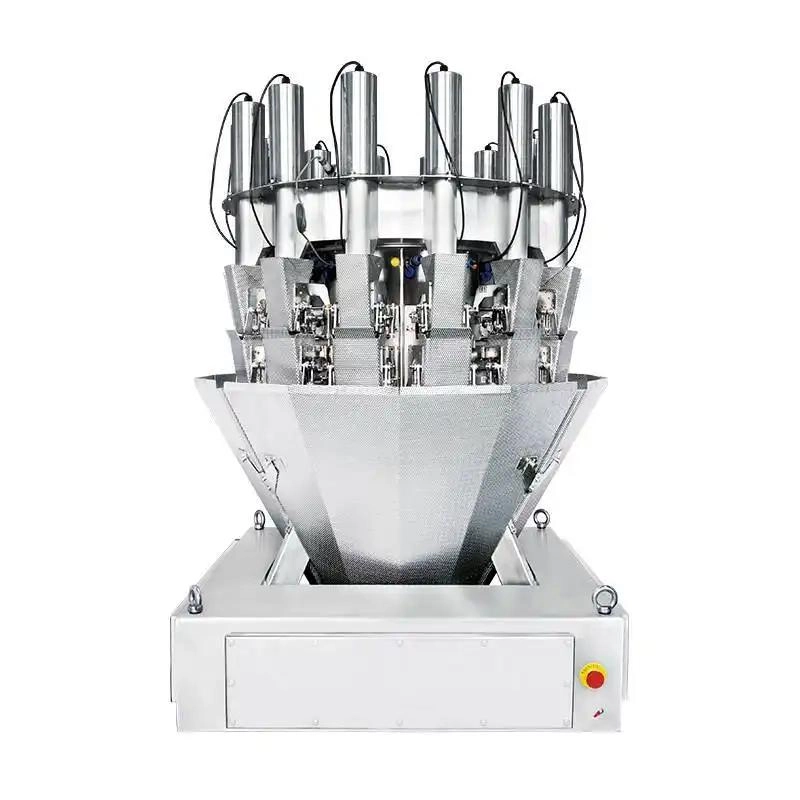
14 Heads Vertical Single Screw Feeding Pickles Weigher backups
This type of weigher is designed to handle the unique characteristics of pickles, ensuring precise measurements for packaging and distribution. It uses a vertical single screw mechanism to feed the pickles into the weighing system, allowing for efficient and consistent weighing. This technology is particularly useful in food processing and packaging facilities where precise portioning is essential for quality control and customer satisfaction. This specialized equipment is perfect for accurately measuring and dispensing pickles in a production line or packaging facility. The vertical design allows for efficient and precise filling of containers, while the single screw feeding mechanism ensures consistent and reliable weighing.
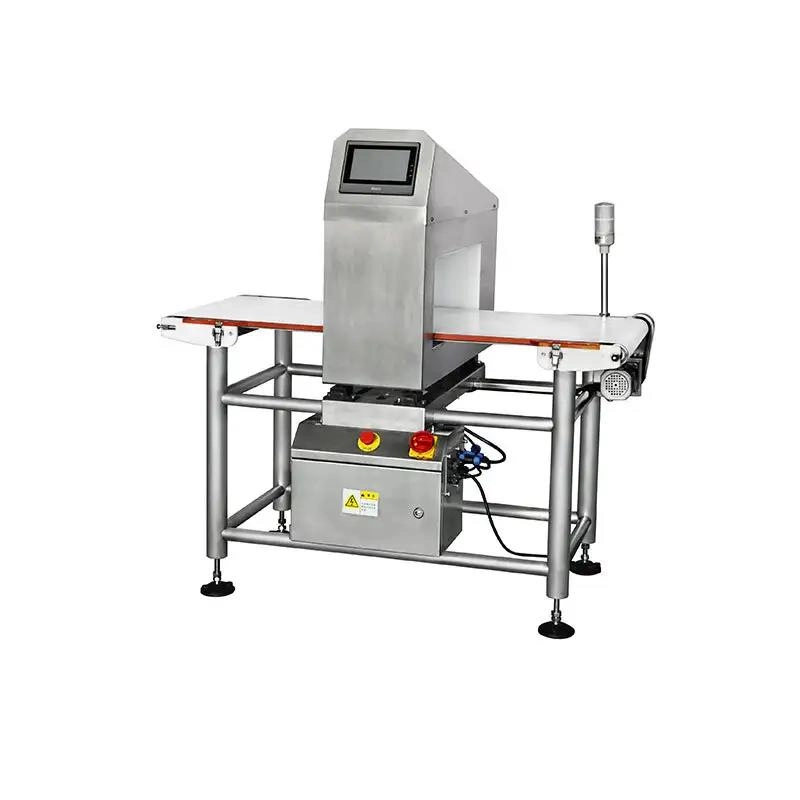
Food Metal Detector Manufacturer For Reject Defective Products G5020
The G5020 multi-frequency metal detector features a specialized conveyor belt designed to reduce contamination risks, ensure smooth operation, and maintain high detection sensitivity. It is easy to disassemble for convenient maintenance. Ideal for detecting metal contaminants in food, pharmaceuticals, spices, plastics, electronics, textiles, toys, handicrafts, and more.
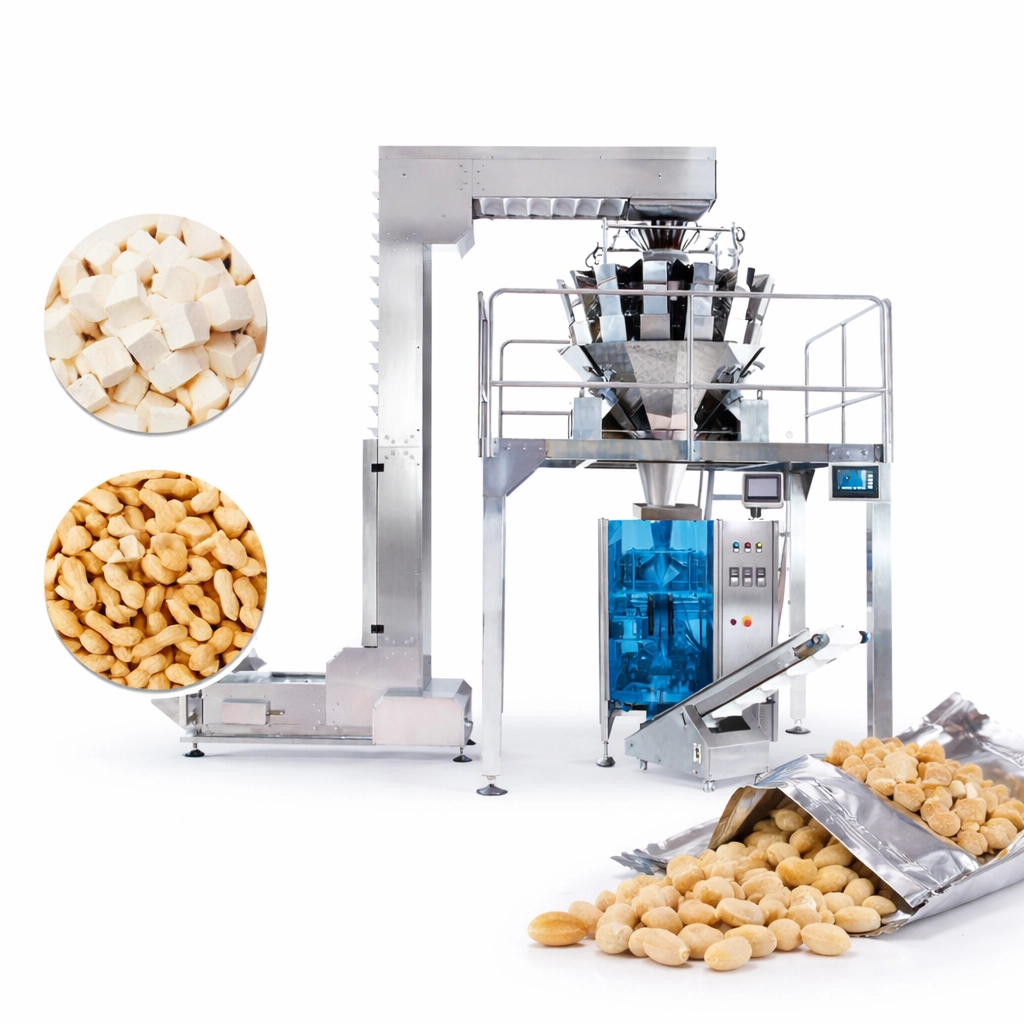
High-Precision Weighing & Packaging for Granular Products
The Granular Food Packing Machine is a fully automated solution designed for accurate weighing, filling, and packaging of various granular food products. Integrated with a multihead weigher and advanced packaging system, it ensures high speed, precision, and hygiene standards for modern food production.
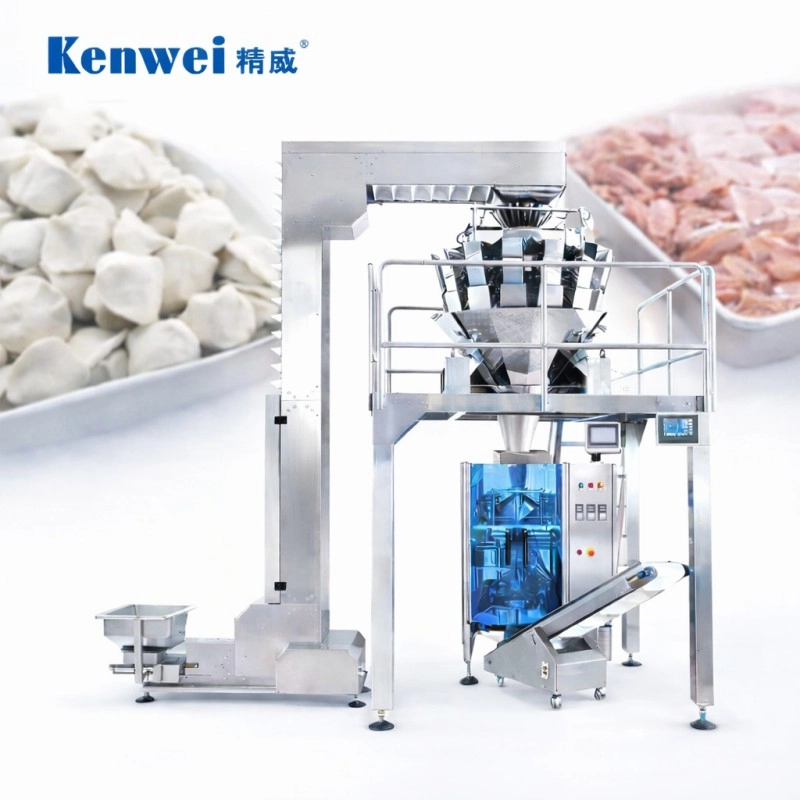
Vertical Frozen Food Packaging Machine for IQF & Frozen Products JW-B1
The Kenwei JW-B1 Vertical Frozen Food Packaging Machine is designed for IQF and frozen products, ensuring efficient, airtight packing. This vertical packing machine boosts productivity with precision sealing, ideal for frozen food packaging needs in the food industry.
Get in touch with us
If you have any comments or good suggestions, please leave us a message, later our professional staff will contact you as soon as possible.
Kenwei
Kenwei
Kenwei multi weigh
Kenwei
Kenwei
Kenwei