






Multihead Weigher for Powders and Granules: Preventing Bridging and Dust
Practical guide on preventing bridging and dust when using multihead weighers for powders and granules. Covers causes, machine selection, feeding & hopper design, dust control, cleaning, and Kenwei automated weighing solutions.
- Introduction: Why Bridging and Dust Matter for Multihead Weighers
- Understand the Root Causes of Bridging and Dust
- Particle and Flow Properties
- Moisture and Agglomeration
- Electrostatic Charge and Dust Generation
- Choose the Right Multihead Weigher for Powders and Granules
- Head Count and Accuracy
- Feeder and Weigh-Bucket Design
- Hopper and Transition Geometry: Preventing Bridges at Source
- Mass Flow vs. Funnel Flow
- Surface Finish and Coatings
- Active Anti-Bridging and Flow-Aid Technologies
- Vibrators, Pulsers, and Mechanical Agitators
- Fluidizing Pads and Aeration Systems
- Dust Control: Capture, Containment, and Hygiene
- Enclosures and Local Exhaust Ventilation (LEV)
- Air Knives, Blowers, and Purge Air
- Electrostatic Management and Humidity Control
- Grounding, Ionizers, and Material Choice
- Controlled Humidity and Temperature
- Operation Practices: Feeding Rate, Dosing Strategy, and Maintenance
- Stable Feeding and Speed Settings
- CIP, Cleaning, and Preventive Maintenance
- Testing and Validation: From Lab to Line
- Small-Scale Trials and Data-Driven Tuning
- Why Choose Kenwei for Your Powder and Granule Weighing Needs
- Integrated Solutions and After-Sales Support
- Customization and Compliance
- Conclusion: A Systematic Approach to Preventing Bridging and Dust
- Frequently Asked Questions
Introduction: Why Bridging and Dust Matter for Multihead Weighers
When buyers search for Multihead Weigher for Powders and Granules: Preventing Bridging and Dust, they are looking for reliable, practical solutions to common production problems that affect yield, accuracy, safety, and regulatory compliance. Bridging (material forming a stable arch over a discharge) and dust (airborne fines) reduce throughput, cause inaccurate fills, increase rejects, and create hygiene hazards. For food, chemical, and pharmaceutical packagers, preventing these issues is essential to maintain product quality and meet production targets with automated weighing solutions.
Understand the Root Causes of Bridging and Dust
To solve bridging and dust issues in a multihead weigher for powders and granules, start with root-cause analysis. Common causes include particle properties, moisture, electrostatic charge, and poor hopper/feeder design. Identifying which factors apply to your product guides effective corrective actions and informs the right equipment selection for automated weighing.
Particle and Flow Properties
Powders with fine particle sizes, wide particle-size distributions, or high cohesiveness (e.g., powdered sugar, milk powder, certain chemical powders) are prone to bridging and rat-holing. Granular materials with irregular shapes can interlock and jam. Understanding bulk density, angle of repose, and flow function of your product helps determine whether a standard multihead weigher or a specialized system is needed.
Moisture and Agglomeration
Humidity or slight moisture causes powders to clump and adhere to surfaces, promoting bridges in hoppers and feeders. Controlling upstream conditioning (drying or desiccant use) and local environmental conditions around the weighing machine reduces this risk.
Electrostatic Charge and Dust Generation
Friction between particles and metal surfaces can generate static, causing fines to cling to surfaces or become airborne when dislodged. Electrostatic issues increase dust spread and cause erratic flow. Grounding, ionization, and anti-static materials help prevent this.
Choose the Right Multihead Weigher for Powders and Granules
Selecting an appropriate multihead weigher is a commercial decision with direct impact on productivity. Consider head count, hopper geometry, feeder type, and hygienic design to reduce bridging and dust. Machines should be designed specifically for powders and granules when needed.
Head Count and Accuracy
Multihead weighers are available with different head counts (10, 14, 16, 20, 24, 32 heads, etc.). For lightweight powder packs, higher head counts can increase combination choices and help reach target weights with precision—typical achievable accuracies range from ±0.1 g to ±1.0 g depending on product and target weight. Higher speeds are possible without compromising accuracy when the feeder and hopper are optimized for powder handling.
Feeder and Weigh-Bucket Design
Use specially designed feeders for powders: shallow, short feeders with smooth finishes reduce material residence time and minimize compaction. Weigh buckets with gentle slopes and polished stainless steel (304 or 316 where corrosion or product reactivity is a concern) reduce hang-ups and facilitate cleaning. Kenwei offers tailor-made weigh buckets and feeder solutions for powder handling as part of its automated weighing solutions.
Hopper and Transition Geometry: Preventing Bridges at Source
Proper hopper design is one of the most effective ways to prevent bridging. Attention to cone angle, outlet diameter, and surface finish can transform problematic powders into reliably flowing materials on a multihead weigher.
Mass Flow vs. Funnel Flow
Design hoppers to achieve mass flow (all material moves when discharged) rather than funnel flow (material only flows through a central channel). Mass flow reduces dead zones and bridging. Steeper cone angles and larger outlet diameters are typical fixes to encourage mass flow for cohesive powders.
Surface Finish and Coatings
Smoother internal surfaces reduce wall friction. Polished stainless steel or specialized low-friction coatings (food-grade PTFE coatings where allowed) can help materials slide and prevent arching. Maintain hygienic finishes for easier cleaning and lower dust retention.
Active Anti-Bridging and Flow-Aid Technologies
When passive design isn't enough, add active anti-bridging devices and flow aids. These components are often integrated into commercial multihead weigher installations to ensure continuous production.
Vibrators, Pulsers, and Mechanical Agitators
Controlled vibration applied to hoppers or feeder troughs breaks stable arches and helps powders flow. Pulsers that provide short bursts are less likely to cause segregation than continuous vibration. Mechanical agitators or paddle feeders inside hoppers can also prevent bridging for sticky or fibrous materials.
Fluidizing Pads and Aeration Systems
Fluidization uses pockets of air to make powder behave like a fluid, breaking cohesive structures. Perforated pads or aeration rings under product beds are effective for many powders; airflow rates must be tuned to avoid excessive dust. These systems are frequently used with multihead weighers for fine powders.
Dust Control: Capture, Containment, and Hygiene
Dust control protects product quality, equipment, and worker health. For commercial operations using a multihead weigher for powders and granules, implement a combination of containment, extraction, and cleaning protocols.
Enclosures and Local Exhaust Ventilation (LEV)
Enclose feed points and weighing areas and connect them to local dust extraction systems with HEPA or ULPA filtration as required by industry regulations. Negative-pressure enclosures reduce escape of fines into the production environment. Properly sized LEV prevents loss of product and reduces housekeeping needs.
Air Knives, Blowers, and Purge Air
Air knives keep product-flow surfaces clean and free of clinging fines. Purge air around chutes and bagging points prevents material build-up. However, air volumes must be balanced to avoid creating clouds of dust that can escape containment systems.
Electrostatic Management and Humidity Control
Electrostatic charge can make powders cling and create dust problems. Manage static and environmental humidity to stabilize flow behavior for powders and granules.
Grounding, Ionizers, and Material Choice
Ensure machine frames, hoppers, and conveyors are properly grounded. Add ionizers near critical transfer points to neutralize charge. Where possible, choose packaging materials and contact surfaces that minimize triboelectric charging.
Controlled Humidity and Temperature
Maintaining stable low-to-moderate relative humidity (RH) prevents excessive moisture that causes clumping, while very low RH increases static. Monitor and control ambient conditions—dehumidifiers and local climate control around weighing lines can stabilize operations.
Operation Practices: Feeding Rate, Dosing Strategy, and Maintenance
Well-trained operators and optimized recipes are as important as hardware. Operational practices reduce the incidence of bridging and dust during continuous runs.
Stable Feeding and Speed Settings
Match feeder speed to hopper supply and avoid surges that compact material. Variable-speed feeders controlled via PLC let you tune feeding to minimize bridging and segregation while maintaining throughput targets for your multihead weigher.
CIP, Cleaning, and Preventive Maintenance
Regular cleaning reduces dust accumulation that leads to hygienic risks and flow problems. Clean-in-place (CIP) compatible designs with quick-release components reduce downtime. Implement preventive maintenance schedules for vibrators, aeration systems, seals, and filters to sustain performance.
Testing and Validation: From Lab to Line
Before committing to a production configuration, validate with lab or pilot tests. Simulate production speeds, environmental conditions, and packaging weights to confirm that selected measures prevent bridging and dust on your multihead weigher for powders and granules.
Small-Scale Trials and Data-Driven Tuning
Conduct flowability tests (e.g., shear testing, angle of repose) and on-machine trials with representative material. Use weighing logs and reject rates to tune settings. Data-driven adjustments reduce guesswork and drive ROI on equipment investments.
Why Choose Kenwei for Your Powder and Granule Weighing Needs
Kenwei is a powerful manufacturer of multihead weighers with a proven track record in metal detectors, linear weighers, and check weighers. Our machines are characterized by high speed and high precision, and we provide one-stop automated weighing and packaging solutions tailored to prevent bridging and dust challenges for powders and granules.
Integrated Solutions and After-Sales Support
Located in Fusha High-tech Industrial Park, Guangdong, Kenwei offers complete capabilities in design, manufacturing, installation, commissioning, and after-sales service. We work with customers to select appropriate head counts, hopper geometries, and flow-aid options (vibration, fluidization, enclosures, extraction) so your line meets productivity and hygiene targets.
Customization and Compliance
Kenwei provides customization to meet regulatory and industry-specific requirements—food-grade finishes, CIP accessibility, and integrated dust extraction interfaces. Our engineering teams validate solutions on site to make sure multihead weighers operate reliably with minimal bridging and dust.
Conclusion: A Systematic Approach to Preventing Bridging and Dust
Preventing bridging and dust when using a multihead weigher for powders and granules requires a systematic approach: characterize the product, choose the right machine features (head count, feeder and hopper design), use flow aids (vibration, aeration), control electrostatics and humidity, and apply robust dust containment and cleaning practices. Combining good engineering with proper operation and maintenance yields higher throughput, better accuracy, and safer production environments.
Frequently Asked Questions
Q: What is the most common cause of bridging in a multihead weigher for powders and granules?A: The most common causes are cohesive powder properties (fine particles and moisture), inadequate hopper angles or outlet size, and prolonged residence time that leads to compaction. Addressing hopper geometry and adding active flow aids often solves the problem.
Q: Can I run fine powders on a standard multihead weigher?A: Many standard multihead weighers can be adapted for fine powders with the right feeder design, polished surfaces, fluidization or aeration systems, and dust containment. For extremely cohesive or hygroscopic powders, specialized systems or pre-conditioning may be needed.
Q: How do I control dust without reducing weigher accuracy?A: Use local exhaust ventilation, enclosures, and controlled purge air to capture dust while keeping transfer paths short. Ensure extraction airflow is balanced to avoid disturbing product flow into the weigh buckets—Kenwei engineers can help size and tune these systems.
Q: What maintenance practices reduce bridging and dust issues?A: Regular cleaning of hoppers, feeders, filters, and extraction systems; scheduled inspection of vibrators and aeration components; and frequent checks on seals and quick-release parts. Keep maintenance logs and monitor reject rates to detect trends early.
Q: How quickly can Kenwei customize a multihead weigher solution for powders?A: Timeline depends on complexity, but Kenwei offers pre-engineered modules for common powder challenges (hoppers, aeration, enclosures) that speed up implementation. Contact Kenwei via https://www.kenweigroup.com/ for project-specific lead times and on-site evaluation.
Tags
snack packaging machine
snack packaging machine
metal detectors food safety
metal detectors food safety
vertical packaging machine
vertical packaging machine
multihead weigher packing machine
multihead weigher packing machine
snack packaging machine
snack packaging machine
premade pouch filling machine for liquids and powders
premade pouch filling machine for liquids and powders
Recommended for you
Top 10 food packing machine Manufacturers and Supplier Brands
The B2B Buyer’s Guide to checkweigher metal detector combination
Best 10 head multihead weigher manufacturers and supplier brands
How Combination Weighers Improve Accuracy in 2026
Prdoucts Categories
Question you may concern
About Product choice
What is the difference between a multi-head weigher and a linear weigher?
Multi-head Weigher: Ideal for high-speed and high-precision weighing of products with irregular shapes or varying sizes. It provides multiple weighings in parallel for faster processing.
Linear Weigher: It is suitable for powder and granule. It is typically slower than a multi-head weigher but is effective for certain types of applications that require more continuous flow or controlled weighing.
What is the average lifespan of Kenwei products?
Kenwei machines are built for durability and longevity. With proper maintenance, our products are designed to last for many years, even under heavy usage. We offer maintenance services and support to help extend the lifespan of your machines.
About products customization
Can Kenwei machines be customized for different industries?
Yes,According to the material characteristics and requirements of different industries, we developed various machine types for counting (small pouches into big bag), noodles, frozen foods, peppers, stick-shaped products, product -mixing, cheeses, salads and so on.
Can Kenwei machines support multiple languages?
Yes, we can customize the software interface to support multiple languages, making it easier for operators from different regions to use the machine.
About Logistics
Do I need to prepare my facility for the delivery of large machines?
Yes, large machines often require special preparations for delivery, including ensuring adequate space for unloading and installation.
You may also like
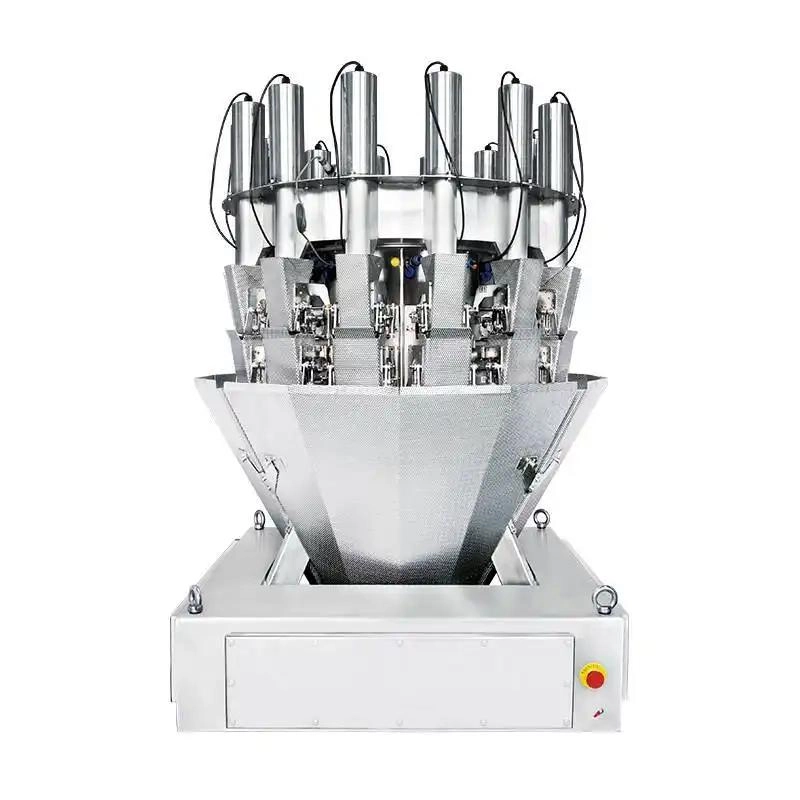
14 Heads Vertical Single Screw Feeding Pickles Weigher backups
This type of weigher is designed to handle the unique characteristics of pickles, ensuring precise measurements for packaging and distribution. It uses a vertical single screw mechanism to feed the pickles into the weighing system, allowing for efficient and consistent weighing. This technology is particularly useful in food processing and packaging facilities where precise portioning is essential for quality control and customer satisfaction. This specialized equipment is perfect for accurately measuring and dispensing pickles in a production line or packaging facility. The vertical design allows for efficient and precise filling of containers, while the single screw feeding mechanism ensures consistent and reliable weighing.
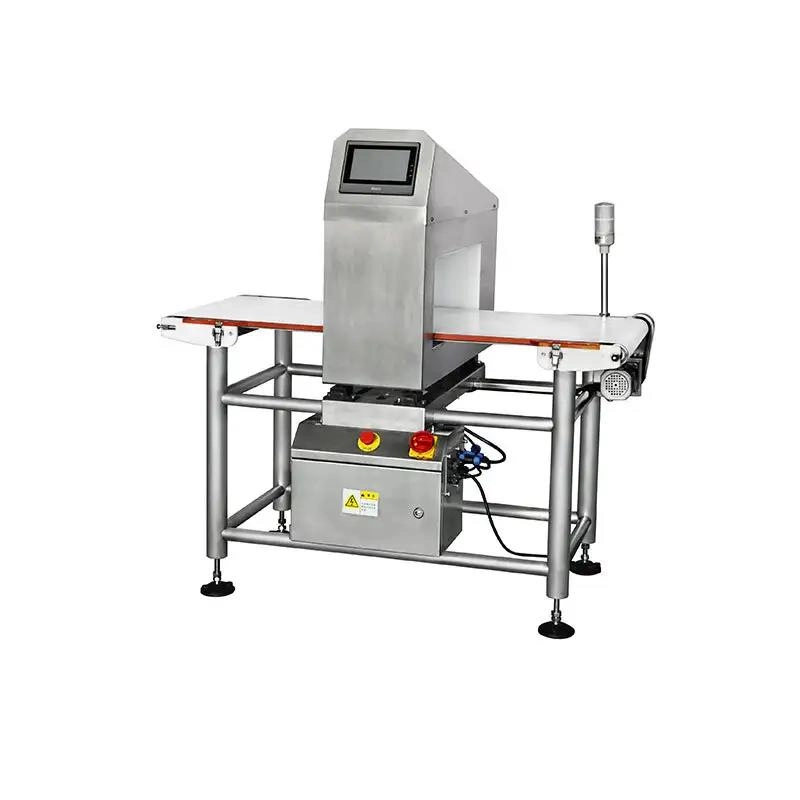
Food Metal Detector Manufacturer For Reject Defective Products G5020
The G5020 multi-frequency metal detector features a specialized conveyor belt designed to reduce contamination risks, ensure smooth operation, and maintain high detection sensitivity. It is easy to disassemble for convenient maintenance. Ideal for detecting metal contaminants in food, pharmaceuticals, spices, plastics, electronics, textiles, toys, handicrafts, and more.
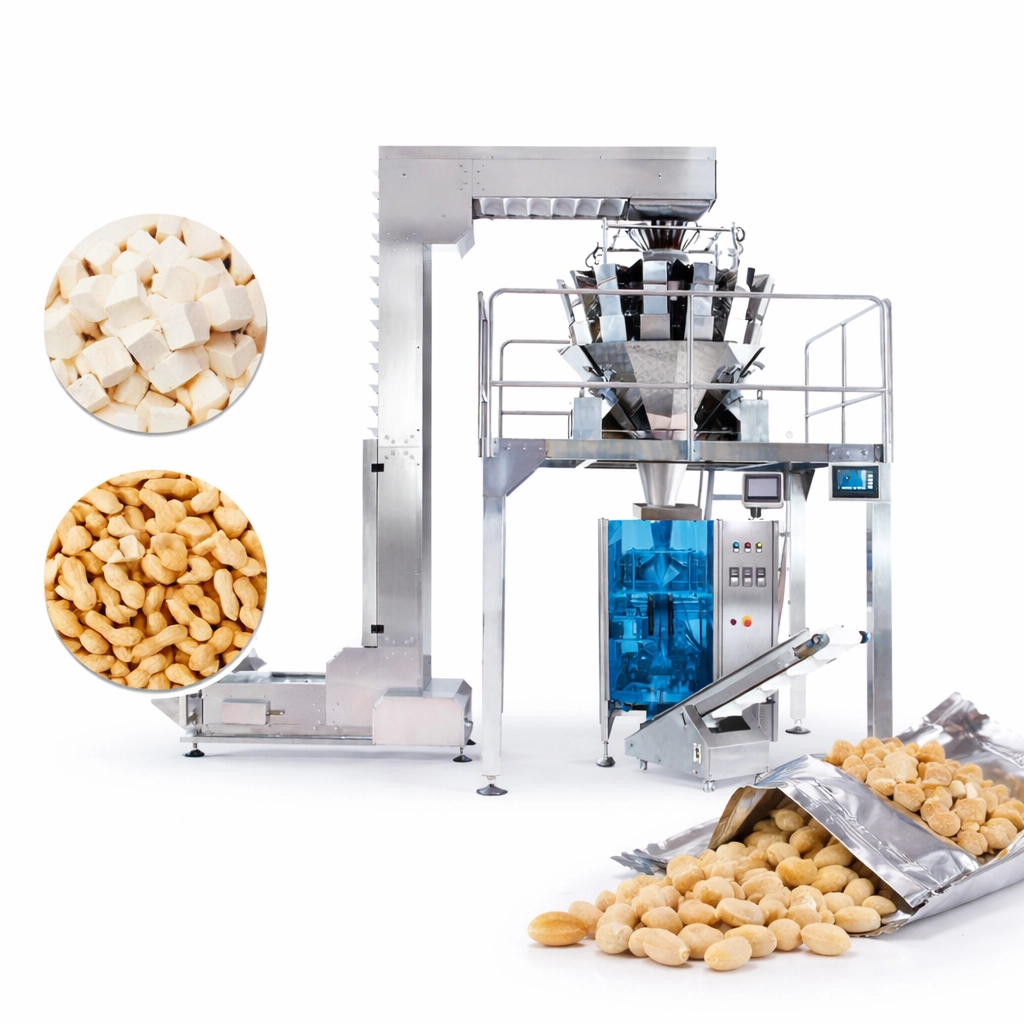
High-Precision Weighing & Packaging for Granular Products
The Granular Food Packing Machine is a fully automated solution designed for accurate weighing, filling, and packaging of various granular food products. Integrated with a multihead weigher and advanced packaging system, it ensures high speed, precision, and hygiene standards for modern food production.
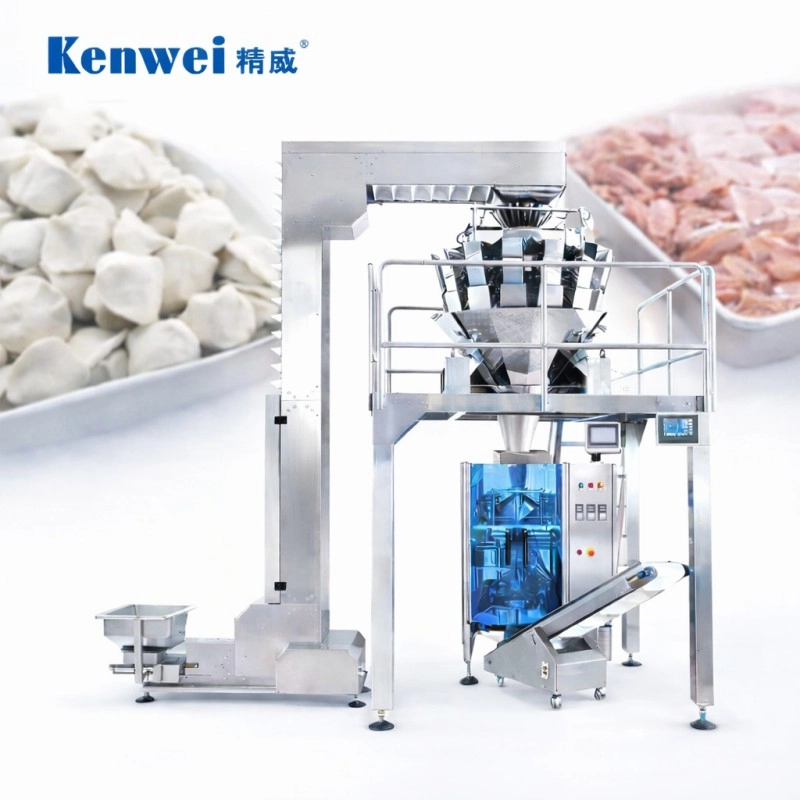
Vertical Frozen Food Packaging Machine for IQF & Frozen Products JW-B1
The Kenwei JW-B1 Vertical Frozen Food Packaging Machine is designed for IQF and frozen products, ensuring efficient, airtight packing. This vertical packing machine boosts productivity with precision sealing, ideal for frozen food packaging needs in the food industry.
Get in touch with us
If you have any comments or good suggestions, please leave us a message, later our professional staff will contact you as soon as possible.
Kenwei
Kenwei
Kenwei multi weigh
Kenwei
Kenwei
Kenwei