






Why choose a Rotary Packing Machine for high-speed lines
Rotary packing machines are purpose-built for high-speed production lines, delivering consistent fills, tight seals, and compact footprints while handling a wide range of product shapes and sizes. For manufacturers aiming to increase throughput without sacrificing accuracy or product integrity, rotary systems such as the Double feeder horizontal packaging and weighing system JW-B12 provide automated feeding, multihead weighing, and reliable premade-bag sealing—ideal for snacks, nuts, candies, hardware and irregular items. This article explains the technical advantages, design considerations, ROI drivers, integration best practices, and FAQs to help you decide whether a rotary packing machine is the right choice for your high-speed line.
- Performance Advantages of Rotary Packing Systems
- High throughput with consistent accuracy
- Reduced product giveaway and better yield
- Suitable for diverse product types
- Design Features That Make Rotary Ideal for High-Speed Lines
- Dual-feeder and multihead integration
- Compact footprint and ergonomic layout
- Sealing quality and premade bag compatibility
- Comparing Rotary vs Linear Packaging for High-Speed Applications
- Performance and throughput comparison
- When a rotary approach is the right choice
- Choosing JW-B12: Practical Considerations and ROI
- Product fit and application scenarios
- Operational cost drivers and return on investment
- Compliance, hygiene and safety considerations
- Integration, Maintenance and Best Practices for High-Speed Operation
- Line balancing and upstream/downstream integration
- Planned maintenance and spare parts strategy
- Operator training and changeover procedures
- Brand Advantages and Why JW-B12 Stands Out
- Engineered for high-speed, high-precision tasks
- Versatility and customization options
- Service network and supportability
- Frequently Asked Questions (FAQ)
- Q: What maximum throughput can a rotary packing machine like JW-B12 achieve?
- Q: How does a multihead weigher improve accuracy compared to single-head systems?
- Q: Are rotary packing machines suitable for fragile or irregular products?
- Q: How much floor space will a JW-B12 require?
- Q: What sanitation features are typical for food-grade rotary packers?

The drive for higher throughput, consistent weight accuracy, and minimal downtime has put rotary packing machines at the center of modern high-speed packaging lines. A rotary packing solution combines precise multihead weighing, controlled feeding, and fast premade bag sealing to meet strict production targets and quality standards while minimizing product giveaway and operator intervention. Whether your product is fragile snacks, irregular hardware, or free-flowing candies, a rotary machine optimizes performance by balancing speed, accuracy, and reliability. After understanding why choose a rotary packing machine for high-speed lines, the next logical step is to explore how upstream feeding and weighing are handled, starting with a clear JW-B12 double feeder horizontal packaging and weighing system overview.
Performance Advantages of Rotary Packing Systems
High throughput with consistent accuracy
Rotary packing machines excel at sustaining high outputs because the circular format allows parallel operations: while one station is filling or sealing a bag, other stations are indexing to the next position for feeding or weighing. This parallelism reduces cycle time per bag and increases net throughput compared to many linear systems. When combined with a multihead weigher—an industry-standard technology for fast, accurate portioning (see the multihead weigher overview on Wikipedia)—rotary systems maintain tight weight tolerances even at elevated line speeds.
Reduced product giveaway and better yield
Accurate portioning reduces overfill and product giveaway, which improves margins especially on high-value items. The rotary configuration often integrates feedback between the weigher and the bagging turret, enabling real-time correction of feed rates and distribution. This closed-loop approach reduces variation and maintains target weights with minimal manual calibration.
Suitable for diverse product types
Rotary packing machines are adaptable to free-flowing snacks, puffed foods, irregular-shaped nuts, candies, and even non-food items like hardware. Their design handles irregular geometries better than some vertical form-fill-seal systems because the filling motion and distribution can be tuned to minimize breakage and orientation issues.
Design Features That Make Rotary Ideal for High-Speed Lines
Dual-feeder and multihead integration
Combining dual feeders with a multihead weigher allows continuous feeding while one feeder is being refilled or adjusted. The JW-B12 Double feeder horizontal packaging and weighing system is purpose-built for this: it integrates a multihead weigher and dual feeders to deliver reliable, continuous supply and high-precision picks for every bag. The design reduces the likelihood of starvation at the weigh head and supports uninterrupted high-speed operation.
Compact footprint and ergonomic layout
High-speed lines value factory floor space. Rotary packing machines, due to their circular layout, often use space more efficiently than long linear conveyors, allowing integration of weighing, feeding, and bagging in a compact cell. This also simplifies access for operators and maintenance staff, improving overall equipment effectiveness (OEE).
Sealing quality and premade bag compatibility
Rotary systems provide controlled, repeatable sealing cycles that are especially effective for premade pouch formats. Secure seals reduce product spoilage and returns. For food-grade applications, robust sealing ensures compliance with storage and shelf-life requirements. Rotary packers are compatible with a range of premade bag styles—stand-up pouches, pillow bags, and doypacks—allowing greater packaging flexibility for branding and shelf presence.
Comparing Rotary vs Linear Packaging for High-Speed Applications
Performance and throughput comparison
When deciding between rotary and linear packaging machines for a high-speed line, it's helpful to compare key metrics such as cycle speed, footprint, flexibility, and maintenance. The table below summarizes typical differences to guide selection decisions.
| Metric | Rotary Packing Machine | Linear Packing Machine |
|---|---|---|
| Typical throughput | Very high (best for continuous high-speed production) | Moderate to high (may bottleneck at single fill/seal points) |
| Footprint efficiency | Compact cell (circular layout) | Elongated footprint (series of stations) |
| Product flexibility | High (suits irregular shapes with appropriate feeders) | Good (may require additional indexing or handling) |
| Service & maintenance | Complex mechanisms but centralized maintenance points | Simpler mechanisms but more dispersed points |
| Initial cost | Higher capex but lower per-unit cost at scale | Lower to moderate capex; per-unit cost rises with speed |
When a rotary approach is the right choice
Choose rotary systems when your priority is sustained high throughput, tight weight control at scale, and efficient factory floor use. If your product mix is heavy on premade bags or irregular items that need gentle handling, a rotary solution typically outperforms linear alternatives.
Choosing JW-B12: Practical Considerations and ROI
Product fit and application scenarios
The JW-B12 Double feeder horizontal packaging and weighing system is designed for high-speed, high-precision packaging of snacks, puffed foods, nuts, candies, hardware, and irregular-shaped materials. With a multihead weigher and dual-feeder setup, it delivers efficient, fully automated feeding, weighing, and bagging for a wide range of products—ensuring secure seals and professional premade bag packaging.
Operational cost drivers and return on investment
Key ROI drivers for adopting a rotary packing machine include:
- Reduced product giveaway from precise weighing
- Higher throughput leading to increased production capacity
- Lower labor costs due to automation and fewer changeovers
- Reduced damage and returns due to gentle handling and secure sealing
Manufacturers often recover the investment in equipment like the JW-B12 within a predictable timeframe when throughput and yield improvements are prioritized. For conservative ROI modeling, consider baseline metrics (current throughput, average overfill, labor hours) and forecast the impact of improved weight control and uptime.
Compliance, hygiene and safety considerations
For food applications, hygienic design is critical. Rotary machines intended for snack and candy lines typically use food-grade materials (stainless steel 304/316), rounded welds, and easy-clean features to meet hygienic standards. For regulated markets, align your equipment selection with published packaging and food safety resources such as the Packaging Machinery Manufacturers Institute (PMMI) and local regulatory guidance.
Integration, Maintenance and Best Practices for High-Speed Operation
Line balancing and upstream/downstream integration
Successful high-speed operation requires careful synchronization between the feeder, multihead weigher, rotary bagging turret, and downstream conveyors. Consider line balancing: the feeder(s) must present product at a steady rate, the multihead weigher must achieve target cycles per minute, and the rotary turret must index precisely to avoid bottlenecks. Integrate sensors and PLC-level communication between machines to enable coordinated speed adjustments and fault reporting.
Planned maintenance and spare parts strategy
High-speed rotary systems rely on precision mechanical components (bearings, cams, seals). Implement a preventive maintenance schedule focusing on lubrication, wear points, and seal integrity to avoid unscheduled downtime. Keep critical spares on hand—cams, sealing bars, drive belts, and control modules—to minimize mean time to repair (MTTR).
Operator training and changeover procedures
Because rotary machines run fast, well-practiced changeover routines reduce downtime. Train operators on quick-release components, preset recipe loading for different bag sizes, and routine sanitation steps. A documented standard operating procedure (SOP) reduces errors and improves safe handling during line changeovers.
Brand Advantages and Why JW-B12 Stands Out
Engineered for high-speed, high-precision tasks
The JW-B12 was engineered with the high-speed line in mind: dual feeders prevent weigh-head starvation and a multihead weigher ensures precise portioning. This combination supports continuous operation under demanding throughput targets while maintaining weight accuracy and seal integrity.
Versatility and customization options
The machine supports a broad range of premade bag styles and sizes and can be configured with product-specific feeders (vibratory, belt, or agitator types) to handle fragile puffed snacks or dense hardware equally well. Custom options often include different sealing systems, gas flush capabilities, and integrated checkweighers for inline verification.
Service network and supportability
Choose suppliers that back their equipment with training, preventive maintenance contracts, and readily available spare parts. A strong service network reduces the risk of extended downtime and protects your production commitments to customers.
Frequently Asked Questions (FAQ)
Q: What maximum throughput can a rotary packing machine like JW-B12 achieve?
A: Maximum throughput depends on product characteristics and bag size, but rotary machines configured with multihead weighers commonly achieve several hundred bags per minute for lightweight snacks and tens to low hundreds for heavier or irregular items. For a precise estimate, run a capacity analysis using your target bag weight, product bulk density, and typical cycle times.
Q: How does a multihead weigher improve accuracy compared to single-head systems?
A: Multihead weighers calculate the best combination of individual weigh buckets to achieve the target weight, dramatically reducing variation and overfill. This combinatorial approach provides higher accuracy and faster cycle times than single-head systems or volumetric fillers. See technical background on multihead weighers on Wikipedia.
Q: Are rotary packing machines suitable for fragile or irregular products?
A: Yes—when paired with the appropriate feeder design and tuned feed parameters, rotary systems can handle fragile puffed snacks and irregular-shaped nuts with minimal breakage. Gentle feed systems, controlled drop heights, and correctly sized funnels reduce impact and preserve product integrity.
Q: How much floor space will a JW-B12 require?
A: The JW-B12's rotary layout is designed to minimize footprint; the exact footprint depends on optional conveyors and feeders. Your supplier can provide a layout drawing showing machine dimensions and recommended clearances for access and sanitation.
Q: What sanitation features are typical for food-grade rotary packers?
A: Typical features include stainless steel construction, easily removable components for cleaning, sloped surfaces to prevent product accumulation, and sealed electronics to protect against washdown. Verify that the machine's design matches your sanitation protocol and regulatory requirements.
Ready to evaluate rotary packaging for your high-speed line? View the product page for the JW-B12 Double feeder horizontal packaging and weighing system or contact our sales engineers to schedule a capacity assessment and live demo.
Tags
multihead weigher manufacturers
multihead weigher manufacturers
multihead weigher
multihead weigher
premade pouch filling machine for liquids and powders
premade pouch filling machine for liquids and powders
10 heads combination weigher
10 heads combination weigher
multihead weigher china
multihead weigher china
checkweigher
checkweigher
Recommended for you

Top 10 Installation Tips for Food Industry Metal Detectors
Everything You Need to Know About food metal detector

Speed vs Accuracy: Selecting a Food Packaging Machine
Sensors, Software and Controls in Modern Packing Machines
Prdoucts Categories
Question you may concern
About Logistics
How are large machines handled during shipping?
Large machines are typically shipped via sea freight using containerized shipping.
About Solution suggestions
Can Kenwei provide solutions for high-volume production?
Yes, Kenwei specializes in high-speed, high-throughput machines designed for large-scale operations. Our multi-head weighers, packing machines, and check weighers.
Can Kenwei machines handle products with irregular shapes or sizes?
Yes, multi-head weighers are particularly effective for handling products with irregular shapes and sizes.
About After Sales Support
Can I get remote troubleshooting assistance?
Yes, Kenwei offers remote troubleshooting for certain issues. Our technical team can guide you through diagnostics and help resolve issues via phone, video call, or online messaging.
How do I claim warranty service?
To claim warranty service, please contact our customer support team with your machine’s product code and a description of the issue. If applicable, we may request photos or videos of the issue to facilitate troubleshooting.
You may also like
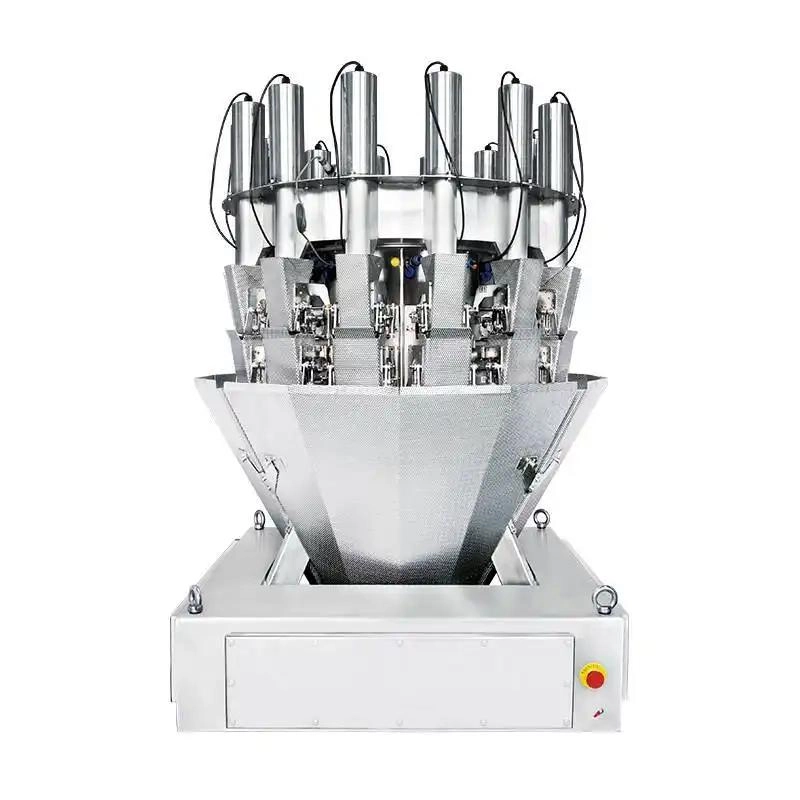
14 Heads Vertical Single Screw Feeding Pickles Weigher backups
This type of weigher is designed to handle the unique characteristics of pickles, ensuring precise measurements for packaging and distribution. It uses a vertical single screw mechanism to feed the pickles into the weighing system, allowing for efficient and consistent weighing. This technology is particularly useful in food processing and packaging facilities where precise portioning is essential for quality control and customer satisfaction. This specialized equipment is perfect for accurately measuring and dispensing pickles in a production line or packaging facility. The vertical design allows for efficient and precise filling of containers, while the single screw feeding mechanism ensures consistent and reliable weighing.
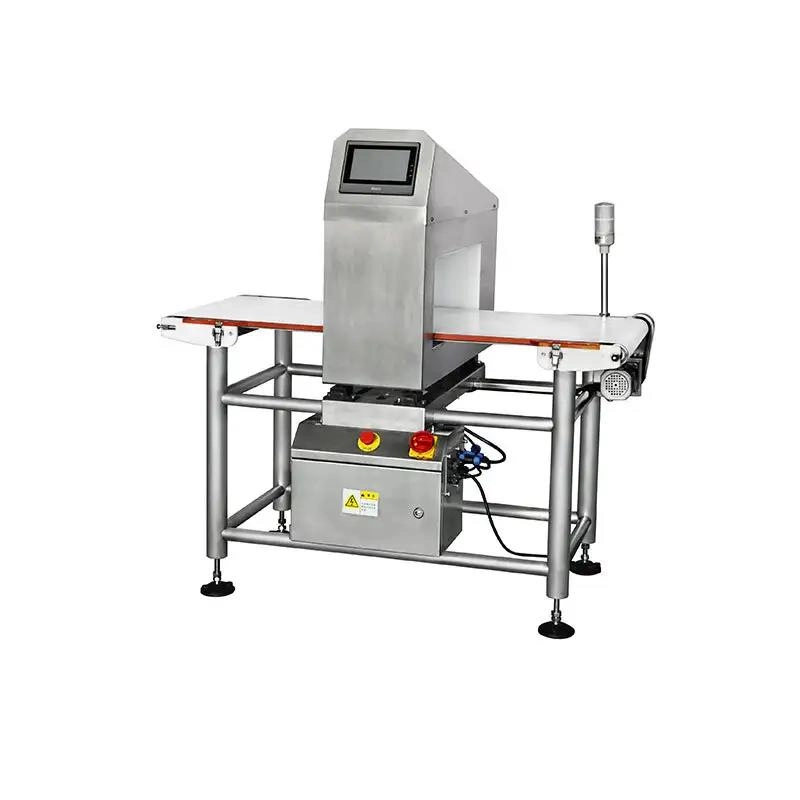
Food Metal Detector Manufacturer For Reject Defective Products G5020
The G5020 multi-frequency metal detector features a specialized conveyor belt designed to reduce contamination risks, ensure smooth operation, and maintain high detection sensitivity. It is easy to disassemble for convenient maintenance. Ideal for detecting metal contaminants in food, pharmaceuticals, spices, plastics, electronics, textiles, toys, handicrafts, and more.
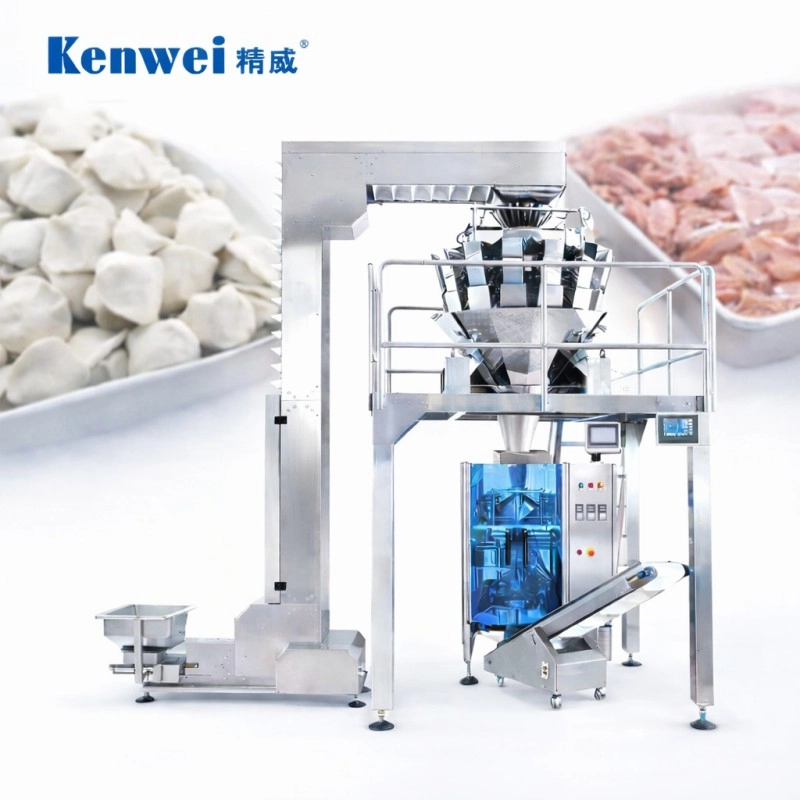
Vertical Frozen Food Packaging Machine for IQF & Frozen Products JW-B1
The Kenwei JW-B1 Vertical Frozen Food Packaging Machine is designed for IQF and frozen products, ensuring efficient, airtight packing. This vertical packing machine boosts productivity with precision sealing, ideal for frozen food packaging needs in the food industry.
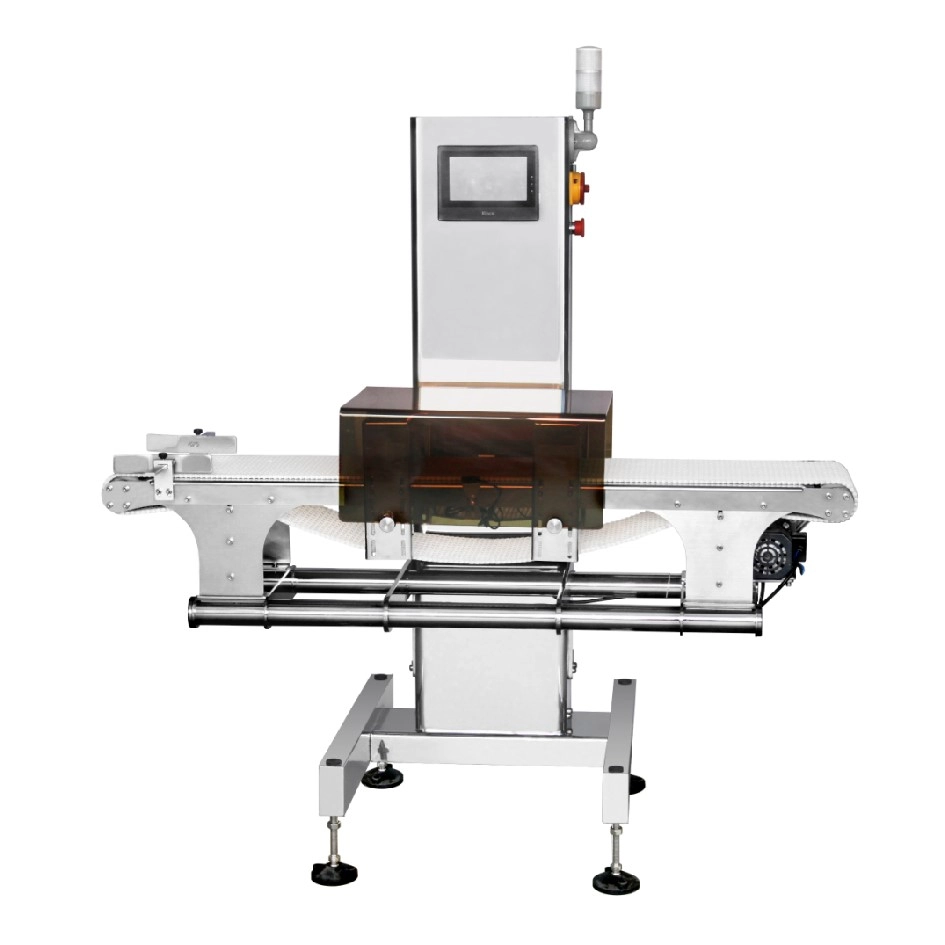
Metal Detector for Aluminum Foil in the Food Industry for Accurate Contamination Detection
The 2415 Metal Detector for Aluminum Foil is equipped with high-sensitivity sensors that effectively filter out signals from aluminum packaging, ensuring precise detection of magnetic metal contaminants. Ideal for detecting foreign bodies in aluminum foil-packaged items such as coffee bags, peanuts, dried meats, chocolate, and more. This versatile metal detector offers adjustable settings, with a maximum width of 24mm and height ranging from 20-150mm, making it suitable for a wide variety of aluminum foil packaging applications.
Get in touch with us
If you have any comments or good suggestions, please leave us a message, later our professional staff will contact you as soon as possible.
Kenwei
Kenwei
Kenwei multi weigh
Kenwei
Kenwei
Kenwei