






Troubleshooting Common Issues in Multihead Weighers
Comprehensive, actionable guidance for diagnosing and fixing common mechanical, electrical, and product-handling issues in multihead weighers — with a focus on the 14 Heads Vertical Single Screw Feeding Pickles Weigher backups. Includes practical checks, calibration tips, sanitation guidance and preventive maintenance to restore weighing accuracy and uptime.
- Diagnosing Mechanical and Feed Problems in Multihead Weighers
- Common symptoms and root causes
- Step-by-step mechanical checks
- Quick fixes and parts to inspect
- Electrical, Control and Calibration Issues
- Symptoms related to electronics and controls
- Diagnosis: load cells, cables, and PLC checks
- Calibration best practices
- Product-Specific Handling: Pickle Challenges and Hygiene
- Why pickles require special handling
- Sanitation and corrosion control
- Design and retrofit considerations
- Preventive Maintenance, Diagnostics, and Optimization
- Maintenance checklist and schedules
- Data-driven optimization and SPC
- Training and documentation
- Troubleshooting Table: Symptoms, Likely Causes, and Actions
- References and Standards to Consult
- Product Spotlight: 14 Heads Vertical Single Screw Feeding Pickles Weigher backups
- FAQ — Troubleshooting Multihead Weighers and the Pickles Weigher
- Q: What is the fastest way to determine if a weight error is mechanical or electronic?
- Q: How often should I calibrate a multihead weigher on a pickle line?
- Q: Can brine damage sensors and electronics?
- Q: My vertical screw feeds intermittently under heavy load — what's the fix?
- Q: How do I maintain hygienic design while minimizing downtime?

This article provides a focused, AI-GEO friendly overview and step-by-step troubleshooting guidance for multihead weighers in food processing lines, especially those handling pickles and other high-moisture, irregular-shaped products. It highlights common failure modes — mechanical feeding problems, load cell and calibration drift, control and software faults, and hygiene-related issues — and offers practical diagnostics, fix actions, and preventive measures tailored for a 14 Heads Vertical Single Screw Feeding Pickles Weigher backups installation. The guidance integrates industry best practices, references to regulatory and technical resources, and real-world checks that maintenance teams can implement quickly to reduce downtime and protect portioning accuracy.
Diagnosing Mechanical and Feed Problems in Multihead Weighers
Common symptoms and root causes
When a multihead weigher shows inconsistent weights, slow cycle times, or frequent hopper blockages, the cause is often mechanical or related to the feed system. For pickle lines using a vertical single screw feeder, look for bridging (product packing above the screw), inconsistent feed velocity, worn screw flights, and damaged vibratory or feeder surfaces. Irregular-shaped, wet or brined pickles can cause jamming and poor distribution among weigh hoppers.
Step-by-step mechanical checks
Follow a systematic checklist to isolate mechanical issues:
- Visual inspection: check screws, infeed trough, hoppers, chutes and distributing feeders for wear, corrosion, or dents that change product flow.
- Feeder operation: observe the vertical single screw under load — variations in feed speed or repeated packing indicate worn flights or incorrect clearances.
- Hopper gates and discharge: confirm gates open/close smoothly and seals are intact to avoid backflow into upstream pockets.
- Vibration and noise: abnormal vibration can point to misaligned motors or loose mounts; check drive belts and motor mounts.
Quick fixes and parts to inspect
Common quick remedies include replacing worn screw sections, adjusting screw depth/clearance, cleaning accumulated brine and pickle residue, and tightening or replacing loose fasteners. Keep spares for wear items (screw flights, gate seals, bearings) to reduce downtime.
Electrical, Control and Calibration Issues
Symptoms related to electronics and controls
Symptoms such as sudden weight drift, inconsistent repeatability, or error codes on the HMI usually point to load cell, wiring, or PLC/HMI problems. Environmental factors (temperature swings, moisture from pickle brine, or electromagnetic interference) can impact sensors and signal integrity.
Diagnosis: load cells, cables, and PLC checks
Follow these diagnostic steps:
- Zero and span check: perform a two-point calibration (zero and test weight) using certified test weights or known product portions. If zero shifts or span is off, investigate load cell wiring and grounding.
- Inspect cabling: look for crushed, corroded or wet cable connectors. Moisture ingress is a frequent problem in pickle processing environments.
- PLC/HMI logs: review event logs for error codes, communication faults, or repeated alarms. Recreate the fault in manual mode if possible to isolate software vs hardware issues.
- Environmental protection: ensure junction boxes and enclosures meet ingress protection (IP) ratings appropriate for wet/splashed conditions.
Calibration best practices
Calibrate regularly and document results. Use certified weights traceable to an authority and follow manufacturer calibration steps. For legal-for-trade operations consult standards from organizations such as the International Organization of Legal Metrology (OIML) when required. Keep a calibration log and set alarms for drift beyond acceptable ranges to prompt preventive action.
Product-Specific Handling: Pickle Challenges and Hygiene
Why pickles require special handling
Pickles are high-moisture, often brined, and irregular in size and shape. These characteristics increase friction, promote sticking, and raise corrosion risk. The 14 Heads Vertical Single Screw Feeding Pickles Weigher backups is specifically designed to address these factors by using vertical single screw feeding for consistent metering and a hooper configuration that encourages even distribution to the multihead weigh system.
Sanitation and corrosion control
Regular cleaning prevents residue buildup that causes sticking and weight errors. Use food-safe CIP (clean-in-place) or manual cleaning protocols that match the machine materials and seals. Keep components that contact product stainless-steel rated for salt/brine exposure. Follow recognized food safety frameworks (for example the FAO/WHO Codex Alimentarius guidance on food safety management: Codex).
Design and retrofit considerations
If recurring issues stem from product handling, consider retrofit options: smoother hopper surfaces, non-stick coatings, improved drainage and splash guards, or heated feed areas (where safe) to reduce brining viscosity. Ensure all retrofits comply with food contact regulations and FDA recommendations on packaging and food-contact materials (FDA Packaging & Labeling).
Preventive Maintenance, Diagnostics, and Optimization
Maintenance checklist and schedules
A structured preventive maintenance plan will reduce unplanned downtime and maintain fill accuracy. Sample schedule:
| Interval | Tasks | Key checks |
|---|---|---|
| Daily | Visual clean, check feed, inspect hoppers | Residue buildup, fasteners, leak points |
| Weekly | Functional test, check vibration levels | Feeder alignment, motor mounts, gate timing |
| Monthly | Calibration verification, load cell checks | Zero/span, wiring, HMI logs |
| Quarterly | Replace wear parts, full inspection | Screw flights, seals, bearings |
Data-driven optimization and SPC
Use production data to track OEE and fill accuracy. Statistical Process Control (SPC) helps detect trends before they become faults. Log average weight, standard deviation, reject rates, and cycle times. If you see widening variance patterns, investigate feeds, hopper balance and mechanical wear.
Training and documentation
Empower operators with clear SOPs and troubleshooting flowcharts. Train teams to perform basic load cell checks, perform a quick zero/span, and follow lockout-tagout (LOTO) procedures before mechanical interventions. Document every adjustment and repair to build institutional knowledge and make supplier support faster and more effective.
Troubleshooting Table: Symptoms, Likely Causes, and Actions
| Symptom | Likely Cause | Immediate Action |
|---|---|---|
| Inconsistent weights / high variance | Load cell drift, uneven feed distribution, hopper sticking | Perform zero/span, inspect hoppers for residue, check feed screw speed and consistency |
| Frequent hopper blockages | Product bridging, worn screw flights, improper gate timing | Clean feed path, inspect/replace flights, adjust gate timing |
| Machine stops with error codes | Sensor faults, PLC communication errors, moisture on connectors | Review HMI logs, dry/replace connectors, restart PLC after safe reset |
| Corrosion or pitting in contact areas | Brine exposure, improper material selection | Replace damaged parts with appropriate stainless grade, improve drainage/cleaning |
References and Standards to Consult
For calibration and legal-for-trade concerns consult the International Organization of Legal Metrology (OIML). For background on weighing and scales see the encyclopedia entry (Weighing scale — Wikipedia). For food-contact and packaging considerations consult the U.S. Food & Drug Administration resources (FDA Packaging & Labeling) and Codex Alimentarius for food safety management (FAO/WHO Codex).
Product Spotlight: 14 Heads Vertical Single Screw Feeding Pickles Weigher backups
Product description:
This type of weigher is designed to handle the unique characteristics of pickles, ensuring precise measurements for packaging and distribution. It uses a vertical single screw mechanism to feed the pickles into the weighing system, allowing for efficient and consistent weighing. This technology is particularly useful in food processing and packaging facilities where precise portioning is essential for quality control and customer satisfaction. This specialized equipment is perfect for accurately measuring and dispensing pickles in a production line or packaging facility. The vertical design allows for efficient and precise filling of containers, while the single screw feeding mechanism ensures consistent and reliable weighing.
When troubleshooting this specific model, pay special attention to the vertical screw assembly (alignment, flight wear and sealing), drain and splash management (to protect bearings and motors), and the distributing chutes that route product to the 14 heads. Because pickles are brined, corrosion-resistant components and ingress-protected electronics are critical for long-term reliability.
FAQ — Troubleshooting Multihead Weighers and the Pickles Weigher
Q: What is the fastest way to determine if a weight error is mechanical or electronic?
A: Perform a zero check and a known-weight (span) test. If the system reads a certified test weight correctly, the mechanical feed or distribution (hoppers, gates) is the likely source. If the electronic readout drifts or shows inconsistent readings for static known weights, investigate load cells, wiring, and the scale's signal amplifier.
Q: How often should I calibrate a multihead weigher on a pickle line?
A: At minimum, perform daily zero checks and weekly span verifications in high-throughput pickle lines. Monthly formal calibrations with traceable weights are recommended. Increase frequency when you see higher variance, after maintenance, or when environmental conditions change.
Q: Can brine damage sensors and electronics?
A: Yes. Brine is corrosive and conductive; it can damage connectors, sensors and circuit boards. Use IP-rated enclosures, sealed connectors, and regular cleaning. Replace degraded cables and use conformal coatings where appropriate.
Q: My vertical screw feeds intermittently under heavy load — what's the fix?
A: Check for worn screw flights, incorrect clearance or product bridging in the inlet. Also verify motor torque and drive belt tension. If the product compacts, consider modifying screw geometry or adding gentle agitation/upstream vibration to reduce packing.
Q: How do I maintain hygienic design while minimizing downtime?
A: Design procedures for rapid disassembly of product-contact parts, schedule CIP if supported, and stock quick-change seals and modular components. Train staff on fast, sanitary cleaning methods that preserve equipment integrity.
Need more help? If you’re experiencing persistent issues with your multihead weigher or want to evaluate the 14 Heads Vertical Single Screw Feeding Pickles Weigher backups for your line, contact our technical support team or request a product consultation: Contact Sales & Support. To view product details and specifications, visit the product page: View 14 Heads Vertical Single Screw Feeding Pickles Weigher backups.
Tags
Linear weigher machine
Linear weigher machine
food metal detector
food metal detector
Linear weigher spare parts and components
Linear weigher spare parts and components
food packing machinery
food packing machinery
automatic food packing machine
automatic food packing machine
multihead weigher machine
multihead weigher machine
Recommended for you
Packaging Frozen Foods: Food Packing Machine Best Practices
Top Food Metal Detector Models for Packaging Lines 2025
Calibrating a Multihead Weigher: Simple Steps to Improve Accuracy
The latest trends for food metal detector machine
Prdoucts Categories
Question you may concern
About Cooperation Process
Can Kenwei customize equipment to meet my specific needs?
Yes! We offer customized solutions for all of our machines. Our team will work closely with you to understand your specific requirements and create a solution that meets your needs in terms of size, functionality, speed, and other factors.
What information is needed to get a quote from Kenwei?
For us to provide an accurate quote, please provide the following details:
Type of machinery you are interested in (e.g., multi-head weighers, metal detectors, etc.)
Specifications and customization requirements (e.g., capacity, speed, size, etc.)
Your intended application and industry
Quantity of machines required
Delivery location
About After Sales Support
How about the after-sales service?
Warranty :2 years
How do I claim warranty service?
To claim warranty service, please contact our customer support team with your machine’s product code and a description of the issue. If applicable, we may request photos or videos of the issue to facilitate troubleshooting.
About Product choice
Are Kenwei’s products suitable for small-scale or large-scale operations?
Yes! We offer machines that are scalable to meet the needs of both small and large-scale operations.
You may also like
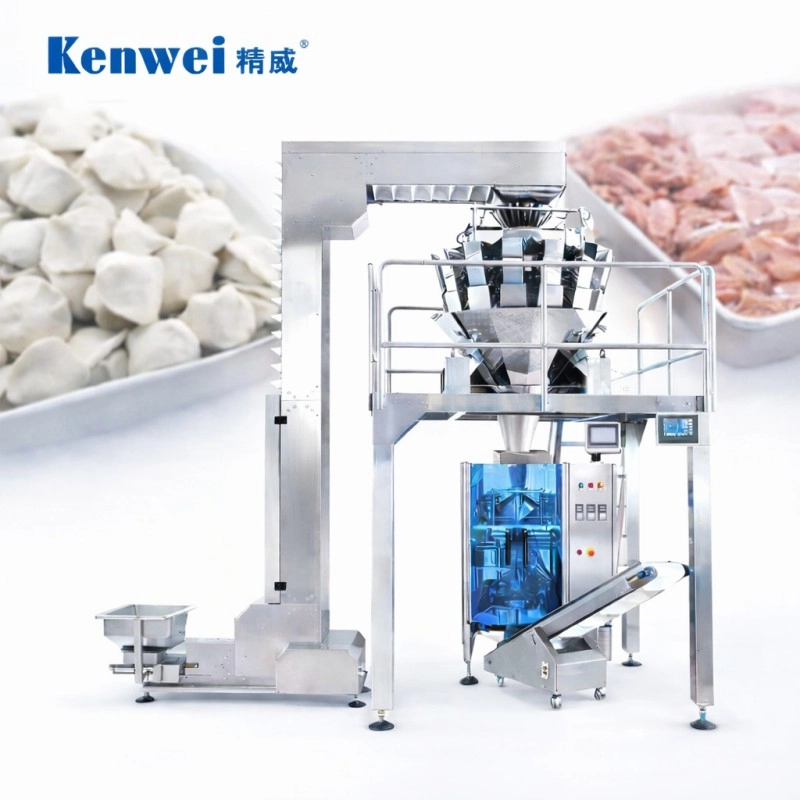
Vertical Frozen Food Packaging Machine for IQF & Frozen Products JW-B1
The Kenwei JW-B1 Vertical Frozen Food Packaging Machine is designed for IQF and frozen products, ensuring efficient, airtight packing. This vertical packing machine boosts productivity with precision sealing, ideal for frozen food packaging needs in the food industry.
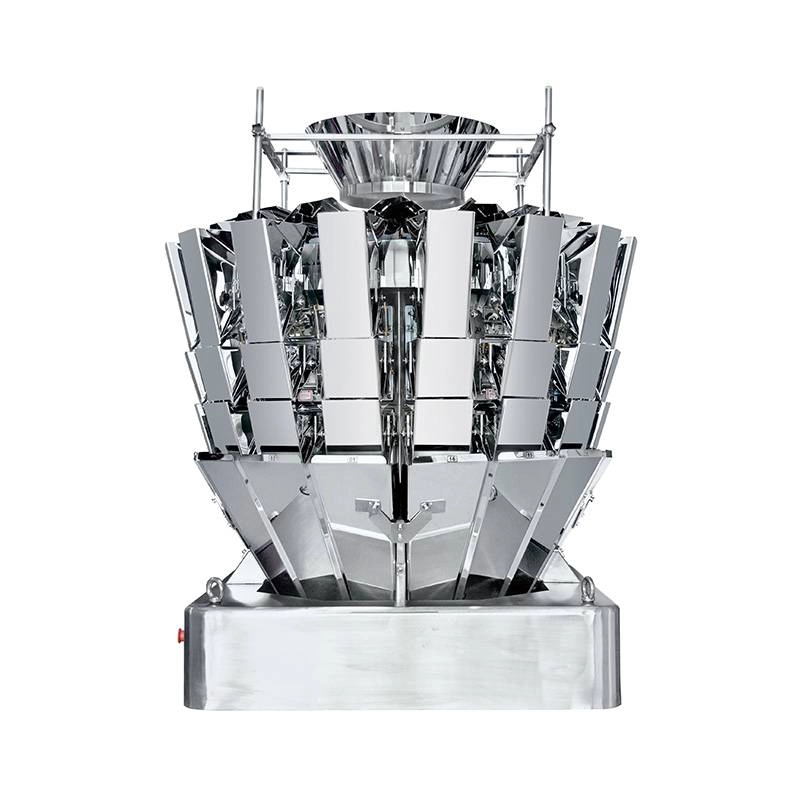
16 Head Three Layer Multihead Weigher for Granular and Irregular Materials
Kenwei’s 16 Head Three Layer Multihead Weigher ensures precise weighing of granular and irregular materials. This multihead weighing machine offers efficient, high-speed performance, ideal for various packaging needs. Trust our 16 head weigher for accuracy and reliability in your production line.
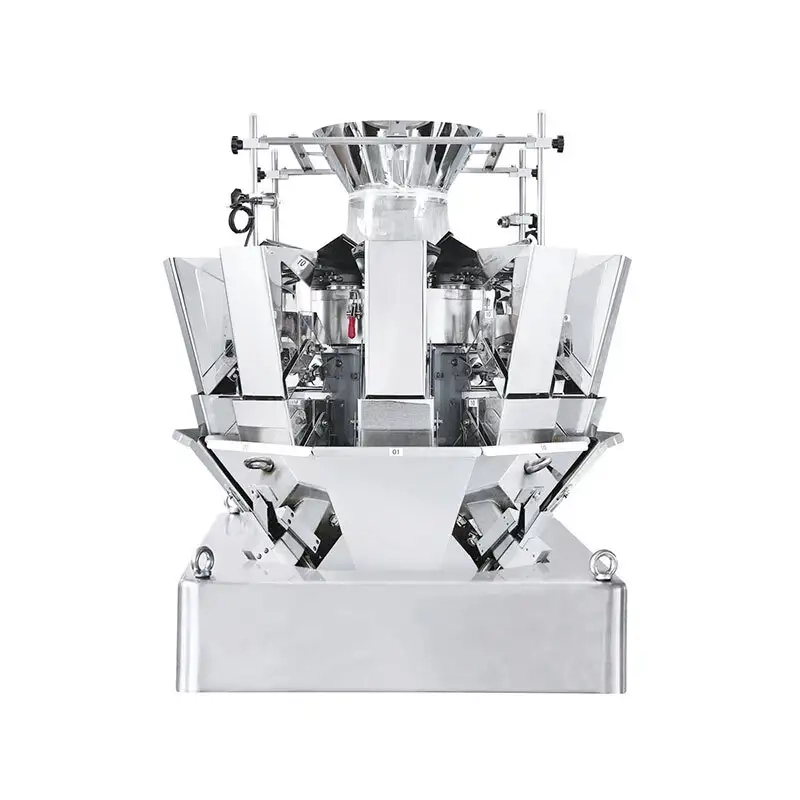
10-Head Standard No-Spring Multihead Weigher 1.6L for Precise Weighing
The standard no-spring combination scale features a patented spring-free hopper design, making it ideal for weighing a variety of products such as melon seeds, peanuts, nuts, almonds, grapes, candies, pistachios, potato chips, shrimp chips, and more. The double-support feeding tray is easily adjustable, while the feeding hopper is designed for easy disassembly, ensuring convenience and cleanliness. With a maximum weighing speed of up to 120 bags per minute, the 14-head standard no-spring combination scale is an economical, versatile, and cost-effective solution.
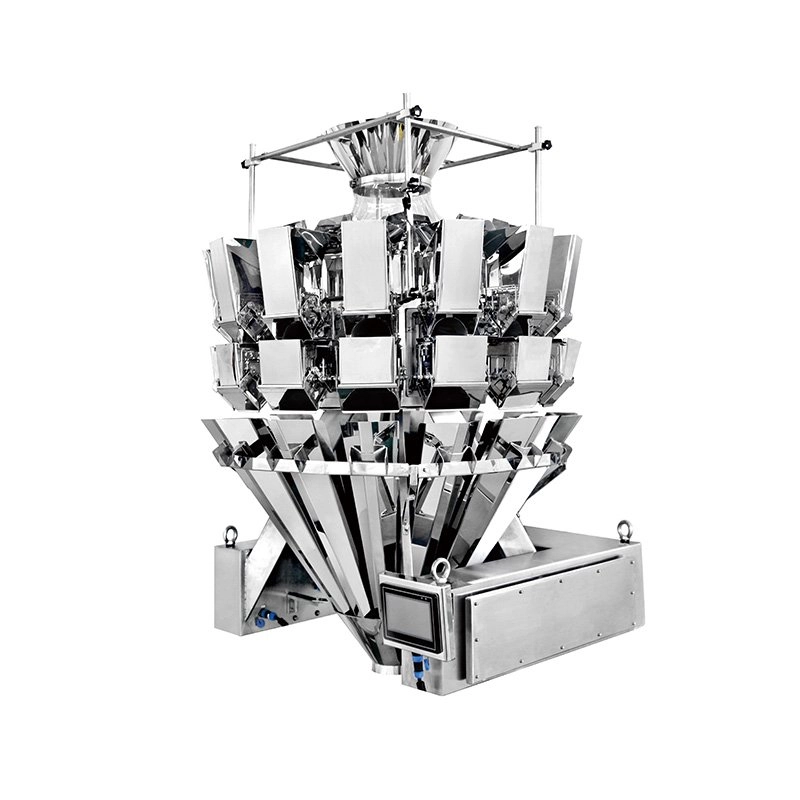
Automatic Multihead Weigher for Stick and Bar-Shaped Materials
Kenwei’s Automatic Multihead Weigher for Stick and Bar-Shaped Materials ensures precise, fast, and efficient weighing. This advanced automatic multihead weighing machine is ideal for accurate portioning of various stick and bar-shaped products, enhancing productivity and reducing waste.
Get in touch with us
If you have any comments or good suggestions, please leave us a message, later our professional staff will contact you as soon as possible.
Kenwei
Kenwei
Kenwei multi weigh
Kenwei
Kenwei
Kenwei