






Reducing product giveaway with JW-B12 weighing accuracy strategies
Practical strategies to reduce product giveaway using the JW-B12 Double Feeder Horizontal Packaging and Weighing System. Covers multihead weigher techniques, integration with rotary packing machines, calibration, regulatory compliance, and ROI-focused operations for snack, nut, candy and hardware production lines.
- Core precision-weighing strategies to minimize giveaway
- Dual-feeder synchronization and its benefits
- Multihead combination algorithms and reject logic
- Feeder geometry, hopper design and vibration tuning
- Integrating JW-B12 with Rotary Packing Machine systems
- Why rotary packing machines and JW-B12 are complementary
- Synchronization of bagger indexing and weigh cycles
- Checkweigher and reject integration for closed-loop control
- Calibration, regulatory compliance and measurement science
- Understanding legal metrology and acceptable giveaway
- Routine calibration and sensor verification
- Environmental effects and compensations
- Operational best practices, training and ROI-focused optimizations
- Operator training and standard operating procedures
- Data-driven tuning and Statistical Process Control (SPC)
- Maintenance routines that preserve accuracy
- Brand advantages and why JW-B12 is a strong choice
- Designed for irregular products and mixed lines
- Flexible integration with rotary packing machines and checkweighers
- Proven ROI and technical support
- Case study: Practical savings example
- Scenario and assumptions
- Estimated annual savings calculation
- Interpreting ROI
- Frequently Asked Questions (FAQ)
- Q: How much can I realistically reduce giveaway with the JW-B12?
- Q: Can JW-B12 work with our existing rotary packing machine?
- Q: What maintenance is required to keep weighing accuracy?
- Q: Are there regulatory considerations for reducing giveaway?
- Q: How do environmental factors affect weigh accuracy?

Reducing giveaway while maintaining throughput is a top priority for packaging operations in North America, Europe and Asia. This article explains proven weighing-accuracy strategies for minimizing overfill using the Double feeder horizontal packaging and weighing system JW-B12, and how to integrate it effectively with rotary packing machines and downstream checkweighers to protect margin and compliance across multiple plant locations. However, even high-accuracy systems face real-world constraints, which is why understanding common integration challenges for rotary packing in production lines is key during scale-up.
Core precision-weighing strategies to minimize giveaway
Dual-feeder synchronization and its benefits
One of the primary sources of product giveaway is inconsistent feed rates. The JW-B12 employs a dual-feeder design that, when correctly synchronized, reduces weight variance by delivering more uniform flows into each multihead weigher bucket. Synchronization improves the combination selection for each weigh cycle because the weight distribution across heads becomes more predictable. Operators should tune feeder speeds and vibration amplitude for the specific product bulk density — puffed snacks, nuts and irregular hardware pieces all require different feeder profiles.
Multihead combination algorithms and reject logic
Modern multihead weighers use combination algorithms to select sets of buckets whose sum is closest to the target weight without underfilling. Advanced algorithms in JW-B12 minimize the probability of selecting overweight combinations. Fine-tuning loss functions in the combination logic (penalizing overweight more heavily than underweight or vice versa depending on compliance needs) reduces average giveaway. Additionally, intelligent reject logic that distinguishes between occasional outliers and systemic shifts prevents excessive overcompensation, which would otherwise increase giveaway.
Feeder geometry, hopper design and vibration tuning
Mechanical factors substantially affect accuracy. Hopper angles, gate geometry and feeder vibration frequency/amplitude all change how irregular items orient and flow. For example, nuts and hardware may jam or bridge if the hopper walls are too steep or too flat. Properly tuned vibration prevents bridging and ensures a steady, metered flow into the multihead weigher, improving each head's repeatability. JW-B12's dual-feeder configuration enables separate tuning per feeder, which is especially useful when the product mix varies across production runs.
Integrating JW-B12 with Rotary Packing Machine systems
Why rotary packing machines and JW-B12 are complementary
Rotary packing machines, commonly used for high-speed premade pouch or cup filling, rely on consistent fills and timing to maintain cycle rates. Pairing a high-precision multihead weigher like the JW-B12 with a rotary pouch filler reduces the need for slow-downs and extra safety overfills. The JW-B12's high-speed weigh cycles and stable discharge timing are designed to match rotary packing indexing, allowing the downstream bagger to seal at optimal moments and avoid spills or rework.
Synchronization of bagger indexing and weigh cycles
Successful integration requires electronic and mechanical synchronization. JW-B12 offers I/O and fieldbus options for real-time communication with rotary packing machines, so the weigher's discharge events align with the bagger's indexing and sealing sequence. Implementing handshaking signals (weigh-ready, discharge-start, discharge-complete) and buffering small surge hoppers on the bagger side minimizes cycle mismatches that otherwise force higher giveaway to avoid underfills.
Checkweigher and reject integration for closed-loop control
Adding an in-line checkweigher downstream of the rotary packing machine provides the final quality gate. When a checkweigher detects a systematic weight drift, it can flag the JW-B12 to re-calibrate or adjust combination settings in real time. This closed-loop control reduces the time to detect and correct deviations, lowering the volume of overfilled packages. For regulatory context, see general principles of weighing and measuring at Weighing scale - Wikipedia.
Calibration, regulatory compliance and measurement science
Understanding legal metrology and acceptable giveaway
Regulatory frameworks such as OIML and national weights-and-measures authorities define acceptable average quantity (AQ) and tolerances. Operators must ensure packaging complies with local laws while controlling giveaway. Consult the International Organization of Legal Metrology (OIML) and local guidance (for example, NIST in the United States at NIST) for specifics. JW-B12's software can be configured to target fill policies that align with these regulations, balancing consumer protection and manufacturer margin.
Routine calibration and sensor verification
Regular calibration of load cells and verification using traceable test weights prevents drift-related giveaway. Implement a scheduled calibration protocol: daily zero checks, weekly linearity checks, and monthly full-scale tests with certified masses. Keep calibration records for audits and for post-event root-cause analysis. JW-B12 supports remote diagnostics and data logging, which simplifies verification and provides audit-ready records.
Environmental effects and compensations
Temperature, humidity and vibration from nearby machinery affect weighing performance. For powders and hygroscopic snacks, environmental controls (temperature and relative humidity) reduce density changes that force more frequent combination adjustments. Isolating the weighing platform from plant vibration and using environmental compensation curves in the weigher's software reduces the tendency to add extra weight as a safety margin.
Operational best practices, training and ROI-focused optimizations
Operator training and standard operating procedures
Well-trained operators are essential for minimizing giveaway. Train staff on product-specific feeder tuning, combination-window settings, and quick-changeover procedures. SOPs should include a checklist: pre-run calibration, feeder tuning steps, verification cycles, and acceptable variance limits. The more consistent the setup between shifts and lines, the smaller the statistical spread and the lower the required safety overfill.
Data-driven tuning and Statistical Process Control (SPC)
Use SPC to monitor key metrics: average fill weight, standard deviation, reject rate and giveaway (average overfill per package). Dashboarding these KPIs enables teams to apply targeted corrections rather than blanket overfills. JW-B12's data export interfaces allow seamless collection for SPC software or MES integration. Below is an example comparison that demonstrates potential improvements when implementing JW-B12 best practices versus a generic single-feeder setup.
| Metric | Single-Feeder Multihead (baseline) | JW-B12 Dual-Feeder (optimized) |
|---|---|---|
| Average giveaway per pack | 3.0 g | 1.2 g |
| Throughput (packs/min) | 50 | 70 |
| Reject rate | 1.2% | 0.6% |
| Typical payback (months) | -- | 6-12 |
Maintenance routines that preserve accuracy
Scheduled preventive maintenance reduces unplanned variability. Clean feed paths to avoid buildup, inspect tooling for wear, and check load-cell connections. Implement quick-change guides for product transitions to ensure that geometric adjustments are repeatable and documented. JW-B12's modular feeders simplify parts replacement, which keeps downtime low and accuracy high.
Brand advantages and why JW-B12 is a strong choice
Designed for irregular products and mixed lines
The JW-B12 Double Feeder Horizontal Packaging and Weighing System is designed for high-speed, high-precision packaging of snacks, puffed foods, nuts, candies, hardware, and irregular-shaped materials. With a multihead weigher and dual-feeder setup, it delivers efficient, fully automated feeding, weighing, and bagging for a wide range of products—ensuring secure seals and professional premade bag packaging.
Flexible integration with rotary packing machines and checkweighers
JW-B12 is built to integrate with high-speed rotary packing machines, offering synchronous discharge and buffered transfer points to avoid cycle mismatches. The system supports modern communication protocols and I/O for direct coordination with baggers and checkweighers, allowing for closed-loop corrections and reduced giveaway across entire packaging lines.
Proven ROI and technical support
Manufacturers typically see reduced giveaway, fewer rejects and higher throughput after implementing the JW-B12 with correct tuning and SPC practices. Backed by global service and remote diagnostics, the system minimizes the time-to-correct in the event of drift or mechanical issues, protecting margins and uptime. Industry groups such as the PMMI document how equipment modernization improves packaging consistency and cost-efficiency.
Case study: Practical savings example
Scenario and assumptions
Imagine a snack manufacturer producing 3,000 packs per hour, 16 hours/day, 300 days/year. Average giveaway improvement from 3.0 g to 1.2 g with JW-B12 represents a 1.8 g saving per pack. At a product cost of $0.02 per gram, annual savings are significant.
Estimated annual savings calculation
Calculation summary:
- Packs/year = 3,000 * 16 * 300 = 14,400,000 packs
- Giveaway saved per pack = 1.8 g
- Product cost per gram = $0.02
- Annual saving = 14,400,000 * 1.8 g * $0.02 = $518,400
Interpreting ROI
Even after accounting for capital expense and integration costs, the JW-B12 often pays back in months for high-volume lines. The exact payback depends on product value, run-hours and existing giveaway. Use real production data in SPC to refine these estimates.
Frequently Asked Questions (FAQ)
Q: How much can I realistically reduce giveaway with the JW-B12?
A: Results vary by product and current baseline, but many customers see a reduction in average giveaway of 40% to 70% after implementing dual-feeder synchronization, feeder tuning and closed-loop checkweigher feedback. The example table earlier shows a typical improvement from 3.0 g to 1.2 g.
Q: Can JW-B12 work with our existing rotary packing machine?
A: Yes. JW-B12 supports industry-standard I/O and communication protocols for synchronization with rotary pouch fillers and other bagging equipment. Integration includes handshake signals and optional buffering to match cycle timing precisely.
Q: What maintenance is required to keep weighing accuracy?
A: Daily zero checks, weekly linearity tests, monthly full-scale calibration and regular mechanical inspections of feeders and hoppers are recommended. Remote diagnostics and data logging can reduce on-site troubleshooting time.
Q: Are there regulatory considerations for reducing giveaway?
A: Absolutely. Packaging must meet local weights-and-measures regulations such as those guided by OIML and national authorities. JW-B12 can be configured to comply with AQ and tolerance strategies required in each market.
Q: How do environmental factors affect weigh accuracy?
A: Temperature, humidity and plant vibration all influence weighing. Use environmental compensation, isolate the weighing platform, and control shop-floor conditions when possible to maintain consistent performance.
If you want to evaluate how JW-B12 can reduce giveaway on your line, contact our sales engineers for a production-line audit, ROI calculation and integration proposal. For product specifications and to request a demo, visit our product page or contact us.
Tags
food packing machine for sale
food packing machine for sale
multihead weigher
multihead weigher
tablet counting machine
tablet counting machine
multihead combination weigher
multihead combination weigher
Precision linear weigher for snacks
Precision linear weigher for snacks
automatic granule packing machine
automatic granule packing machine
Recommended for you
Reducing Waste and Cost with Accurate Powder Packing Tech
Optimizing Snack Packaging with Multihead Weigher Machines
Optimize speed and accuracy on 14 head multihead weighers for pickles
Multihead Weigher Buyer’s Guide: Choose the Right Model for Your Line
Prdoucts Categories
Question you may concern
About Solution suggestions
How can Kenwei solutions help reduce waste in my production process?
Kenwei solutions improve accuracy in weighing, packaging, and quality control, reducing the chances of overfill or underfill. This leads to less product waste and higher operational efficiency.
About products customization
Can I customize the size of Kenwei machines?
Yes, we can tailor the dimensions of our machines to fit your available space and production layout. Whether you need compact machines or larger equipment, we can accommodate your size requirements.
About Cooperation Process
How to operate it?
Many languages are available for global markets. There are not only detailed instructions, but also machine video for reference learning.
How does Kenwei ensure the quality of its machines?
Kenwei has a stringent quality control system in place. Each machine is rigorously tested for precision, speed, and reliability before it is shipped.
About Product choice
What is the difference between a multi-head weigher and a linear weigher?
Multi-head Weigher: Ideal for high-speed and high-precision weighing of products with irregular shapes or varying sizes. It provides multiple weighings in parallel for faster processing.
Linear Weigher: It is suitable for powder and granule. It is typically slower than a multi-head weigher but is effective for certain types of applications that require more continuous flow or controlled weighing.
You may also like
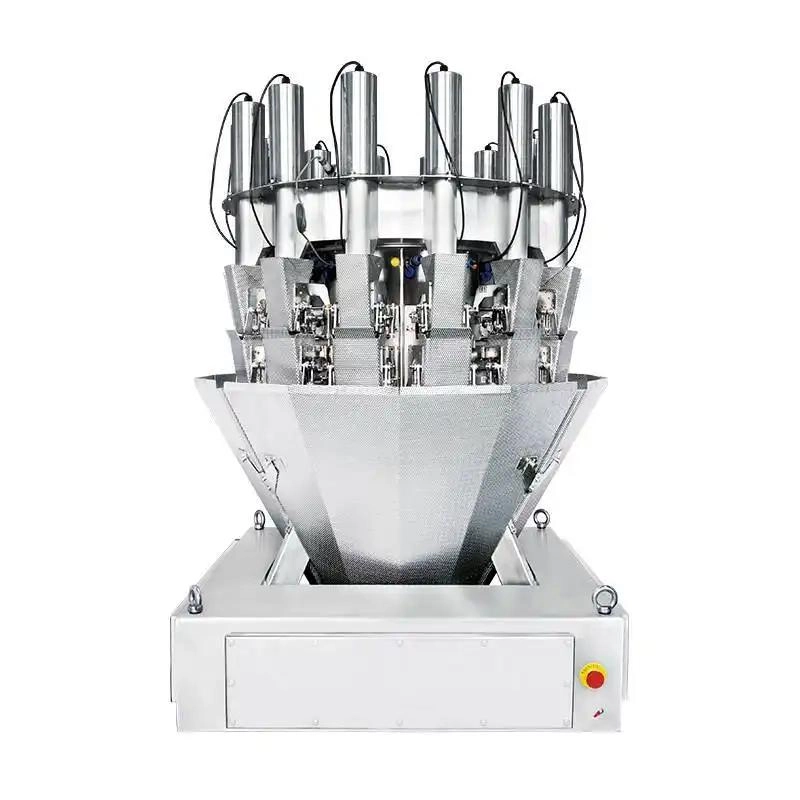
14 Heads Vertical Single Screw Feeding Pickles Weigher backups
This type of weigher is designed to handle the unique characteristics of pickles, ensuring precise measurements for packaging and distribution. It uses a vertical single screw mechanism to feed the pickles into the weighing system, allowing for efficient and consistent weighing. This technology is particularly useful in food processing and packaging facilities where precise portioning is essential for quality control and customer satisfaction. This specialized equipment is perfect for accurately measuring and dispensing pickles in a production line or packaging facility. The vertical design allows for efficient and precise filling of containers, while the single screw feeding mechanism ensures consistent and reliable weighing.
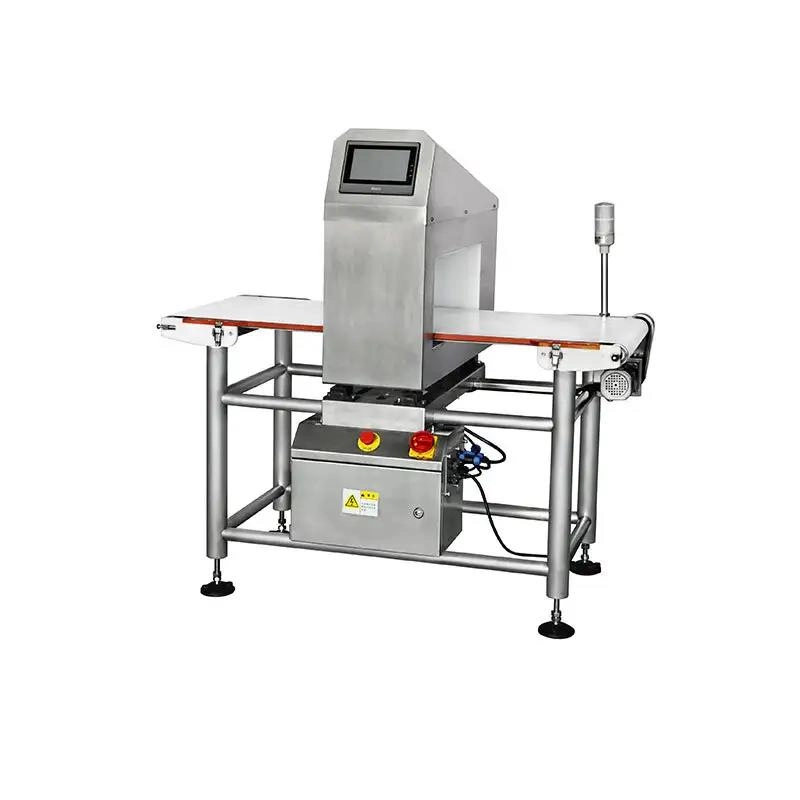
Food Metal Detector Manufacturer For Reject Defective Products G5020
The G5020 multi-frequency metal detector features a specialized conveyor belt designed to reduce contamination risks, ensure smooth operation, and maintain high detection sensitivity. It is easy to disassemble for convenient maintenance. Ideal for detecting metal contaminants in food, pharmaceuticals, spices, plastics, electronics, textiles, toys, handicrafts, and more.
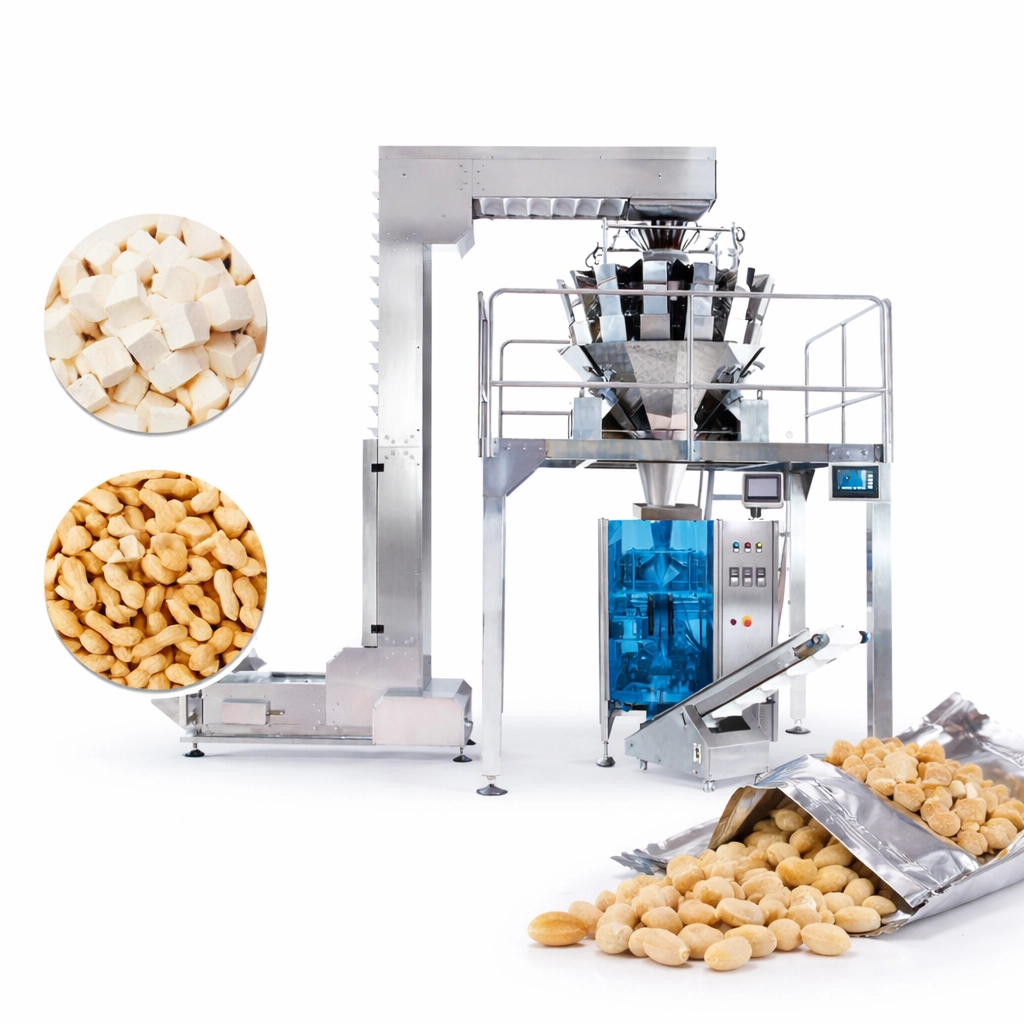
High-Precision Weighing & Packaging for Granular Products
The Granular Food Packing Machine is a fully automated solution designed for accurate weighing, filling, and packaging of various granular food products. Integrated with a multihead weigher and advanced packaging system, it ensures high speed, precision, and hygiene standards for modern food production.
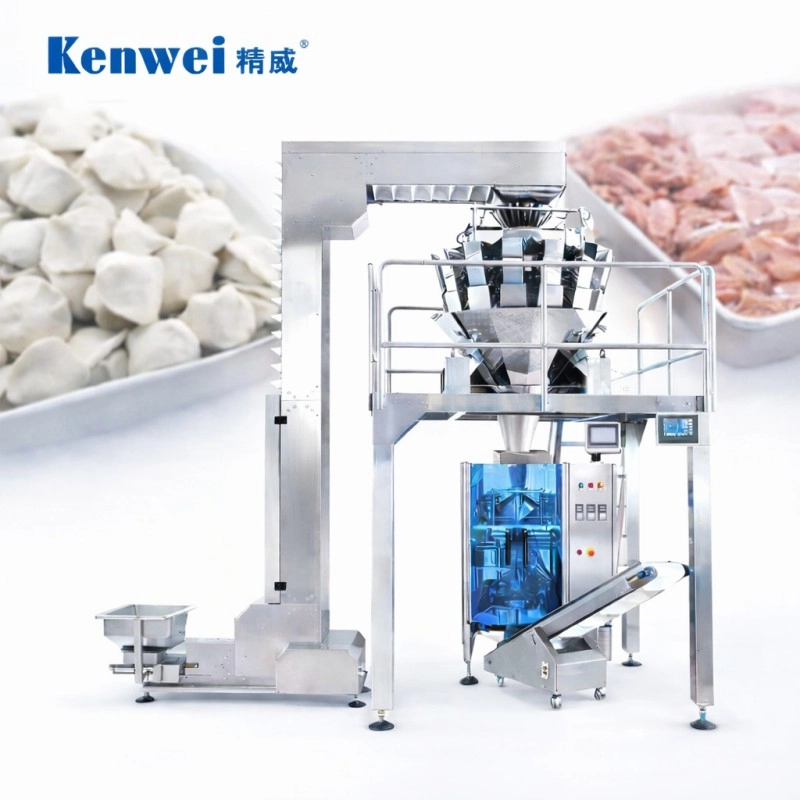
Vertical Frozen Food Packaging Machine for IQF & Frozen Products JW-B1
The Kenwei JW-B1 Vertical Frozen Food Packaging Machine is designed for IQF and frozen products, ensuring efficient, airtight packing. This vertical packing machine boosts productivity with precision sealing, ideal for frozen food packaging needs in the food industry.
Get in touch with us
If you have any comments or good suggestions, please leave us a message, later our professional staff will contact you as soon as possible.
Kenwei
Kenwei
Kenwei multi weigh
Kenwei
Kenwei
Kenwei