






Common integration challenges for rotary packing in production lines
This article examines the most common integration challenges when adding a Rotary Packing Machine to production lines, focusing on mechanical alignment, controls, product handling, and validation. It provides practical mitigation strategies and highlights how the JW-B12 Double Feeder Horizontal Packaging and Weighing System addresses these challenges for snacks, nuts, candies, hardware and irregular-shaped products.
- Physical alignment and line layout constraints
- Machine footprint, conveyor interfaces and line geometry
- Synchronization of line speed and accumulation strategy
- Case example: layout considerations for JW-B12 integration
- Electrical, controls and communication hurdles
- PLC compatibility, communication protocols and networking
- Encoder, sensor and timing integration
- Safety, E-stop logic and lockouts
- Product handling and process reliability issues
- Feeding irregular and fragile products into multihead weighers
- Weighing accuracy, give-away and reject rate control
- Seal integrity, bag handling and premade bag alignment
- Installation, validation and operational readiness
- Commissioning, Factory Acceptance Testing (FAT) and Site Acceptance Testing (SAT)
- Cleaning, maintenance access and OEE considerations
- Regulatory compliance and documentation
- Practical mitigation checklist and comparison
- Brand advantages and why JW-B12 is a strong candidate for rotary packing integration
- Frequently Asked Questions (FAQ)
- Q: What are the most critical checks before installing a rotary packing machine?
- Q: Can a multihead weigher handle irregular shapes consistently?
- Q: How do I reduce give-away without increasing rejects?
- Q: What protocols should I expect on modern rotary packers?
- Q: How long does commissioning typically take?

The adoption of a Rotary Packing Machine on existing production lines can improve throughput and consistency but often introduces mechanical, controls, and product-handling challenges that must be resolved to realize those benefits. This article explains the typical integration pain points and provides practical mitigation steps, with a focus on multihead weigher integration and the JW-B12 Double Feeder Horizontal Packaging and Weighing System as a reference solution for high-speed, high-precision premade bag packaging. Addressing these challenges often depends on component-level decisions, including selecting the right sensors and feeders for JW-B12 systems.
Physical alignment and line layout constraints
Machine footprint, conveyor interfaces and line geometry
One of the earliest and most common issues is physical integration. Rotary Packing Machines and horizontal packaging systems have specific footprint and conveyor interface requirements. Mismatches in conveyor height, infeed/outfeed distances, or approach angles lead to product accumulation, misfeeds, or mechanical interference. Before install, perform a detailed line survey: measure belt widths, centerline elevations, frame clearances and service access zones. Create a scaled layout and, if possible, a 3D scan of the area to detect hidden obstructions (piping, supports, or ceiling-mounted services).
Synchronization of line speed and accumulation strategy
Rotary packaging machines typically accept product in bursts synchronized with rotating pockets or lanes. Integrating a rotary unit with upstream continuous conveyors requires careful design of accumulation zones, tampers, and synchronization sensors. Use zone-controlled accumulating conveyors or servo-driven metering belts ahead of the rotary to provide constant, controlled feeds. Where gentle handling is necessary (for puffed snacks or fragile biscuits), introduction of soft-start conveyors and controlled vibratory feeders preserves product integrity while matching speed. Consider installing vision or photo-eye sensors with PLC logic to trigger infeed pulses only when the rotary pocket is ready.
Case example: layout considerations for JW-B12 integration
The JW-B12 is engineered for compact lines yet benefits from a properly planned approach conveyor. The following product description provides immediate context for planners and integrators:
The JW-B12 Double Feeder Horizontal Packaging and Weighing System is designed for high-speed, high-precision packaging of snacks, puffed foods, nuts, candies, hardware, and irregular-shaped materials. With a multihead weigher and dual-feeder setup, it delivers efficient, fully automated feeding, weighing, and bagging for a wide range of products—ensuring secure seals and professional premade bag packaging.
When integrating the JW-B12, maintain a minimum straight approach length of 1.2 – 2 meters for non-free-flowing products, and specify height-adjustable infeed chutes for alignment. For lines with limited space, modular conveyor adapters or angled transfer belts can reduce required clearances.
Electrical, controls and communication hurdles
PLC compatibility, communication protocols and networking
Electrical and automation compatibility is another frequent barrier. Legacy lines often use older PLCs or proprietary fieldbuses, while modern rotary packers support Ethernet/IP, Profinet, Modbus TCP, or OPC UA. During engineering, map required I/O signals, identify supported protocols on both ends, and decide whether an intermediate gateway or protocol converter is needed. Using open standards such as OPC UA improves scalability and OT/IT integration. Refer to Packaging Machinery Manufacturers Institute (PMMI) guidance on automation best practices for packaging systems for industry recommendations: PMMI.
Encoder, sensor and timing integration
Precise timing between the multihead weigher discharge and the rotary pocket requires reliable encoder feedback and deterministic IO timing. Typical failure modes are jitter, missed pulses, or misaligned triggers causing partial fills or bag misplacement. Use a single-filed encoder reference (from the rotary machine) and route encoder signals to both upstream feeders and the packer. Where high accuracy is needed, prefer hardware-based synchronization (e.g., synchronized servo drives or shared motion controllers) instead of software polling. Implement diagnostic HMI screens that show encoder status, phase offset and last good/bad triggers to speed troubleshooting.
Safety, E-stop logic and lockouts
Integrating a rotary unit introduces new safety zones like rotating pockets, rotary seals and dual-feeder infeed areas. Harmonize emergency stops, safety interlocks and lockout/tagout procedures across the line. Ensure that safety relays and assistive devices meet local regulations (e.g., machine directive standards in EU). For food applications, also include interlocks for hygienic guards to prevent operation unless guards are properly in place. For guidance on hygienic and safety design, see the European Hygienic Engineering & Design Group: EHEDG.
Product handling and process reliability issues
Feeding irregular and fragile products into multihead weighers
Products like chips, puffed snacks, nuts, or irregular hardware parts present feeding challenges. Poorly metered feeds cause hopper starvation or overloading of weigh hoppers, impacting yield and weight accuracy. The JW-B12’s double feeder arrangement helps by providing staged feeding: one feeder maintains a steady flow to the multihead weigher while the second compensates for variability or cleans bridging. To improve reliability, tune feeder amplitude, deck angles, and install anti-bridging devices. Adding gentle agitators, slide plates, or flexible chutes reduces plug formation for sticky or cohesive items.
Weighing accuracy, give-away and reject rate control
Multihead weighers are recognized for fast, accurate combinations, but integration errors increase weight give-away or rejection of acceptable packs. Common causes include vibration transfer from nearby machinery, poor machine leveling, electrical noise affecting load cells, and inconsistent product density. Place the multihead weigher and the rotary machine on vibration-damping mounts and ensure a clean, separate grounding scheme. Regular calibration against certified test weights and setting sensible target/variance ranges on the HMI keeps give-away in control. See Wikipedia for general principles of weighing and measurement: Weighing scale.
Seal integrity, bag handling and premade bag alignment
With premade bags, rotary packing systems must maintain precise bag registration to ensure proper seal locations and print alignment. Bag neck shape, gusseting and film memory affect how bags present to the jaw or clamp. Use bag-present sensors, servo-controlled bag indexers and adjustable clamp jaws to compensate. In environments with static or dusty products, static eliminators and air knives ahead of sealing surfaces significantly reduce contamination and improve seal consistency. Regular inspection of seal bars and jaws for wear prevents long-term seal quality drift.
Installation, validation and operational readiness
Commissioning, Factory Acceptance Testing (FAT) and Site Acceptance Testing (SAT)
Insufficient FAT/SAT planning frequently delays production startup. A well-structured FAT validates functional performance, integration points, and acceptance criteria before shipment. Define key performance indicators (KPIs) in advance such as throughput (bags/min), target fill weight and acceptable reject rates. During SAT, test the integrated network, safety interlocks, and synchrony under live products and simulated faults. Keep detailed FAT/SAT runbooks and test data to expedite regulatory audits and future troubleshooting.
Cleaning, maintenance access and OEE considerations
Operational readiness includes maintainability and cleanability. Provide clear access panels, easy-to-remove guard sections and centralized lubrication points. For food lines, design CIP (clean-in-place) or easy-washdown processes consistent with EHEDG recommendations to reduce downtime. Track mean time between failures (MTBF), mean time to repair (MTTR) and overall equipment effectiveness (OEE) metrics to prioritize preventive maintenance tasks. Training operator teams on routine adjustments and quick changeover procedures shortens downtime and increases uptime.
Regulatory compliance and documentation
Packaging machinery for food or pharmaceutical applications must meet local and international standards. Maintain up-to-date risk assessments, CE documentation (if selling in EU), user manuals, electrical schematics and software version control. For food safety and packaging, coordinate with quality teams to validate that materials in contact comply with regulations and that traceability (batch codes, date stamps) is integrated into the line's MES or ERP systems.
Practical mitigation checklist and comparison
The table below summarizes common integration issues, their impact, and practical mitigations, with notes on how the JW-B12 addresses each point.
| Integration issue | Impact | Mitigation | How JW-B12 helps |
|---|---|---|---|
| Conveyor height/misalignment | Product jams, misfeeds | Adjustable transfer chutes; modular adapters | Height-adjustable infeed and compact footprint |
| Protocol mismatch (PLC) | Loss of control, manual overrides | Protocol gateways; use OPC UA or Modbus | Supports common industrial protocols; configurable IO |
| Weighing errors (vibration/electrical noise) | High give-away, inconsistent fills | Vibration isolation; grounding; calibration regimen | Multihead weigher with stable support and noise suppression |
| Bag registration and seal failures | Rework, product waste | Servo bag indexers; bag sensors; static elimination | Servo-controlled bag handling and professional sealing units |
Brand advantages and why JW-B12 is a strong candidate for rotary packing integration
When selecting a rotary packing solution, manufacturers prioritize accuracy, flexibility and serviceability. The JW-B12 Double Feeder Horizontal Packaging and Weighing System offers:
- Dual-feeder architecture that smooths variable product flows and supports irregular shapes.
- Multihead weighing accuracy to reduce give-away and meet package weight targets consistently.
- Compact, modular design that simplifies line layout and reduces engineering changes.
- Standardized communication options and accessible I/O for easier PLC and MES integration.
- Hygienic design elements and easy-to-clean surfaces to meet food safety expectations.
Together these features reduce integration time, lower commissioning risk, and improve first-pass yield when adding a Rotary Packing Machine to existing production lines.
Frequently Asked Questions (FAQ)
Q: What are the most critical checks before installing a rotary packing machine?
A: Check line geometry and clearances, confirm electrical and protocol compatibility, ensure proper encoder and sensor wiring, and validate safety interlocks. Pre-installation surveys and a formal FAT help prevent surprises.
Q: Can a multihead weigher handle irregular shapes consistently?
A: Yes, modern multihead weighers are designed to combine variable-weight pieces into target weights. Dual-feeder setups like the JW-B12's reduce variability in the hopper feed and improve selection quality for irregular items.
Q: How do I reduce give-away without increasing rejects?
A: Ensure mechanical stability, isolate vibration sources, maintain proper calibration and set realistic target/variance windows in the weigher's algorithm. Regularly audit weight data and adjust combination logic as product characteristics change.
Q: What protocols should I expect on modern rotary packers?
A: Many packers support Ethernet/IP, Profinet, Modbus TCP and OPC UA. Confirm support for your PLC; otherwise, add a gateway. Using OPC UA is recommended for scalable OT/IT integration.
Q: How long does commissioning typically take?
A: Commissioning varies by complexity. For a well-prepared line with clear KPIs and a completed FAT, on-site SAT and production ramp can be completed in 3–7 days. Complex integrations or changes to upstream equipment may require additional time.
If you have further technical questions, want a line survey, or would like to see a JW-B12 demonstration, contact our sales and service team or view the product page for specifications and options.
Contact Customer Service | View JW-B12 Product Page
References: Packaging machinery overview and industry guidance from Wikipedia: Packaging machine; weighing fundamentals at Wikipedia: Weighing scale; industry standards and best practice from PMMI and hygienic design guidance from EHEDG.
Tags
multihead weigher supplier
multihead weigher supplier
metal detectors for food production
metal detectors for food production
automated food packaging systems
automated food packaging systems
food packaging sealing machine
food packaging sealing machine
premade pouch packing machine
premade pouch packing machine
multihead weigher china
multihead weigher china
Recommended for you
How Sensitivity Affects Food Metal Detector Performance

Top Inspection Strategies Using G5020 Metal Detectors
The B2B Buyer’s Guide to 14 head multihead weigher
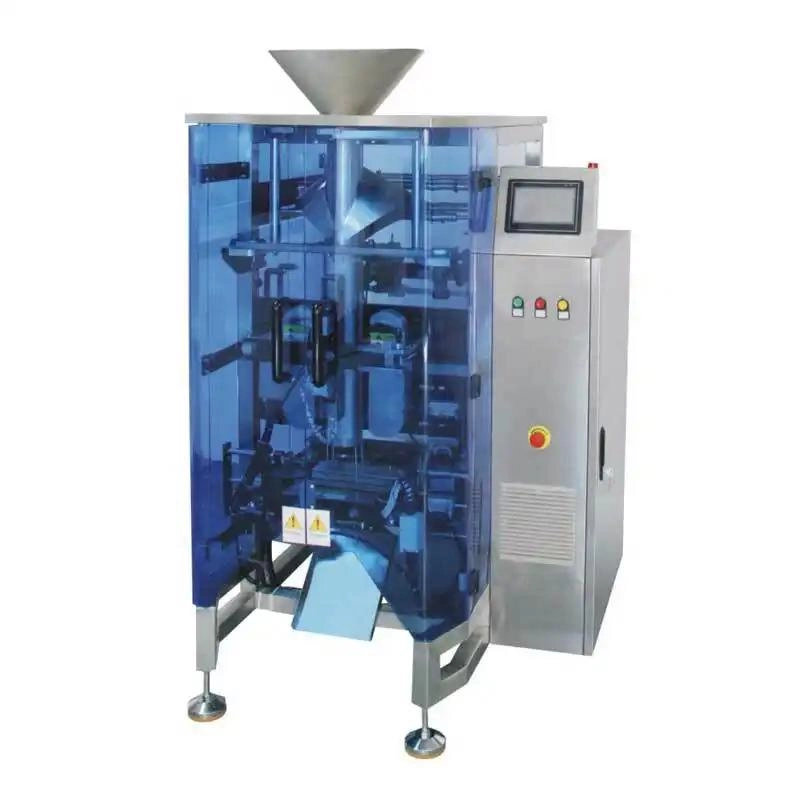
Integrating Economic VFFS with Multihead Weighers: Best Practices
Prdoucts Categories
Question you may concern
About Solution suggestions
Can Kenwei solutions be used for both manual and automated packing lines?
Yes, Kenwei machines can be used in both manual and automated packing lines. We can provide integrated systems that work alongside manual labor or fully automated systems depending on your production requirements.
About products customization
How do I request a custom-built Kenwei machine?
To request a customized machine, simply contact our sales or engineering team.
About Product choice
Can Kenwei's machines be used in my industry?
Kenwei’s equipment is highly versatile and can be used across a wide range of industries, including:Food,Pharmaceuticals,Chemicals,Plastics and Agriculture.
Plastics If you're unsure whether our products are suitable for your industry, please contact us, and we can provide you with specific solutions tailored to your needs.
About Price and payment
Are the prices for Kenwei machines negotiable?
Prices are generally fixed, but depending on the order volume, long-term partnerships, or special circumstances, we may offer discounts or promotional pricing. Please contact our sales team to discuss your specific situation.
About After Sales Support
How can I get technical support for my Kenwei machine?
You can contact Kenwei's technical support team via email, phone, or through our website.
You may also like
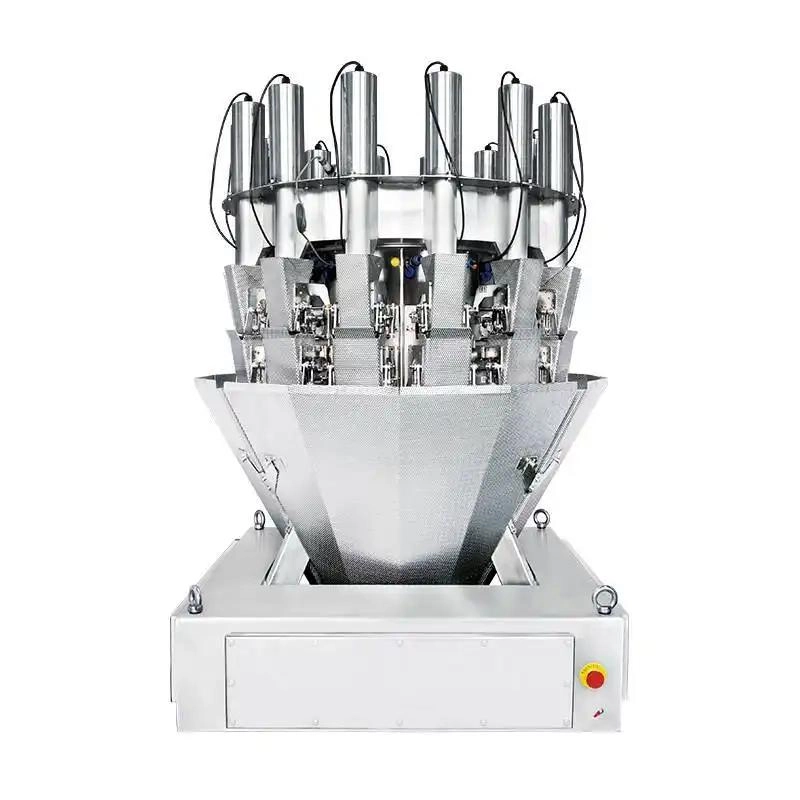
14 Heads Vertical Single Screw Feeding Pickles Weigher backups
This type of weigher is designed to handle the unique characteristics of pickles, ensuring precise measurements for packaging and distribution. It uses a vertical single screw mechanism to feed the pickles into the weighing system, allowing for efficient and consistent weighing. This technology is particularly useful in food processing and packaging facilities where precise portioning is essential for quality control and customer satisfaction. This specialized equipment is perfect for accurately measuring and dispensing pickles in a production line or packaging facility. The vertical design allows for efficient and precise filling of containers, while the single screw feeding mechanism ensures consistent and reliable weighing.
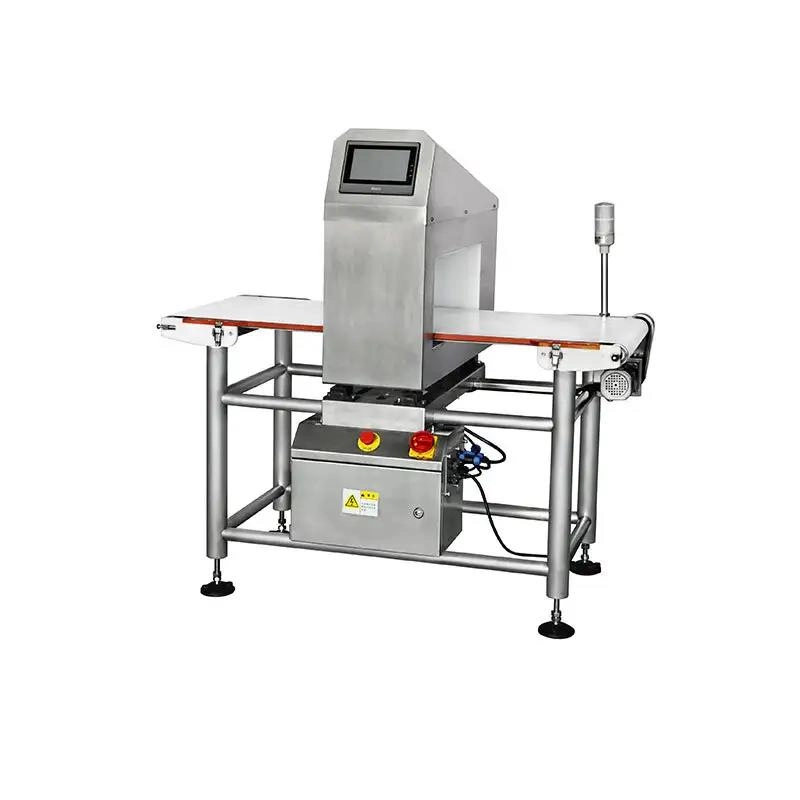
Food Metal Detector Manufacturer For Reject Defective Products G5020
The G5020 multi-frequency metal detector features a specialized conveyor belt designed to reduce contamination risks, ensure smooth operation, and maintain high detection sensitivity. It is easy to disassemble for convenient maintenance. Ideal for detecting metal contaminants in food, pharmaceuticals, spices, plastics, electronics, textiles, toys, handicrafts, and more.
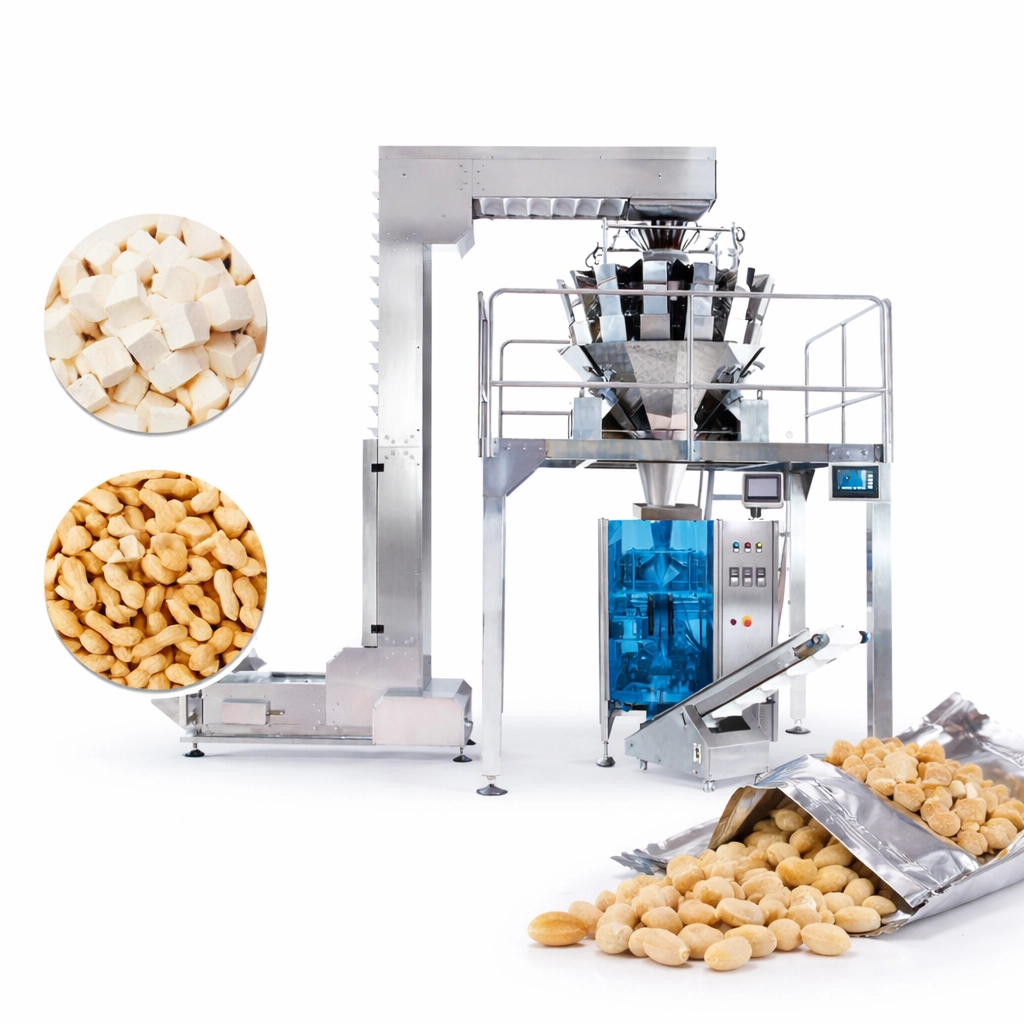
High-Precision Weighing & Packaging for Granular Products
The Granular Food Packing Machine is a fully automated solution designed for accurate weighing, filling, and packaging of various granular food products. Integrated with a multihead weigher and advanced packaging system, it ensures high speed, precision, and hygiene standards for modern food production.
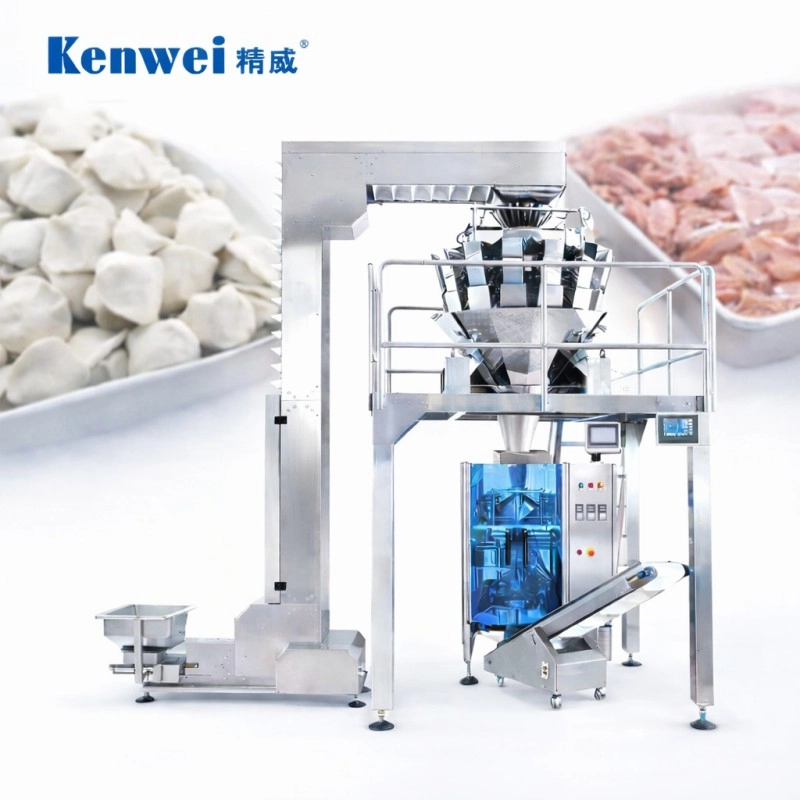
Vertical Frozen Food Packaging Machine for IQF & Frozen Products JW-B1
The Kenwei JW-B1 Vertical Frozen Food Packaging Machine is designed for IQF and frozen products, ensuring efficient, airtight packing. This vertical packing machine boosts productivity with precision sealing, ideal for frozen food packaging needs in the food industry.
Get in touch with us
If you have any comments or good suggestions, please leave us a message, later our professional staff will contact you as soon as possible.
Kenwei
Kenwei
Kenwei multi weigh
Kenwei
Kenwei
Kenwei