






Procurement Guide: Evaluating JW-B20 Powder Packing Machine
A practical procurement guide to evaluate the Kenwei JW-B20 Powder Packing Machine (Semi Automatic Multi-function Single Bucket Conveying Powder granule food Packaging Machine With Linear Weigher). Covers accuracy, throughput, bag flexibility, food-safety compliance, ROI, comparison table, and supplier checklist to help purchasing teams choose the right Powder Packing Machine for powders and granules.
- Procurement Guide: Evaluating JW-B20 Powder Packing Machine
- Why this guide matters for buyers of a Powder Packing Machine
- Product at a glance: JW-B20 Powder Packing Machine
- Key specifications and what they mean for procurement
- Accuracy and consistency: how to evaluate weighing performance
- Throughput and cycle time: matching production requirements
- Bag types and packaging flexibility
- Hygiene, cleaning and food safety compliance
- Integration, controls and automation compatibility
- Maintenance, spare parts and service
- Footprint, layout and installation considerations
- Cost of ownership and ROI: a simple model
- Technical procurement checklist (must-have items)
- Supplier evaluation: questions to ask Kenwei or other vendors
- Industry fit: where JW-B20 shines
- Brand advantages and why Kenwei JW-B20 may be the right choice
- Acceptance, commissioning and training
- FAQ — Common procurement questions about the JW-B20 Powder Packing Machine
- Contact sales / View product
- Authoritative references and further reading

Procurement Guide: Evaluating JW-B20 Powder Packing Machine
Why this guide matters for buyers of a Powder Packing Machine
Purchasing a Powder Packing Machine is a strategic decision that affects product quality, throughput, and long-term operating cost. This guide helps procurement managers, production engineers, and plant managers evaluate the Kenwei JW-B20 Semi Automatic Multi-Function Single Bucket Conveying Powder granule food Packaging Machine With Linear Weigher (JW-B20). It focuses on real commercial concerns—accuracy, flexibility, footprint, hygiene, integration, and total cost of ownership—so you can compare alternatives and decide with confidence. A well-informed purchase ultimately delivers measurable results, reinforcing how powder packing machines boost factory throughput and completing the internal link loop.
Product at a glance: JW-B20 Powder Packing Machine
The Kenwei JW-B20 Semi-Automatic Multi-Function Packaging Machine with Linear Weigher is ideal for powders and granules like sugar, salt, rice, coffee, and milk powder. It automates feeding, weighing, and output with high accuracy and efficiency. Compact and cost-effective, it suits various bag types not supported by standard machines, making it perfect for flexible, space-saving packaging needs.
Key specifications and what they mean for procurement
When evaluating any Powder Packing Machine, confirm the specifications that directly affect your product and process. For the JW-B20, consider:
- Weighing method: Linear weigher with single-bucket conveying—good for moderate throughputs and powders/granules that flow well.
- Accuracy range: Typically ±0.2%–±1.0% depending on product density and target weight—verify on your product sample.
- Supported weight range: Verify the minimum and maximum fill weights (e.g., grams to several kilograms) to match SKUs.
- Bag formats: Compatible with various small-format bags (pillow, gusset, flat bottom, doypack compatibility varies).
- Throughput: Dependent on target weight and product; expect moderate speeds suitable for small-to-medium scale operations.
- Materials and finish: Food-grade stainless steel in contact areas and hygienic design for easy cleaning.
Ask the vendor to provide an official spec sheet and, if possible, production data from similar installations.
Accuracy and consistency: how to evaluate weighing performance
Accuracy is the single most important factor for powder packing. Errors cause giveaway (higher product cost) or underfill (legal and reputational risk). Evaluate the JW-B20's linear weigher by:
- Requesting a Certificate of Calibration and machine accuracy tests on the same powder/granule you produce.
- Running acceptance tests (Factory Acceptance Test - FAT) with multiple weight targets across the intended range.
- Checking how the machine handles low-bulk-density powders (dusty, cohesive) vs free-flowing granules.
For procurement, specify acceptable accuracy bands and statistical sampling plans in the purchase agreement: e.g., 99% of fills within ±0.5% for sugar at target weights 500g–1,000g. Include performance penalties or service commitments if targets aren't met.
Throughput and cycle time: matching production requirements
Throughput depends on fill weight, product flowability, and operator cycle time for semiautomatic equipment. For the JW-B20:
- Estimate fills per minute for each SKU through vendor testing (FAT) or onsite trial.
- Consider downstream operations—sealing, coding, secondary packaging—when calculating line capacity.
- For multi-SKU environments, evaluate changeover time between weights and bag types.
Procurement checklist: require documented throughput data, including worst-case scenarios (fine dust powders), and contractual acceptance criteria tied to production metrics.
Bag types and packaging flexibility
One advantage of the JW-B20 is its suitability for bag types not always supported by standard machines. Confirm compatibility with the bag formats used in your portfolio:
- Pillow bags
- Gusseted bags
- Doypacks or stand-up pouches (if applicable)
- Pre-formed sachets
Ask the supplier for changeover times, tooling costs, and whether additional attachments are needed for specific bag types. Flexibility reduces the need for separate packaging lines and increases ROI.
Hygiene, cleaning and food safety compliance
For food powders (coffee, milk powder, sugar), sanitation and regulatory compliance are essential. Evaluate JW-B20 on:
- Material contact surfaces: food-grade stainless steel (304/316) and polished finishes to prevent product build-up.
- Design for cleaning: tool-less disassembly, minimal crevices, and accessible areas for washdown if required.
- Compliance with relevant standards such as ISO 22000 (food safety management) and local food safety regulations (FDA in the U.S., EFSA in EU).
Include hygiene validation (HACCP) protocols and maintenance schedules in your purchase documentation.
Integration, controls and automation compatibility
Even a semi-automatic machine must integrate smoothly into your plant. Confirm:
- Control system: PLC/HMI compatibility, protocol support (Ethernet/IP, Modbus TCP, Profinet) for line integration.
- Data logging: digital records of weights, cycle counts, alarms for traceability and QA.
- Interlocks and safety: emergency stops, guarding per local regulations, and lockout procedures.
Procurement should require a connectivity and data plan that fits your MES/ERP or quality systems to ensure traceability and better process control.
Maintenance, spare parts and service
Serviceability affects uptime and operating cost. For the JW-B20, verify:
- Availability of critical spare parts and lead times.
- Local service network or trained partner technicians for installation and preventive maintenance.
- Warranty terms, response time SLAs, and options for extended support contracts.
Include a recommended spare-parts kit in the procurement and require preventative maintenance documentation from the vendor.
Footprint, layout and installation considerations
The JW-B20 is compact and suited to space-constrained facilities, but procurement must check:
- Exact machine dimensions and required clearance for loading, operation, and maintenance.
- Power, compressed air, and vacuum needs if applicable.
- Flooring and anchoring requirements; vibration isolation if sensitive equipment nearby.
Request an installation drawing and a pre-delivery site assessment from the vendor to avoid surprises.
Cost of ownership and ROI: a simple model
Price is only one part of cost. Consider total cost of ownership (TCO): purchase price, installation, consumables, spare parts, downtime, labor, and yield (product giveaway). Below is a simplified comparison table to illustrate differences between the JW-B20 (linear weigher) and two other common options: multihead weigher and manual packing.
| Metric | JW-B20 (Linear weigher) | Multihead Weigher | Manual Packing |
|---|---|---|---|
| Typical Accuracy | ±0.2%–±1.0% | ±0.1%–±0.5% | ±1%–±5% (operator dependent) |
| Throughput (packs/min) | Moderate (varies with weight) | High | Low |
| Initial Cost | Low–Moderate | High | Low |
| Operating Cost | Moderate | Moderate–High | High (labor) |
| Best fit | SMBs, flexible SKUs, space-limited lines | High-volume production, multiple SKUs | Prototype, small-batch/occasional use |
Use your actual numbers—labor costs, expected throughput, giveaway percentage—to calculate payback period. Procurement should request vendor-provided cost models and references showing realized ROI in comparable plants.
Technical procurement checklist (must-have items)
- Machine model and complete spec sheet (include electrical, air, dimensions)
- Weighing accuracy report and FAT on customer product
- Hygiene/food-safety compliance documentation
- Warranty, spare parts list, and local service contact
- Data integration and connectivity specifications
- Acceptance criteria and on-site SAT (Site Acceptance Test) plan
- Training plan for operators and maintenance staff
Supplier evaluation: questions to ask Kenwei or other vendors
When engaging vendors, include these commercial and technical questions in RFPs:
- Can you provide FAT videos or on-site trials with our product?
- What is the lead time for delivery, installation, and commissioning?
- Who provides local service, and what are typical response times?
- Do you provide documentation for cleaning, calibration and maintenance schedules?
- What training is included for operators and maintenance personnel?
Industry fit: where JW-B20 shines
The JW-B20 is particularly suitable for:
- Small-to-medium food producers handling powders and free-flowing granules (sugar, salt, rice, coffee)
- Startups or co-packers needing flexible bag formats and compact equipment
- Operations where capital budget is limited but accuracy and hygiene are required
Brand advantages and why Kenwei JW-B20 may be the right choice
When comparing brands, consider these advantages that vendors like Kenwei commonly highlight for the JW-B20:
- Compact footprint for space-saving installations.
- Cost-effective entry to automated weighing compared to high-end multihead systems.
- Good accuracy for a broad range of powders and granules with easy maintenance.
- Flexibility to handle bag types not supported by larger, specialized machines.
Procurement should validate brand claims via onsite demos, customer references, and documented test results to confirm these advantages in practice.
Acceptance, commissioning and training
To ensure smooth commissioning and reliable operation:
- Plan a FAT with your product and bag formats before shipment.
- Define SAT acceptance criteria to be tested on-site after installation.
- Include operator and maintenance training in the contract and obtain training materials and SOPs.
FAQ — Common procurement questions about the JW-B20 Powder Packing Machine
Q: What products can the JW-B20 handle?
A: The JW-B20 is designed for powders and free-flowing granules such as sugar, salt, rice, coffee, and milk powder. Very cohesive or sticky powders may require product-specific evaluation.
Q: How accurate is the JW-B20?
A: Accuracy depends on product, target weight, and setup. Typical performance ranges from ±0.2% to ±1.0%. Always request a FAT using your product to verify actual performance.
Q: Can it run different bag types?
A: Yes—pillow bags, gusseted bags and some flexible formats are supported. Confirm doypack compatibility and required attachments with the vendor.
Q: What are typical throughput expectations?
A: Throughput varies by fill weight and product. Expect moderate cycles suitable for small-to-medium production. Get vendor-provided throughput charts or results from product trials.
Q: What kind of service and spare parts support is available?
A: Kenwei and authorized partners typically offer spare parts kits, local service technicians, and remote support. Request specific SLAs and parts lead times before purchase.
Contact sales / View product
To arrange a product demo, FAT with your product, or request a formal quotation for the Semi Automatic Multi-function Single Bucket Conveying Powder granule food Packaging Machine With Linear Weigher JW-B20, contact our sales team. We can provide on-site trials, detailed spec sheets, and a tailored ROI analysis to help you make an informed procurement decision.
Authoritative references and further reading
Sources consulted for best-practice procurement and packaging standards:
- Packaging and labeling — Wikipedia: https://en.wikipedia.org/wiki/Packaging_and_labeling
- Weighing scale (principles of weighing) — Wikipedia: https://en.wikipedia.org/wiki/Weighing_scale
- Food and Agriculture Organization (FAO): https://www.fao.org
- ISO 22000 — Food safety management systems — International Organization for Standardization: https://www.iso.org/iso-22000-food-safety-management.
- U.S. Food and Drug Administration (FDA) — Food safety: https://www.fda.gov/food
End of guide.
Tags
metal detectors for the food industry
metal detectors for the food industry
automated packaging machines
automated packaging machines
multihead weighing machine
multihead weighing machine
commercial food metal detectors
commercial food metal detectors
vffs packaging equipment
vffs packaging equipment
14 head multihead weigher
14 head multihead weigher
Recommended for you
Best vffs packaging equipment manufacturers and supplier brands
Top 10 automatic packing machine Manufacturers and Supplier Brands

Metal detector sensitivity vs. aluminum foil thickness
Top Features of Fully Automatic Cup Weigher JW-B23
Prdoucts Categories
Question you may concern
About Price and payment
How do I make a payment for Kenwei machines?
We accept several payment methods: T/T, Letter of Credit (L/C)
About Solution suggestions
What are Kenwei’s primary solutions for industrial weighing and packaging?
Kenwei provides comprehensive solutions for automated weighing and packaging, including multi-head weighers, linear weighers, check weighers, metal detectors, and packing machines. These solutions are tailored to improve speed, accuracy, and efficiency in various industries such as food, pharmaceuticals, and chemicals.
What industries benefit the most from Kenwei solutions?
Kenwei solutions are ideal for a wide range of industries, including:
1)Food Packaging snacks, grains, and powdered beverages.
2)Pharmaceuticals: Precise weighing of tablets, and capsules.
3)Chemicals: Weighing and packaging granular and powdered chemicals.
4)Agriculture: Packaging seeds, grains, and fertilizers.
Can Kenwei solutions be adapted for different product packaging types?
Yes, Kenwei solutions can handle a variety of packaging types, including bags, boxes, pouches, and bottles. We can customize machines to suit your packaging format, ensuring compatibility with your packaging equipment.
About products customization
Can Kenwei machines support multiple languages?
Yes, we can customize the software interface to support multiple languages, making it easier for operators from different regions to use the machine.
You may also like
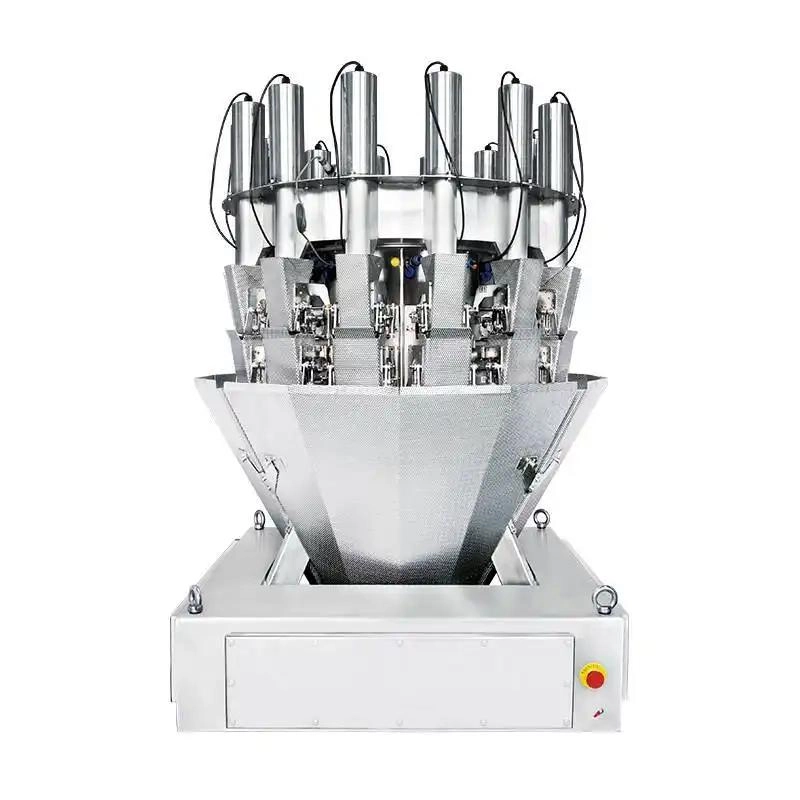
14 Heads Vertical Single Screw Feeding Pickles Weigher backups
This type of weigher is designed to handle the unique characteristics of pickles, ensuring precise measurements for packaging and distribution. It uses a vertical single screw mechanism to feed the pickles into the weighing system, allowing for efficient and consistent weighing. This technology is particularly useful in food processing and packaging facilities where precise portioning is essential for quality control and customer satisfaction. This specialized equipment is perfect for accurately measuring and dispensing pickles in a production line or packaging facility. The vertical design allows for efficient and precise filling of containers, while the single screw feeding mechanism ensures consistent and reliable weighing.
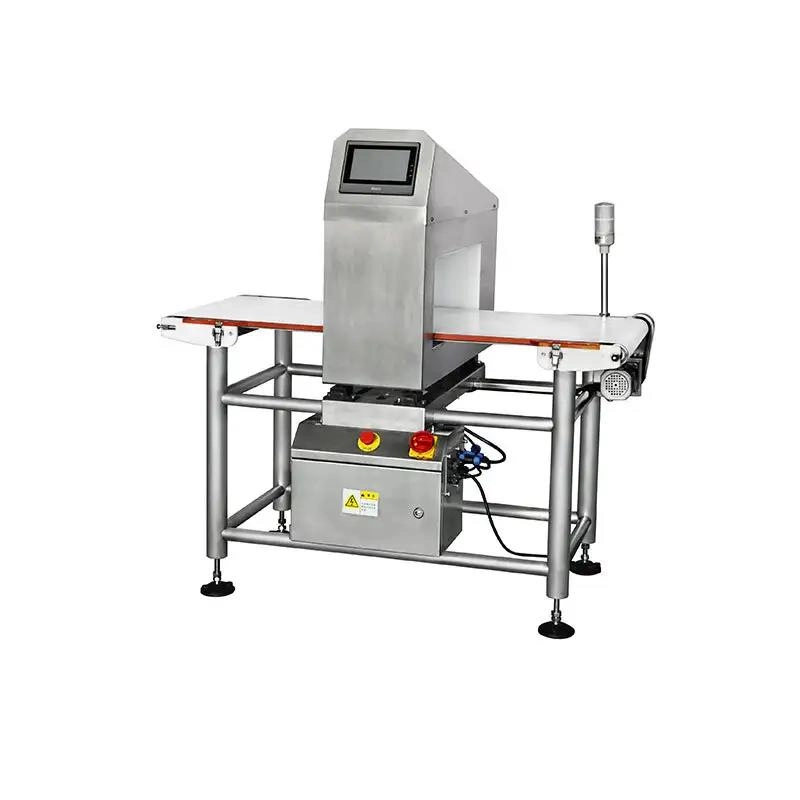
Food Metal Detector Manufacturer For Reject Defective Products G5020
The G5020 multi-frequency metal detector features a specialized conveyor belt designed to reduce contamination risks, ensure smooth operation, and maintain high detection sensitivity. It is easy to disassemble for convenient maintenance. Ideal for detecting metal contaminants in food, pharmaceuticals, spices, plastics, electronics, textiles, toys, handicrafts, and more.
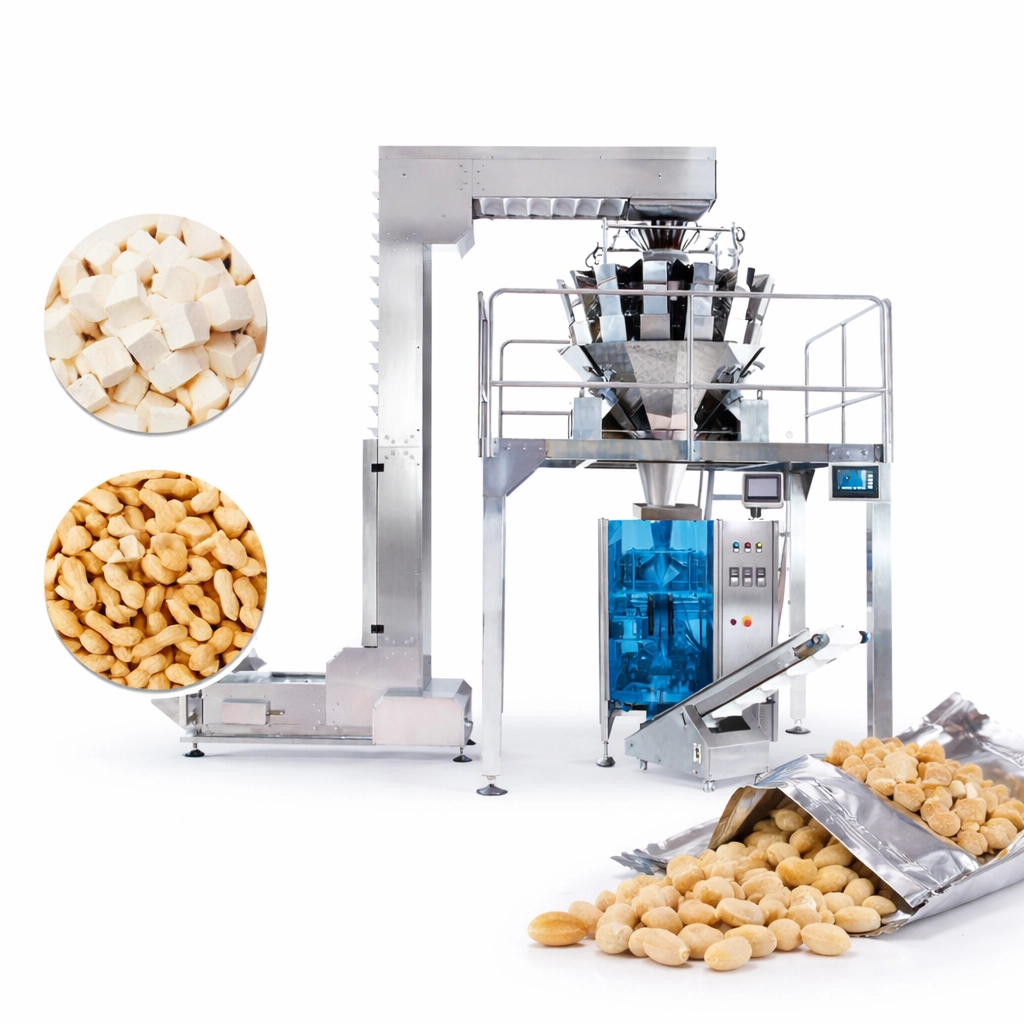
High-Precision Weighing & Packaging for Granular Products
The Granular Food Packing Machine is a fully automated solution designed for accurate weighing, filling, and packaging of various granular food products. Integrated with a multihead weigher and advanced packaging system, it ensures high speed, precision, and hygiene standards for modern food production.
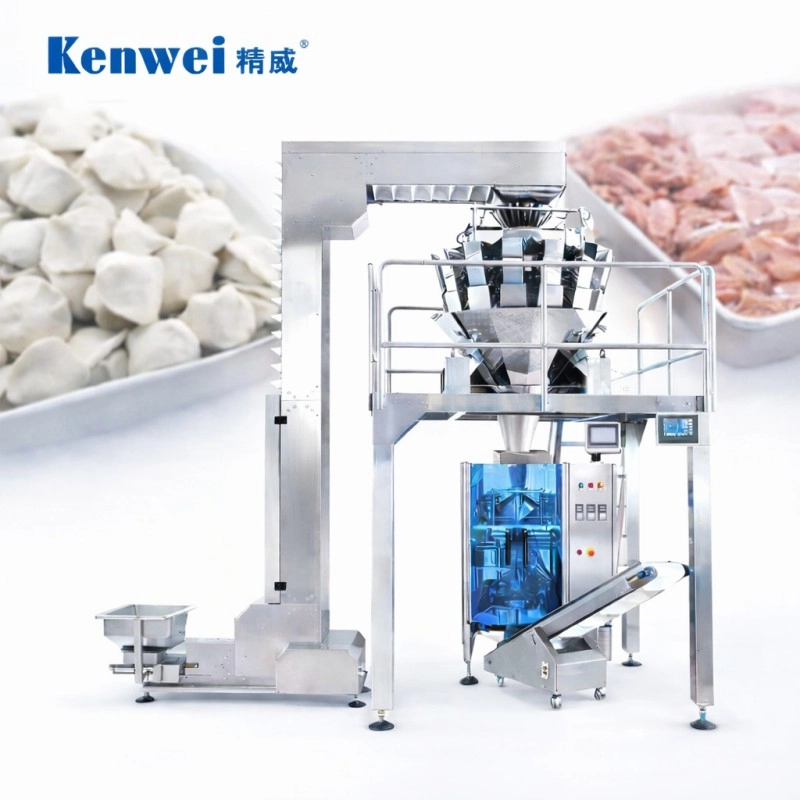
Vertical Frozen Food Packaging Machine for IQF & Frozen Products JW-B1
The Kenwei JW-B1 Vertical Frozen Food Packaging Machine is designed for IQF and frozen products, ensuring efficient, airtight packing. This vertical packing machine boosts productivity with precision sealing, ideal for frozen food packaging needs in the food industry.
Get in touch with us
If you have any comments or good suggestions, please leave us a message, later our professional staff will contact you as soon as possible.
Kenwei
Kenwei
Kenwei multi weigh
Kenwei
Kenwei
Kenwei