






Choosing a Powder Packing Machine for Food Production Lines
This guide explains how to choose the right Powder Packing Machine for your food production line, comparing weighing systems, evaluating accuracy, throughput, flexibility, hygiene, and cost. It highlights the Kenwei JW-B20 Semi Automatic Multi-Function Single Bucket Conveying Powder granule food Packaging Machine With Linear Weigher as a compact, accurate solution for powders and granules, and provides practical FAQs and authoritative references.
- Choosing a Powder Packing Machine for Food Production Lines
- Why selecting the right Powder Packing Machine matters for food manufacturers
- Understanding major Powder Packing Machine types
- Key selection criteria for a Powder Packing Machine
- Semi-Automatic Multi-Function Single Bucket Conveying Powder granule food Packaging Machine With Linear Weigher JW-B20 — product overview
- How the JW-B20 compares to other weighing systems
- Practical production issues: powder behavior and machine selection
- Integration and line automation considerations
- Hygiene, material standards and food safety
- Cost of ownership: CAPEX, OPEX and ROI calculations
- Maintenance, training and supplier support
- Brand advantages and why Kenwei JW-B20 may be the right Powder Packing Machine for your line
- Implementation checklist before purchase
- FAQ — Powder Packing Machine selection and JW-B20 specifics
- Q1: Is the JW-B20 suitable for fine powders like milk powder or flour?
- Q2: What throughput can I expect from the JW-B20?
- Q3: Can the JW-B20 handle multiple bag formats?
- Q4: How does the machine control giveaway?
- Q5: What should I know about cleaning and maintenance?
- Call to action
- Authoritative references and further reading

Choosing a Powder Packing Machine for Food Production Lines
Why selecting the right Powder Packing Machine matters for food manufacturers
Choosing the right Powder Packing Machine is one of the most impactful decisions for food manufacturers that package powders and granules (sugar, salt, flour, coffee, milk powder, spice mixes). A correct choice improves yield, reduces giveaway (product loss to overfilling), ensures regulatory compliance (net weight labeling), maintains product quality and hygiene, and directly affects operating costs and return on investment. This article helps you make a practical, production-focused decision by explaining machine types, key performance metrics, integration considerations, and how the Semi Automatic Multi-Function Single Bucket Conveying Powder granule food Packaging Machine With Linear Weigher JW-B20 fits common food-line needs. Once food-grade requirements are clear, buyers often evaluate specific models, making JW-B20 semi-auto powder packing: key specs buyers need a critical reference point.
Understanding major Powder Packing Machine types
There are multiple packing solutions used in food production. Each has pros and cons depending on product characteristics, target speed, bag format and budget. Keywords: Powder Packing Machine.
- Linear (single-bucket / multi-bucket) weighers — measure product with one or several linear weighing hoppers. Good for powders and small granules where compact layout or low-to-medium speed is required.
- Multihead (combination) weighers — use many small weigh heads combined to reach a target weight quickly and accurately. Best for high-speed lines and varied product blends.
- Auger fillers — use a rotating screw to dose powder into bags or containers. Excellent for highly free-flowing powders when precise auger calibration is possible.
- Volumetric cup fillers — measure by volume. Lower cost but less accurate for powders with varying bulk density.
Choosing between these requires balancing accuracy, speed, flexibility and cost. For many small-to-medium producers needing flexibility, compact footprint, and good accuracy without the capital cost of a full multihead system, a linear weigher-based semi-automatic machine like the Kenwei JW-B20 is an attractive option.
Key selection criteria for a Powder Packing Machine
When evaluating machines, focus on the following metrics and design features so your selection delivers reliable performance on your specific production line.
- Accuracy and giveaway control: Look for weighing systems with high resolution and repeatability. Overfill (giveaway) equals lost margin.
- Throughput (bags/min or kg/hr): Match machine speed to your packaging targets. Remember utility and labor constraints.
- Bag formats and sealing methods: Ensure the machine supports the bag types you use (pillow, gusseted, stand-up, pre-made pouches) and supports heat sealing or valve filling as required.
- Product handling & hygiene: Food-grade contact surfaces (stainless steel 304/316), easy-clean design, and dust control are critical for food safety.
- Flexibility & changeover: How quickly can the machine switch between product types, weights, and bag sizes?
- Integration & automation: Consider conveyors, metal detection, check-weighing, date coding and upstream feeders.
- Footprint & installation: Space constraints and plant layout impact which machines fit comfortably.
- Support & spare parts: Local service, warranty, and availability of consumables reduce unplanned downtime.
Semi-Automatic Multi-Function Single Bucket Conveying Powder granule food Packaging Machine With Linear Weigher JW-B20 — product overview
Product name: Semi Automatic Multi-function Single Bucket Conveying Powder granule food Packaging Machine With Linear Weigher JW-B20
The Kenwei JW-B20 Semi-Automatic Multi-Function Packaging Machine with Linear Weigher is ideal for powders and granules like sugar, salt, rice, coffee, and milk powder. It automates feeding, weighing, and output with high accuracy and efficiency. Compact and cost-effective, it suits various bag types not supported by standard machines, making it perfect for flexible, space-saving packaging needs.
This model is designed for small-to-medium food manufacturers that need a reliable Powder Packing Machine without the complexity or footprint of a full multihead installation. Its single-bucket linear weighing method provides repeatable weights with simple maintenance and lower capital cost.
How the JW-B20 compares to other weighing systems
Comparing machines with a clear table helps weigh trade-offs when selecting your Powder Packing Machine.
| Feature | JW-B20 (Linear / single-bucket) | Multihead Weigher | Auger Filler |
|---|---|---|---|
| Typical throughput | Low–Medium (e.g., up to 20–60 bags/min depending on weight) | High (often 60–200+ bags/min) | Low–Medium (good for steady flows) |
| Accuracy | High for small batches; excellent repeatability | Very high at high speed | High if calibrated; sensitive to powder characteristics |
| Flexibility (bag types) | Good—support for multiple bag styles with change parts | Good—often tailored for specific formats | Depends—best for free-flowing powders |
| Footprint & cost | Compact & cost-effective | Large footprint & higher capital cost | Moderate cost & footprint |
| Maintenance complexity | Lower—simpler mechanics | Higher—many heads & electronics | Moderate—depends on auger wear and sensors |
Practical production issues: powder behavior and machine selection
Powder behavior (flowability, cohesiveness, particle size, moisture sensitivity, electrostatic properties) has a major impact on dosing strategy. Consider the following:
- Free-flowing powders (e.g., table salt): auger or linear systems work well.
- Cohesive powders (e.g., some protein powders): vibration-assisted feeders and proper hopper design improve flow; linear weighers with controlled feeding can be advantageous.
- Dusty powders (e.g., flour, fine sugar): require dust-control measures, enclosed hoppers, and possibly vacuum extraction to keep the workplace clean and avoid product loss.
- Fragile or mixed particle sizes: gentle conveying and careful dosing avoid degradation and segregation.
The JW-B20 includes conveying and single-bucket linear weighing that reduces mechanical agitation compared to some volumetric or high-speed multihead systems, helping with fragile blends and some cohesive powders.
Integration and line automation considerations
For smooth operation, plan how the Powder Packing Machine integrates with upstream and downstream equipment:
- Feeding systems: Bulk hoppers, bag dump stations, or integrated screw conveyors should match the machine inlet.
- Upstream mixing: Ensure consistent feed characteristics; variations cause weight deviations.
- Downstream sealing & finishing: Check compatibility with bag sealing, coding and valve filling requirements.
- Quality control: Add checkweighers, metal detectors or x-ray as required by your QA protocols.
- Control system and data: Look for PLC/HMI systems that log weights, batch counts and alarms to support traceability and continuous improvement.
The JW-B20’s compact control package and flexible bag handling options make line integration straightforward for small-to-medium installations and pilot lines used in product development.
Hygiene, material standards and food safety
Food packing requires compliance with hygiene and safety standards. Key points:
- Use food-grade stainless steel (304 or 316) where product contacts surfaces.
- Design for easy cleaning: quick-release parts, smooth welds, and minimal crevices.
- Consider CIP-compatible parts if your product requires frequent cleaning.
- Dust containment and extraction reduces contamination and helps meet workplace safety rules.
The JW-B20 is built with sanitary design principles in mind and supports the hygiene requirements of many food processors. Always verify local regulatory compliance (e.g., FDA in the U.S., EU food safety regulations) for your intended use.
Cost of ownership: CAPEX, OPEX and ROI calculations
Don't judge a Powder Packing Machine by purchase price alone. Consider Total Cost of Ownership:
- Capital cost (CAPEX): purchase, installation, initial training.
- Operating cost (OPEX): energy use, maintenance, spare parts, labor.
- Giveaway savings: improved accuracy reduces overfill and saves product cost over time.
- Downtime risk: easily maintainable machines with good local support reduce lost production hours.
Example: A machine that reduces average giveaway by 1% on a 1000 kg/day line saves 10 kg/day in product — over a year that may offset a significant portion of CAPEX. Machines like the JW-B20 often provide favorable ROI for smaller lines because of their lower initial cost and strong weighing accuracy.
Maintenance, training and supplier support
Supplier support is crucial. Evaluate warranty, spare part availability, remote support options, and training programs. A simpler mechanical design (such as linear weighing) tends to be easier and cheaper to maintain than complex multihead systems. Ask your vendor for mean time to repair (MTTR) estimates, service contracts, and available diagnostic tools.
Brand advantages and why Kenwei JW-B20 may be the right Powder Packing Machine for your line
When selecting a brand and model, look for a balance of proven performance, local service, and product fit. The Kenwei JW-B20 offers several advantages:
- Cost-effective entry: Lower capital requirement than full multihead systems while delivering accurate weighing for powders and granules.
- Compact footprint: Suitable for space-constrained factories or pilot lines.
- Flexibility: Supports multiple bag types and is adaptable for a range of small-to-medium production runs.
- Food-grade design: Sanitary construction and easy-to-clean components help meet hygiene standards.
- Simple maintenance: Fewer moving parts and straightforward access reduce downtime and service costs.
If you need higher speeds or broader product mix handling in the future, you can plan staged upgrades to higher-capacity weighers while keeping the JW-B20 as a flexible backup or for specialty runs.
Implementation checklist before purchase
Use this checklist to validate vendors and equipment when evaluating a Powder Packing Machine:
- Define the target bag types, target weights and daily throughput requirements.
- Test the machine with your actual product (request site trial or sample testing).
- Confirm materials in contact are food-grade and cleaning procedures are practical.
- Verify spare parts lead times and local service availability.
- Request data on accuracy (standard deviation, Cpk) under production conditions.
- Check electrical, air and footprint requirements for installation.
- Clarify warranty, training and acceptance criteria.
FAQ — Powder Packing Machine selection and JW-B20 specifics
Q1: Is the JW-B20 suitable for fine powders like milk powder or flour?
A1: Yes. The JW-B20 is designed for powders and granules including milk powder, flour and similar products. For dusty or highly cohesive powders, add dust containment and review hopper vibration or agitation options to ensure consistent feed.
Q2: What throughput can I expect from the JW-B20?
A2: Throughput depends on bag weight, filling accuracy and operator procedures. Typical semi-automatic linear weigher systems perform well in low-to-medium throughput ranges. Consult your vendor for a throughput estimate using your specific product and bag format.
Q3: Can the JW-B20 handle multiple bag formats?
A3: Yes. The JW-B20 supports various bag types with change parts and simple adjustments. Clarify which bag formats you plan to use (pillow, flat bottom, pre-made pouches) during purchase to ensure compatibility.
Q4: How does the machine control giveaway?
A4: The JW-B20 uses linear weighing with precise load-cell measurement and controlled feed to consistently reach target weight. Good upstream feed conditioning and proper calibration further reduce giveaway.
Q5: What should I know about cleaning and maintenance?
A5: Look for quick-release components, stainless steel surfaces, and accessible hoppers. Regular calibration and scheduled preventive maintenance minimize production disruptions. Kenwei typically provides manuals and training to support maintenance.
Call to action
If you’re evaluating Powder Packing Machine options and want a compact, accurate and cost-effective solution for powders and granules, consider the Kenwei JW-B20. Contact our sales team for a sample test with your product, technical drawings, or a on-site demonstration: sales@kenwei.com or visit the product page: https://www.kenwei.com/JW-B20.
Authoritative references and further reading
References used for industry context and best-practice guidance:
- Packaging machinery overview — Wikipedia: https://en.wikipedia.org/wiki/Packaging_machine
- Multihead weighing machines — general principles: https://en.wikipedia.org/wiki/Multihead_weigher
- Food safety and hygiene guidance — European Food Safety Authority (EFSA): https://www.efsa.europa.eu/
- U.S. Food & Drug Administration (FDA) food safety guidance: https://www.fda.gov/food
- Basic principles of powder flow and handling — industry overviews (e.g., engineering texts and technical notes): https://en.wikipedia.org/wiki/Flowability
Contact us for tailored specification sheets, case studies or a production trial with your powder or granule product.
Tags
pill counter machine
pill counter machine
food supplement powder stick pack packaging machines
food supplement powder stick pack packaging machines
metal detectors food safety
metal detectors food safety
china multihead weighing machine
china multihead weighing machine
food metal detector manufacturer
food metal detector manufacturer
automatic multihead weigher packing machine
automatic multihead weigher packing machine
Recommended for you

Top 10 Features to Look for in Food Industry Metal Detectors
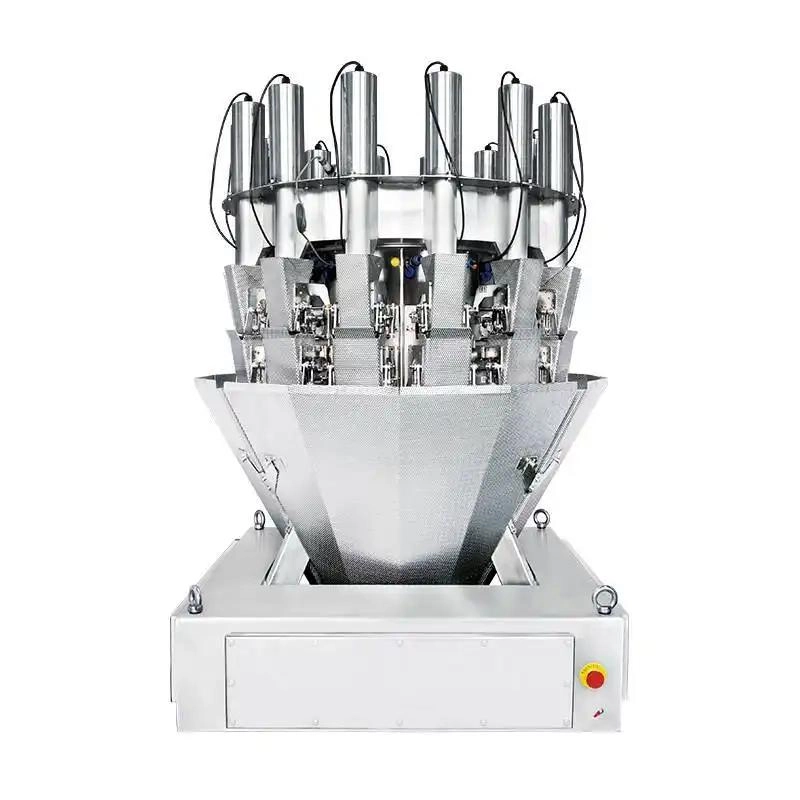
Installation & Calibration Guide for 14-Head Multihead Weighers
The dynamic checkweigher Cost Guide
Where to Buy checkweighers
Prdoucts Categories
Question you may concern
About Cooperation Process
How to operate it?
Many languages are available for global markets. There are not only detailed instructions, but also machine video for reference learning.
How can I start a cooperation with Kenwei?
To begin a cooperation, simply contact our sales or customer service team via email or phone. You can also fill out the inquiry form on our website. Once we receive your request, a representative will get in touch with you to discuss your specific needs and provide you with a tailored solution.
About Solution suggestions
What are Kenwei’s primary solutions for industrial weighing and packaging?
Kenwei provides comprehensive solutions for automated weighing and packaging, including multi-head weighers, linear weighers, check weighers, metal detectors, and packing machines. These solutions are tailored to improve speed, accuracy, and efficiency in various industries such as food, pharmaceuticals, and chemicals.
About After Sales Support
Can I get remote troubleshooting assistance?
Yes, Kenwei offers remote troubleshooting for certain issues. Our technical team can guide you through diagnostics and help resolve issues via phone, video call, or online messaging.
About Price and payment
Can I get a detailed quote before making a purchase?
Absolutely! We provide detailed quotes that break down the costs for the machines, customization, shipping, and any additional services. Please contact our sales team with your requirements to receive a customized quote.
You may also like
14 Heads Vertical Single Screw Feeding Pickles Weigher backups
This type of weigher is designed to handle the unique characteristics of pickles, ensuring precise measurements for packaging and distribution. It uses a vertical single screw mechanism to feed the pickles into the weighing system, allowing for efficient and consistent weighing. This technology is particularly useful in food processing and packaging facilities where precise portioning is essential for quality control and customer satisfaction. This specialized equipment is perfect for accurately measuring and dispensing pickles in a production line or packaging facility. The vertical design allows for efficient and precise filling of containers, while the single screw feeding mechanism ensures consistent and reliable weighing.
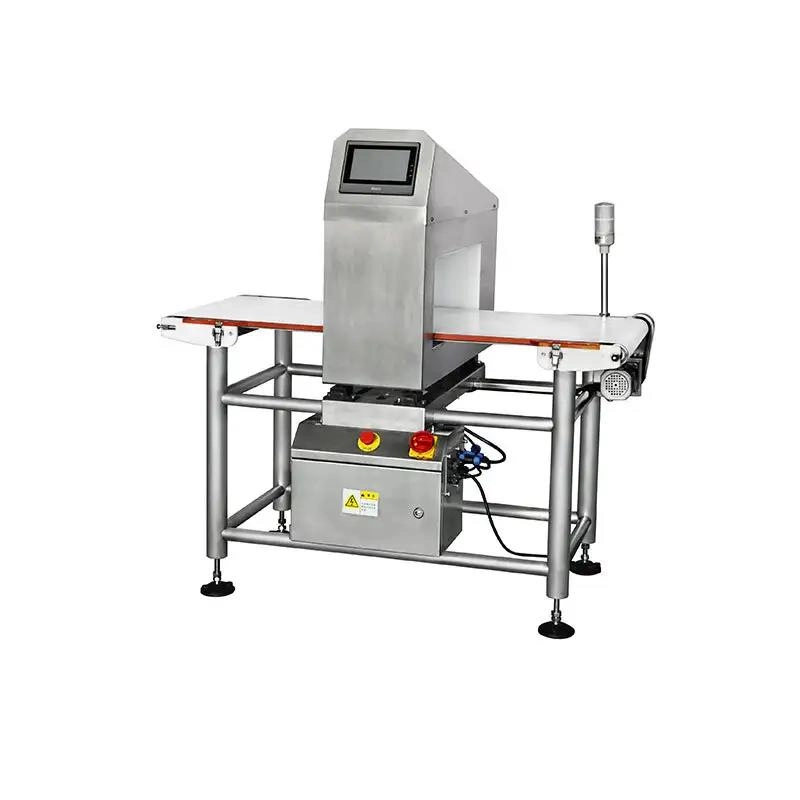
Food Metal Detector Manufacturer For Reject Defective Products G5020
The G5020 multi-frequency metal detector features a specialized conveyor belt designed to reduce contamination risks, ensure smooth operation, and maintain high detection sensitivity. It is easy to disassemble for convenient maintenance. Ideal for detecting metal contaminants in food, pharmaceuticals, spices, plastics, electronics, textiles, toys, handicrafts, and more.
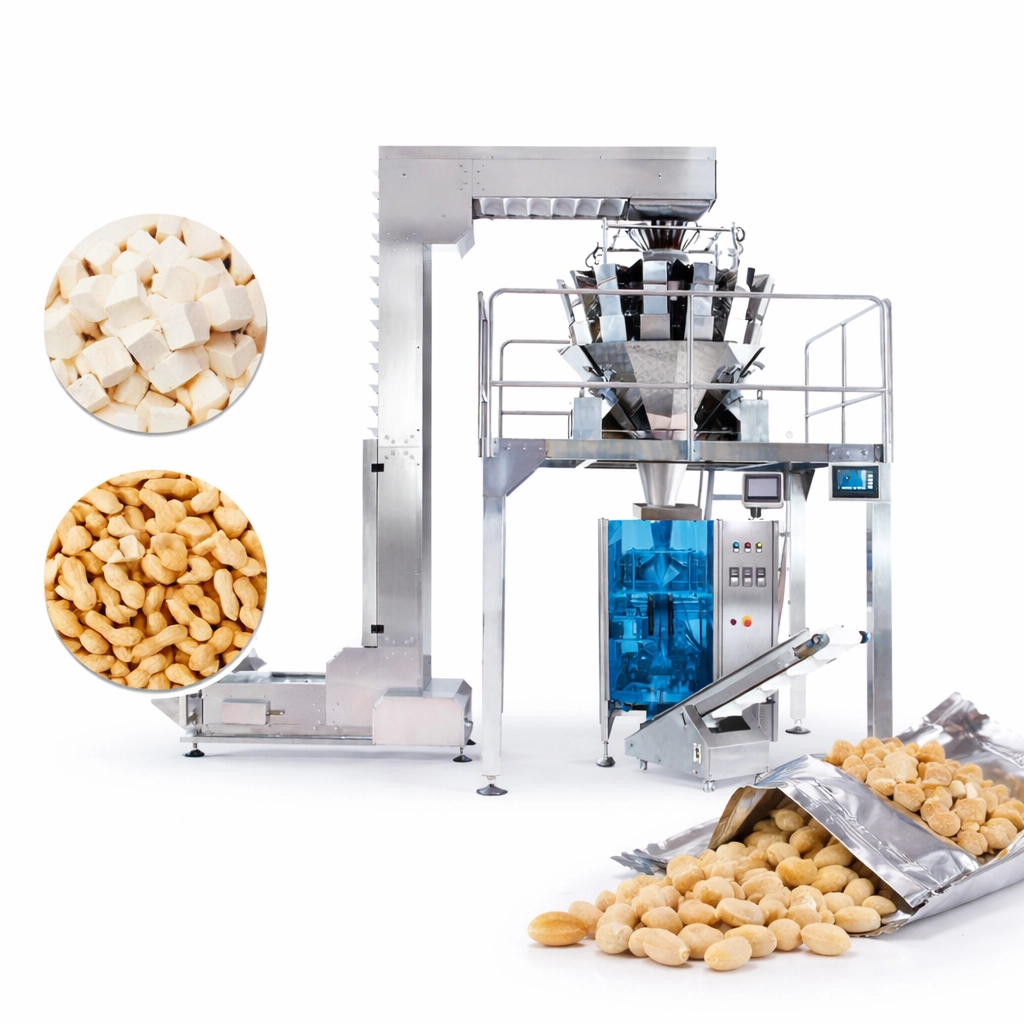
High-Precision Weighing & Packaging for Granular Products
The Granular Food Packing Machine is a fully automated solution designed for accurate weighing, filling, and packaging of various granular food products. Integrated with a multihead weigher and advanced packaging system, it ensures high speed, precision, and hygiene standards for modern food production.
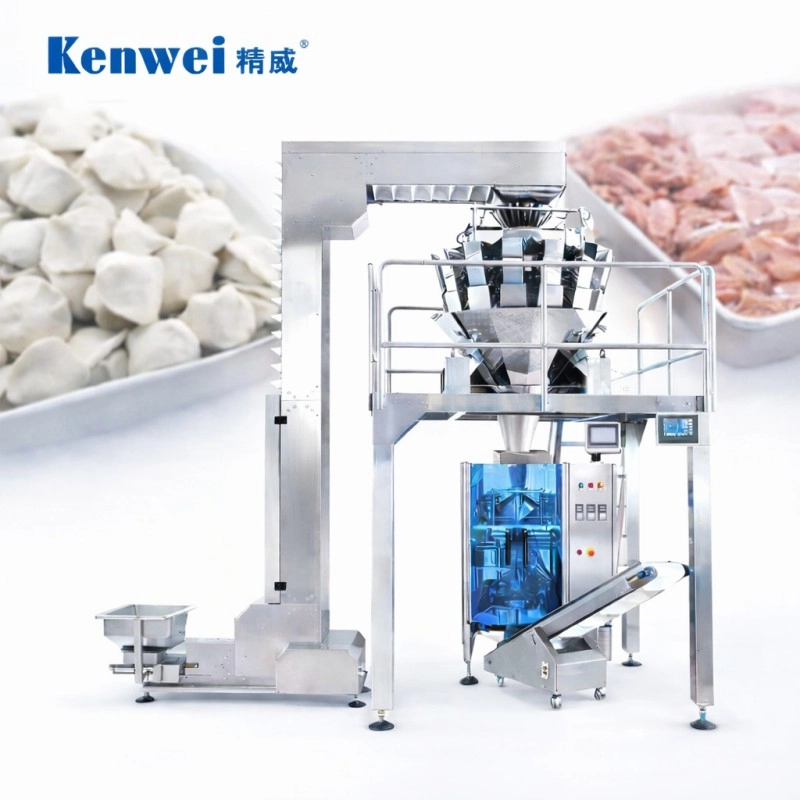
Vertical Frozen Food Packaging Machine for IQF & Frozen Products JW-B1
The Kenwei JW-B1 Vertical Frozen Food Packaging Machine is designed for IQF and frozen products, ensuring efficient, airtight packing. This vertical packing machine boosts productivity with precision sealing, ideal for frozen food packaging needs in the food industry.
Get in touch with us
If you have any comments or good suggestions, please leave us a message, later our professional staff will contact you as soon as possible.
Kenwei
Kenwei
Kenwei multi weigh
Kenwei
Kenwei
Kenwei