






Hygienic Design Features for Pickles Multihead Weighers
This article explains hygienic design considerations for multihead weighers used with pickles, focusing on the specialized 14 Heads Vertical Single Screw Feeding Pickles Weigher backups. It covers sanitary materials, cleanability, contamination control, maintenance practices, validation, and regulatory references to help food processors select, operate and validate a safe, high-accuracy weighing system for pickled products.
- Core principles of hygienic design for weighers
- Why hygienic design matters for pickled products
- Fundamental hygienic design principles
- Hygienic features built into the 14 Heads Vertical Single Screw Feeding Pickles Weigher backups
- Sanitary feeding: vertical single screw mechanism
- Multihead weighing bowl and discharge design
- Materials, finishes and surface protection
- Cleaning, sanitation and maintenance best practices
- Designed for CIP and manual CIP support
- Scheduled maintenance and monitoring
- Cleaning validation and verification
- Compliance, validation and operational considerations
- Regulatory and standards alignment
- Verification through documentation and traceability
- Balancing throughput, accuracy and hygienic needs
- Practical comparisons: hygienic features vs operational benefits
- Case example: reducing downtime with hygienic design
- Selecting and validating a pickles multihead weigher: checklist
- Purchase and installation checklist
- Validation and acceptance testing
- Operator training and SOPs
- Product information
- FAQ
- Q1: How often should the weigher be fully disassembled for cleaning?
- Q2: Are there CIP-compatible models of the 14-head pickles weigher?
- Q3: What records are recommended to demonstrate compliance during audits?
- Q4: Can the weigher handle both whole pickles and sliced forms?
- Q5: Which standards or organizations provide guidance for hygienic equipment design?

Hygienic design is essential for multihead weighers handling high-moisture, irregular-shaped foods like pickles. Proper sanitary design reduces contamination risk, supports efficient cleaning and maintenance, and helps maintain weighing accuracy and throughput in production lines. This guidance focuses on practical features and operational controls specifically applicable to pickles multihead weighers, including design elements of the 14 Heads Vertical Single Screw Feeding Pickles Weigher backups and evidence-based references to industry standards and food-safety guidance.
Core principles of hygienic design for weighers
Why hygienic design matters for pickled products
Pickles present specific challenges: high water activity, brine and vinegar residues, variable geometry (whole, sliced, spears), and a tendency to trap debris between pieces. Poor hygienic design can lead to microbial harborage, corrosion, and product cross-contamination that compromise food safety and shelf life. A well-designed multihead weigher for pickles reduces cleaning time, improves uptime, and ensures consistent portioning—the key for both food safety and profitability.
Fundamental hygienic design principles
Apply these basic principles when evaluating a multihead weigher: use corrosion-resistant and non-reactive materials (e.g., stainless steel 316L), eliminate horizontal crevices, provide smooth welded seams, avoid dead legs where brine can collect, and enable full access for inspection and cleaning. These principles align with international guidance on equipment hygiene and food-safety management such as ISO 22000 and the Food Safety Modernization Act (FSMA) sanitary design expectations (ISO 22000, FDA FSMA).
Hygienic features built into the 14 Heads Vertical Single Screw Feeding Pickles Weigher backups
Sanitary feeding: vertical single screw mechanism
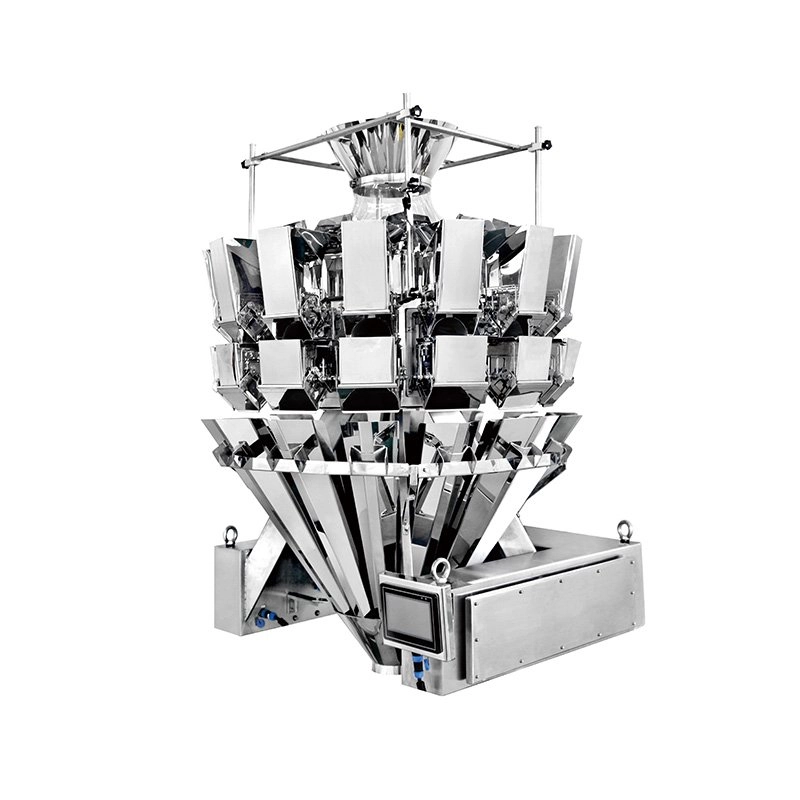
The vertical single screw feeder on the 14 Heads Vertical Single Screw Feeding Pickles Weigher backups isolates the feed pathway, reducing product spread and splashing. A contained screw feed minimizes exposed surfaces where brine or particulates can accumulate, improving overall cleanability. The screw and housing should be polished and drainable to avoid residue buildup, and seals should be food-grade and easily replaceable.
Multihead weighing bowl and discharge design
Each of the 14 weighing heads uses bowls shaped to promote product flow and full drainage. Bowl geometry, slope angles, and smooth radii prevent pickles from lodging in corners. Quick-release bowls and tool-free removal accelerate cleaning cycles without disrupting calibration. The discharge chutes should be sloped and tapered to prevent pooling and allow sanitizing solutions to flow through freely.
Materials, finishes and surface protection
All product-contact parts should be constructed from stainless steel 316L with electropolished or fine-polished finishes (Ra values appropriately low) to resist pitting from vinegar and brine. Non-contact structural parts may use 304 stainless steel with protective coatings. Fasteners should be flush-mounted or captive to avoid crevices, and any polymer parts in contact with pickles must be NSF- or FDA-compliant.
Cleaning, sanitation and maintenance best practices
Designed for CIP and manual CIP support
A hygienically designed multihead weigher supports cleaning-in-place (CIP) for components that can safely be sluiced and sanitized without disassembly. Where CIP is not feasible for all parts (for example, internal screw housings), the design should permit quick manual access and rapid disassembly for cleaning. Use validated cleaning agents compatible with the weigher's materials and the brined nature of pickles.
Scheduled maintenance and monitoring
Implement routine inspection checklists for seals, bearings, screw flights, bowl integrity and gaskets. Replace wear parts on a preventive schedule to avoid leakage and contamination. Use condition monitoring (e.g., vibration or torque analysis on the screw drive and vibrating feeders) to detect wear before product quality is affected.
Cleaning validation and verification
Cleaning validation demonstrates that procedures effectively remove brine residues and microbiological loads. Validation approaches follow HACCP principles and international expectations such as those expressed by the World Health Organization and industry groups like EHEDG. Typical validation methods include ATP swabs, protein/residue assays, and microbiological testing on high-risk surfaces after cleaning.
Compliance, validation and operational considerations
Regulatory and standards alignment
Hygienic weighers should be evaluated against applicable standards and guidance: ISO 22000 for food safety systems (ISO 22000), FDA FSMA's preventive controls expectations (FDA FSMA), and EHEDG design recommendations (EHEDG). These frameworks help ensure the equipment supports documented preventive controls and supply-chain audits.
Verification through documentation and traceability
Keep as-built drawings, material certificates, surface finish measurements, and cleaning validation records for each machine. Traceability is critical during audits and in root-cause analyses for food-safety incidents. A digital maintenance log tied to each weigher head simplifies compliance reporting and continuous improvement.
Balancing throughput, accuracy and hygienic needs
The 14-head configuration offers a balance between speed and granularity for portion control. For pickles, bowl fill and screw feed rates must be tuned to avoid jamming and to maintain consistent weigh combinations. Operators should be trained in adjusting feed volumes, vibration settings (if present), and discharge timing to preserve both hygiene and accuracy. For industry background on weighing systems, see general references on weighing technology such as the overview of weighing equipment (Weighing scale - Wikipedia).
Practical comparisons: hygienic features vs operational benefits
| Hygienic Feature | Operational Benefit | Why it matters for pickles |
|---|---|---|
| 316L stainless contact parts, electropolished finish | Longer life, reduced corrosion, easier cleaning | Resists brine and acid attack from vinegar solutions |
| Vertical screw feeder with sealed housing | Reduced splash, consistent feed, fewer contamination points | Contains brine and small particulates, improving hygiene |
| Quick-release bowls and tool-free access | Reduced downtime for sanitation, faster changeovers | Enables thorough cleaning between product batches |
| Drainable chutes and sloped surfaces | Complete drainage of cleaning fluids and brine | Prevents standing liquid and microbial growth |
Case example: reducing downtime with hygienic design
A mid-size pickle packer replaced an older combination weigher with the 14 Heads Vertical Single Screw Feeding Pickles Weigher backups. By switching to sealed screw feeding and quick-release bowls, they reduced sanitary downtime by 20% and cut microbial holdover incidents. These improvements supported faster line speeds while meeting the company’s HACCP verification schedule.
Selecting and validating a pickles multihead weigher: checklist
Purchase and installation checklist
- Confirm product-contact materials (316L stainless, FDA-compliant polymers).
- Verify surface finish specifications and provide material certificates.
- Request vendor cleaning validation protocols and CIP compatibility data.
- Ensure control interfaces support traceability and event logging.
Validation and acceptance testing
Run acceptance tests covering: weigh accuracy across fill ranges, simulated cleaning cycles, and microbiological swabbing of high-risk contact points post-cleaning. Document results and incorporate them into the HACCP and preventive control plans.
Operator training and SOPs
Create SOPs for daily sanitation, deep cleaning, and part replacement. Train staff to perform quick inspections for brine buildup, check torque on screws, and recognize signs of wear on bowl liners. Well-documented procedures reduce human error—one of the leading causes of cross-contamination in processing equipment.
Product information
Product name: 14 Heads Vertical Single Screw Feeding Pickles Weigher backups
This type of weigher is designed to handle the unique characteristics of pickles, ensuring precise measurements for packaging and distribution. It uses a vertical single screw mechanism to feed the pickles into the weighing system, allowing for efficient and consistent weighing. This technology is particularly useful in food processing and packaging facilities where precise portioning is essential for quality control and customer satisfaction. This specialized equipment is perfect for accurately measuring and dispensing pickles in a production line or packaging facility. The vertical design allows for efficient and precise filling of containers, while the single screw feeding mechanism ensures consistent and reliable weighing.
FAQ
Q1: How often should the weigher be fully disassembled for cleaning?
A: Frequency depends on production patterns and risk assessment. For continuous pickle processing, full disassembly and deep cleaning are commonly performed at least daily or between product changes. Validation data (ATP or microbiology) should guide the specific schedule.
Q2: Are there CIP-compatible models of the 14-head pickles weigher?
A: Many manufacturers offer CIP-capable designs for non-moving, product-contact surfaces. The vertical screw housing may require targeted manual cleaning. Confirm CIP compatibility and validated procedures with the equipment supplier.
Q3: What records are recommended to demonstrate compliance during audits?
A: Maintain material certificates, as-built drawings, cleaning validation reports, routine sanitation logs, maintenance records, and calibration certificates for load cells. These documents support compliance with ISO 22000 and regulatory expectations like FSMA.
Q4: Can the weigher handle both whole pickles and sliced forms?
A: Yes. The 14-head configuration and adjustable feeding settings generally adapt to whole, halved, or sliced pickles. However, bowl geometry and feed rate settings should be optimized for each product to avoid jamming and ensure consistent weights.
Q5: Which standards or organizations provide guidance for hygienic equipment design?
A: Leading references include EHEDG (https://www.ehedg.org/) for hygienic engineering, ISO 22000 for food-safety management (https://www.iso.org/iso-22000-food-safety-management.), and FSMA guidance from the FDA (https://www.fda.gov/food/food-safety-modernization-act-fsma). For general context on weighing technology, see the weighing overview (https://en.wikipedia.org/wiki/Weighing_scale).
If you want to evaluate the 14 Heads Vertical Single Screw Feeding Pickles Weigher backups for your facility, contact our sales and technical team to request specifications, sanitation validation protocols and a site assessment. View the product page or contact us to schedule a demonstration and receive a customized hygienic design proposal.
Tags
multihead weigher packing machine
multihead weigher packing machine
noodle packaging machine
noodle packaging machine
food vacuum pack machine
food vacuum pack machine
combined check weigher and metal detector
combined check weigher and metal detector
vffs machine for sale
vffs machine for sale
Precision linear weigher for snacks
Precision linear weigher for snacks
Recommended for you
Top 10 metal detector machine Manufacturers and Supplier Brands in America
What is packing machine for food products ?
The B2B Buyer’s Guide to checkweigher metal detector combination
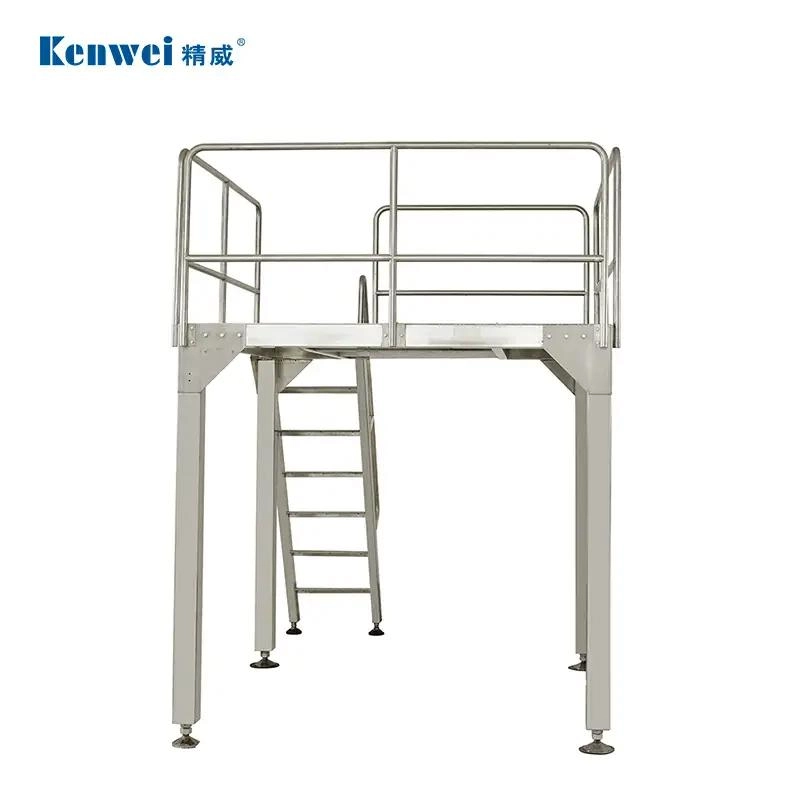
JW-B12 Double feeder horizontal packaging and weighing system overview
Prdoucts Categories
Question you may concern
About Product choice
Can Kenwei's machines be used in my industry?
Kenwei’s equipment is highly versatile and can be used across a wide range of industries, including:Food,Pharmaceuticals,Chemicals,Plastics and Agriculture.
Plastics If you're unsure whether our products are suitable for your industry, please contact us, and we can provide you with specific solutions tailored to your needs.
What types of products does Kenwei offer?
Kenwei specializes in high-precision and high-speed automated machinery for weighing, packaging, and quality control. Our main products include: multihead weigher, linear weigher, checkweighers,food metal detector,vertical packing machine and packing machine accessories.
Are there any additional features available for Kenwei machines?
Yes, we offer a variety of optional features for customization, such as: advanced touchscreen interfaces, multiple language support and so on.
About Cooperation Process
Can Kenwei customize equipment to meet my specific needs?
Yes! We offer customized solutions for all of our machines. Our team will work closely with you to understand your specific requirements and create a solution that meets your needs in terms of size, functionality, speed, and other factors.
How can I start a cooperation with Kenwei?
To begin a cooperation, simply contact our sales or customer service team via email or phone. You can also fill out the inquiry form on our website. Once we receive your request, a representative will get in touch with you to discuss your specific needs and provide you with a tailored solution.
You may also like
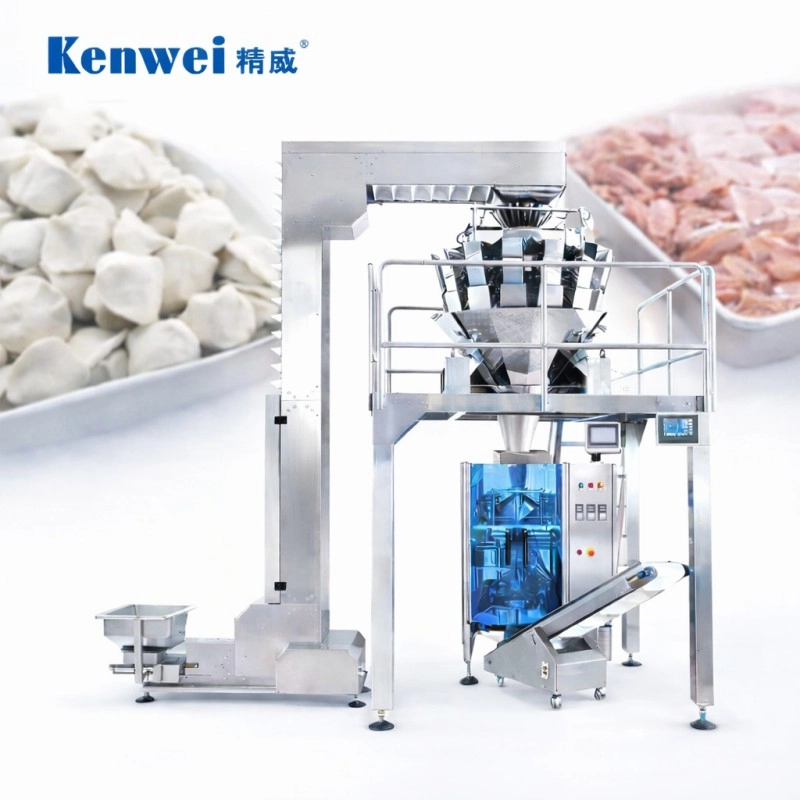
Vertical Frozen Food Packaging Machine for IQF & Frozen Products JW-B1
The Kenwei JW-B1 Vertical Frozen Food Packaging Machine is designed for IQF and frozen products, ensuring efficient, airtight packing. This vertical packing machine boosts productivity with precision sealing, ideal for frozen food packaging needs in the food industry.
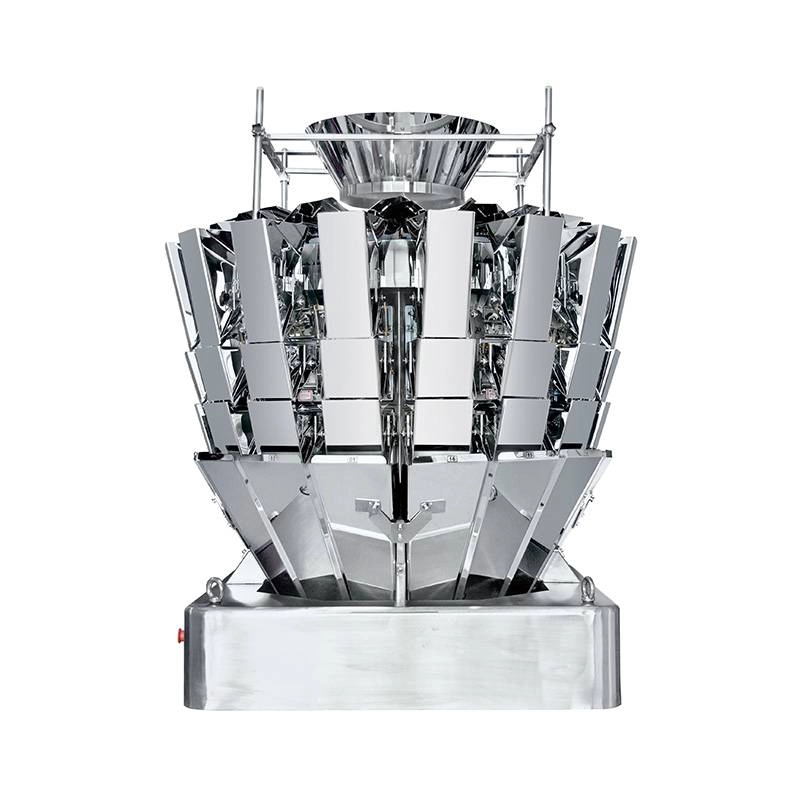
16 Head Three Layer Multihead Weigher for Granular and Irregular Materials
Kenwei’s 16 Head Three Layer Multihead Weigher ensures precise weighing of granular and irregular materials. This multihead weighing machine offers efficient, high-speed performance, ideal for various packaging needs. Trust our 16 head weigher for accuracy and reliability in your production line.
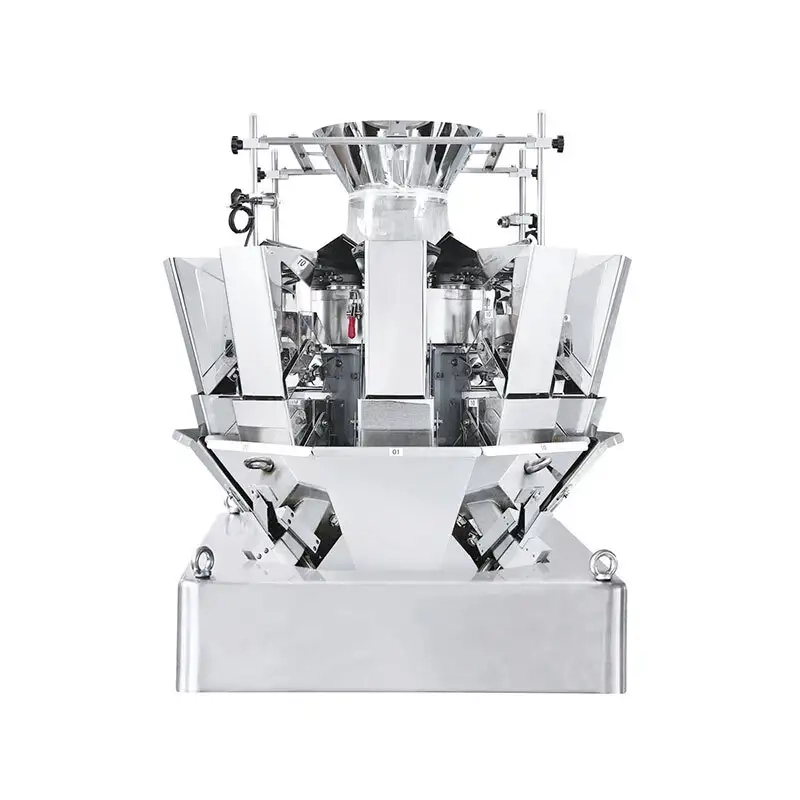
10-Head Standard No-Spring Multihead Weigher 1.6L for Precise Weighing
The standard no-spring combination scale features a patented spring-free hopper design, making it ideal for weighing a variety of products such as melon seeds, peanuts, nuts, almonds, grapes, candies, pistachios, potato chips, shrimp chips, and more. The double-support feeding tray is easily adjustable, while the feeding hopper is designed for easy disassembly, ensuring convenience and cleanliness. With a maximum weighing speed of up to 120 bags per minute, the 14-head standard no-spring combination scale is an economical, versatile, and cost-effective solution.
Automatic Multihead Weigher for Stick and Bar-Shaped Materials
Kenwei’s Automatic Multihead Weigher for Stick and Bar-Shaped Materials ensures precise, fast, and efficient weighing. This advanced automatic multihead weighing machine is ideal for accurate portioning of various stick and bar-shaped products, enhancing productivity and reducing waste.
Get in touch with us
If you have any comments or good suggestions, please leave us a message, later our professional staff will contact you as soon as possible.
Kenwei
Kenwei
Kenwei multi weigh
Kenwei
Kenwei
Kenwei