






G5020 Food Metal Detector: Ensuring Precision Rejecting Defects
This article explains how the G5020 Food Metal Detector Manufacturer for Rejecting Defective Products combines multi-frequency detection, a contamination-minimizing conveyor design, and easy maintenance to deliver reliable rejection of metal-contaminated food and pharmaceutical products. It covers features, technical comparisons, line integration, calibration and verification, compliance with food safety standards, ROI considerations, and frequently asked questions.
- G5020 Food Metal Detector: Ensuring Precision Rejecting Defects
- Overview — Why choose good metal detectors like the G5020 Food Metal Detector Manufacturer for Rejecting Defective Products
- Product Description — Technical introduction to the G5020
- Key Features — What makes this a leading option among good metal detectors
- How G5020 Ensures Precision Rejecting Defects — detection principles and operational controls
- Industries and Product Types — where multi-frequency good metal detectors add the most value
- Performance Comparison — G5020 vs. Typical Single-Frequency Conveyor Detectors
- Integration with Multihead Weighers and Production Lines — ensuring synchronized rejection
- Installation, Calibration and In-Plant Validation — best practices for accuracy
- Maintenance and Sanitation — keeping sensitivity high and contamination low
- Compliance & Certifications — meeting food safety and regulatory expectations
- Return on Investment — quantifying value from precision rejecting defects
- Brand Advantages — why choose our G5020 solution among good metal detectors
- Frequently Asked Questions (FAQ)
- Q1: What kinds of metal can the G5020 detect?
- Q2: How often should we run test pieces and verification checks?
- Q3: Can the G5020 be integrated with existing reject systems and PLCs?
- Q4: Will multi-frequency detection increase false rejects?
- Q5: Do you provide validation and audit documentation?
- Contact / View Product — ready to evaluate the G5020?
- Authoritative References and Further Reading

G5020 Food Metal Detector: Ensuring Precision Rejecting Defects
Overview — Why choose good metal detectors like the G5020 Food Metal Detector Manufacturer for Rejecting Defective Products
In modern food and pharmaceutical production, preventing metal contamination is a core quality and safety requirement. Manufacturers need good metal detectors that reliably identify and reject defective products without slowing down the line or creating additional contamination risks. The G5020 Food Metal Detector Manufacturer for Rejecting Defective Products (G5020) is a multi-frequency, conveyor-mounted detector engineered specifically to address these demands. This article outlines how the G5020 ensures precision rejection of defects, its technical strengths, integration and maintenance considerations, and why it is a practical investment for safety-driven operations. After understanding the importance of defect rejection, let's focus on the ROI of investing in good metal detectors for food safety. Evaluating the cost-effectiveness of the G5020 will allow you to make a sound investment in food safety and long-term quality control.
Product Description — Technical introduction to the G5020
The 5020 Multi-Frequency Metal Detector features a specialized conveyor belt that minimizes contamination sources, ensuring smooth operation and high detection sensitivity. Its design allows for easy disassembly and maintenance. This metal detector is ideal for detecting metal contaminants in a wide range of industries, including food, pharmaceuticals, condiments, plastics, electronics, textiles, toys, and more.
Key Features — What makes this a leading option among good metal detectors
The G5020 stands out among good metal detectors because of a combination of design choices focused on sensitivity, hygiene, and uptime:
- Multi-frequency detection: Reduces masking from product conductivity and allows accurate identification of ferrous, non-ferrous and stainless steel contaminants across a wide product mix.
- Contamination-minimizing conveyor: The belt and support structure are designed to reduce product buildup and particles that could obscure detection performance.
- Quick-disassembly design: Tool-free or low-tool disassembly minimizes downtime for sanitation and maintenance, supporting HACCP-driven cleaning schedules.
- High sensitivity and stable performance: Optimized signal processing gives consistent sensitivity across typical food product variations.
- Clear reject logic and verification: Integrated reject control with pass/fail logging and optional automated ejection systems for accurate removal of defective products.
How G5020 Ensures Precision Rejecting Defects — detection principles and operational controls
Precision in rejection depends on three technical pillars: detection sensitivity, stable signal processing, and robust reject mechanisms. The G5020 addresses each as follows:
- Multi-frequency coil sets: By operating on multiple frequencies concurrently, the detector reduces false negatives caused by product effect (highly conductive or non-homogeneous products). This increases the likelihood of detecting small or low-signal contaminants.
- Adaptive filtering and digital signal processing: The G5020 uses advanced filtering to distinguish transient noise from true metal signals, maintaining sensitivity in noisy factory environments.
- Controlled reject timing and verification: The system times reject actions to match conveyor speeds and product spacing. Integrated sensors or PLC feedback verify successful rejection, reducing the chance of missed defective items.
Industries and Product Types — where multi-frequency good metal detectors add the most value
The G5020’s versatility makes it suitable for a broad range of sectors beyond standard food processing, including pharmaceutical tablets, condiment pouches, frozen foods, confectionery, and even non-food industries such as plastics and electronics. Situations where it adds particular value include:
- Highly conductive or wet products (e.g., sauces, doughs) where single-frequency detectors struggle
- Lines with mixed product profiles requiring fast sensitivity adjustments
- High-throughput conveyor systems needing precise reject timing
Performance Comparison — G5020 vs. Typical Single-Frequency Conveyor Detectors
Below is a practical comparison to help procurement teams evaluate detector performance under representative conditions:
| Feature | G5020 (Multi-Frequency) | Typical Single-Frequency Detector |
|---|---|---|
| Ferrous sensitivity (typical) | 0.6–1.0 mm diameter wire (product dependent) | 0.8–1.5 mm diameter wire |
| Non-ferrous sensitivity (typical) | 0.8–1.2 mm diameter | 1.0–2.0 mm diameter |
| Stainless steel sensitivity (austenitic) | 1.0–1.5 mm diameter | 1.5–3.0 mm diameter |
| Product effect handling | Excellent (multi-frequency compensation) | Poor to moderate |
| Sanitation & disassembly | Tool-light, quick-disassembly design | Often requires tools, slower cleaning |
| Data logging & integration | Advanced logging, PLC/Industry 4.0 ready | Basic or optional logging |
Note: Sensitivity ranges above are indicative and vary with product type, aperture size, and environmental conditions. Factory product testing is recommended for precise specs on your product mix.
Integration with Multihead Weighers and Production Lines — ensuring synchronized rejection
For precision rejecting defects, timing and communication between the metal detector, multihead weigher, and reject subsystem is critical. The G5020 supports common industrial communication protocols (e.g., Ethernet/IP, Profinet, Modbus) and digital I/O for fast signaling. Integration best practices include:
- Physical spacing and conveyor buffers to allow accurate detector-to-reject timing
- Synchronized signals between the weigher and detector to flag suspect batches and match rejects
- Interlock logic in PLCs to prevent accidental loss of good product during sporadic false alarms
- Automated logging to link rejection events to production batch numbers for traceability
Installation, Calibration and In-Plant Validation — best practices for accuracy
To achieve consistent rejecting performance, follow these steps when commissioning a G5020 detector:
- Perform site-specific product sensitivity tests using representative samples and standard test pieces (ferrous, non-ferrous, stainless).
- Document baseline settings and upload saved configurations for each product SKU.
- Calibrate reject timing against conveyor speed and product spacing; use optical or proximity sensors to validate ejection timing.
- Implement routine verification checks (daily test pieces, weekly logs) as part of the HACCP/quality plan.
Maintenance and Sanitation — keeping sensitivity high and contamination low
Frequent cleaning and preventive maintenance preserve detection performance. The G5020’s design promotes easy sanitation: quick-release belts, washable components, and smooth hygienic surfaces. Recommended maintenance practices:
- Daily visual inspection and cleaning of conveyor and aperture
- Weekly verification with test pieces and logging of results
- Scheduled firmware and diagnostics checks to detect drift or noise sources
- Spare parts planning for belts, sensors and reject actuators to minimize downtime
Compliance & Certifications — meeting food safety and regulatory expectations
Using a detector like the G5020 helps meet requirements from common food safety standards when implemented correctly:
- HACCP-based programs: metal detection is a critical CCP for foreign body control in many HACCP plans.
- ISO 22000 and FSSC 22000 compatibility with documented validation and verification records.
- Retail standards (BRC/IFS): demonstrate effective foreign body control and traceability with event logs and verification routines.
Return on Investment — quantifying value from precision rejecting defects
Investing in robust detection and rejection capabilities reduces risks and costs associated with recalls, brand damage, and customer complaints. ROI considerations include:
- Reduced product recalls and associated direct costs
- Fewer line stoppages due to contaminated product detection downstream
- Improved customer confidence and market access with verified safety controls
Brand Advantages — why choose our G5020 solution among good metal detectors
Our approach focuses on safety-first design, practical hygiene features, and serviceability. Key brand advantages include:
- Industry-focused R&D producing detectors suited for mixed-product food lines
- Local technical support and training to help teams implement best practices
- Comprehensive validation documentation to streamline audits
- Flexible integration and data export options enabling Industry 4.0 readiness
Frequently Asked Questions (FAQ)
Q1: What kinds of metal can the G5020 detect?
The G5020 detects ferrous, non-ferrous (e.g., aluminium, copper) and many stainless steels. Sensitivity varies by metal type, size, product composition and aperture; multi-frequency operation improves detection consistency across these types.
Q2: How often should we run test pieces and verification checks?
Daily verification using standardized test pieces is recommended for high-risk production lines. Weekly documentation and monthly in-depth validation are common best practices. Frequency should be defined in your HACCP plan and may increase for high-risk SKUs.
Q3: Can the G5020 be integrated with existing reject systems and PLCs?
Yes. The G5020 supports common industrial communication protocols and discrete I/O for integration with PLCs, multihead weighers, and pneumatic or air-blast reject systems. Integration ensures synchronized rejection and traceable event logging.
Q4: Will multi-frequency detection increase false rejects?
No — when configured and validated correctly, multi-frequency detection decreases false negatives and can reduce false rejects caused by product effect. Proper setup and verification are important to balance sensitivity with acceptable false-reject rates.
Q5: Do you provide validation and audit documentation?
Yes. We supply installation qualification (IQ), operational qualification (OQ), and performance qualification (PQ) templates, along with recommended test logs and procedures to support audits and regulatory compliance.
Contact / View Product — ready to evaluate the G5020?
If you want to learn more, schedule a factory acceptance test, or request on-site product trials for the G5020 Food Metal Detector Manufacturer for Rejecting Defective Products, contact our sales and technical team. We provide product demos, application testing with your actual products, and full documentation to help with procurement and validation.
Contact us today to request a quote or schedule an on-site trial — protect Kenwei with reliable detection and precise rejecting of defective products.
Authoritative References and Further Reading
For industry standards and additional background, see these authoritative sources:
- Codex Alimentarius — Hazard Analysis and Critical Control Point (HACCP): https://www.fao.org/fao-who-codexalimentarius/en/
- U.S. Food & Drug Administration — Food Safety Modernization Act (FSMA) guidance and foreign object control: https://www.fda.gov/food/food-safety-modernization-act-fsma
- ISO 22000 — Food safety management systems: https://www.iso.org/iso-22000-food-safety-management.
- British Retail Consortium (BRCGS) Global Standard for Food Safety: https://www.brcgs.com/
- Wikipedia — Metal detector (for general technical background): https://en.wikipedia.org/wiki/Metal_detector
Tags
cheese multihead weigher
cheese multihead weigher
kenwei multihead weigher
kenwei multihead weigher
multihead combination weigher
multihead combination weigher
metal detector for food industry
metal detector for food industry
Linear weigher with touch screen
Linear weigher with touch screen
pet food packaging machines
pet food packaging machines
Recommended for you
Sensors, Software and Controls in Modern Packing Machines
Comparing Single Bucket vs Multihead Powder Packing Solutions
The latest trends for food check weigher machine
Top 10 vffs packaging machine Manufacturers and Supplier Brands in America
Prdoucts Categories
Question you may concern
About After Sales Support
What do I do if I encounter a malfunction in the machine?
If you encounter a malfunction, first check the user manual and troubleshooting guide for common issues. If the problem persists, contact our technical support team for further assistance.
About products customization
How do I request a custom-built Kenwei machine?
To request a customized machine, simply contact our sales or engineering team.
About Solution suggestions
Can Kenwei machines handle products with irregular shapes or sizes?
Yes, multi-head weighers are particularly effective for handling products with irregular shapes and sizes.
What are Kenwei’s primary solutions for industrial weighing and packaging?
Kenwei provides comprehensive solutions for automated weighing and packaging, including multi-head weighers, linear weighers, check weighers, metal detectors, and packing machines. These solutions are tailored to improve speed, accuracy, and efficiency in various industries such as food, pharmaceuticals, and chemicals.
How can Kenwei solutions help reduce waste in my production process?
Kenwei solutions improve accuracy in weighing, packaging, and quality control, reducing the chances of overfill or underfill. This leads to less product waste and higher operational efficiency.
You may also like
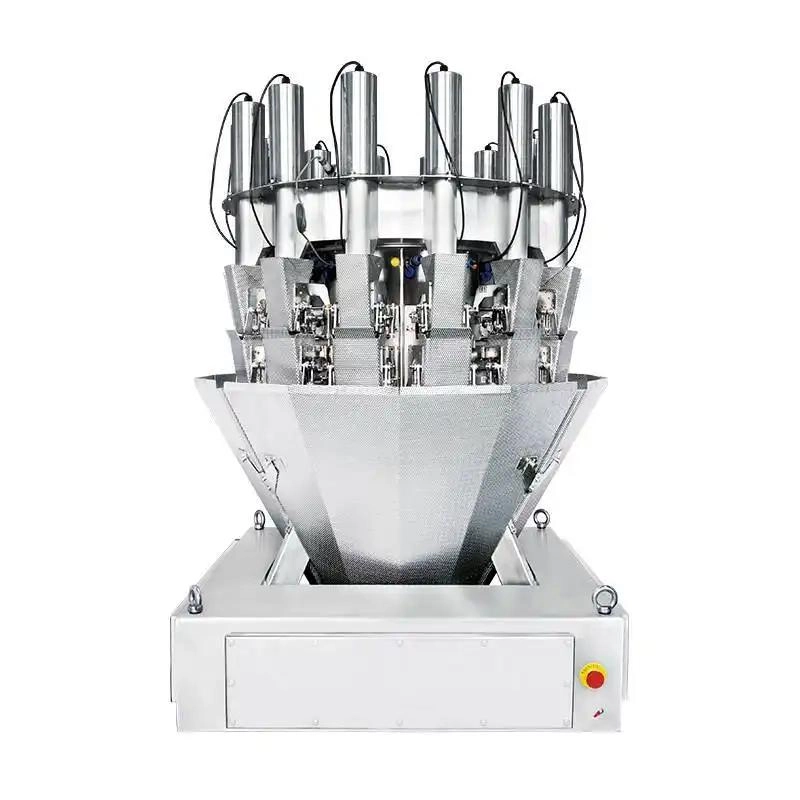
14 Heads Vertical Single Screw Feeding Pickles Weigher backups
This type of weigher is designed to handle the unique characteristics of pickles, ensuring precise measurements for packaging and distribution. It uses a vertical single screw mechanism to feed the pickles into the weighing system, allowing for efficient and consistent weighing. This technology is particularly useful in food processing and packaging facilities where precise portioning is essential for quality control and customer satisfaction. This specialized equipment is perfect for accurately measuring and dispensing pickles in a production line or packaging facility. The vertical design allows for efficient and precise filling of containers, while the single screw feeding mechanism ensures consistent and reliable weighing.
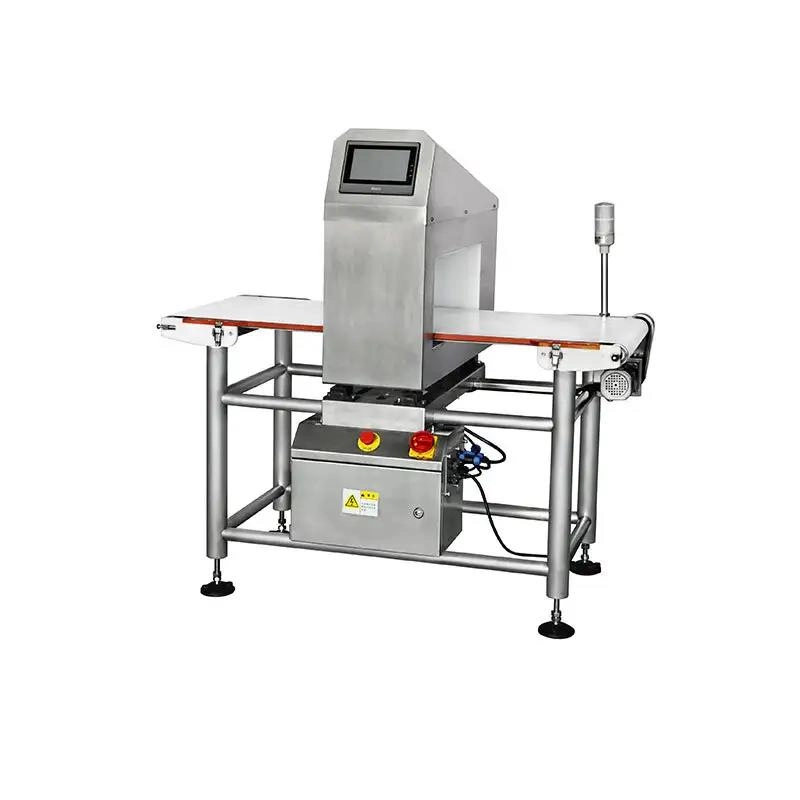
Food Metal Detector Manufacturer For Reject Defective Products G5020
The G5020 multi-frequency metal detector features a specialized conveyor belt designed to reduce contamination risks, ensure smooth operation, and maintain high detection sensitivity. It is easy to disassemble for convenient maintenance. Ideal for detecting metal contaminants in food, pharmaceuticals, spices, plastics, electronics, textiles, toys, handicrafts, and more.
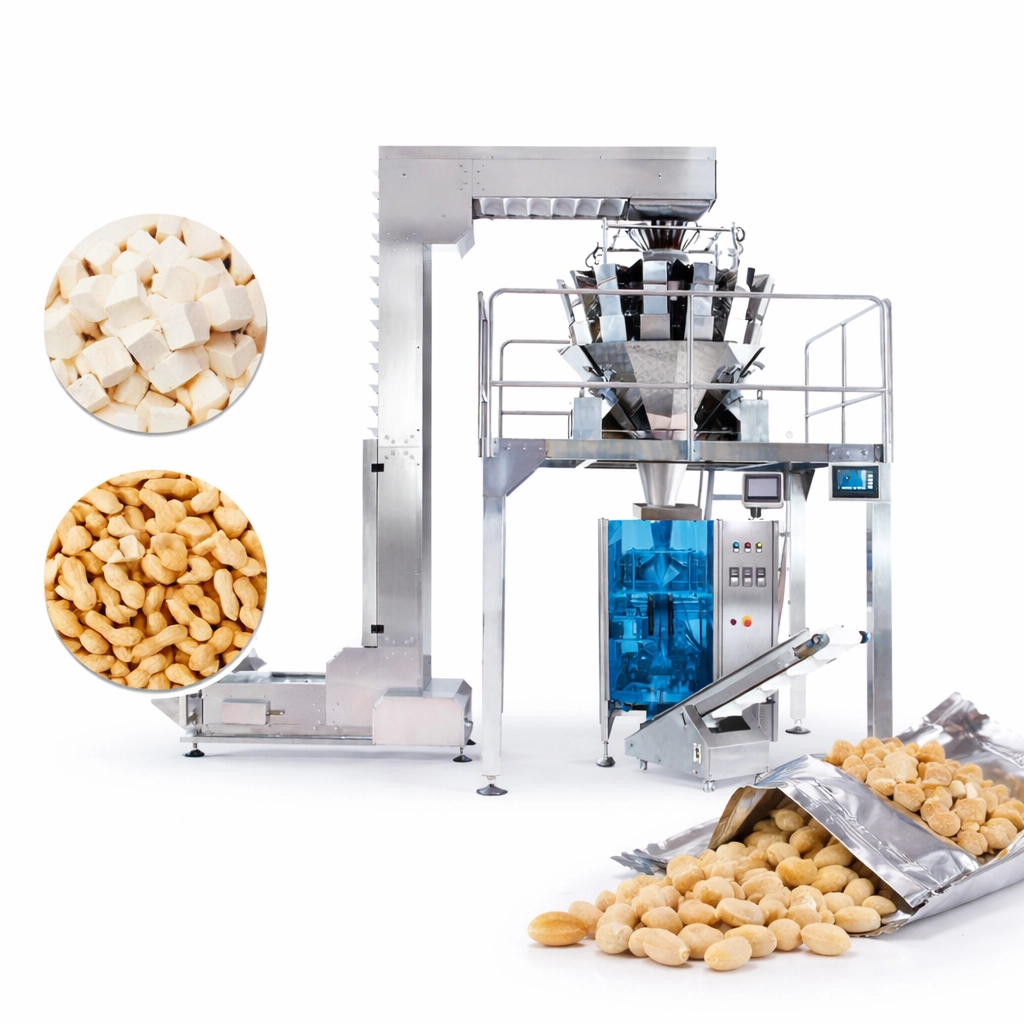
High-Precision Weighing & Packaging for Granular Products
The Granular Food Packing Machine is a fully automated solution designed for accurate weighing, filling, and packaging of various granular food products. Integrated with a multihead weigher and advanced packaging system, it ensures high speed, precision, and hygiene standards for modern food production.
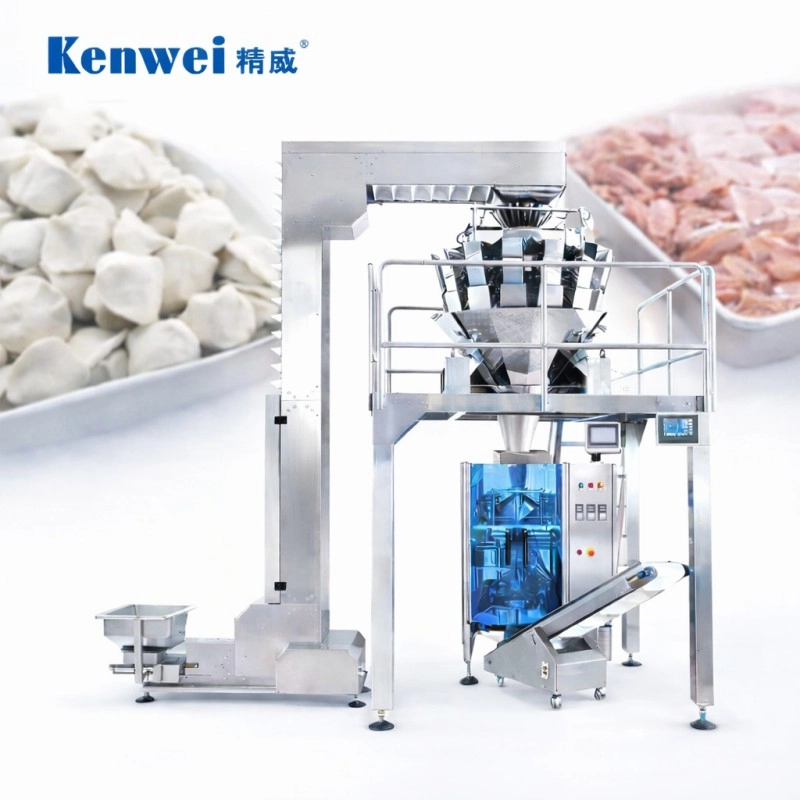
Vertical Frozen Food Packaging Machine for IQF & Frozen Products JW-B1
The Kenwei JW-B1 Vertical Frozen Food Packaging Machine is designed for IQF and frozen products, ensuring efficient, airtight packing. This vertical packing machine boosts productivity with precision sealing, ideal for frozen food packaging needs in the food industry.
Get in touch with us
If you have any comments or good suggestions, please leave us a message, later our professional staff will contact you as soon as possible.
Kenwei
Kenwei
Kenwei multi weigh
Kenwei
Kenwei
Kenwei