






Energy-efficient rotary packing machine practices for factories
Energy-efficient rotary packing machine practices help factories reduce operating costs, lower carbon footprint, and improve throughput by combining optimized equipment selection, smart controls, and process-level improvements. This guide covers practical design, operational strategies, and integration tips for rotary packing lines—highlighting the Double feeder horizontal packaging and weighing system JW-B12 as an example of a high-efficiency, high-speed solution.
- Design principles for energy-efficient packaging lines
- Right-sizing equipment and modular line layout
- Use of efficient actuators and drives
- Thermal management and sealing systems
- Operational best practices to reduce energy use
- Line balancing and throughput optimization
- Preventive maintenance and condition monitoring
- Smart control strategies and scheduling
- Selecting and integrating the right rotary packing machine
- Why multihead weighers and dual-feeder systems matter
- Case in point: Double feeder horizontal packaging and weighing system JW-B12
- Integration tips for maximum efficiency
- Measurement, benchmarking, and continuous improvement
- Key performance indicators (KPIs) to track
- Benchmarking and audits
- Data-driven optimization and AI-enabled controls
- Practical examples and ROI comparison
- Calculating payback
- Brand advantages and why JW-B12 stands out
- Design focus on efficiency and uptime
- Precision weighing and reduced giveaway
- Serviceability and lifecycle support
- FAQ
- How much energy can a factory expect to save by switching to an energy-optimized rotary packing machine?
- Is the JW-B12 suitable for irregular-shaped materials?
- What maintenance is required to keep energy consumption low?
- Can existing lines be retrofitted with energy-saving technologies?

Energy-efficient rotary packing machine practices help factories cut energy consumption, reduce waste, and maintain high production throughput. By optimizing machine selection, controls, maintenance, and line integration, manufacturers can achieve measurable gains in cost per package and sustainability targets while preserving product quality and uptime. When energy efficiency and operating costs are fully evaluated, decision-makers often return to the core question of why choosing a rotary packing machine for high-speed lines delivers the strongest overall value.
Design principles for energy-efficient packaging lines
Right-sizing equipment and modular line layout
Choosing the appropriate rotary packing machine capacity and a modular layout reduces unnecessary idle power draw and avoids overspecification. Rotary packaging systems and rotary pouch fillers sized to match real production rates minimize cycling losses. For many snack, nut, and candy lines, a multihead weigher coupled with a horizontal rotary packer balances speed and fill precision—preventing frequent short runs that waste energy in start/stop cycles.
Use of efficient actuators and drives
Modern rotary packing machines benefit from servo drives and variable frequency drives (VFDs) that modulate motor speed to demand. Compared to fixed-speed motors, VFDs reduce energy use during low-load periods and allow smoother acceleration profiles that lower mechanical stress and maintenance. Servo-driven feeders and indexing tables also improve timing accuracy, which reduces rework and product giveaway due to overfilling.
Thermal management and sealing systems
Heat-sealing and pouch sealing subsystems are often among the largest energy consumers on horizontal packaging lines. Implementing on-demand heating heads, zoned heaters, and thermal insulation reduces standby energy. Closed-loop temperature control prevents overheating and provides consistent, secure seals without excess energy input. For reference on packaging machine fundamentals and common design practices, see the Packaging Machine overview on Wikipedia (Packaging machine).
Operational best practices to reduce energy use
Line balancing and throughput optimization
Analyze the entire production flow—feeding, weighing, bag making, and packing—to identify bottlenecks. A well-balanced line ensures the multihead weigher and rotary packing machine run at optimal duty cycles rather than frequent ramp-ups. Running equipment closer to its rated capacity typically improves energy per unit packaged. Use data logging from PLCs and machine HMI to monitor cycles per hour and idle time.
Preventive maintenance and condition monitoring
Regular maintenance—lubrication, belt tensioning, sensor cleaning—maintains mechanical efficiency and reduces energy losses from friction or misalignment. Condition monitoring with vibration sensors and current monitoring flags inefficiencies early so corrective actions prevent large energy drains. Align preventive schedules with real production plans to minimize unnecessary machine startups.
Smart control strategies and scheduling
Integrating machine controls with plant MES/SCADA allows smart scheduling: group similar SKUs to reduce set-up time, run high-speed shifts to maximize efficiency, and sleep or reduce power on idle modules. Implement energy-aware recipes where heating elements, conveyors, and pumps switch to reduced power states between batches. Government guidance on industrial energy efficiency, such as the U.S. Department of Energy's resources, provides practical frameworks for manufacturers: DOE Industrial Energy Efficiency.
Selecting and integrating the right rotary packing machine
Why multihead weighers and dual-feeder systems matter
Multihead weighers deliver high-precision, high-speed fills with minimal product giveaway—directly affecting both material waste and energy per package. Combining a multihead weigher with a rotary packing machine that supports dual or double feeders increases flexibility for mixed-product lines and ensures steady feed without overworking conveyors. For technical background on multihead weighers, refer to the industry overview: Multihead weigher.
Case in point: Double feeder horizontal packaging and weighing system JW-B12
The JW-B12 Double Feeder Horizontal Packaging and Weighing System is designed for high-speed, high-precision packaging of snacks, puffed foods, nuts, candies, hardware, and irregular-shaped materials. With a multihead weigher and dual-feeder setup, it delivers efficient, fully automated feeding, weighing, and bagging for a wide range of products—ensuring secure seals and professional premade bag packaging.
Key energy and performance benefits of the JW-B12 include:
- Dual-feeder design to maintain continuous feed and reduce motor cycling.
- High-precision multihead weighing minimizes giveaway, lowering material waste and associated embodied energy.
- Servo-driven mechanisms and PLC control provide optimal acceleration profiles and reduced inrush currents.
- Compact, horizontal layout reduces conveyor distances and air handling needs.
Integration tips for maximum efficiency
When integrating a rotary packing machine like the JW-B12 into a line, consider these practical steps:
- Match upstream hopper and feed system capacities to avoid starving the weigher or causing frequent speed changes.
- Use centralized control logic that coordinates VFDs, servo drives, and heating zones to optimize power usage across the line.
- Implement product-specific recipes in the HMI to switch heating and motor profiles automatically during SKU changes.
Measurement, benchmarking, and continuous improvement
Key performance indicators (KPIs) to track
Track energy per package (kWh/package), overall equipment effectiveness (OEE), product giveaway percentage, and uptime. Measuring these KPIs supports targeted improvements: for instance, a drop in OEE tied to longer changeovers suggests focusing on changeover reduction to improve energy efficiency.
Benchmarking and audits
Conduct periodic energy audits and compare with industry benchmarks provided by organizations such as the Packaging Machinery Manufacturers Institute (PMMI): PMMI. Audits should include electrical consumption of motors, heaters, and auxiliary equipment, and thermal imaging to detect insulation or sealing losses.
Data-driven optimization and AI-enabled controls
AI and machine learning can analyze historic production and energy data to predict optimal setpoints for speed, heat, and feed. Predictive maintenance reduces unscheduled downtime and the extra energy associated with degraded components. A data-driven approach improves ROI by combining lower energy costs with higher throughput.
Practical examples and ROI comparison
Below is a simple comparative table illustrating typical savings from implementing several energy-efficiency practices on a rotary packing line. Numbers are illustrative averages reported across the packaging industry and should be adjusted for site-specific conditions.
| Practice | Typical energy savings | Implementation complexity |
|---|---|---|
| Install VFDs and servo drives | 10–25% on motor-driven components | Medium |
| On-demand heating and zoned thermal control | 15–30% on sealing systems | Medium |
| Line balancing & SKU scheduling | 5–15% overall | Low |
| Predictive maintenance / condition monitoring | 5–12% (less downtime, lower rework) | Medium |
Calculating payback
Estimate annual energy cost savings by multiplying kWh saved per package by annual packaging volume and local electricity price. Combine this with reduced material giveaway and lower maintenance costs for a comprehensive ROI. For capital investments in drives or control upgrades, typical payback periods range from 12 to 36 months depending on throughput and electricity rates.
Brand advantages and why JW-B12 stands out
Design focus on efficiency and uptime
Our JW-B12 is engineered for continuous production with dual feeders to minimize interruptions. The system's compact horizontal layout reduces conveyor handling and supports faster changeovers—both directly contributing to energy efficiency and higher OEE.
Precision weighing and reduced giveaway
High-precision multihead weighing reduces product giveaway. Less giveaway means lower material costs and less embodied energy per shipped unit, improving both sustainability and margin.
Serviceability and lifecycle support
We provide onboarding for energy-aware recipes, preventive maintenance schedules, and training for operators. Long-term servicing ensures the JW-B12 continues to operate at designed efficiency levels throughout its lifecycle.
FAQ
How much energy can a factory expect to save by switching to an energy-optimized rotary packing machine?
Savings vary by baseline equipment and practices, but combined measures (VFDs, on-demand heating, line balancing, and predictive maintenance) can typically reduce energy consumption on the packaging line by 15–30%. Site-specific audits provide precise estimates; refer to DOE guidance for industrial assessments: DOE Industrial Energy Efficiency.
Is the JW-B12 suitable for irregular-shaped materials?
Yes. The JW-B12 is designed for snacks, puffed foods, nuts, candies, hardware, and other irregular-shaped materials. Its multihead weigher and dual feeder design handle variable shapes and sizes while maintaining fill accuracy.
What maintenance is required to keep energy consumption low?
Regular tasks include lubrication, cleaning feed paths and sensors, checking belt tensions, verifying heater insulation, and updating control recipes. Implement condition monitoring and follow a preventive maintenance schedule to catch inefficiencies early.
Can existing lines be retrofitted with energy-saving technologies?
Yes. Many lines can be retrofitted with VFDs, servo upgrades, on-demand heating controls, and centralized PLC-based recipes. Retrofitting should be guided by an energy audit to prioritize high-impact measures.
If you have specific production targets or want a site-level energy audit, contact our sales engineering team to evaluate ROI and integration feasibility. View product details for the JW-B12 or request a demonstration to see energy-saving features in action. Contact us or view the JW-B12 product page.
Tags
multihead weigher supplier
multihead weigher supplier
china food packing machine
china food packing machine
food metal detector for sale
food metal detector for sale
multihead weigher
multihead weigher
china food metal detector
china food metal detector
vffs equipment
vffs equipment
Recommended for you
top multihead weigher maintenance tips 2026
Top 5 automatic grain packing machine Company List and Products Compared
Everything You Need to Know About linear weigher
Integrating Linear Weighers with Automated Lines: Practical Guide for Packaging Efficiency
Prdoucts Categories
Question you may concern
About Solution suggestions
Can Kenwei machines handle products with irregular shapes or sizes?
Yes, multi-head weighers are particularly effective for handling products with irregular shapes and sizes.
What are Kenwei’s primary solutions for industrial weighing and packaging?
Kenwei provides comprehensive solutions for automated weighing and packaging, including multi-head weighers, linear weighers, check weighers, metal detectors, and packing machines. These solutions are tailored to improve speed, accuracy, and efficiency in various industries such as food, pharmaceuticals, and chemicals.
About Product choice
What is the difference between a multi-head weigher and a linear weigher?
Multi-head Weigher: Ideal for high-speed and high-precision weighing of products with irregular shapes or varying sizes. It provides multiple weighings in parallel for faster processing.
Linear Weigher: It is suitable for powder and granule. It is typically slower than a multi-head weigher but is effective for certain types of applications that require more continuous flow or controlled weighing.
About Price and payment
How is the price of Kenwei machines determined?
The price of Kenwei machines depends on several factors, including the type of machine, customization requirements, production volume, and any additional features or integrations. We provide tailored quotes based on your specific needs and requirements.
About products customization
Can Kenwei machines support multiple languages?
Yes, we can customize the software interface to support multiple languages, making it easier for operators from different regions to use the machine.
You may also like
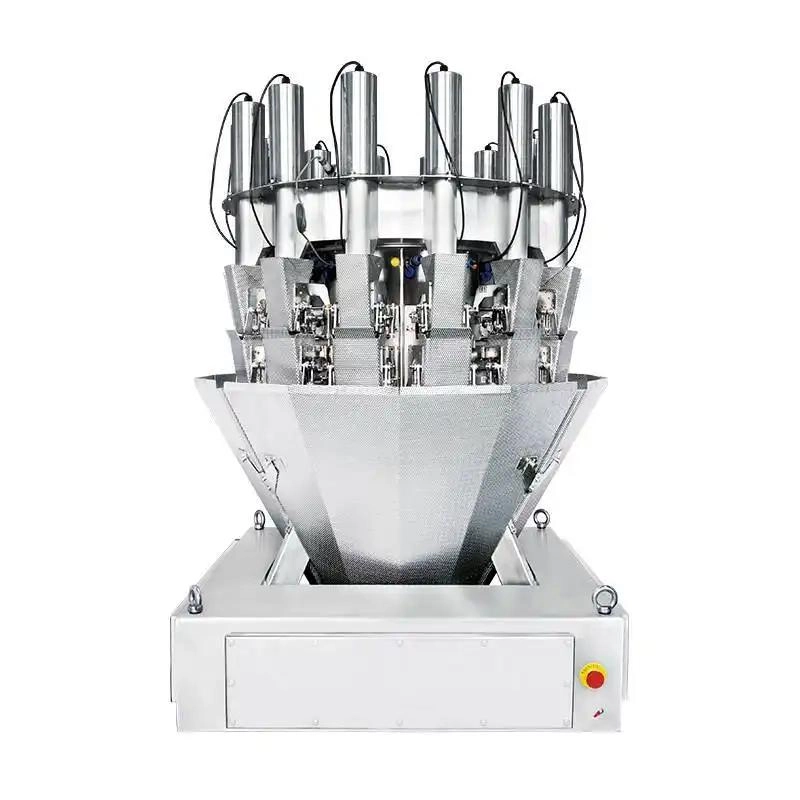
14 Heads Vertical Single Screw Feeding Pickles Weigher backups
This type of weigher is designed to handle the unique characteristics of pickles, ensuring precise measurements for packaging and distribution. It uses a vertical single screw mechanism to feed the pickles into the weighing system, allowing for efficient and consistent weighing. This technology is particularly useful in food processing and packaging facilities where precise portioning is essential for quality control and customer satisfaction. This specialized equipment is perfect for accurately measuring and dispensing pickles in a production line or packaging facility. The vertical design allows for efficient and precise filling of containers, while the single screw feeding mechanism ensures consistent and reliable weighing.
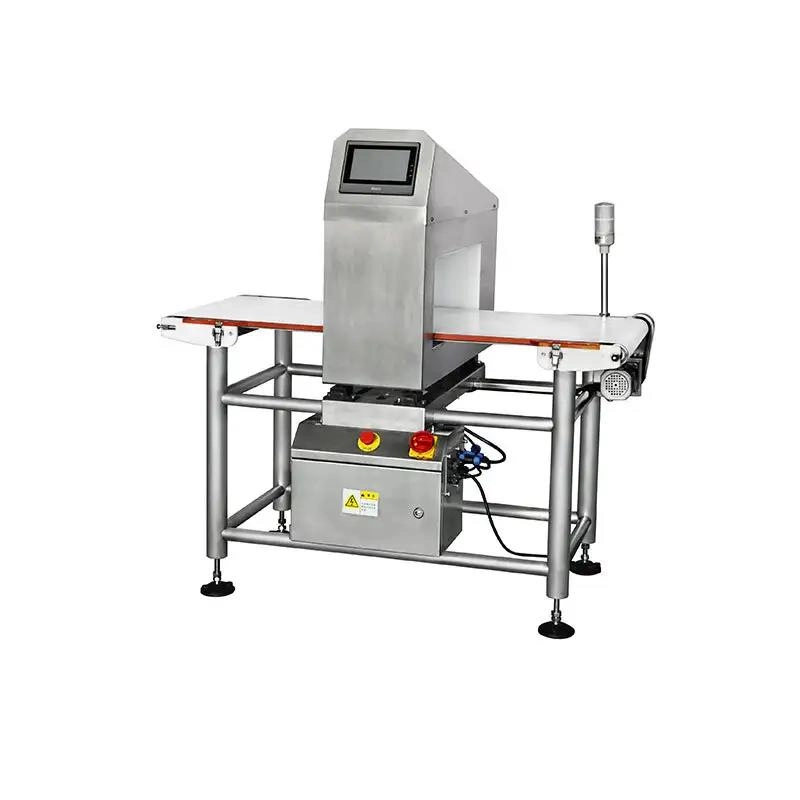
Food Metal Detector Manufacturer For Reject Defective Products G5020
The G5020 multi-frequency metal detector features a specialized conveyor belt designed to reduce contamination risks, ensure smooth operation, and maintain high detection sensitivity. It is easy to disassemble for convenient maintenance. Ideal for detecting metal contaminants in food, pharmaceuticals, spices, plastics, electronics, textiles, toys, handicrafts, and more.
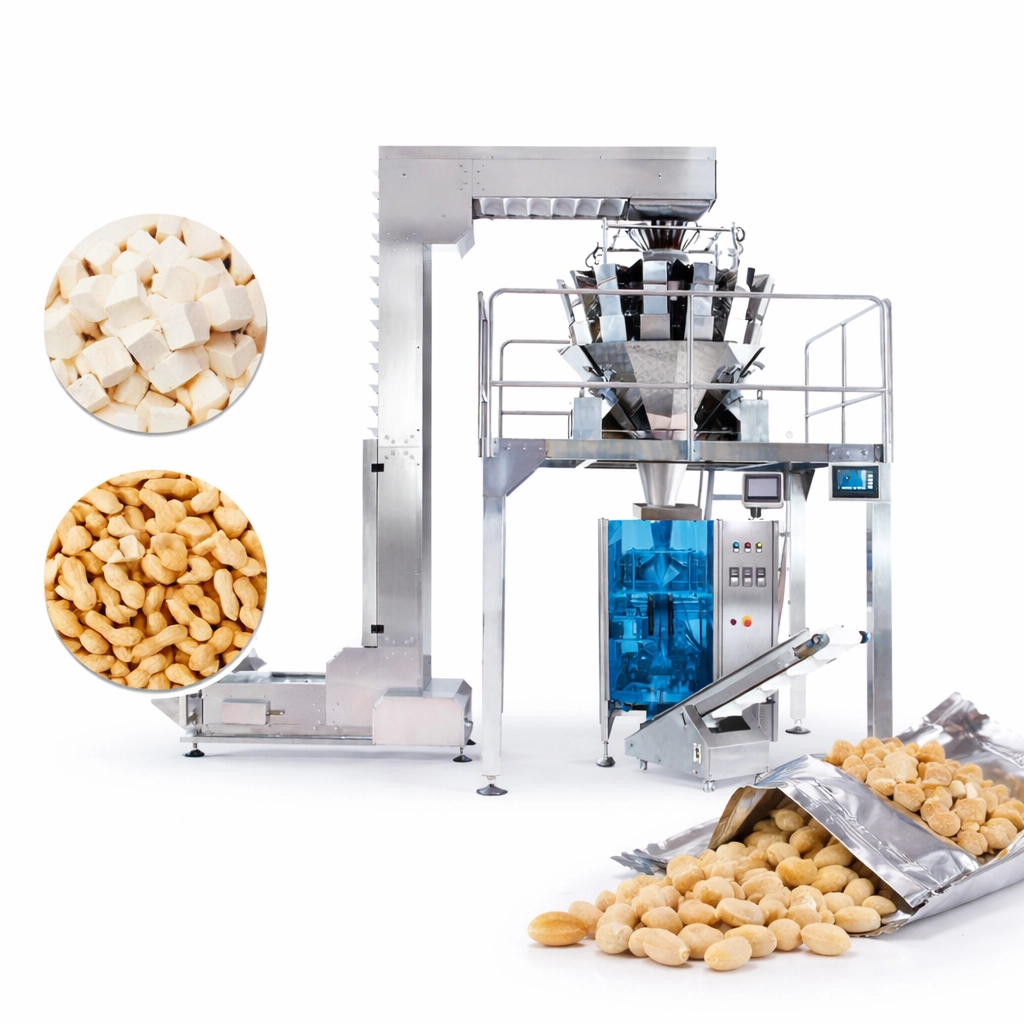
High-Precision Weighing & Packaging for Granular Products
The Granular Food Packing Machine is a fully automated solution designed for accurate weighing, filling, and packaging of various granular food products. Integrated with a multihead weigher and advanced packaging system, it ensures high speed, precision, and hygiene standards for modern food production.
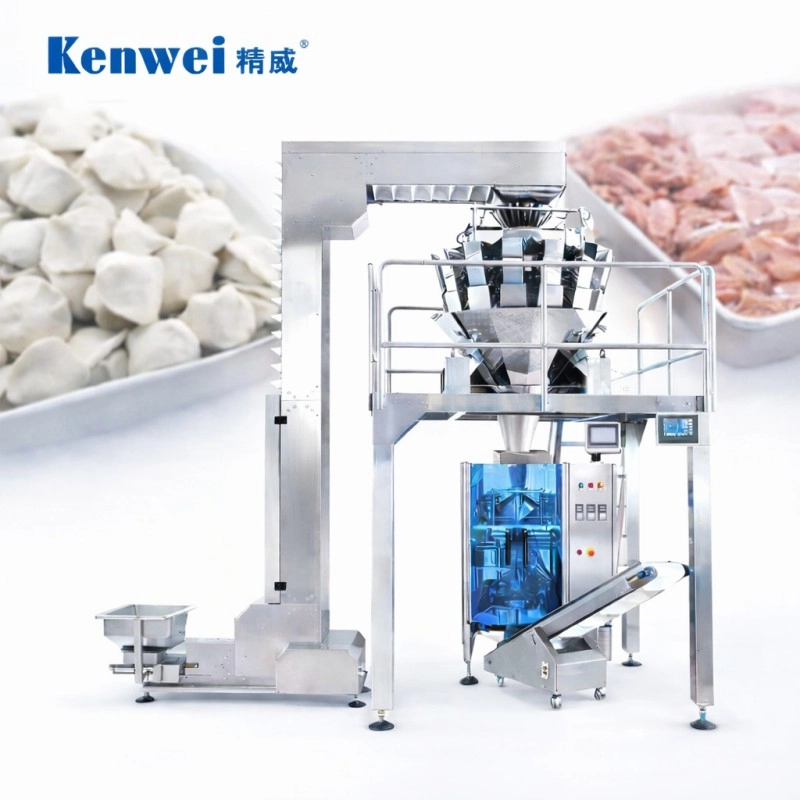
Vertical Frozen Food Packaging Machine for IQF & Frozen Products JW-B1
The Kenwei JW-B1 Vertical Frozen Food Packaging Machine is designed for IQF and frozen products, ensuring efficient, airtight packing. This vertical packing machine boosts productivity with precision sealing, ideal for frozen food packaging needs in the food industry.
Get in touch with us
If you have any comments or good suggestions, please leave us a message, later our professional staff will contact you as soon as possible.
Kenwei
Kenwei
Kenwei multi weigh
Kenwei
Kenwei
Kenwei