






Best 14-Head Vertical Multihead Weighers: Features & Benefits
Discover why 14-head vertical multihead weighers—with single screw feeding designed for pickles—are ideal for precise portioning, higher throughput, and consistent packaging. This guide explains features, benefits, comparisons, compliance considerations, and how to choose and maintain the right multihead weigher for your pickle production line.
- Why Choose a 14-Head Vertical Multihead Weigher for Pickles
- Optimized balance of throughput and accuracy
- Gentle handling with vertical single screw feeding
- Application fit: why it works for pickles and similar products
- Key Features of 14 Heads Vertical Single Screw Feeding Pickles Weigher backups
- Precision weighing mechanics and algorithms
- Stainless steel construction and hygienic design
- Controls, HMI and integration with packaging lines
- Performance Metrics, Comparisons and Typical Specs
- Throughput and accuracy considerations
- Comparing head counts: 10 vs 14 vs 20 heads
- Case metrics: what to expect after installation
- Installation, Validation and Maintenance Best Practices
- Pre-installation site requirements
- Validation and acceptance testing
- Routine maintenance and hygiene protocols
- Selecting the Right 14-Head Multihead Weigher: Decision Checklist
- Match machine to product characteristics
- Evaluate total cost of ownership (TCO)
- Ask about compliance, documentation and support
- Product Spotlight: 14 Heads Vertical Single Screw Feeding Pickles Weigher backups
- Typical specifications (example)
- Integration tips
- References and Further Reading
- FAQ — Frequently Asked Questions
- Q: Is a 14-head multihead weigher suitable for all types of pickles?
- Q: What accuracy can I expect?
- Q: How often does the machine require cleaning and maintenance?
- Q: Can this weigher integrate with existing packaging lines?
- Q: What certifications should I look for?

For food processors and packagers targeting consistent portioning, higher line efficiency, and improved yield, the 14-head vertical multihead weigher—especially models like the 14 Heads Vertical Single Screw Feeding Pickles Weigher backups—offers an optimized balance of speed, accuracy and gentleness for fragile products such as pickles. This article explains how a vertical multihead weigher integrates into modern packaging lines, the key features and performance metrics to evaluate, and best practices for installation, cleaning and validation to meet food-safety and quality standards.
Why Choose a 14-Head Vertical Multihead Weigher for Pickles
Optimized balance of throughput and accuracy
Multihead weighers are designed to count, weigh and combine product portions quickly and accurately. A 14-head configuration is often the sweet spot for many mid-to-high-capacity food facilities: it provides higher combinations and faster cycle times than 10-head units while avoiding the complexity and footprint of 20+ head systems. For delicate, irregular products such as pickles, a vertical multihead weigher with a single screw feeding system reduces product damage while maintaining consistent portioning across containers.
Gentle handling with vertical single screw feeding
This specific design—vertical single screw feeding—controls how pickles are introduced into the weighing buckets, minimizing collisions and breakage compared with bulk vibratory feeding. The screw conveys pickles upward and meters them into the distribution system, improving feed uniformity and enabling the weigher's algorithm to find accurate weight combinations more reliably. That results in less giveaway and more consistent fill levels.
Application fit: why it works for pickles and similar products
Pickles are irregular in shape, can vary in moisture and have slippery surfaces; therefore, both feed consistency and gentle transfer are critical. A vertical multihead weigher with dedicated product infeed eliminates bridging and reduces slugging, which are common with vibratory infeed systems when handling oblong, wet or brined items. The result is higher first-pass accuracy and fewer rejects on the line.
Key Features of 14 Heads Vertical Single Screw Feeding Pickles Weigher backups
Precision weighing mechanics and algorithms
The accuracy of a multihead weigher depends on load-cell quality, bucket design and combination algorithms. Modern 14-head systems use high-resolution digital load cells and advanced combination software to calculate the optimal set of buckets that sum to the target weight within the allowed tolerance. Typical systems can achieve accuracy performance appropriate for the category of product—often expressed as percentage of target weight or in grams—depending on product variability and target portion size.
Stainless steel construction and hygienic design
Food-grade 304/316 stainless steel, rounded surfaces, easy-disassemble buckets, and CIP-compatible components help meet sanitation requirements. For pickle processing—where brine and acidity can be corrosive—choosing the right stainless grade and protective finishes extends equipment life and reduces maintenance costs. Many manufacturers design multihead weighers to comply with hygienic design principles recommended by industry bodies such as the (https://www.pmmi.org/) (PMMI) and general food safety guidance from the U.S. FDA.
Controls, HMI and integration with packaging lines
Modern machines include touchscreen HMI with recipe management, statistical process control (SPC) reporting, and Ethernet/IO links for PLC integration. This enables quick changeovers between formats, remote diagnostics, and data capture for traceability—aligned with FSMA and digital auditing needs (see FDA FSMA guidance here).
Performance Metrics, Comparisons and Typical Specs
Throughput and accuracy considerations
Throughput depends on product size, target weight, and cycle time. A 14-head multihead weigher typically supports medium-to-high throughput ranges while keeping high first-pass accuracy for many products. Accuracy is influenced by product variability; for pickles, expect typical in-line accuracy ranges expressed as relative tolerance (for example, ±0.5%–±1.5% of target) depending on target portion. Manufacturers will provide machine-specific data after trial runs.
Comparing head counts: 10 vs 14 vs 20 heads
Choosing the head count is a balance of footprint, cost, speed and accuracy. The table below summarizes typical trade-offs for common head counts on multihead weighers. These are indicative ranges; always validate with product-specific trials.
| Feature | 10-head | 14-head | 20-head |
|---|---|---|---|
| Typical throughput (packs/min) | 100–300 | 250–600 | 500–1,000+ |
| First-pass accuracy | Good for small-medium portions | Excellent balance for variable products like pickles | Maximum accuracy & minimal giveaway for high-speed lines |
| Footprint & cost | Lower footprint, lower cost | Moderate footprint & cost | Higher footprint & cost |
| Best for | Low-medium speed snacks, nuts | Pickles, fruit chunks, mixed salads | High-speed snacks, chips, frozen products |
Case metrics: what to expect after installation
After proper set-up and product tuning, many processors report reduced giveaway, higher yield and fewer rejects. Important KPIs to monitor: fill accuracy rate (first-pass), product damage rate, cycles per minute, and downtime for cleaning/maintenance. Data capture from the HMI will support continuous improvement and compliance reporting.
Installation, Validation and Maintenance Best Practices
Pre-installation site requirements
Ensure the line layout accommodates the vertical multihead weigher's footprint and infeed/outfeed elevations. Consider: utilities (power, compressed air), floor loading, health & safety clearances, CIP/COP access, and integration with conveyors, filling heads or cappers. A Process Design Qualification (DQ) and Installation Qualification (IQ) are standard steps for validated facilities, supporting ISO and food-safety programs (see ISO food safety overview ISO 22000).
Validation and acceptance testing
Run Factory Acceptance Tests (FAT) using representative product samples to verify throughput, accuracy and product handling. Once installed, perform Site Acceptance Tests (SAT) including environmental conditions, full recipe runs and integration tests with your packaging equipment. Document results and set acceptable tolerances for production use.
Routine maintenance and hygiene protocols
Daily and weekly cleaning schedules, periodic calibration checks, and bucket/load-cell inspections prolong machine life. For acidic/brine products such as pickles, more frequent corrosion checks are advisable. Maintain spare parts inventory for wear items (seals, screws, buckets) and schedule preventive maintenance to reduce unplanned downtime. Use manufacturer-recommended lubricants and follow hygienic cleaning protocols referenced by regulatory agencies such as the FDA.
Selecting the Right 14-Head Multihead Weigher: Decision Checklist
Match machine to product characteristics
Ask whether your product is fragile, wet, oily or irregular—pickles typically require gentler feeding and fewer vertical drops. The single screw feed of the 14 Heads Vertical Single Screw Feeding Pickles Weigher backups makes it especially appropriate. Request on-site trials or send product samples to the manufacturer for test-running on a demo unit.
Evaluate total cost of ownership (TCO)
Consider acquisition cost plus operational costs: cleaning time, spare parts, energy, and expected yield reduction (giveaway). A more accurate weigher can pay back through reduced giveaway and less rework. Also account for training, support, and warranty terms when calculating TCO.
Ask about compliance, documentation and support
Verify that the vendor provides documentation for IQ/OQ/PQ, spare parts lists, and preventive maintenance schedules. Confirm compliance-related certificates and traceability features for audit readiness. Reputable suppliers will provide service contracts, remote diagnostic capability and training for your operators.
Product Spotlight: 14 Heads Vertical Single Screw Feeding Pickles Weigher backups
Product brief:
This type of weigher is designed to handle the unique characteristics of pickles, ensuring precise measurements for packaging and distribution. It uses a vertical single screw mechanism to feed the pickles into the weighing system, allowing for efficient and consistent weighing. This technology is particularly useful in food processing and packaging facilities where precise portioning is essential for quality control and customer satisfaction. This specialized equipment is perfect for accurately measuring and dispensing pickles in a production line or packaging facility. The vertical design allows for efficient and precise filling of containers, while the single screw feeding mechanism ensures consistent and reliable weighing.
Why choose this model: the vertical single-screw feed reduces product damage and improves infeed consistency; the 14-head geometry provides excellent combination options for accurate fills; and the machine supports recipe storage, remote diagnostics and hygienic design for brined products.
Typical specifications (example)
- Heads: 14
- Feed: Vertical single screw with adjustable speed
- Construction: Food-grade stainless steel (304/316 options)
- Controls: Touchscreen HMI, recipe management, Ethernet/PLC I/O
- Accuracy: Product-dependent; validated at FAT/SAT
- Cleaning: Quick-release buckets, CIP-ready surfaces
Integration tips
Coordinate conveyor speeds, container indexing and filler timing. A synchronized line ensures the weigher meets target throughput without congestion. Consider capabilities for multi-lane filling or integration with auger or volumetric fillers for hybrid approaches.
References and Further Reading
- Weighing scale — Wikipedia
- ISO 22000 — Food safety management (ISO)
- FDA — Food Safety Modernization Act (FSMA)
- PMMI — The Association for Packaging and Processing Technologies
FAQ — Frequently Asked Questions
Q: Is a 14-head multihead weigher suitable for all types of pickles?
A: Generally yes, but product size, shape and brine content will affect performance. A vertical single screw feed design is particularly good for whole or halved pickles that are slippery or irregular. We recommend product trials to validate accuracy and throughput before purchasing.
Q: What accuracy can I expect?
A: Accuracy depends on target weight and product variability. Typical facilities see first-pass accuracy improving with careful tuning and stable infeed; ranges are often expressed relative to target weight (for example, ±0.5%–±1.5%). Always verify with a product-specific FAT or on-site trial.
Q: How often does the machine require cleaning and maintenance?
A: Daily quick-clean routines and weekly deeper clean cycles are typical for pickle lines due to brine and residue. Periodic preventive maintenance (monthly/quarterly) for mechanical parts and annual calibration checks for load cells are recommended. Follow the supplier’s maintenance schedule.
Q: Can this weigher integrate with existing packaging lines?
A: Yes. Modern multihead weighers support PLC/Ethernet integration, recipe exchange, and signal I/O for line synchronization. Provide the vendor with your line layout and control protocols to ensure smooth integration.
Q: What certifications should I look for?
A: Look for sanitary/hygienic design, materials certificates (304/316), and support for validation documentation (IQ/OQ/PQ). For food safety program alignment, ensure the manufacturer’s guidance supports FSMA, ISO 22000 or equivalent local food-safety requirements.
If you would like to test product samples, schedule an on-site demo, or request a quote for the 14 Heads Vertical Single Screw Feeding Pickles Weigher backups, contact our sales team today. For immediate assistance or to view full technical specifications and spare-parts lists, contact sales or view product details.
Tags
automated food packaging machine
automated food packaging machine
dog food packaging machine
dog food packaging machine
power packaging machine
power packaging machine
checkweigher
checkweigher
china weighing and packaging machine factory
china weighing and packaging machine factory
waterproof metal detector
waterproof metal detector
Recommended for you
The latest trends for packing food machine
What are the application scenarios of metal detector machines?
Integrating Combination Weigher into Automated Packaging Lines

Top 10 Inspection Line Configurations for Aluminum Foil
Prdoucts Categories
Question you may concern
About products customization
How long does it take to deliver a customized Kenwei machine?
The lead time for customized machines can vary based on the complexity of the customization, as well as production schedules. Generally, it takes 4-6 weeks to deliver a fully customized machine after design approval.
About Cooperation Process
What information is needed to get a quote from Kenwei?
For us to provide an accurate quote, please provide the following details:
Type of machinery you are interested in (e.g., multi-head weighers, metal detectors, etc.)
Specifications and customization requirements (e.g., capacity, speed, size, etc.)
Your intended application and industry
Quantity of machines required
Delivery location
How to operate it?
Many languages are available for global markets. There are not only detailed instructions, but also machine video for reference learning.
Does Kenwei offer installation and training?
Yes, Kenwei provides installation services and comprehensive training to ensure that your team can operate the machinery efficiently. Our engineers can travel to your facility for on-site installation, and we also offer remote training options if needed.
About After Sales Support
How can I get technical support for my Kenwei machine?
You can contact Kenwei's technical support team via email, phone, or through our website.
You may also like
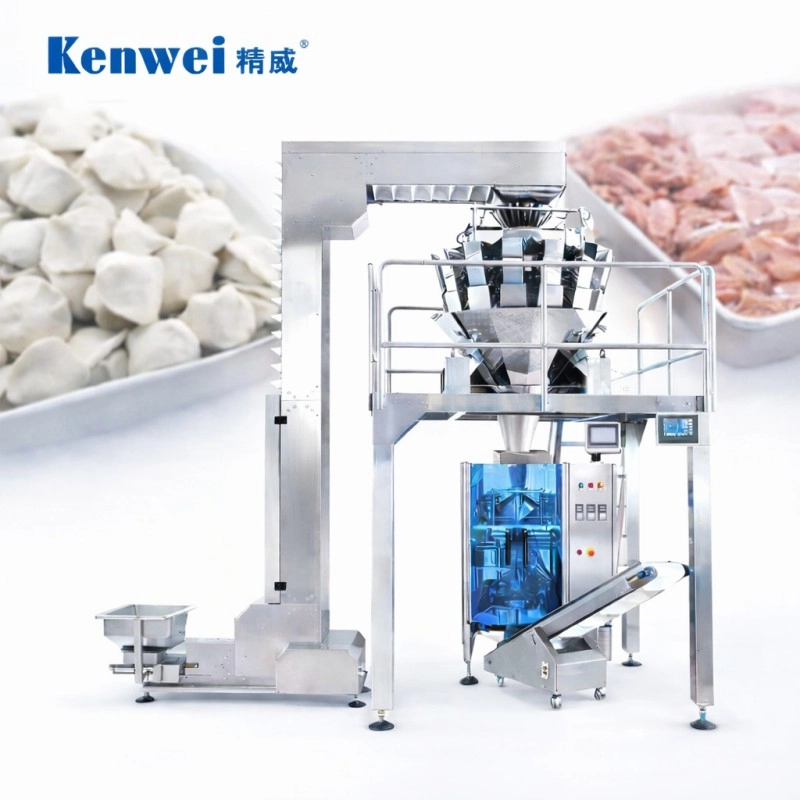
Vertical Frozen Food Packaging Machine for IQF & Frozen Products JW-B1
The Kenwei JW-B1 Vertical Frozen Food Packaging Machine is designed for IQF and frozen products, ensuring efficient, airtight packing. This vertical packing machine boosts productivity with precision sealing, ideal for frozen food packaging needs in the food industry.
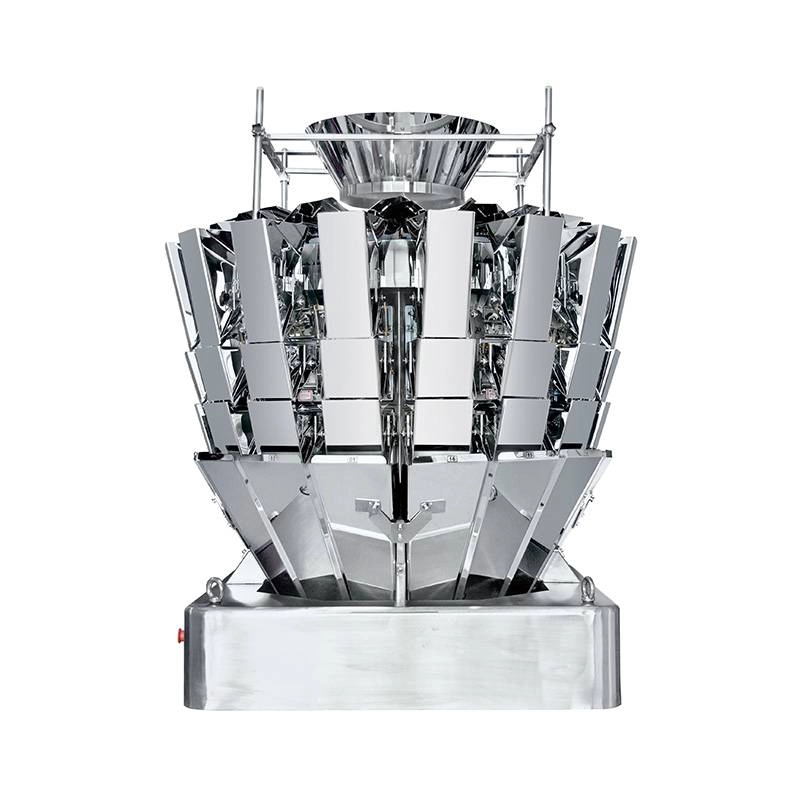
16 Head Three Layer Multihead Weigher for Granular and Irregular Materials
Kenwei’s 16 Head Three Layer Multihead Weigher ensures precise weighing of granular and irregular materials. This multihead weighing machine offers efficient, high-speed performance, ideal for various packaging needs. Trust our 16 head weigher for accuracy and reliability in your production line.
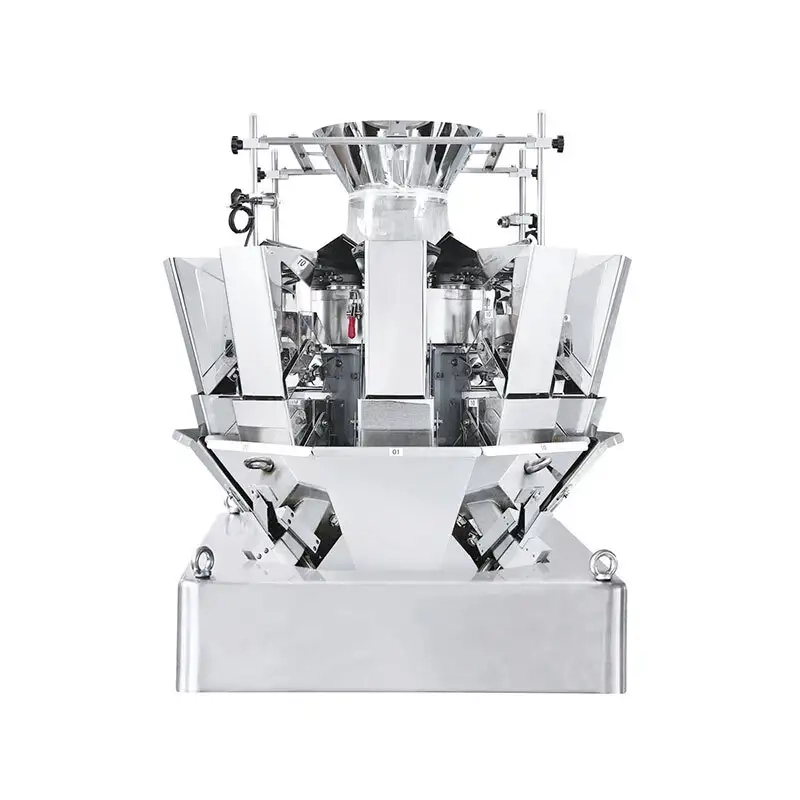
10-Head Standard No-Spring Multihead Weigher 1.6L for Precise Weighing
The standard no-spring combination scale features a patented spring-free hopper design, making it ideal for weighing a variety of products such as melon seeds, peanuts, nuts, almonds, grapes, candies, pistachios, potato chips, shrimp chips, and more. The double-support feeding tray is easily adjustable, while the feeding hopper is designed for easy disassembly, ensuring convenience and cleanliness. With a maximum weighing speed of up to 120 bags per minute, the 14-head standard no-spring combination scale is an economical, versatile, and cost-effective solution.
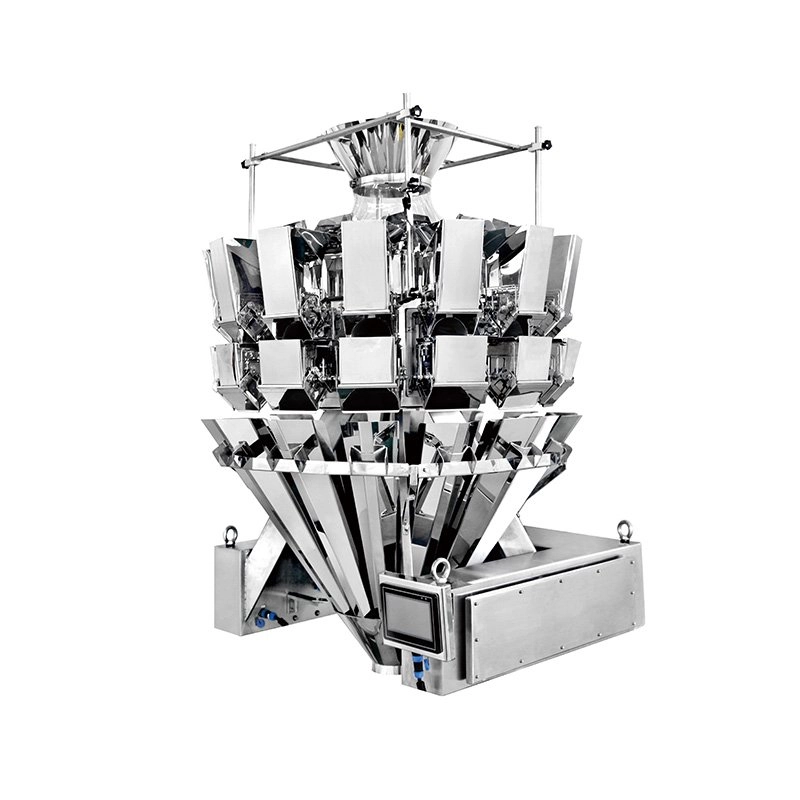
Automatic Multihead Weigher for Stick and Bar-Shaped Materials
Kenwei’s Automatic Multihead Weigher for Stick and Bar-Shaped Materials ensures precise, fast, and efficient weighing. This advanced automatic multihead weighing machine is ideal for accurate portioning of various stick and bar-shaped products, enhancing productivity and reducing waste.
Get in touch with us
If you have any comments or good suggestions, please leave us a message, later our professional staff will contact you as soon as possible.
Kenwei
Kenwei
Kenwei multi weigh
Kenwei
Kenwei
Kenwei