






Ultimate Guide to Food Metal Detectors 2026
Tuesday, 12/9/2025
- Introduction: The Critical Role of Food Metal Detectors in Modern Processing
- What is a Food Metal Detector? Understanding the Basics
- How Food Metal Detectors Work: The Science Behind the Safety
- The Challenge of "Product Effect"
- Types of Food Metal Detector Systems for Diverse Applications
- Benefits Beyond Detection: Why Every Food Processor Needs One
- Navigating Compliance: Food Metal Detector Standards and Regulations
- Choosing the Right Food Metal Detector: Key Considerations
- Implementing and Optimizing Your Food Metal Detector Program
- The Future of Food Metal Detectors: Innovation and Advanced Technologies
- Conclusion: The Indispensable Guardian of Food Quality and Safety
- FAQ
- What types of metal can a food metal detector identify?
- How often should a food metal detector be checked for accuracy?
- What is 'product effect' and how does it impact food metal detectors?
- Is it a legal requirement to use food metal detectors in food production?
- Can food metal detectors detect metal in foil packaging?
- What's the difference between a metal detector and an X-ray inspection system for food?
- How can false rejections from a food metal detector be minimized?
- References
Examine Kenwei's 2026 food metal detectors for prompt, precise, and dependable defense. Enhance food safety with us!
Introduction: The Critical Role of Food Metal Detectors in Modern Processing
In the high-stakes world of food processing, a single piece of metal can do a lot of damage to a brand's reputation and put consumer health at risk. As supply chains get more complex and automated, the risk of physical contamination goes up, making food metal detectors a must for manufacturers. These systems are like the first line of defense, making sure that the finished products are free from foreign bodies like machine parts, wire clippings, and shavings.
This technology is really important, and a lot of people use it. According to Growth Market Reports, the global food metal detector market size hit $482.7 million in 2024, showing how much the industry is investing in safety infrastructure. Also, FSNS data shows that while pathogens often make the news, foreign materials like metal and plastic caused 12 specific food recalls in 2024 alone. This guide gives you the lowdown on food metal detectors, including how they work, the different types, the rules you need to follow, and how to pick the best one for your place.This guide covers everything you need to know about food metal detectors, including how they work, the different types available, the regulations you must follow, and how to select the best metal detectors in the food industry to protect your products and brand.

What is a Food Metal Detector? Understanding the Basics
A food metal detector is a special kind of inspection device that's put into production lines to spot and reject products that have metallic foreign objects in them. These machines are different from regular security detectors because they're calibrated to ignore signals from food (moisture, salt, etc.), but they can still spot tiny metallic contaminants.
Industry standards usually put contaminants into three main groups:
· Ferrous Metals: Iron and steel are easy to spot because of their magnetic properties.
· Non-Ferrous Metals: Copper, lead, aluminum, and brass. They're highly conductive but nonmagnetic.
· Stainless Steel: The most difficult to detect are the non-magnetic grades (like 316 stainless), which are often used in food processing equipment. You need high-sensitivity equipment to identify these.
How Food Metal Detectors Work: The Science Behind the Safety
Most industrial metal detectors for food use the balanced coil system. This classic design uses three coils wrapped around a non-metallic frame (the aperture).
1. Transmitter Coil: It's located in the center and sends out a radio frequency signal that creates an electromagnetic field.
2. Receiver Coils: These two coils are placed on either side of the transmitter and wound in opposition. When the system is empty, the signals cancel each other out, resulting in a "balanced" zero output.
When a metal object passes through the opening, it messes with the electromagnetic field, causing the coils to become unbalanced and creating a signal that the machine reads as a contaminant.
The Challenge of "Product Effect"
One of the main challenges with metal detection is product effect. Foods with a lot of moisture, salt, or minerals (like meat, cheese, or hot bread) can conduct electricity. They can generate a signal that mimics metal, which can lead to false rejects. Advanced systems use multi-spectrum or simultaneous multi-frequency technology to tell the difference between the product's signal and a real metal contaminant.
Types of Food Metal Detector Systems for Diverse Applications
Different production stages need different detector configurations. Here's a rundown of the most common systems:
|
System Type |
Best Application |
Key Features |
|
Conveyorized Systems |
Packaged and unpackaged goods (bread, meat trays, boxes). |
Most common; integrated with automatic reject arms or belt stops. |
|
Gravity Fall Systems |
Bulk powders, granules, rice, cereals. |
High-speed detection for free-falling products; typically uses a divert flap for rejection. |
|
Pipeline / Pumped Systems |
Liquids, pastes, slurries, sauces, minced meat. |
Installed directly into the pipework; uses a specialized valve to reject contaminants without stopping flow. |
|
Vertical Fall Systems |
Vertical Form Fill Seal (VFFS) bagging lines (snacks, chips). |
Compact design that fits between the scale and the bagger. |
|
Pharmaceutical Systems |
Tablets, capsules. |
Ultra-high sensitivity for very small contaminants; often features easy-clean polished stainless steel. |

Benefits Beyond Detection: Why Every Food Processor Needs One
Beyond just being safe, purchasing a high-quality metal detector can be a fantastic way to earn money.
· Brand Protection: Dataintelo says that the demand for these detectors is mostly driven by the need to keep up the brand's reputation in a global supply chain. A recall can cost millions in direct costs and lost sales.
· Regulatory Compliance: It's key to meeting the standards set by the FDA, USDA, and GFSI-benchmarked schemes.
· Machinery Protection: If you can spot a screw or bolt before it reaches a grinder or slicer, you can prevent some serious equipment damage and downtime.
· Reduced Waste: Modern detectors with precise rejection timing make sure that only the contaminated product gets removed, so you don't lose too much of the good stuff.
Navigating Compliance: Food Metal Detector Standards and Regulations
Compliance is a primary driver for metal detector adoption. Key regulatory frameworks include:
· HACCP (Hazard Analysis and Critical Control Points): Metal detection is often considered a Critical Control Point (CCP). A detector must be installed and monitored if the analysis indicates a risk of metal contamination.
· GFSI Standards (BRCGS, SQF, FSSC 22000): These global standards have tough requirements. For example, BRCGS (British Retail Consortium Global Standards) says that metal detectors have to be used unless a risk assessment shows that they're not needed. It also needs specific testing procedures to verify that it's working right.
· FDA FSMA: According to the Food Safety Modernization Act, you've got to validate your preventative controls. Metal detectors are a proven way to control physical hazards.
Choosing the Right Food Metal Detector: Key Considerations
Choosing the best metal detector depends on the specific environment you're dealing with.
1. Product Characteristics: Is the product wet, dry, frozen, or hot? Frozen products are easier to inspect (less conductive), while hot, fresh bread has a high product effect.
2. Packaging Type: If your product is wrapped in metallized film or aluminum foil, a standard balanced coil detector might not work. You might need a "Ferrous-in-Foil" detector or an X-ray inspection system.
3. Sensitivity Needs: What's the smallest contaminant size you need to catch? Standards usually say you should be able to detect ferrous spheres as small as 1.5 mm and stainless steel around 2.5 mm to 3.0 mm, depending on the aperture size.
4. Environmental Conditions: If you're working in a meat or dairy plant, it's important to have detectors with high IP ratings (IP69K). That way, they can handle being washed down with high-pressure, caustic water without getting damaged.
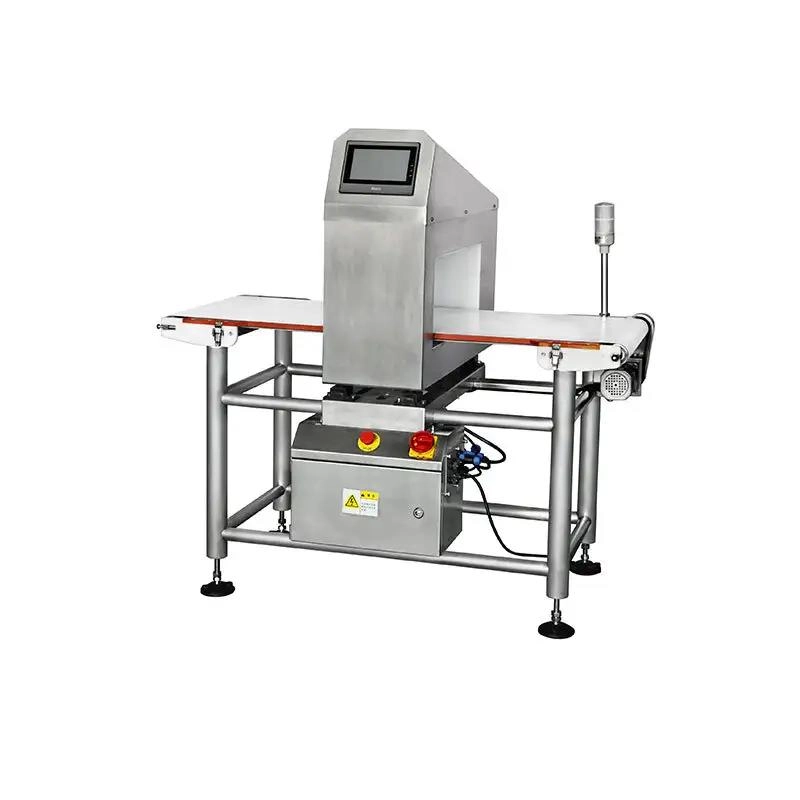
By considering these factors, you can select a metal detector tailored to your specific needs. A food metal detector manufacturer like Kenwei provides reliable, high-performance solutions to keep your products safe. Kenwei is a food metal detector manufacturer that offers advanced detection systems designed to meet the toughest industry standards.
Implementing and Optimizing Your Food Metal Detector Program
Installation is just the beginning. A robust program requires:
· Regular Testing: Use certified test pieces (ferrous, non-ferrous, stainless steel) to verify the detector is working. Testing typically occurs at the start of a shift, at product changeovers, and at regular intervals (e.g., every hour).
· Rejection Verification: It is not enough to detect the metal; the system must accurately reject it. Verify that the reject arm, air blast, or pusher effectively removes the contaminated item from the line.
· Training: Operators must understand how to handle "false rejects" and never simply re-pass a rejected product without thorough investigation.
The Future of Food Metal Detectors: Innovation and Advanced Technologies
The market's changing fast. Lucintel says the industrial metal detector market will keep growing because of strict government rules. Here are some future tech trends to watch:
· Multi-Spectrum Technology: Using a bunch of different frequencies at once helps get rid of the product's effect completely, so we can find smaller metals in tough-to-test products like cheese.
· IoT and Industry 4.0: Smart detectors now log data automatically, providing real-time documentation for audits and predictive maintenance alerts to prevent downtime.
· Automated record keeping: getting rid of paper logs to make sure data is accurate and easier to comply with FSMA record-keeping rules.
Conclusion: The Indispensable Guardian of Food Quality and Safety
The most cost-effective method of preventing physical contamination is still to use food metal detectors. According to Dataintelo, the global market is predicted to grow significantly by 2032, and as a result, technology is becoming more sophisticated and sensitive. For food manufacturers, the question isn't just if they need a metal detector anymore, but how to pick the most advanced solution to protect their consumers and their business's longevity.
FAQ
What types of metal can a food metal detector identify?
Food metal detectors are designed to detect ferrous metals (iron, steel), non-ferrous metals (aluminum, copper, brass), and non-magnetic stainless steel (like 316 grade). Ferrous metals are generally the easiest to detect, while non-magnetic stainless steel is the most challenging due to its poor electrical conductivity and lack of magnetic properties.
How often should a food metal detector be checked for accuracy?
Testing frequency is dictated by your HACCP plan and retailer standards (e.g., Costco, Walmart, Tesco). Typically, detectors are tested at the start of production, at every shift change, whenever product settings change, and at regular intervals (e.g., hourly). If a detector fails a test, all product produced since the last successful test must be placed on hold and re-inspected.
What is 'product effect' and how does it impact food metal detectors?
Product effect is the signal produced by the food itself, which can interfere with the detection of metal. Foods with high moisture, salt, or acidity (like pickles, meat, or warm bread) conduct electricity and create a signal that mimics metal. If not compensated for, this leads to false rejects or requires reducing sensitivity, which compromises safety.
Is it a legal requirement to use food metal detectors in food production?
While not explicitly mandated by every local law for every product, they are a de facto requirement for compliance with major food safety standards (HACCP, GFSI, BRCGS, SQF) and retailer mandates. Under FDA FSMA, if a hazard analysis identifies metal as a potential risk, a preventive control (like a metal detector) must be implemented.
Can food metal detectors detect metal in foil packaging?
Standard balanced coil detectors cannot detect metal inside aluminum foil packaging because the package itself is metal. For these applications, you must use a specialized "Ferrous-in-Foil" detector (which can only detect magnetic metals) or, more commonly, an X-ray inspection system, which can see through the foil to find all metal types.
What's the difference between a metal detector and an X-ray inspection system for food?
A metal detector uses electromagnetic fields to find metal based on conductivity and magnetism. An X-ray system uses density differences to find contaminants. X-ray systems can detect metal, glass, stone, bone, and high-density plastic, and they work well with foil packaging. However, metal detectors are often cheaper and can be more sensitive to very small, low-density aluminum contaminants in non-foil products.
How can false rejections from a food metal detector be minimized?
False rejections can be minimized by using the correct frequency settings for the specific product, ensuring the detector is isolated from external vibration and electromagnetic interference (like radios), and using modern systems with "phase tracking" or multi-spectrum technology that automatically adjusts to variations in the product's moisture and temperature.
References
· Growth Market Reports: Food Metal Detector Market Research Report 2033
· FSNS: Food Recalls in 2024 - Revealing the Statistics
· Dataintelo: Metal Detector in Food Market Report | Global Forecast From 2025 To 2033
· Lucintel: Metal Detector Market: Trends, Opportunities and Competitive Analysis
Recommended for you

2026 Trends in the Weighing and Packaging Industry

Celebrating International Women’s Day | Honoring the Women of Kenwei

Kenwei to Showcase Intelligent weighing machine at Sino-Pack 2026

Auspicious Start to Work | Guangdong Kenwei 2026
Prdoucts Categories
FAQ
About products customization
How long does it take to deliver a customized Kenwei machine?
The lead time for customized machines can vary based on the complexity of the customization, as well as production schedules. Generally, it takes 4-6 weeks to deliver a fully customized machine after design approval.
Can I customize the size of Kenwei machines?
Yes, we can tailor the dimensions of our machines to fit your available space and production layout. Whether you need compact machines or larger equipment, we can accommodate your size requirements.
About Solution suggestions
Can Kenwei provide a solution for mixed-product weighing?
Yes, Kenwei’s multi-head weighers are ideal for mixed-product weighing. They can handle a variety of products in different shapes and sizes, ensuring that the correct portions are weighed and packaged quickly.
Can Kenwei solutions be used for both manual and automated packing lines?
Yes, Kenwei machines can be used in both manual and automated packing lines. We can provide integrated systems that work alongside manual labor or fully automated systems depending on your production requirements.
Can Kenwei solutions be adapted for different product packaging types?
Yes, Kenwei solutions can handle a variety of packaging types, including bags, boxes, pouches, and bottles. We can customize machines to suit your packaging format, ensuring compatibility with your packaging equipment.
You may also like
Food Metal Detector Manufacturer For Reject Defective Products G5020
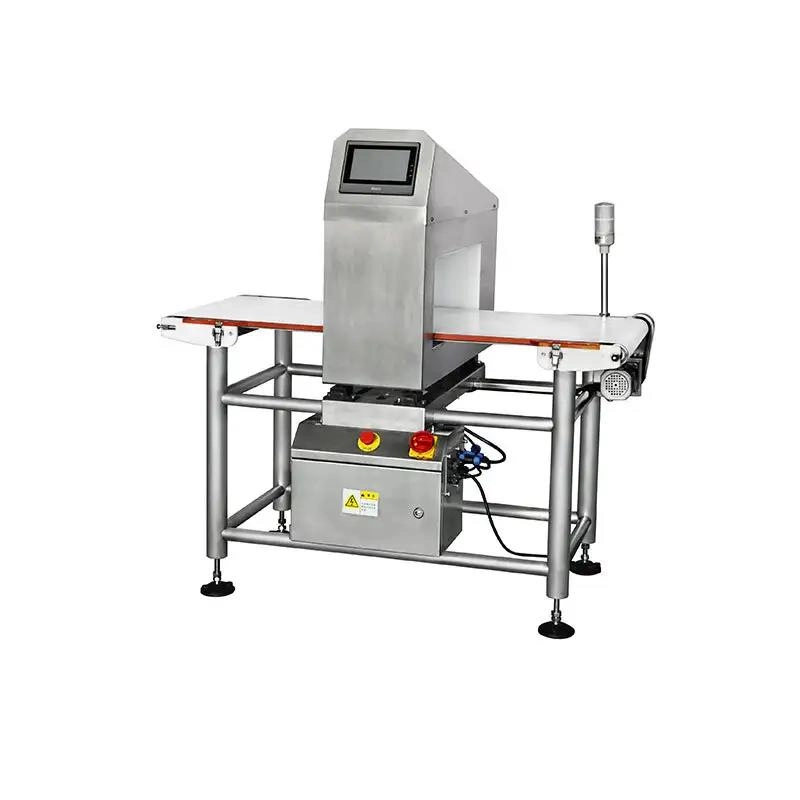
The G5020 multi-frequency metal detector features a specialized conveyor belt designed to reduce contamination risks, ensure smooth operation, and maintain high detection sensitivity. It is easy to disassemble for convenient maintenance. Ideal for detecting metal contaminants in food, pharmaceuticals, spices, plastics, electronics, textiles, toys, handicrafts, and more.
Metal Detector for Aluminum Foil in the Food Industry for Accurate Contamination Detection
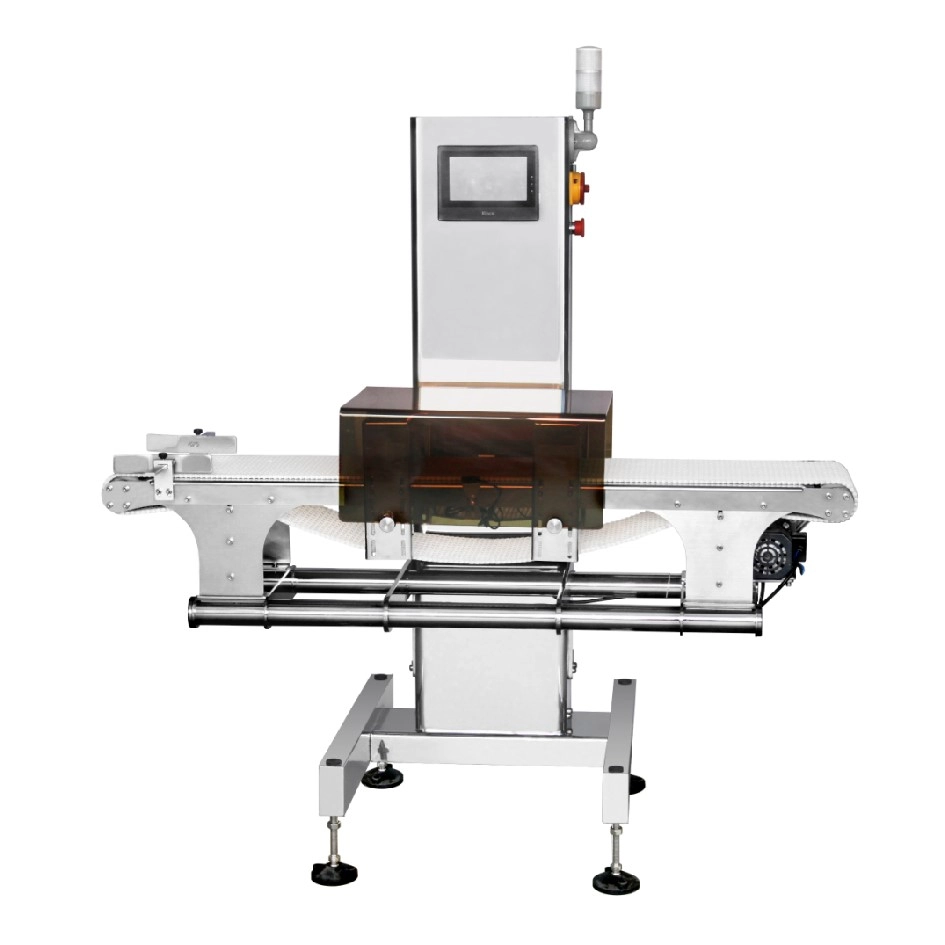
The 2415 Metal Detector for Aluminum Foil is equipped with high-sensitivity sensors that effectively filter out signals from aluminum packaging, ensuring precise detection of magnetic metal contaminants. Ideal for detecting foreign bodies in aluminum foil-packaged items such as coffee bags, peanuts, dried meats, chocolate, and more. This versatile metal detector offers adjustable settings, with a maximum width of 24mm and height ranging from 20-150mm, making it suitable for a wide variety of aluminum foil packaging applications.
Combined Check Weigher and Metal Detector for Food Industrial Weighing and Sorting
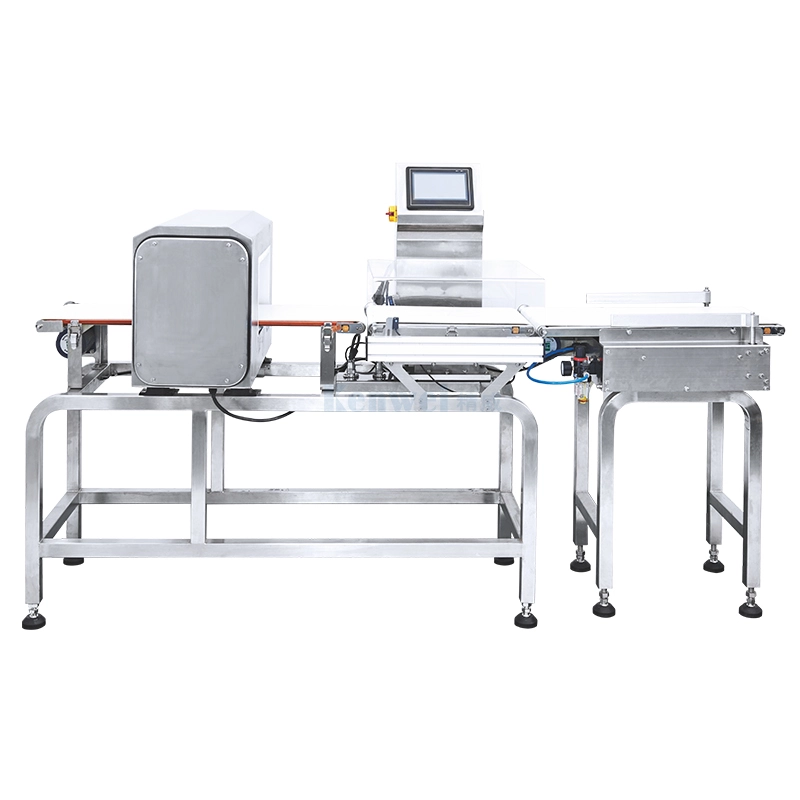
Kenwei’s Combined Checkweigher and Metal Detector for food industrial weighing and sorting ensures precise weight control and superior safety. This advanced food metal detector integrates high-speed check weighing, delivering accuracy and reliability for quality assurance.
High Sensitivity Horizontal Metal Detector for Food and Pharmaceutical Industries
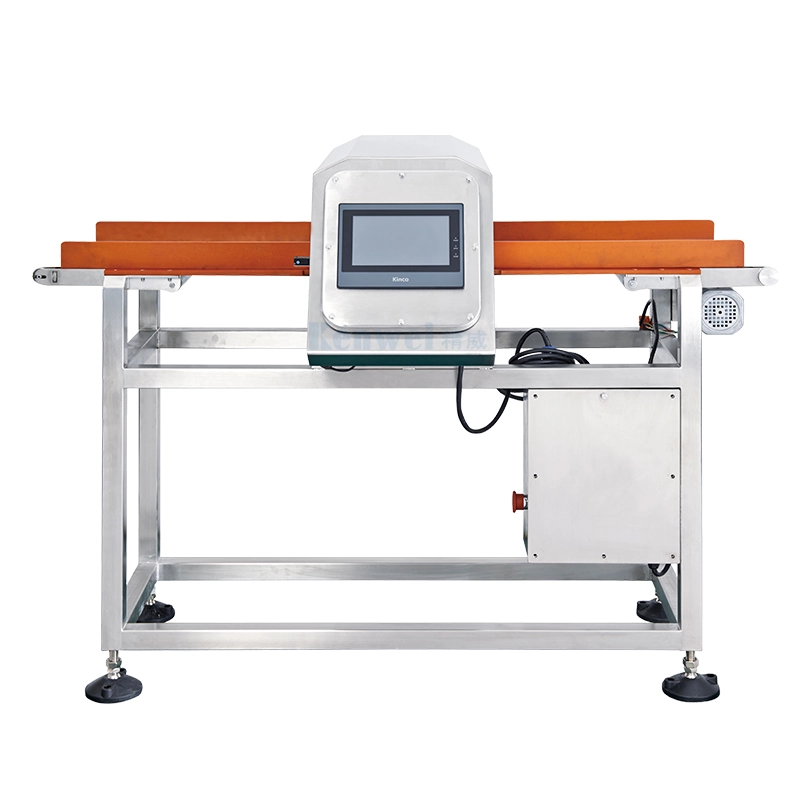
The Horizontal Metal Detector Series is ideal for detecting both ferrous and non-ferrous metals in food, pharmaceutical, chemical, textile, and rubber products. Equipped with a 7" industrial touch screen and supporting 32 languages, it features high sensitivity, digital signal processing, and intelligent algorithms for stable, precise detection. With stainless steel waterproof construction and multiple rejection options, it's perfect for HACCP and GMP compliance.
Contact Kenwei
Our company is located in areas with convenient transportation and developed economy. Our products are supplied in a timely manner. In the course of business operation, we always focus on customers.Have any questions or concerns about our products? Please leave us a message here, and our team will get back to you promptly.
Kenwei
Kenwei
Kenwei multi weigh
Kenwei
Kenwei
Kenwei