






How Multihead Weighers Improve Packing Speed for Pickles
Multihead weighers dramatically increase packing speed and portion consistency for pickles by combining parallel weighing heads, purpose-built feeding (such as vertical single screw systems), and hygienic design. This article explains how a 14 Heads Vertical Single Screw Feeding Pickles Weigher backups improves throughput and accuracy on modern packaging lines, what integration and regulatory considerations matter across regions (North America, Europe, Asia), and how to select and validate the right system for your operation.
- Why Pickles Need Specialized Weighing Solutions
- Physical characteristics that challenge weighing
- Quality and portion control requirements
- How Multihead Weighers Increase Packing Speed
- Parallel weighing and increased throughput
- Vertical single screw feeding: why it matters
- Minimizing downtime and fast changeovers
- Design and Integration Considerations for Pickle Packaging Lines
- Hygienic construction and food safety compliance
- Integration with conveyors and packaging machines
- Performance, ROI and Selecting the Right Multihead Weigher
- Comparing multihead vs volumetric and single-head weighing
- Key specs and what to ask suppliers
- Case Example: 14 Heads Vertical Single Screw Feeding Pickles Weigher backups
- Product overview
- Expected operational benefits
- Validation, Testing and Continuous Improvement
- Factory acceptance and on-site validation
- Ongoing calibration and maintenance
- Frequently Asked Questions (FAQ)
- Q: How much faster is a multihead weigher for pickles compared to a volumetric filler?
- Q: Can a multihead weigher handle whole pickles and spears equally well?
- Q: What about cleaning and sanitation for brined products?
- Q: How does a multihead weigher reduce product giveaway?
- Q: What integration support should I expect from suppliers?
- Conclusion and Next Steps

Multihead weighers have become essential equipment on high-speed pickle packaging lines around the world. By combining multiple weighing heads that operate in parallel with specialized feeding systems, manufacturers achieve both higher throughput and tighter portion control than traditional single-head or volumetric systems. This article focuses on practical ways multihead weighers — especially a 14 Heads Vertical Single Screw Feeding Pickles Weigher backups — improve packing speed, reduce giveaway, and support food-safety and regulatory compliance across different markets.
Why Pickles Need Specialized Weighing Solutions
Physical characteristics that challenge weighing
Pickles are highly variable in size, shape, moisture content and surface texture. They are often wet or brined, can cling together, and may have irregular geometries (whole gherkins, spears, slices). These characteristics reduce flowability and make accurate, fast portioning difficult for volumetric cup fillers or drop-in single-screw fillers. A properly configured multihead weigher handles these challenges by combining gentle, controlled feeding with many small-scale weighments that sum to an accurate target weight.
Quality and portion control requirements
Retail and foodservice customers expect consistent portion sizes and correct net weights. Overfilling increases product giveaway and costs; underfilling risks compliance problems and customer complaints. Multihead weighers offer statistically optimized combinations of weighments that minimize average giveaway while keeping out-of-tolerance packs to a minimum. For industries with strict labeling and regulatory oversight, this accuracy is critical for compliance and brand reputation (see FDA food safety guidance for packaging and labeling: https://www.fda.gov/food).
How Multihead Weighers Increase Packing Speed
Parallel weighing and increased throughput
Unlike single-head or net-weighing methods that perform one measurement at a time, multihead weighers distribute product across many weigh heads (14 heads in the featured product). Each head performs a small, quick weighment; the controller then computes the best combination of head outputs to reach the target weight nearly instantaneously. This parallel approach translates into much higher throughput: multiple selections per second, lower cycle times, and the ability to maintain high speeds without sacrificing accuracy.
Vertical single screw feeding: why it matters
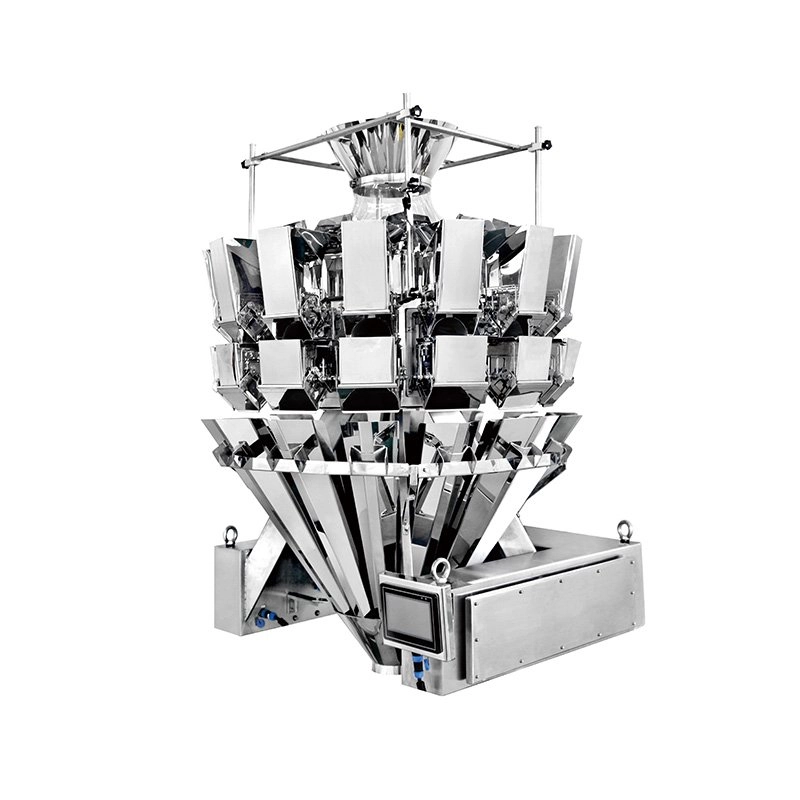
The 14 Heads Vertical Single Screw Feeding Pickles Weigher backups combines a vertical single-screw feed mechanism with multihead weighing. Vertical screw feeding is particularly effective for wet, sticky, or irregular-shaped pickles because it gently meters product into the distribution system without damaging pieces or causing bridging. Compared with vibratory or horizontal screw feeders, the vertical single screw provides:
- Consistent product metering into the weigh hopper, reducing variation in head fills.
- Gentler handling that preserves piece integrity, reducing rejects from broken or crushed pickles.
- Better performance with brined or wet products because the enclosed vertical screw resists splash and channeling.
Manufacturers that switch from less specialized feeders to vertical single screw feeding often see immediate improvements in both speed and first-pass yield.
Minimizing downtime and fast changeovers
Packing speed isn't only machine cycle rate — it's also measured by effective uptime. Multihead weighers designed for food lines prioritize quick-clean features, easy access to contact parts, and recipe-driven changeovers. With the right design, a 14-head system can switch between pack weights, container formats, and product recipes with minimal mechanical adjustments, reducing line stoppages and maintaining high overall line OEE (Overall Equipment Effectiveness).
Design and Integration Considerations for Pickle Packaging Lines
Hygienic construction and food safety compliance
Pickles are a ready-to-eat or ready-to-serve product: packaging equipment must meet high sanitation standards to avoid contamination. Look for multihead weighers constructed from stainless steel with smooth welds, CIP-compatible surfaces, and quick-release parts for washdown. Compliance with international food-safety standards such as ISO 22000 (https://www.iso.org/iso-22000-food-safety-management.) and adherence to good manufacturing practices described by regulators like the FDA reduce risk and simplify audits.
Integration with conveyors and packaging machines
To maximize packing speed, the multihead weigher must integrate seamlessly with upstream (feeding/sorting) and downstream (pouches, jars, tray fillers) equipment. Key integration points include:
- Synchronised communication with packaging machines (PLC/ethernet/IP or standard industrial protocols).
- Buffering conveyors to decouple the weigher cycle from intermittent downstream stops.
- Automated rejection systems for overweight/underweight packs to keep the line moving while preserving quality.
Industry resources and supplier technical documents often provide best-practice integration guides; large suppliers also offer site surveys and simulation to optimize line balance before installation (see an overview of multihead weighing technology from industry leaders: https://www.ishida.com/).
Performance, ROI and Selecting the Right Multihead Weigher
Comparing multihead vs volumetric and single-head weighing
Below is a concise comparison to help quantify performance differences when evaluating investments.
| Feature | Volumetric/Single-Head | Multihead (e.g., 14-head Vertical Single Screw) |
|---|---|---|
| Typical throughput | Low to medium (suitable for low-speed lines) | High — multiple selections per second, ideal for high-speed production |
| Accuracy / Giveaway | Lower accuracy with variable-shaped products; higher giveaway | High accuracy; optimized algorithms reduce giveaway |
| Product handling | May damage delicate or wet products | Gentle handling with vertical screw option; maintains piece integrity |
| Changeover & cleaning | Often simpler mechanically, but may require repeated adjustments | Designed for hygienic cleaning and fast recipe changeovers |
| CapEx / ROI | Lower initial cost, slower payback on high-volume lines | Higher initial cost, faster ROI through reduced giveaway and higher throughput |
Key specs and what to ask suppliers
When selecting a multihead weigher for pickles, request the following specifics to evaluate real-world performance:
- Nominal throughput (packs/min) at your target pack weight and selected pack format.
- Accuracy statistics (standard deviation, expected giveaway) under test conditions using your actual product.
- Cleaning time (time to disassemble/assemble contact parts) and compatibility with your washdown protocols.
- Integration interfaces (PLCs, I/O, HMI recipes) and available service/support footprint in your region.
- Evidence of food-grade materials and certifications or conformance to hygienic design standards.
Ask suppliers to run acceptance tests (FAT/SAT) with your pickle SKU to validate throughput and accuracy before final acceptance. Many reputable manufacturers provide data, case studies and customer references demonstrating improvements in packaging speed for similar products (industry overviews are available from packaging trade organizations: https://www.pmmi.org/).
Case Example: 14 Heads Vertical Single Screw Feeding Pickles Weigher backups
Product overview
14 Heads Vertical Single Screw Feeding Pickles Weigher backups
This type of weigher is designed to handle the unique characteristics of pickles, ensuring precise measurements for packaging and distribution. It uses a vertical single screw mechanism to feed the pickles into the weighing system, allowing for efficient and consistent weighing. This technology is particularly useful in food processing and packaging facilities where precise portioning is essential for quality control and customer satisfaction. This specialized equipment is perfect for accurately measuring and dispensing pickles in a production line or packaging facility. The vertical design allows for efficient and precise filling of containers, while the single screw feeding mechanism ensures consistent and reliable weighing.
Expected operational benefits
- Improved line throughput by 30–100% compared with older single-head systems depending on product and pack weight.
- Reduction in average giveaway by 0.5–2.0% of product weight due to optimized combination algorithms.
- Lower reject rates and fewer damaged pieces because vertical screw feeding reduces product stress during metering.
Validation, Testing and Continuous Improvement
Factory acceptance and on-site validation
Prior to installation, require a factory acceptance test (FAT) using your pickle SKU. A FAT should produce measured throughput, accuracy, and cleaning time data. After installation, a site acceptance test (SAT) ensures the weigher integrates correctly with upstream and downstream equipment and that the line achieves targeted OEE.
Ongoing calibration and maintenance
Maintaining weighing accuracy requires regular calibration and preventive maintenance. Implement a schedule that covers weight-check calibration, inspection of the vertical screw for wear, and verification of controller software updates. Many suppliers provide remote-monitoring options and predictive maintenance packages that reduce unplanned downtime and keep packing speeds consistent.
Frequently Asked Questions (FAQ)
Q: How much faster is a multihead weigher for pickles compared to a volumetric filler?
A: While exact numbers depend on product shape and pack weight, multihead weighers typically deliver 30–100% higher throughput for irregular, wet products like pickles. The parallel weighments and fast combination calculations are the main drivers of speed.
Q: Can a multihead weigher handle whole pickles and spears equally well?
A: Yes, with the right feeding system. The vertical single screw feeding used on the 14-head unit is particularly effective for whole pickles and spears because it meters gently and consistently. However, testing with your SKUs is essential to confirm head fill characteristics and final pack presentation.
Q: What about cleaning and sanitation for brined products?
A: Look for quick-release contact parts, smooth stainless surfaces, and CIP compatibility. Confirm the supplier's recommended cleaning procedure and verify it during FAT/SAT. Proper design reduces microbial risk and speeds cleaning cycles.
Q: How does a multihead weigher reduce product giveaway?
A: Multihead weighers use algorithms to select combinations of head weighments that come as close as possible to the target weight, which statistically minimizes overfill. This optimized selection reduces average giveaway without increasing underweight risk.
Q: What integration support should I expect from suppliers?
A: Good suppliers provide PLC/HMI integration libraries, on-site commissioning, and training for operators. They often assist with line balancing studies to maximize throughput and will run FATs with your product for validation.
Conclusion and Next Steps
If you run high-volume pickle packaging operations, investing in a purpose-built multihead weigher like the 14 Heads Vertical Single Screw Feeding Pickles Weigher backups can materially increase packing speed, reduce giveaway, and improve product quality on the line. For best results, require FAT/SAT with your SKUs, verify hygienic design and sanitization procedures, and ensure supplier support for integration and calibration.
For detailed specifications, on-site evaluation, or to schedule a demonstration of the 14-head vertical single-screw solution, please contact our sales team or view the product page.
References and further reading: Weighing scale (Wikipedia), Ishida — Multihead weighing overview, ISO 22000, FDA Food, PMMI.
Tags
metal detector for food packaging
metal detector for food packaging
automatic weighing and packaging machine
automatic weighing and packaging machine
food metal detectors
food metal detectors
snack packing mahcine
snack packing mahcine
PLC controlled linear weigher
PLC controlled linear weigher
Precision linear weigher for snacks
Precision linear weigher for snacks
Recommended for you
The B2B Buyer’s Guide to multi head combination weigher
Ultimate Guide to Food Packing Machine for Multihead Weigher
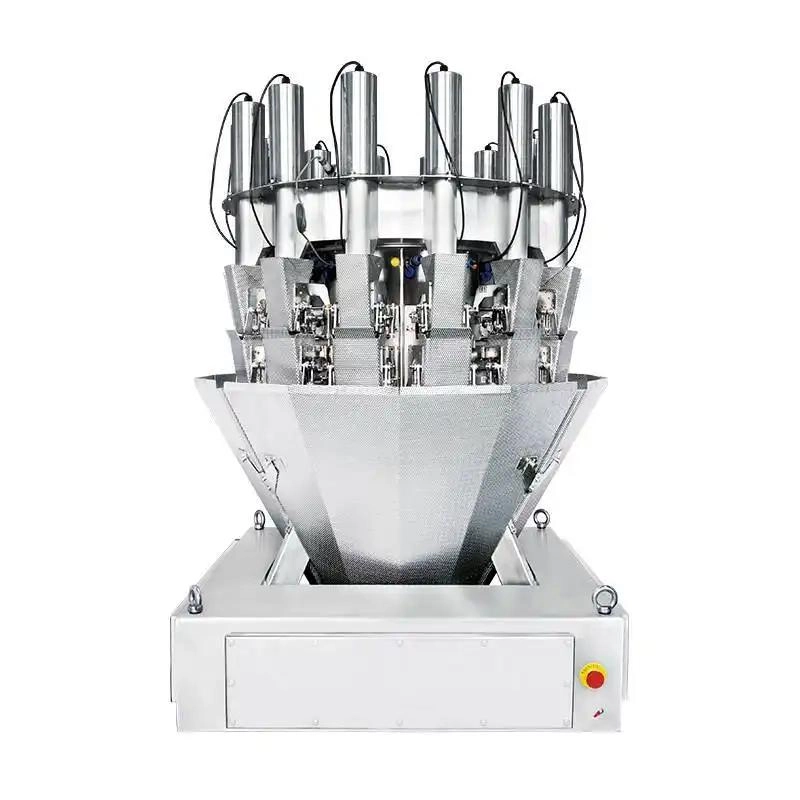
Multihead Weigher Buying Guide for Pickles: 14-Head Backup Specs
Multihead Weigher Buyer’s Guide: Choose the Right Model for Your Line
Prdoucts Categories
Question you may concern
About Cooperation Process
How can I start a cooperation with Kenwei?
To begin a cooperation, simply contact our sales or customer service team via email or phone. You can also fill out the inquiry form on our website. Once we receive your request, a representative will get in touch with you to discuss your specific needs and provide you with a tailored solution.
About products customization
Can Kenwei machines be customized for different industries?
Yes,According to the material characteristics and requirements of different industries, we developed various machine types for counting (small pouches into big bag), noodles, frozen foods, peppers, stick-shaped products, product -mixing, cheeses, salads and so on.
About Solution suggestions
What industries benefit the most from Kenwei solutions?
Kenwei solutions are ideal for a wide range of industries, including:
1)Food Packaging snacks, grains, and powdered beverages.
2)Pharmaceuticals: Precise weighing of tablets, and capsules.
3)Chemicals: Weighing and packaging granular and powdered chemicals.
4)Agriculture: Packaging seeds, grains, and fertilizers.
Can Kenwei solutions be adapted for different product packaging types?
Yes, Kenwei solutions can handle a variety of packaging types, including bags, boxes, pouches, and bottles. We can customize machines to suit your packaging format, ensuring compatibility with your packaging equipment.
About Price and payment
How do I make a payment for Kenwei machines?
We accept several payment methods: T/T, Letter of Credit (L/C)
You may also like
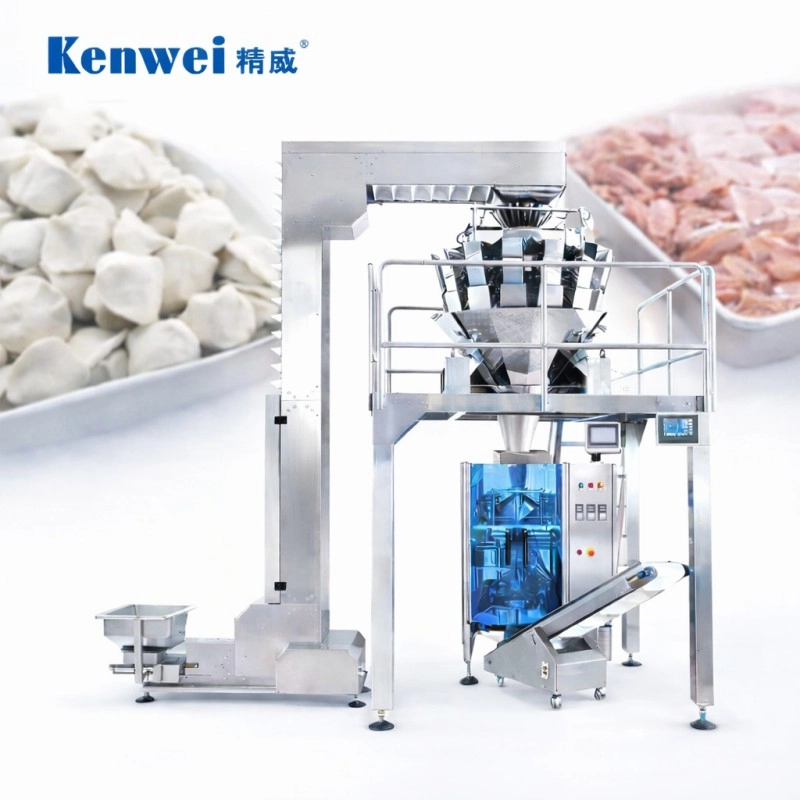
Vertical Frozen Food Packaging Machine for IQF & Frozen Products JW-B1
The Kenwei JW-B1 Vertical Frozen Food Packaging Machine is designed for IQF and frozen products, ensuring efficient, airtight packing. This vertical packing machine boosts productivity with precision sealing, ideal for frozen food packaging needs in the food industry.
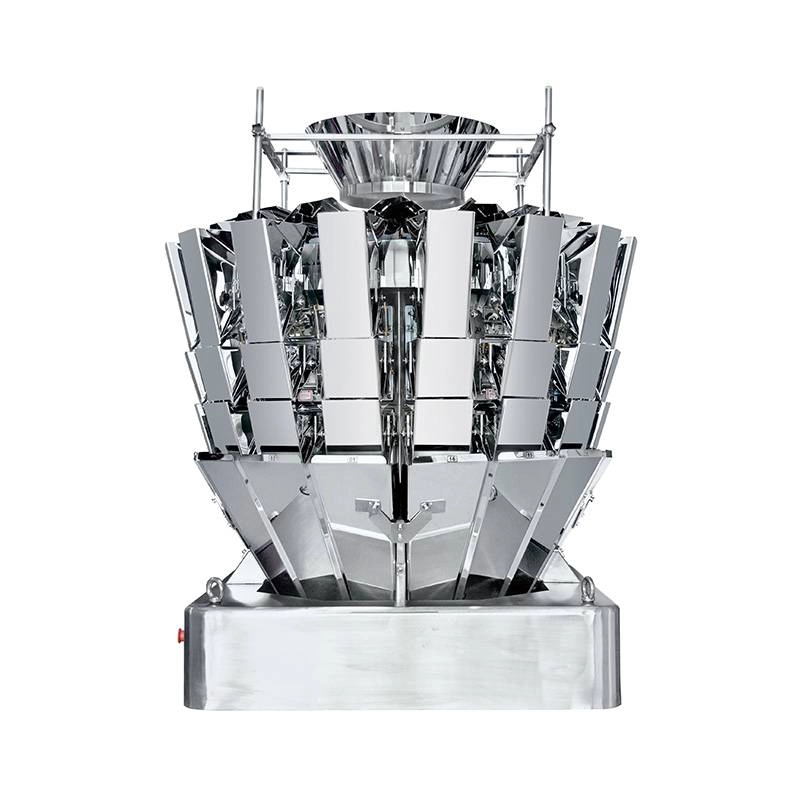
16 Head Three Layer Multihead Weigher for Granular and Irregular Materials
Kenwei’s 16 Head Three Layer Multihead Weigher ensures precise weighing of granular and irregular materials. This multihead weighing machine offers efficient, high-speed performance, ideal for various packaging needs. Trust our 16 head weigher for accuracy and reliability in your production line.
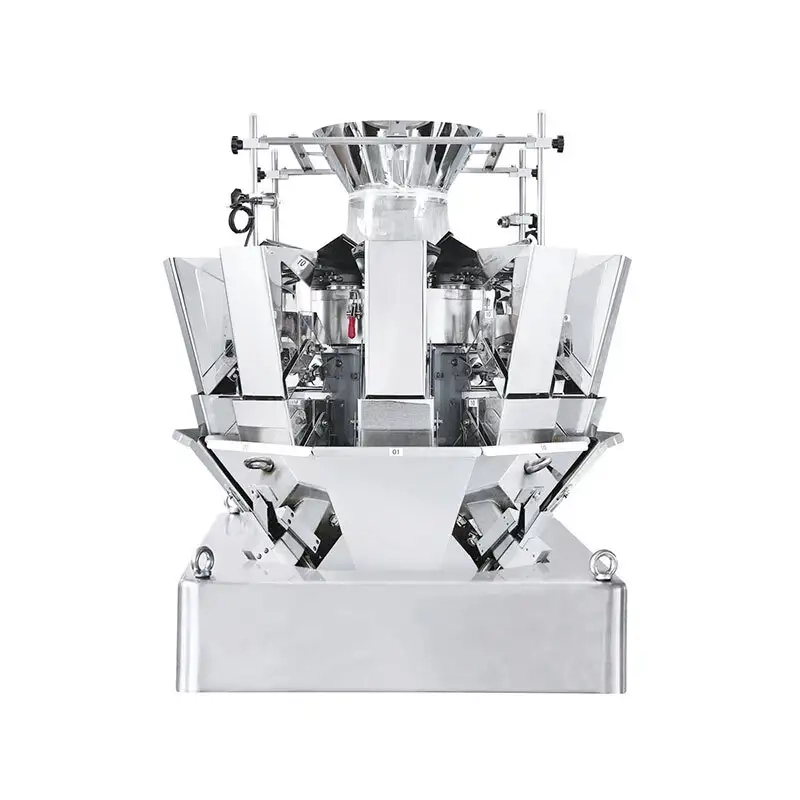
10-Head Standard No-Spring Multihead Weigher 1.6L for Precise Weighing
The standard no-spring combination scale features a patented spring-free hopper design, making it ideal for weighing a variety of products such as melon seeds, peanuts, nuts, almonds, grapes, candies, pistachios, potato chips, shrimp chips, and more. The double-support feeding tray is easily adjustable, while the feeding hopper is designed for easy disassembly, ensuring convenience and cleanliness. With a maximum weighing speed of up to 120 bags per minute, the 14-head standard no-spring combination scale is an economical, versatile, and cost-effective solution.
Automatic Multihead Weigher for Stick and Bar-Shaped Materials
Kenwei’s Automatic Multihead Weigher for Stick and Bar-Shaped Materials ensures precise, fast, and efficient weighing. This advanced automatic multihead weighing machine is ideal for accurate portioning of various stick and bar-shaped products, enhancing productivity and reducing waste.
Get in touch with us
If you have any comments or good suggestions, please leave us a message, later our professional staff will contact you as soon as possible.
Kenwei
Kenwei
Kenwei multi weigh
Kenwei
Kenwei
Kenwei