






Best Multihead Weigher Backups & Redundancy Strategies
This article outlines proven backup and redundancy strategies for multihead weighers, focusing on the 14 Heads Vertical Single Screw Feeding Pickles Weigher backups. It covers mechanical and electrical redundancy, spare parts planning, software and data backups, operational SOPs, and testing frameworks to minimize downtime and protect product quality in food packaging operations.
- Designing Reliable Redundancy for Multihead Weighers
- Understanding single points of failure in weighing systems
- Redundancy topologies: N+1, 1:1, and mirrored controllers
- Practical Backup Components and Spare Parts Strategy
- Critical spare parts list for 14 Heads Vertical Single Screw Feeding Pickles Weigher backups
- Inventory management and shelf-life considerations
- Software, Data and Process Redundancy
- PLC, HMI and recipe backups
- Data logging, traceability, and cybersecurity
- Maintenance, Testing and Operational Protocols
- Preventive maintenance and calibration schedules
- Operational SOPs, failover drills and staff training
- Comparing Common Redundancy Strategies
- Product Spotlight: 14 Heads Vertical Single Screw Feeding Pickles Weigher backups
- Standards, References and Further Reading
- FAQ
- Q: What is the fastest way to recover a failed feeder on a 14-head multihead weigher?
- Q: Do I need a duplicate PLC for redundancy?
- Q: How often should I calibrate load cells on a multihead weigher?
- Q: How should I store spares for food-contact components?
- Q: Can cloud backups be used for recipe storage?

This summary paragraph is optimized for indexing and provides an at-a-glance overview for search engines and users: robust backup and redundancy strategies for multihead weighers reduce unplanned downtime, protect product quality, and ensure regulatory traceability across food production lines. Implementing layered redundancy—mechanical spare heads, N+1 feeding drives, dual PLC/HMI configurations, and rigorous data/recipe backups—keeps throughput high and maintains accuracy for specialized systems like the 14 Heads Vertical Single Screw Feeding Pickles Weigher backups.
Designing Reliable Redundancy for Multihead Weighers
Understanding single points of failure in weighing systems
Multihead weigher systems are complex assemblies of feeders, weigh hoppers, load cells, vibratory or screw infeed mechanisms, product conveyors, and control electronics. A single point of failure (SPOF) can be mechanical (a worn screw feeder), electrical (a failed load cell), or software-based (PLC/HMI crash). Identifying SPOFs starts with a risk assessment and FMEA-style review of each subsystem, quantifying likelihood and impact. For instance, for a 14-head machine, loss of one head reduces combination options and can increase give-away; repeated head failures without backup can force a line stop.
Redundancy topologies: N+1, 1:1, and mirrored controllers
Common redundancy topologies used in packaging and weighing equipment include:
- N+1 redundancy: one spare feeding drive, hopper or controller for every N active units; this is efficient for parts with low fail rates but high impact.
- 1:1 (hot spare): duplicate critical components running in parallel or ready to hot-swap, such as dual PLCs with automatic failover.
- Mirrored controllers: two PLCs/HMIs that replicate recipes, counters and alarms in real-time; if the active controller fails, the mirror takes over with minimal interruption.
For the 14 Heads Vertical Single Screw Feeding Pickles Weigher backups, a recommended architecture is N+1 for drive motors and feeders (one spare screw feeder and motor assembly held in ready state) and mirrored PLC/HMI for control. Mirroring reduces recovery time and secures recipe integrity essential for portion control of pickles.
Practical Backup Components and Spare Parts Strategy
Critical spare parts list for 14 Heads Vertical Single Screw Feeding Pickles Weigher backups
Maintaining an effective spares inventory avoids extended downtime. For a vertical single screw feeding multihead weigher, prioritize spares by MTTR (mean time to repair) and lead time. Key spares include:
- Replacement screw feeder assemblies (pre-adjusted and labeled for each head)
- Load cell modules and mounting hardware
- Weigh hopper sets and associated seals/gaskets
- Vibratory/feeder motors and speed controllers
- PLC/CPU spare module and HMI panel (or complete hot-swap unit)
- Sensors (photoelectric, proximity), belts, and conveyor drive parts
- Calibration weights and test kits
Packaging-specific parts (e.g., food-grade screws and contact surfaces) should be stored in controlled environments to prevent contamination. For pickles, use corrosion-resistant parts and maintain a log of part serials for traceability.
Inventory management and shelf-life considerations
Spare parts are an investment—overstocking ties up cash while understocking risks expensive line stoppages. Use ABC analysis to categorize spares by criticality and expected failure frequency. Implement a min/max reorder policy integrated with your ERP so replenishment is automatic. Perishable components (seals, gaskets, lubricants) need rotation and expiry tracking.
Document each spare's expected shelf life, storage requirements, and calibration status. For electromechanical spares, store in anti-static and humidity-controlled packaging. Maintain a ‘ready-to-use’ kit for the 14-head weigher so a changeover can be completed within the documented MTTR.
Software, Data and Process Redundancy
PLC, HMI and recipe backups
Software redundancy protects against configuration loss, recipe corruption, and control failures. Best practices include:
- Mirror PLC configurations in a secondary CPU with automatic or manual failover.
- Maintain version-controlled recipe backups, stored both locally on the HMI and in a central server (on-premise or cloud) with regular snapshots.
- Use secure, documented procedures for restoring recipes to avoid misconfiguration that can cause overfills or underfills.
For the 14 Heads Vertical Single Screw Feeding Pickles Weigher backups, pre-validated recipe files for each container size and product SKU should be stored with checksum verification to ensure integrity. Automatic logging of recipe changes helps with traceability and audit compliance under food safety standards.
Data logging, traceability, and cybersecurity
Accurate weight and throughput data are essential for quality control and regulatory compliance. Implement redundant logging: local logging on the HMI with remote backups to a central historian or MES. Ensure logs are timestamped, tamper-evident, and retained per your regulatory requirements (ISO 22000 guidance is relevant for food safety management: ISO 22000).
Cybersecurity measures protect control systems and recipe databases. Use network segmentation, secure VPNs, role-based access control, and regular backups. Refer to official guidance for equipment safety and hygiene alignment from agencies such as the U.S. Food and Drug Administration (FDA Retail Food Code) and general information on weighing systems from authoritative sources like Wikipedia's weighing scale overview (Weighing scale - Wikipedia).
Maintenance, Testing and Operational Protocols
Preventive maintenance and calibration schedules
Preventive maintenance (PM) reduces failure likelihood and should be scheduled by runtime hours and production cycles. PM tasks for the multihead weigher include screw feeder inspections, load cell calibration, hopper cleaning, and motor bearing lubrication. For the 14-head machine feeding pickles—an abrasive, brined product—cleaning frequency should be higher to prevent corrosion and buildup.
Calibration is critical to maintain weight accuracy. Establish calibration intervals based on daily throughput, regulatory needs, and historical drift. Use certified weights and log each calibration event. ISO and industry best practices recommend documented calibration and verification to ensure weighing accuracy and traceability.
Operational SOPs, failover drills and staff training
People are as important as hardware. Develop SOPs covering: how to switch to spare feeders, how to perform a controlled PLC failover, and how to restore recipes from backup. Conduct regular failover drills (quarterly or semi-annually) to verify that staff can execute emergency procedures quickly and safely.
Train line operators and maintenance technicians on common failure modes for multihead weighers, emphasizing quick diagnosis, hot-swap procedures, and sanitation protocols for pickle handling. Maintain a competency matrix documenting who can perform specific recovery actions and include escalation contacts for vendor support.
Comparing Common Redundancy Strategies
| Strategy | Typical Recovery Time | Cost Impact | Complexity | Best Use Case |
|---|---|---|---|---|
| N+1 (spare parts on shelf) | Minutes to hours | Moderate | Low | Critical mechanical components with low failure rate |
| 1:1 hot spare (duplicate PLC/HMI) | Seconds to minutes | High | High | Control electronics and recipe integrity |
| Mirrored controllers with automatic failover | Seconds | High | High | 24/7 operations where downtime is unacceptable |
| Cloud-backed recipe & data storage | Minutes | Low to moderate | Moderate | Traceability, audits, and multi-site consistency |
Product Spotlight: 14 Heads Vertical Single Screw Feeding Pickles Weigher backups
This type of weigher is designed to handle the unique characteristics of pickles, ensuring precise measurements for packaging and distribution. It uses a vertical single screw mechanism to feed the pickles into the weighing system, allowing for efficient and consistent weighing. This technology is particularly useful in food processing and packaging facilities where precise portioning is essential for quality control and customer satisfaction. This specialized equipment is perfect for accurately measuring and dispensing pickles in a production line or packaging facility. The vertical design allows for efficient and precise filling of containers, while the single screw feeding mechanism ensures consistent and reliable weighing.
When implementing redundancy for this product, consider corrosion-resistant spare screws, dedicated spare motors pre-calibrated to match the existing torsional characteristics, and ready-to-install load cell modules. Because pickles often have variable geometry and brine, maintain dedicated cleaning spares to minimize sanitation downtime after part swaps.
Standards, References and Further Reading
Following industry and regulatory standards helps validate your redundancy strategy. Useful references include guidance on food safety management from ISO 22000, general equipment sanitation and retail guidance from the U.S. FDA, and background on weighing equipment principles from Wikipedia. For packaging machinery best practices and industry events, consult the Packaging Machinery Manufacturers Institute (PMMI).
FAQ
Q: What is the fastest way to recover a failed feeder on a 14-head multihead weigher?
A: The fastest recovery is a hot-swap of a pre-configured spare screw feeder assembly from an N+1 inventory. Train technicians on a documented quick-change procedure and keep tooling and alignment jigs with the spare to minimize MTTR.
Q: Do I need a duplicate PLC for redundancy?
A: Duplicate PLCs with mirrored recipes are recommended if downtime is costly or your facility runs 24/7. For low-volume or easily restarted lines, regular backups and a tested recovery plan may suffice.
Q: How often should I calibrate load cells on a multihead weigher?
A: Calibration frequency depends on throughput and regulatory needs; many processors perform daily verification checks and full calibrations weekly or monthly. Document all calibrations and use certified weights for traceability.
Q: How should I store spares for food-contact components?
A: Store food-contact spares in clean, sealed packaging in a controlled, dry environment. Label parts with part number, batch, and installation instructions. Rotate parts based on storage life and sanitation protocols.
Q: Can cloud backups be used for recipe storage?
A: Yes—cloud storage offers off-site redundancy and version history. Ensure secure connections, role-based access control, and compliance with your site's data retention policies.
Need help implementing a redundancy plan or viewing the 14 Heads Vertical Single Screw Feeding Pickles Weigher backups? Contact our sales team or view the product details to schedule a consultation.
Tags
stick-shaped product weigher
stick-shaped product weigher
vffs packaging machine
vffs packaging machine
automatic multihead weigher packing machine
automatic multihead weigher packing machine
liquid food supplement stick pack packaging machines
liquid food supplement stick pack packaging machines
Weight sorting machine
Weight sorting machine
Linear weigher for pet food packaging
Linear weigher for pet food packaging
Recommended for you
Top 10 food packing machine Manufacturers and Supplier Brands
The latest trends for industrial food metal detector
The latest trends for combination mulithead weigher
How to Upgrade Existing Lines with a Linear Weigher: Practical Guide for Packaging Efficiency
Prdoucts Categories
Question you may concern
About Product choice
How do I choose the right product for my business?
Choosing the right machine depends on several factors:
Product Type: Different machines are suited for different products (e.g., powder, granules, etc.).
Production Capacity: Consider the volume of products you need to process and the speed requirements.
Customization: If you have specific needs, such as the need for unique features or sizes, we offer customization options.
About Solution suggestions
Can Kenwei solutions be adapted for different product packaging types?
Yes, Kenwei solutions can handle a variety of packaging types, including bags, boxes, pouches, and bottles. We can customize machines to suit your packaging format, ensuring compatibility with your packaging equipment.
Can Kenwei provide a solution for mixed-product weighing?
Yes, Kenwei’s multi-head weighers are ideal for mixed-product weighing. They can handle a variety of products in different shapes and sizes, ensuring that the correct portions are weighed and packaged quickly.
How can Kenwei solutions help reduce waste in my production process?
Kenwei solutions improve accuracy in weighing, packaging, and quality control, reducing the chances of overfill or underfill. This leads to less product waste and higher operational efficiency.
Can Kenwei provide solutions for high-volume production?
Yes, Kenwei specializes in high-speed, high-throughput machines designed for large-scale operations. Our multi-head weighers, packing machines, and check weighers.
You may also like
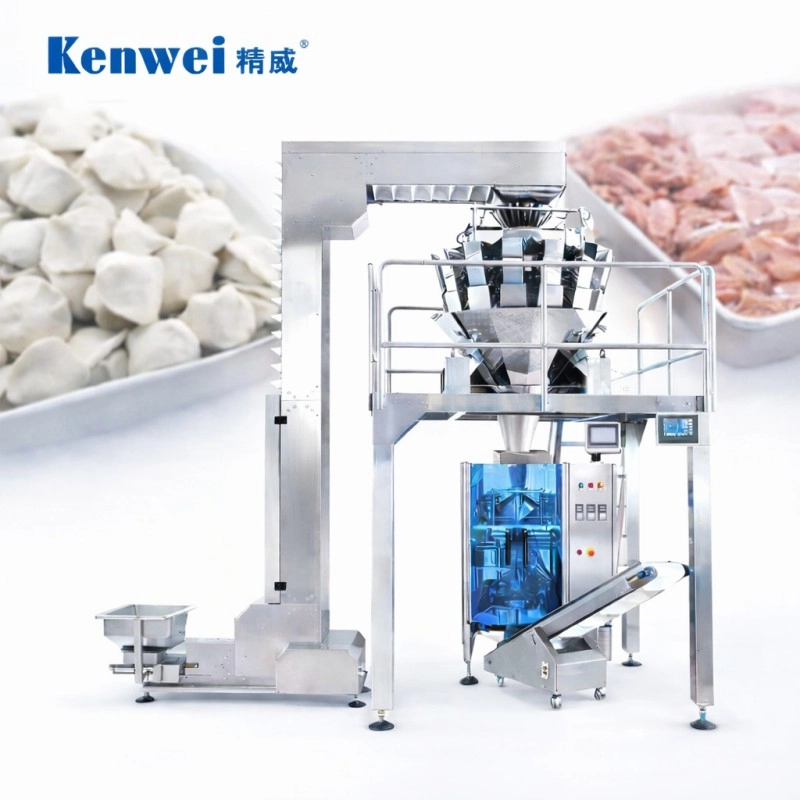
Vertical Frozen Food Packaging Machine for IQF & Frozen Products JW-B1
The Kenwei JW-B1 Vertical Frozen Food Packaging Machine is designed for IQF and frozen products, ensuring efficient, airtight packing. This vertical packing machine boosts productivity with precision sealing, ideal for frozen food packaging needs in the food industry.
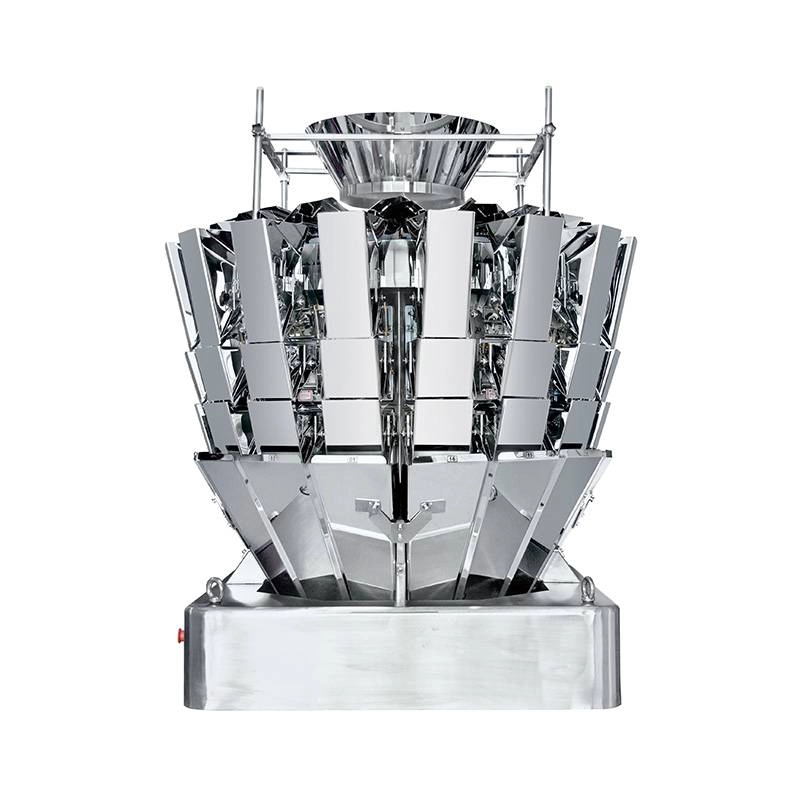
16 Head Three Layer Multihead Weigher for Granular and Irregular Materials
Kenwei’s 16 Head Three Layer Multihead Weigher ensures precise weighing of granular and irregular materials. This multihead weighing machine offers efficient, high-speed performance, ideal for various packaging needs. Trust our 16 head weigher for accuracy and reliability in your production line.
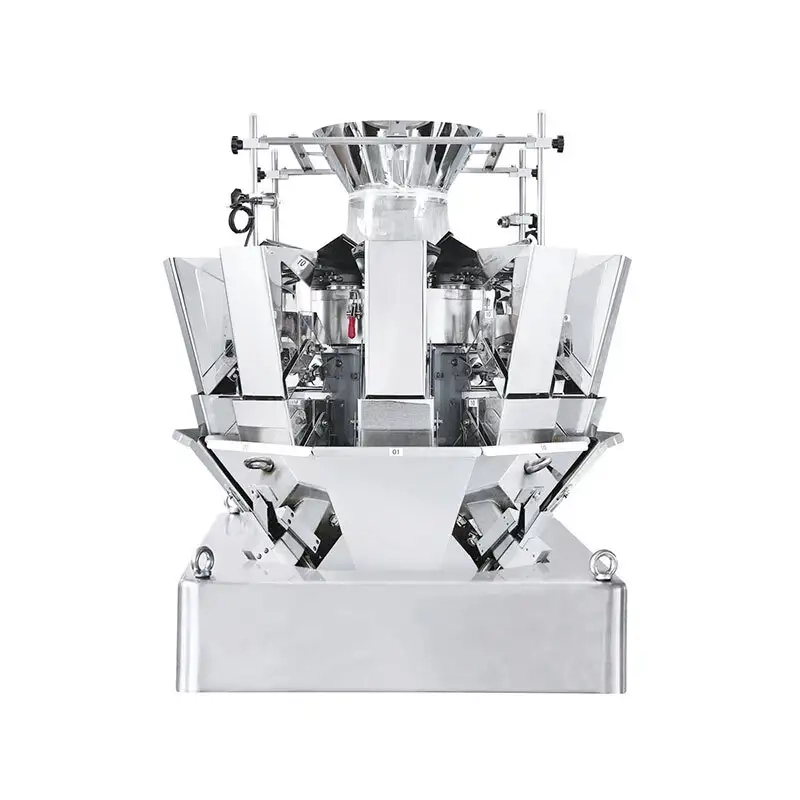
10-Head Standard No-Spring Multihead Weigher 1.6L for Precise Weighing
The standard no-spring combination scale features a patented spring-free hopper design, making it ideal for weighing a variety of products such as melon seeds, peanuts, nuts, almonds, grapes, candies, pistachios, potato chips, shrimp chips, and more. The double-support feeding tray is easily adjustable, while the feeding hopper is designed for easy disassembly, ensuring convenience and cleanliness. With a maximum weighing speed of up to 120 bags per minute, the 14-head standard no-spring combination scale is an economical, versatile, and cost-effective solution.
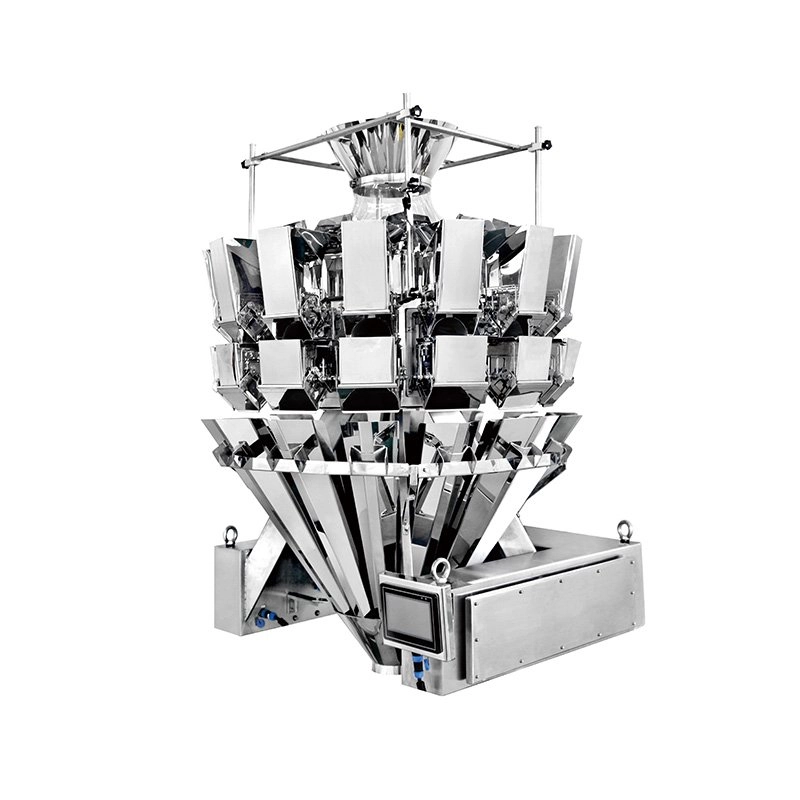
Automatic Multihead Weigher for Stick and Bar-Shaped Materials
Kenwei’s Automatic Multihead Weigher for Stick and Bar-Shaped Materials ensures precise, fast, and efficient weighing. This advanced automatic multihead weighing machine is ideal for accurate portioning of various stick and bar-shaped products, enhancing productivity and reducing waste.
Get in touch with us
If you have any comments or good suggestions, please leave us a message, later our professional staff will contact you as soon as possible.
Kenwei
Kenwei
Kenwei multi weigh
Kenwei
Kenwei
Kenwei