






Selecting a metal detector for aluminum-packed products
Choosing the right metal detector for aluminum-packed products requires addressing the signal interference caused by foil, ensuring high sensitivity to magnetic contaminants, and meeting food safety standards. This guide explains how advanced detectors (like the 2415 Metal Detector for Aluminum Foil) overcome packaging effects, what features to prioritize, testing and validation best practices, and how to integrate equipment into production lines to reduce risk and maintain compliance.
- Why aluminum foil packaging complicates metal detection
- How aluminum affects detection signals
- Packaging variables that influence sensitivity
- Key features to look for in a metal detector for aluminum-packed food
- High-sensitivity sensors and advanced signal processing
- Adjustable aperture, coil design and construction
- Throughput, integration and false-reject management
- Testing, validation, and compliance
- Regulatory standards and industry guidance
- On-site verification and validation protocols
- Choosing and installing a metal detector: practical considerations
- Environmental and layout considerations
- Maintenance, training and lifecycle management
- Comparative overview
- Deployment checklist and decision guide
- Define your detection objectives
- Run product-effect trials and supplier proof-of-performance
- Document acceptance criteria and training
- FAQ — Frequently asked questions
- Q: Can a metal detector reliably find metal in foil-wrapped coffee or chocolate?
- Q: How often should I validate a metal detector in a food line?
- Q: Are there contaminants that metal detectors can’t find?
- Q: Will using a detector for aluminum foil increase my false rejects?
- Q: What documentation should I keep for audits?
- Q: How do I choose between metal detection and X-ray?

The right metal detector for food industry use must reliably detect metal contaminants in finished products while compensating for packaging effects, high throughput, and diverse product types. Aluminum foil packaging presents a particular detection challenge: its conductive nature can mask or distort the metal signature of contaminants. Practical selection, validation, and proper installation of a detector designed to filter out foil signals and focus on magnetic metal contaminants are essential to avoid false rejects while maintaining food safety and regulatory compliance.
Why aluminum foil packaging complicates metal detection
How aluminum affects detection signals
Aluminum is non-ferrous but conductive. When a metal detector's search coil interrogates a product, the foil can create eddy currents and background signals that either mask small ferrous or non-ferrous contaminants or trigger false alarms. Standard detectors tuned for unpackaged products often lose sensitivity when the product is wrapped in foil because the detector's automatic gain control adjusts to the combined product-plus-foil signal rather than isolating the foreign body.
Understanding the physics behind this interaction is critical. For an overview of metal detector technology and signal processing fundamentals, see the general metal detector entry on Wikipedia.
Packaging variables that influence sensitivity
Several packaging attributes change the detector’s response: foil thickness and multilayer laminates, the presence of metalized film or zipper features, product density immediately adjacent to the foil, and crumpling or folds. High-moisture products (e.g., some chocolates or meat snacks) and products with conductive inclusions can also compound the effect. When evaluating a metal detector for aluminum-packed products, account for:
- Foil gauge and metallization percentage
- Product geometry inside the pack (air pockets vs tightly packed)
- Throughput and package orientation on the conveyor
Key features to look for in a metal detector for aluminum-packed food
High-sensitivity sensors and advanced signal processing
A dedicated metal detector for aluminum foil must include high-sensitivity sensors and sophisticated algorithms to filter out the background signature of foil while still detecting magnetic contaminants. Multi-frequency or dual-frequency systems, combined with digital signal processing (DSP), help separate product and packaging effects from true contaminant signals. The 2415 Metal Detector for Aluminum Foil incorporates these capabilities to focus on magnetic metal contaminants despite the presence of foil.
Adjustable aperture, coil design and construction
Detector aperture size and coil configuration determine the detection zone and sensitivity. For narrow pouches like coffee bags or chocolate sachets, smaller apertures with tightly coupled coils can yield higher sensitivity. The 2415 supports a maximum width of 24mm and a height range of 20–150mm, enabling it to handle a wide variety of foil-packed items such as coffee bags, peanuts, dried meats, and chocolate. Robust hygienic construction and IP-rated housings are also important for food production environments to ensure washdown compatibility and long-term reliability.
Throughput, integration and false-reject management
High-speed lines demand detectors that maintain sensitivity without generating excessive false rejects. Look for features like product-effect compensation, advanced reject logic (e.g., timed or in-line pneumatic rejects), and easy integration with metal-free conveyors or checkweighers. Automation-friendly interfaces (PLC, Ethernet/IP, Modbus) reduce manual intervention and help keep line efficiency high.
Product spotlight:
The 2415 Metal Detector for Aluminum Foil is equipped with high-sensitivity sensors that effectively filter out signals from aluminum packaging, ensuring precise detection of magnetic metal contaminants. Ideal for detecting foreign bodies in aluminum foil-packaged items such as coffee bags, peanuts, dried meats, chocolate, and more. This versatile metal detector offers adjustable settings, with a maximum width of 24mm and height ranging from 20-150mm, making it suitable for a wide variety of aluminum foil packaging applications.
Testing, validation, and compliance
Regulatory standards and industry guidance
Food manufacturers must demonstrate effective control of foreign bodies as part of a food safety management system. ISO 22000 provides a framework for food safety processes and hazard control; see ISO 22000 for details. Regulatory bodies such as the U.S. FDA provide oversight and guidance on food safety programs—refer to the FDA for general guidance and requirements applicable in the U.S.
Industry technical bodies and independent test organizations (e.g., Campden BRI) publish operational best practices for metal detection and product effect testing. For practical testing approaches and interpretation of results, see resources available from Campden BRI.
On-site verification and validation protocols
Validation requires a documented program of challenge tests using representative test pieces (ferrous, non-ferrous, stainless steel) placed in a range of pack positions and orientations. Key steps include:
- Establish baseline sensitivity with an empty pack or control product.
- Run reproducibility tests across shift patterns and product variants.
- Record reject rates and adjust settings to balance detection and false rejects.
- Schedule routine in-line checks and a formal re-validation when product or packaging changes.
Manufacturers typically maintain a traceable log of each verification test. For guidance on acceptable practices and laboratory verification, consult manufacturer technical notes or accredited test labs.
Choosing and installing a metal detector: practical considerations
Environmental and layout considerations
Installation location dramatically affects detector performance. Noise sources—motors, variable frequency drives, nearby metal frames—can reduce sensitivity. Recommendations include:
- Position detectors away from heavy electromagnetic sources and large metal structures.
- Use non-metallic supports and ensure a stable, vibration-free conveyor run.
- Maintain consistent product presentation (orientation and spacing) through conveyors and infeed guides.
Local GEO factors (line elevation, ambient temperature, humidity) should be evaluated, and the detector should be commissioned on-site using the actual product and packaging to fine-tune settings.
Maintenance, training and lifecycle management
Routine maintenance and operator training reduce downtime and maintain detection performance. Best practices include scheduled coil calibration, firmware updates, cleaning protocols aligned with HACCP plans, and documented operator procedures for daily commissioning tests. A well-defined spare-parts plan and remote diagnostics (when available) can shorten repair times and support continuity of operations.
Comparative overview
Below is a quick comparison of typical detector configurations and how they perform with aluminum foil packaging.
| Feature | Standard Single-Frequency Detector | Dual/Multi-Frequency Detector (recommended) | 2415 Metal Detector for Aluminum Foil |
|---|---|---|---|
| Performance with foil | Reduced sensitivity, higher false rejects | Improved separation of product/foil signals | High — optimized to filter foil and detect magnetic contaminants |
| Typical sensitivity (ferrous) | Medium | High | High |
| Throughput compatibility | Low–Medium | Medium–High | Medium–High |
| Integration features | Basic I/O | Advanced communications | Adjustable settings, flexible integration |
| Recommended for | Unpackaged or non-foil-packed items | Mixed packaging including metalized film | Aluminum foil-packaged foods like coffee, snacks, chocolates |
Deployment checklist and decision guide
Define your detection objectives
Start by documenting the types of contaminants you must detect (ferrous vs. non-ferrous vs. stainless), the packaging formats in scope, production speeds, and acceptable false-reject rates. This objective document guides specification and acceptance criteria during supplier evaluation.
Run product-effect trials and supplier proof-of-performance
Ask vendors to demonstrate the detector on your real product and packaging. A robust vendor will perform on-site trials with representative packs and provide sensitivity data and a validation protocol. If possible, request a trial agreement and temporary installation to evaluate both detection and operational impacts on throughput.
Document acceptance criteria and training
Before purchase, agree on acceptance test procedures, warranty terms, and support SLAs. Include operator training and documentation for routine checks in the procurement package.
FAQ — Frequently asked questions
Q: Can a metal detector reliably find metal in foil-wrapped coffee or chocolate?
A: Yes, but only if the detector is specifically configured to compensate for the foil's signal. Detectors with multi-frequency DSP and product-effect filtering, like the 2415, can isolate contaminant signatures even when foil is present. On-site validation with real packs is essential.
Q: How often should I validate a metal detector in a food line?
A: Daily verification checks are common (simple test pieces run through the line), with a formal documented re-validation after any product, packaging, or process change. Periodic full performance audits (monthly or quarterly) should be scheduled according to your HACCP or food safety plan.
Q: Are there contaminants that metal detectors can’t find?
A: Metal detectors are highly effective for ferrous and many non-ferrous metals. Very small particles, some grades of stainless steel (austenitic types), or metal occluded within high-density product zones may be challenging. X-ray inspection can complement metal detection for some non-metallic or difficult-to-detect contaminants.
Q: Will using a detector for aluminum foil increase my false rejects?
A: If you use a detector not optimized for foil, yes. But purpose-built systems apply algorithms to remove foil interference and maintain sensitivity, minimizing false rejects while still detecting contaminants.
Q: What documentation should I keep for audits?
A: Keep installation qualification (IQ), operational qualification (OQ), and performance qualification (PQ) records, daily verification logs, maintenance records, and training records. These support compliance with ISO 22000 and regulatory expectations such as FDA inspections.
Q: How do I choose between metal detection and X-ray?
A: Metal detectors are cost-effective and excellent for metal contaminants, especially in foil-packaged goods when detectors are foil-compensating. X-rays detect a broader range of contaminants (glass, stone, dense plastics) but are more expensive and sensitive to product density. Many manufacturers use both technologies in a layered approach for maximum protection.
If you'd like a demonstration, product specifications, or an on-site trial of the 2415 Metal Detector for Aluminum Foil, contact our sales team or view the product page:
View product details and request a demo | Contact sales
References and further reading: ISO 22000 (iso.org), FDA (fda.gov), metal detector technology overview (Wikipedia), Campden BRI guidance (campdenbri.co.uk), manufacturer technical resources (Mettler Toledo).
Tags
best metal detector
best metal detector
metal detector machine in food industry
metal detector machine in food industry
metal detector for food industry
metal detector for food industry
food packaging machine
food packaging machine
vacuum food packaging machine
vacuum food packaging machine
OEM linear weigher manufacturer
OEM linear weigher manufacturer
Recommended for you
The latest trends for combination food weigher
The latest trends for automatic check weighing equipment
How to Integrate a Food Metal Detector with Multihead Weighers

Compliance and Safety Considerations for Food Packaging Machines
Prdoucts Categories
Question you may concern
About Solution suggestions
Can Kenwei machines handle products with irregular shapes or sizes?
Yes, multi-head weighers are particularly effective for handling products with irregular shapes and sizes.
What are Kenwei’s primary solutions for industrial weighing and packaging?
Kenwei provides comprehensive solutions for automated weighing and packaging, including multi-head weighers, linear weighers, check weighers, metal detectors, and packing machines. These solutions are tailored to improve speed, accuracy, and efficiency in various industries such as food, pharmaceuticals, and chemicals.
About Product choice
Are Kenwei’s products suitable for small-scale or large-scale operations?
Yes! We offer machines that are scalable to meet the needs of both small and large-scale operations.
About Logistics
How are large machines handled during shipping?
Large machines are typically shipped via sea freight using containerized shipping.
About Price and payment
Can I get a detailed quote before making a purchase?
Absolutely! We provide detailed quotes that break down the costs for the machines, customization, shipping, and any additional services. Please contact our sales team with your requirements to receive a customized quote.
You may also like
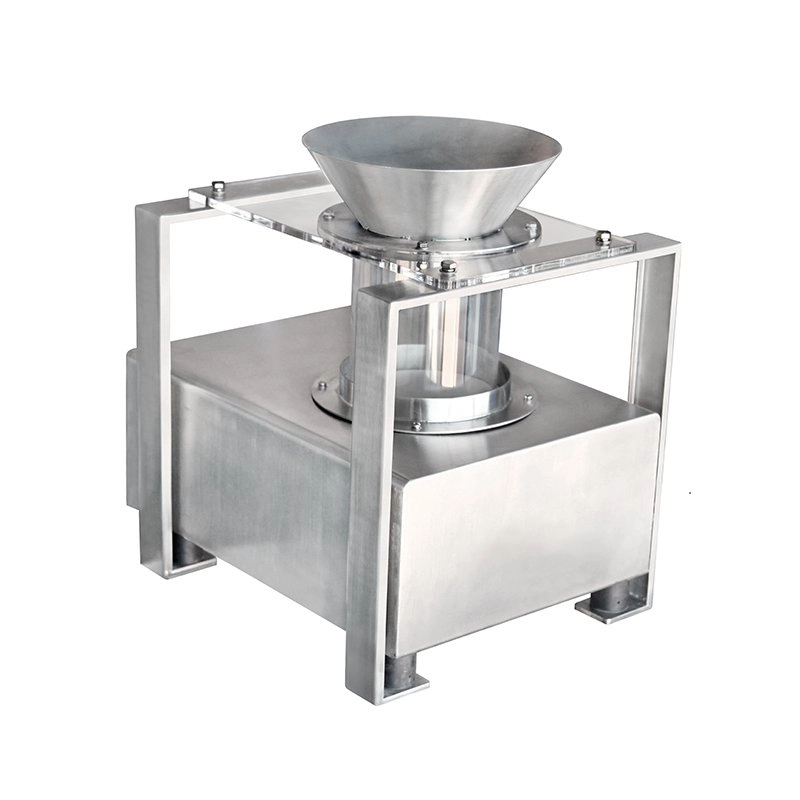
Dropped Metal Detector for Powder Granules For Food Industry
Enhance food safety with Kenwei’s Dropped Metal Detector for Powder Granules. This advanced food metal detector ensures precise detection in the food industry, safeguarding products and maintaining high quality standards throughout processing.
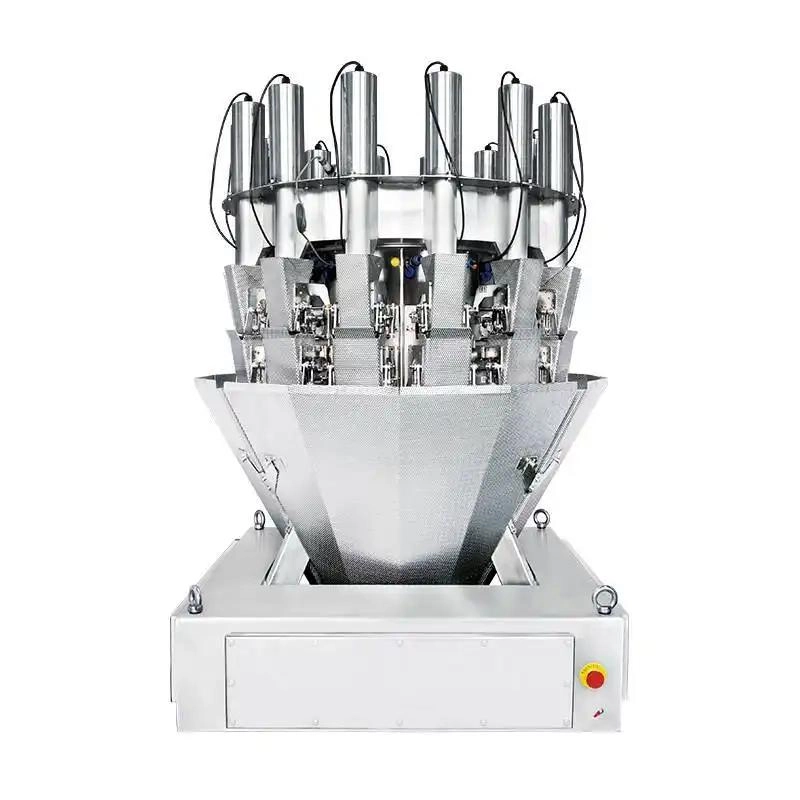
14 Heads Vertical Single Screw Feeding Pickles Weigher backups
This type of weigher is designed to handle the unique characteristics of pickles, ensuring precise measurements for packaging and distribution. It uses a vertical single screw mechanism to feed the pickles into the weighing system, allowing for efficient and consistent weighing. This technology is particularly useful in food processing and packaging facilities where precise portioning is essential for quality control and customer satisfaction. This specialized equipment is perfect for accurately measuring and dispensing pickles in a production line or packaging facility. The vertical design allows for efficient and precise filling of containers, while the single screw feeding mechanism ensures consistent and reliable weighing.
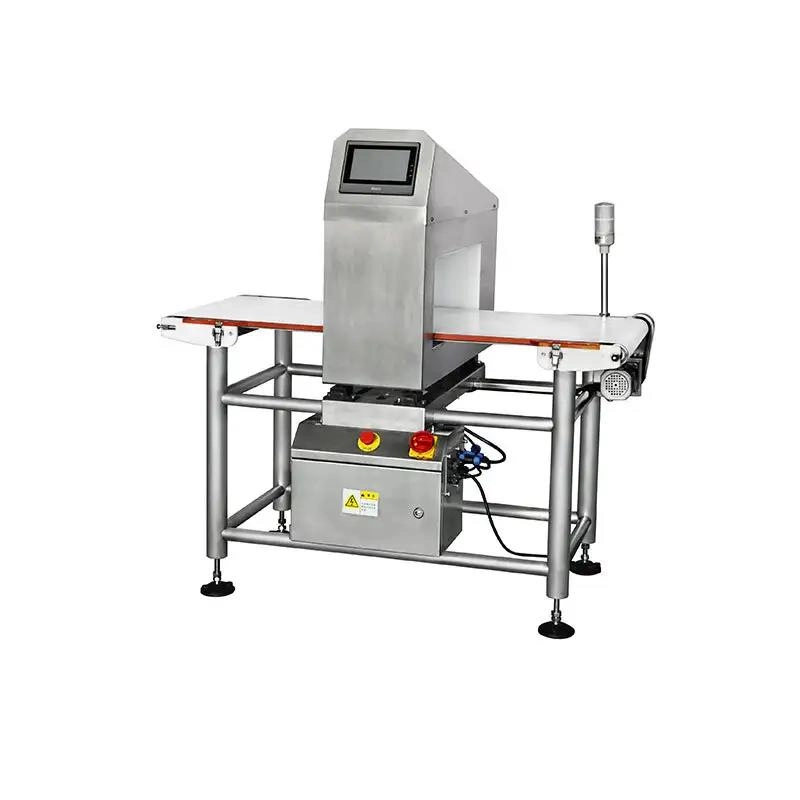
Food Metal Detector Manufacturer For Reject Defective Products G5020
The G5020 multi-frequency metal detector features a specialized conveyor belt designed to reduce contamination risks, ensure smooth operation, and maintain high detection sensitivity. It is easy to disassemble for convenient maintenance. Ideal for detecting metal contaminants in food, pharmaceuticals, spices, plastics, electronics, textiles, toys, handicrafts, and more.
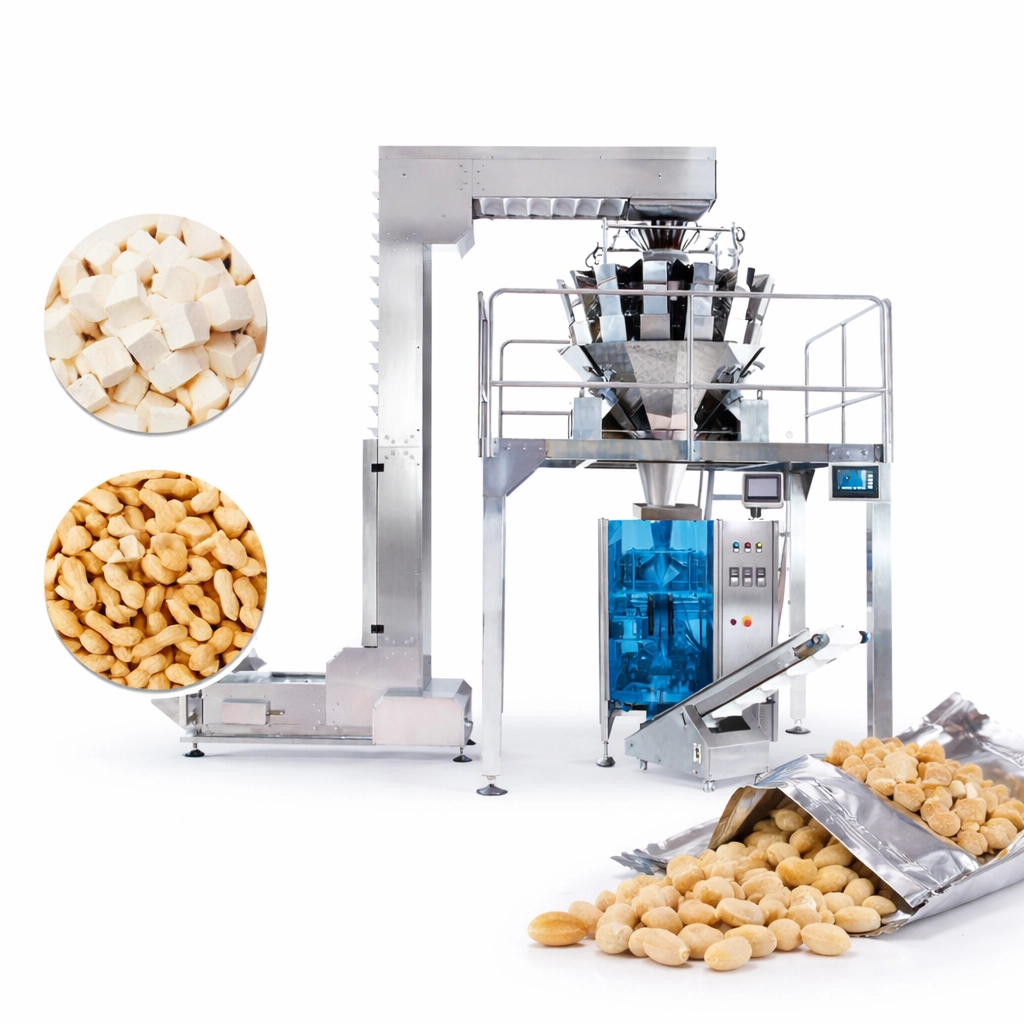
High-Precision Weighing & Packaging for Granular Products
The Granular Food Packing Machine is a fully automated solution designed for accurate weighing, filling, and packaging of various granular food products. Integrated with a multihead weigher and advanced packaging system, it ensures high speed, precision, and hygiene standards for modern food production.
Get in touch with us
If you have any comments or good suggestions, please leave us a message, later our professional staff will contact you as soon as possible.
Kenwei
Kenwei
Kenwei multi weigh
Kenwei
Kenwei
Kenwei