






Key Specs to Compare in Good Metal Detectors for Procurement
A practical procurement guide that explains the key specifications to evaluate when buying good metal detectors for food and other industries. Covers sensitivity, multi-frequency technology, reject systems, conveyor design, hygiene, compliance, maintenance, and total cost of ownership. Includes a comparison table, FAQs, authoritative references, and a CTA to view the G5020 Food Metal Detector.
- Key Specs to Compare in Good Metal Detectors for Procurement
- Why choosing good metal detectors matters for procurement decisions
- Detection sensitivity and target metals — core of what makes good metal detectors
- Multi-frequency technology and product effect handling
- Conveyor design and hygienic construction — reduce contamination sources
- Reject mechanisms — accuracy, speed, and product preservation
- Throughput, aperture size, and installation footprint
- Compliance, materials, and industry certifications
- Usability, controls, and integration with line automation
- Maintenance, serviceability, and spare parts strategy
- Software features: reporting, alarms, and audit trails
- Power, environmental resilience, and lifecycle costs
- Comparative spec table — how to quickly contrast good metal detectors
- How to run meaningful acceptance tests for good metal detectors
- Risk-based procurement: matching detector specs to product risk
- Vendor selection checklist for buying good metal detectors
- G5020 Food Metal Detector Manufacturer for Rejecting Defective Products — brand summary and advantages
- FAQ — Frequently Asked Questions about good metal detectors and the G5020
- Q1: What is the difference between single-frequency and multi-frequency metal detectors?
- Q2: How do I validate that a metal detector is 'good' for my products?
- Q3: How important is hygienic conveyor design?
- Q4: What should I look for in a reject mechanism?
- Q5: Can the G5020 be integrated into existing production lines?
- Q6: What documentation should the vendor provide?
- Contact and product action
- Authoritative references and further reading

Key Specs to Compare in Good Metal Detectors for Procurement
Why choosing good metal detectors matters for procurement decisions
When procuring equipment to protect product integrity and brand reputation, selecting good metal detectors is a strategic decision—not just a technical one. A well-chosen metal detection system prevents costly recalls, protects consumers, and maintains regulatory compliance. Procurement teams must understand how key specifications affect detection performance, line integration, maintenance burden, and total cost of ownership. This guide walks through the essential features you should compare and explains how they translate into operational benefits.
Detection sensitivity and target metals — core of what makes good metal detectors
Sensitivity is the primary metric for any good metal detector. It defines the smallest size of ferrous, non-ferrous (aluminum, copper), and stainless steel contaminants the system can reliably detect. Sensitivity depends on several factors: the detector’s coil design, operating frequency, product effect compensation, and the physical location of the contaminant in the product (center vs. edge).
Procurement tip: Specify sensitivity targets in millimeters or grams for the most critical contaminants in your product set and require vendor validation on representative samples.
Multi-frequency technology and product effect handling
Good metal detectors increasingly use multi-frequency or multi-channel detection to address complex product effects (e.g., wet, salty, or dense products). Multi-frequency systems switch or combine frequencies to improve the signal-to-noise ratio for different metal types and product conditions.
Why it matters: A multi-frequency metal detector reduces false rejects and improves detection reliability across varied SKUs. For procurement, insist on demonstration data showing detection performance for each product family you run.
Conveyor design and hygienic construction — reduce contamination sources
Conveyor and headframe design affect both detection sensitivity and cleanability. Good metal detectors for food and pharmaceutical lines use smooth, food-grade materials, minimal horizontal surfaces, and quick-release components to minimize contamination and speed sanitation.
Example: The G5020 Food Metal Detector Manufacturer for Rejecting Defective Products incorporates a specialized conveyor belt that minimizes contamination sources and allows easy disassembly and maintenance. Such design elements improve uptime and meet strict hygiene standards.
The product description for the G5020:
The 5020 Multi-Frequency Metal Detector features a specialized conveyor belt that minimizes contamination sources, ensuring smooth operation and high detection sensitivity. Its design allows for easy disassembly and maintenance. This metal detector is ideal for detecting metal contaminants in a wide range of industries, including food, pharmaceuticals, condiments, plastics, electronics, textiles, toys, and more.
Reject mechanisms — accuracy, speed, and product preservation
Reject systems must be matched to product type and line speed. Common reject methods include pneumatic pushers, air blasts, drop gates, and belt stops. A good metal detector provides configurable reject mechanisms and verifies successful rejection.
Procurement considerations: Evaluate reject reliability at peak throughput, the rate of false rejects, and how the mechanism affects product damage and waste.
Throughput, aperture size, and installation footprint
Select a detector with an aperture (detection window) sized for the largest packaged product while maintaining sensitivity. Larger apertures typically reduce sensitivity; multi-frequency systems can help compensate, but you must test with real products at expected line speeds.
Also consider the physical footprint and integration requirements—height, access for maintenance, and alignment with existing conveyors. A compact, modular design reduces installation complexity and costs.
Compliance, materials, and industry certifications
Good metal detectors for regulated industries should comply with applicable food safety and equipment hygiene standards. Look for materials like 304 or 316 stainless steel, IP ratings for washdown (e.g., IP65/IP66), and adherence to standards relevant to your market (e.g., FDA expectations, EHEDG guidance, ISO 22000 food safety management compatibility).
Procurement should request evidence of conformity and documentation such as material certificates, IP ratings, and sanitation validation reports.
Usability, controls, and integration with line automation
Operator interfaces and connectivity impact performance and retraining costs. Good metal detectors include intuitive touchscreens, recipe storage for quick SKU changes, event logging for audit trails, and integration options (PLC, SCADA, Ethernet/IP, OPC UA).
Ask for demonstration of changeover times, user rights management, and the ability to export traceable inspection data for quality records.
Maintenance, serviceability, and spare parts strategy
Assess how quickly the system can be serviced—tool-free access, replaceable modules, and remote diagnostics decrease downtime. Ask vendors for recommended maintenance intervals, mean time between failures (MTBF), and the availability of local service engineers and spare parts.
Procurement should evaluate service contracts, on-site training, and the vendor’s capability for fast response in your region.
Software features: reporting, alarms, and audit trails
Software capabilities can significantly influence compliance and continuous improvement. Good metal detectors include event logs, exportable detection statistics, calibration history, and configurable alarms. Advanced analytics can identify trends (e.g., increasing false rejects) and trigger preventive actions.
Ensure the system meets your record retention policies and can produce reports required by auditors and regulators.
Power, environmental resilience, and lifecycle costs
Consider power consumption, operating temperature, humidity tolerances, and ingress protection for the environment in which the detector will operate. A lower energy footprint and robust environmental rating reduce long-term operational costs.
Procurement should model total cost of ownership (TCO), factoring in initial purchase, installation, spare parts, service contracts, consumables (e.g., belts), and expected lifecycle.
Comparative spec table — how to quickly contrast good metal detectors
Use this table as a procurement checklist when comparing vendor proposals. Replace placeholder values with validated vendor data and on-line test results.
| Spec | Why it matters | Typical Good Value / Expectation |
|---|---|---|
| Sensitivity (mm or g) | Detect smallest contaminants reliably | Ferrous 0.8–1.0 mm; Non-ferrous 1.0–1.5 mm; Stainless 1.5–2.0 mm (validate by SKU) |
| Frequency | Optimizes detection for product types | Single or multi-frequency (multi recommended for varied products) |
| Aperture size | Must fit largest packaged product without losing sensitivity | Custom sizes; check sensitivity at target aperture |
| Reject method | Accuracy and product preservation | Pneumatic pusher / air blast / drop gate with verification sensor |
| Hygienic design | Sanitation speed and contamination risk | Food-grade 304/316 SS, quick-release belts, sloped surfaces |
| Ingress protection (IP) | Washdown and dust resistance | IP65/IP66 or higher for regular washdown |
| Integration | Line automation compatibility | PLC/SCADA/Ethernet interfaces, recipe management |
| Service & support | Uptime and reliability | Local service, ≥24-month warranty options, spare parts availability |
How to run meaningful acceptance tests for good metal detectors
Procurement should require factory acceptance tests (FAT) and site acceptance tests (SAT) using production samples. Test across the full range of SKUs, packaging formats, and typical line speeds. Document detection rates, false rejects, and reject verification results. A strong vendor will supply a signed FAT report and support SAT execution.
Risk-based procurement: matching detector specs to product risk
Not all production lines require the same detector sophistication. Use a risk matrix based on product acidity, moisture, density, packaging material, and consumer risk to prioritize investment. High-risk products (e.g., ready-to-eat, baby food) justify higher sensitivity and more rigorous service contracts.
Vendor selection checklist for buying good metal detectors
Use this practical checklist during tender evaluation:
- Validated sensitivity data on representative products
- Multi-frequency capability if running varied SKUs
- Hygienic design and washdown rating
- Demonstrated reject reliability and verification
- Integration options and user-friendly HMI
- Local support, training, and spare parts availability
- Clear warranty and SLA terms
- Life-cycle cost estimate including consumables and service
G5020 Food Metal Detector Manufacturer for Rejecting Defective Products — brand summary and advantages
The G5020 Food Metal Detector Manufacturer for Rejecting Defective Products is positioned as a practical solution for food and cross-industry contamination control. Key advantages of the G5020 that align with procurement priorities for good metal detectors include:
- Specialized conveyor belt and hygienic design to minimize contamination sources and ease sanitation.
- Multi-frequency detection to balance sensitivity across diverse product effects.
- Compact, service-friendly construction enabling fast maintenance and reduced downtime.
- Broad industry applicability (food, pharmaceuticals, condiments, plastics, electronics, textiles, toys), supporting multi-line deployment strategies.
For procurement teams, the G5020 offers a compelling balance of hygiene-focused mechanical design, multi-frequency detection capability, and maintainability—three pillars of what makes good metal detectors effective in real production environments.
FAQ — Frequently Asked Questions about good metal detectors and the G5020
Q1: What is the difference between single-frequency and multi-frequency metal detectors?
A: Single-frequency detectors operate at one frequency and are effective for stable product types. Multi-frequency systems can operate at several frequencies either simultaneously or switched, improving detection across wet, salt-containing, or dense products and reducing false rejects—making them a better choice for variable production lines.
Q2: How do I validate that a metal detector is 'good' for my products?
A: Request FAT and SAT using your actual products and packaging at intended line speeds. Validate sensitivity, false reject rates, and reject verification. Require a signed test report from the vendor and consider third-party validation if regulations demand it.
Q3: How important is hygienic conveyor design?
A: Extremely important in food and pharma. Hygienic design reduces contamination points, speeds cleaning, and supports regulatory compliance. Features such as food-grade materials, quick-release belts, and minimized horizontal surfaces directly lower contamination risk and downtime.
Q4: What should I look for in a reject mechanism?
A: Choose a reject mechanism suited to your product handling (e.g., pneumatic pushers for stable packages, air blasts for lightweight items). Evaluate reject accuracy at peak speeds, product damage rates, and verify that the system confirms successful rejection.
Q5: Can the G5020 be integrated into existing production lines?
A: Yes. The G5020 is designed for easy integration with common conveyor systems and line automation. Procurement should confirm electrical and communication interface compatibility during specification stage and request an integration plan from the vendor.
Q6: What documentation should the vendor provide?
A: Request technical specifications, FAT/SAT reports, material certificates, IP ratings, maintenance manuals, wiring diagrams, software/firmware revision notes, and warranty/SLA terms.
Contact and product action
After you've reviewed the key specs and chosen the right model, circle back to the benefits of G5020. Reassess how good metal detectors can cut food recall risks and enhance overall food safety, completing the cycle of effective metal detection procurement.If you want to evaluate how the G5020 Food Metal Detector Manufacturer for Rejecting Defective Products can reduce contamination risk and improve line efficiency, contact our sales engineering team for a live demonstration, FAT/SAT plan, and a customized quote. Request product datasheets, testing on your SKUs, or schedule a site inspection today.
Authoritative references and further reading
- Wikipedia — Metal detector: https://en.wikipedia.org/wiki/Metal_detector
- EHEDG — European Hygienic Engineering & Design Group: https://www.ehedg.org/
- Codex Alimentarius — Food safety standards: http://www.fao.org/fao-who-codexalimentarius/en/
- U.S. Food and Drug Administration (FDA): https://www.fda.gov/
- U.S. Department of Agriculture — Food Safety and Inspection Service (FSIS): https://www.fsis.usda.gov/
- AOAC International — Methods and validation standards: https://www.aoac.org/
- International Organization for Standardization (ISO): https://www.iso.org/
Tags
buy premade pouch packing machine
buy premade pouch packing machine
check weigher machine
check weigher machine
multihead weigher packing machine factory
multihead weigher packing machine factory
food packaging system
food packaging system
premade pouch packing machine manufacturer
premade pouch packing machine manufacturer
Working Platform
Working Platform
Recommended for you
Where to Buy vffs packaging machine
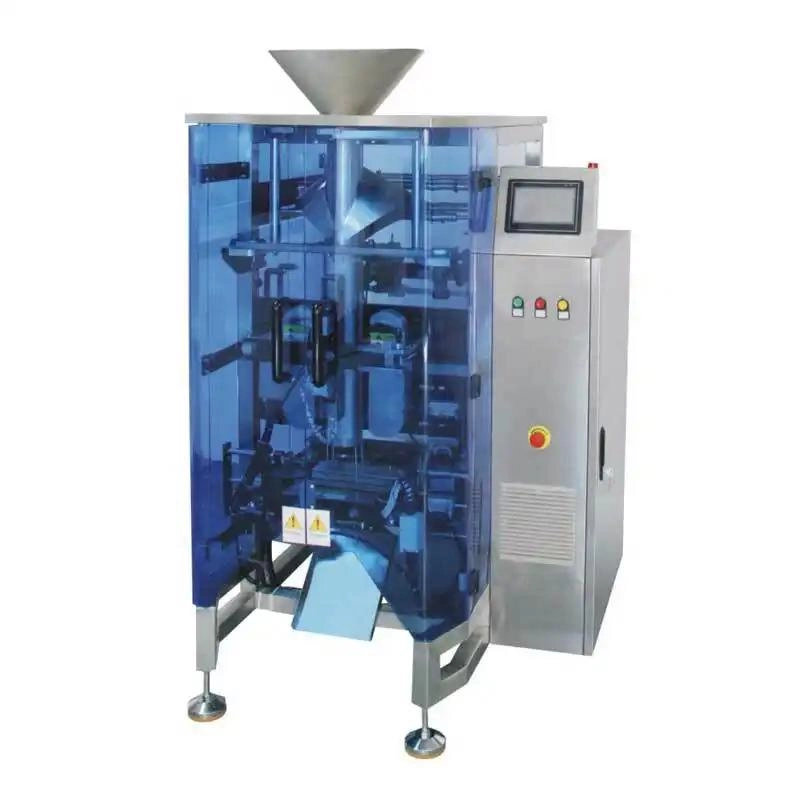
Packaging Material Compatibility for Vertical Packaging Machines
Top 10 Linear Weigher Features to Look For
Multihead Weigher Technology Trends 2026
Prdoucts Categories
Question you may concern
About After Sales Support
How about the after-sales service?
Warranty :2 years
About Solution suggestions
Can Kenwei provide solutions for high-volume production?
Yes, Kenwei specializes in high-speed, high-throughput machines designed for large-scale operations. Our multi-head weighers, packing machines, and check weighers.
What are Kenwei’s primary solutions for industrial weighing and packaging?
Kenwei provides comprehensive solutions for automated weighing and packaging, including multi-head weighers, linear weighers, check weighers, metal detectors, and packing machines. These solutions are tailored to improve speed, accuracy, and efficiency in various industries such as food, pharmaceuticals, and chemicals.
About Logistics
Do I need to prepare my facility for the delivery of large machines?
Yes, large machines often require special preparations for delivery, including ensuring adequate space for unloading and installation.
About Product choice
What is the average lifespan of Kenwei products?
Kenwei machines are built for durability and longevity. With proper maintenance, our products are designed to last for many years, even under heavy usage. We offer maintenance services and support to help extend the lifespan of your machines.
You may also like
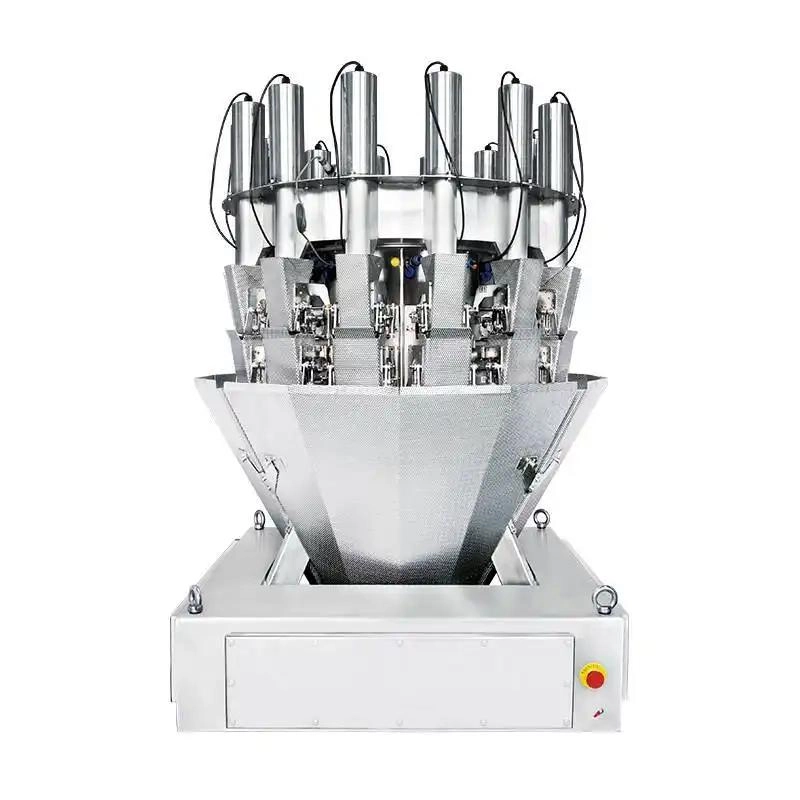
14 Heads Vertical Single Screw Feeding Pickles Weigher backups
This type of weigher is designed to handle the unique characteristics of pickles, ensuring precise measurements for packaging and distribution. It uses a vertical single screw mechanism to feed the pickles into the weighing system, allowing for efficient and consistent weighing. This technology is particularly useful in food processing and packaging facilities where precise portioning is essential for quality control and customer satisfaction. This specialized equipment is perfect for accurately measuring and dispensing pickles in a production line or packaging facility. The vertical design allows for efficient and precise filling of containers, while the single screw feeding mechanism ensures consistent and reliable weighing.
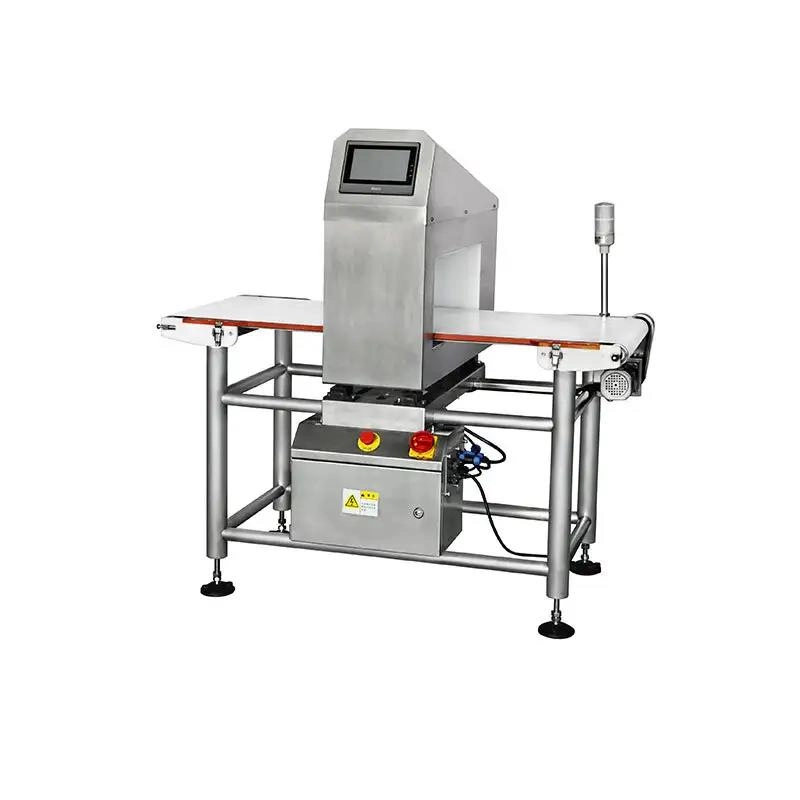
Food Metal Detector Manufacturer For Reject Defective Products G5020
The G5020 multi-frequency metal detector features a specialized conveyor belt designed to reduce contamination risks, ensure smooth operation, and maintain high detection sensitivity. It is easy to disassemble for convenient maintenance. Ideal for detecting metal contaminants in food, pharmaceuticals, spices, plastics, electronics, textiles, toys, handicrafts, and more.
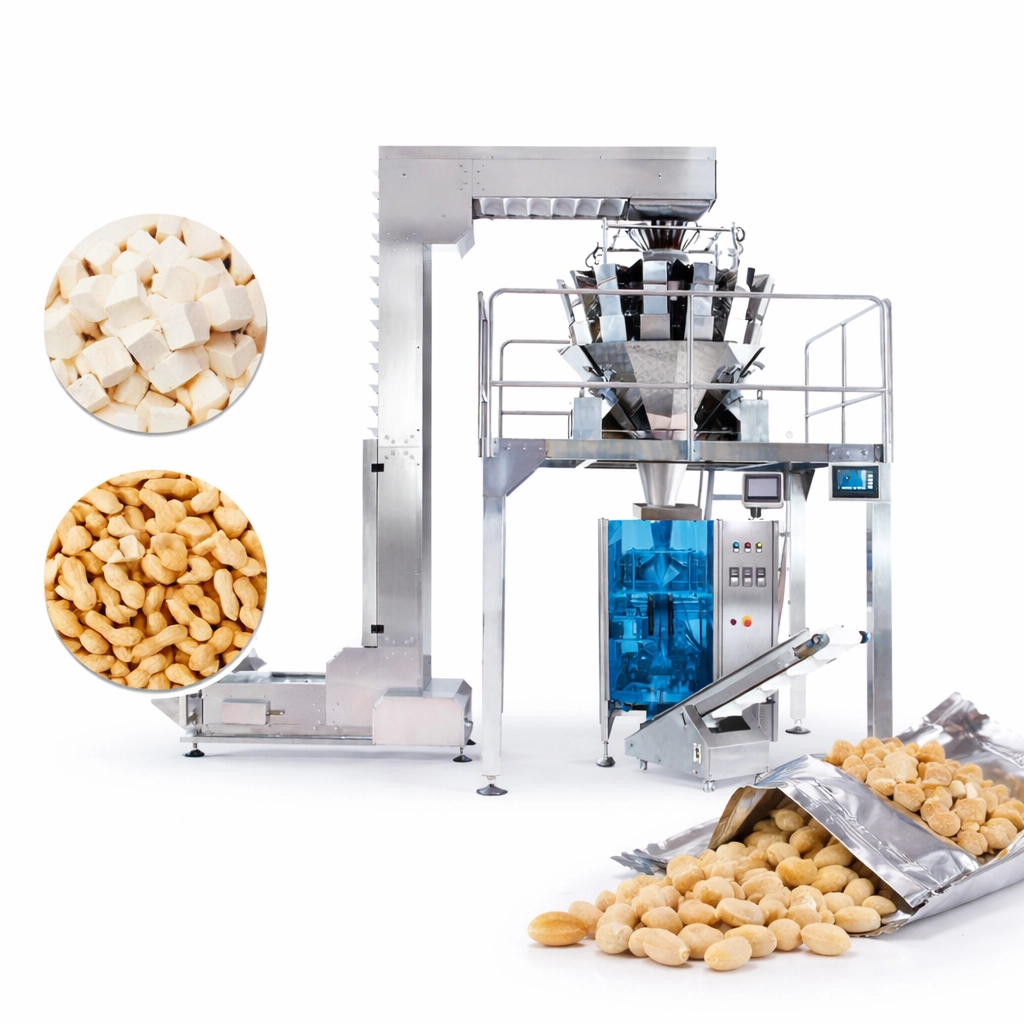
High-Precision Weighing & Packaging for Granular Products
The Granular Food Packing Machine is a fully automated solution designed for accurate weighing, filling, and packaging of various granular food products. Integrated with a multihead weigher and advanced packaging system, it ensures high speed, precision, and hygiene standards for modern food production.
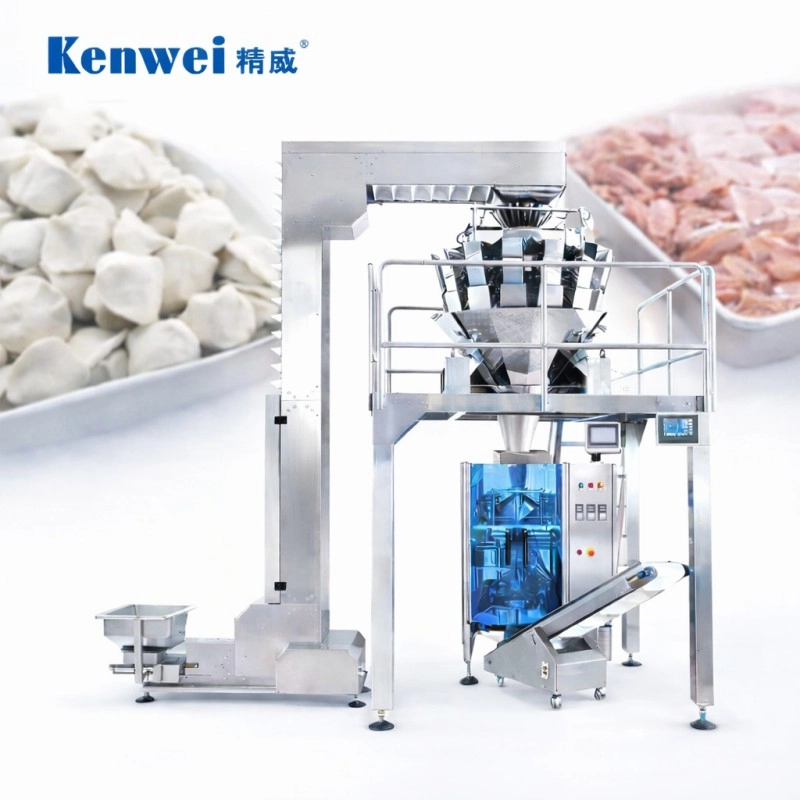
Vertical Frozen Food Packaging Machine for IQF & Frozen Products JW-B1
The Kenwei JW-B1 Vertical Frozen Food Packaging Machine is designed for IQF and frozen products, ensuring efficient, airtight packing. This vertical packing machine boosts productivity with precision sealing, ideal for frozen food packaging needs in the food industry.
Get in touch with us
If you have any comments or good suggestions, please leave us a message, later our professional staff will contact you as soon as possible.
Kenwei
Kenwei
Kenwei multi weigh
Kenwei
Kenwei
Kenwei